10 Popular Jasper Benefits: Helpful Traditions, Evidence, Safe Use & Clear Limits
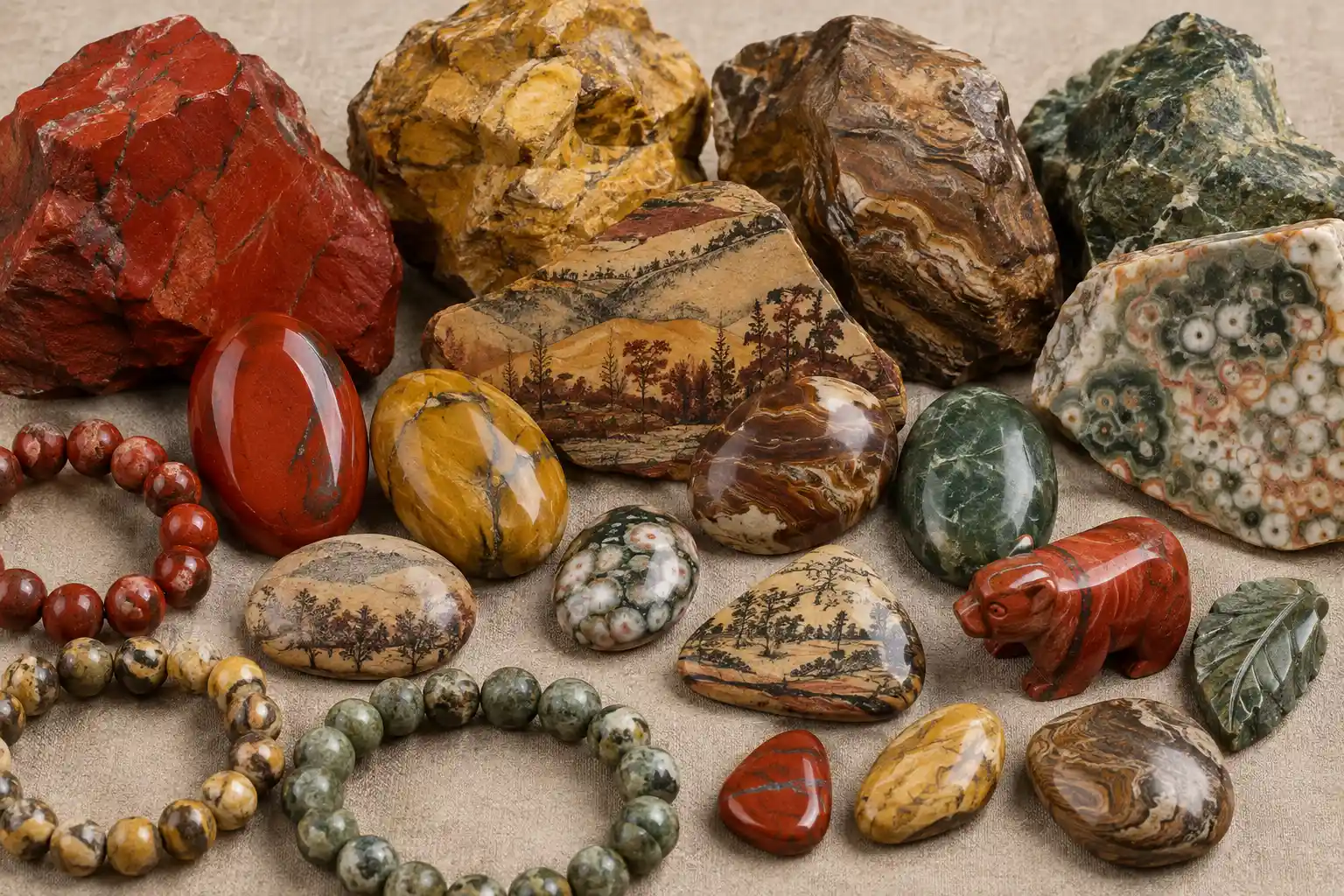
Jasper benefits begin with durability, color diversity, pattern, and an unusually long history of human use. The name traditionally describes opaque to slightly translucent silica-rich stone related to microcrystalline quartz or chalcedony, commonly colored by fine inclusions of iron oxides, iron hydroxides, clay minerals, and other substances. Red and brown are classic colors, but jasper can also appear yellow, green, cream, black, gray, multicolored, spotted, brecciated, orbicular, banded, or patterned like landscapes. Commercial naming is much less precise than mineralogical classification, so some stones sold as jasper are technically other silica-rich rocks or decorative stones rather than one narrowly defined variety.
Most traditional jasper has quartz-like hardness around 6.5 to 7 and no easy cleavage, giving it useful resistance to scratching and allowing compact pieces to take a strong polish. These physical properties create practical Jasper benefits in cabochons, beads, carvings, seals, decorative objects, mosaics, tumbled stones, and jewelry. The dense microcrystalline texture also makes many varieties tougher in everyday use than large single quartz crystals with prominent fractures, although any particular piece can still chip if struck hard enough.
Jasper also carries extensive historical and modern symbolism. Red varieties have often been associated with strength, endurance, protection, blood, earth, or courage, while brown and landscape-patterned stones are frequently connected with stability, place, nature, and continuity. Some of these themes have genuine cultural histories in particular regions, while others are modern crystal interpretations. Jasper benefits are strongest when geology, craftsmanship, history, and personal symbolism are appreciated without turning the stone into a medical treatment.
10 Jasper Benefits at a Glance
- Quartz-rich hardness gives many jaspers useful durability for jewelry and decorative use.
- Natural colors and patterns create enormous visual variety without requiring transparency.
- Dense microcrystalline structure allows jasper to accept a smooth, attractive polish.
- Cabochons, beads, carvings, seals, and freeforms make jasper highly versatile for lapidary work.
- Iron oxides, mineral inclusions, brecciation, sedimentary structures, and replacement processes give many varieties geological interest.
- The wide range of named varieties provides substantial collecting opportunities based on color, pattern, locality, and formation.
- Jasper identification teaches buyers to distinguish descriptive trade names from strict mineralogical categories.
- Archaeological and historical use connects jasper with ornament, seals, beads, tools, and decorative craftsmanship across many societies.
- Accessible varieties provide durable natural stone for everyday jewelry without requiring exceptional gem transparency.
- Modern symbolism involving endurance, steadiness, courage, or connection with nature can remain meaningful when kept separate from medical claims.
Quartz-Rich Hardness Gives Jasper Useful Everyday Durability
One of the most practical Jasper benefits is the combination of quartz-rich hardness and a compact microcrystalline structure. Traditional jasper generally falls around 6.5 to 7 on the Mohs scale, so it resists routine scratching better than calcite, fluorite, gypsum, and many other common ornamental stones. It also lacks the easy cleavage found in minerals such as fluorite or topaz, making well-formed compact pieces suitable for beads, pendants, earrings, bracelets, cabochons, and many rings when normal jewelry care is used.
Durability still varies because jasper is a descriptive category that includes stones with different proportions of silica, inclusions, fractures, brecciated zones, cavities, and secondary minerals. A solid fine-grained red jasper cabochon may tolerate everyday wear very well, while a strongly brecciated or porous specimen can contain natural weakness along healed fractures or inclusion-rich boundaries. Hardness therefore remains only part of the durability picture.
The practical lesson is straightforward: most dense jasper is durable enough for regular jewelry and handling, but each stone should still be judged according to its own structure. Protective settings, sensible storage, and avoiding severe impact preserve polish and edges far more effectively than assuming all silica-rich stones are indestructible.
Natural Colors and Patterns Give Jasper Exceptional Visual Variety
Color diversity creates some of the most recognizable Jasper benefits. Iron oxides frequently produce red, yellow, brown, and orange tones, while other inclusions and geological processes can create green, cream, black, gray, and multicolored appearances. Pattern may be equally important, with spotted, orbicular, brecciated, banded, striped, mottled, and landscape-like stones all occurring within commercial jasper categories.
This variation explains why jasper appeals to collectors who prefer pattern over transparency. A polished slice can reveal geological structures that would be invisible on rough surfaces, while a cabochon may be oriented deliberately so natural bands resemble a horizon, mountain range, desert, or abstract painting. The visual resemblance is interpretive, but the structures themselves reflect real mineral deposition, replacement, fracturing, or inclusion patterns.
Different named varieties emphasize different appearances. The earthy red tones associated with Red Jasper benefits create a very different visual identity from the landscape-like patterns emphasized in Picture Jasper benefits. This variety allows buyers to choose according to actual appearance rather than assuming jasper must conform to one traditional red standard.
Fine-Grained Texture Allows Jasper to Take an Excellent Polish
Jasper’s dense microcrystalline silica texture allows many specimens to accept a smooth, glossy surface, which is central to several Jasper benefits. Rough jasper may appear dull or ordinary because weathered surfaces scatter light, but cutting and polishing can reveal saturated color, sharp pattern boundaries, and subtle translucence along thin edges.
A good polish also changes how the stone feels. Jasper cabochons and palm stones can become exceptionally smooth because the microscopic quartz grains create an even surface when properly finished. This tactile quality contributes to its popularity in carvings and beads, where repeated contact makes polish as important as color.
Lapidaries still need to account for variable hardness where inclusions, fractures, or softer secondary minerals occur. A mixed stone may undercut during polishing if one component wears faster than another, leaving slight relief or pits. Successful finishing therefore depends on understanding the specimen rather than applying one polishing routine mechanically to every piece labeled jasper.
Jasper Is Highly Versatile for Cabochons, Beads, Carvings, and Decorative Work
Lapidary versatility is another major group of Jasper benefits. Because the stone is generally opaque and strongly patterned, cutters do not need to maximize light return through precise faceting angles. Instead, they can work with broad polished surfaces that reveal color, structure, and natural pattern.
Cabochons are especially effective because curved domes display landscape-like or orbicular patterns without distracting facet reflections. Beads use jasper’s durability well, while carved objects can incorporate contrasting colors into animal forms, seals, decorative boxes, plaques, spheres, and sculptural pieces. Thin slabs are also popular because a large flat surface can reveal patterns that would disappear if the stone were cut into several small gems.
The stone’s accessibility encourages experimentation. A beginning lapidary can learn sawing, shaping, sanding, and polishing on many jasper varieties without risking exceptionally rare rough, while experienced cutters can spend considerable time orienting valuable scenic pieces to preserve one unique pattern.
Geological Structures Give Jasper More Than Decorative Value
Jasper benefits extend into geology because many specimens preserve evidence of the environments in which silica and associated minerals accumulated or replaced earlier rocks. Traditional jasper can occur with chert, iron formations, volcanic systems, hydrothermal deposits, sedimentary sequences, and replacement structures. Iron oxides commonly contribute red and brown coloration, while fractures later filled with chalcedony or quartz can produce brecciated patterns.
Some stones preserve structures that resemble sedimentary layering, veins, nodules, or fragments cemented by later silica. These features turn polished specimens into small geological records rather than simple blocks of color.
This is also why commercial variety names deserve caution. Names based on appearance may group together stones formed by different processes, while the word jasper itself is sometimes applied loosely to attractive opaque rocks that do not fit a strict microcrystalline-silica definition. Geological context becomes more informative than a trade label when formation history matters.
Collectors who retain locality information can therefore preserve far more scientific value than those who keep only the polished stone without provenance.
Named Jasper Varieties Create Rich Collecting Possibilities
The enormous number of trade varieties creates Jasper benefits for collectors who enjoy building focused collections. Red Jasper, Picture Jasper, Ocean Jasper, brecciated jasper, orbicular types, patterned locality stones, and many regional names can differ dramatically in texture, color, geological origin, and commercial availability.
Not every name has equal mineralogical precision. Some represent genuine locality-specific stones, some describe appearance, and others were created primarily for marketing. A name can still be useful if it consistently describes a recognizable product, but collectors should not assume every commercial variety represents a separate mineral species.
This distinction makes collecting more interesting because it encourages research. A specimen labeled jasper can raise questions about whether it is microcrystalline quartz, silicified rock, volcanic rock, orbicular chalcedony, or another lapidary stone whose commercial identity has expanded beyond strict mineral terminology.
The best collections therefore combine appearance with locality and geological context rather than relying solely on colorful names.
Jasper Identification Teaches the Difference Between Trade Names and Mineral Science
Identification is one of the more educational Jasper benefits because the commercial use of the word can be confusing. Traditional jasper is generally opaque or slightly translucent, silica-rich, and closely related to chalcedony or chert, but lapidary markets have historically applied jasper names to various attractive opaque rocks.
This means visual appearance alone cannot always establish composition. Hardness, fracture, microscopic structure, specific gravity, mineral inclusions, and professional analysis can become important when exact identity matters. A brown patterned stone sold as jasper may be perfectly legitimate as a trade product while having a geological classification more specific than the commercial name suggests.
Buyers do not need laboratory analysis for every inexpensive bead, but understanding the distinction protects against exaggerated claims. A trade name can describe a useful visual category without creating a new mineral species.
This same principle applies to healing and historical claims: names should not be used as shortcuts for conclusions that require separate evidence.
Jasper Has a Long History in Ornament and Craftsmanship
Human use gives Jasper benefits considerable historical depth. Various silica-rich stones identified as jasper have been carved into seals, beads, amulets, intaglios, vessels, decorative inlays, and ornaments across long periods of history. Dense texture, good polish, attractive color, and durability made the stone useful well before modern mineral classification existed.
Historical descriptions of jasper can be difficult to map perfectly onto modern mineral categories because old gemstone names often referred to color or appearance rather than chemical composition. A stone called jasper in an ancient or medieval source therefore should not always be assumed to match the exact mineralogical category used today.
That caution does not diminish jasper’s history. It makes interpretation more accurate. The stone’s real importance in carving and ornament is already substantial without assigning every modern spiritual meaning to ancient objects.
Jasper Provides Accessible Natural Stone for Everyday Jewelry
Many jasper varieties remain comparatively accessible, which creates useful Jasper benefits for jewelry buyers who want natural stone, strong color, and durability without depending on transparent gem rough. Large cabochons and beads can be affordable enough for substantial designs, while one-of-a-kind patterns keep inexpensive pieces visually individual.
Because jasper is usually opaque, clarity does not function as a primary quality criterion in the same way it does for sapphire or emerald. Color harmony, pattern, polish, fracture condition, cutting, locality, and design become more important. This allows stones with natural inclusions to remain desirable rather than being dismissed automatically as low clarity.
Jasper also works well with many metals because earthy reds, browns, greens, and creams can pair with silver, copper-toned alloys, yellow gold, or darker finishes. The design can emphasize the stone’s pattern instead of trying to maximize brilliance.
Traditional Strength and Grounding Symbolism Needs Clear Limits
Modern and historical traditions frequently associate Jasper benefits with strength, endurance, protection, grounding, stability, courage, or connection with the earth. Red varieties especially lend themselves visually to themes involving vitality or courage, while brown and landscape-like stones are often interpreted through nature and steadiness.
A person may wear jasper because it symbolizes perseverance during a demanding project, choose a patterned stone as a reminder of a meaningful landscape, or keep a family carving because of its personal history. These are legitimate forms of symbolic value because meaning can develop through association and memory.
Beliefs surrounding Jasper healing properties may extend into circulation, digestion, fertility, pain, blood health, emotional disorders, or physical stamina. Those interpretations belong to spiritual and wellness traditions rather than established clinical medicine. Iron oxide that colors red jasper does not become a nutritional iron treatment through skin contact.
Safe Use Requires Ordinary Quartz-Dust and Treatment Awareness
Finished jasper jewelry can generally be handled safely, but cutting, grinding, and drilling silica-rich stone create respirable crystalline-silica dust. Lapidary work therefore requires wet methods, ventilation, eye protection, and suitable respiratory controls rather than dry grinding without protection.
Most dense untreated jasper tolerates gentle cleaning with lukewarm water, mild soap, and a soft brush, although fracture-filled, dyed, glued, or composite pieces may require greater caution. Some commercial stones can be dyed or stabilized, particularly when sellers want stronger colors or improved surface integrity, so treatment disclosure remains useful.
Jasper should not be powdered for ingestion or used as an ingredient in homemade drinking remedies. The stone’s mineral inclusions and natural chemistry are geological features rather than nutritional formulations.
Conclusion
Jasper benefits include quartz-rich durability, remarkable color and pattern diversity, excellent polish, lapidary versatility, geological interest, collecting depth, identification value, historical craftsmanship, accessible jewelry use, and meaningful symbolism. Its opaque character allows inclusions and pattern to become strengths rather than defects, creating a gemstone category in which individuality often matters more than transparency.
The strongest Jasper benefits come from understanding the stone as a varied silica-rich lapidary tradition rather than one perfectly uniform mineral product. Color, geology, pattern, locality, workmanship, and personal significance already provide substantial value. Symbolic themes involving strength or steadiness can add another layer without being presented as medical effects.
FAQs
What are the main Jasper benefits?
The most practical Jasper benefits include jewelry durability, strong polish, carving versatility, varied natural colors, collecting, geological education, gemstone identification, and a long history of decorative use. Modern themes involving endurance, grounding, courage, or protection can also provide personal meaning, but those associations should remain separate from claims that jasper medically changes circulation, pain, fertility, or emotional health.
What is jasper made of?
Traditional jasper is an opaque to slightly translucent silica-rich stone related to microcrystalline quartz, chalcedony, or chert and commonly contains abundant fine mineral inclusions. Iron oxides and hydroxides frequently contribute red, yellow, and brown colors, while other inclusions can produce green, black, cream, spotted, banded, and multicolored varieties.
How hard is jasper?
Most traditional jasper has hardness around 6.5 to 7 on the Mohs scale and no easy cleavage, giving dense pieces useful resistance to normal scratching and everyday wear. Durability can still vary when a specimen contains fractures, porous zones, softer inclusions, brecciation, or multiple minerals, so the condition of the individual stone remains important.
Is jasper suitable for everyday jewelry?
Dense well-polished jasper is generally well suited to beads, pendants, earrings, bracelets, and many rings because its quartz-rich structure combines useful hardness with good toughness. Jewelry should still be protected from severe impact, while fracture-filled, heavily brecciated, dyed, or composite pieces may require more careful cleaning and wear.
Why does jasper occur in so many colors?
Fine mineral inclusions and geological processes create most of jasper’s color variation. Iron oxides frequently produce reds and browns, iron hydroxides can contribute yellow tones, while other minerals, alteration processes, replacement textures, and silica deposition create green, gray, cream, black, or multicolored patterns.
Are all stones sold as jasper mineralogically identical?
No. Jasper has a long and sometimes loose lapidary usage, and some commercial stones carrying jasper names are better described geologically as other silicified, volcanic, sedimentary, or mixed rocks. This does not automatically make the trade name fraudulent, but buyers should distinguish commercial naming from strict mineral classification when precise composition matters.
Is Red Jasper different from ordinary jasper?
Red Jasper belongs within the larger jasper category and is distinguished primarily by its strong red coloration, commonly related to finely dispersed iron oxides such as hematite. Its mineralogical relationship remains close to other silica-rich jaspers, while color, pattern, locality, and inclusions create the differences collectors recognize.
Is jasper historically important?
Yes. Stones identified as jasper have been used for beads, seals, carved objects, intaglios, ornaments, and decorative work across many historical cultures. Older gemstone terminology did not always match modern mineralogical categories exactly, so individual historical claims should be evaluated within their original cultural and archaeological context.
Does Jasper help with grounding or stamina?
There is no established scientific evidence that Jasper directly changes stamina, emotional regulation, concentration, or nervous-system function through ordinary wearing or handling. Someone may use the stone as a symbolic reminder of steadiness or persistence, but practical changes in those areas depend on behavior, circumstances, health, training, and appropriate professional support where needed.
Does Jasper have healing powers?
There is no established clinical evidence that Jasper treats circulation problems, digestive disease, fertility conditions, pain, anemia, anxiety, depression, or other physical or mental-health concerns. Jasper benefits described as healing, grounding, protective, stamina-related, chakra, or energetic effects remain spiritual and personal beliefs and should not replace qualified medical or mental-health care.