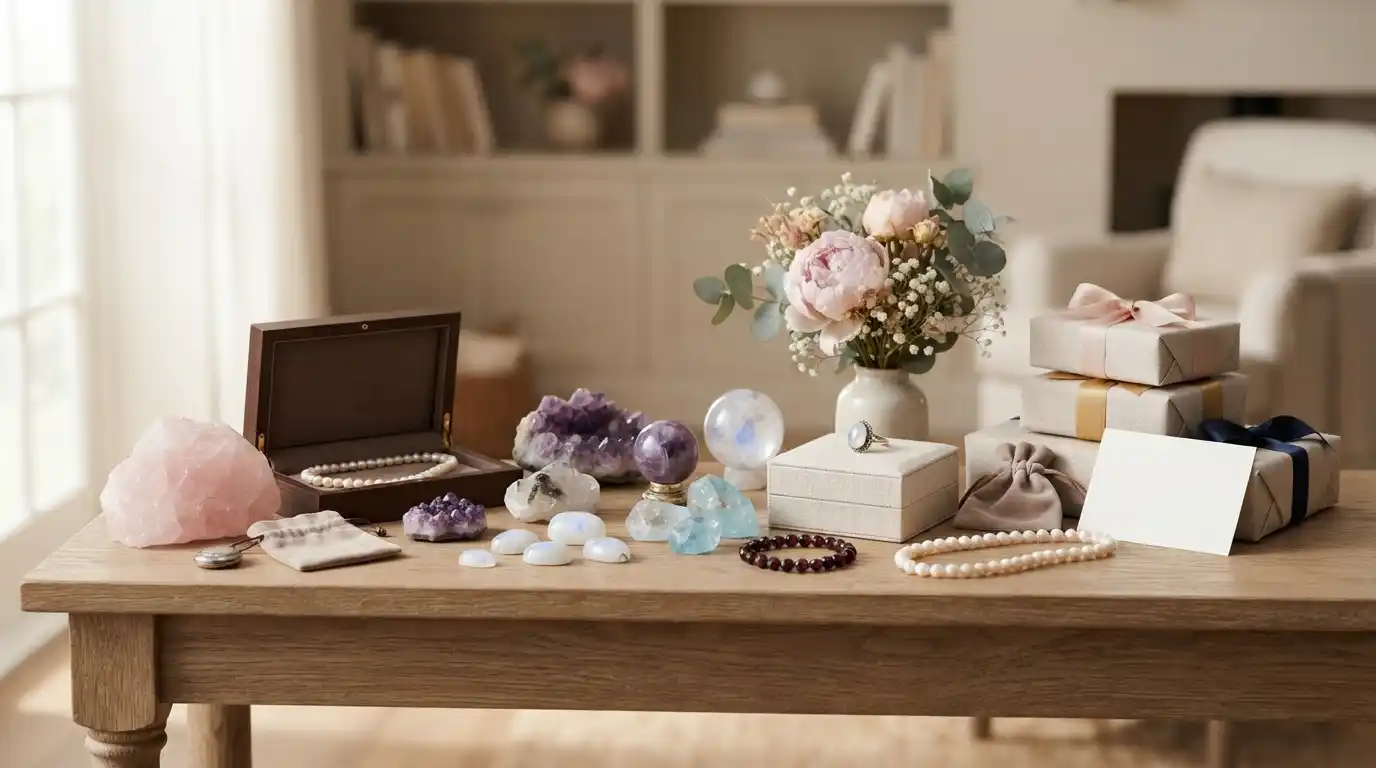
16 Heartfelt Crystal Gifts for Mother’s Day to Show Gratitude
Crystal gifts for Mother’s Day can turn gratitude into something lasting, especially when the gemstone has been chosen to reflect a mother’s favorite color, birth month, jewelry style, family story, or collecting interests. Rose quartz hearts and pendants are familiar choices, but amethyst, moonstone, aquamarine, garnet, pearl, sapphire, carnelian, agate, jade, and mineral specimens can feel far more personal when they suit the recipient rather than simply following a generic list of metaphysical meanings.
The strongest Mother’s Day gemstone gifts do not need exaggerated promises. A stone can symbolize appreciation, patience, affection, resilience, or family connection without claiming to heal emotions, improve physical health, regulate hormones, or create supernatural protection. The value of the gift comes from the relationship and the memory attached to it. Gemology contributes something different: genuine mineral identity, natural color, optical effects, durability, treatments, and craftsmanship.
Practical details deserve attention because a gift meant to be treasured should also suit the way it will be used. Sapphire is exceptionally durable for rings, while pearl is delicate and better suited to a careful wearer. Moonstone offers beautiful adularescence but can chip if struck, whereas quartz varieties such as amethyst and rose quartz are easier to maintain. A mother who loves natural specimens may prefer an elegant mineral cluster to jewelry altogether.
16 Heartfelt Crystal Gifts for Mother’s Day
- Rose quartz pendant
- Amethyst earrings
- Moonstone necklace
- Aquamarine pendant
- Garnet ring
- Pearl earrings
- Sapphire birthstone jewelry
- Carnelian bracelet
- Agate keepsake box
- Jade cabochon pendant
- Clear quartz crystal specimen
- Labradorite palm stone
- Citrine brooch
- Family birthstone necklace
- Personalized gemstone charm
- Curated mineral gift set
These 16 options work for different personalities and levels of jewelry wear. A mother who dresses formally may enjoy classic sapphire or pearl, while someone who likes natural textures may prefer agate or labradorite. A collector may value an accurately labeled quartz specimen or mineral set more than a polished heart chosen only for symbolism.
Choosing a Mother’s Day Crystal Gift With Genuine Personal Meaning
The easiest way to make a gemstone gift feel thoughtful is to connect it to something already meaningful in the recipient’s life. Birth month is one option, but it is not the only one. Her favorite color, a stone from a memorable trip, a jewelry style she already wears, or a gem representing children or grandchildren may create a stronger emotional connection.
Jewelry preferences should be observed carefully. Some people rarely wear rings but use earrings every day. Others dislike bracelets because they catch on clothing or desks. A pendant is often the safest jewelry format when sizing is unknown, while charms can be added to an existing necklace or bracelet.
Color can also guide the decision. Rose quartz provides soft pink, amethyst violet, aquamarine pale blue, garnet deep red, citrine golden yellow, carnelian warm orange, and jade a range of green to white shades. Selecting a color she already enjoys usually creates a more wearable gift than choosing a gemstone solely because it is associated with motherhood online.
A natural mineral specimen can be equally personal. Someone who enjoys gardening, geology, travel, or home décor may appreciate the natural crystal form of quartz, fluorite, or another well-identified mineral more than jewelry.
Mother’s Day Gemstone Gift Comparison
| Gift | Gemological Character | Practical Use | Symbolic Theme |
|---|---|---|---|
| Rose quartz | Pink quartz | Pendant, carving, cabochon | Affection |
| Amethyst | Violet quartz | Earrings, pendant, ring | Reflection |
| Moonstone | Feldspar with adularescence | Pendant, cabochon jewelry | Change and family cycles |
| Aquamarine | Blue beryl | Pendant, earrings, ring | Calm communication |
| Garnet | Diverse mineral group | Rings, earrings, necklaces | Commitment |
| Pearl | Organic gem | Earrings, necklace | Grace and tradition |
| Sapphire | Corundum | Frequent-wear jewelry | Loyalty |
| Carnelian | Orange-red chalcedony | Bracelet, pendant | Courage |
| Agate | Banded chalcedony | Decorative object, jewelry | Stability symbolism |
| Jade | Jadeite or nephrite | Pendant, carving, bracelet | Longevity symbolism |
| Clear quartz | Crystalline quartz | Specimen, pendant | Clarity symbolism |
| Labradorite | Feldspar with labradorescence | Palm stone, pendant | Transformation symbolism |
| Citrine | Yellow quartz | Brooch, pendant, earrings | Warmth and optimism |
| Family birthstones | Multiple gemstones | Necklace or bracelet | Family connection |
| Gemstone charm | Depends on stone | Personalized jewelry | Personal memory |
| Mineral gift set | Multiple minerals | Display and collecting | Curiosity and appreciation |
The symbolic themes describe associations people may choose to give the stones. They are not medical or scientific effects of the gemstones themselves.
Rose Quartz, Amethyst, and Moonstone for Soft, Sentimental Gifts
Rose quartz is one of the most familiar Mother’s Day choices because its pink color naturally fits ideas of affection and appreciation. It is a variety of quartz with a Mohs hardness of 7 and is usually translucent rather than highly transparent.
Most rose quartz is cut into cabochons, beads, hearts, carvings, spheres, or polished freeforms. Some specimens can show a star effect when cut correctly as cabochons, caused by light interacting with oriented microscopic inclusions.
Modern spiritual traditions frequently associate rose quartz with unconditional love. A Mother’s Day gift can use that symbolism without claiming that the stone physically generates love, repairs family relationships, or heals emotional trauma. A heart carving can simply represent gratitude for affection already given.
Amethyst offers greater transparency and a wider range of faceted jewelry options. It is violet crystalline quartz with a hardness of 7 and no cleavage. Color ranges from pale lilac to strong purple, sometimes with visible zoning.
Amethyst earrings or a pendant are practical because these jewelry forms receive less abrasion than rings. Strong heat should be avoided because it can permanently alter the color of certain stones.
Moonstone provides a different visual experience through adularescence, a floating light effect produced by fine internal feldspar structures. High-quality moonstone may show a blue or white glow moving across the surface as the stone tilts.
Its hardness is around 6 to 6.5, and cleavage makes it more vulnerable to impact than quartz. A pendant is therefore often more practical than a frequently worn ring.
Aquamarine, Garnet, and Sapphire for Durable Mother’s Day Jewelry
Aquamarine is the blue to greenish-blue variety of beryl. Its hardness of 7.5 to 8 makes it suitable for rings, pendants, and earrings. Fine crystals can be highly transparent, and larger stones are available in a range of pale to stronger blue shades.
Heat treatment is commonly used to reduce greenish or yellowish components and produce a cleaner blue. This treatment is generally accepted when disclosed.
Aquamarine can symbolically represent calm communication or mutual understanding within a family. It does not physiologically reduce stress, but a necklace given after years of shared conversations can carry a very real personal meaning.
Garnet is another excellent jewelry choice because the garnet group offers far more than traditional dark red. Different species produce red, orange, green, pink, purple, yellow, and other colors. Many garnets fall around 6.5 to 7.5 on the Mohs scale and lack cleavage.
A garnet ring can work especially well for a mother born in January, but birth month does not need to be the only reason for choosing it. Deep red can also symbolize commitment, family history, or simply her preferred color.
Sapphire is the strongest of these three for frequent ring wear. At Mohs 9 with no cleavage, corundum provides excellent resistance to everyday abrasion. Blue is traditional, but pink, yellow, green, violet, and other fancy colors allow considerable personalization.
A sapphire chosen to mark years of family commitment may carry loyalty symbolism naturally. Its durability also makes it a practical heirloom candidate when the setting is well made.
Pearl, Jade, and Agate for Classic or Decorative Mother’s Day Gifts
Pearl remains one of the most traditional Mother’s Day jewelry choices. Unlike crystalline gems, pearls are organic products formed within mollusks. Cultured pearls dominate the modern market, and their beauty comes from nacre or related surface structures that produce soft luster.
White, cream, pink, silver, golden, and darker pearls are available depending on type and origin. Their surface is comparatively soft, generally around 2.5 to 4.5 on the Mohs scale, making careful handling essential.
Perfume, hairspray, cosmetics, acids, and abrasion can damage pearl surfaces. Earrings and necklaces are therefore more practical than pearl rings for most people.
Jade can refer to jadeite or nephrite, two different gem substances. Both are prized for toughness, smooth polish, and a long history in carving and jewelry. Jadeite can occur in vivid green, lavender, white, yellow, and other colors, while nephrite is particularly known for green, cream, brown, and related shades.
Treatment disclosure matters greatly for jadeite because bleaching, polymer impregnation, and dyeing can change appearance and commercial value. A fine Mother’s Day jade pendant should be represented accurately rather than sold under a vague jade label.
Agate is chalcedony with banding or other distinctive patterns. Natural stones can contain intricate layers, while commercial agates are also frequently dyed to produce vivid colors.
An agate keepsake box, small bowl, or decorative slice can be ideal for a mother who enjoys interior design but does not wear much jewelry. Each pattern is naturally individual, which can make the object feel more personal.
Carnelian, Citrine, and Labradorite for Warm or Expressive Gifts
Carnelian is orange to red-orange chalcedony with a long history in seals, beads, carvings, and jewelry. It is durable enough for bracelets and pendants and takes a smooth, attractive polish.
Its warm coloration is commonly connected symbolically with courage and vitality. For Mother’s Day, it might represent admiration for a mother’s determination through difficult years. The stone does not physically increase energy or stamina, but the association can still carry meaning.
Citrine offers yellow to orange quartz with a hardness of 7. Much commercial citrine has been produced through heating suitable amethyst or smoky quartz. The resulting gemstones can be beautiful and stable when treatment is represented honestly.
Its sunny color can symbolize warmth, optimism, and gratitude. A small citrine brooch or pendant can work particularly well with yellow gold.
Labradorite appeals to someone who enjoys optical effects. This feldspar can display labradorescence, creating moving flashes of blue, green, gold, orange, or other colors across a darker body.
A polished palm stone or pendant can show the phenomenon dramatically. The flashes result from light interacting with internal structures, not supernatural energy. Understanding the real optical effect can make the stone even more interesting.
Family Birthstone Jewelry as a More Personal Gift
A family birthstone necklace can represent children, grandchildren, or several generations through different colored gemstones. This creates an especially direct connection between jewelry and family history.
The practical challenge is that birthstones differ in durability. Diamond, sapphire, ruby, spinel, chrysoberyl, aquamarine, and many garnets tolerate regular wear well. Opal, pearl, turquoise, and moonstone require more careful settings and handling.
A pendant is often the most flexible design when several stones with different durability levels are being combined. It receives fewer hard impacts than a ring and allows each gemstone to be visible without demanding identical hardness.
Treatment and identity should remain clear. A synthetic birthstone may be perfectly suitable for a personalized family piece, especially when budget matters, but it should not be represented as a natural mined gemstone.
Engraving initials or dates on the metal rather than the gemstone can add personalization without risking damage to a delicate stone.
Mineral Specimens and Curated Sets for Mothers Who Prefer Natural Objects
Some recipients are much more interested in geology than jewelry. A natural quartz cluster, amethyst crystal group, pyrite cube, calcite specimen, or fluorite crystal can become an attractive display object and conversation piece.
Quality should be evaluated according to the mineral. A quartz specimen may be appreciated for crystal form and clarity, fluorite for cubic habit and color zoning, and pyrite for metallic crystal faces.
Locality information can add collecting value when it is genuinely known. A specimen with a reliable mine, district, or regional origin is more informative than a generic stone accompanied by an invented provenance story.
A curated mineral set can also become a shared activity between a mother and children or grandchildren. Comparing hardness, crystal habit, luster, cleavage, and color creates an educational dimension that goes beyond decorative use.
Showing Gratitude Without Turning Symbolism Into a Health Claim
Mother’s Day naturally encourages themes of care, patience, protection, love, and gratitude. Gemstones can represent these ideas because objects often become attached to important memories and relationships.
Rose quartz may represent affection, sapphire loyalty, garnet commitment, pearl grace, jade family continuity, and aquamarine calm communication. None of these interpretations requires the gem to produce a physiological effect.
A gemstone cannot restore health, regulate hormones, strengthen immunity, treat anxiety or depression, improve fertility, or physically protect a family. Those claims go beyond what mineralogy or medical evidence establishes.
A more meaningful approach is often simpler. A gift may represent gratitude for specific actions, such as years of support, encouragement through education, maintaining family traditions, or helping during a difficult time. The gemstone becomes a physical marker of that appreciation.
Buying a Mother’s Day Crystal Gift With Confidence
Start with accurate identity. Terms such as natural crystal, healing stone, premium jade, genuine pearl, and rare quartz can be used loosely, so the seller should state what the item actually is.
Natural, synthetic, treated, and imitation products are separate categories. Laboratory-grown sapphire is real corundum with artificial origin. Glass that resembles sapphire is a simulant. Stabilized turquoise is natural turquoise enhanced for durability, while dyed magnesite sold as turquoise would be an imitation.
Treatments are common across the gemstone market. Heating, dyeing, impregnation, bleaching, irradiation, filling, and coatings may all be legitimate depending on the stone and level of disclosure.
For an expensive sapphire, jadeite, pearl strand, or other high-value gift, independent identification can provide additional confidence. For modest gifts, a transparent and knowledgeable seller may be sufficient.
Craftsmanship should also be examined. Smooth prongs, secure clasps, comfortable chains, even bead drilling, polished surfaces, and appropriate settings determine whether the piece will actually be enjoyable to use.
Caring for Mother’s Day Gemstone Gifts
Quartz varieties such as amethyst, rose quartz, citrine, carnelian, and agate can usually be cleaned with mild soap, lukewarm water, and a soft cloth or brush when the jewelry setting permits.
Aquamarine, garnet, and sapphire are relatively durable, though treatments, fractures, and settings can still influence cleaning choices.
Pearl requires much gentler care. It should be protected from perfume, hair products, acids, harsh detergents, and abrasive contact. Wiping pearls after wear helps remove skin oils and cosmetic residue.
Moonstone should be protected from impacts because of cleavage. Jade is exceptionally tough but can still be scratched by harder gemstones. Labradorite may develop surface wear and should not be stored where sapphire or diamond can rub against it.
A soft pouch or divided jewelry box is an inexpensive way to preserve a meaningful Mother’s Day gift for years.
Conclusion
Crystal gifts for Mother’s Day can express gratitude through color, craftsmanship, family history, birthstones, natural specimens, or symbolic meaning. Rose quartz, amethyst, moonstone, aquamarine, garnet, pearl, sapphire, carnelian, agate, jade, quartz, labradorite, citrine, personalized jewelry, and mineral sets all suit different personalities and styles.
The strongest gift is one that reflects the recipient rather than relying on extravagant metaphysical promises. Accurate gem identity, thoughtful design, appropriate durability, and a genuine connection to the relationship give the stone lasting meaning long after Mother’s Day has passed.
FAQs About Crystal Gifts for Mother’s Day
What is the best crystal gift for Mother’s Day?
The best choice depends on the recipient. Rose quartz is popular for pink color and affection symbolism, sapphire is excellent for durable jewelry, pearl offers a classic look, and a mineral specimen can be ideal for someone who prefers natural objects to jewelry.
What crystal symbolizes gratitude?
No gemstone has an official scientific meaning of gratitude, but rose quartz, garnet, jade, pearl, and amethyst are often used symbolically for affection, commitment, appreciation, family connection, or reflection. The meaning becomes personal through the reason the gift is given.
Is rose quartz a good Mother’s Day gift?
Yes. Rose quartz is visually soft, relatively durable at Mohs 7, and available in pendants, hearts, cabochons, beads, and decorative carvings. Its association with love can suit Mother’s Day when treated as symbolism rather than a claim that the stone produces emotional healing.
Can crystals improve a mother’s health?
There is no established scientific evidence that gemstones treat medical conditions, improve circulation, alter hormones, strengthen immunity, or cure emotional disorders. A gemstone can still be meaningful as jewelry, a keepsake, or a cultural symbol.
Is sapphire a practical Mother’s Day ring stone?
Yes. Sapphire has a Mohs hardness of 9, no cleavage, and strong resistance to everyday wear. It is one of the best colored gemstones for rings that will be worn frequently.
Are pearls suitable for Mother’s Day jewelry?
Yes, especially for earrings and necklaces. Pearls have elegant luster and a long jewelry tradition, but their surfaces are soft and sensitive to cosmetics, acids, abrasion, and harsh cleaners. They require more care than sapphire or quartz.
Is moonstone suitable for a Mother’s Day ring?
Moonstone can make a beautiful ring, but it has a hardness around 6 to 6.5 and possesses cleavage. A protective setting and careful wear are important. A pendant is often a safer choice for someone who is hard on jewelry.
What is a good Mother’s Day gift for a mother who does not wear jewelry?
An agate keepsake box, quartz crystal specimen, labradorite palm stone, mineral collection, decorative jade carving, or another polished mineral object can work well without requiring jewelry sizing.
Is family birthstone jewelry a good idea?
Yes. Combining birthstones for children or grandchildren can make a necklace or bracelet highly personal. The design should take the durability of each gemstone into account, especially when softer stones are included.
Are treated gemstones appropriate for Mother’s Day gifts?
Yes. Heat-treated sapphire, stabilized turquoise, dyed agate, and other treated gems can be attractive and durable. Treatment should simply be represented honestly so the buyer understands what is being purchased.
How can I tell whether a gemstone gift is genuine?
Reliable seller disclosure, correct gem names, realistic pricing, and professional testing for expensive pieces are more dependable than color or appearance alone. Natural, synthetic, treated, and imitation stones can sometimes look very similar.
Is jade a good Mother’s Day gift?
Yes. Jadeite and nephrite have excellent toughness and a long history in carving and jewelry. Treatment disclosure is especially important for jadeite because dyeing, bleaching, and polymer impregnation can significantly affect value.
What gemstone symbolizes a strong mother?
Sapphire, garnet, jade, carnelian, and several other stones can symbolize strength or resilience through personal or cultural interpretation. No mineral scientifically creates strength, but a gemstone can represent qualities the giver already admires in the recipient.
Should I choose jewelry or a natural crystal specimen?
Choose according to the recipient’s habits. Jewelry suits someone who regularly wears gemstones, while a natural specimen may be more meaningful for a collector, science enthusiast, gardener, traveler, or person who enjoys decorative natural objects.
How much should a Mother’s Day gemstone gift cost?
There is no required amount. A modest polished stone with genuine personal meaning can be as thoughtful as an expensive sapphire or pearl piece. Accurate identity, craftsmanship, and suitability matter more than choosing the highest price.
How should Mother’s Day gemstone jewelry be stored?
Store pieces separately or in divided compartments so harder gems do not scratch softer ones. Pearls, moonstone, opal, quartz, and jade can all be damaged by harder stones such as sapphire or diamond when loose jewelry repeatedly rubs together.