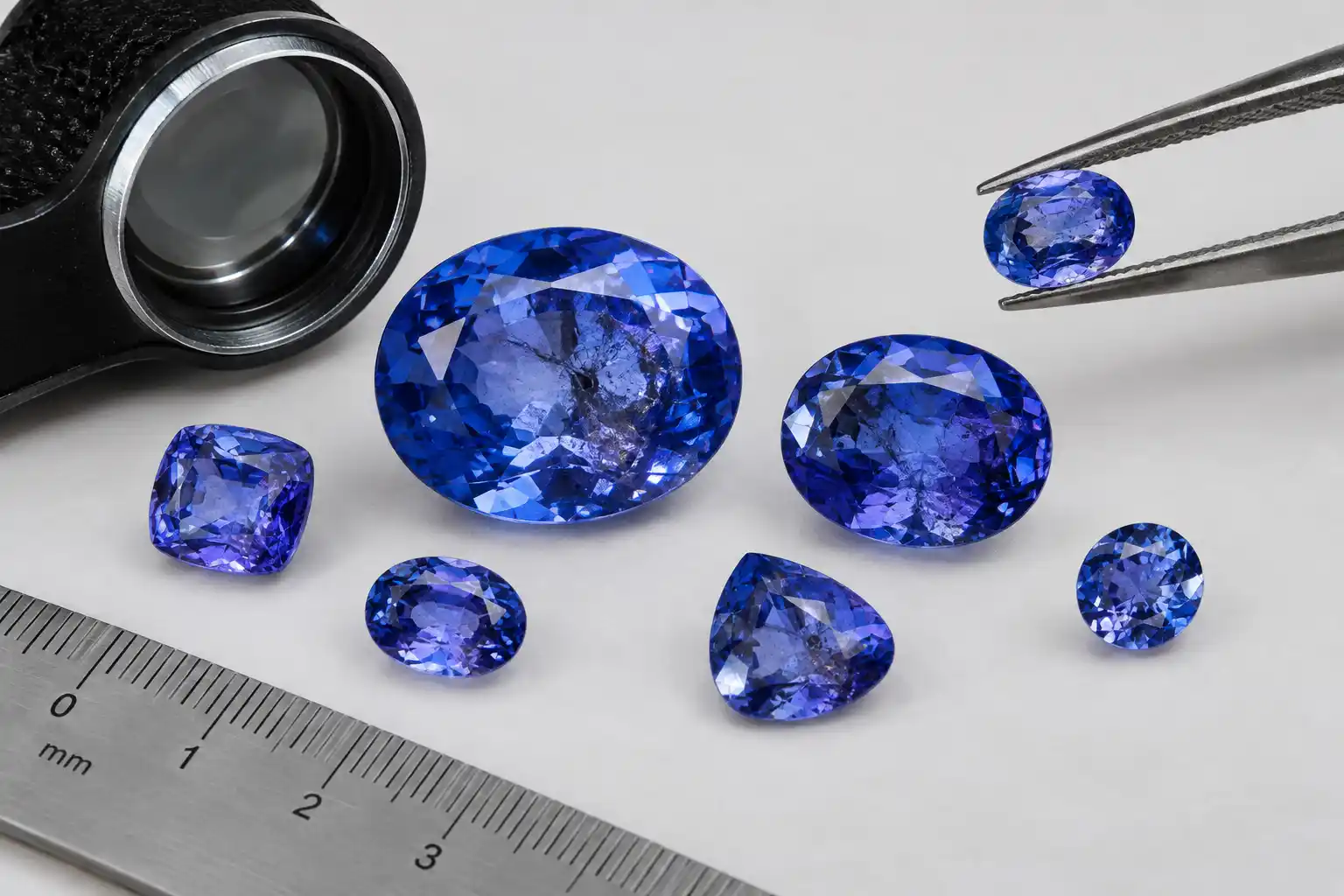
Benitoite Price Per Carat: 9 Rarity & Value Factors You Must Know
Benitoite Price per carat can rise rapidly because fine facetable stones are genuinely scarce, especially once weight approaches or exceeds one carat. Small commercial stones with lighter color, visible inclusions, or less efficient cutting may begin around several hundred to roughly $1,500 per carat, while attractive sub-carat gems with strong blue color can move into roughly $1,500 to $4,000 per carat. Fine stones around one carat may reach approximately $4,000 to $8,000 per carat, while exceptional larger gems with vivid color, strong brilliance, good clarity, and documented California provenance can move beyond $8,000 per carat and, in unusual cases, substantially higher. These figures are best treated as market orientation because benitoite is too scarce for a single universal The Price chart.
Benitoite is barium titanium silicate, BaTiSi₃O₉, and is best known from San Benito County, California. Fine transparent blue crystals suitable for cutting are far less common than mineral specimens, and large facetable crystals are particularly difficult to obtain. The gemstone also combines strong blue to violet-blue color with noticeable dispersion, so well-cut stones can produce flashes of spectral color that resemble fire in diamond even though benitoite is much softer.
The steep value increase at larger sizes is one of the most important points for buyers. Benitoite does not behave like amethyst or aquamarine, where sizable clean stones can be relatively available. A two-carat fine benitoite is not simply twice as rare as a one-carat gem. The combination of crystal size, transparency, attractive blue color, good cutting yield, and acceptable clarity becomes dramatically harder to find, which is why The Price per carat can climb sharply as quality and weight increase together.
9 Rarity and Value Factors Behind Benitoite Price Per Carat
- Natural benitoite identity and authenticity
- Strength and attractiveness of blue color
- Tone, saturation, and violet modifiers
- Clarity and transparency
- Cut quality, dispersion, and brilliance
- Carat weight and rarity above one carat
- California origin and documented provenance
- Treatment status and condition
- Collector demand, certification, and craftsmanship
These nine factors interact closely. A larger stone does not automatically outrank a smaller gem if the larger specimen is grayish, heavily included, shallowly cut, or poorly proportioned. Fine benitoite earns its strongest premiums when size, color, transparency, and cutting quality all remain strong at the same time.
Typical Benitoite Price Per Carat
Because gem benitoite is scarce and inventories are limited, The Price can vary considerably among specialist dealers, auctions, private collectors, and finished jewelry. Broad ranges provide a practical framework rather than a rigid tariff.
| Benitoite Quality | Approximate The Price Per Carat | Typical Characteristics |
|---|---|---|
| Small commercial stones | $500 to $1,500 | Pale or grayish blue, visible inclusions, small size |
| Good sub-carat gems | $1,500 to $4,000 | Attractive blue, reasonable clarity, good cut |
| Fine stones approaching 1 carat | $3,000 to $6,000 | Strong blue, eye-clean or nearly clean, lively brilliance |
| Fine 1-carat-plus gems | $4,000 to $8,000+ | Scarce size, saturated blue, good transparency and cutting |
| Exceptional larger benitoite | $8,000 to $15,000+ | Rare size, vivid blue, strong brilliance, documented provenance |
| Extraordinary collector gems | Highly variable | Unusual size, color, provenance, historical importance or exceptional quality |
These ranges should not be applied mechanically to every stone. A mounted jewel may carry significant value from gold, platinum, diamonds, historical provenance, designer attribution, or antique importance, while an unusually fine loose stone may command a collector premium independent of conventional retail categories.
Natural Benitoite Identity Comes Before Any Value Estimate
Benitoite’s rarity makes accurate identification important because blue gemstones with superficially similar appearances are much more common. Sapphire, blue spinel, blue zircon, kyanite, glass, synthetic products, and other stones can imitate part of the visual impression when judged only from photographs.
Natural benitoite has distinctive gemological properties. It is strongly birefringent, belongs to the trigonal crystal system, commonly forms distinctive tabular or triangular crystals, and has a Mohs hardness of about 6 to 6.5. Its refractive behavior and dispersion contribute to a lively appearance when the stone is cut well.
Many specimens also fluoresce strongly under shortwave ultraviolet illumination, a feature for which benitoite is famous. Fluorescence can support identification, but it should not be used as the only test because gem identification relies on a combination of optical and physical observations.
An expensive faceted stone should therefore be evaluated on the basis of confirmed mineral identity before rarity premiums are applied. Paying fine-benitoite rates for a blue imitation creates a far greater valuation error than ordinary differences in clarity or cut.
Blue Color Is the Most Important Visible Value Factor
Fine benitoite is best known for saturated blue to violet-blue color. The strongest stones can rival sapphire in apparent richness while also showing bright spectral flashes created by the gem’s dispersion.
Color quality depends on hue, tone, and saturation working together. A vivid medium to medium-dark blue often creates the most desirable face-up appearance because the stone remains recognizably blue without becoming excessively dark.
Pale benitoite can still be attractive, especially in small stones where stronger color is difficult to retain, but lighter saturation generally lowers The Price when all other characteristics are equal. Grayish appearance can also reduce desirability because it weakens the clean blue impression.
Violet-blue modifiers may be attractive when they add complexity without dominating the blue. The market generally rewards stones that remain lively under ordinary lighting rather than gems that reveal their best color only under intense display lamps.
Tone and Saturation Need to Preserve Brilliance
A dark stone is not automatically a fine stone. If tone becomes too deep, extensive extinction can make portions of the gem appear black, hiding both color and dispersion.
Very light stones present the opposite problem. They may look transparent and bright but lack enough saturation to deliver the visual intensity collectors associate with fine benitoite.
Cut orientation influences this balance because the crystal’s optical properties interact with the chosen facet arrangement. A skilled cutter tries to preserve the best blue while maintaining enough light return for the gem to look lively.
This becomes especially difficult in larger rough because valuable weight encourages conservative cutting. A cutter may retain depth to preserve carats, but excessive depth can produce darker appearance and a smaller face-up size.
Fine stones achieve a balance in which color looks strong yet brilliance remains visible across most of the crown.
Clarity Matters, but Rarity Requires Sensible Expectations
Natural benitoite can contain mineral inclusions, fractures, veils, growth features, and associated crystals or residues from the geological environment in which it formed. Fine transparent faceted stones are valued more highly when inclusions do not distract from blue color or brilliance.
Eye-clean clarity is desirable, but buyers should remember that benitoite is far rarer than aquamarine or amethyst. A minor inclusion may be acceptable in a stone whose size, color, and overall appearance are otherwise exceptional.
Large central fractures, clouds, or dark inclusions can substantially reduce value because they interfere with transparency. Surface-reaching fractures also deserve attention because benitoite is only moderately hard and can be more vulnerable than sapphire or spinel.
Clarity should therefore be judged in relation to the whole stone. A slightly included one-carat gem with vivid blue and strong brilliance can be much more desirable than a cleaner but very pale half-carat stone.
Cut Quality Determines Whether Benitoite Shows Its Famous Fire
One of benitoite’s most appealing optical characteristics is its strong dispersion, which separates white light into spectral colors. A well-cut transparent gem can display flashes of red, orange, green, and other colors against its blue body color.
That dispersion becomes visible only when cutting allows light to return effectively. Poor proportions, windowing, excessive extinction, and weak polish can suppress the very optical effect that makes benitoite special.
Cutters face a difficult economic decision because fine rough is rare. Maximizing beauty may require sacrificing weight, while preserving every possible fraction of a carat can create a deeper or less symmetrical stone.
A slightly asymmetrical outline may therefore be understandable in valuable natural benitoite when it preserves rare weight, but severe windowing or poor brilliance should still lower value.
Precision-cut stones can command strong premiums because the cutter has deliberately prioritized light performance rather than simple carat retention.
Carat Weight Creates One of the Steepest Benitoite Premiums
Most faceted benitoite is small. Clean stones approaching one carat are already scarce, and fine gems above one carat become increasingly important to collectors.
This scarcity means The Price per carat often rises rapidly rather than remaining constant. A two-carat stone with comparable color and clarity can be worth far more than twice the total value of a one-carat example.
Large crystals exist as mineral specimens, but not every crystal can produce a transparent faceted gemstone. Fractures, inclusions, crystal shape, color distribution, and cutting yield reduce the amount of usable rough considerably.
Face-up dimensions should also be compared with weight. A deep one-carat stone can look smaller than a well-proportioned 0.85-carat gem, even though the heavier stone carries a stronger rarity label.
For buyers interested in actual visual presence, dimensions, cut, and brightness deserve consideration alongside the number on the scale.
California Provenance Is Central to Benitoite’s Collector Appeal
Benitoite is closely associated with San Benito County, California, and commercially significant transparent blue gem quality is overwhelmingly linked with that region. This geographic concentration is one of the reasons the gem has such strong collector identity.
California also designated benitoite as its state gemstone, reinforcing the connection between locality and gemological history.
Collectors may pay premiums for stones with reliable documentation connecting them to well-known mining areas, older collections, or historically important production. Original specimen labels and traceable provenance can be particularly valuable for crystals and matrix specimens.
Origin should not replace direct quality grading, however. A pale, heavily fractured stone does not become exceptional simply because its locality is prestigious.
For faceted jewelry, blue color, clarity, cut, size, and condition remain the primary visible qualities, while provenance adds an additional layer of collector value.
Treatments Are Not a Major Feature of the Benitoite Market
Benitoite is generally valued for its natural color, and routine heat treatment is not a defining feature of the market in the way it is for sapphire, aquamarine, or some quartz varieties.
This relative lack of mainstream enhancement increases the importance of natural appearance, but buyers should still confirm whether unusual coatings, fracture filling, composites, or other modifications are present when significant money is involved.
Repairs are more relevant in mineral specimens. Benitoite crystals can occur on fragile matrix, and specimen preparation may involve stabilization or restoration. Such work should be disclosed when it affects collector value.
In faceted stones, polishing history and recutting can also matter. An antique or historically important stone that has been aggressively recut may lose provenance value even if its optical appearance improves.
Benitoite Fluorescence Adds Interest but Does Not Determine The Price Alone
Benitoite is renowned among mineral collectors for its response to ultraviolet illumination, particularly shortwave UV. Fine crystals and faceted stones can display striking fluorescence that makes them memorable in both scientific and collector settings.
Fluorescence is useful as an identifying and educational characteristic, but it should not be treated as a standalone quality grade. A strongly fluorescent stone with pale daylight color and poor cutting can still be worth less than a beautifully saturated gem whose market appeal comes from ordinary visible-light appearance.
Collectors of fluorescent minerals may place additional value on exceptional response, especially in natural crystals on matrix. Jewelry buyers are usually more concerned with blue color, brilliance, clarity, and size under normal lighting.
The effect therefore adds character and provenance interest rather than replacing traditional gemstone quality factors.
Mineral Specimen Value Is Different From Faceted-Gem Value
Benitoite crystals are collected both as faceting rough and as mineral specimens, and these two markets judge quality differently. A fine crystal specimen may be valuable because of crystal form, sharp triangular habit, matrix association, neptunite or other associated minerals, fluorescence, size, and locality.
Such a specimen can be highly collectible even when the crystal contains fractures or inclusions that would prevent successful faceting.
Conversely, a rough fragment lacking attractive external crystal form may yield an excellent gemstone and therefore have strong cutting value.
Removing a well-formed crystal from an important matrix specimen solely for faceting can destroy collector value, which is why knowledgeable buyers distinguish specimen quality from gem rough before making cutting decisions.
How to Compare Two Benitoites Before Buying
The most useful comparison begins under neutral daylight-equivalent illumination. Look at the blue hue, saturation, and brightness without checking the carat labels first. A lively smaller stone can outperform a larger dull gem immediately.
Next examine transparency and cut. Look for a central window, broad black extinction zones, obvious fractures, poor symmetry, or an excessively deep pavilion. Rotate each stone gently and see whether spectral flashes appear naturally through the crown.
Only after visual comparison should weight and provenance enter the discussion. A heavier stone deserves a rarity premium only when the quality justifies retaining that weight.
For expensive purchases, documentation is particularly useful because natural identity, weight, measurements, and provenance all affect collector confidence.
Is Benitoite Worth Buying as an Investment?
Fine benitoite is genuinely rare and has strong collector interest, but rarity does not guarantee profitable resale. The market is specialized, and the eventual sale of an expensive gemstone depends on finding collectors or dealers who understand the significance of the stone.
Retail markups, auction fees, dealer margins, certification, provenance, and market liquidity can all influence returns. A commercial pale stone purchased at a high retail level should not be expected to appreciate simply because the mineral species is rare.
The strongest collector candidates tend to combine attributes that remain difficult to replace: fine saturated blue, transparency, substantial carat weight, strong cutting, excellent condition, and reliable California provenance.
A buyer who also values the gemstone aesthetically is in a better position because the stone retains personal and collector enjoyment even when future financial performance is uncertain.
Benitoite Durability and Long-Term Value
Benitoite has a Mohs hardness around 6 to 6.5, which makes it considerably softer than sapphire, ruby, spinel, topaz, or diamond. It can still be used successfully in jewelry, but the setting and wearing habits need more care.
Pendants and earrings generally protect the gemstone better than rings. A benitoite ring should ideally use a setting that shields vulnerable edges from repeated impact.
Harsh abrasion should be avoided because facet junctions can wear over time. Separate storage is also important because quartz, topaz, sapphire, and diamond can scratch benitoite.
Gentle cleaning with lukewarm water, mild soap, and a soft brush is generally appropriate for intact stones. Severe heat, ultrasonic cleaning of fractured gems, and rough mechanical treatment are unnecessary risks for a rare stone.
Preserving polish and original weight is particularly important because replacing lost benitoite with a comparable large natural stone can be difficult.
Conclusion
Benitoite Price per carat is driven by natural identity, blue color, tone, saturation, clarity, cutting, size, California provenance, treatment status, and collector demand. Small commercial stones can remain within relatively accessible ranges, but fine one-carat and larger gems become significantly more expensive because transparent rough of that quality is extremely scarce.
The highest-value benitoite combines vivid blue color with enough brightness to show the gem’s notable dispersion, good transparency, efficient cutting, strong condition, and trustworthy provenance. Buyers who judge those qualities before focusing on carat weight are better positioned to understand why seemingly similar blue stones can carry dramatically different Prices.
FAQs About Benitoite Price Per Carat
How much does benitoite cost per carat?
Small commercial stones may begin around several hundred to roughly $1,500 per carat, while better sub-carat gems can reach roughly $1,500 to $4,000 per carat. Fine stones around one carat can move into several thousand dollars per carat, while exceptional larger gems may exceed $8,000 per carat substantially.
Why is benitoite so expensive?
Fine facetable benitoite is geographically restricted and unusually scarce in transparent crystals large enough to cut. The rarity becomes much more pronounced above one carat, especially when strong blue color and good clarity are retained.
Does benitoite become much more expensive above one carat?
Yes. Fine stones around and above one carat are much scarcer than small gems, so The Price per carat can rise sharply when color, clarity, and cutting quality remain strong.
What benitoite color is most valuable?
Vivid saturated blue to violet-blue is generally preferred, particularly when the stone remains bright rather than overly dark. Grayish or very pale blue usually commands less.
Does clarity affect benitoite value?
Yes. Transparent eye-clean or nearly eye-clean stones are highly desirable, especially at larger sizes. Minor inclusions may still be acceptable because the gemstone is rare, while large central fractures and clouds reduce value more substantially.
Why does benitoite show colorful flashes?
Benitoite has strong dispersion, which separates white light into spectral colors when cutting and lighting conditions allow. Fine faceting can reveal noticeable flashes against the blue body color.
Is California benitoite more valuable?
California provenance is central to the gem’s identity because commercially significant gem-quality benitoite is closely associated with San Benito County. Reliable provenance can increase collector confidence, particularly for important stones and mineral specimens.
Is benitoite treated?
Routine color treatment is not a major feature of the benitoite market. Natural color is generally expected, although buyers should still seek disclosure concerning repairs, filling, coatings, or other modifications when significant value is involved.
Can benitoite be confused with sapphire?
Yes. Both can appear intensely blue, but they are different minerals with different optical properties, hardness, chemistry, and rarity. Proper gemological testing separates them reliably.
Is benitoite harder than sapphire?
No. Benitoite is about 6 to 6.5 on the Mohs scale, while sapphire is 9. Sapphire therefore offers substantially greater resistance to scratching in everyday jewelry.
Is benitoite a good investment gemstone?
Exceptional stones have strong collector appeal because of their rarity, but no gemstone guarantees financial appreciation. Quality, provenance, purchase Price, resale liquidity, and collector demand all influence future value.
Should expensive benitoite have a laboratory report?
Independent documentation is sensible for high-value stones because accurate identity, weight, dimensions, natural origin, and condition materially affect value. Provenance records can be equally important for collector-level examples.
Does fluorescence increase benitoite value?
Fluorescence adds scientific and collector interest but is not normally the primary The Price factor for faceted jewelry. Visible blue color, size, clarity, cut, and provenance usually matter more.
Is larger benitoite always better?
No. Large size creates rarity, but a dark, fractured, or badly cut stone can be less desirable than a smaller gem with vivid blue color and stronger brilliance.
How should benitoite be stored?
Store it separately in a padded compartment or soft pouch so harder gemstones cannot scratch it. Careful storage is especially important because the stone is much softer than sapphire or diamond.