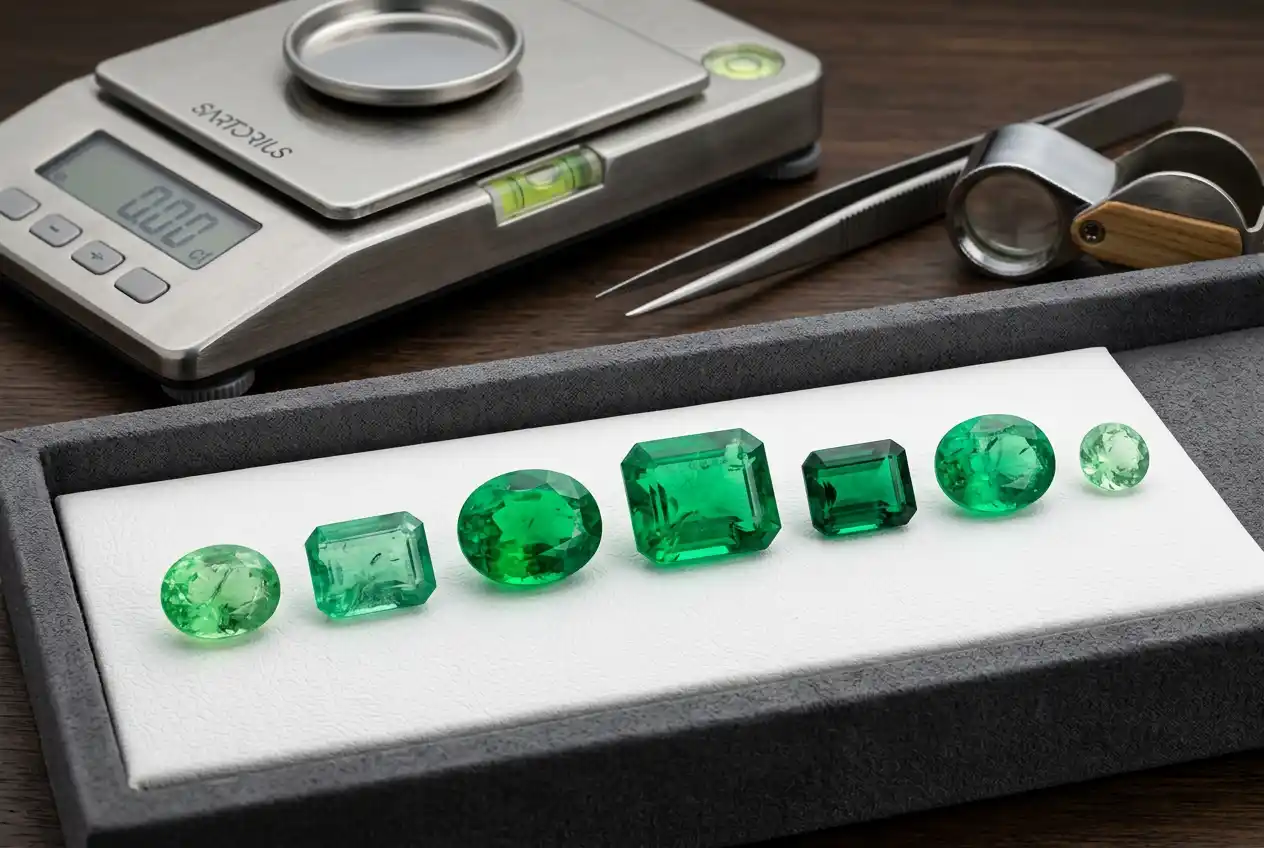
Emerald Price Per Carat: 10 Critical Cost & Rarity Factors
Emerald price per carat can range from a few hundred dollars for pale, heavily included commercial stones to several thousand dollars per carat for vivid, transparent gems with attractive cutting and limited enhancement. Fine natural emeralds with rich green color, good transparency, useful size, and desirable provenance can exceed $10,000 per carat, while exceptional large stones with outstanding color, minimal enhancement, strong laboratory documentation, and prestigious origin may move far beyond that level. The Price rises rapidly when several rare characteristics occur together because large clean emerald rough with fine saturation is exceptionally difficult to obtain.
Emerald is the green variety of beryl, Be₃Al₂Si₆O₁₈, colored principally by chromium, vanadium, or a combination of the two. It shares the beryl species with aquamarine and morganite but belongs to a very different value category because fine emerald combines unusual color with geological scarcity and challenging clarity. Natural stones commonly contain fissures, crystals, growth structures, and fluid inclusions collectively described in the trade as jardin, meaning garden. These inclusions are expected to a greater degree than they are in aquamarine, so emerald valuation does not reward microscopic perfection in the same way as diamond.
Treatment is one of the most important price variables. Many natural emeralds are clarity enhanced by introducing oil, resin, or another filler into surface-reaching fissures. Minor enhancement is widely encountered and can be accepted by the market, while moderate or significant filling generally lowers The Price compared with a visually similar stone requiring little or no enhancement. Buyers therefore need to judge color, clarity, cut, weight, origin, and treatment together rather than using carat size or country name as a shortcut.
10 Critical Factors Behind Emerald Price Per Carat
- Green hue, saturation, and overall color quality
- Tone and face-up brightness
- Transparency, clarity, and jardin character
- Degree and type of clarity enhancement
- Carat weight and rarity of larger fine stones
- Cut quality, proportions, and color retention
- Geographic origin and documented provenance
- Natural versus synthetic emerald identity
- Laboratory documentation and treatment disclosure
- Craftsmanship, condition, historical importance, and market demand
These ten factors interact continuously. A two-carat emerald with exceptional color and moderate inclusions can be worth more per carat than a cleaner but pale four-carat stone, while a heavily filled gem may trade at a substantial discount to a similar-looking emerald whose fissures contain only minor oil.
Typical Emerald Price Per Carat
Emerald does not have one universal retail schedule because individual stones vary dramatically in color, transparency, enhancement, origin, cut, and size. The following ranges are useful only as broad orientation for natural loose emeralds.
| Emerald Quality | Approximate Price Per Carat | Typical Characteristics |
|---|---|---|
| Commercial quality | $200 to $1,000 | Pale or dark color, obvious inclusions, stronger enhancement |
| Good jewelry quality | $1,000 to $4,000 | Attractive green, acceptable transparency, moderate inclusions |
| Fine quality | $4,000 to $10,000 | Strong saturation, good transparency, limited distracting inclusions |
| Exceptional quality | $10,000 to $30,000+ | Vivid green, fine transparency, limited enhancement, larger size |
| Rare collector emeralds | Highly variable and potentially much higher | Exceptional color, important size, minimal enhancement, prestigious provenance |
Finished jewelry can cost substantially more because precious metal, side diamonds, craftsmanship, designer attribution, historical importance, and retail positioning contribute to the total. An antique Colombian emerald ring, for example, cannot be valued accurately by multiplying the center stone’s weight by a simple loose-stone rate.
Color Is the Strongest Visible Driver of Emerald Value
Fine emerald should show a clearly recognizable green that is sufficiently saturated to appear rich without becoming excessively dark. Slightly bluish green through balanced green commonly receives strong market interest, while noticeably yellowish, grayish, or weak green usually lowers demand when all other factors are similar.
Color evaluation involves hue, saturation, and tone rather than one descriptive word. Hue identifies the basic green and any blue or yellow modifier, saturation measures strength, and tone describes lightness or darkness. A stone can possess strong saturation yet still appear too dark if the tone prevents enough light from returning through the crown.
The most valuable emeralds typically look vivid rather than merely dark. Their green remains compelling in ordinary indoor lighting and does not collapse into nearly black areas away from concentrated jewelry-store lamps.
Uneven color distribution can also matter. Some natural emeralds show zoning, but good cutting may orient the rough so the finished stone appears reasonably balanced. Strong pale areas or dark bands that disrupt the face generally reduce quality.
Tone Must Preserve Both Richness and Transparency
Emerald buyers sometimes assume that the deepest green stone is automatically the finest, but excessive darkness can hide transparency and make the gem appear lifeless. Very light stones have the opposite problem because their color may lack the saturation traditionally associated with emerald.
A medium to medium-dark tone often creates an attractive balance, although the ideal depends on hue, cut, size, and transparency. Larger stones may naturally appear deeper because light travels through more colored crystal.
Cut depth can influence this perception dramatically. A deep pavilion may concentrate color but hide unnecessary carat weight and create extinction, while a shallow cut can reduce saturation and produce a visible central window.
The finished face-up appearance therefore matters more than how dark the rough looked before cutting.
Emerald Clarity Requires Different Expectations From Many Other Gems
Natural emerald frequently contains internal features visible to the unaided eye. Fluid inclusions, mineral crystals, fissures, growth structures, and healed fractures are common enough that a completely clean large natural emerald deserves careful scrutiny rather than automatic celebration.
The traditional word jardin refers to the garden-like internal landscape often seen in emerald. A visually attractive jardin can support natural character, but inclusion abundance still affects value when it reduces transparency, brilliance, or durability.
Fine stones should preserve enough transparency for the color to look luminous rather than opaque. Small internal crystals or delicate growth features may have little negative effect, while broad fractures, dense clouds, or black inclusions under the table can lower value substantially.
Clarity also interacts with size. A minor inclusion may be tolerated more readily in a rare five-carat gem than in a one-carat stone because replacing the larger emerald with an equally colored cleaner example can be extremely difficult.
Clarity Enhancement Has a Direct Effect on The Price
Fissure filling is common in emerald because natural surface-reaching fractures can be visually prominent. Oils, resins, or similar substances can enter those fissures and reduce their visibility by decreasing the optical contrast between the fracture and the surrounding emerald.
Minor oiling is widely encountered and does not automatically make an emerald undesirable. The amount of enhancement matters greatly, however. A stone requiring only minor filling generally occupies a stronger value position than a comparable emerald with significant filled fissures.
Different fillers can also affect durability and future maintenance. Traditional oils may need renewed treatment over time, while polymer or resin fillers may behave differently under heat, chemicals, and cleaning.
An emerald should therefore be valued according to what is known about both the amount and type of enhancement. A vivid stone whose appearance depends heavily on extensive filling does not belong in the same rarity category as a similarly beautiful emerald requiring little treatment.
Carat Weight Creates Strong Premiums When Quality Remains High
Large natural emeralds do occur, but large transparent crystals with fine green color, manageable inclusions, and good cutting yield are much rarer than raw crystal size alone might suggest.
As finished weight rises, The Price per carat can increase sharply when color and transparency remain strong. A fine five-carat emerald may therefore be worth far more than five times the total value of a comparable-looking one-carat commercial stone.
Important weight thresholds can also influence demand. One, two, three, five, and ten carats carry psychological significance in high-end jewelry and collecting, particularly when the gem remains vivid and well proportioned.
Face-up dimensions still matter. A very deep emerald may retain extra weight beneath the girdle without producing a proportionate increase in visible size.
The best large stones combine substantial carat weight with a broad attractive face, rich color, manageable jardin, and structural integrity.
Emerald Cut Quality Is About Color, Durability, and Light Return
The rectangular step cut known as the emerald cut became closely associated with emerald partly because it can protect corners and accommodate elongated crystal shapes while displaying color through broad facets.
Emeralds are also cut as ovals, cushions, rounds, pears, and other forms. The best shape depends on rough geometry, inclusion placement, color zoning, fracture position, and desired weight retention.
Cutters often face more restrictions with emerald than with relatively clean quartz or aquamarine. Removing every inclusion could sacrifice excessive weight, while placing a major fissure near an exposed corner could create durability problems.
Windowing should still be minimized. A large transparent center weakens apparent color and reduces visual richness. Excessive extinction is also undesirable because dark areas can hide the color buyers are paying for.
Polish matters because a smooth surface supports luster, while chips and abrasions can indicate wear or structural weakness. Fine cutting therefore balances beauty with practical survival of valuable rough.
Colombian Emerald Origin Can Add a Major Premium
Colombia has one of the strongest historical reputations in the emerald market. Mines such as Muzo, Chivor, and Coscuez have produced celebrated gems, including richly saturated stones whose color and inclusion scenes have become central to emerald history.
A documented Colombian origin can add substantial value when the stone itself is fine. Origin should never replace quality, however. A pale, heavily fractured Colombian emerald can be worth less than a vivid, transparent stone from another country.
Zambia is another major source and is known for producing high-quality emeralds that often show attractive bluish-green hues and strong transparency. Brazil, Ethiopia, Afghanistan, Pakistan, and other regions have also produced important material.
Country of origin can influence market demand, but hue, saturation, transparency, treatment, size, and cutting remain essential. An origin premium is strongest when a respected laboratory supports the claim.
Zambian, Brazilian, Ethiopian, and Other Emeralds Can Be Exceptional
Zambian emeralds have become highly important in the international market and can achieve excellent saturation and transparency. Their color may lean slightly more toward bluish green than some classic Colombian stones, though individual gems vary greatly.
Brazil has produced emerald from several deposits, with a wide range of colors and clarity levels. Ethiopian production has also supplied striking material, sometimes with attractive vivid green color and distinctive inclusion patterns.
Afghanistan and Pakistan are known for collectible and fine emerald from difficult mountainous mining regions, and certain stones can display excellent color and transparency.
No origin should be treated as an automatic quality grade. The finest approach is to grade the visible emerald first, then use provenance as an additional rarity factor.
Synthetic Emerald Belongs to a Different Value Category
Synthetic emerald can be produced through hydrothermal or flux growth and may possess vivid green color, high transparency, and the same basic beryl crystal structure as natural emerald.
Because it is laboratory-grown, its rarity and market position differ substantially from natural emerald. A visually beautiful synthetic stone can therefore cost far less than a natural emerald of similar apparent color and clarity.
Synthetic emerald may contain characteristic growth features or inclusions that trained gemologists use for identification, but sophisticated examples can require laboratory equipment to separate confidently from natural stones.
Glass, composite stones, dyed beryl, and other green materials can also imitate emerald. Expensive purchases should therefore establish natural identity before origin or treatment premiums are considered.
Laboratory Reports Become Increasingly Important as Value Rises
A respected laboratory report can confirm natural versus synthetic identity and may comment on clarity enhancement and geographic origin when sufficient evidence exists.
Treatment terminology is especially important because an emerald described as having minor enhancement occupies a different rarity category from one showing significant filling.
Origin determination can add another layer of confidence when a seller is charging a substantial premium for Colombian, Zambian, or another geographic source.
The report does not determine beauty automatically. Two emeralds with similar laboratory descriptions can still differ in color distribution, transparency, cutting, and face-up appeal. Documentation should therefore support visual evaluation rather than replace it.
Emerald Durability Depends Heavily on the Individual Stone
Emerald has a Mohs hardness of about 7.5 to 8, which provides good scratch resistance, but natural fissures can reduce toughness substantially. A heavily fractured emerald can be far more vulnerable to impact than the hardness number suggests.
Protective settings are therefore sensible, especially for rings. Corners should be guarded, and significant fissures should not sit in highly exposed positions if they can be avoided.
Steam and ultrasonic cleaning can be risky because heat, vibration, and cleaning solutions may affect fillers or pre-existing fractures. Gentle cleaning with mild soap, lukewarm water, and a soft brush is generally safer.
Harsh solvents can also disturb certain oils or filling substances. Proper care preserves both physical integrity and the appearance created by clarity enhancement.
How to Compare Two Emeralds Before Buying
Begin with color under neutral lighting and determine which stone looks more vivid rather than simply darker. Compare saturation, tone, and any blue or yellow modifiers before considering origin labels.
Next examine transparency and jardin from normal viewing distance. Determine whether inclusions add natural character without overwhelming the gem or whether they create distracting clouds, fractures, and dark areas.
Then compare cutting, windowing, dimensions, and face-up spread. A smaller but better-proportioned stone can look substantially more impressive than a heavier deep-cut emerald.
Only after these visible characteristics should treatment level, laboratory report, origin, and The Price be used to complete the comparison. This keeps the gem itself at the center of the decision.
Conclusion
Emerald price per carat is determined by color, tone, transparency, jardin, clarity enhancement, size, cutting, origin, natural identity, laboratory documentation, and market demand. Commercial natural stones may cost hundreds of dollars per carat, while fine emeralds can reach several thousand dollars per carat and exceptional large gems with vivid color and limited enhancement can move far higher.
The most valuable emerald is not necessarily the cleanest or darkest stone. Fine quality depends on vivid green color, enough transparency for the gem to look luminous, manageable inclusions, suitable proportions, limited enhancement, and reliable identity. When those characteristics occur together in a larger natural emerald with strong provenance, scarcity can drive The Price into a completely different market tier.
FAQs About Emerald Price Per Carat
How much does emerald cost per carat?
Commercial natural emerald may cost a few hundred dollars per carat, while good jewelry-quality stones can reach roughly $1,000 to $4,000 per carat. Fine gems can move into several thousand dollars per carat, and exceptional larger emeralds with strong color and limited enhancement can exceed $10,000 per carat substantially.
Why are fine emeralds so expensive?
Fine emerald combines strong green color with a level of transparency that is difficult to obtain because natural crystals commonly contain inclusions and fissures. Large stones retaining vivid color, good transparency, and limited enhancement are especially scarce.
Is Colombian emerald always more expensive?
Colombian origin can create a meaningful premium because of historical reputation and collector demand, but the individual stone must still justify it. A fine Zambian, Ethiopian, Afghan, Pakistani, or Brazilian emerald can be worth more than a weak Colombian stone.
Does clarity matter as much in emerald as in diamond?
Clarity matters, but emerald is judged with different expectations because inclusions are common. Fine stones may contain visible jardin while still commanding high value if transparency and color remain strong.
Does oil treatment lower emerald value?
Minor oiling is widely encountered and often accepted. More extensive filling generally reduces value more significantly because a greater portion of the apparent clarity depends on enhancement.
Are untreated emeralds more valuable?
An untreated emerald with excellent natural clarity and strong color can command a major premium because such stones are rare. Untreated status alone does not make a pale or unattractive stone exceptional.
Does emerald become more expensive above one carat?
Fine stones can receive progressively stronger premiums as size increases because large transparent rough with vivid color is scarce. The premium becomes much greater when several carats are combined with high color quality and limited enhancement.
What emerald color is most valuable?
Rich, vivid green to slightly bluish green is generally highly desirable when saturation is strong and the stone remains bright rather than excessively dark. Exact preference depends on the individual gem and market.
Is a darker emerald always better?
No. Excessive darkness can hide transparency and reduce brilliance. A somewhat lighter vivid emerald can be more valuable than a dark stone that appears nearly black in ordinary lighting.
What does jardin mean in emerald?
Jardin is a traditional term describing the garden-like internal inclusions and fissures commonly seen in natural emerald. Attractive jardin can contribute to natural character, but heavy inclusions that reduce transparency still lower value.
Are synthetic emeralds real emeralds?
Synthetic emerald has the chemistry and crystal structure of beryl and can display emerald color, but it is laboratory-grown rather than geologically natural. It belongs to a different rarity and price category.
Does an emerald need a laboratory report?
A report is especially useful for high-value stones because natural identity, treatment level, and geographic origin can materially affect value. The report should supplement direct inspection of color and transparency.
Is emerald durable enough for an engagement ring?
Yes, but it requires more care than diamond or sapphire because natural fissures can reduce toughness. Protective settings and gentle cleaning are particularly important.
What makes an emerald collector quality?
Collector-quality emerald combines exceptional green color, strong transparency, significant size, attractive natural inclusions, limited enhancement, fine cutting, sound condition, and reliable provenance or laboratory documentation.
How should emerald prices be compared?
Compare stones with similar natural or synthetic identity, size, color, transparency, enhancement level, cut, origin documentation, and face-up dimensions. Carat weight alone is not enough for a meaningful comparison.