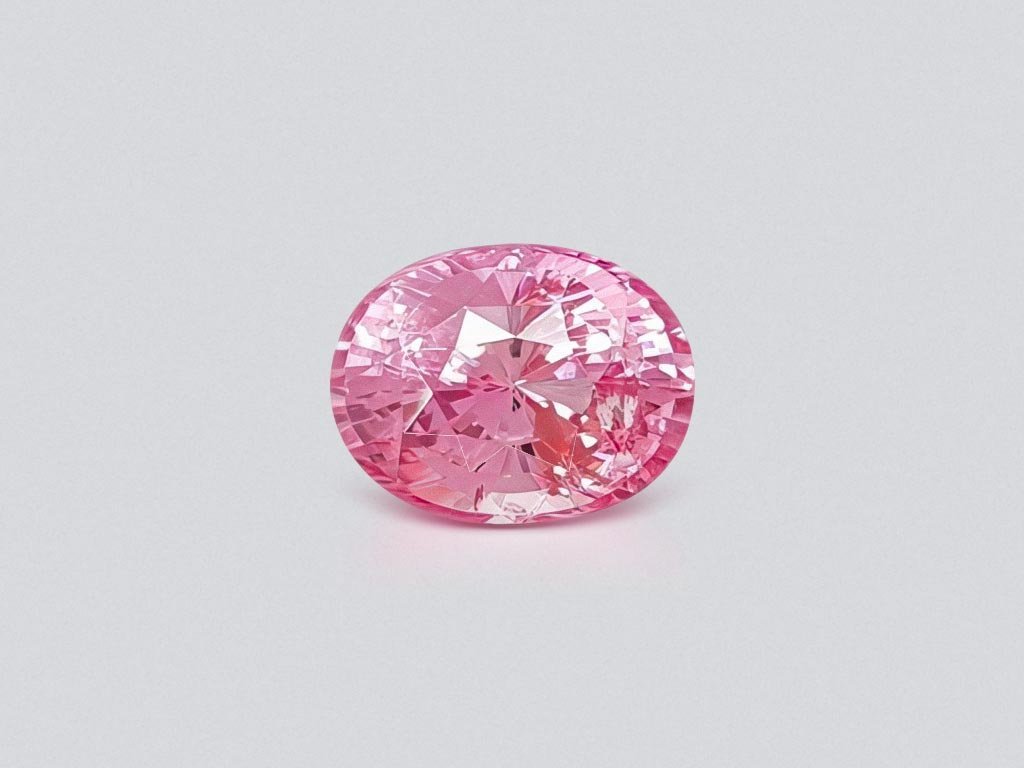
Padparadscha Sapphire Quality Grading: 9 Rules for Pink-Orange Balance
Padparadscha sapphire quality grading begins with one central question: does the gemstone show a convincing and harmonious combination of pink and orange within the accepted padparadscha range? Fine stones usually have a delicate but clearly visible pink-orange appearance, attractive brightness, good transparency, limited distracting inclusions, and cutting that distributes the color evenly across the face. The highest commercial grades also depend heavily on treatment status and reliable laboratory identification because a visually similar sapphire may not necessarily qualify for the padparadscha designation.
Padparadscha is a color variety of corundum, the same mineral species as ruby and other sapphires. The name is historically associated with a lotus-blossom color and is often explained through salmon or sunset comparisons, but these descriptions are not formal numerical grades. Major gemological laboratories use their own carefully defined criteria, and boundaries can differ in difficult cases. Stones that appear too pink, too orange, excessively brown, strongly yellow, red-dominant, too dark, or significantly uneven may be classified simply as sapphire rather than padparadscha.
A proper quality assessment must therefore separate three issues that are often mixed together: whether the gemstone is natural corundum, whether its color qualifies as padparadscha, and how fine the individual stone is within that category. Treatment is a fourth critical consideration. Conventional heat treatment is common and may still be accepted commercially, while certain diffusion treatments can materially change both nomenclature and value. An attractive grade should never be assigned from color photographs alone.
9 Rules for Grading Padparadscha Pink-Orange Balance
- Confirm a genuine pink-orange mixture: Both pink and orange should contribute meaningfully to the face-up appearance rather than one hue merely acting as a faint modifier.
- Avoid excessive hue dominance: Stones that look overwhelmingly pink, orange, yellow, red, or brown should be evaluated cautiously before applying the padparadscha name.
- Judge saturation carefully: Fine color should be distinct and lively without becoming unnaturally intense, muddy, or visually heavy.
- Evaluate tone and brightness: Medium-light to medium stones generally display the delicate padparadscha character more effectively than overly dark gems.
- Check color distribution: Strong zoning or separate pink and orange patches can reduce harmony compared with a well-integrated face-up blend.
- Assess clarity and transparency: Eye-clean appearance and strong light transmission are desirable, although minor natural inclusions are acceptable.
- Evaluate cut and orientation: Proportions should maximize brightness, minimize windowing and extinction, and present the best possible color mixture.
- Establish treatment status: Heated, unheated, diffusion-treated, synthetic, and otherwise modified stones should not be treated as equivalent quality categories.
- Require reliable identification for valuable stones: A respected laboratory report is important when the commercial designation and treatment status materially affect value.
A Practical Padparadscha Sapphire Quality Framework
Commercial grade labels vary considerably, so observing the gemstone itself provides more useful information than relying on terms such as AAA or premium. A practical framework should consider color first and then determine whether clarity, cutting, and treatment support the same quality level.
| Quality Level | Pink-Orange Color | Clarity and Cut | Treatment and Overall Character |
|---|---|---|---|
| Borderline or low commercial | Very pale, uneven, brownish, or dominated by one hue | Visible inclusions, weak cut, possible windowing | May not satisfy strict laboratory padparadscha criteria |
| Commercial | Recognizable pink-orange with moderate balance | Acceptable transparency and cutting | Often heated |
| Good | Attractive blend with pleasing brightness | Eye-clean or lightly included, good symmetry | Clear identification and disclosure |
| Fine | Harmonious pink-orange, strong but delicate saturation | High transparency, excellent cut and polish | Strong laboratory support |
| Exceptional | Rare balance, luminous color, excellent uniformity | Very clean appearance and superior cutting | Especially desirable when unheated and well documented |
No table can replace actual laboratory assessment for the varietal name. Its purpose is to show how quality generally progresses once a stone’s identity and treatment status have been established.
Pink and Orange Must Form One Coherent Face-Up Color
A fine padparadscha should not look like half a pink sapphire and half an orange sapphire. The most desirable stones usually present an integrated face-up impression in which both hues contribute to a coherent peach-pink, salmon, lotus-like, or sunset-like appearance.
Color zoning can complicate this judgment. Corundum may contain growth zones with different concentrations of coloring elements, and a cutter can sometimes orient the stone to blend those zones attractively. If zoning remains obvious face-up, the gem may appear patchy rather than harmonious.
Lighting can shift perception as well. Warm indoor illumination may emphasize orange, while cooler daylight can make pink more prominent. Quality should therefore be evaluated under neutral lighting and, ideally, more than one realistic light source.
Photographs require particular caution. Digital white balance, saturation, and background color can move a borderline sapphire toward an apparently perfect pink-orange blend. A high-value purchase should never depend exclusively on one edited image.
Saturation Should Be Strong Enough but Not Excessive
Many fine gemstones receive higher grades as saturation becomes stronger, but padparadscha requires more nuance. Its traditional appeal lies partly in a delicate balance rather than maximum intensity.
A washed-out stone may lack enough color to look distinctly padparadscha, particularly in smaller sizes. At the opposite extreme, a heavily saturated reddish orange or vivid hot pink-orange stone may fall outside the traditional range or appear less harmonious.
The best saturation makes both pink and orange obvious while preserving brightness. Color should look alive rather than chalky, muddy, or brownish.
Brown modifiers are generally undesirable because they reduce freshness, while excessive yellow can make the stone look more like orange or yellow sapphire. Strong red may shift the appearance toward pink sapphire or ruby-like color territory, depending on intensity and classification.
This is one reason laboratory interpretation matters. The boundary is not defined by a simple saturation number that buyers can apply independently.
Tone and Brightness Determine Whether the Color Looks Luminous
Tone describes how light or dark a gemstone appears. Fine padparadscha usually performs best at medium-light to medium tone because this range allows the mixed color to remain visible without sacrificing brightness.
Very pale stones can disappear against the skin or setting, particularly in small sizes. Their subtle color may still be attractive, but the commercial grade usually declines if the pink-orange character becomes difficult to see.
Overly dark stones can lose the soft luminous appearance associated with padparadscha. If the body becomes too deep, brown or red modifiers may become more apparent and brilliance can decrease.
Cutting and tone interact strongly. A deep pavilion can make an otherwise moderate-toned stone look darker, while a shallow windowed cut can weaken apparent color. The body color should therefore be judged together with proportions rather than as an isolated feature.
Clarity and Transparency in Fine Padparadscha Sapphire
Natural sapphire is not expected to be perfectly inclusion-free. Padparadscha can contain crystals, needles, fingerprints, healed fissures, growth zoning, and other features created during geological formation.
The key grading question is whether those inclusions interfere with transparency or visual beauty. An eye-clean stone with minor microscopic inclusions can receive a very high grade, while a heavily included gem may look cloudy even when its color is attractive.
Inclusions beneath the table generally have greater visual impact than similar features near the girdle. Large fractures can also create durability concerns, particularly if they reach the surface or extend near corners and points.
Fine transparency allows light to move effectively through the corundum, supporting brilliance and making the pink-orange color appear cleaner. A slightly included but transparent stone can therefore outperform a more heavily included sapphire whose body appears sleepy or hazy.
Some internal features can also provide evidence about natural origin and treatment to trained gemologists, so clarity grading should not encourage unrealistic expectations of microscopic perfection.
Cut Quality Determines How the Pink-Orange Balance Is Seen
Cutting plays a major role in padparadscha because color can be directionally dependent and unevenly distributed in the rough. Corundum is pleochroic, so different crystallographic directions may show different color components.
A skilled cutter chooses an orientation that produces the most attractive face-up blend while maintaining reasonable weight. This may require sacrificing portions of the rough that contain undesirable zoning or weaker color.
Windowing is particularly damaging in pale stones because it creates a transparent-looking center where color and brilliance weaken dramatically. Excessive depth can instead produce dark extinction and hide unnecessary weight below the girdle.
Fine stones should show balanced brightness through the center, good symmetry, a clean polish, and a face-up size appropriate to the carat weight. Ovals and cushions are common because they use rough efficiently, but shape itself is less important than how well the color and light performance have been managed.
A slightly asymmetrical shape can still be acceptable in an exceptionally rare stone if it preserves important weight and color, although high-end examples should generally display careful workmanship.
Heat Treatment Versus Unheated Quality
Heat treatment can improve sapphire color and clarity by modifying internal features and redistributing color-causing elements. Heated padparadscha can still be natural sapphire and can achieve excellent commercial quality.
Unheated stones receive stronger collector premiums because attractive natural color without heating is less common. A fine unheated gem therefore occupies a higher rarity category than an otherwise comparable heated stone.
The no-heat designation should not replace visual grading. An unheated stone that is too pale, heavily included, or poorly cut can still rank below a beautiful heated example in overall appearance.
For high-value stones, treatment status should be established through professional testing. Some heat-related features are subtle, and unsupported seller assumptions should not carry the same weight as a respected laboratory conclusion.
Diffusion, Synthetic Sapphire, and Other Identification Issues
Pink-orange color can be produced or modified through processes beyond conventional heating. Lattice diffusion, including treatment involving beryllium, has been used to create orange and related colors in sapphire.
These stones are not equivalent in rarity or market value to naturally colored padparadscha. Treatment may also affect whether a laboratory applies the padparadscha designation at all.
Synthetic sapphire adds another distinction. Laboratory-grown corundum can be produced in attractive pink-orange colors and can have excellent clarity. It is still sapphire chemically and crystallographically, but its artificial growth origin means it belongs to a different commercial category from natural padparadscha.
Imitations such as glass or other gemstones can reproduce the general color without sharing corundum’s properties. Correct identification should therefore occur before color grading becomes financially meaningful.
Origin Is Secondary to Color but Can Add Interest
Sri Lanka has the strongest historical association with padparadscha sapphire, and fine stones from the island can carry considerable prestige. Other deposits have produced pink-orange sapphires that may qualify for the name depending on their properties and laboratory interpretation.
A famous origin does not override poor color balance. A weak or brownish Sri Lankan sapphire is not automatically superior to a fine stone from another accepted source.
For collectors, provenance may matter more when the stone is unheated, historically documented, or associated with a noteworthy deposit. For ordinary fine jewelry, color, transparency, treatment, and cut usually remain more important.
Origin determination can itself be complex. Laboratories sometimes issue an inconclusive result when characteristics overlap between deposits, so buyers should avoid treating undocumented locality claims as guaranteed quality.
Laboratory Reports and Why Wording Matters
For valuable padparadscha, the exact wording on a laboratory report should be read carefully. A report may identify natural sapphire and separately state whether the color qualifies for the padparadscha variety name.
Treatment information is equally important. “No indications of heating” is different from a report confirming a treated stone, and diffusion-related findings can place the gemstone in an entirely different category.
Some laboratories may use different policies regarding color boundaries or treatment exclusions. This does not necessarily mean one report is wrong. Padparadscha classification contains an element of standardized expert color judgment, and borderline stones can produce differing conclusions.
When a purchase depends heavily on the padparadscha name, obtaining an additional respected opinion may be reasonable for particularly valuable stones. The more expensive the gemstone, the more important it becomes that the commercial description matches the laboratory evidence.
How to Grade Padparadscha Sapphire Before Buying
Begin with identity and treatment documentation. Confirm that the stone is natural corundum and determine whether a respected laboratory recognizes the padparadscha designation. Review any heat or diffusion information before comparing prices.
Then evaluate color under neutral lighting. Both pink and orange should be evident without one overwhelming the other, and the body should remain bright rather than brown, muddy, or excessively dark.
Rotate the stone to check zoning. Determine whether pink and orange remain reasonably integrated through normal viewing angles or whether separate patches dominate different parts of the gem.
Next inspect cut and clarity. Look for central windowing, excessive extinction, obvious fractures, asymmetry, and weak polish. A fine stone should make efficient use of rare color while still looking lively and well finished.
Only after these steps should commercial labels such as premium or AAA be considered, and even then they add little compared with the direct characteristics of the stone and the laboratory report.
Conclusion
Padparadscha sapphire quality grading depends on nine closely connected standards: pink-orange mixture, hue balance, saturation, tone, color distribution, clarity, cut, treatment status, and reliable identification. Fine stones display a luminous, harmonious blend rather than simply combining any pink sapphire with any orange modifier.
The highest grade is earned when attractive color, transparency, workmanship, and rarity occur together. Laboratory documentation is especially important because the padparadscha name itself carries financial value, and treatments or borderline color can materially change how a sapphire should be described.
FAQs About Padparadscha Sapphire Quality Grading
What color is considered the best padparadscha sapphire?
The most prized stones generally show a harmonious blend of pink and orange with attractive brightness and moderate saturation. Neither color should overwhelm the other, and strong brown, yellow, or red modifiers can reduce the classic appearance. There is no simple universal percentage defining the ideal blend.
Does padparadscha need to be exactly half pink and half orange?
No. Padparadscha is not defined by a literal 50/50 mixture. Gemological laboratories evaluate the overall face-up color within their accepted pink-orange range. A stone can lean somewhat toward pink or orange and still qualify, depending on saturation, tone, modifiers, and laboratory criteria.
What does AAA padparadscha sapphire mean?
AAA is a commercial seller grade rather than a universally standardized gemological category. Different merchants may use the term for different levels of color, clarity, treatment, and cut. A laboratory report and direct examination provide much more meaningful quality information.
Is unheated padparadscha the highest quality?
Unheated status creates an important rarity premium, especially in fine color, but it does not automatically guarantee the highest overall quality. A very pale or included unheated sapphire can be less attractive than a beautifully balanced heated stone. The strongest quality occurs when excellent appearance and unheated status coincide.
Can heated sapphire still be called padparadscha?
Conventional heat treatment does not necessarily prevent a natural sapphire from being described commercially or by some laboratories as padparadscha, provided the resulting stone meets the relevant criteria. Treatment should still be disclosed because it significantly affects rarity and price.
Why can laboratories disagree about padparadscha?
The accepted color range is narrow, and borderline stones may sit near the limits for hue, tone, saturation, zoning, or modifiers. Laboratories can also differ in specific nomenclature policies. For an expensive stone, the exact wording of the report is therefore more important than assuming every pink-orange sapphire will receive the same classification.
Is brownish pink-orange sapphire padparadscha?
Strong brown coloration generally works against the classic padparadscha appearance and may cause a stone to fall outside accepted laboratory criteria. A slight modifier may be interpreted differently depending on the overall color, but distinctly brownish stones should be approached cautiously when sold at a padparadscha premium.
Can synthetic sapphire look like padparadscha?
Yes. Laboratory-grown corundum can be manufactured in attractive pink-orange colors. Synthetic sapphire has the same basic mineral composition as natural corundum but an artificial growth origin, so it should be disclosed and valued separately from natural padparadscha sapphire.
Is Sri Lankan padparadscha always the best?
Sri Lanka has an important historical association with padparadscha, but origin alone does not determine quality. A fine gem from another source can be superior to a weak Sri Lankan stone. Color balance, transparency, cut, treatment status, and reliable documentation remain the primary grading considerations.