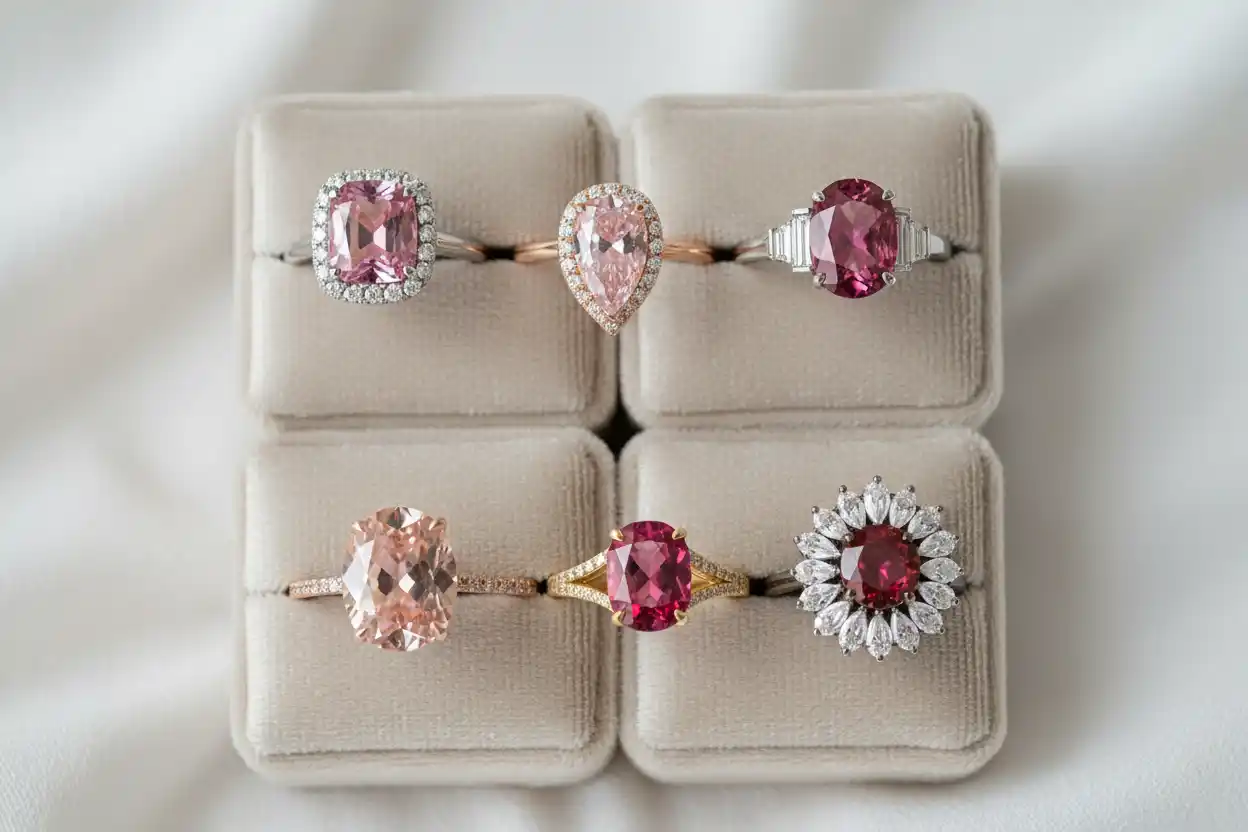
Pink Gemstones for Engagement Rings: Best Durable Choices
Pink engagement-ring stones range from exceptionally durable pink diamonds and sapphires to romantic but more care-intensive gems such as morganite, tourmaline, kunzite and pink opal. The right choice depends on more than color. Daily wear exposes a center stone to impact, abrasion, heat, cleaning products, repair work and repeated contact with hard surfaces.
For most wearers, pink sapphire and spinel provide the strongest balance of color, durability and practical maintenance. Pink diamond offers maximum hardness and rarity, while laboratory-grown diamond and sapphire can provide similar physical performance at different price points. Morganite offers larger pale-pink stones, whereas pink tourmaline and rhodolite garnet suit buyers willing to use protective settings and mindful wear.
This page owns the color-specific engagement-ring decision. The broader best gemstones for engagement rings guide compares durable stones across all colors, while the upcoming pink gemstones guide owns the complete pink material list and non-engagement uses.
Best Pink Engagement-Ring Stones at a Glance
| Pink gemstone | Mohs hardness | Daily-wear suitability | Typical color character | Important concern |
|---|---|---|---|---|
| Pink diamond | 10 | Excellent | Pale blush to vivid fancy pink | Very high natural-stone premiums; treatment and origin disclosure |
| Laboratory-grown pink diamond | 10 | Excellent | Pale to saturated pink | Manufacturing method and post-growth treatment disclosure |
| Pink sapphire | 9 | Excellent | Pastel pink to vivid magenta | Heat, diffusion and filling disclosures |
| Laboratory-grown pink sapphire | 9 | Excellent | Consistent light to vivid pink | Must be disclosed as laboratory-grown |
| Pink spinel | 8 | Very good | Pastel, rose, hot pink or neon-like | Natural versus synthetic identity |
| Morganite | 7.5–8 | Good with care | Peach, salmon, blush and rose | Pale color, windowing and possible heat treatment |
| Pink tourmaline or rubellite | 7–7.5 | Good with care | Soft pink to saturated pink-red | Inclusions, thermal shock and treatment disclosure |
| Rhodolite garnet | About 7–7.5 | Good with care | Raspberry, rose-purple and pink-red | Dark tone and variable garnet properties |
| Pink topaz | 8 | Conditional | Pale rose to vivid pink | Perfect cleavage and treatment history |
| Kunzite | 6.5–7 | Occasional wear | Pale pink to violetish pink | Poor toughness, cleavage and light fading |
| Rose quartz | 7 | Occasional or protective use | Translucent pale to medium pink | Surface wear, limited transparency and low brilliance |
| Pink opal | About 5–6.5 | Occasional wear | Soft opaque to translucent pink | Scratching, drying, crazing and treatment |
| Rhodochrosite | About 3.5–4 | Not recommended for daily wear | Banded pink to red-pink | Very soft and easily damaged |
Mohs hardness is only one durability factor. Toughness, cleavage, inclusions, treatment, setting design and the wearer’s routine can matter just as much. The gemstone hardness chart explains scratch resistance, while gemstone toughness versus hardness explains impact and fracture risk.
1. Pink Diamond
Natural pink diamond offers the highest scratch resistance in the group and can withstand long-term daily wear when properly cut and set. Its color may range from faint blush through purplish pink, orangy pink and intense saturated pink.
Color is the dominant value factor in fancy-color diamonds. Cutters may use radiant, cushion, pear and other shapes that retain color rather than maximizing the bright return expected from a colorless round brilliant.
Natural pink diamonds can be exceptionally expensive, particularly when saturation, size, clarity and documentation align. A buyer should not assume that every pink diamond is natural-color and untreated.
The diamond engagement-ring guide owns diamond-specific cut, setting and report decisions. The types of diamond guide explains fancy-color categories and natural, treated and laboratory-grown distinctions.
Laboratory-Grown Pink Diamond
Laboratory-grown pink diamond has essentially the same crystal structure and hardness as natural diamond. Pink color may result from growth conditions, post-growth treatment or both.
The principal distinction is origin, not basic diamond identity. Sellers must clearly disclose laboratory growth and any relevant treatment.
The lab-diamond engagement-ring guide covers manufacturing, grading and value considerations. The broader lab-grown versus natural gemstones guide explains why laboratory-grown, imitation and treated are separate terms.
A laboratory-grown pink diamond can be a practical choice for a wearer who wants saturated color and diamond durability without requiring natural rarity.
2. Pink Sapphire
Pink sapphire is the most balanced natural colored-stone option for many engagement rings. As corundum, it ranks 9 on the Mohs scale and resists scratching better than most alternatives.
The color range includes pale baby pink, rose, hot pink, purplish pink and orangy pink. Stones with enough red saturation may be classified as ruby rather than pink sapphire, and the boundary can vary among laboratories and markets.
Sapphire can be heat-treated, diffusion-treated, fracture-filled or produced synthetically. Heat treatment is widely accepted when disclosed, while diffusion and filling require closer attention to durability and price.
The sapphire engagement-ring guide owns setting and style choices. The sapphire buying guide covers color, clarity, cut and origin, while the treated sapphire guide owns enhancement and synthetic boundaries.
Pink sapphire is well suited to solitaires, halos, three-stone rings and low bezels. It is the strongest choice for someone who wants a natural pink gemstone, frequent wear and a broad design range without entering the natural pink-diamond market.
3. Pink Spinel
Pink spinel ranks 8 on the Mohs scale and generally has good durability for daily jewelry. Fine examples range from delicate pastel pink to vivid hot pink and neon-like shades.
Spinel is singly refractive, which can produce crisp brilliance. Eye-clean material is available, though inclusions and cut quality still affect appearance.
The market also contains synthetic spinel, so identity disclosure matters. A laboratory report is useful when the stone is important, unusually vivid or priced as rare natural material.
The spinel meaning guide provides the material profile, while the spinel buying guide covers color, clarity, cut and documentation.
Pink spinel is especially attractive for buyers who want durability close to sapphire, strong brilliance and a gem that remains less conventional than diamond or corundum.
4. Morganite
Morganite is the peach-to-pink member of the beryl family. Its hardness of approximately 7.5–8 supports regular wear, although it does not resist abrasion as well as sapphire or diamond.
Fine color is often pale, and larger stones may show the hue better than small ones. Peach, salmon and champagne modifiers are common, while pure pink material can be more desirable.
Morganite is frequently cut in large ovals, cushions, pears and emerald cuts. Windowing can become obvious in pale gems, especially when skin shows through the center.
The morganite engagement-ring guide owns its ring-specific settings and styling. The morganite buying guide covers color and cutting, while the treated morganite guide explains heating, irradiation concerns and disclosure.
Morganite is best for a wearer who prefers a large, soft blush stone and accepts more frequent cleaning and occasional repolishing than a sapphire would require.
5. Pink Tourmaline and Rubellite
Pink tourmaline ranges from pale blush to saturated pink. Rubellite describes strongly saturated pink-red to red tourmaline that remains attractive across different light sources.
Tourmaline ranks approximately 7–7.5 and has fair toughness. It can work in an engagement ring when the stone is protected from hard knocks and sudden temperature changes.
Elongated tourmaline crystals often yield oval, emerald, rectangular and pear cuts. Pleochroism can create different color intensities along different viewing directions, so orientation matters.
The pink tourmaline guide owns the variety’s identity and symbolism. Buyers considering richer color can compare the rubellite guide and use the rubellite buying guide for saturation, inclusions and treatment questions.
A bezel, protective halo or substantial multi-prong setting is preferable for daily wear. Very included stones or thin exposed corners are better reserved for less demanding jewelry.
6. Rhodolite Garnet
Rhodolite is a purplish-red to pink-red garnet variety associated with pyrope and almandine composition. Raspberry and rose-purple stones can create a richer pink engagement-ring appearance than pale morganite.
Garnet hardness varies by species and composition, with rhodolite commonly suitable for jewelry at about 7–7.5 Mohs. It generally lacks cleavage, although sharp impacts can still chip a stone.
Dark tone is the main visual risk. A deep rhodolite may look lively under spotlights but nearly black in dim indoor conditions. Cut and pavilion depth strongly affect face-up brightness.
The rhodolite garnet guide covers identity and color. The rhodolite buying guide owns detailed purchasing criteria.
Rhodolite suits buyers who prefer raspberry, wine or magenta-pink color and want a natural gem that is often more accessible than sapphire or spinel.
7. Pink Topaz
Topaz ranks 8 on the Mohs scale, yet it has perfect cleavage. A sharp blow in the wrong direction can split or chip the gem despite its respectable hardness.
Natural pink topaz exists, but color may also be produced or modified by treatment. Seller disclosure and laboratory documentation become important when strong pink color carries a premium.
Pink topaz can provide high clarity, large sizes and bright cutting. It should be mounted in a protective design and worn by someone willing to remove the ring during hands-on work.
The broader topaz guide provides the material background, while the treated topaz guide owns irradiation, heating, coatings and other disclosure issues.
Topaz is a conditional engagement-ring choice rather than a leading daily-wear recommendation. A low bezel or halo is safer than an exposed high solitaire.
8. Kunzite
Kunzite is the pink to violetish-pink variety of spodumene. It can show attractive size, clarity and pleochroic color, but its durability limitations are significant.
The gem ranks approximately 6.5–7, has poor toughness because of cleavage and may fade with prolonged intense light or heat. These traits make it poorly suited to uninterrupted daily engagement-ring wear.
The kunzite ring guide covers setting and maintenance, while the kunzite buying guide explains color orientation and value.
Kunzite is better for an occasional engagement ring, anniversary ring or symbolic ring worn selectively. A protective bezel and careful storage away from strong light reduce risk but cannot eliminate it.
9. Rose Quartz
Rose quartz offers a soft, recognizable pink at an accessible price. Most material is translucent rather than transparent, so it produces a glowing cabochon or softly faceted appearance instead of high brilliance.
Its Mohs hardness of 7 is workable for jewelry, but repeated daily abrasion can dull facet edges and polish. Surface-reaching fractures and low-quality settings add further risk.
The rose quartz ring guide owns its ring styles and care concerns.
Rose quartz can suit a wearer who values symbolism, prefers an opaque or translucent center and accepts periodic repolishing or replacement. A substantial bezel is preferable to a thin exposed setting.
10. Pink Opal
Pink opal has a soft opaque to translucent appearance, usually without the play-of-color associated with precious opal. Its delicate visual character can make a highly personal ring.
Physical durability is the limiting factor. Opal is softer than most leading engagement stones and can scratch, chip, craze or respond poorly to dehydration and abrupt environmental changes.
The pink opal guide covers the material’s identity and symbolism.
A pink-opal engagement ring should be treated as occasional or carefully managed jewelry. A full bezel, low profile and readiness for future replacement are practical requirements.
Stones Better Reserved for Occasional Rings
Rhodochrosite, mangano calcite, coral, pearl and many soft ornamental materials can be beautiful in pink rings, but they are not strong candidates for continuous engagement-ring wear.
Rhodochrosite and calcite scratch easily. Pearl and coral are organic gems with low hardness and sensitivity to chemicals. These materials can work in heirloom-inspired or ceremonial rings when the wearer understands that regular maintenance and eventual replacement may be necessary.
An engagement ring does not need to be worn during every activity. Still, a stone that requires constant anxiety may be better moved to a pendant or earrings.
Natural, Laboratory-Grown, Treated and Imitation
These terms describe different product categories.
A natural gemstone formed without human manufacture, although it may later be treated. A laboratory-grown gemstone has essentially the same core chemical, physical and optical properties as its natural counterpart but formed through a manufacturing process.
A treated gemstone is natural or laboratory-grown material whose appearance has been altered. An imitation resembles another gem without sharing its identity.
The gemstone treatments guide explains heating, diffusion, filling, irradiation and coating. Sellers should disclose treatments that affect value, permanence or special-care requirements.
Choosing Color
Pink covers a wide range. Cool pinks may lean purple or blue, while warm pinks include peach, salmon and orangy modifiers. Rose gold can intensify warmth; platinum and white gold create cooler contrast.
Judge the stone under daylight, neutral indoor light and warm evening lighting. Some gems become browner, grayer or darker away from showroom spotlights.
A very pale stone may blend into skin or rose gold. A vivid gem creates more contrast but may carry a premium or reveal extinction if cut too deeply.
Color preference should be established before carat weight. A smaller stone with strong, stable face-up color usually provides more satisfaction than a larger gem selected only for size.
Cut, Windowing and Face-Up Size
Pale pink stones reveal windowing readily. If the pavilion is too shallow, the wearer may see skin or the ring setting through a transparent central area.
Deeper cutting can strengthen color but may hide weight beneath the setting. The stone then costs more by carat without appearing proportionally larger.
The carat-versus-millimeter size chart helps compare visual dimensions across gems with different densities.
Cushions, ovals and radiants often intensify pink color. Emerald cuts emphasize clarity and color zoning. Pears and marquises create length but require protection at their points.
Setting Protection
A bezel offers the greatest edge coverage and works especially well for morganite, tourmaline, topaz, kunzite, rose quartz and opal.
Halos provide visual size and can intercept some side impact. They do not make a fragile center indestructible, and their small prongs create additional maintenance.
Six-prong settings provide redundancy for rounds and ovals. V-prongs should protect pear and marquise points. A low basket reduces snagging and impact.
Tension settings are poor choices for cleavage-prone, highly included or fragile colored stones. The setting must be designed around the individual gem rather than adapted from a standard diamond head without review.
Metal Choices
Platinum and white gold make cool and vivid pinks appear crisp. Yellow gold creates a warm contrast, particularly with magenta sapphire, spinel and tourmaline.
Rose gold blends with peach morganite and blush stones, creating a unified romantic palette. However, very pale centers may disappear into the metal.
A white-metal basket can be paired with a rose- or yellow-gold shank to prevent warm reflection through a transparent stone.
Metal allergies, maintenance, shank thickness and the strength required by the setting matter more than color coordination alone.
Treatment Disclosure and Reports
Treatment has different implications across the pink-gem market. Sapphire may be heated or diffusion-treated; emerald-family morganite may be heated; diamond color may be natural, treated or growth-related; topaz may receive irradiation, heating or coating; opal may be dyed, impregnated or assembled.
A reputable seller should state what is known and avoid presenting silence as proof of untreated status.
The gemstone certification guide explains report providers and limitations. A report is particularly valuable for pink diamond, fine sapphire, spinel, natural-color topaz and any stone whose natural or laboratory-grown origin materially affects price.
A laboratory report identifies the gemstone and may disclose detectable treatment. It does not guarantee good cutting, durable mounting or fair retail price.
Buying Online
Request images and video of the exact ring under more than one light source. Product media should show the profile, prongs, gallery, shank and any inclusions visible at normal viewing distance.
The listing should identify the gemstone, natural or laboratory-grown origin, known treatment, dimensions, carat weight, metal fineness, ring size, resizing limitations and return period.
The online gemstone buying guide provides transaction safeguards. Independent inspection should fit within the return window.
Do not rely on unexplained grades such as “AAA,” “premium pink” or “investment quality.” Colored gemstones do not share one universal retail grading system.
Matching the Stone to the Wearer
Someone who rarely removes a ring should prioritize pink diamond, sapphire or spinel. A careful wearer who accepts periodic maintenance can consider morganite, tourmaline or rhodolite.
Kunzite, pink opal and rose quartz are better for selective wear or for owners comfortable with repair and eventual replacement.
Lifestyle questions are more useful than asking which stone is “best” in isolation. Consider occupation, exercise, cooking, childcare, travel, cleaning habits and whether the wearer is willing to use a ring dish consistently.
The ideal ring is durable enough for its real routine, not an imagined routine created at the jewelry counter.
Frequently Asked Questions
1. What is the best pink gemstone for an engagement ring?
Pink sapphire is the strongest all-around colored-stone choice for durability, color range and daily wear. Pink diamond and spinel are also excellent options.
2. Is morganite durable enough for daily wear?
Morganite can be worn regularly with a protective setting and mindful habits. It will show abrasion sooner than sapphire or diamond and may need more maintenance.
3. Is pink tourmaline good for an engagement ring?
Yes, with care. Choose a well-cut stone without durability-threatening fractures and protect it with a bezel, halo or substantial prongs.
4. Is pink spinel better than pink sapphire?
Neither is universally better. Sapphire is harder, while spinel can offer excellent brilliance and distinctive color. Price, treatment and availability vary by stone.
5. Are laboratory-grown pink diamonds real diamonds?
They are diamonds with essentially the same crystal structure and hardness as natural diamonds, but they formed through a manufacturing process that must be disclosed.
6. Can kunzite be used in an engagement ring?
It can be used for occasional wear, but cleavage, poor toughness and possible light fading make it a weak choice for nonstop daily wear.
7. Is rose quartz too soft for an engagement ring?
Its hardness of 7 is workable, but it is generally less brilliant and more prone to surface wear than leading engagement stones. A bezel and realistic replacement expectations help.
8. Is pink opal suitable for daily wear?
Not ideally. It is softer and more environmentally sensitive than sapphire, spinel or diamond, so it is better for occasional or carefully managed wear.
9. Which pink gemstone gives the largest look for the budget?
Morganite, rose quartz and some garnets can provide larger face-up sizes than fine pink sapphire or natural pink diamond. Cut quality and durability should still lead the decision.
10. Do pink sapphires need laboratory reports?
A report is worthwhile for a costly stone, an important origin claim, an untreated premium or uncertainty about treatment and laboratory-grown material.
11. Which metal looks best with pink gemstones?
Rose gold emphasizes warmth, white metals create crisp contrast and yellow gold creates a richer vintage effect. The individual stone’s undertone should guide the choice.
12. How often should a pink gemstone engagement ring be inspected?
Inspect it after any hard impact and whenever a prong catches or the stone moves. Frequently worn valuable rings benefit from regular professional checks, often around once a year.
A pink engagement ring succeeds when color and lifestyle are evaluated together. Sapphire, spinel and diamond tolerate the widest range of daily routines; morganite, tourmaline and rhodolite reward more deliberate care; kunzite, rose quartz and pink opal require a wearer who accepts their limitations. Choosing the stone by its actual behavior—not only by a romantic photograph—creates a ring that can remain meaningful after the proposal and practical through years of wear.