Morganite Healing Properties: 9 Claims, Beryl Facts & Safe Use
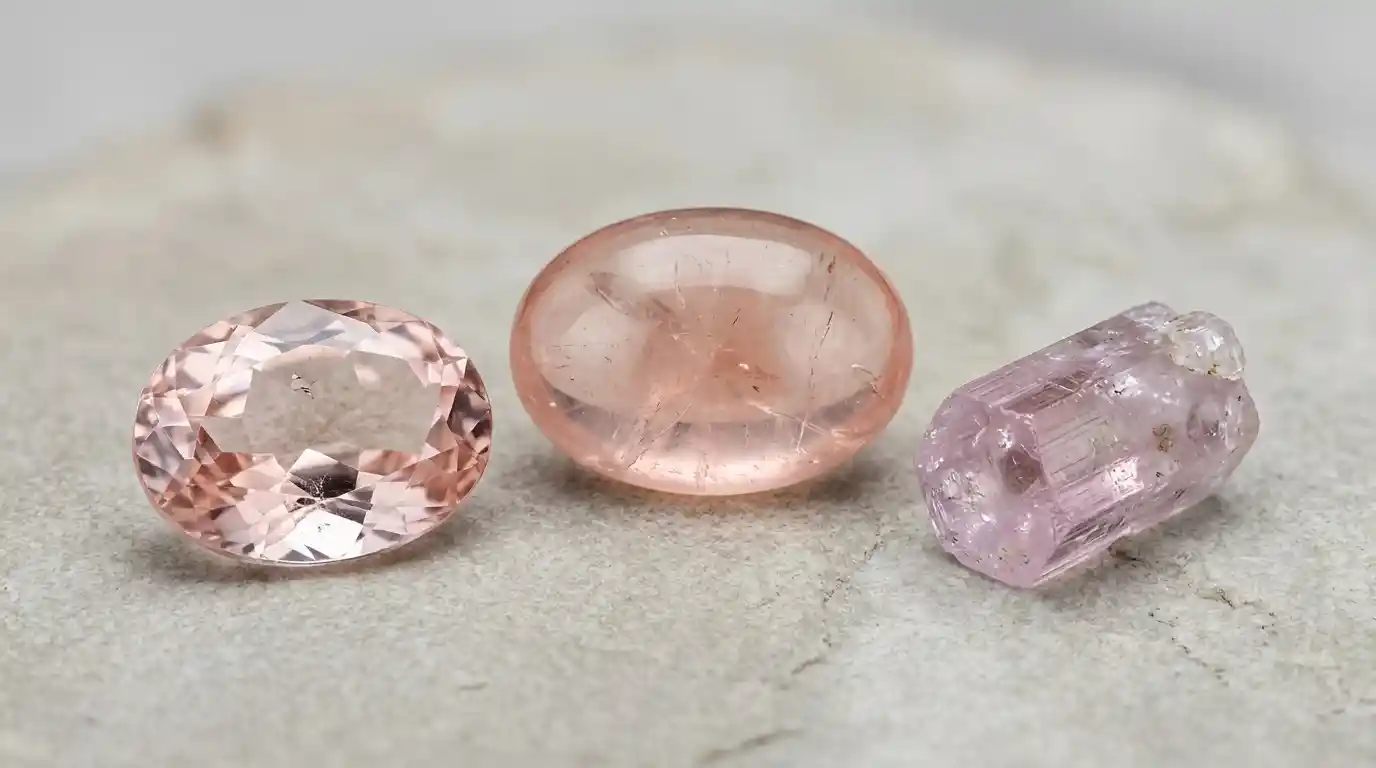
Morganite healing properties are commonly associated with compassion, emotional calm, self-acceptance, relationship awareness, confidence, forgiveness, resilience, optimism, and spiritual reflection. Its pastel pink, rose, peach, and salmon colors make themes of tenderness and affection visually intuitive, but color does not establish a therapeutic mechanism. Morganite has not been demonstrated to treat anxiety, depression, trauma, cardiovascular disease, hormonal disorders, infertility, pain, sleep problems, or another medical condition, and wearing pink beryl does not alter emotional chemistry through gemstone energy. Scientifically, Morganite is the pink to orangey-pink variety of beryl, Be₃Al₂Si₆O₁₈, the same mineral species that also includes emerald and aquamarine. It crystallizes in the hexagonal system, measures about Mohs 7.5 to 8, has generally poor or indistinct cleavage, and is durable enough for many jewelry uses when protected from hard impacts and excessive heat.
9 Morganite Healing Claims
- Compassion toward oneself and others
- Emotional calm during stressful periods
- Self-acceptance and kinder self-reflection
- Relationship awareness and communication
- Confidence during emotionally difficult situations
- Forgiveness without ignoring boundaries
- Resilience after disappointment
- Optimism during personal change
- Spiritual reflection on love and values
These nine themes can support distinct reflective practices without becoming nine scientifically verified effects. Many Morganite benefits become more useful when translated into actions such as preparing for a difficult conversation, challenging harsh self-talk, identifying a boundary, or deliberately choosing a calmer response.
Morganite Mineral Facts
Morganite is a variety of beryl with the formula Be₃Al₂Si₆O₁₈. The beryl structure consists of rings of silicate tetrahedra arranged around channels that can contain small quantities of water molecules, alkali elements, or other constituents. These channel occupants can vary between specimens, but Morganite remains beryl mineralogically.
The mineral crystallizes in the hexagonal system and can form attractive six-sided prismatic crystals. Morganite crystals are often somewhat flatter than aquamarine crystals, and transparent rough can grow large enough to produce substantial faceted gemstones.
Color ranges from delicate pale pink to rose, purplish pink, peach, and salmon. Manganese is responsible for the characteristic pink coloration. Strongly saturated natural color is less common, which is why larger stones can sometimes show richer color than small gems.
Some Morganite can also contain substantial cesium and other alkali elements in structural channels. These compositional details interest mineralogists and gemologists but do not create healing effects.
Luster is vitreous, and faceted stones are commonly transparent. Eye-visible inclusions are often limited in fine gem Morganite, although liquid inclusions, gas bubbles, solid phases, fractures, and other internal features can occur.
Morganite has Mohs hardness around 7.5 to 8. This gives it considerably better scratch resistance than calcite, fluorite, feldspar, opal, and quartz. Its cleavage is poor or indistinct, while fracture is commonly conchoidal to uneven. The stone is reasonably durable but can still chip or fracture from a strong blow.
Morganite Discovery and Name
Morganite is a modern gemstone variety rather than a gem with a documented ancient identity under this name. Pink beryl from Madagascar drew significant gemological attention around 1910, when George Frederick Kunz examined notable specimens.
The variety was named Morganite in honor of American financier and gem collector John Pierpont Morgan. The name entered mineralogical literature in 1911 and quickly became established in the gemstone trade.
Madagascar was central to Morganite’s early recognition, but important deposits were later found elsewhere. Brazil, particularly Minas Gerais, became one of the most significant commercial sources, while Mozambique, Afghanistan, China, Russia, and the United States have also produced notable stones.
Morganite forms mainly in evolved granitic pegmatites. These coarse-grained igneous bodies can concentrate beryllium, lithium, cesium, boron, fluorine, and other elements during the late stages of magma crystallization. Beryl may grow alongside quartz, feldspar, tourmaline, spodumene, mica, and other pegmatite minerals.
Because Morganite’s named identity dates from the twentieth century, modern healing and chakra claims should not be presented as an ancient Morganite tradition.
Compassion and Emotional Calm
Compassion Through Perspective
Morganite is frequently described as a compassion stone because of its soft pink color. The gem does not biologically increase empathy. A practical ritual is to use it as a reminder to consider another person’s perspective while also evaluating whether their behavior is respectful and whether boundaries are needed.
Calm Through a Pause
Some practitioners describe Morganite as soothing or emotionally calming. The stone has not been shown to alter stress hormones or neurotransmitters. A more useful approach is to let the gemstone signal a deliberate pause before responding, especially during conflict or emotional intensity. Slowing the breathing and identifying what actually needs attention provides the practical mechanism.
Self-Acceptance and Relationships
Self-Acceptance Through Fairer Thinking
Morganite is often included in self-love practices. Wearing pink beryl cannot directly change self-esteem, but it can become a cue to notice harsh internal language. Replace sweeping criticism with a specific description of what happened, what was handled well, and what should change next time.
Relationship Awareness
Morganite’s romantic color naturally leads to relationship symbolism. It cannot make another person loyal, affectionate, compatible, or emotionally available. A grounded reflection looks instead at repeated behavior. Are expectations communicated clearly? Are promises followed by action? Are disagreements handled respectfully? Those patterns provide meaningful evidence.
Confidence and Forgiveness
Confidence in Emotional Conversations
Morganite is sometimes associated with speaking vulnerably while remaining composed. It does not biologically create confidence. Before a difficult conversation, use it as a reminder to identify the main point, rehearse the opening sentence, and decide what outcome is realistic. Preparation provides a stronger basis for confidence.
Forgiveness With Boundaries
Modern crystal traditions frequently connect Morganite with forgiveness. A gemstone cannot remove resentment or erase harmful experiences. Forgiveness also does not require reconciliation. A useful practice is to decide what emotional burden you no longer want to rehearse while separately maintaining any boundary that protects your well-being.
Resilience and Optimism
Resilience After Disappointment
Morganite is sometimes promoted for heartbreak and emotional recovery. It cannot heal grief or trauma through mineral energy. After disappointment, use the gem as a cue to identify what cannot be changed, what remains under personal control, and what support or action would be constructive now.
Optimism During Change
The light pink and peach palette often inspires themes of hope. Morganite cannot guarantee favorable outcomes. A more grounded optimism exercise is to identify one genuine difficulty, one reason progress is still possible, and one action that would improve the probability of a better outcome.
Spiritual Reflection
The ninth common claim involves spiritual reflection on love, compassion, gratitude, and personal values. Someone may use Morganite during prayer, meditation, or quiet contemplation and find the color or gemstone personally meaningful.
There is no evidence that Morganite transmits love energy, opens supernatural awareness, or changes consciousness through beryl chemistry. The useful part of the practice comes from sustained attention to values and behavior.
Morganite Chakra Meaning
Morganite is most commonly associated with the heart chakra in contemporary crystal systems because of its pink coloration. Typical themes include compassion, affection, forgiveness, emotional openness, relationships, and self-acceptance.
Chakras are a spiritual framework rather than anatomical structures. Morganite has not been demonstrated to affect the physical heart, circulation, lungs, endocrine glands, nervous system, or another organ through chakra placement.
Its manganese content also does not create a nutritional or medicinal effect through normal skin contact.
Morganite Treatments and Color
Heat treatment is routine in the Morganite market. It is commonly used to reduce yellow or orange components and leave a purer pink color. The resulting treated pink is considered stable to ordinary light.
This matters because treatment does not make a stone fake. Natural Morganite can be heated and still remain natural beryl. Buyers who care about untreated peach or salmon tones should ask for clear disclosure, particularly because treatment can alter the visual character that collectors value.
Synthetic Morganite also exists, although it is not produced commercially on the scale of synthetic sapphire or other common laboratory-grown gems. Professional gemological testing can separate natural and synthetic stones when identification matters.
The workbook-verified buy Morganite topic focuses on color, clarity, cutting, treatment, and other quality checks without confusing value with healing claims.
Morganite Care and Safety
Morganite’s Mohs hardness of 7.5 to 8 makes it suitable for rings, pendants, earrings, and other jewelry, but hardness does not mean immunity from damage. Hard knocks can still fracture the gem, especially when internal fractures or liquid inclusions are present.
Warm water with mild soap is the safest routine cleaning method. A soft brush can be used gently around settings, followed by careful rinsing and drying.
Ultrasonic and steam cleaning are often acceptable for sound untreated Morganite, but they should be avoided when a stone contains fractures, significant liquid inclusions, or fracture filling. Warm soapy water is the more conservative default when treatment history is uncertain.
Strong heat exposure is not recommended. Although Morganite’s color is stable to ordinary light, excessive heat can affect some stones or treatments. Hydrofluoric acid attacks beryl and is extremely hazardous, so it should never be used in gemstone care.
Ordinary handling of finished Morganite is appropriate, but cutting, grinding, or drilling beryl creates mineral dust containing beryllium-bearing particles. Lapidary work should use wet methods, effective extraction, eye protection, and suitable respiratory controls. Morganite should never be intentionally powdered or ingested for wellness purposes.
Safe Ritual Cleansing
Morganite does not need water immersion, salt, heat, or chemicals for ritual cleansing. There is no scientifically demonstrated unwanted energy that must be physically removed from the gemstone.
Sound, intentional breathing, quiet reflection, or dry placement on a clean cloth are low-risk approaches. A heart-centered ritual can be made practical by choosing one compassionate action, one honest conversation, or one boundary to maintain consistently.
Avoid flame, extreme heat, abrasive salt, harsh chemicals, and unnecessary soaking. Gentle symbolic practices preserve the gemstone while keeping spirituality separate from unsupported therapeutic claims.
Conclusion
Morganite is a durable pink variety of beryl with manganese-driven color, a modern Madagascar discovery history, and strong appeal in jewelry. Its nine healing themes can still support compassion, communication, confidence, forgiveness, resilience, and optimism when the meaningful work comes from personal reflection and behavior rather than an unproven property of the gemstone.
FAQs
What are the main Morganite healing properties?
Common claims include compassion, emotional calm, self-acceptance, relationship awareness, confidence, forgiveness, resilience, optimism, and spiritual reflection. These are contemporary wellness beliefs rather than scientifically proven therapeutic effects.
What is Morganite made of?
Morganite is pink to orangey-pink beryl with the formula Be₃Al₂Si₆O₁₈.
What gives Morganite its pink color?
Trace manganese is responsible for Morganite’s pink, rose, peach, and salmon coloration.
How hard is Morganite?
Morganite measures about Mohs 7.5 to 8, making it durable enough for many types of everyday jewelry when protected from hard knocks.
Does Morganite have ancient healing traditions?
Morganite was recognized and named as a pink beryl variety in the early twentieth century. Its present-day healing and chakra associations are therefore modern rather than ancient Morganite traditions.
Is Morganite commonly heat treated?
Yes. Heat treatment is routinely used to reduce orange or yellow tones and produce a purer pink. The resulting color is generally stable.
Which chakra is Morganite associated with?
Modern crystal practice most commonly associates Morganite with the heart chakra. This is a spiritual correspondence rather than an anatomical effect.
Can Morganite go in water?
Yes. Warm soapy water is considered a safe routine cleaning method for Morganite. Avoid unnecessary exposure to harsh chemicals or excessive heat.
Can Morganite be cleaned ultrasonically?
Ultrasonic cleaning is usually safe for sound stones, but it should be avoided when Morganite contains fractures, significant liquid inclusions, or fracture filling.
Does Morganite’s manganese content provide health benefits?
No evidence shows that wearing Morganite supplies a medicinal or nutritional manganese dose through the skin.
Crystal healing claims are traditional or personal beliefs and should not replace qualified medical or mental health care.