Picture Jasper Healing Properties: 9 Claims, Geology & Safe Use
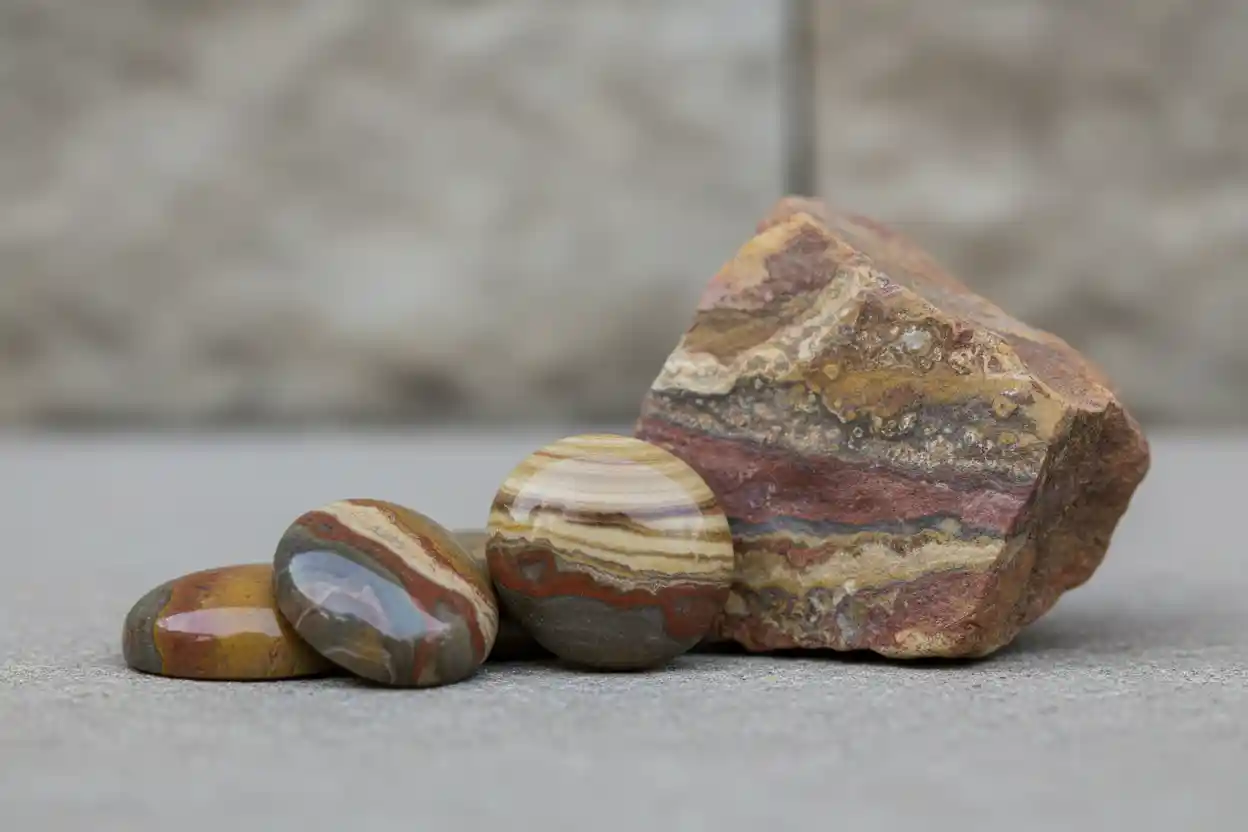
Picture Jasper healing properties are commonly associated with grounding, patience, emotional steadiness, resilience, confidence, concentration, creativity, connection with nature, and spiritual reflection. The attraction is easy to understand. Brown, tan, cream, rust, black, and reddish patterns can resemble mountains, dunes, coastlines, forests, clouds, or distant horizons, giving polished stones the appearance of miniature landscapes. Those scenes are geological patterns rather than literal pictures stored inside the stone, and they do not establish a therapeutic mechanism. Picture Jasper has not been demonstrated to treat anxiety, depression, fatigue, pain, inflammation, digestive problems, blood disorders, hormonal conditions, or another illness. Mineralogically, Picture Jasper is not one formally defined mineral species or one standardized geological variety. It is a lapidary trade name applied to patterned jasper, an opaque to slightly translucent silica-rich rock commonly related to chalcedony or microcrystalline chert and colored by iron oxides, hydroxides, clays, manganese compounds, and other fine inclusions.
9 Picture Jasper Healing Claims
- Grounding and present-moment awareness
- Patience with gradual progress
- Emotional steadiness during stress
- Resilience after setbacks
- Confidence through practical action
- Concentration and clear priorities
- Creativity and visual imagination
- Connection with nature and place
- Spiritual reflection on direction and change
These nine themes can support useful personal routines without becoming nine scientifically proven healing effects. Many Picture Jasper benefits become more practical when translated into actions such as slowing down before reacting, reviewing progress over longer periods, identifying one workable next step, or using the stone as a visual cue for reflection.
Picture Jasper Geology
Jasper is a historically broad term rather than a single mineral species. Mineralogical references commonly describe it as opaque to slightly translucent, impure chalcedony or microcrystalline chert containing abundant fine inclusions. Quartz and chalcedony provide much of the silica-rich structure, while hematite, iron hydroxides, clays, manganese compounds, and other substances create color and pattern.
Picture Jasper is the commercial name given to pieces whose natural markings resemble scenery. A tan field crossed by brown lines may look like desert hills, while reddish bands can resemble cliffs and dark dendritic markings can suggest branches or vegetation.
These appearances are examples of pattern recognition rather than evidence that a literal landscape has been preserved in the stone. Mineral deposition, sedimentary layering, fractures, fluid movement, oxidation, replacement, and later silicification can all contribute to the final design.
Because Picture Jasper is a rock rather than one pure crystal species, assigning every specimen one exact formula or crystal system is misleading. The dominant silica component is chemically SiO₂, while the color-producing constituents vary between deposits.
Fine-grained jasper normally measures around Mohs 6.5 to 7. It has no useful cleavage and commonly breaks with conchoidal to splintery fracture. Its dense microcrystalline structure generally makes it tough enough for cabochons, beads, carvings, spheres, and other polished objects.
Landscape Patterns and Color
The colors most strongly associated with Picture Jasper are brown, beige, cream, ochre, rust, red, gray, and black. Iron chemistry explains many of these tones.
Hematite can contribute red and reddish-brown coloration, while hydrated iron oxides and hydroxides such as goethite can create yellow, brown, or ochre shades. Manganese-rich compounds may produce dark brown or black markings. Clay and other fine particles can soften or modify the overall palette.
Veins and fractures can later become filled with silica or other minerals, adding contrasting lines that resemble rivers, horizons, or mountain ridges. Layering in the original rock can produce parallel scenery-like zones.
The patterns therefore record geological processes rather than painted images. Two stones sold under the same trade name may have different geological histories, which is why exact mineral identification should be based on the specimen rather than the commercial label alone.
Picture Jasper and Other Jaspers
Picture Jasper belongs to a large family of commercial jasper names based on appearance. Red Jasper emphasizes red iron-rich color, Ocean Jasper is a specialized Madagascar orbicular silica-rich rock, and Kambaba Jasper is another trade stone with its own geological identity.
The general jasper healing properties overlap with Picture Jasper in themes such as grounding and stability, but Picture Jasper has a more specific visual identity built around landscape-like patterns.
Its appearance also differs from agate. Agate is typically more translucent and defined by banded chalcedony, while jasper is usually more opaque because abundant inclusions interrupt transparency.
Some trade stones called jasper are not mineralogically true jasper at all. The name is used loosely in lapidary commerce for several attractive opaque rocks, making provenance and accurate description more useful than assuming that every “jasper” label represents identical geology.
Picture Jasper History
Jasper itself has a long cultural history and was used for tools, seals, beads, carvings, jewelry, and decorative objects in several ancient societies. The name has roots in old terms for spotted or patterned stone.
That historical record applies to jasper as a general category. It does not establish an equally ancient, distinct healing tradition for the modern trade identity called Picture Jasper.
The idea that Picture Jasper specifically carried ancestral memories, stored landscapes, or encoded messages from ancient civilizations belongs to modern metaphysical interpretation rather than verified archaeology.
The Picture Jasper meaning used today draws naturally from its earth-toned scenery, but the stone’s geology should remain separate from spiritual storytelling.
Grounding and Patience
Grounding Through Sensory Focus
Picture Jasper is strongly associated with grounding because its colors resemble soil, rock, deserts, and mountains. The stone does not electrically connect the body to the Earth or regulate the nervous system through an unseen field. It can still serve as a tactile anchor. Notice its weight, temperature, smooth surface, individual lines, breathing rhythm, and physical surroundings. The practical effect comes from directing attention toward immediate sensory information.
Patience With Gradual Progress
Sedimentary-looking layers and slow geological formation make patience a natural symbolic theme. Picture Jasper cannot biologically increase patience. A useful practice is to review long-term goals over weeks or months rather than judging progress from one difficult day. The stone can mark that slower timescale.
Emotional Steadiness and Resilience
Emotional Steadiness Under Stress
Some practitioners describe Picture Jasper as emotionally stabilizing. Silica-rich rock has not been shown to regulate cortisol, neurotransmitters, or heart rate through contact. A grounded routine is to pause, identify what actually happened, distinguish facts from assumptions, and decide whether any response is necessary immediately.
Resilience After Setbacks
Picture Jasper’s dense structure and earth-like patterns encourage endurance symbolism. It cannot transfer resilience to the wearer. After a setback, use it as a cue to identify what failed, what remains intact, what lesson matters, and what next action is still possible.
Confidence and Concentration
Confidence Through Practical Action
Picture Jasper is often linked with quiet confidence and self-reliance. The stone cannot biologically increase self-esteem. Before a difficult task or conversation, use it as a reminder to review what has already been prepared and identify the first controllable action. Confidence develops through evidence of capability.
Concentration Through Clear Priorities
Grounding symbolism often extends into claims about focus. Picture Jasper has not been demonstrated to improve memory or attention span. Pair the stone with one active task, reduce competing notifications, and define what must be completed before switching activities.
Creativity and Nature Connection
Creativity Through Landscape Patterns
Picture Jasper is particularly suitable as a creative prompt because its markings can suggest different scenes depending on the viewer. Writers, artists, photographers, and designers can study the patterns and generate ideas without assuming that the stone itself changes cognition. The visual complexity provides inspiration.
Connection With Nature
The miniature-landscape appearance naturally leads to nature symbolism. A polished stone cannot replace actual contact with natural environments. It can become a reminder to walk outdoors, observe geological formations, study local landscapes, or spend time away from constant digital stimulation.
Spiritual Reflection
The ninth common claim connects Picture Jasper with ancestral wisdom, Earth memory, personal direction, or a sense of belonging. No evidence shows that jasper stores human memories or transmits messages from past civilizations.
A person can still use the stone during meditation or prayer to reflect on place, continuity, responsibility, and long-term direction. The meaning comes from the person’s interpretation of the geological patterns rather than from encoded information inside the silica.
Picture Jasper Chakra Meaning
Picture Jasper is most commonly associated with the root chakra in contemporary crystal systems because of its brown, red, tan, and earth-colored appearance. Themes often include stability, security, grounding, physical presence, resilience, and connection with nature.
Some practitioners also associate yellow or golden areas with solar plexus themes involving confidence and practical action.
Chakras are a spiritual framework rather than anatomical structures. Picture Jasper has not been demonstrated to affect the spine, adrenal glands, nervous system, digestive organs, circulation, or another physiological system through chakra placement.
Picture Jasper Care
Picture Jasper is relatively durable because most specimens are strongly silicified and fall around Mohs 6.5 to 7. It resists scratching better than calcite, fluorite, opal, and feldspar but can still be scratched by topaz, sapphire, ruby, diamond, and other harder gems.
Its microcrystalline structure generally provides good toughness, although natural fractures, veins, cavities, or altered zones can create local weaknesses. Thin carvings and sharp edges should still be protected from impacts.
Warm water, mild soap, and a soft cloth or brush are suitable for most sound untreated pieces. Brief water exposure is generally safe.
Long soaking is unnecessary when a stone has open fractures, dye, resin, coatings, glue, or attached jewelry components. Jasper can be dyed or otherwise treated, so unusually intense colors deserve additional care.
Steam and ultrasonic cleaning are unnecessary defaults. Gentle hand cleaning is safer when treatment history or internal fracture condition is unknown.
Strong chemicals and abrasive cleaners should be avoided. Hydrofluoric acid attacks silica and is extremely hazardous.
Cutting or grinding jasper creates respirable crystalline silica dust. Lapidary work should use wet methods, effective extraction, eye protection, and appropriate respiratory controls. Picture Jasper should never be intentionally powdered or ingested for wellness purposes.
Safe Ritual Cleansing
Picture Jasper does not require burial, salt, flame, or prolonged water exposure for symbolic cleansing. There is no scientifically demonstrated negative energy that must be extracted from the stone.
Sound, intentional breathing, dry placement, meditation, or gentle washing are low-risk choices. A grounding ritual can be made practical by identifying one concern that is outside your control and one action that remains available.
Avoid harsh chemicals, extreme heat, abrasive salt, and rough burial that could scratch polished surfaces.
Conclusion
Picture Jasper is most compelling when its landscape-like patterns are understood as geology rather than literal stored scenes. Silica-rich rock, iron compounds, clays, veins, fractures, and other inclusions can create remarkable natural pictures. Its nine healing themes can support grounding, patience, resilience, creativity, and reflection when symbolic use remains separate from medical claims.
FAQs
What are the main Picture Jasper healing properties?
Common claims include grounding, patience, emotional steadiness, resilience, confidence, concentration, creativity, connection with nature, and spiritual reflection. These are contemporary wellness or spiritual beliefs rather than scientifically proven effects.
What is Picture Jasper made of?
Picture Jasper is generally silica-rich jasper or microcrystalline chert containing fine quartz or chalcedony plus iron oxides, hydroxides, clays, manganese compounds, and other inclusions.
Are the pictures in Picture Jasper real landscapes?
No. The scenery-like patterns form through natural geological processes. Human pattern recognition makes the markings resemble mountains, deserts, rivers, forests, or horizons.
How hard is Picture Jasper?
Most strongly silicified Picture Jasper falls around Mohs 6.5 to 7, making it suitable for many jewelry and decorative uses.
Is Picture Jasper a crystal?
It is better described as a fine-grained silica-rich rock rather than one individual crystal. Its quartz and chalcedony components are crystalline at microscopic scale.
Does Picture Jasper have ancient healing traditions?
Jasper itself has a long history of human use, but a distinct ancient healing system specifically for the modern Picture Jasper trade category is not established.
Which chakra is Picture Jasper associated with?
Modern crystal practice most commonly connects it with the root chakra and themes involving grounding, stability, resilience, and security. These are spiritual rather than anatomical associations.
Can Picture Jasper go in water?
Brief washing with lukewarm water is generally safe for sound untreated pieces. Mild soap and gentle hand cleaning are appropriate.
Can Picture Jasper be dyed?
Yes. Jasper and related chalcedony can be dyed. Very intense or unusual colors should be evaluated carefully if natural coloration matters.
Does Picture Jasper contain ancient Earth memories?
Its patterns preserve physical geological history, but there is no evidence that the stone stores human memories, ancestral messages, or conscious information.
Crystal healing claims are traditional or personal beliefs and should not replace qualified medical or mental health care.