Rhodochrosite Healing Properties: 11 Wellness Beliefs, Mineral Facts & Safe Care
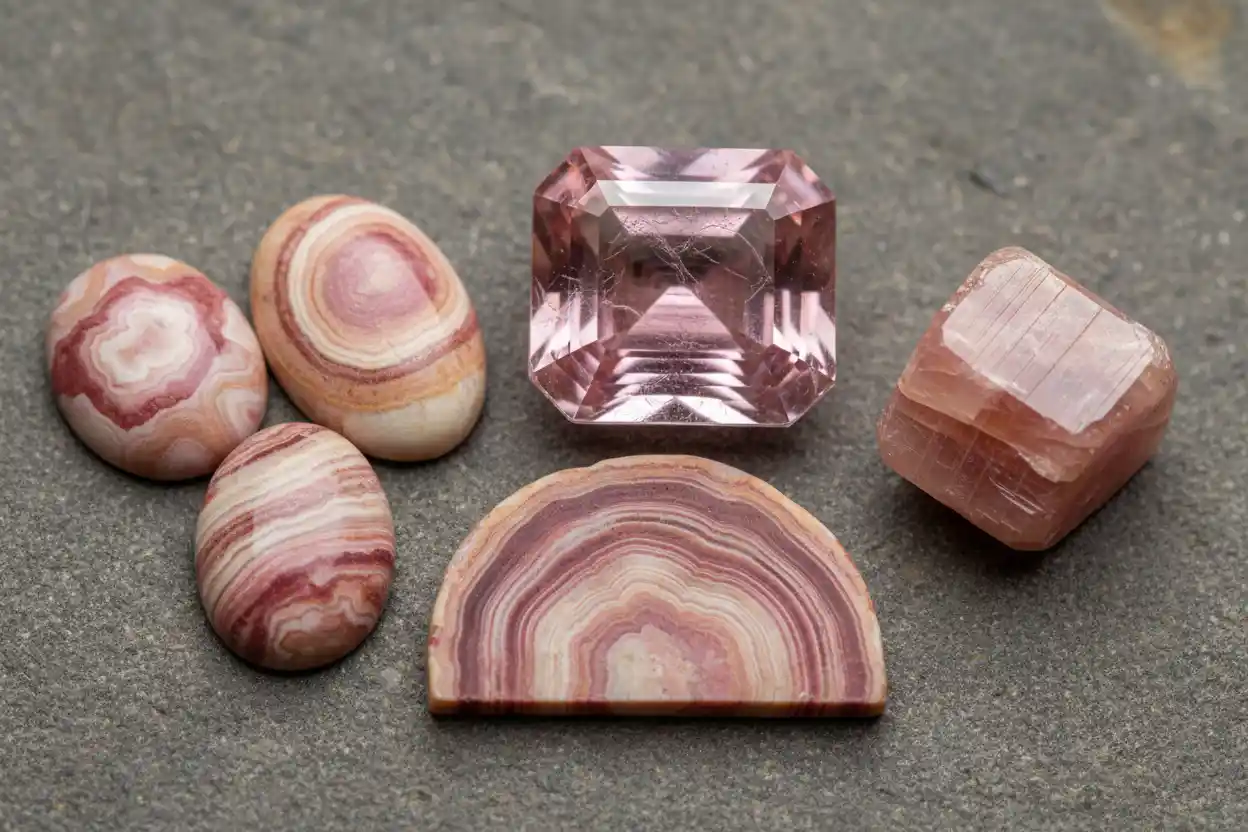
Rhodochrosite healing properties are commonly associated with self-compassion, emotional reflection, confidence, relationship awareness, forgiveness, resilience, optimism, boundaries, creativity, meditation, and spiritual renewal. Rose-pink to raspberry-red color and soft white banding naturally encourage heart-centered symbolism, but color does not establish a therapeutic mechanism. Rhodochrosite healing properties have not been scientifically demonstrated to treat anxiety, depression, trauma, cardiovascular disease, high blood pressure, respiratory disorders, thyroid conditions, pain, inflammation, or another medical problem. Scientifically, rhodochrosite is manganese carbonate, MnCO₃, a trigonal member of the calcite group. It has Mohs hardness about 3.5 to 4, perfect rhombohedral cleavage, vitreous to pearly luster, and relatively poor resistance to scratching and impact. Its pink to red color comes primarily from manganese within the mineral structure, while iron, calcium, magnesium, and other substitutions can shift color and produce paler or brownish tones.
11 Rhodochrosite Healing Properties Beliefs
- Self-compassion and kinder self-evaluation
- Emotional reflection without avoidance
- Confidence during vulnerable situations
- Relationship awareness and communication
- Forgiveness while maintaining boundaries
- Resilience after emotional setbacks
- Optimism during gradual recovery
- Stronger personal boundaries
- Creativity and emotional expression
- Meditation and present awareness
- Spiritual renewal and heart-centered reflection
These eleven rhodochrosite healing properties are more useful when treated as prompts for personal practice than as automatic effects of manganese carbonate. Self-compassion can mean replacing sweeping self-criticism with a specific assessment, forgiveness can mean reducing repeated resentment without restoring unsafe access, and resilience can mean rebuilding routines after disappointment. The separate Rhodochrosite benefits topic can address everyday uses, while this page keeps rhodochrosite healing properties centered on beliefs, evidence limits, mineral science, history, and safe handling.
Rhodochrosite Mineral Facts
Understanding rhodochrosite healing properties begins with the stone’s actual mineral identity. Rhodochrosite has the ideal formula MnCO₃ and belongs to the calcite group. It crystallizes in the trigonal system and can form rhombohedral, scalenohedral, tabular, massive, granular, botryoidal, stalactitic, and banded forms.
Well-formed transparent crystals can show strong rose, cherry-red, or raspberry coloration and vitreous luster. Massive material commonly appears pink with cream, white, pale rose, or darker concentric bands.
Rhodochrosite measures about Mohs 3.5 to 4, which makes it much softer than quartz, feldspar, topaz, sapphire, and most jewelry metals used around it. It also has perfect rhombohedral cleavage in three directions. That combination makes fine crystals and faceted gems especially vulnerable to scratching, chipping, and cleavage fractures.
Rhodochrosite healing properties do not become stronger in deeper red stones. Saturation and transparency can affect gem or collector value, but they do not establish greater therapeutic action.
What Gives Rhodochrosite Its Pink and Red Color?
The color that shapes many rhodochrosite healing properties comes directly from manganese. Mn²⁺ is an essential part of rhodochrosite chemistry rather than a minor trace impurity.
When composition approaches manganese-rich MnCO₃, crystals can show vivid pink to red tones. Substitution by iron, calcium, magnesium, or other elements can modify color, density, optical properties, and appearance.
Massive banded rhodochrosite often alternates pink and white zones. These bands can reflect changing chemistry and growth conditions during repeated deposition, particularly in vein, cavity, or stalactitic settings.
The mineral can also weather toward darker manganese oxide coatings on exposed surfaces. Black or brown alteration does not represent “negative energy” leaving the crystal. It is ordinary mineral oxidation and alteration.
Rhodochrosite healing properties are therefore symbolic interpretations of a genuinely manganese-rich carbonate mineral, not biological effects caused by its pink coloration.
Rhodochrosite Formation and Major Localities
Rhodochrosite commonly forms in moderate- to low-temperature hydrothermal veins, sedimentary manganese deposits, metasomatic environments, and as a late-stage mineral in some pegmatites. It frequently occurs with quartz, calcite, fluorite, sulfides, and other manganese minerals.
Argentina is famous for banded stalactitic rhodochrosite, especially from the Capillitas mining district. Polished slices and cabochons can show concentric pink and white bands that make this material visually distinctive.
Colorado’s Sweet Home Mine near Alma became internationally famous for transparent deep-red rhodochrosite crystals. The locality produced exceptional rhombohedra and faceting rough, although cutting rhodochrosite is challenging because of its low hardness and perfect cleavage.
Peru, South Africa, Romania, Mexico, China, and several other countries also produce notable rhodochrosite.
The geological variety helps explain why rhodochrosite healing properties should not be linked to one universal appearance. A pale banded stalactite and a transparent red rhombohedron belong to the same mineral species even though they look very different.
Rhodochrosite Name and History
Rhodochrosite was named in the early nineteenth century. The name derives from Greek roots referring to rose color, a direct reference to the mineral’s characteristic pink to red appearance.
The recognized type locality is the Cavnic mining area in present-day Romania. The mineral’s formal scientific identity therefore has a documented mineralogical history, but today’s rhodochrosite healing properties should not automatically be described as an ancient standardized healing tradition.
Modern metaphysical associations around inner-child work, heart healing, self-love, emotional release, and relationship repair largely belong to contemporary crystal culture.
This distinction does not make personal symbolism meaningless. It simply keeps historical fact separate from later interpretation.
Self-Compassion and Emotional Reflection
Self-Compassion Through More Accurate Self-Talk
Self-love is one of the most repeated rhodochrosite healing properties. Manganese carbonate does not biologically increase self-esteem.
A more practical exercise is to notice broad statements such as “I always fail” or “I am not good enough” and replace them with specific descriptions of what happened. Accurate self-evaluation can acknowledge mistakes without turning one event into a permanent identity.
Emotional Reflection Without Avoidance
Rhodochrosite healing properties are also strongly associated with emotional processing. The mineral cannot pull grief, trauma, or suppressed feelings out of the body.
Keeping the stone near a journal can create a consistent cue to record what happened, what emotion appeared, what interpretation followed, and which action remains available. Reflection becomes useful when it leads to clearer understanding rather than endless rumination.
Confidence and Relationships
Confidence During Vulnerability
Rhodochrosite healing properties often include confidence, particularly in emotional situations. A gemstone cannot remove insecurity or social fear.
Before a difficult conversation, identify the central issue, decide what needs to be communicated, and define what outcome remains within your control. Confidence is more stable when it comes from preparation rather than from expecting another person’s reaction to validate you.
Relationship Awareness
Relationship healing appears frequently among rhodochrosite healing properties. The stone cannot make another person trustworthy, loyal, affectionate, or compatible.
A grounded relationship review examines repeated behavior. Do actions match promises? Are concerns taken seriously? Are boundaries respected? Is repair possible after conflict? Those patterns provide information that color symbolism cannot.
Forgiveness and Resilience
Forgiveness Without Removing Boundaries
Forgiveness is another common theme within rhodochrosite healing properties. A mineral cannot erase painful memories or decide whether reconciliation is appropriate.
Forgiveness can instead mean reducing the amount of time spent rehearsing resentment while preserving whatever boundary remains necessary. Someone can stop centering an injury without restoring access to a person who continues harmful behavior.
Resilience After Emotional Setbacks
Rhodochrosite healing properties are sometimes described as supporting recovery after heartbreak, disappointment, or rejection. The stone cannot heal trauma through a mineral frequency.
After a setback, identify what cannot be changed, what support remains available, what routine has been disrupted, and which constructive action can be restarted first. Recovery becomes a process rather than a sudden state.
Optimism and Boundaries
Optimism During Gradual Recovery
Pink color and heart-centered symbolism make optimism a natural part of rhodochrosite healing properties. The gemstone cannot guarantee that circumstances improve.
A useful optimism exercise names one real difficulty, one reason improvement remains possible, and one action that increases the chance of a better outcome. This keeps hope connected with evidence and behavior.
Boundaries as Emotional Protection
Rhodochrosite healing properties sometimes emphasize openness so strongly that boundaries receive too little attention. Compassion does not require unlimited access.
Use the stone as a reminder to define which behaviors are acceptable, what request should be declined, and what consequence follows when a boundary is repeatedly ignored. Emotional openness and self-protection can coexist.
Creativity and Meditation
Creativity Through Emotional Expression
Creativity appears in many descriptions of rhodochrosite healing properties because pink and red colors are associated with emotion and expression. There is no evidence that MnCO₃ changes creative cognition through touch.
The gemstone can still mark a period for writing, drawing, music, or another expressive activity. Generate ideas before judging them and allow difficult emotions to become subjects for expression rather than evidence that the crystal caused inspiration.
Meditation With Color and Banding
Rhodochrosite healing properties fit naturally into visual meditation because banded specimens offer repeated patterns while transparent crystals provide rich internal reflections.
Choose one line, crystal face, color transition, or rhombohedral edge and return attention to it whenever the mind wanders. This is a genuine concentration exercise without proving a gemstone-specific change in consciousness.
Spiritual Renewal and Heart-Centered Reflection
The eleventh of the rhodochrosite healing properties concerns spiritual renewal. Contemporary crystal systems often connect Rhodochrosite with compassion, emotional openness, self-worth, and the idea of healing an “inner child.”
These can function as metaphors for examining earlier experiences, unmet needs, or learned responses, but the gemstone does not provide psychotherapy or retrieve hidden memories.
Someone may use rhodochrosite healing properties during prayer, journaling, or reflection on values and relationships. The meaningful effect comes from the practice and interpretation rather than from a scientifically demonstrated field emitted by the crystal.
Rhodochrosite Chakra Associations
Rhodochrosite healing properties are most commonly associated with the heart chakra because of the mineral’s pink and red coloration. Contemporary systems connect it with compassion, self-acceptance, relationships, forgiveness, emotional openness, and grief.
Redder specimens may also receive root or sacral associations, while pale pink banded stones remain strongly heart-centered in most modern systems.
Chakras are spiritual frameworks rather than anatomical structures. Rhodochrosite healing properties have not been demonstrated to affect the physical heart, lungs, blood pressure, reproductive organs, endocrine glands, nervous system, or another physiological structure through chakra placement.
The manganese in rhodochrosite also does not provide a controlled nutritional dose through normal handling.
Rhodochrosite Care and Cleavage
Rhodochrosite healing properties should never overshadow the gemstone’s significant physical fragility. Mohs hardness around 3.5 to 4 means quartz dust, glass, steel, and most common gemstones can scratch it.
Perfect rhombohedral cleavage makes impact an even greater concern. A sharp knock can split a crystal along smooth planes. Faceted Rhodochrosite therefore requires careful cutting, setting, storage, and wear.
Store the gem in a padded compartment away from harder stones. Pendants, earrings, collector specimens, and carefully protected jewelry are generally easier to preserve than exposed everyday rings.
Room-temperature or lukewarm soapy water and a very soft cloth are appropriate for conservative cleaning of sound untreated rhodochrosite. Rinse gently and dry without vigorous rubbing.
Ultrasonic, steam, mechanical buffing, and aggressive cleaning should be avoided. Heat, vibration, and impact can exploit cleavage and existing fractures.
Rhodochrosite and Acids
Rhodochrosite is a carbonate mineral, which makes acid exposure especially important. Acids can attack carbonate structures, etching or damaging the surface.
Vinegar, lemon juice, acidic bathroom cleaners, descalers, strong jewelry solutions, and similar substances should not be used. Even if a household acid acts slowly, there is no benefit in testing a polished stone this way.
Some massive rhodochrosite may be impregnated with wax or polymer to improve stability or appearance. Heat and solvents can affect such treatments, which is another reason gentle cleaning is preferable.
Rhodochrosite healing properties do not become stronger through soaking in acidic liquids, saltwater, or homemade elixirs. These methods can damage the gemstone and add unnecessary exposure to unknown treatments or impurities.
Safe Ritual Cleansing
Rhodochrosite healing properties do not require saltwater, vinegar, citrus, flame, steam, or prolonged soaking. There is no scientifically demonstrated negative energy that must be chemically removed from manganese carbonate.
Sound, intentional breathing, dry placement, quiet reflection, prayer, or a gentle wipe are safer symbolic practices. A self-compassion ritual can be made concrete by writing one harsh self-judgment and replacing it with a more accurate description.
Avoid abrasive salt, strong heat, ultrasonic devices, acids, and rough burial. Rhodochrosite’s softness and cleavage mean gentle handling should take priority.
Conclusion
Rhodochrosite healing properties are modern wellness beliefs attached to a distinctive manganese carbonate mineral with genuine rose-pink to red color, trigonal structure, perfect cleavage, and a rich geological identity. Self-compassion, reflection, relationships, forgiveness, resilience, boundaries, creativity, and meditation can all become useful practices when the personal work remains with the individual rather than being presented as a medical effect of MnCO₃.
FAQs
What are rhodochrosite healing properties?
Rhodochrosite healing properties commonly refer to beliefs involving self-compassion, emotional reflection, confidence, relationships, forgiveness, resilience, optimism, boundaries, creativity, meditation, and spiritual renewal.
What is Rhodochrosite made of?
Rhodochrosite is manganese carbonate with the chemical formula MnCO₃.
What makes Rhodochrosite pink?
Manganese is an essential part of the mineral structure and produces the characteristic pink to red coloration. Other substitutions can modify the final shade.
How hard is Rhodochrosite?
Rhodochrosite measures about Mohs 3.5 to 4 and has perfect cleavage, making it comparatively soft and fragile.
Do rhodochrosite healing properties treat emotional trauma?
No scientifically verified Rhodochrosite effect has been shown to treat trauma. Reflection or meditation with the stone may be personally meaningful but should not replace appropriate mental health care.
Where does Rhodochrosite come from?
Important sources include Argentina, Colorado in the United States, Romania, Peru, South Africa, Mexico, China, and other manganese-rich deposits.
Which chakra is associated with Rhodochrosite?
Modern crystal practice most commonly links Rhodochrosite with the heart chakra. These associations are spiritual rather than anatomical.
Can Rhodochrosite go in water?
Brief gentle cleaning with room-temperature or lukewarm soapy water is appropriate for many sound stones. Long soaking is unnecessary, especially when treatments or fractures are present.
Can Rhodochrosite be cleaned with vinegar?
No. Rhodochrosite is a carbonate mineral and can be attacked by acids. Vinegar, lemon juice, and acidic cleaners should be avoided.
Are rhodochrosite healing properties scientifically proven?
No. Rhodochrosite healing properties are contemporary spiritual or personal wellness beliefs rather than scientifically established medical effects.
Rhodochrosite healing properties are personal or spiritual wellness beliefs and should never replace qualified medical or mental health care.