12 Tourmaline Healing Properties: Modern Wellness Beliefs, Gem Science & Safe Use
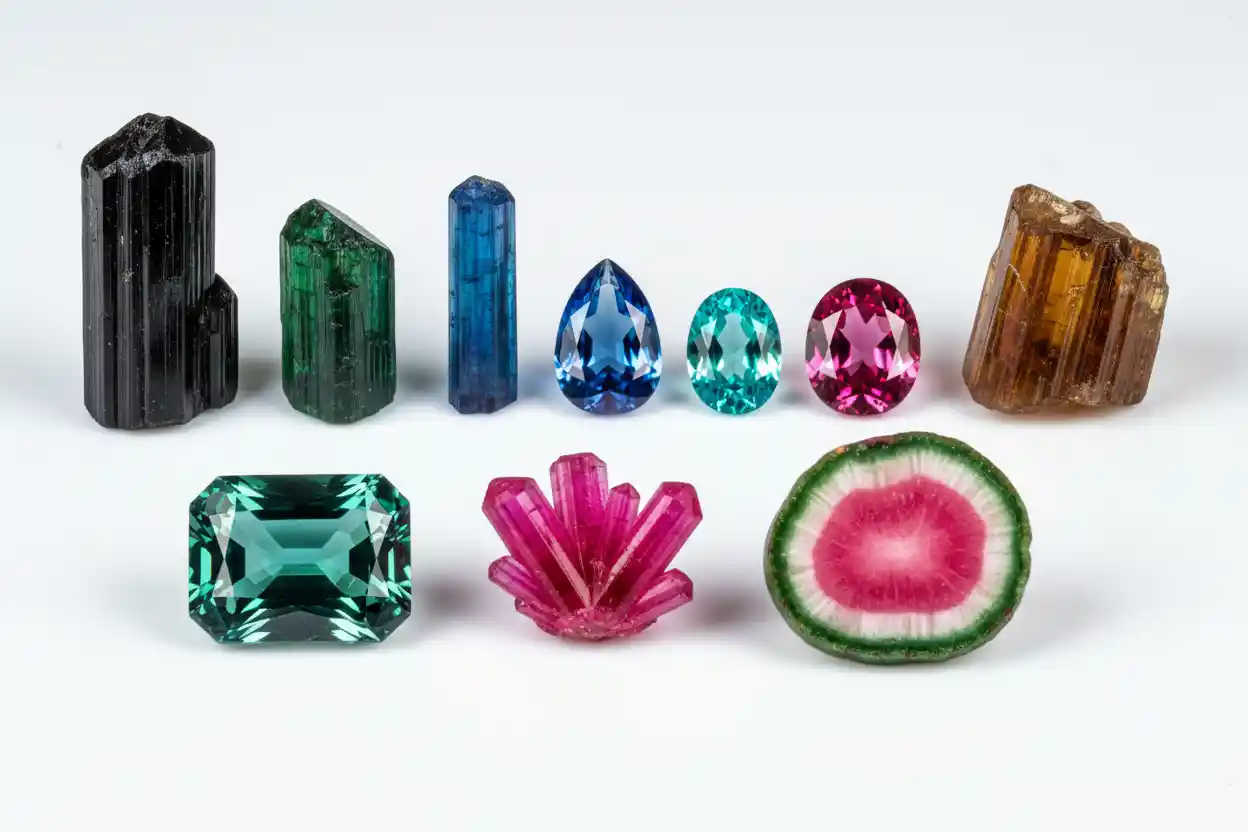
Tourmaline healing properties are commonly associated with grounding, emotional steadiness, confidence, communication, focused reflection, personal boundaries, and a symbolic sense of protection. Because tourmaline occurs in black, green, pink, red, blue, and multicolored crystals, modern crystal practice often assigns different wellness themes to different colors. These associations can be meaningful within meditation or personal ritual, but tourmaline is not scientifically proven to treat anxiety, depression, trauma, pain, insomnia, circulatory problems, hormonal conditions, neurological disorders, or any other medical condition.
Tourmaline is more scientifically complex than the simple phrase “tourmaline stone” suggests. It is a group of related borosilicate minerals rather than one single chemical species. Members of the group crystallize in the trigonal system and commonly form elongated, strongly striated prisms. Gem varieties span an exceptional range of colors because iron, manganese, copper, chromium, vanadium, radiation-related color centers, and other chemical differences can affect appearance.
A realistic approach to tourmaline healing properties treats the gem as a visual or tactile reminder rather than a source of medical energy. Someone might use a crystal to pause before reacting, begin a journaling session, review a boundary, or return attention to a chosen task. Any useful effect comes from the person’s actions and interpretation, not from evidence that tourmaline changes human physiology.
12 Tourmaline Healing Properties Commonly Used in Modern Crystal Practice
- Grounding during busy or emotionally intense periods.
- Calm reflection before responding to conflict.
- Stronger awareness of personal boundaries.
- Confidence when speaking or making decisions.
- Focus on realistic priorities and manageable next steps.
- Emotional steadiness during change or uncertainty.
- Mindful release of habits that no longer feel useful.
- Creative reflection and curiosity.
- Compassion toward oneself and other people.
- Intentional communication and active listening.
- Spiritual reflection shaped by color symbolism.
- Symbolic protection paired with practical safety and judgment.
Tourmaline Mineralogy Explains Its Color Range, Not Healing Energy
Tourmaline healing properties belong to spiritual and wellness interpretation, while tourmaline’s physical characteristics belong to mineral science. The tourmaline group contains numerous recognized species. Elbaite is especially important in gem jewelry and can occur in green, pink, red, blue, yellow, colorless, and multicolored crystals. Schorl is usually black and iron-rich, while dravite commonly appears brown to dark brown. Other species and chemical substitutions add still more variation.
Tourmaline typically ranks about 7 to 7.5 on the Mohs hardness scale. That hardness makes many gem-quality stones suitable for jewelry, although toughness is only fair and crystals can fracture from a hard impact or sudden temperature change. Tourmaline also shows strong pleochroism in many transparent gems, meaning color or color intensity can change with viewing direction. Color zoning within a single crystal can create bicolor, tricolor, or concentric patterns, including the familiar pink-and-green appearance associated with watermelon tourmaline.
An unusual physical characteristic sometimes becomes confused with spiritual language. Tourmaline is pyroelectric, so heating or cooling can create an electrical charge across a crystal. It is also piezoelectric, meaning mechanical stress can produce an electrical response. These are measurable mineral properties, but they do not demonstrate that tourmaline healing properties alter the body’s energy field, nervous system, hormones, or cellular function.
Tourmaline Healing Properties for Grounding, Boundaries, and Emotional Steadiness
Grounding as a Practical Return to the Present
Grounding is one of the most repeated tourmaline healing properties, particularly for dark stones. Modern crystal culture often describes black tourmaline as absorbing or blocking negativity. A safer interpretation is to use the stone as a cue to notice what is actually happening in the present and identify what remains within personal control.
A person feeling scattered might hold a stone, name the immediate problem, write down the next three realistic actions, and leave less urgent tasks for later. Someone in a tense conversation could use the same cue to slow a response and listen before speaking. Protective beliefs associated with black tourmaline healing properties often emphasize grounding, although there is no evidence that the mineral blocks radiation, electromagnetic fields, accidents, illness, or harmful behavior from other people.
This distinction allows tourmaline healing properties to remain personally meaningful without replacing practical safeguards. A symbolic protection ritual should reinforce sensible choices such as leaving an unsafe setting, protecting private information, following workplace precautions, or seeking help when circumstances require it.
Boundaries, Confidence, and Deliberate Communication
Another cluster of tourmaline healing properties involves confidence, assertiveness, and personal boundaries. Crystal users sometimes associate black tourmaline with firm boundaries, pink tourmaline with compassionate self-regard, and blue tourmaline with communication. These color themes vary between practitioners and have no standardized medical basis.
A behavior-centered practice can make the symbolism useful. Before agreeing to a request, someone might pause with the stone and ask whether the commitment fits available time, energy, and responsibilities. Before an important conversation, the gem can serve as a reminder to decide what needs to be said clearly and what outcome would be acceptable. Tourmaline does not create confidence automatically, but a repeated cue may support preparation and intentional action.
Modern tourmaline meaning varies with color, culture, and personal interpretation, so no single symbolic definition applies to every specimen. That flexibility is especially appropriate for a mineral group whose natural color range is unusually large.
Emotional Steadiness Without Treating Mental Health Conditions
Emotional balance appears frequently among tourmaline healing properties. Pink and green stones are often framed around compassion or emotional openness, while black varieties tend to be linked with stability. These beliefs should not become assertions that tourmaline treats trauma, depression, panic disorder, prolonged grief, or another mental health condition.
For everyday reflection, a crystal might prompt a person to name an emotion rather than react immediately to it. Journaling about what triggered the feeling, what evidence supports a fear, or what response is proportionate can create useful distance. The effectiveness of those techniques depends on the person and the practice, not on a therapeutic force inside the gemstone.
Tourmaline can therefore function much like a meaningful keepsake, meditation object, or habit cue. It may become associated with calm through repetition, but that personal association should not be mistaken for proof that tourmaline healing properties produce a clinical effect.
Focus, Motivation, and Creative Reflection
Tourmaline’s varied colors make it popular in modern practices centered on creativity and focus. Green, blue, and multicolored crystals may be used near a workspace or sketchbook, while black stones are often chosen when someone wants fewer distractions. Tourmaline healing properties do not scientifically increase concentration or creativity, yet the stone can become part of a structured routine.
A writer might begin each work period by placing the stone beside a notebook, silencing notifications, and choosing one defined task. An artist might associate a multicolored crystal with experimentation rather than perfection. Tourmaline is also valued for its extensive color range, jewelry versatility, durability, and collecting appeal, practical tourmaline benefits that do not depend on therapeutic beliefs.
Tourmaline Healing Properties by Color and Chakra Association
Modern crystal systems often assign different tourmaline healing properties according to color. Black tourmaline is usually connected with grounding and the root chakra. Red or pink tourmaline may be linked with the heart chakra and themes of compassion or emotional openness. Green tourmaline is also often placed within heart-centered practice, while blue varieties can be associated with the throat chakra and communication. Some multicolored stones are interpreted as combining several symbolic themes.
Chakras are spiritual frameworks, not anatomical structures. There is no established medical evidence that tourmaline opens or closes a chakra, clears a physical blockage, regulates endocrine glands, changes circulation, or alters the nervous system. The associations can still be used reflectively. A throat-focused ritual might prompt someone to prepare for an honest conversation, while a root-focused practice could center on budgeting, sleep routines, home stability, or another practical foundation.
Color itself has real gemological explanations. Iron commonly contributes to green and blue colors, manganese can contribute to pink and red, and copper produces the vivid blue-to-green hues associated with Paraíba-type tourmaline. Natural or laboratory-related color centers can influence some pink and yellow stones. These mechanisms explain visible color without demonstrating different medicinal powers for each hue.
Tourmaline History and the Development of Modern Spiritual Associations
Tourmaline has an interesting trade history, but it should not be given invented ancient traditions. The name developed from a term used in Sri Lankan gem trade for colored stones sent to Europe. Early shipments included gems that European traders did not initially identify correctly, and green tourmaline from Brazil was historically confused with emerald because modern gem-testing methods did not yet exist.
Historical curiosity does not establish the modern set of tourmaline healing properties. Many color-specific chakra associations and energy interpretations developed much later through contemporary crystal culture. People can still find meaning in them, but it is more accurate to describe those practices as modern or evolving rather than as continuous ancient medical knowledge.
Tourmaline’s measurable electrical behavior may also encourage metaphors about energy. Heating a crystal can create an electrical charge, and pressure can produce a piezoelectric response. Those properties are real, yet their physical mechanism does not establish spiritual protection or biological healing.
Tourmaline Treatments, Durability, and Safe Care
Heat treatment and irradiation are among the processes used to alter some tourmaline colors. Heat can lighten overly dark stones or modify particular hues, while irradiation can create or intensify color in some gems. Irradiation-related color may fade with strong heat or bright light in certain stones. Treatment does not make tourmaline healing properties stronger or weaker because no therapeutic effect has been established in the first place.
Warm water, mild soap, and a soft brush or cloth are the safest routine cleaning choices. Avoid steam and ultrasonic cleaning because inclusions, internal fractures, and thermal shock can cause damage. High heat should also be avoided. Tourmaline is generally stable under ordinary light and normal household conditions, but a strong impact can chip or fracture a gem despite its respectable hardness.
Finished jewelry is ordinarily safe to handle. Cutting, drilling, grinding, or polishing any mineral should still use proper lapidary dust control, eye protection, ventilation, and appropriate respiratory protection. Gem powders should not be deliberately inhaled or swallowed, and tourmaline should not be added to drinking water in an attempt to transfer supposed healing energy.
Safer Symbolic Cleansing for Tourmaline
People who include tourmaline healing properties in meditation or ritual do not need aggressive cleansing methods. A soft cloth, a quiet resting place, sound from a bell or singing bowl, or simply holding the stone while restating an intention can serve the symbolic purpose without unnecessary wear.
Avoid flames, boiling water, harsh chemicals, abrasive powders, and sudden temperature changes. Long exposure to intense heat is particularly unnecessary because tourmaline can fracture through thermal shock and some treated colors can be affected by heat. Physical cleaning removes oils and dirt, while symbolic cleansing expresses personal meaning.
Conclusion
Tourmaline healing properties are modern wellness and spiritual associations centered on grounding, boundaries, confidence, emotional steadiness, communication, focus, compassion, and symbolic protection. Tourmaline itself is a diverse group of trigonal borosilicate minerals with real color zoning, pyroelectric and piezoelectric behavior, useful hardness, and complex chemistry. Those scientific characteristics make tourmaline fascinating, but they do not demonstrate medical healing.
Used thoughtfully, a tourmaline crystal can become a cue for reflection, preparation, journaling, meditation, or deliberate action. The value of the practice lies in what the person chooses to do, not in an unproven therapeutic force attributed to the gem.
FAQs
What Are the Most Common Tourmaline Healing Properties?
Tourmaline healing properties commonly include grounding, emotional steadiness, boundaries, confidence, focus, compassion, communication, creativity, mindful release, spiritual reflection, and symbolic protection.
Are Tourmaline Healing Properties Scientifically Proven?
No. There is no reliable scientific evidence that tourmaline treats disease, changes hormones, regulates circulation, alters brain chemistry, or produces a medically measurable healing effect.
Why Is Black Tourmaline Associated With Protection?
Modern crystal traditions commonly connect its dark color with grounding and protective symbolism. That association is spiritual rather than evidence that the stone physically blocks radiation, electromagnetic fields, illness, or danger.
Which Chakra Is Tourmaline Associated With?
The answer usually depends on color. Black tourmaline is commonly linked with the root chakra, pink and green with the heart, and blue with the throat. Chakras are spiritual frameworks rather than anatomical structures.
Does Tourmaline Really Produce Electricity?
Tourmaline is pyroelectric and piezoelectric. Temperature changes or mechanical stress can create measurable electrical charge, but this physical property does not prove tourmaline healing properties affect the human body.
Can Tourmaline Go in Water?
Brief cleaning in warm soapy water is generally suitable for intact tourmaline. Long soaking is unnecessary, and sudden temperature changes should be avoided.
Can Tourmaline Be Cleaned in an Ultrasonic Cleaner?
Warm soapy water is safer. Ultrasonic and steam cleaning are not recommended because fractures, inclusions, and thermal stress can increase the chance of damage.
Do Different Colors Have Different Tourmaline Healing Properties?
Modern crystal practice assigns different themes to black, pink, green, blue, and multicolored tourmaline. Scientific evidence does not show that these colors produce different therapeutic effects.
Is Tourmaline Safe to Wear Every Day?
Many tourmaline gems can handle regular jewelry wear because they rank about 7 to 7.5 on the Mohs scale. They still need protection from hard impacts, high heat, and sudden temperature changes.
Can Tourmaline Treat Anxiety or Improve Sleep?
Tourmaline is not an evidence-based treatment for anxiety or sleep disorders. It can be used as a personal reminder for calming routines, but persistent symptoms need appropriate professional care.
Tourmaline healing properties are spiritual and personal wellness beliefs, not medical treatments, and should not replace qualified physical or mental health care.