Chrysocolla Benefits: 10 Real Uses, Helpful Symbolism & Verified Facts, Safe Limits
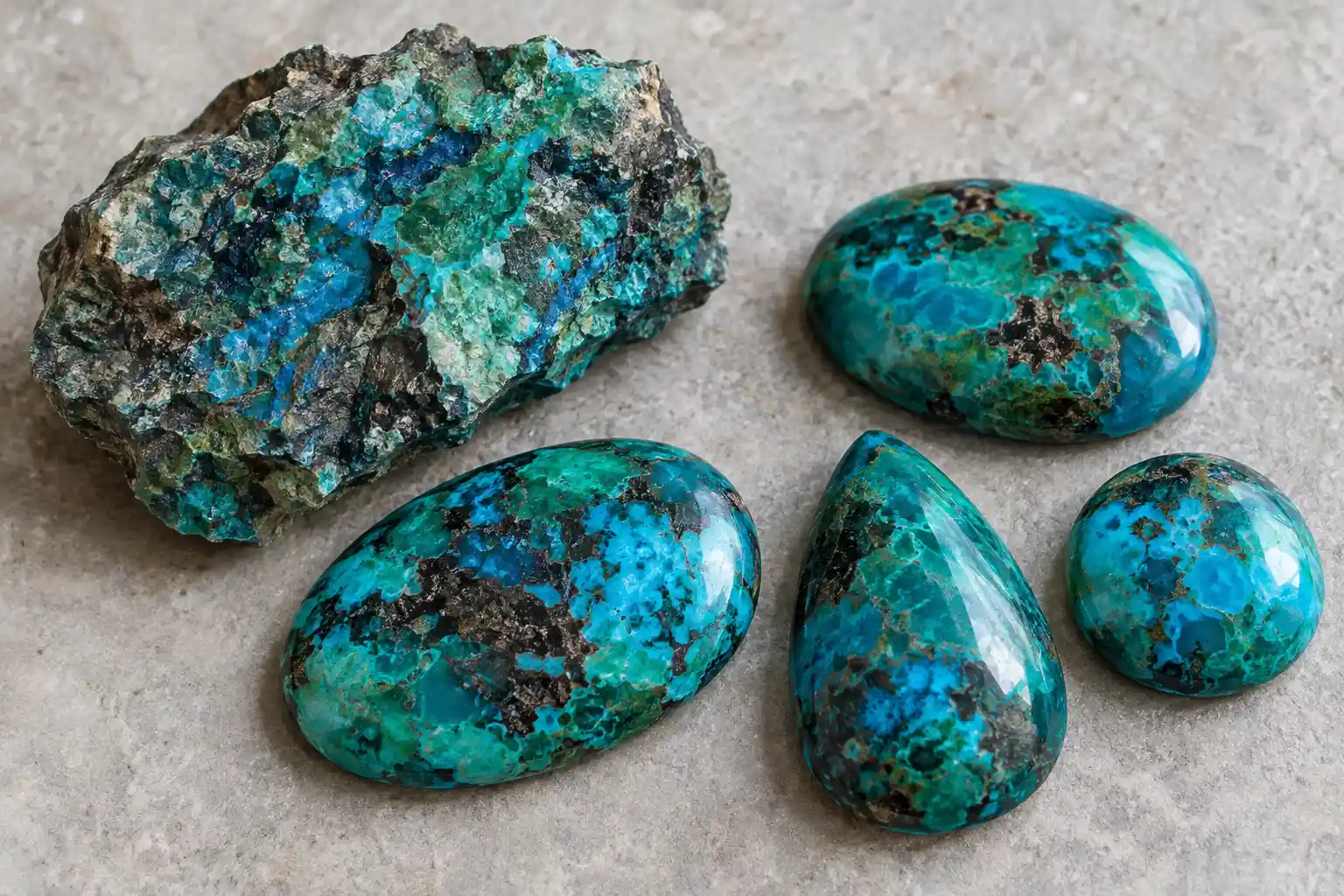
Chrysocolla benefits begin with color, geology, and mineral diversity rather than healing claims. Natural chrysocolla can show vivid blue, turquoise-blue, blue-green, green, and darker tones that immediately reveal its connection with copper-rich geological environments. It typically develops as a secondary copper mineral in oxidized portions of copper deposits, where weathering and circulating fluids transform earlier copper-bearing minerals and create new species in fractures, crusts, rounded masses, and vein fillings.
The mineral itself is relatively soft, commonly around 2.5 to 3.5 on the Mohs hardness scale, so pure chrysocolla does not behave like quartz or sapphire in jewelry. However, commercial stones sold as chrysocolla can contain substantial silica, quartz, chalcedony, or other associated minerals, and these combinations may be considerably tougher than pure chrysocolla. This distinction is central to understanding chrysocolla benefits because appearance alone cannot tell a buyer how durable a polished stone will be.
Modern crystal traditions add chrysocolla benefits involving communication, confidence, emotional calm, creativity, or feminine symbolism. These interpretations may carry personal meaning, but they are not established medical effects of a copper silicate mineral. Chrysocolla does not treat anxiety disorders, throat disease, hormonal problems, neurological conditions, inflammation, or other illnesses through ordinary handling.
10 Chrysocolla Benefits at a Glance
- Vivid blue and green copper colors make chrysocolla visually distinctive for collecting and decorative use.
- Oxidation-zone occurrence provides a clear lesson in how copper deposits change near Earth’s surface.
- Association with malachite, azurite, quartz, and other minerals creates varied natural patterns and specimens.
- Silica-rich chrysocolla-bearing stone can be polished into attractive cabochons, beads, and decorative pieces.
- Collectors can study the difference between relatively soft chrysocolla and harder quartz-rich combinations.
- Mineral identification develops through attention to hardness, luster, associated minerals, structure, and treatment.
- Copper-mineral relationships make chrysocolla valuable for geological and mineralogical education.
- Historical naming provides cultural interest while requiring care when comparing ancient terminology with modern mineral definitions.
- Blue-green coloration gives jewelry designers a striking palette when the stone is sufficiently durable for its intended setting.
- Contemporary symbolism can represent thoughtful communication or adaptability when kept separate from medical claims.
Blue-Green Copper Color Gives Chrysocolla Its Most Immediate Appeal
Color is one of the strongest chrysocolla benefits because the mineral can display remarkably saturated blue and green tones. Some specimens are turquoise-blue, others lean strongly green, and still others contain several shades crossing a single surface. Black, brown, or pale matrix can add contrast, while associated minerals may introduce banding, patches, veins, or irregular boundaries that make each polished stone visually different.
The color comes from copper within the mineral’s chemistry, which connects chrysocolla directly with the wider geology of copper deposits. This makes the gemstone especially interesting because its appearance is not merely decorative. The same element responsible for much of the blue-green color also helps explain where the mineral forms and why it commonly appears alongside other secondary copper species.
Polished chrysocolla-bearing stone can be particularly dramatic when blue and green areas intersect with dark matrix or quartz. Some pieces display relatively even color, while others show complex landscapes of copper minerals and silica. Neither style is automatically superior. Pattern, polish, structural stability, and personal preference matter more than uniformity alone.
These visual chrysocolla benefits are substantial enough that the mineral does not need exaggerated metaphysical promises to attract collectors or jewelry enthusiasts.
Copper Deposit Geology Makes Chrysocolla Educational as Well as Beautiful
Chrysocolla benefits anyone interested in mineral formation because it commonly develops through secondary processes near copper deposits. Water, oxygen, changing acidity, and weathering can alter earlier copper minerals and redistribute copper into new combinations. Chrysocolla often appears within these oxidized zones alongside species such as malachite, azurite, cuprite, quartz, and iron-rich coatings.
A specimen therefore records part of a changing geological system rather than representing one isolated mineral event. Bright blue-green crusts may line fractures, fill small cavities, coat earlier minerals, or replace pre-existing forms. These relationships can reveal which minerals formed before or after others and how fluids moved through the rock.
This geological setting is one of the most useful chrysocolla benefits because it turns an attractive stone into a teaching specimen. A collector can compare chrysocolla with malachite or azurite and see how the same copper-rich environment can produce very different colors, crystal habits, hardness, and chemistry.
Understanding oxidation-zone geology also prevents oversimplification. Blue-green color does not mean every specimen formed in exactly the same way, and stones sold commercially under a single name may contain several intergrown minerals rather than pure chrysocolla alone.
Pure Chrysocolla and Silica-Rich Chrysocolla Behave Very Differently
Durability is one area where chrysocolla benefits are frequently misunderstood. Pure chrysocolla is relatively soft and brittle, so it is poorly suited to exposed daily-wear jewelry. Yet many attractive cabochons sold as chrysocolla are much harder because the colored copper mineral occurs with quartz, chalcedony, or silica-rich components.
This distinction matters greatly when choosing a ring, pendant, bracelet, or loose stone. A harder quartz-rich piece can tolerate substantially more abrasion than a soft porous chrysocolla specimen. Two blue-green cabochons that look similar may therefore perform very differently in use.
Gem silica is an especially important related trade concept. It generally refers to chalcedony colored by chrysocolla or copper-related inclusions, producing an attractive blue-green appearance with quartz-family hardness rather than the softness of pure chrysocolla. It should not simply be treated as another name for ordinary chrysocolla.
A person deciding where to buy chrysocolla should ask what the polished stone actually contains, whether it has been stabilized, whether quartz or chalcedony contributes to durability, and whether the seller distinguishes chrysocolla from gem silica accurately. These practical questions are more valuable than choosing by color alone.
Lapidary Work Can Reveal Complex Copper-Mineral Patterns
Lapidary use provides some of the most visually rewarding chrysocolla benefits, but success depends heavily on the specific stone. Soft porous chrysocolla can crumble, undercut, or polish unevenly, while dense silica-rich examples can produce excellent cabochons and freeforms.
Cutters often work around fractures, soft areas, contrasting matrix, and associated minerals rather than forcing the rough into a standardized outline. A freeform shape may preserve an exceptional blue-green pattern that would disappear if the stone were reduced to a calibrated oval. Larger pieces can also become polished slabs, display stones, carvings, or decorative objects when structural stability allows.
Mixed mineral composition can make polishing challenging. Quartz-rich zones may resist abrasion more strongly than softer chrysocolla, so one part of a surface can polish at a different rate from another. Skilled lapidary work therefore involves understanding the whole specimen rather than treating every blue-green area identically.
These chrysocolla benefits highlight the partnership between natural geology and human craftsmanship. The copper minerals provide color, the associated rock provides structure, and the cutter decides how to preserve the most attractive and stable combination.
Chrysocolla Is Especially Valuable for Mineral Collectors
Collecting is one of the strongest chrysocolla benefits because the mineral appears in many forms and associations. Botryoidal coatings, crusts, vein fillings, rounded masses, pseudomorph-like forms, matrix specimens, quartz-associated pieces, and polished stones can all offer different kinds of interest.
A collector may focus on locality, associated minerals, color, morphology, geological context, or historical mining districts. Specimens that preserve clear relationships with malachite, azurite, quartz, limonite, or other copper-zone minerals can be more scientifically informative than an anonymous polished piece.
Rough specimens also reveal properties that polishing tends to hide. Waxy or earthy luster, natural fracture surfaces, coatings, porosity, and relationships with host rock are easier to observe before a stone is shaped.
Locality information adds substantial value when reliable. Copper deposits around the world can produce chrysocolla, but individual occurrences differ in associated species and appearance. Accurate provenance connects the specimen with a real geological environment rather than reducing it to a decorative color.
For collectors, these chrysocolla benefits can remain meaningful regardless of whether a particular specimen is suitable for jewelry.
Identification Requires More Than Recognizing Turquoise-Blue Color
Chrysocolla can resemble turquoise, dyed chalcedony, glass, variscite, blue-green opal, malachite mixtures, and several other copper-bearing stones. Color therefore provides a clue but not a complete identification.
Hardness is especially informative because relatively pure chrysocolla is much softer than quartz-rich gem silica. Luster, density, porosity, microscopic texture, associated minerals, and professional analytical testing may also help determine what a specimen actually contains.
Commercial naming can complicate the situation further. A seller may use chrysocolla for any blue-green copper-bearing ornamental stone even when quartz, chalcedony, malachite, or another mineral forms a significant part of the piece. This does not automatically make the stone undesirable, but accurate description improves buyer understanding.
These identification-focused chrysocolla benefits encourage careful observation. A vivid blue cabochon should be evaluated for structure, durability, treatment, and mineral composition rather than accepted solely on the strength of a trade label.
Ancient Naming History Needs Careful Interpretation
The name chrysocolla has deep historical roots, but the ancient word did not necessarily correspond perfectly with the mineral species defined by modern mineralogy. The Greek roots relate to gold and glue, reflecting terminology connected with substances used in goldworking or soldering.
This gives chrysocolla historical interest, yet it also creates a common misunderstanding. An ancient written reference using a similar name does not automatically prove that the author was describing exactly the hydrated copper silicate identified today as chrysocolla.
That distinction matters when discussing spiritual traditions. Statements claiming that a particular ancient society used modern chrysocolla for a specific emotional or healing purpose need evidence beyond a familiar-sounding historical name.
Responsible interpretation makes the genuine history more interesting. Chrysocolla connects with ancient metallurgical terminology, copper working, changing mineral classification, and later scientific identification. Those subjects have more depth than simply labeling every modern crystal belief ancient.
Jewelry Use Depends on the Stone’s Actual Structure
Chrysocolla benefits jewelry design through exceptional blue-green color, but the physical structure determines whether a piece is suitable for frequent wear. Soft pure chrysocolla is better protected in pendants, earrings, brooches, or display pieces where abrasion and impact remain limited.
Harder silica-rich chrysocolla-bearing stones give designers more options. Cabochons can work beautifully in bezels, while quartz-rich pieces may be suitable for rings when they are structurally sound and protected from severe impact. Dark matrix can create strong contrast with silver, while yellow or rose gold can make green and turquoise-blue areas appear warmer.
Large cabochons are particularly effective because they preserve enough surface area for natural patterns to remain visible. Matching pairs can be difficult, which makes complementary rather than identical earrings a natural design choice.
Jewelry-focused chrysocolla benefits are therefore inseparable from honest durability assessment. A beautiful stone is most useful when its setting matches its real hardness, toughness, porosity, and treatment history.
Modern Symbolism Can Represent Communication Without Becoming Medicine
Contemporary crystal traditions often associate chrysocolla benefits with communication, confidence, emotional calm, creativity, compassion, or adaptation. The blue-green color makes communication symbolism especially common in systems that connect blue stones with speech or the throat chakra.
A practical symbolic interpretation can work without claiming a biological effect. Someone may keep chrysocolla near a desk as a reminder to explain an idea carefully or wear a pendant during a difficult conversation because it represents the intention to listen as well as speak.
Beliefs surrounding chrysocolla healing properties sometimes extend these themes into claims about anxiety, throat disease, blood pressure, hormones, pain, neurological function, or physical detoxification. Those ideas belong to spiritual practice rather than established medical evidence.
The mineral contains copper, but ordinary skin contact does not make it a copper supplement or treatment. Mineral chemistry should not be confused with nutrition or medicine.
Chrysocolla benefits remain substantial when communication and calmness are treated as personal symbolism rather than promised health outcomes.
Responsible Care Depends on Hardness, Porosity, and Associated Minerals
Care for chrysocolla cannot be reduced to one universal rule because specimens vary considerably. Soft porous chrysocolla should be handled much more gently than quartz-rich cabochons. Harsh scrubbing, acids, steam, ultrasonic cleaning, and prolonged soaking are poor default choices when composition or stabilization is uncertain.
A soft dry cloth is often enough for decorative pieces. Stable polished stones can sometimes tolerate brief cleaning with a slightly damp cloth and mild soap, but owners should avoid aggressive treatment when associated minerals or coatings are unknown.
Hard impacts remain a concern even with attractive polished pieces, especially where fractures cross the surface. Jewelry should be stored away from harder gems that can scratch softer areas.
Grinding or drilling also requires professional dust control and protective equipment. Copper-bearing dust and silica-bearing dust should not be intentionally inhaled or ingested.
These limits support the real chrysocolla benefits of beauty, collecting, geological interest, and decorative use by helping preserve the specimen rather than damaging it through inappropriate care.
Conclusion
Chrysocolla benefits include vivid blue-green copper color, oxidation-zone geology, mineral collecting, copper-mineral associations, lapidary potential, identification practice, historical naming, jewelry use, and meaningful personal symbolism. Its greatest strength is diversity: one specimen may be a soft collector mineral, while another may contain enough quartz or chalcedony to become a durable polished gemstone.
Understanding that variation is essential. Modern themes of communication, calmness, creativity, or adaptability can remain personally meaningful when they are kept separate from medical claims. The strongest chrysocolla benefits come from accurate identification, honest durability assessment, geological context, skilled cutting, and responsible care.
FAQs
What are the main chrysocolla benefits?
The most verifiable chrysocolla benefits include mineral collecting, copper-deposit geology, decorative use, lapidary work in suitable specimens, gemstone identification, historical interest, and personal symbolism.
What is chrysocolla?
Chrysocolla is a hydrated copper-bearing silicate mineral that commonly forms as a secondary mineral within oxidized copper deposits.
How hard is chrysocolla?
Relatively pure chrysocolla is commonly around 2.5 to 3.5 on the Mohs scale. Quartz-rich chrysocolla-bearing stones can be significantly harder.
Is chrysocolla suitable for jewelry?
It can be, but suitability depends on structure. Soft chrysocolla needs protected use, while silica-rich or quartz-supported pieces can be more practical.
Is gem silica the same as chrysocolla?
Not exactly. Gem silica is generally chalcedony whose blue-green color is associated with chrysocolla or copper-related inclusions, giving it quartz-family hardness.
Why is chrysocolla blue or green?
Copper in the mineral’s chemistry is responsible for much of its characteristic blue and green coloration.
Is chrysocolla found with malachite?
Yes. Chrysocolla can occur with malachite, azurite, quartz, and other secondary minerals in oxidized copper deposits.
What does chrysocolla symbolize?
Modern symbolism often connects chrysocolla with communication, calmness, creativity, confidence, compassion, and adaptability.
Does chrysocolla provide medicinal copper?
No. Wearing or holding a copper-bearing mineral does not function as nutritional copper supplementation or medical treatment.
Does chrysocolla have healing benefits?
There is no established clinical evidence that chrysocolla treats anxiety, throat conditions, hormonal disorders, blood pressure, neurological problems, pain, or other illnesses.
Chrysocolla benefits described as healing, emotional, chakra, communication-related, or energetic effects remain spiritual and personal beliefs and should not replace qualified medical or mental-health care.