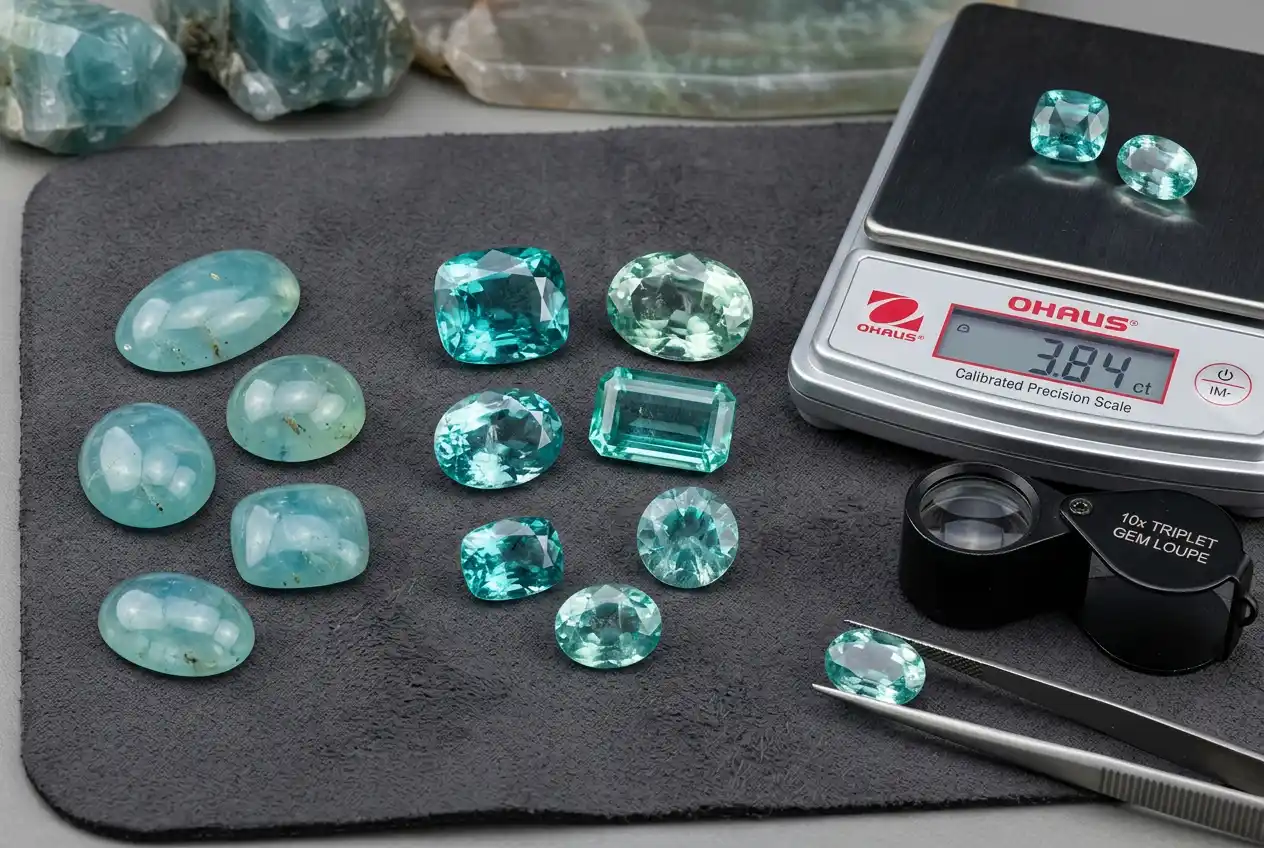
Grandidierite Price Per Carat: 12 Rarity Factors Behind the Price
Grandidierite price per carat can range from relatively modest levels for opaque or strongly included blue-green stones to several thousand dollars per carat for transparent faceted gems with vivid teal to greenish-blue color, strong clarity, useful size, and excellent cutting. Translucent commercial pieces may sell for tens to a few hundred dollars per carat, while clean transparent gems can move into roughly $1,000 to $3,000 per carat. Exceptional larger stones with unusually high transparency, attractive pleochroism, fine proportions, and reliable provenance can exceed these levels because transparent facetable grandidierite represents only a very small portion of the mineral that reaches the gem market.
The rarity premium is not based simply on the existence of grandidierite in nature. The mineral occurs in several geological settings, but much recovered grandidierite is opaque, translucent, fractured, or too included for fine faceting. The most valuable category requires a combination of transparent crystal, attractive blue-green color, limited distracting inclusions, sufficient thickness for cutting, and structural integrity strong enough to survive polishing. Each of those requirements reduces the amount of rough capable of producing a high-quality finished gemstone.
Grandidierite is an orthorhombic borosilicate with a composition commonly written as (Mg,Fe)Al₃(BO₃)(SiO₄)O₂. It is strongly pleochroic, meaning different crystallographic directions can show noticeably different colors, commonly including blue-green, green, and much paler colorless to yellowish directions. This pleochroism makes cutting orientation unusually important because a skilled cutter can emphasize the desirable blue-green axis while a poor orientation may allow a pale or less attractive direction to dominate the face.
12 Rarity Factors Behind Grandidierite Price Per Carat
- Transparent versus translucent or opaque quality
- Strength and attractiveness of blue-green or teal body color
- Pleochroism and quality of cutting orientation
- Clarity and visibility of internal inclusions
- Tone, saturation, and face-up brightness
- Cut quality, symmetry, polish, and light return
- Carat weight and rarity of larger transparent stones
- Face-up dimensions and cutting efficiency
- Madagascar origin and documented provenance
- Natural identity and separation from similar blue-green gems
- Treatment status, durability, and structural condition
- Precision craftsmanship, certification, and collector demand
These twelve factors explain why two stones of equal weight can occupy completely different price categories. A three-carat opaque cabochon and a three-carat transparent faceted grandidierite may come from the same mineral species, yet the transparent gemstone represents much scarcer rough and demands more careful orientation, cutting, and clarity. The Price therefore rises most sharply when transparency, color, size, and craftsmanship occur together rather than when carat weight increases by itself.
Typical Grandidierite Price Per Carat
Grandidierite does not have a standardized international price chart, and supply is too limited for one fixed rate to describe every stone. Broad market ranges are still useful for separating common included pieces from transparent collector-level gems.
| Grandidierite Quality | Approximate Price Per Carat | Typical Characteristics |
|---|---|---|
| Opaque to heavily included | $20 to $100 | Blue-green body, limited transparency, cabochon quality |
| Translucent jewelry quality | $100 to $500 | Attractive color, moderate inclusions, some internal glow |
| Transparent commercial faceted | $500 to $1,500 | Good clarity, visible pleochroism, competent cutting |
| Fine transparent quality | $1,500 to $3,500+ | Strong teal or blue-green color, high transparency, fine cut |
| Exceptional larger transparent gems | $3,000 to $5,000+ | Rare size, vivid color, excellent clarity and orientation |
| Important collector stones | Highly variable | Exceptional size, provenance, natural crystal form, or unusually fine faceting |
These ranges are intentionally wide because grandidierite prices depend heavily on the individual stone. A smaller gem can sit at the upper end of the market when transparency and color are exceptional, while a much larger cabochon may remain comparatively inexpensive when most of its body is cloudy or opaque.
Transparency Creates the Largest Divide in Grandidierite Value
The difference between transparent and translucent grandidierite is one of the strongest price separators in the entire market. Many blue-green specimens possess attractive color but allow only limited light to pass through them, making them suitable for cabochons, beads, or collector specimens rather than high-value faceting. Transparent rough is far less common because fractures, mineral inclusions, clouds, and internal growth features often prevent clean light transmission.
Fine transparent stones can look remarkably lively when properly cut. Their blue-green body color combines with directional pleochroism to create subtle shifts between teal, greenish blue, and lighter green as the gem moves. This visual depth is difficult to reproduce in a heavily included stone because internal scattering weakens both brilliance and color separation.
Transparency should therefore be assessed before size. A one-carat clean transparent gem can be more valuable than a five-carat cloudy stone because the smaller stone belongs to a rarer quality category. The premium becomes especially strong when a transparent gem remains eye-clean and retains vivid color across a face large enough to appreciate the pleochroic effect.
Blue-Green Color Determines Immediate Visual Appeal
Grandidierite is best known for blue-green, teal, greenish-blue, and related hues. Fine stones generally show enough blue and green to create a distinctive cool-toned appearance rather than drifting toward dull gray-green or very pale colorless directions.
Saturation is important, but excessive darkness can suppress transparency. A strongly saturated teal stone with lively light return may rank higher than a darker gem that appears almost black in ordinary indoor lighting. Fine color therefore requires enough strength to remain unmistakably blue-green while preserving transparency and brilliance.
Pleochroism also changes how color should be evaluated. A grandidierite can show a desirable blue-green direction and a much paler direction within the same crystal. The finished appearance depends on how those axes are positioned relative to the table and pavilion, which means color quality cannot be separated completely from cutting orientation.
Lighting should remain neutral during grading. Warm lamps can make green components appear more yellow, while cool illumination can emphasize blue. A valuable stone should retain an attractive identity across realistic lighting rather than appearing fine only beneath a carefully chosen lamp.
Pleochroism Can Increase Value When the Cutter Uses It Well
Strong pleochroism is one of grandidierite’s defining characteristics and can be seen as different colors when the stone is viewed along different crystallographic directions. In fine rough, these directions may include blue-green, darker green, and much paler colorless or yellowish appearances.
A skilled cutter studies the rough before choosing the table orientation because the dominant face-up direction determines how the gemstone will look in jewelry. If the best blue-green axis is oriented effectively, the stone can maintain an attractive teal appearance while showing subtle directional variation as it moves. If the pale axis dominates, the finished gem may look washed out even when the original crystal contained stronger color.
This makes cutting yield more complicated than simply preserving maximum weight. The cutter may sacrifice carats to achieve better color orientation, which can increase the value of the smaller finished gem. A heavy stone with poor pleochroic alignment can therefore be worth less per carat than a lighter gemstone cut deliberately for color.
Clarity Becomes Increasingly Valuable in Transparent Stones
Natural grandidierite can contain fractures, crystals, veils, clouds, and other inclusions. In translucent stones these features may blend into the overall appearance, but in transparent faceted gems they become much easier to see and therefore carry greater importance.
Eye-clean grandidierite is especially desirable because clean facetable rough is scarce. Minor inclusions visible only under magnification may have little influence when the color and cut are exceptional, while large central fractures or dark crystals can reduce both transparency and face-up beauty.
The position of an inclusion also matters. A small feature near the girdle may be much less distracting than a similar inclusion under the center of the table. Surface-reaching fractures deserve additional attention because they can affect durability and create risks during setting or daily wear.
Collector specimens require a different perspective because natural inclusions, associated minerals, crystal form, and locality can contribute to scientific or aesthetic interest. A specimen should therefore not be downgraded automatically because it fails the clarity expectations applied to a faceted jewel.
Tone and Saturation Need to Preserve Brightness
Grandidierite can become visually dark when saturation, thickness, and cutting depth combine. Dark tone may initially appear luxurious because the blue-green color looks strong, but a gemstone that returns little light can lose the liveliness expected from high-quality transparent rough.
Fine stones balance saturation and brightness so that individual facets remain visible and the color appears luminous rather than dense. Very pale stones can remain transparent but may lack enough blue-green strength to justify a strong rarity premium, while excessively dark stones can hide their pleochroic character.
Cut depth plays an important role. A deep pavilion can increase apparent color concentration but also create extinction and hide unnecessary weight beneath the girdle. A shallower but properly angled cut may look larger and brighter while preserving sufficient saturation.
The best value therefore occurs when color strength and transparency support each other rather than competing.
Cut Quality Can Add a Significant Premium
Grandidierite rough is difficult enough to obtain in transparent quality that cutters often face pressure to preserve weight. This can lead to unconventional outlines, thick girdles, asymmetry, or deeper pavilions, particularly when removing an additional fraction of a carat would cross an important weight threshold.
Some compromise can be understandable in an exceptionally rare stone, but severe windowing, poor symmetry, weak polish, or unnecessary depth still lowers value. A fine cut should create a lively face-up appearance while using pleochroism intelligently and protecting structural weaknesses.
Precision-cut stones can command a substantial premium because the cutter has accepted greater weight loss in exchange for improved color, brilliance, and face-up dimensions. In a rare gem such as grandidierite, that decision represents both lapidary skill and economic risk.
Custom shapes can also be desirable when they follow the natural geometry of the rough. An unusual outline should not be considered inferior simply because it differs from a standard oval or cushion if the finished result preserves exceptional color and transparency.
Larger Transparent Grandidierite Becomes Dramatically Rarer
Opaque and translucent grandidierite can occur in fairly substantial pieces, but large transparent faceting rough is much more difficult to find. As carat weight rises, the probability that fractures, inclusions, or color-orientation problems will interrupt the crystal increases sharply.
This creates a nonlinear premium for fine transparent stones. A three-carat eye-clean grandidierite is not merely three times as rare as a one-carat example because recovering that much clean, suitably oriented crystal may require a much larger piece of exceptional rough.
The premium still depends on quality. A large transparent stone that appears pale, badly windowed, or poorly polished should not receive collector-level value simply because its weight is unusual. Fine size means little unless attractive color, transparency, and cutting survive together.
Face-up dimensions should also be compared with weight because deep cutting can preserve carats without creating a proportionate increase in visible size. Buyers should examine length, width, depth, and overall spread before assuming the heavier stone offers greater visual value.
Madagascar Origin Has the Strongest Historical Association
Grandidierite was first described from Madagascar in the early twentieth century and was named in honor of Alfred Grandidier, the French explorer and naturalist known for his work on Madagascar. The island remains the locality most strongly associated with the mineral and has produced many of the transparent gemstones that established grandidierite’s modern gem-market reputation.
Documented Madagascar origin can add collector interest, particularly when the stone is large, transparent, or associated with a well-known mining area. Provenance should still refine an already fine gemstone rather than replace quality. A cloudy stone from a prestigious source can remain worth less than a beautifully transparent example from another confirmed locality.
Sri Lanka and a small number of other regions have also produced grandidierite or related gem-quality material, but fine transparent stones remain unusual regardless of source. When origin materially affects the Price, credible laboratory or collection documentation is more reliable than assuming locality from color alone.
Natural Identity Needs to Be Confirmed Before Rare-Gem Pricing Applies
Blue-green grandidierite can resemble several other gemstones, including tourmaline, apatite, aquamarine, sapphire, glass, and other uncommon silicates. Color alone therefore cannot establish identity, especially in transparent faceted stones where cutting masks many crystal-form clues.
Professional identification can use refractive indices, birefringence, specific gravity, pleochroism, spectroscopy, inclusions, and other gemological observations. Grandidierite’s orthorhombic optical character and strong directional colors contribute useful evidence, but valuable stones deserve a complete identification rather than a single visual test.
Correct identity is critical because the scarcity premium depends on the stone actually being natural grandidierite. A similar-looking blue-green gemstone may be beautiful in its own right but belong to a completely different market category.
Treatment Status Is Usually Secondary but Still Important
Grandidierite is generally valued for naturally occurring color and is not associated with a large routine treatment industry comparable with sapphire, ruby, or emerald. This relative lack of enhancement contributes to its appeal among collectors.
The absence of common treatment should not be turned into an automatic assumption that every stone is untreated or unmodified. Coatings, fillers, assembled products, or imitations can occur anywhere in the gemstone market, particularly when a rare name commands a premium.
For expensive transparent grandidierite, laboratory confirmation can provide confidence in identity and disclose unusual features that may affect durability or value. Treatment history is usually less influential than transparency, color, size, and cut, but accurate disclosure remains part of a trustworthy valuation.
Durability and Structural Condition Influence Wearability
Grandidierite has a hardness around 7 to 7.5, providing useful resistance to scratching, but its cleavage and internal fractures can make some stones more vulnerable to impact than hardness alone suggests. Rare transparent gems should therefore be inspected carefully before they are placed in rings exposed to frequent knocks.
A fracture that reaches the girdle or a thin corner can create a practical setting risk even when the stone appears beautiful face-up. Rounded ovals and cushions may be easier to protect than sharp points, although setting design matters more than shape alone.
Pendants and earrings naturally expose the gem to less mechanical stress, making them sensible choices for exceptionally rare stones. Gentle cleaning with mild soap, lukewarm water, and a soft brush is generally safer than aggressive steam or ultrasonic cleaning when fractures or treatment history are uncertain.
Condition should be included in valuation because chipped facet edges, abrasions, or repaired fractures can lower the desirability of a stone whose rarity otherwise suggests a high Price.
Grandidierite Versus Other Blue-Green Gems
Aquamarine is far more available in transparent sizes and usually shows a lighter blue to blue-green body, while indicolite tourmaline can produce much deeper blue-green colors and has a different pleochroic pattern. Paraíba-type tourmaline can appear strikingly vivid due to copper-related coloration but belongs to an entirely different chemical and value category.
Blue-green sapphire is harder and often more expensive at high quality, while apatite can overlap in color but is much softer. These comparisons help demonstrate why color alone cannot establish grandidierite value.
The appeal of fine grandidierite comes from the combination of rarity, strong pleochroism, teal coloration, and limited transparent supply. It should therefore be judged as its own gem species rather than mainly as a substitute for another blue-green gemstone.
Conclusion
Grandidierite price per carat is driven most strongly by transparency, blue-green color, pleochroism, clarity, tone, cutting, carat weight, provenance, natural identity, treatment status, condition, and collector demand. Translucent stones can remain comparatively accessible, while fine transparent gems can rise into several thousand dollars per carat because suitable faceting rough is genuinely scarce.
The most valuable grandidierite is not simply the largest or darkest stone. Fine quality requires a successful interaction between transparency and color, with the cutter orienting strong pleochroic directions so the gemstone remains vividly teal or greenish blue rather than pale or closed. When that color is combined with high clarity, efficient proportions, useful size, and trustworthy provenance, the stone moves into a much rarer market category.
FAQs About Grandidierite Price Per Carat
How much does grandidierite cost per carat?
Opaque or heavily included grandidierite can cost only tens of dollars per carat, while translucent jewelry-quality stones may reach hundreds of dollars per carat. Fine transparent faceted gems can move into roughly $1,500 to $3,500 per carat, with exceptional larger stones potentially exceeding those levels when color, clarity, cut, and provenance are unusually strong.
Why is transparent grandidierite so expensive?
Transparent facetable rough represents a very small portion of natural grandidierite. Most specimens contain enough inclusions, fractures, or translucency to prevent high-quality faceting, so clean blue-green crystals of useful size become much harder to replace.
What color grandidierite is most valuable?
Attractive teal, blue-green, and greenish-blue hues generally receive the strongest demand when they remain saturated but bright. Excessively dark stones can lose transparency, while very pale stones may lack the visual strength associated with fine-quality grandidierite.
Does grandidierite show pleochroism?
Yes. Grandidierite can display strong directional colors, including blue-green, green, and much paler colorless to yellowish directions. Skilled cutting orientation can emphasize the most attractive blue-green appearance and significantly influence value.
Does larger grandidierite cost more per carat?
Fine transparent grandidierite can receive a strong size premium because larger clean crystals are exceptionally difficult to obtain. Opaque or translucent large stones do not receive the same premium because size alone is less scarce in those categories.
Is Madagascar grandidierite more valuable?
Madagascar has the strongest historical association with grandidierite and has produced important gem-quality stones. Documented origin can add collector interest, but transparency, color, clarity, cut, and size remain more important than locality alone.
Is eye-clean grandidierite rare?
Yes, especially in transparent faceted sizes. Minor inclusions are common, so a clean stone with vivid blue-green color and useful carat weight can command a substantial premium.
Is grandidierite treated?
Routine color or clarity treatment is not central to the grandidierite market. Expensive stones should still be identified accurately and checked for unusual enhancement, filling, coatings, or imitation when treatment status materially affects the purchase.
Is grandidierite durable enough for jewelry?
Its hardness around 7 to 7.5 gives reasonable scratch resistance, but cleavage and internal fractures can make some stones vulnerable to impact. Protective settings and careful wear are sensible, particularly for valuable transparent gems.
What makes grandidierite collector quality?
Collector-quality grandidierite combines vivid blue-green color, strong but attractive pleochroism, high transparency, limited distracting inclusions, fine cutting, significant size, excellent condition, natural identity, and reliable provenance.