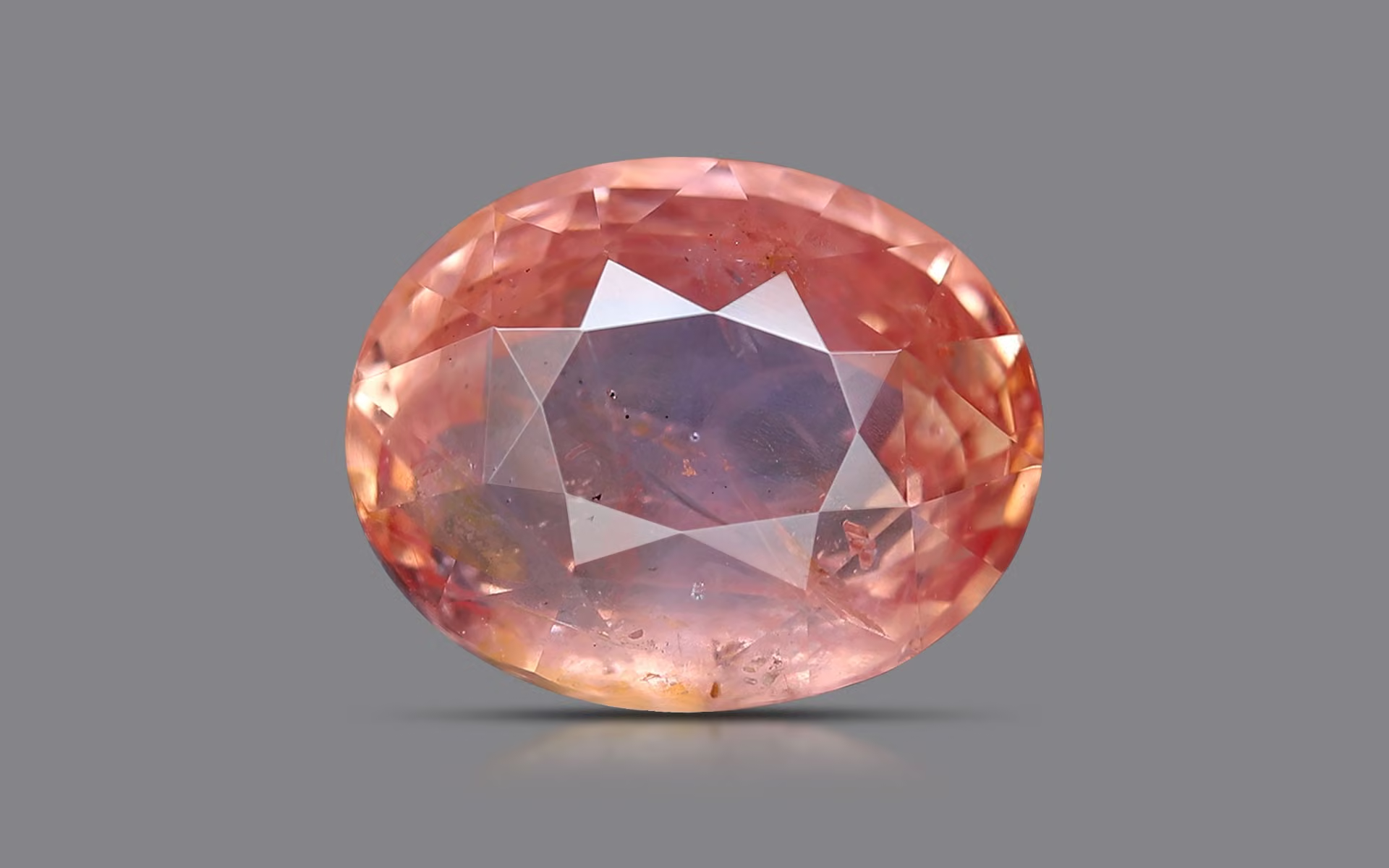
Padparadscha Sapphire Price Per Carat: 11 Rarity Drivers for Sunset Gems
Padparadscha sapphire price per carat can range from several hundred dollars for small, treated, pale, included, or commercially borderline stones to several thousand dollars per carat for attractive natural gems with a convincing pink-orange balance. Fine larger stones with strong but delicate color, excellent transparency, desirable cutting, credible laboratory identification, and no evidence of heating can reach roughly $5,000 to $20,000 per carat or more in high-end retail and collector markets. Exceptional unheated gems at significant sizes may command substantially higher prices because the combination of accepted padparadscha color, natural origin, clarity, and size is genuinely scarce.
Padparadscha sapphire is a color variety of corundum, the same mineral species as ruby and other sapphires. Its identity is based primarily on an unusual mixture of pink and orange, often described with comparisons to lotus blossoms, salmon, or a warm sunset. Those comparisons are useful visually but do not create a universally precise color formula. Major laboratories apply defined criteria when deciding whether a natural sapphire qualifies for the padparadscha designation, and stones with excessive brown, yellow, red, uneven color zoning, or certain treatments may not receive that name.
This makes pricing unusually sensitive to laboratory opinion. Two sapphires that look superficially similar can have dramatically different market values if one receives a respected report identifying it as natural padparadscha sapphire while the other is described simply as pink-orange sapphire. Treatment status creates another major division. Conventional heat treatment is common in sapphire and can still leave a stone commercially desirable, but unheated padparadscha with attractive color generally receives a strong premium. Diffusion-related treatments, including beryllium-assisted color modification, belong to a very different value category and may affect whether laboratories accept the padparadscha name at all.
11 Rarity Drivers Affecting Padparadscha Sapphire Price Per Carat
- Pink-orange balance: Stones showing a harmonious mixture of pink and orange generally command more than gems dominated too strongly by one component.
- Color saturation: Attractive medium saturation is usually preferred over washed-out color or excessively intense hues that move away from the classic padparadscha appearance.
- Tone and brightness: Fine stones remain lively and luminous rather than becoming overly dark, brownish, or visually heavy.
- Laboratory designation: A respected report identifying the gemstone as padparadscha sapphire can materially strengthen market confidence and price.
- Heat-treatment status: Unheated stones with fine color usually receive substantial premiums over comparable heated examples.
- Absence of diffusion treatment: Color produced or substantially modified by lattice diffusion belongs to a different market category from naturally colored or conventionally heated padparadscha.
- Clarity and transparency: Eye-clean or lightly included stones with good transparency are especially desirable, although some natural inclusions are acceptable.
- Carat weight: Larger stones become increasingly rare when proper color balance, clarity, and treatment status remain strong.
- Cut quality: Skilled proportions and orientation can improve brightness, distribute color attractively, and avoid obvious windows or dark extinction.
- Geographic origin and provenance: Credible origin information can influence demand, particularly for historically important sources, but quality remains essential.
- Market scarcity and seller level: High-end dealers, auctions, collector markets, and luxury jewelry can produce much higher price-per-carat figures than ordinary commercial retail.
How Much Does Padparadscha Sapphire Cost Per Carat?
Padparadscha sapphire does not have one universal price because quality differences are extreme. A small heated sapphire with light peach-pink color can cost a fraction of what a larger unheated stone with a balanced pink-orange hue and prestigious laboratory report commands.
The following ranges provide approximate retail orientation rather than fixed market quotations.
| Padparadscha Sapphire Quality | Typical Characteristics | Approximate Retail Price Per Carat |
|---|---|---|
| Commercial or borderline | Pale, included, heated, weak balance, or less convincing pink-orange character | About $500 to $1,500 |
| Good | Attractive pink-orange appearance, decent clarity, competent cutting, often heated | About $1,500 to $4,000 |
| Fine | Convincing padparadscha balance, good transparency, strong cut, documented identity | About $4,000 to $10,000 |
| Fine unheated | Desirable balanced hue, high transparency, no evidence of heat, respected report | About $5,000 to $20,000+ |
| Exceptional | Significant size, outstanding pink-orange balance, excellent clarity and cut, rare treatment or origin combination | Potentially well above $20,000 |
These bands overlap because color judgment is not mechanical. A smaller heated stone with exceptional appearance may be more desirable than a larger unheated gem whose color is weak or brownish. Likewise, an unheated designation alone does not make a sapphire fine. The premium becomes strongest when natural untreated color is already attractive.
Pink and Orange Must Work Together
The defining value characteristic of padparadscha sapphire is its combination of pink and orange. A stone that looks predominantly pink with only a faint warm modifier may be classified commercially as pink sapphire, while one dominated by orange or yellow can fall outside the accepted padparadscha range.
The most desirable stones usually show both components clearly without looking muddy. The color may appear peach-pink, salmon-pink, orange-pink, or subtly sunset-like depending on lighting, cutting, and the individual gem. Buyers should be cautious with photographs because white balance and digital saturation can make a borderline stone appear more intensely pink-orange than it looks in person.
Balanced does not necessarily mean an exact 50/50 mixture. Gemological color perception is more complex, and laboratories do not grade padparadscha simply by dividing hue into two equal portions. What matters commercially is whether the combined appearance falls within the accepted pink-orange range and remains attractive rather than brownish or overly saturated.
Color distribution matters as well. Strong zoning can cause one portion of a gemstone to look pink while another looks orange, creating a face-up appearance that is less harmonious than a stone whose mixed color is more evenly distributed.
Saturation, Tone, and the Delicate Character of Fine Padparadscha
Padparadscha is unusual because the highest value is not necessarily associated with the deepest possible saturation. Extremely vivid orange-pink or red-orange sapphire may move away from the delicate color character traditionally associated with the variety.
Fine stones often have medium-light to medium tone with enough saturation to appear clearly colorful while retaining brightness. A gem that is too pale may look nearly colorless or merely peach, while a very dark stone can lose the luminous quality that makes padparadscha distinctive.
Brown modifiers generally reduce desirability because they make the stone look duller. Excessive yellow can also push the color away from the preferred range, while excessive red may cause a gem to be viewed as pink sapphire or even approach ruby-like territory depending on the exact appearance.
This balance explains why color evaluation should occur under neutral lighting and from several angles. Corundum can show color differences with direction, and cutting orientation can change which hue dominates face-up.
Laboratory Identification Can Have a Major Financial Effect
Padparadscha is one of the sapphire varieties for which laboratory terminology can strongly influence market price. Because the acceptable color range is narrow and treatments can complicate identification, high-value stones are commonly sold with reports from respected gemological laboratories.
A report may address whether the stone is natural corundum, whether its color falls within the laboratory’s padparadscha criteria, whether evidence of heat treatment is present, and sometimes whether geographic origin can be determined.
Not every laboratory applies identical wording or boundaries. A stone accepted as padparadscha by one institution may receive a more general pink-orange sapphire description elsewhere, particularly when the color lies close to the edge of the accepted range.
For expensive stones, buyers should therefore read the actual report rather than relying solely on the seller’s title. The distinction between “padparadscha sapphire” and “pink-orange sapphire” may have substantial commercial consequences.
Heat Treatment and Why Unheated Stones Command Premiums
Heat treatment is widely used throughout the sapphire market to improve or modify color and clarity. A heated natural padparadscha can still be a genuine natural sapphire and can still possess beautiful color. Heating does not make the gemstone synthetic.
Unheated stones command stronger prices because fine natural color without thermal enhancement is less common. The premium can become significant when the stone is also large, transparent, well cut, and accompanied by respected laboratory confirmation of no evidence of heating.
Treatment should not outweigh beauty completely. A poorly colored unheated stone may be less desirable than a heated gem with exceptional balance and brilliance. For collectors, however, the rarity of unheated color can justify paying considerably more when the visual quality is comparable.
Statements such as “untreated” or “no heat” carry financial weight and should therefore be supported appropriately for valuable stones. Visual examination alone cannot reliably determine every heating history.
Diffusion Treatment Changes the Market Category
Certain sapphires can have their color modified through lattice diffusion, including processes involving beryllium. Such treatment can create or enhance orange, yellow, or pink-orange appearances that may resemble padparadscha.
These stones are not economically equivalent to naturally colored or conventionally heated padparadscha sapphires. Diffusion treatment can penetrate to varying depths depending on the process, and professional testing may be required for confident detection.
For this reason, high-value pink-orange sapphires should have treatment status evaluated by a competent laboratory. A stone priced as rare natural-color padparadscha should not depend on undisclosed diffusion-generated color.
Synthetic sapphire can also be manufactured in pink-orange hues. Laboratory-grown corundum has the same basic chemical composition and crystal structure as natural sapphire but an artificial growth origin. It belongs to a separate value category and should be identified clearly.
Clarity Matters, but Natural Inclusions Can Be Acceptable
Corundum commonly contains natural inclusions, and padparadscha sapphire is not expected to be microscopically flawless. Small crystals, needles, healed fissures, growth structures, or other inclusions may be present without substantially reducing beauty.
Eye-clean stones receive stronger premiums because inclusions are less distracting in a gemstone valued heavily for delicate color. A prominent dark crystal beneath the table can interfere with brightness, while a small feature near the girdle may be much less noticeable.
Transparency is particularly important. A slightly included stone can still be fine if it remains bright and transparent, while widespread silk, dense inclusions, or fractures may make the body look cloudy.
Inclusions can also provide useful evidence of natural origin and treatment history to trained gemologists. Their presence should therefore be interpreted carefully rather than treated as inherently negative.
Size Creates a Powerful Price Increase in Fine Stones
Small padparadscha sapphires are already selective, but larger gems become significantly more difficult to find when proper pink-orange balance and strong transparency must be maintained simultaneously.
A larger crystal may have uneven zoning, darker portions, fractures, or color that falls outside the accepted range. Cutting away those areas reduces final weight, making clean, balanced multi-carat stones especially scarce.
Price per carat can therefore rise rapidly with size. A five-carat fine unheated padparadscha may not simply cost five times as much as a one-carat example. The per-carat rate itself can increase because the larger quality category is harder to replace.
Weight still should not overshadow color. A large sapphire that is too pale, brownish, or uneven may have a lower per-carat value than a smaller stone with exceptional hue balance and brilliance.
Cut Quality Can Strengthen or Weaken Sunset Color
Good cutting is essential because padparadscha color is often subtle. A poorly proportioned stone can look washed out, windowed, or uneven even when the rough possessed excellent potential.
Windowing occurs when light passes through the center rather than returning toward the viewer. In a pale sapphire, a large window can weaken apparent color dramatically. Excessive depth may create the opposite issue by darkening the stone and hiding weight beneath the face.
Cut orientation also affects hue distribution. Corundum is pleochroic, meaning color can vary with crystallographic direction. Skilled cutters orient rough to achieve the most attractive face-up blend of pink and orange while preserving as much usable weight as practical.
Symmetry and polish matter because padparadscha often appears in high-end jewelry where craftsmanship is expected to match the rarity of the color. Ovals and cushions are common because they can preserve weight efficiently, although fine examples also occur in other shapes.
Does Origin Affect Padparadscha Sapphire Price?
The name padparadscha is historically associated with Sri Lanka, whose sapphires have long supplied celebrated pink-orange stones. Today, gems described as padparadscha can also come from other sources if their characteristics satisfy the relevant gemological criteria.
Origin can influence collector interest and pricing, particularly when a stone has fine quality and a credible laboratory origin determination. Sri Lankan stones may attract a traditional premium because of the historical association, while other sources can also produce beautiful gems.
The visual quality should remain central. A weak Sri Lankan stone is not automatically more desirable than an exceptional gem from another accepted source.
Geographic origin can be difficult to determine conclusively in some sapphires, and laboratories may occasionally be unable to assign a source. A premium should therefore be based on documented evidence rather than a seller’s unsupported geographic claim.
How to Compare Padparadscha Sapphire Price Before Buying
Start with the laboratory report when the stone is expensive. Confirm natural origin, padparadscha designation, treatment status, and any origin conclusion before becoming attached to marketing descriptions.
Then judge color under neutral light. Look for a convincing combination of pink and orange without excessive brown, yellow, or red. Rotate the stone to determine whether zoning or directional color causes the appearance to change significantly.
Next inspect transparency and cut. Look for windowing, dark extinction, obvious inclusions, poor symmetry, and unnecessary depth. A stone should remain lively through normal movement rather than looking attractive only in one carefully chosen photograph.
Finally, compare price only with stones of similar treatment status, laboratory designation, size, and quality. A heated two-carat gem should not be evaluated directly against an unheated five-carat sapphire simply because both are described as padparadscha.
Conclusion
Padparadscha sapphire price per carat depends on an unusually sensitive combination of pink-orange balance, saturation, tone, laboratory designation, treatment status, clarity, size, cut, origin, and market scarcity. Fine unheated stones with convincing color and respected laboratory documentation can command some of the strongest premiums in the sapphire market.
The name alone is not enough. A valuable padparadscha should display attractive color in person, remain transparent and lively, be cut intelligently, and have its identity and treatment status supported appropriately. Those characteristics provide a much stronger basis for value than a sunset-inspired marketing description by itself.
FAQs About Padparadscha Sapphire Price Per Carat
How much is a padparadscha sapphire per carat?
Commercial or heated stones may begin around several hundred to a few thousand dollars per carat, while fine documented padparadscha commonly reaches several thousand dollars per carat. Fine unheated gems with strong pink-orange balance can reach roughly $5,000 to $20,000 per carat or more, and exceptional larger stones may command substantially higher prices.
Why is padparadscha sapphire so expensive?
The accepted color range is narrow, and attractive stones must combine pink and orange without becoming overly brown, yellow, red, or dark. Fine examples are even scarcer when buyers require high transparency, larger size, good cutting, natural color, and no evidence of heat treatment. Laboratory confirmation also adds importance because the commercial designation itself can affect value dramatically.
Is unheated padparadscha always more valuable?
Unheated stones generally receive a substantial premium when color and quality are comparable, but untreated status does not automatically make a gemstone beautiful. A weakly colored or badly cut unheated sapphire may be less desirable than an exceptionally attractive heated stone. The strongest premium occurs when fine color and no-heat status occur together.
Is pink-orange sapphire automatically padparadscha?
No. Padparadscha occupies a restricted pink-orange color range, and major laboratories may exclude stones that are too pink, orange, yellow, red, brown, dark, unevenly zoned, or affected by certain treatments. Expensive stones should therefore be evaluated through an appropriate laboratory rather than by color description alone.
Does padparadscha sapphire need a laboratory report?
For a valuable purchase, a respected laboratory report is highly advisable. It can verify natural corundum, treatment status, and whether the stone meets that laboratory’s padparadscha criteria. These findings can have a substantial effect on price and future resale confidence.
Does larger padparadscha cost more per carat?
Fine larger stones often command a significantly higher price per carat because maintaining balanced pink-orange color, transparency, clarity, and desirable treatment status becomes increasingly difficult as size grows. Large stones with weak or borderline color do not receive the same premium, so size must be considered together with quality.
Can padparadscha sapphire be heat treated?
Yes. Heat-treated natural padparadscha sapphires are present in the market and can be attractive, valuable gemstones. Heating should be disclosed when known. Unheated stones generally command stronger premiums because fine natural color without thermal enhancement is rarer.
Is laboratory-grown padparadscha sapphire valuable?
Laboratory-grown sapphire can be produced in pink-orange colors, but it is not priced like a rare natural padparadscha. Synthetic corundum should be disclosed clearly because its growth origin, rarity, and market value differ fundamentally from natural sapphire.