Lapis Lazuli Benefits: 11 Real Uses, Deep Symbolism, Evidence, Safe Use & Clear Limits
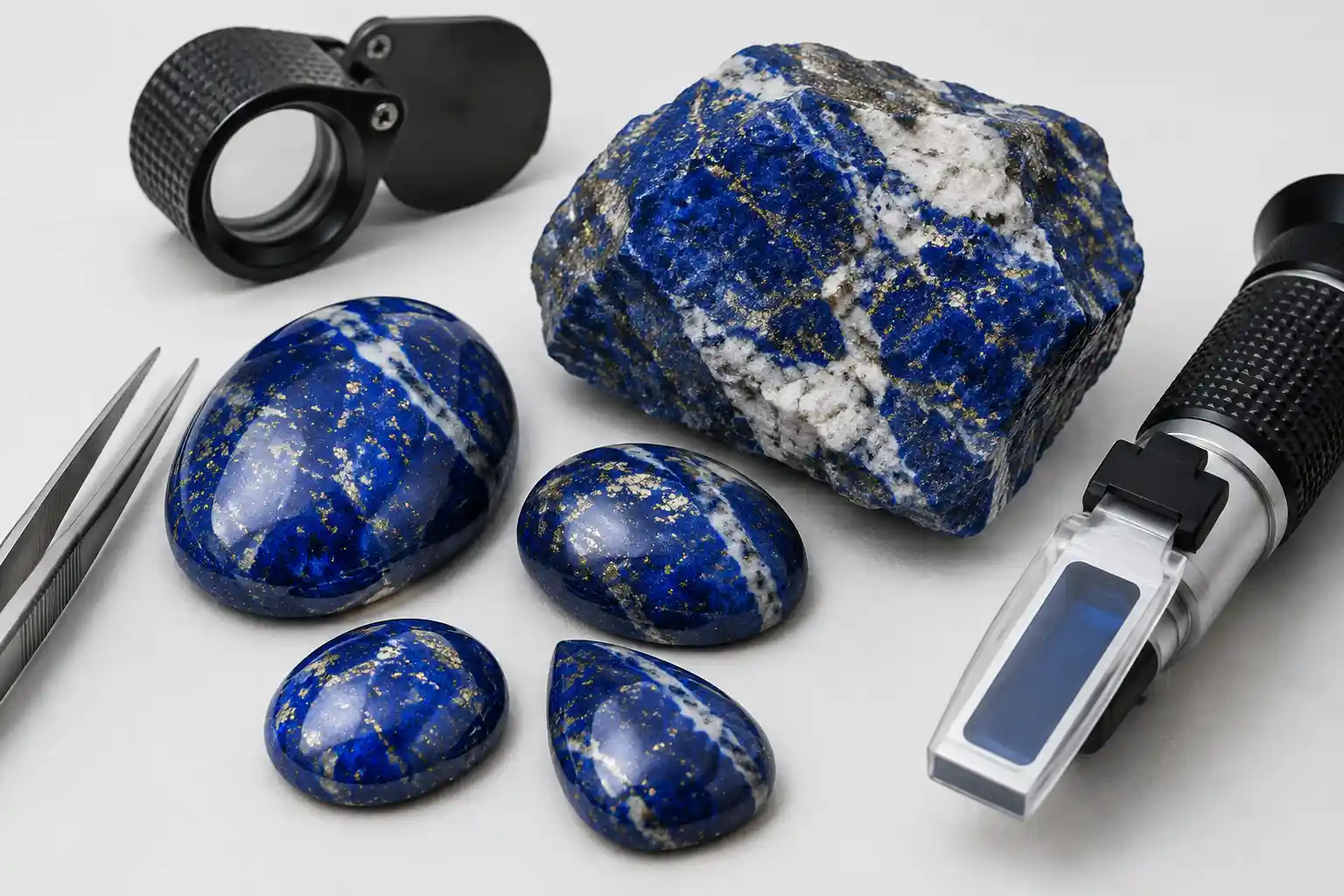
Lapis lazuli benefits extend far beyond modern crystal symbolism. This famous blue ornamental rock has been valued for thousands of years for jewelry, carved objects, decorative work, pigment production, collecting, and cultural expression. Its characteristic appearance comes primarily from lazurite, which contributes the prized blue color, together with varying amounts of calcite and pyrite. The small metallic-looking golden flecks seen in many pieces are usually pyrite rather than actual gold.
That composition is important because lapis lazuli is a rock made from several minerals, not a single mineral species. Fine examples can show an intense, highly saturated blue with little visible white calcite and a visually pleasing distribution of pyrite. Other pieces may be paler, strongly streaked with calcite, or show greenish areas and abundant pyrite. These variations create substantial differences in appearance, quality, carving potential, and commercial value.
Lapis lazuli benefits also include remarkable historical and artistic importance. The stone was treasured by ancient civilizations, shaped into ornaments and inlays, and later ground to create natural ultramarine pigment for important works of art. Modern spiritual traditions add themes such as truth, wisdom, communication, insight, and self-expression, but these beliefs should remain separate from medical claims. The most dependable benefits are found in the stone’s beauty, cultural history, lapidary versatility, geological interest, artistic legacy, and personal symbolism.
11 Lapis Lazuli Benefits at a Glance
- Intense blue color gives lapis lazuli lasting appeal in jewelry and decorative objects.
- Natural pyrite can create attractive golden-looking accents against the blue background.
- Jewelry versatility supports use in beads, pendants, earrings, brooches, inlays, and protected rings.
- Carving potential makes lapis suitable for cabochons, seals, figurines, boxes, plaques, and ornamental objects.
- Collecting value comes from differences in color, pyrite distribution, calcite content, locality, workmanship, and historical context.
- Mineralogical interest makes lapis useful for understanding rocks composed of several interacting minerals.
- Artistic importance includes its historic role as a source of natural ultramarine pigment.
- Cultural symbolism connects lapis with dignity, wisdom, truth, status, and intellectual or spiritual reflection.
- Personal use in meditation or journaling can provide a symbolic focus without requiring medical claims.
- Historical significance links lapis with ancient trade, craftsmanship, jewelry, and artistic traditions.
- Care awareness encourages safer ownership because lapis is moderately soft, porous in some pieces, and sensitive to inappropriate cleaning.
Deep Blue Color Is One of the Most Important Lapis Lazuli Benefits
Color is central to nearly every discussion of lapis lazuli benefits. High-quality lapis is admired for saturated blue ranging from slightly greenish blue through rich royal blue to violetish blue. Lazurite is the principal component responsible for the most desirable blue appearance, although the exact mixture of minerals inside the rock influences the final color and pattern.
Fine lapis can appear almost velvety because the blue is opaque and visually dense rather than transparent like sapphire. Small, evenly scattered pyrite particles may add attractive metallic contrast without overwhelming the surface. White calcite, by comparison, usually interrupts the blue and can reduce the visual uniformity that many buyers prefer. That does not make every calcite-bearing piece undesirable. Some people appreciate dramatic white veining or geological patterning, particularly in carvings or decorative objects.
The interaction of blue, white, and gold-colored features makes every piece somewhat individual. A cabochon with a smooth royal-blue field and fine pyrite can create a very different visual effect from a larger carving filled with calcite bands and irregular mineral textures. These differences are part of the appeal rather than defects that must always be eliminated.
Color also helps explain why lapis has maintained cultural importance across such a long span of history. Intense blue pigments and naturally blue ornamental stones were historically difficult to obtain in many regions. Lapis therefore offered an unusual visual richness that made it suitable for elite objects, ceremonial use, jewelry, and later fine-art pigments.
Jewelry and Carving Create Practical Lapis Lazuli Benefits
Lapis works especially well in jewelry styles that emphasize color and surface area. Cabochons, beads, pendants, earrings, brooches, signet-style pieces, and inlays can display the stone effectively because brilliance from faceting is not the main attraction. A broad polished surface allows the blue color, pyrite flecks, and natural pattern to dominate.
The stone requires sensible handling. Lapis lazuli generally falls around 5 to 6 on the Mohs hardness scale depending on its composition, and its toughness is commonly described as fair. These properties make it less resistant to scratches and impact than corundum gemstones such as ruby and sapphire. Pendants and earrings are therefore relatively forgiving choices, while rings intended for frequent wear benefit from protective settings and greater care.
Carving is another important area where lapis lazuli benefits become obvious. The stone has been fashioned into seals, beads, small sculptures, plaques, boxes, decorative panels, inlays, handles, and other ornamental objects for centuries. Its opaque color creates strong visual contrast with gold, silver, white stone, shell, wood, and many other substances used in decorative arts.
Lapidaries can also use natural patterning creatively. A white calcite vein may become part of a landscape-like composition, while scattered pyrite can suggest stars against a blue field. The best cutting decision therefore depends on the individual piece rather than on a universal rule that every inclusion or contrasting mineral must be removed.
When choosing a finished piece, color saturation, polish, visible calcite, pyrite distribution, treatment disclosure, construction quality, and craftsmanship all matter when deciding to buy lapis lazuli. Strong blue color alone does not guarantee that a jewel or carving has been cut, treated, or assembled well.
Mineralogy and Geology Add Educational Lapis Lazuli Benefits
One of the most interesting lapis lazuli benefits is its value as a geological teaching example. Unlike gemstones consisting predominantly of a single mineral species, lapis lazuli is a metamorphic rock made from an aggregate of minerals. Lazurite is especially important, while calcite and pyrite are common companions. Other minerals can also occur depending on locality and geological history.
This mixed composition explains why two pieces of lapis can look noticeably different. One may contain a high proportion of rich blue lazurite and minimal calcite, while another may show abundant white areas, pyrite veins, or additional mineral grains. Hardness can also vary somewhat across a piece because different minerals have different physical properties.
For students and collectors, this makes lapis useful for understanding the distinction between a mineral and a rock. A sapphire crystal belongs to a specific mineral species, corundum. Lapis lazuli, by contrast, is named for an aggregate whose recognizable appearance depends on multiple minerals occurring together.
Its geology also connects directly with source. Afghanistan has historically supplied highly regarded lapis and remains closely associated with the finest traditional examples. Chile and the Lake Baikal region of Russia are also notable sources, while lapis occurs in additional localities around the world. Geographic origin can interest collectors, but appearance and documentation should be evaluated carefully rather than inferred from color alone.
Ancient Trade and Cultural History Are Major Lapis Lazuli Benefits
Few ornamental stones have a cultural history as extensive as lapis. Archaeological evidence shows that people valued lapis thousands of years ago, and the stone became part of long-distance trade connecting mining regions with ancient centers of civilization. It appeared in beads, carved objects, inlays, seals, and prestigious ornaments.
Its intense blue color made it particularly desirable in societies where vivid blue substances were scarce. Lapis appeared in artistic and ceremonial contexts across parts of Mesopotamia, Egypt, the Mediterranean world, and Asia. The stone’s presence in important objects helped establish associations with status, prestige, authority, divinity, and intellectual or spiritual significance.
Historical use provides a genuine cultural foundation for modern symbolism, but individual traditions should not be blended into one universal ancient meaning. Different societies used lapis in different ways and attached different values to blue, gold-colored pyrite, jewelry, and imported luxury goods. Modern claims should therefore distinguish documented historical use from interpretations created much later.
This history is itself one of the strongest lapis lazuli benefits. A modern bead or cabochon belongs to the same type of ornamental rock that fascinated craftspeople and patrons over very long periods. That continuity gives the stone an intellectual and historical interest that exists independently of crystal-healing beliefs.
Natural Ultramarine Gives Lapis Exceptional Artistic Importance
The relationship between lapis lazuli and art is another genuine advantage of the stone. Historically, selected blue lapis could be ground and processed to produce natural ultramarine pigment. Producing a rich pigment from the rock required careful preparation because the desired blue component had to be separated from unwanted impurities.
Natural ultramarine became famous for its intense blue appearance and was highly prized in important paintings and illuminated works. Its cost and rarity meant artists and patrons did not treat it as an ordinary pigment. In some periods, the expense of high-quality ultramarine could influence where and how extensively it was used.
This artistic history gives lapis a dual identity. It can be admired as a gemstone-quality ornamental rock in jewelry or carvings, while also being understood as a historical source of one of art’s most celebrated blues. A collector interested in painting, manuscripts, decorative arts, or historical pigments may therefore value lapis for reasons entirely separate from conventional jewelry use.
Modern synthetic pigments have changed the economics of ultramarine, but they do not erase the importance of lapis in art history. The stone remains a physical connection between geology and visual culture, showing how a naturally occurring rock could influence human artistic expression.
Lapis Lazuli Benefits for Collectors Depend on Quality and Context
Collectors evaluate lapis according to several overlapping qualities. Saturated blue color is usually important, but pyrite pattern, calcite content, locality, size, cutting, surface condition, treatment, historical interest, and specimen form can all affect desirability. A mineral collector may value a rough geological specimen differently from a jewelry buyer looking for a uniformly blue cabochon.
Treatments need particular attention. Some lapis is dyed to deepen or equalize blue color. Wax or oil may also be used to improve surface appearance or luster. Such treatments do not automatically make a stone unacceptable, but they should be disclosed because they affect care, stability, and value.
Imitations can also occur. Dyed rocks, glass, reconstructed products, and other blue substances may be sold with appearances designed to resemble lapis. Artificially added metallic-looking particles can imitate pyrite in some products. Reliable sellers should describe what the product actually is rather than depending on color alone.
These distinctions help explain why lapis lazuli price can vary substantially between inexpensive beads, commercial carvings, fine cabochons, large decorative pieces, and noteworthy collector specimens. Size matters, but color quality, treatment, craftsmanship, provenance, and overall appearance can matter just as much.
Wisdom, Truth, and Communication Are Symbolic Lapis Lazuli Benefits
Modern lapis lazuli benefits often include symbolism connected with wisdom, truth, dignity, insight, communication, intellectual curiosity, and self-expression. Some of these themes draw loosely from the stone’s historical prestige and long use in ceremonial or elite objects, while others are more recent spiritual interpretations.
Wisdom is understandable as a symbolic theme because lapis has been associated with learning, status, religious thought, and important artistic traditions. A student or scholar might use a lapis pendant or desk stone as a personal reminder to remain curious and disciplined. The object does not increase intelligence, but it can represent the value placed on learning.
Truth and communication are similarly symbolic. A person might wear lapis as a reminder to speak carefully, communicate honestly, or remain consistent with personal principles. Such an interpretation can have psychological value as an intentional cue without requiring the gemstone to alter brain function or produce a physical energy.
Blue itself also influences these interpretations. Many people associate deep blue with seriousness, reflection, calmness, authority, or depth. Human responses to color vary across culture and experience, so these meanings are not universal physical properties. They are part of the symbolic language people build around objects.
Meditation and Reflection Can Use Lapis Without Medical Claims
Lapis is frequently included in modern meditation, journaling, spiritual practice, or contemplative routines. Its intense blue color and long cultural history can make it a compelling object of focus. A person may hold a polished stone while reflecting on honesty, communication, education, personal values, or a difficult decision.
The usefulness of such a practice can come from the structure of the ritual itself. Setting aside quiet time, focusing attention on an object, slowing breathing, or writing deliberately can support a reflective routine. Those experiences do not prove that lapis emits a healing field or changes biological systems.
Modern crystal traditions sometimes connect lapis with throat or third-eye chakra concepts, intuition, mental clarity, emotional expression, or spiritual awareness. These ideas belong to spiritual frameworks rather than anatomy. The separate traditions described around lapis lazuli healing properties should therefore be interpreted as belief-based claims with clear evidence limits rather than as reasons to replace medical care.
This distinction allows symbolism to remain useful without overstating what the stone can do. Lapis can be meaningful during meditation because of its color, history, personal associations, and ritual role even when no therapeutic mechanism is attributed to it.
Care and Treatment Awareness Protect Lapis Lazuli
Understanding care requirements is one of the most practical lapis lazuli benefits because correct handling can preserve jewelry and carvings for many years. Lapis is softer than many familiar jewelry gemstones and may contain calcite, pyrite, fractures, pores, dyes, waxes, or oils that respond differently to cleaning agents.
Warm soapy water and gentle cleaning are generally the safest approach for ordinary untreated or appropriately tested pieces. Harsh chemicals, strong solvents, acids, abrasive cleaners, steam, and aggressive ultrasonic cleaning should be avoided. Acidic substances are particularly unsuitable because calcite components can react with acids, while some dyes or surface treatments may also be damaged by solvents or heat.
Storage should keep lapis away from harder gemstones and abrasive surfaces. A soft pouch or lined compartment reduces the chance of scratching. Rings and bracelets should be removed before demanding physical work, cleaning with household chemicals, or activities in which the stone may strike hard surfaces.
Treatment status can change care requirements. A dyed or wax-treated piece may need more conservative handling than an untreated stone. Asking about treatments at the time of purchase therefore has practical value, not merely commercial significance.
What Lapis Lazuli Benefits Do Not Include
Lapis lazuli has genuine artistic, historical, decorative, geological, and symbolic value, but these qualities should not be stretched into unsupported health claims. There is no established evidence that wearing or holding lapis cures disease, treats anxiety disorders, improves thyroid function, regulates hormones, removes toxins, strengthens immunity, changes circulation, or treats neurological or psychiatric conditions.
Its minerals also do not enter the body beneficially simply because the rock touches the skin. Pyrite, calcite, and lazurite contribute to the stone’s appearance and geology, not to a medically proven transdermal treatment.
A person can still use lapis as a meaningful reminder of truth, study, creativity, communication, or reflection. Cultural and spiritual symbolism can coexist with scientific accuracy when the two are not confused. That evidence-safe approach preserves what makes lapis interesting while keeping health decisions grounded in appropriate medical information.
Conclusion
Lapis lazuli benefits are unusually diverse because the stone connects geology, jewelry, carving, ancient trade, cultural history, painting, collecting, and personal symbolism. Its rich blue color, occasional golden-looking pyrite, artistic versatility, and historic role in natural ultramarine give it genuine value without relying on healing claims.
Responsible use also means recognizing its limitations. Lapis is moderately soft, may contain sensitive components or treatments, and benefits from gentle cleaning and protected wear. Wisdom, truth, communication, and spiritual themes can remain meaningful as personal or cultural interpretations, while medical claims require evidence that lapis itself does not provide.
FAQs
What are the most important lapis lazuli benefits?
The strongest lapis lazuli benefits include its rich blue color, jewelry and carving versatility, collector appeal, geological interest, ancient cultural history, and important connection with natural ultramarine pigment. It can also serve as a personally meaningful symbol of wisdom, truth, learning, or communication. These uses are distinct from unproven claims that the stone medically changes the body or mind.
Is lapis lazuli a mineral or a gemstone?
Lapis lazuli is an ornamental rock rather than a single mineral. It is composed mainly of several minerals, with lazurite providing much of the prized blue color and calcite and pyrite commonly present. Other minerals can occur as well. The rock is nevertheless widely treated as a gemstone in jewelry and decorative arts because of its beauty, rarity, history, and suitability for polishing and carving.
What makes high-quality lapis lazuli valuable?
Strong, saturated blue color is usually one of the most important quality factors. Many buyers prefer pieces with little visible white calcite and either minimal pyrite or small, attractively distributed golden-looking pyrite flecks. Treatment, size, craftsmanship, surface condition, provenance, locality, and form also influence desirability. A collector specimen, a fine cabochon, and a large carving may therefore be valued according to different priorities.
Can lapis lazuli be worn every day?
Lapis can be worn regularly when the jewelry design and activity level are appropriate, but it is less durable than sapphire or ruby. Its hardness generally falls around 5 to 6, and its toughness is considered fair. Pendants and earrings are usually easier to protect, while rings and bracelets can face more scratching and impact. Removing lapis jewelry before physical work or harsh cleaning helps preserve the polish.
Why does lapis lazuli sometimes contain gold-colored flecks?
The metallic-looking flecks commonly seen in lapis are pyrite, an iron sulfide mineral, rather than gold. Fine scattered pyrite can produce an attractive contrast against the blue rock, although large concentrations may affect appearance differently. White areas are commonly associated with calcite. The relative amounts and distribution of these minerals contribute to each piece’s individual pattern.
Was lapis lazuli really used to make blue paint?
Yes. Historically, selected lapis lazuli was processed to obtain natural ultramarine, a highly prized blue pigment used in important paintings and other artworks. Producing fine pigment required considerable preparation, and high-quality natural ultramarine could be expensive. This connection between geology and painting is one of the most distinctive historical lapis lazuli benefits.
Does lapis lazuli improve communication or wisdom?
Communication and wisdom are symbolic associations rather than scientifically demonstrated effects of the stone. Someone may use lapis jewelry or a polished stone as a reminder to communicate honestly, study carefully, or reflect before making decisions. That type of personal symbolism can be meaningful, but lapis has not been shown to increase intelligence, alter cognition, or medically improve communication disorders.
How should lapis lazuli be cleaned safely?
Gentle cleaning with warm water, mild soap, and a soft cloth is generally safer than harsh methods. Strong acids, solvents, abrasive products, steam, and aggressive ultrasonic cleaning should be avoided because lapis can contain calcite and may also be dyed, waxed, oiled, fractured, or otherwise sensitive. Treated pieces can require additional caution, so treatment disclosure is useful when planning long-term care.
Are lapis lazuli healing benefits scientifically proven?
No. Historical and modern spiritual traditions have attributed many wellness effects to lapis, but those claims are not established medical treatments. The stone’s demonstrated qualities relate to its geology, appearance, cultural history, jewelry use, art, and collecting. Anyone facing a physical or mental-health problem should rely on qualified health care rather than using lapis as a replacement for diagnosis or treatment.
Lapis lazuli benefits involving spiritual or wellness traditions are cultural and personal interpretations, not established medical effects or substitutes for qualified health care.