9 Real Padparadscha Sapphire Benefits: Deep Uses, Verified Facts, Important Cautions
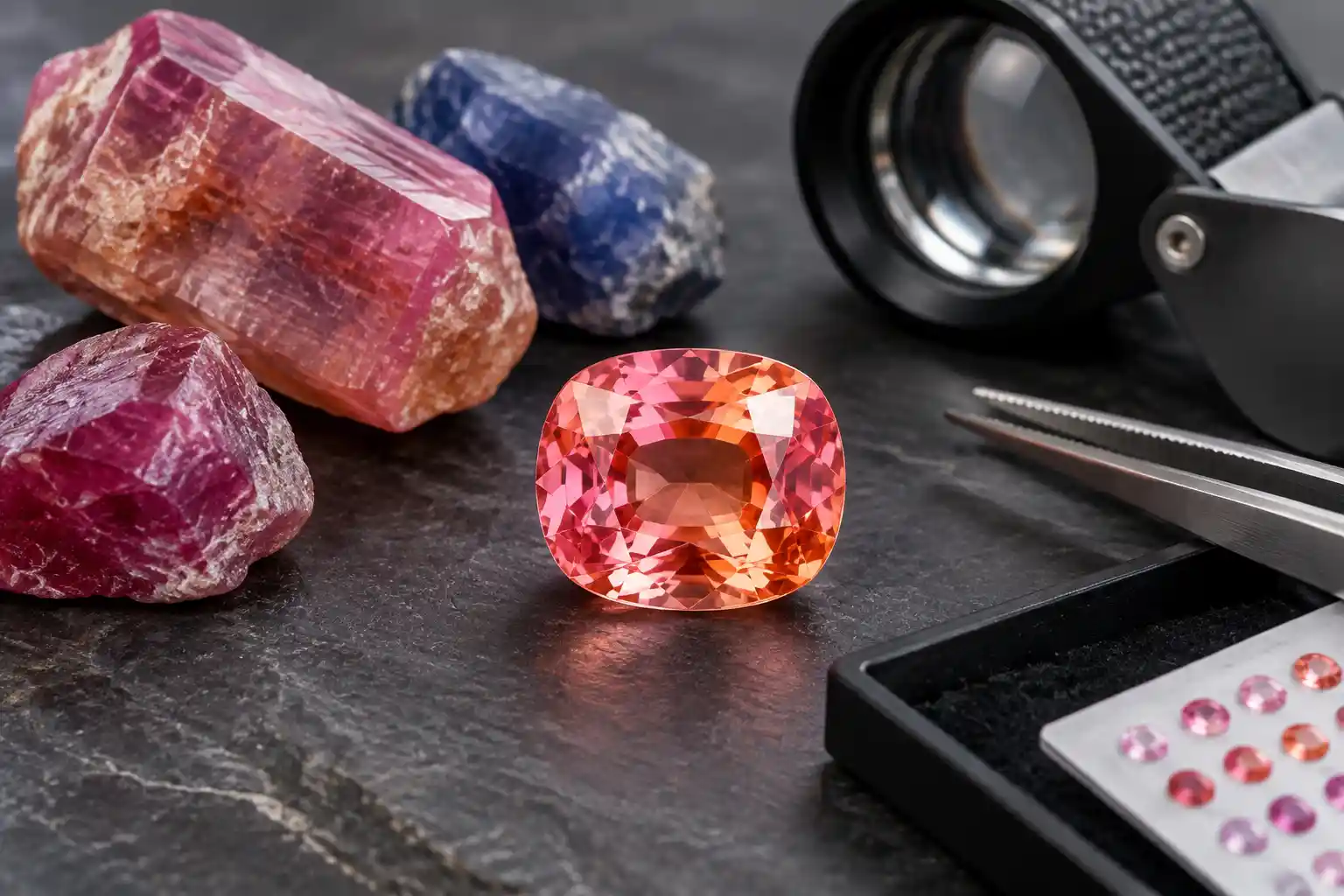
Padparadscha Sapphire benefits begin with an unusually delicate balance of pink and orange in one of the world’s most durable gem minerals. Padparadscha is a rare sapphire variety within corundum, aluminum oxide with the formula Al₂O₃. Unlike blue sapphire, which owes its color primarily to iron and titanium interactions, padparadscha occupies a narrow pinkish-orange to orangy-pink range whose precise boundaries have long been debated within the gem trade.
The name is traditionally connected with a lotus-blossom color, and Sri Lanka is historically important to the identity of the variety. Fine pink-orange sapphires also occur in other deposits, including East African and Madagascar sources. Geographic origin alone does not determine whether a sapphire qualifies as padparadscha, because color character, treatment status, stability, and laboratory interpretation all matter.
Real Padparadscha Sapphire benefits include Mohs hardness 9, excellent jewelry durability, rare and distinctive color, strong collector appeal, high-quality faceting potential, and an unusual combination of individuality and long-term wearability. Its rarity also creates important cautions. Heat treatment, beryllium diffusion, unstable color behavior, synthetic counterparts, and loose use of the padparadscha name make professional identification especially valuable when significant prices are involved.
9 Padparadscha Sapphire Benefits at a Glance
- A rare balance of pink and orange creates a highly distinctive sapphire color.
- Mohs hardness 9 provides exceptional resistance to everyday scratching.
- Corundum durability makes fine stones suitable for engagement rings and frequently worn jewelry.
- Strong transparency and good cutting can produce impressive brilliance without sacrificing color.
- Scarcity gives qualifying natural stones substantial collector interest.
- Historical association with Sri Lanka and lotus-blossom color adds cultural and gemological identity.
- Laboratory testing can clarify treatment, synthetic origin, color stability, and whether a stone qualifies for the padparadscha description.
- Jewelry can symbolize individuality, warmth, commitment, or important milestones without requiring healing claims.
- Careful buying protects owners from overpaying for treated, unstable, poorly colored, or inaccurately labeled stones.
Pink and Orange Balance Is the Defining Padparadscha Sapphire Benefit
Color is the foundation of Padparadscha Sapphire benefits. The gemstone is not merely any orange sapphire or any pink sapphire. Its identity depends on an attractive blend of both color families, commonly described within a light to medium pinkish-orange or orangy-pink range.
This balance can be difficult to describe precisely because perception depends on tone, saturation, lighting, cutting, surrounding colors, and individual visual sensitivity. One person may see more pink, while another notices orange first.
Very dark, brownish, strongly yellow, or heavily saturated red-orange stones generally move away from the appearance traditionally associated with padparadscha. Exact laboratory criteria can also differ somewhat because the definition has historically been debated.
This makes color evaluation more nuanced than simply matching a photograph. A fine stone should be examined under neutral lighting and ideally accompanied by a reputable laboratory report when the padparadscha designation contributes significantly to price.
Corundum Hardness Makes Padparadscha Excellent for Jewelry
Durability is among the strongest Padparadscha Sapphire benefits. Corundum has Mohs hardness 9, making sapphire one of the hardest natural gemstones commonly used in jewelry.
This resistance to scratching is particularly valuable in rings. Everyday dust can contain quartz, which readily scratches softer stones but normally cannot scratch sapphire. A well-polished Padparadscha Sapphire can therefore preserve facet edges and surface luster well over long periods.
Hardness does not mean indestructibility. A sapphire can still chip from a severe impact, especially along exposed corners, girdle edges, or vulnerable points in pear, marquise, or princess-style shapes.
Protective settings and normal jewelry habits still matter, but Padparadscha Sapphire offers substantially more wear resistance than softer gems such as opal, moonstone, calcite, pearl, or fluorite.
Padparadscha Sapphire Works Especially Well in Milestone Jewelry
Rare color and high durability make Padparadscha Sapphire suitable for engagement rings, anniversary jewelry, heirloom pieces, pendants, earrings, and other important designs.
The pink-orange palette can work with several metals. Rose gold may emphasize the warm pink component, while yellow gold can reinforce orange tones. Platinum and white gold create stronger contrast and may make the gem appear warmer by comparison.
Diamond accents are common because colorless stones frame the sapphire without competing directly with its unusual hue. Pink or orange side stones can create a more tonal design, although careful matching is necessary because padparadscha colors vary considerably.
Anyone preparing to buy Padparadscha Sapphire should evaluate both gemstone quality and setting design. A rare center stone deserves secure prongs, a well-built mounting, and craftsmanship appropriate for frequent wear.
Rarity Creates Strong Collector Appeal
Scarcity is another important Padparadscha Sapphire benefit. Stones that satisfy strict color expectations while also offering attractive clarity, cutting, size, and treatment status are relatively uncommon.
This scarcity becomes more significant in larger stones because maintaining a desirable balance of color throughout substantial transparent rough is difficult. Fine untreated examples with laboratory confirmation can therefore receive strong market attention.
Collector interest does not depend on size alone. A smaller sapphire with exceptional color may be more desirable than a much larger stone that is too orange, too pink, too dark, or heavily included.
Origin can add interest, particularly for historically important Sri Lankan stones, but locality should not replace quality assessment. Madagascar and East African sources can also produce attractive pink-orange sapphires.
Treatment Disclosure Is Essential to Padparadscha Sapphire Benefits
Sapphire treatment is common, and heat treatment can improve color or clarity in many corundum varieties. A heated natural sapphire remains natural corundum, but treatment disclosure matters because untreated stones may carry significant premiums.
Padparadscha requires even greater caution because high-temperature treatment combined with beryllium diffusion can create or strengthen orange coloration in pink sapphire, producing a padparadscha-like appearance.
This type of enhancement can be difficult to evaluate visually. Sophisticated laboratory testing may be required to detect treatment and determine whether the stone should receive a particular descriptive designation.
Buyers should therefore avoid assuming that attractive pink-orange color proves natural untreated origin. Independent documentation becomes more important as price increases.
Color Stability Is an Important Buying Consideration
Some pink and orange sapphires can show unstable color behavior related to light exposure. A sapphire may temporarily develop or intensify an orange component under certain illumination and then return toward a pinker appearance after appropriate testing or environmental changes.
This phenomenon matters because padparadscha identity depends heavily on stable color. A stone that only looks appropriately pink-orange because of a temporary light-induced state may not qualify after professional stability testing.
Consumers are unlikely to evaluate this reliably at home. The practical lesson is that a reputable gemological report can provide information unavailable through photographs, retailer descriptions, or casual visual inspection.
This is one of the less obvious Padparadscha Sapphire benefits of professional documentation. Certification is not simply paperwork when the commercial variety depends on subtle color boundaries and stability.
Price Reflects Rarity, Color, Treatment, and Documentation
Padparadscha Sapphire can command substantial premiums, but price varies dramatically. Color quality is usually central, with attractive balanced pink-orange hues receiving the strongest attention.
Carat weight, clarity, cutting, treatment history, natural versus synthetic origin, geographic origin when established, color stability, and laboratory documentation can all influence value.
The factors behind Padparadscha Sapphire price should therefore be evaluated together rather than reduced to a single per-carat number.
A larger stone that falls outside accepted padparadscha color may be worth less than a smaller gem with exceptional hue. Similarly, an untreated stone may command a premium over a comparable heated example, while diffusion treatment can change market positioning substantially.
High asking price should never be treated as evidence of authenticity.
Corundum Mineralogy Gives Padparadscha Scientific Value
Padparadscha is part of the corundum mineral species, linking it directly with ruby, blue sapphire, yellow sapphire, pink sapphire, and other fancy-colored sapphires.
Pure corundum is aluminum oxide and would be colorless. Trace elements and defects create the diverse colors seen in natural gems. Chromium is particularly important in pink and red corundum, while iron and other factors can contribute to orange components.
This makes Padparadscha Sapphire useful for understanding how small chemical differences produce major visual changes within one mineral species.
The wider Sapphire benefits provide useful context because durability, corundum chemistry, crystal structure, and jewelry performance are shared across the sapphire family even though each color variety occupies a different market niche.
Symbolism Can Center on Warmth, Individuality, and Commitment
Modern Padparadscha Sapphire benefits can include symbolic value, especially in engagement or anniversary jewelry. The unusual combination of pink and orange often inspires associations with warmth, affection, optimism, creativity, individuality, or sunrise and sunset colors.
Lotus imagery can also influence interpretation because the commercial name is historically associated with lotus-blossom color. A wearer may connect this with beauty, renewal, or personal growth.
These associations are cultural and personal rather than biological effects of corundum. The gemstone does not create love, improve fertility, alter mood disorders, or guarantee relationship success.
Symbolism becomes strongest when attached to a real relationship or event. A rare stone chosen deliberately for an engagement may eventually represent years of shared history rather than a standardized metaphysical definition.
Padparadscha Sapphire Care Is Straightforward but Professional Work Matters
Corundum’s hardness makes routine care relatively simple. Warm water, mild soap, and a soft brush are appropriate for many untreated or conventionally heat-treated sapphires.
Professional caution is advisable when treatment history is uncertain. Fracture filling, surface coatings, or unusual enhancements can change how a stone should be cleaned or repaired.
Jewelers should know what they are working with before applying high heat during repairs because some treatments and inclusions can respond differently to extreme temperatures.
Storage away from diamond helps protect polished facets from the few common jewelry stones capable of scratching sapphire. Separate compartments also prevent the sapphire itself from scratching softer jewelry.
What Padparadscha Sapphire Benefits Do Not Include
Padparadscha Sapphire benefits do not include scientifically established treatment for anxiety, depression, fertility problems, hormonal disorders, heart conditions, circulation issues, inflammation, or other illnesses.
The stone’s warm color may feel emotionally uplifting to an owner, but visual preference is different from medical treatment. Likewise, chromium, iron, or other trace elements responsible for color do not become therapeutic nutrients through normal jewelry contact.
Modern spiritual traditions surrounding Sapphire healing properties can be discussed as cultural or personal beliefs, but they should not replace medical evidence.
Conclusion
Padparadscha Sapphire benefits combine a rare pink-orange color balance with Mohs hardness 9, excellent jewelry durability, collector scarcity, corundum mineralogy, and strong potential for milestone jewelry. Few colored gemstones offer the same combination of delicacy in appearance and physical resistance to wear.
Its rarity also makes careful buying essential. Color definition, heat treatment, beryllium diffusion, synthetic origin, color stability, and laboratory documentation can all affect whether a stone deserves the padparadscha designation and premium. Warmth, individuality, commitment, and renewal can remain meaningful symbolism without turning the gem into a source of unsupported healing claims.
FAQs
What are the main Padparadscha Sapphire benefits?
The strongest Padparadscha Sapphire benefits include rare pink-orange color, Mohs hardness 9, excellent jewelry durability, collector appeal, faceting potential, corundum mineralogy, and strong suitability for engagement or milestone jewelry. Symbolic themes such as warmth, individuality, and commitment are personal rather than medical effects.
What exactly is Padparadscha Sapphire?
Padparadscha is a rare pinkish-orange to orangy-pink variety of sapphire. Sapphire is corundum, aluminum oxide with the formula Al₂O₃. The exact commercial color boundary has long been debated, so reputable laboratory identification can be important for valuable stones.
How hard is Padparadscha Sapphire?
Like other sapphire, Padparadscha Sapphire has Mohs hardness 9. This provides excellent resistance to everyday scratches and makes it suitable for frequently worn jewelry. Hard impacts can still chip facet edges or exposed corners.
Is Padparadscha Sapphire good for an engagement ring?
Yes. Its durability, rarity, distinctive color, and ability to take an excellent polish make it very suitable for engagement rings. A secure setting remains important, particularly for valuable stones intended for daily wear.
Does Padparadscha Sapphire always come from Sri Lanka?
No. Sri Lanka is historically important to the identity of padparadscha, but attractive pink-orange sapphires also occur in Madagascar and East African deposits. Geographic origin does not by itself determine whether a stone qualifies for the padparadscha description.
Is Padparadscha Sapphire treated?
Some stones are untreated, while others have been heat treated. Beryllium diffusion can also create padparadscha-like pink-orange colors in sapphire. Treatment history can substantially influence price and should be disclosed accurately.
Why is a laboratory report important for Padparadscha Sapphire?
The commercial definition depends on a narrow color range, and treatment, synthetic origin, diffusion, or unstable color can complicate visual identification. A qualified laboratory can assess characteristics that are difficult or impossible for buyers to determine from photographs alone.
Why is Padparadscha Sapphire expensive?
Fine stones combine rarity, desirable pink-orange color, good clarity, attractive cutting, durable corundum structure, and strong demand. Larger qualifying stones can be particularly scarce. Treatment status and laboratory documentation can also have significant effects on price.
Does Padparadscha Sapphire have healing powers?
There is no established scientific evidence that Padparadscha Sapphire diagnoses, treats, cures, or prevents physical or mental-health conditions. Claims involving emotional healing, fertility, hormones, circulation, or spiritual energy belong to metaphysical traditions rather than established medicine.
Padparadscha Sapphire benefits involving healing energy, emotional wellness, reproductive health, or spiritual effects reflect cultural, personal, or metaphysical interpretations and should not replace qualified physical or mental-health care.