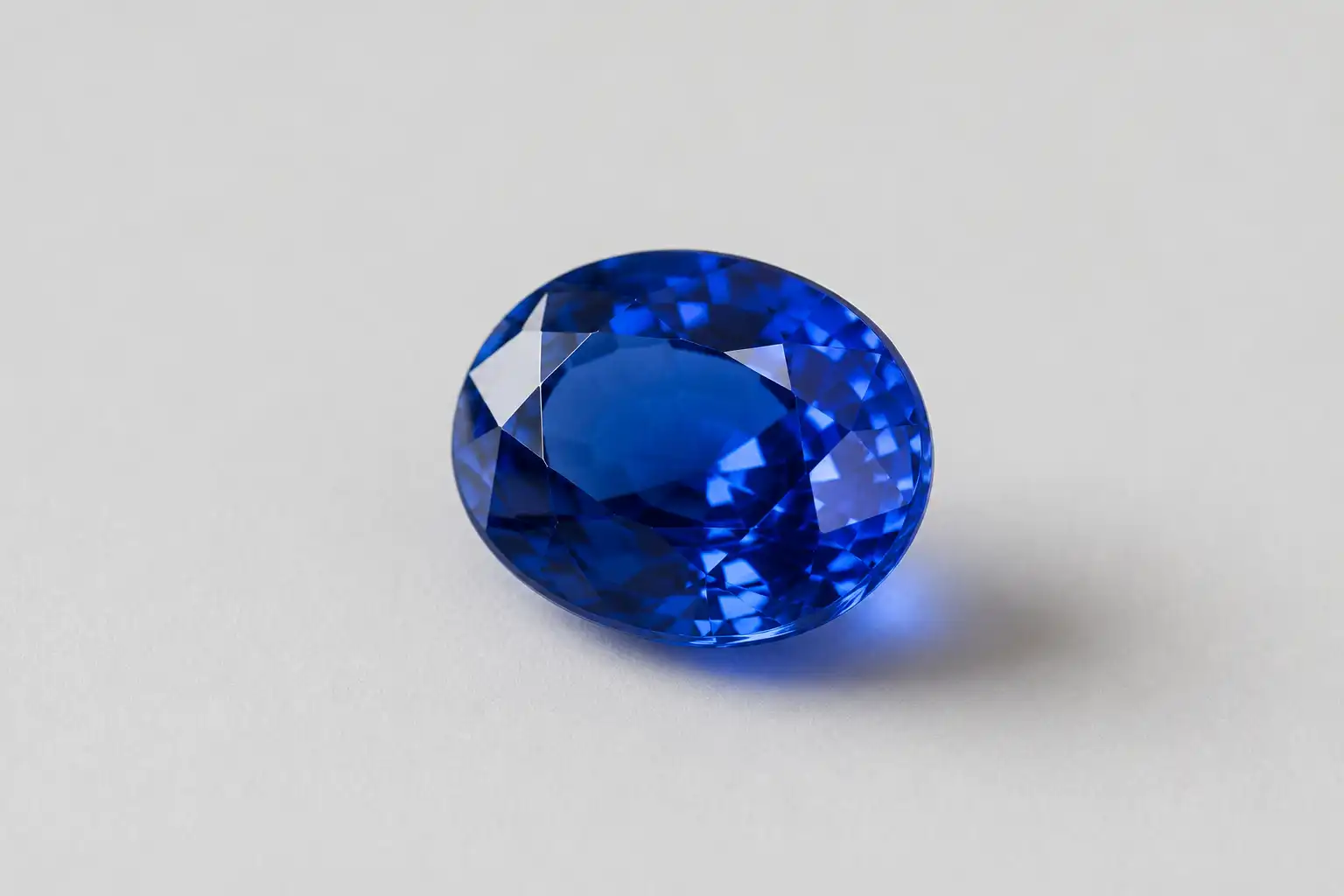
Sapphire Healing Properties: Meaning, Benefits and Uses
Sapphire is traditionally associated with wisdom, truth, loyalty, disciplined thought and responsible commitment. Blue sapphire carries the strongest connection with mental clarity and communication, while pink, yellow, white, green, purple and black sapphires have developed distinct symbolic meanings through color traditions.
Modern crystal practitioners may use sapphire during meditation, journaling, intention-setting or significant conversations. The stone can serve as a visible reminder to examine facts, speak carefully, remain loyal to chosen values and distinguish confidence from certainty.
These healing properties are spiritual and cultural interpretations rather than scientifically established medical effects. Sapphire does not treat depression, anxiety, eye disease, throat problems, neurological conditions, hormone disorders or any other illness.
The complete mineral profile, geology and history appear in Sapphire: Meaning, Properties & Symbolism. Color-specific traditions are explained in Sapphire Color Meaning and Symbolism.
Sapphire Healing Properties at a Glance
| Traditional association | Responsible interpretation |
|---|---|
| Wisdom | Considering evidence, consequences and several perspectives |
| Truth | Communicating accurately while accepting correction |
| Mental clarity | Organizing information and reducing avoidable distraction |
| Focus | Returning attention to one defined task |
| Communication | Preparing language, listening and speaking with care |
| Loyalty | Acting consistently with chosen commitments and values |
| Protection | Using boundaries and practical safeguards |
| Confidence | Trusting preparation without demanding certainty |
| Intuition | Noticing patterns while checking them against evidence |
| Love | Practicing honesty, trust and reciprocal commitment |
| Spiritual insight | Reflective inquiry rather than supernatural certainty |
| Emotional balance | Naming feelings without allowing them to dictate every action |
What Does Crystal Healing Mean?
Crystal healing uses gemstones as symbolic objects during rituals, meditation and reflective practice.
A sapphire can become associated with a value such as truth or focus. Seeing or handling it may then remind the person to act according to that value.
That attentional function does not require the mineral to emit a medically active force.
Sapphire’s color, rarity and historical importance make it a strong symbolic object, but its measurable properties are hardness, density, refractive behavior, chemistry and crystal structure.
The broader foundations of belief-based crystal use appear in Best Crystals for Healing.
Sapphire and Wisdom
Wisdom is sapphire’s central traditional association.
In this context, wisdom means more than possessing information. It involves evaluating evidence, recognizing uncertainty and considering the effects of a decision on other people.
A sapphire can be placed beside a notebook during planning or study.
Before acting, the practitioner may ask which facts are known, which assumptions remain untested and what information could change the conclusion.
The stone cannot provide hidden knowledge. It can represent the discipline required to seek it.
Sapphire and Truth
Sapphire has long represented truth and integrity.
A responsible truth practice includes accuracy, context and willingness to correct an error.
Directness without care can become cruelty, while politeness without honesty can become avoidance.
A sapphire may be worn before an important conversation as a reminder to state the issue clearly, listen fully and avoid exaggeration.
For a broader symbolic stone comparison, see Best Crystals for Communication and Public Speaking.
Sapphire and Mental Clarity
Blue and white sapphire are frequently associated with mental clarity.
The safest interpretation treats clarity as organization rather than a supernatural clearing of the brain.
A sapphire can sit beside a written task list while the person separates immediate actions from concerns that cannot yet be resolved.
The goal is not to eliminate every thought. Instead, the practice identifies which thought deserves attention first.
Persistent cognitive changes, confusion or memory problems require medical assessment rather than crystal use.
Sapphire for Focus
Sapphire symbolism suits tasks that require sustained concentration.
A person may place the stone beside study materials, silence unnecessary notifications and select one measurable work period.
When attention wanders, seeing the sapphire can prompt a return to the chosen task.
The mineral does not improve attention biologically.
The broader Best Crystals for Focus and Concentration guide compares sapphire with fluorite, clear quartz, tiger’s eye and other symbolic options.
Sapphire for Communication
Blue sapphire is commonly connected with careful speech and responsible authority.
It may be useful symbolically before teaching, presenting, negotiating or giving difficult feedback.
A practical exercise involves writing the main point, the evidence supporting it and the action being requested.
Communication also requires listening. Sapphire’s wisdom symbolism can represent the pause needed to understand another perspective before answering.
The stone cannot force someone else to agree or interpret a message as intended.
Sapphire and Loyalty
Sapphire has a long association with loyalty, fidelity and promises.
A ring or pendant may symbolize a commitment to a partner, family, profession or personal ethical standard.
Healthy loyalty is not blind obedience.
A commitment can include conditions, boundaries and the possibility of reconsideration when circumstances become harmful.
The gemstone does not guarantee another person’s fidelity. It can represent the wearer’s intention to act consistently and communicate honestly.
Sapphire and Protection
Protection traditions often present sapphire as a guard against deception, envy or spiritual harm.
A practical interpretation focuses on discernment and boundaries.
The stone can mark the decision to verify information, secure accounts, protect private details or leave an unsafe situation.
No gemstone replaces locks, protective equipment, legal assistance or safety planning.
The broader Best Crystals for Protection guide compares different symbolic approaches without treating stones as physical shields.
Sapphire and Confidence
Sapphire confidence is traditionally quieter than ruby’s activating symbolism.
It represents confidence based on preparation, knowledge and consistency.
A person may wear sapphire during an interview or presentation after reviewing the relevant material and practicing their response.
The stone can symbolize accepting visibility without pretending to know everything.
The wider Best Crystals for Confidence and Self-Esteem guide compares more activating and more grounding traditions.
Sapphire and Intuition
Purple and deep-blue sapphire are often associated with intuition.
A responsible definition of intuition recognizes rapid pattern recognition and emotional information without treating every impression as supernatural truth.
A sapphire meditation may begin by recording an initial feeling, followed by the evidence that supports or challenges it.
This creates space for insight without abandoning verification.
The broader Best Crystals for Intuition and Psychic Ability guide discusses spiritual traditions while maintaining evidence boundaries.
Sapphire and Emotional Balance
Sapphire is traditionally considered a cooling, stabilizing stone.
Symbolically, it may support a pause before reacting to anger, fear or excitement.
Emotional balance does not mean suppressing feeling. It means recognizing the emotion and choosing a response that fits the situation.
A person can hold sapphire while writing what happened, what they feel and what action remains within their control.
Severe or persistent emotional distress requires qualified mental-health support.
Sapphire and Love
Sapphire’s love symbolism emphasizes trust, loyalty and commitment.
Blue sapphire represents honest communication, while pink sapphire introduces compassion and emotional openness.
A sapphire gift may mark an engagement, anniversary or renewed promise.
The gemstone cannot create attraction, prevent betrayal or repair a relationship without mutual action.
The broader Best Crystals for Love and Romance guide compares sapphire with ruby, rose quartz, garnet and other relationship symbols.
Blue Sapphire Healing Properties
Blue sapphire is linked with wisdom, disciplined thought, communication and truth.
Its color supports modern throat- and third-eye-chakra associations.
A blue sapphire may be used while studying, preparing a speech or considering a decision that affects several people.
Dark blue stones can symbolize depth and responsibility, while lighter blue may feel more open and conversational.
The shade does not determine a scientifically measurable energy.
The stone’s physical color is created through trace-element and structural mechanisms within corundum.
Pink Sapphire Healing Properties
Pink sapphire symbolizes affection, emotional courage and compassionate honesty.
Its meaning is more resilient and active than the gentle comfort commonly assigned to rose quartz.
A person may use pink sapphire when they want to communicate care while retaining personal boundaries.
Pale pink can represent tenderness, whereas vivid magenta may symbolize confidence in emotional expression.
The stone does not treat grief, trauma or relationship problems medically.
Yellow Sapphire Healing Properties
Yellow sapphire is associated with optimism, learning, discernment and prosperity guided by judgment.
It may be used symbolically while planning education, career development or financial goals.
The best practice connects the stone with specific actions such as studying, saving or completing an application.
Yellow sapphire does not generate wealth.
Its broader mineral profile appears in Yellow Sapphire.
White Sapphire Healing Properties
White Sapphire symbolizes clarity, honesty and simplification.
A person may use it while separating essential priorities from unnecessary commitments.
Its colorless appearance can represent stating an intention without embellishment.
White sapphire does not cleanse the body, remove toxins or purify thoughts biologically.
The useful practice lies in reviewing choices and removing avoidable complexity.
Green Sapphire Healing Properties
Green sapphire is associated with renewal, practical insight and steady development.
Its symbolism suits goals that require patience rather than dramatic transformation.
A practitioner might place the stone beside a long-term plan and review progress at regular intervals.
Green sapphire can also bridge heart-centered compassion with evidence-based decision-making.
The stone does not treat the heart, immune system or physical growth.
Purple Sapphire Healing Properties
Purple and violet sapphire are linked with contemplation, dignity and spiritual inquiry.
They may be used during meditation on values, meaning or personal philosophy.
A responsible practice allows uncertainty and avoids treating impressions as unquestionable revelation.
Purple sapphire can symbolize the willingness to reconsider a belief when evidence changes.
The stone does not produce psychic powers or diagnose hidden conditions.
Black Sapphire Healing Properties
Black sapphire is associated with boundaries, resilience and containment.
Its symbolism may suit situations where a person needs to limit distraction, protect private information or remain steady under pressure.
Protection should always be translated into practical behavior.
A black sapphire cannot block harmful radiation, prevent violence or remove another person’s influence.
Its use is reflective rather than physically defensive.
Padparadscha Sapphire Symbolism
Padparadscha sapphire combines pink and orange, supporting themes of joy, balanced passion and transition.
The completed Padparadscha Sapphire Color Meaning guide explores these associations in depth.
A practitioner may use the stone when enthusiasm needs compassion or when a relationship transition requires both warmth and clear judgment.
Its rarity and laboratory classification do not make its spiritual effect stronger than that of another sapphire color.
Star Sapphire Healing Properties
Star Sapphire displays a moving star created by oriented inclusions.
The visual rays inspired traditions involving guidance, purpose and protection.
A person may use the moving star as a meditation focus, returning attention to its center when the mind wanders.
The effect does not provide supernatural direction.
Synthetic and diffusion-treated star sapphires also exist, demonstrating that symbolism and geological origin are separate questions.
Sapphire and the Throat Chakra
Blue sapphire is commonly associated with the Throat Chakra.
Modern chakra traditions connect this center with speech, listening, truth and self-expression.
A sapphire practice can support preparation for a conversation or presentation.
The complete comparative list appears in Throat Chakra Crystals.
Chakras are spiritual subtle-body concepts rather than physical organs, and sapphire does not treat thyroid, vocal or throat disorders.
Sapphire and the Third Eye Chakra
Indigo and purple sapphire are frequently connected with the Third Eye Chakra.
This symbolic center is associated with insight, interpretation and perception.
A sapphire meditation may focus on distinguishing observation from assumption.
The wider list appears in Third Eye Chakra Crystals.
The stone does not alter vision, brain function or supernatural perception.
Sapphire and the Solar Plexus Chakra
Yellow sapphire is often linked with the Solar Plexus Chakra.
Modern traditions associate this center with confidence, decision-making and personal responsibility.
A yellow sapphire may symbolize acting on a decision after enough evidence has been gathered.
The stone cannot treat digestive or endocrine conditions.
Its value lies in connecting confidence with preparation and accountability.
Sapphire and the Heart Chakra
Pink and green sapphire can be associated with the Heart Chakra.
Pink emphasizes compassion and emotional courage, while green introduces renewal and balance.
A practitioner may use either color while considering how to express care without abandoning boundaries.
The gemstone does not treat cardiovascular disease or guarantee emotional healing.
Sapphire in Vedic Traditions
Blue sapphire, or Neelam, has a prominent role in Vedic gemstone traditions and is associated with Saturn.
The completed Neelam Blue Sapphire guide addresses its cultural and astrological context.
Yellow sapphire, commonly called Pukhraj, is associated with Jupiter. Its dedicated context appears in Pukhraj Yellow Sapphire.
These traditions deserve respectful cultural framing.
They should not be used to frighten buyers, guarantee wealth or claim that an unsuitable stone inevitably causes harm.
Sapphire Meditation
Choose one sapphire and one intention.
Place the stone where its color remains visible or hold it comfortably.
Take several natural breaths without forcing a sensation.
Name the quality being practiced, such as truth, focus or loyalty.
Ask what that quality requires in the next twenty-four hours.
Write one action and complete or schedule it after the meditation.
The stone functions as an attentional anchor rather than a source of instructions.
A Sapphire Clarity Practice
Write a question at the top of a page.
Create three short sections: facts, assumptions and missing information.
Place the sapphire beside the page while completing each section.
Review whether an assumption has been mistaken for a fact.
Identify the next source, conversation or test that could reduce uncertainty.
This practice translates sapphire’s clarity symbolism into an observable decision process.
Sapphire Affirmations
Affirmations should remain believable and actionable.
Examples include:
“I can communicate truth with accuracy and care.”
“My confidence grows through preparation.”
“I can remain loyal to my values while revising mistaken beliefs.”
“I make space for evidence before reaching a conclusion.”
“I can listen fully before I respond.”
“I protect my attention through clear boundaries.”
The completed How to Program Crystals guide explains how to connect an affirmation with a specific action.
Wearing Sapphire for Symbolic Support
Jewelry keeps sapphire visible throughout the day.
Sapphire Earrings can represent communication and attentive listening.
A Sapphire Engagement Ring often symbolizes commitment and loyalty.
A Sapphire Bracelet remains within view and may act as a recurring reminder, while a Sapphire Necklace suits heart- or throat-centered symbolism.
The jewelry’s location does not determine a guaranteed energetic result.
Combining Sapphire With Other Crystals
Sapphire can be paired symbolically with clear quartz for clarity, lapis lazuli for learning, sodalite for reasoned communication or rose quartz for compassion.
A combination should have one clear purpose.
Using many stones does not create a stronger practice automatically.
Physical compatibility also matters. Sapphire is harder than quartz, lapis, sodalite, rose quartz and most other spiritual stones and can scratch them during loose storage.
Use separate pouches or divided compartments.
The wider comparative framework appears in Best Crystals for Meditation and Best Crystals for Chakras.
Cleansing Sapphire
Physical cleaning and symbolic cleansing are different processes.
For ordinary jewelry care, use treatment-aware instructions rather than a universal ritual.
The completed How to Cleanse and Charge Sapphire explains dry intention-setting, sound and other symbolic approaches.
Warm soapy water is generally suitable for sound untreated, heated or diffusion-treated sapphire. Filled, dyed or uncertain material requires gentler handling.
Avoid using salt, acids or extreme heat merely to perform a spiritual reset.
Scientific Evidence and Medical Claims
Sapphire has no established ability to treat anxiety, depression, eye disease, throat problems, insomnia, pain or neurological conditions.
A ritual may influence attention, expectation and behavior. That is different from the gemstone treating a medical condition.
The physical properties measured by gemology do not establish healing claims.
Sapphire practices should never delay emergency care, diagnosis, medication, psychotherapy or another evidence-based treatment.
A personally meaningful object can complement care when it supports healthy routines without replacing professional help.
Frequently Asked Questions
1. What are sapphire’s main traditional healing properties?
Sapphire is associated with wisdom, truth, focus, loyalty, communication, protection and responsible commitment.
2. Is sapphire scientifically proven to heal the body?
No. Sapphire has no demonstrated medical ability to treat organs, disease, pain or mental-health conditions.
3. Which chakra is blue sapphire associated with?
Blue sapphire is commonly linked with the throat chakra and third eye chakra.
4. What does yellow sapphire symbolize?
Yellow sapphire is associated with optimism, learning, confidence and prosperity pursued through judgment and action.
5. What does pink sapphire represent?
Pink sapphire symbolizes compassion, emotional courage, affection and honest communication in relationships.
6. Can sapphire improve concentration?
It may serve as a symbolic reminder to reduce distraction and return to a task, but it does not alter attention biologically.
7. Can sapphire protect against negative energy?
No gemstone replaces practical safety, boundaries, secure systems or professional assistance.
8. Can sapphire attract love or guarantee loyalty?
No. It can symbolize commitment, but it cannot control another person’s choices or feelings.
9. Is natural sapphire spiritually stronger than lab sapphire?
There is no objective evidence that geological origin determines spiritual effectiveness.
10. How should sapphire be used during meditation?
Choose one intention, observe the stone briefly and finish by identifying a realistic action connected with that intention.
11. Can sapphire be combined with other crystals?
Yes, though the symbolic purpose should remain clear and sapphire’s greater hardness requires separate storage from softer stones.
12. How should sapphire be cleansed?
Use a material-safe symbolic method such as intention-setting or sound, and follow treatment-aware instructions for physical cleaning.
Sapphire’s healing reputation developed from its color, durability and long association with truth and responsibility. Its most constructive modern use is not to promise cures but to support deliberate practices: checking evidence, communicating accurately, protecting attention and acting consistently with chosen values.
Sapphire is indexed in Crystals That Start With S and Gemstones That Start With S.
Sapphire healing properties, chakra associations and affirmations are spiritual and cultural beliefs, not medical or psychological treatment. Seek qualified professional care for health symptoms, persistent emotional distress or safety concerns.