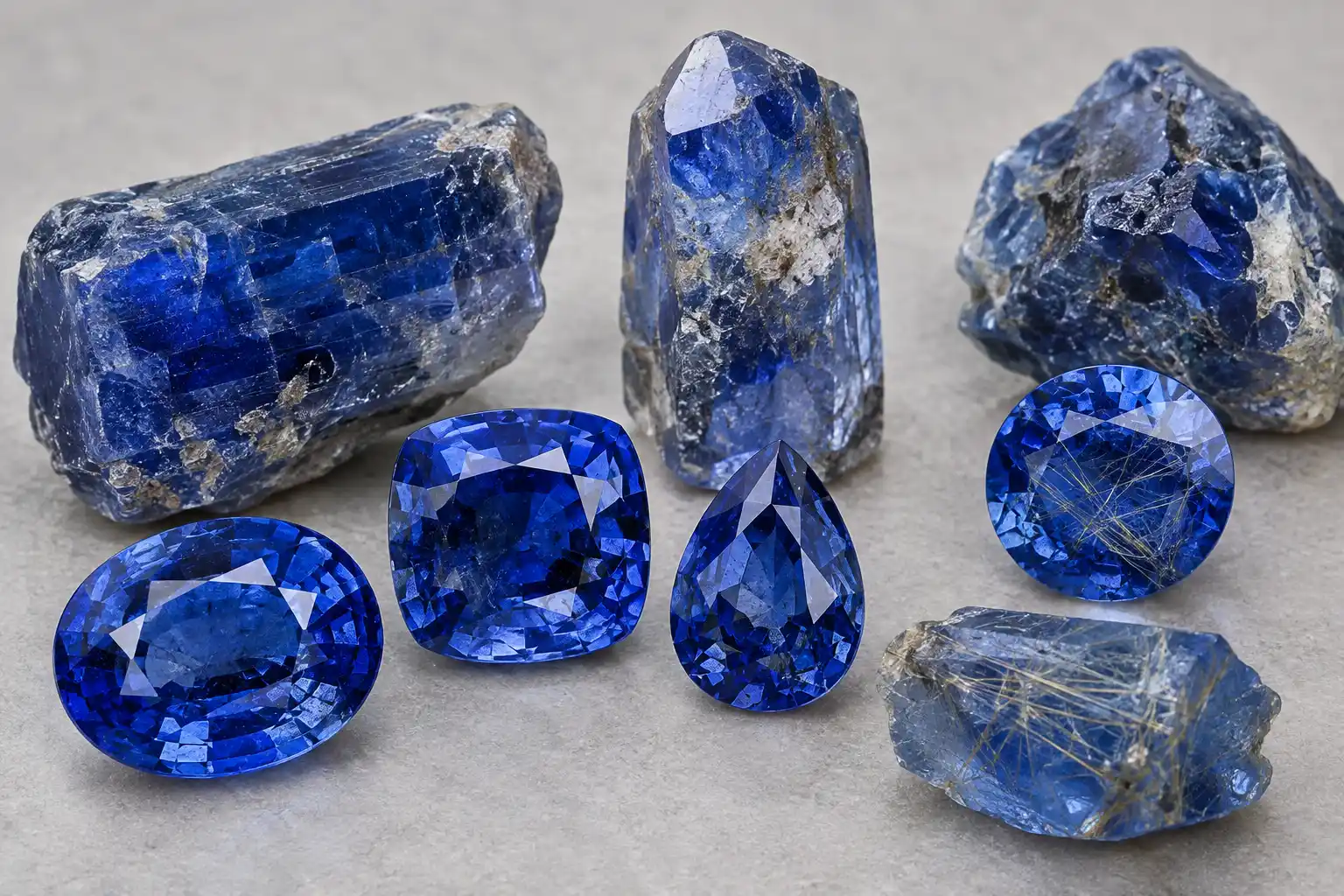
12 Sapphire Benefits for Wisdom & Mental Clarity
Sapphire benefits begin with the exceptional properties of corundum, the same mineral species that includes ruby. Sapphire is crystalline aluminum oxide, Al2O3, and reaches 9 on the Mohs scale. Blue sapphire receives its familiar color mainly through interactions involving iron and titanium within the corundum crystal structure, while sapphires also occur naturally in yellow, green, pink, purple, orange, colorless, and other colors.
These properties give sapphire benefits that are valuable in daily jewelry as well as gemological study. Sapphire combines excellent scratch resistance, good toughness, no true cleavage, attractive brilliance, diverse colors, interesting inclusions, rare star effects, and a long history in fine jewelry.
Wisdom and mental clarity belong to sapphire’s cultural and spiritual symbolism rather than its measurable mineral properties. Blue has often been associated with calm thought, loyalty, truth, discipline, and authority, but sapphire does not medically improve memory, intelligence, concentration, anxiety, neurological function, or mental health.
12 Sapphire Benefits at a Glance
- Mohs hardness 9 gives sapphire exceptional resistance to everyday scratching.
- Corundum has no true cleavage, supporting practical use in rings and frequently worn jewelry.
- Blue sapphire can show vivid color created mainly by iron-titanium interactions within the crystal structure.
- Sapphire occurs naturally in numerous colors, giving the corundum family exceptional visual variety.
- High polish and good transparency allow well-cut sapphires to display strong brilliance and color.
- Natural inclusions provide useful clues about crystal growth, geological origin, and possible treatment.
- Fine rutile silk can create six-rayed or twelve-rayed asterism in properly oriented star sapphires.
- Heat treatment provides a valuable example of how gem enhancement can change color and clarity while preserving natural corundum identity.
- Metamorphic and basalt-related occurrences give sapphire considerable geological and locality interest.
- Natural and laboratory-grown sapphire provide an important lesson in separating mineral identity from growth origin.
- Modern wisdom and mental-clarity symbolism can make sapphire a meaningful object for study, reflection, relationships, and personal commitments.
- Straightforward care and exceptional hardness make many untreated or conventionally heated sapphires practical for long-term jewelry use.
Sapphire Benefits Begin With Corundum
The strongest sapphire benefits come from corundum itself. Sapphire consists primarily of aluminum and oxygen arranged in a trigonal crystal structure, while small quantities of other elements create the colors that distinguish one variety from another.
Red corundum is called ruby. Corundum of other colors is generally called sapphire, often with a color modifier such as blue sapphire, yellow sapphire, pink sapphire, or green sapphire.
This mineral relationship is useful because it shows that gemstone names do not always represent completely different minerals. Ruby and sapphire can share the same core chemistry and physical structure while trace elements create dramatically different appearances.
Sapphire benefits gemology students by making this relationship easy to study. Hardness, crystallography, spectroscopy, inclusions, color chemistry, and treatment can all be examined within the same mineral species.
Mohs 9 Hardness Is a Major Sapphire Benefit
Durability is among the most important sapphire benefits. Mohs hardness 9 places corundum immediately below diamond in the traditional hardness scale and well above quartz, tourmaline, feldspar, fluorite, and many other jewelry gems.
In practical jewelry use, sapphire durability comes from more than hardness alone. Corundum also lacks true cleavage and normally has good toughness, reducing the likelihood of splitting along a fixed crystallographic plane.
Sapphire can still chip after severe impact, particularly along thin girdles, sharp corners, or areas weakened by fractures. A stone that has undergone fracture filling or another extensive enhancement may also require different care from an untreated or simply heated sapphire.
For most sound stones, however, sapphire is one of the best colored gems for engagement rings, wedding jewelry, bracelets, earrings, and pieces intended for frequent wear.
Blue Sapphire Color Comes From Iron and Titanium
Color chemistry gives blue sapphire benefits that are scientifically fascinating. The classic blue usually develops through intervalence charge transfer involving iron and titanium ions within the corundum structure.
Neither element acts alone in the simplistic way often suggested in short gemstone descriptions. Their positions, oxidation states, concentration, and interaction within the crystal determine how different wavelengths of light are absorbed.
Iron content can also influence tone and saturation. Some sapphires become very dark because of high iron or strong absorption, while others show bright medium blues with excellent transparency.
Natural sapphire color meaning belongs to human symbolism, while iron-titanium chemistry explains the actual blue. Separating these two ideas allows a person to enjoy sapphire’s symbolism without mistaking it for the physical cause of the color.
Sapphire Benefits Extend Far Beyond Blue
One of the most interesting sapphire benefits is the variety of natural colors found within corundum. Pink, yellow, orange, green, purple, violet, colorless, and parti-colored sapphires all occur.
Trace elements change the visible spectrum in different ways. Chromium can contribute pink, while iron can produce yellow or green components, and combinations of chromophores can create more complicated colors.
Padparadscha sapphire occupies a particularly narrow pink-orange to orange-pink range and is highly valued when its color fits accepted laboratory criteria. Color-changing sapphire can appear different under daylight and incandescent illumination because of selective absorption.
This diversity makes sapphire valuable for education as well as jewelry. A collection of different sapphires can demonstrate how trace chemistry transforms one mineral species into many visually distinct gems.
Sapphire Quality Depends on Several Factors
Color usually dominates the visual evaluation of sapphire, but the principles behind sapphire quality grading include more than hue alone. Tone, saturation, transparency, clarity, cut, size, treatment, and sometimes geographic origin all influence desirability.
A strongly saturated blue sapphire can still appear unattractive when it is so dark that brilliance disappears. Conversely, a stone that is too pale may lack the color intensity buyers expect from fine blue sapphire.
Cutting also matters because corundum can show uneven color zoning. A skilled cutter considers orientation, depth, symmetry, windowing, extinction, and weight retention when deciding how to fashion the rough.
Natural inclusions are expected in sapphire. Their effect depends on visibility, durability, location, and whether they contribute useful features such as silk or origin clues.
Rutile Silk Can Be Valuable Rather Than Defective
Rutile silk is one of the most interesting internal features associated with sapphire benefits. Fine titanium dioxide needles can develop in oriented patterns within corundum and appear as clouds or silky zones under magnification.
Dense silk may reduce transparency in a faceted stone, but fine dispersed silk can soften color and sometimes enhance visual appearance. The inclusion pattern can also provide information about crystal growth and treatment.
Heating sapphire to high temperatures can dissolve some rutile into the corundum lattice. The released titanium can interact with iron and change blue coloration, while the altered silk provides gemologists with useful treatment evidence.
In star sapphire, aligned inclusions become the feature that creates the gemstone’s appeal rather than an imperfection to remove.
Star Sapphire Creates a Rare Optical Effect
Asterism adds another distinctive group of sapphire benefits. When sufficiently dense oriented inclusions occur in suitable directions and the stone is cut as a properly aligned cabochon, reflected light can produce a moving star.
Six-rayed stars are especially familiar, although twelve-rayed examples can occur when more than one set of needle-like inclusions contributes to the effect. The sharpness, centering, movement, and continuity of the rays all influence visual quality.
The star should move across the dome as the light source changes position. A stationary or unnatural-looking surface effect deserves closer examination for possible imitation or treatment.
Star sapphire demonstrates an important gemological principle: inclusions do not always reduce beauty. In the right arrangement, they create the very phenomenon that makes the stone special.
Geological Origin Gives Sapphire Scientific Value
Knowing where sapphire is found adds geological meaning to the gemstone. Sapphire develops in several rock types, including metamorphic formations and basalt-related igneous environments.
Sri Lanka has long produced sapphires from secondary gem gravels derived from older rocks. Kashmir became famous for velvety blue sapphires, while Myanmar, Madagascar, Australia, Thailand, Cambodia, Tanzania, Montana in the United States, and several other regions have produced important stones.
Basalt-related sapphires commonly contain more iron than sapphires from some metamorphic environments. These chemical differences can influence color, spectroscopy, fluorescence, and the inclusions gemologists observe.
Origin should not be guessed from color alone. Laboratories examine microscopic features, trace-element chemistry, spectroscopy, and other properties before offering a geographic-origin opinion.
Heat Treatment Can Improve Sapphire Color and Clarity
Heat treatment is common in the sapphire trade and represents another useful area for understanding sapphire benefits. Heating can alter color, dissolve rutile silk, reduce certain inclusions, and improve transparency.
A natural sapphire that has been heated remains natural corundum. Treatment history and growth origin are separate questions, so “heated” should not be confused with “synthetic.”
Some more extensive treatments can involve diffusion of elements into the stone to modify color. These treatments require clear disclosure because they differ from conventional heating and can affect market value.
For significant sapphires, a respected gemological laboratory can provide useful information about natural or laboratory-grown origin, detectable heat treatment, and other enhancement features.
Natural and Lab-Grown Sapphire Share Core Mineral Properties
One of the educational sapphire benefits is the ability to compare natural and laboratory-grown corundum without calling a genuine synthetic crystal “fake.” Properly grown synthetic sapphire has the same basic Al2O3 mineral chemistry and corundum crystal structure as natural sapphire.
The primary difference is growth origin. Natural sapphire forms through geological processes, while laboratory-grown sapphire crystallizes under controlled human-made conditions.
Synthetic sapphires can show characteristic growth features and inclusions associated with flame-fusion, flux, hydrothermal, or other growth methods. Gemologists use these features to distinguish growth origin.
Simulants are different. Blue glass or another unrelated gemstone may imitate sapphire’s appearance without sharing its mineral species or fundamental physical properties.
Wisdom as Sapphire Symbolism
Wisdom is one of the strongest traditional themes connected with sapphire benefits. The deep blue color has often been associated with contemplation, seriousness, authority, loyalty, learning, and disciplined thought.
A sapphire ring can therefore serve as a personal symbol for education, leadership, study, or thoughtful decision-making. Someone beginning university or a demanding professional role might value the gemstone for that association.
Sapphire does not increase intelligence, memory, academic performance, or neurological capacity. Aluminum oxide and trace elements within the crystal do not alter cognition merely through skin contact.
The symbolism can still be useful. A meaningful object may remind its owner to slow down, gather information, and make a decision carefully.
Mental Clarity Without Medical Claims
Mental clarity is another common theme among sapphire benefits, particularly for blue sapphire. A person may associate the calm blue appearance with concentration, deliberate communication, or a quieter approach to problem-solving.
This should not be turned into a claim that sapphire treats attention disorders, anxiety, depression, neurological disease, sleep disorders, or brain fog. Scientific evidence does not support those uses.
A sapphire can instead become part of a personal study or reflection routine. Someone might wear a ring during examinations or keep a gemstone near a workspace because it represents disciplined thinking.
The actual benefit comes from preparation, habits, sleep, learning strategies, and other human actions rather than a medical effect of corundum.
Sapphire Chakra Traditions
Modern sapphire chakra traditions commonly connect blue sapphire with the throat or third eye chakra. Themes may include communication, truth, intuition, wisdom, and reflective awareness.
Chakras are spiritual frameworks rather than anatomical structures. Sapphire does not physically activate the throat, thyroid gland, brain, pineal gland, nervous system, or another organ.
A spiritual practice may still use the gem as a visual or tactile focus. Someone can connect the blue color with honest communication or thoughtful reflection without making a biological claim.
The strongest sapphire benefits remain those that allow spiritual symbolism and mineral science to exist without confusing one for the other.
Sapphire Benefits in Engagement and Heirloom Jewelry
Sapphire’s physical properties make it especially suitable for meaningful long-term jewelry. Its hardness, lack of cleavage, color variety, and rarity have made sapphire engagement rings and family pieces popular alternatives to diamond.
A sapphire can represent commitment, loyalty, family history, a September birthday, professional achievement, or another milestone. Those meanings develop through people and events rather than through a universal force inside the gemstone.
Heirloom value also benefits from corundum’s durability. A well-cared-for sapphire can retain polish and structural integrity through decades of sensible wear.
This combination of physical longevity and personal association is one of the most practical sapphire benefits for jewelry owners.
Cleaning and Preserving Sapphire
Most untreated and conventionally heat-treated sapphires are relatively straightforward to maintain. The safest routine way to clean sapphire jewelry is warm water, mild soap, and gentle brushing.
Ultrasonic and steam cleaning can be appropriate for some sound stones, but they should not be automatic choices when a sapphire contains significant fractures, fracture filling, or uncertain treatments. Jewelry settings may also contain other gems that require gentler care.
Harsh chemicals, severe impacts, and abrupt temperature changes are unnecessary risks. A jeweler should inspect valuable pieces periodically for loose prongs or mounting wear.
Sapphire itself can scratch most gemstones below Mohs 9. Separate storage therefore protects neighboring gems as much as it protects the sapphire.
Conclusion
Sapphire benefits include Mohs 9 hardness, excellent jewelry durability, diverse colors, fascinating iron-titanium chemistry, rutile silk, asterism, geological variety, and strong gemological educational value. Wisdom and mental clarity can provide meaningful personal symbolism, but sapphire does not medically improve cognition, psychological health, neurological function, or communication ability.
FAQs
What are the main sapphire benefits?
Sapphire benefits include Mohs 9 hardness, excellent jewelry durability, attractive brilliance, numerous natural colors, interesting inclusions, geological value, and rare optical effects such as asterism. Modern traditions also associate sapphire with wisdom, loyalty, truth, and mental clarity.
What is sapphire made of?
Sapphire is corundum with the basic chemical formula Al2O3. Trace elements within the corundum structure create the many colors found in natural sapphire.
What makes blue sapphire blue?
Blue coloration mainly results from interactions between iron and titanium within the corundum crystal lattice. Their concentration and chemical state influence the tone and saturation of the finished gem.
Is sapphire durable enough for everyday rings?
Yes. Mohs hardness 9, good toughness, and the absence of true cleavage make sapphire one of the most practical colored gemstones for frequently worn rings. Strong impacts and extensive fractures can still cause damage.
Is heated sapphire still natural sapphire?
Yes. A natural sapphire remains natural corundum after conventional heat treatment, although the treatment should be disclosed. Laboratory-grown sapphire has a different growth origin even though its core mineral properties can closely match natural corundum.
Does sapphire improve wisdom or mental clarity?
There is no scientific evidence that sapphire directly improves intelligence, memory, concentration, or neurological function. It can serve as a personal symbol of disciplined thought, learning, truth, or reflection.
Why do some sapphires show a star?
Oriented needle-like inclusions can reflect light in several directions. When the stone is cut correctly as a cabochon, those reflections can produce a moving star called asterism.
Can sapphire have personal meaning without spiritual beliefs?
Yes. Sapphire can represent an engagement, anniversary, September birthday, academic achievement, family heirloom, journey, or professional milestone. Personal symbolism does not require a universal metaphysical explanation.
Disclaimer: Wisdom, mental-clarity, chakra, truth, loyalty, intuitive, and energetic descriptions of sapphire reflect cultural traditions, spiritual beliefs, and personal practices. Sapphire is not a medical or psychological treatment and should not replace professional healthcare.