Sapphire Color Meaning: Blue, Pink, Yellow, White and More
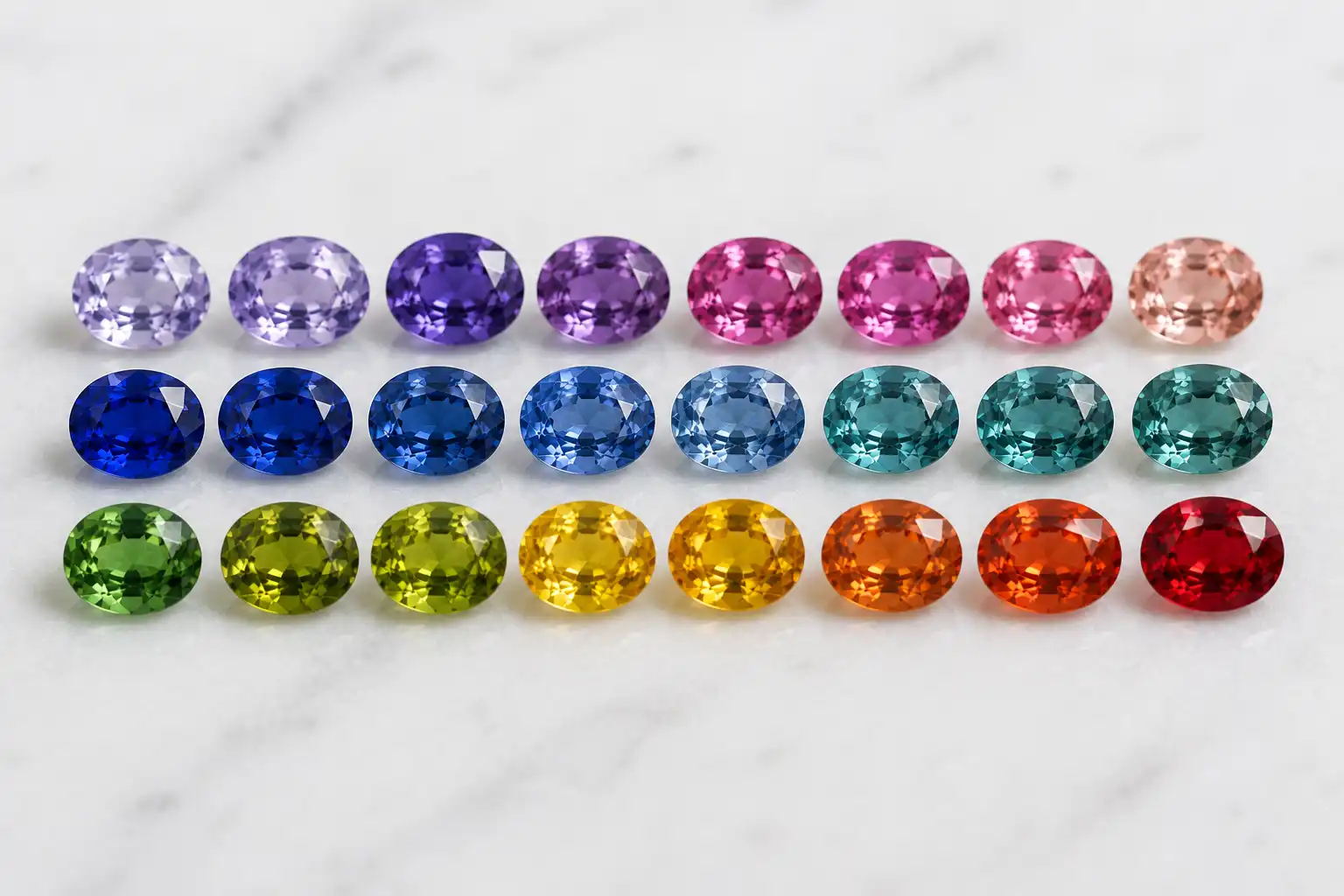
Sapphire color meaning changes dramatically across blue, pink, yellow, white, green, purple, orange, black and multicolored stones. Blue sapphire is traditionally associated with wisdom, loyalty and responsible judgment; pink with affection and emotional courage; yellow with optimism and discernment; and white sapphire with clarity and intentional commitment. Other colors have developed equally distinct symbolism through jewelry history, cultural traditions, astrology and contemporary spiritual practice.
Gemologically, however, these stones remain members of the same corundum family. Pure corundum is colorless aluminum oxide, while trace elements, structural defects, treatment and lighting create its remarkable palette. Red corundum is classified as ruby, while essentially every other gem-quality color remains sapphire.
Understanding sapphire color meaning is most useful when symbolism stays separate from mineral science. A blue sapphire does not physically create honesty, a yellow sapphire cannot guarantee wealth, and a pink sapphire cannot make another person fall in love. Color can carry cultural or personal meaning while the gemstone’s chemistry, treatment, durability and value remain objective questions.
Sapphire Colors at a Glance
| Sapphire color | Typical physical color cause | Common symbolic themes |
|---|---|---|
| Blue | Iron-titanium interactions and related absorption | Wisdom, truth, loyalty, discipline |
| Dark blue | Strong absorption, higher tone | Depth, endurance, responsibility |
| Pink | Chromium | Affection, compassion, emotional courage |
| Yellow | Iron-related mechanisms and color centers | Optimism, discernment, learning |
| White/colorless | Minimal coloring trace elements | Clarity, simplicity, commitment |
| Green | Combined blue- and yellow-producing absorption | Renewal, balance, practical growth |
| Purple/violet | Chromium and other trace-element effects | Reflection, dignity, intuition |
| Orange | Natural color centers, iron-related effects or treatment | Creativity, warmth, confidence |
| Padparadscha | Delicate pink-orange balance | Union, joy, transition |
| Black | Dense inclusions or extremely dark absorption | Boundaries, resilience, protection |
| Gray | Weak saturation or neutral modifiers | Composure, restraint, adaptability |
| Teal | Blue-green combination | Balanced communication, independence |
| Parti-colored | Two or more visible color zones | Integration, individuality, complexity |
| Color-change | Different absorption under different light sources | Adaptability, perspective |
| Star sapphire | Oriented inclusions producing asterism | Guidance, focus, purpose |
This sapphire color meaning chart summarizes symbolism, but no color has a scientifically demonstrated ability to change health, personality, relationships or future events.
Why Sapphire Comes in So Many Colors
To understand sapphire color meaning, it helps first to understand sapphire color itself.
Sapphire is corundum, a crystalline form of aluminum oxide, Al₂O₃. Chemically pure corundum is colorless. Small quantities of other elements entering the crystal structure change which wavelengths of visible light are absorbed, producing different colors.
Blue commonly develops through interactions involving iron and titanium. Chromium produces pink, becoming ruby when red is sufficiently dominant. Iron-related mechanisms can contribute yellow, green and brown. Vanadium and combinations of trace elements can influence violet and color-change material.
The complete sapphire meaning profile explains corundum’s mineral properties, formation, history and broader symbolism, while types of sapphire separates the major gem varieties.
Treatment can also modify color. Heat may improve saturation or reduce unwanted tones, while lattice diffusion can introduce coloring elements at high temperature. Because physical color and sapphire color meaning are separate, symbolism cannot reveal whether a stone is untreated, heated or diffusion-treated.
Blue Sapphire Color Meaning
Blue is the color most strongly identified with sapphire, and blue sapphire color meaning centers on truth, wisdom, loyalty, disciplined thinking and responsible authority.
Historical use in religious objects, royal jewelry, seals and important gifts contributed to this symbolism. Blue also carries broad cultural associations with trust, seriousness and stability.
A grounded interpretation of sapphire color meaning uses blue as a reminder to communicate accurately and examine evidence before making a decision. Someone wearing a blue sapphire during an important professional period might connect it with accountability rather than expecting the gemstone to make every decision correct.
The wider blue gemstones family includes aquamarine, topaz, spinel, zircon, tanzanite and many other stones, but sapphire stands apart because of its corundum identity and Mohs hardness of 9.
Blue sapphire color meaning should not be extended into medical promises. The stone does not improve eyesight, intelligence, hearing, speech or thyroid function.
Light Blue Sapphire Color Meaning
Light blue sapphire often feels visually softer and more open than deeply saturated material.
Within sapphire color meaning, pale blue may symbolize calm communication, thoughtful listening and intellectual openness. It can suit a person who prefers blue sapphire’s traditional associations without the formal visual weight of navy or royal blue.
From a buying perspective, lighter color is not automatically lower quality. Some buyers deliberately prefer pale, icy or pastel sapphire.
The important distinction is between intentional light color and weak appearance caused by poor cutting or excessive windowing.
Sapphire color meaning should follow the color someone actually values rather than a rule that darker or more expensive stones are spiritually stronger.
Dark Blue Sapphire Color Meaning
Dark blue sapphire color meaning emphasizes seriousness, concentration, endurance and responsibility.
Navy and midnight-blue stones can look formal and restrained, which has reinforced associations with authority and long-term commitments.
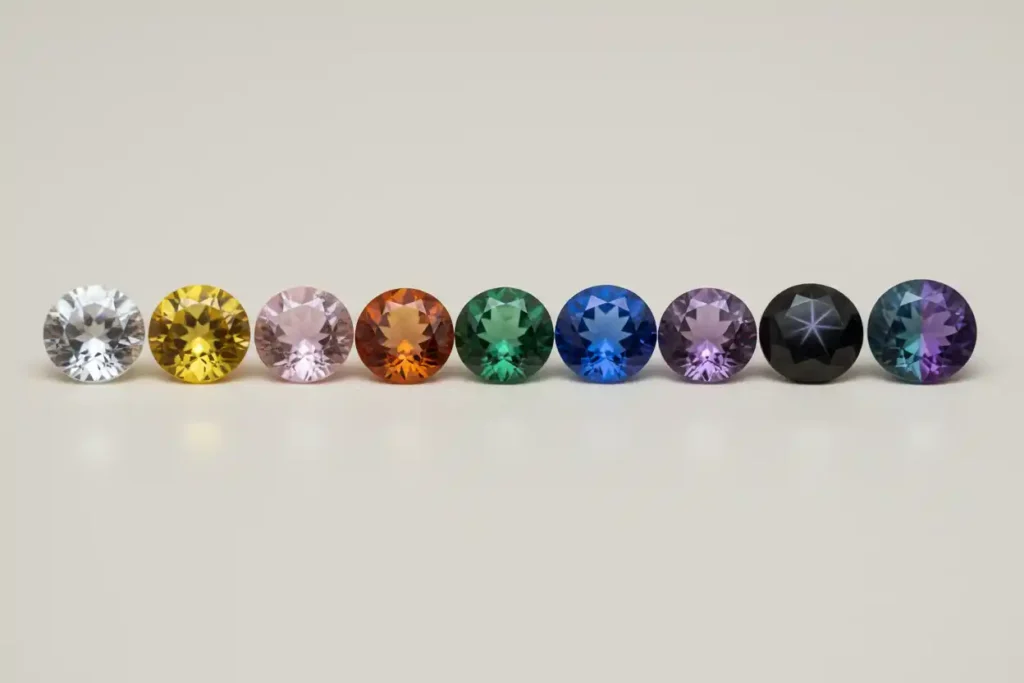
Gemologically, however, a sapphire can become too dark. Excessive tone or extinction may cause a stone to look nearly black under ordinary indoor lighting.
That distinction matters when choosing by sapphire color meaning. Symbolic “depth” should never be used by a seller to disguise poor visual performance.
A dark sapphire should still display attractive blue when viewed under realistic lighting.
Royal Blue Sapphire Color Meaning
Royal blue is a prestigious trade description for richly saturated blue sapphire.
Royal-blue sapphire color meaning naturally emphasizes leadership, dignity, confidence and responsibility because the phrase itself carries centuries of royal imagery.
The most constructive interpretation focuses on stewardship. Authority is meaningful when it comes with accountability rather than superiority.
Commercially, “royal blue” is not one universally standardized color that every laboratory defines identically. Different laboratories and dealers apply their own criteria.
A costly stone should therefore be judged by actual color, treatment disclosure and documentation rather than the phrase alone.
Sapphire color meaning can make royal blue personally attractive, but marketing terminology is not proof of rarity.
Cornflower Blue Sapphire Color Meaning
Cornflower blue generally describes a lively medium blue, often with a subtle violet component.
Cornflower sapphire color meaning can represent balanced judgment, calm intelligence and openness: vivid enough to feel expressive without the visual weight of very dark blue.
The term has historical associations with fine sapphire from regions such as Kashmir and Sri Lanka, but modern sellers use it widely.
“Cornflower” is a color description, not automatic evidence of geographic origin.
When sapphire color meaning influences a purchase, the stone should still be viewed under several lighting conditions. A poetic trade term should never replace direct observation.
Neelam and Blue Sapphire Traditions
Within Vedic gemstone traditions, blue sapphire is commonly known as Neelam and is associated with Saturn.
The dedicated Neelam blue sapphire discussion places these beliefs in their appropriate cultural context.
In that tradition, sapphire color meaning can involve discipline, responsibility, structure and karmic themes.
These beliefs should not be used to frighten someone into purchasing a stone or to claim that wearing the “wrong” sapphire will cause misfortune.
A blue sapphire remains corundum regardless of astrological interpretation, and sapphire color meaning does not scientifically determine a person’s destiny.
Pink Sapphire Color Meaning
Pink sapphire color meaning centers on affection, compassion, emotional courage, warmth and expressive love.
Chromium produces much of sapphire’s pink color. As chromium-related red saturation increases, the classification approaches ruby, and the boundary between vivid pink sapphire and pale red ruby can depend partly on laboratory and market convention.
Pale pink sapphire color meaning may emphasize tenderness and gentleness, while hot pink or magenta material often feels more confident and expressive.
The broader pink gemstones family includes rose quartz, morganite, spinel, tourmaline and other stones, but pink sapphire offers much greater hardness than many alternatives.
In relationship symbolism, sapphire color meaning should focus on behavior rather than promises. A pink sapphire can represent affection or commitment, but it cannot guarantee reconciliation, compel love or establish compatibility.
Pink Sapphire and Emotional Courage
One useful aspect of pink sapphire color meaning is emotional courage.
Compassion does not always mean softness. It can also involve having an uncomfortable conversation, communicating a need clearly or maintaining a boundary while still caring about someone.
A person might use pink sapphire color meaning as a reminder to express affection directly instead of assuming another person already understands it.
The same symbolism can apply to self-respect. Emotional openness does not require accepting manipulation, coercion or repeated mistreatment.
The stone can represent a value. It cannot control another person’s behavior.
Yellow Sapphire Color Meaning
Yellow sapphire color meaning commonly involves optimism, knowledge, discernment, confidence and prosperity pursued with judgment.
The color ranges from pale lemon through vivid yellow to deep golden and orangish yellow. Iron-related mechanisms can create natural yellow, while treatment—including heat and beryllium diffusion—may also contribute to color.
The dedicated yellow sapphire meaning profile explores this variety in greater depth.
A practical interpretation of yellow sapphire color meaning connects optimism with action. Instead of expecting the gemstone to attract money, someone might use it as a reminder to review a budget, improve a skill, complete planned work or investigate an opportunity carefully.
Prosperity symbolism becomes useful when paired with stewardship.
Yellow sapphire cannot guarantee profit, academic success, employment or favorable legal outcomes.
Pukhraj and Yellow Sapphire Traditions
Yellow sapphire is commonly known as Pukhraj within Vedic gemstone traditions and is traditionally associated with Jupiter.
Within this framework, sapphire color meaning may emphasize knowledge, guidance, prosperity, generosity and respected counsel.
These are cultural and astrological interpretations, not scientific properties of yellow corundum.
Material identity also remains important. A seller’s use of the word Pukhraj does not prove that a yellow stone is natural, untreated sapphire.
Treatment, synthetic origin and imitation still require ordinary gemological evidence.
White Sapphire Color Meaning
White sapphire color meaning focuses on clarity, honesty, simplicity, intention and commitment without distraction.
White sapphire is colorless or nearly colorless corundum. Because it lacks strong body color, inclusions, poor cutting and surface residue can become especially noticeable.
Its restrained appearance has made white sapphire popular in engagement jewelry and minimalist designs.
Within sapphire color meaning, white may represent stating an intention plainly: a promise defined by behavior rather than dramatic emotion.
The broader white gemstones family includes diamond, white topaz, zircon and other materials, but each has different optical performance.
White sapphire is less dispersive than diamond and should be appreciated as colorless corundum rather than judged as a failed imitation of another gem.
Green Sapphire Color Meaning
Green sapphire color meaning commonly represents renewal, practical growth, balance and considered action.
Green sapphire can range from yellow-green and olive to blue-green, teal-green and forest tones. Much of the color results from combinations of absorption that produce blue and yellow components.
The wider green gemstones family includes emerald, peridot, tourmaline, jade and many other materials.
Green sapphire color meaning works particularly well for gradual development. Rather than promising sudden transformation, the stone can symbolize improving something through repeated practical choices.
Many green sapphires contain gray or brown modifiers. These may reduce conventional market value, although some buyers deliberately prefer muted natural colors.
Personal preference remains more important than assuming the most expensive shade has the strongest sapphire color meaning.
Teal Sapphire Color Meaning
Teal sapphire combines blue and green, creating one of the most popular contemporary fancy colors.
Teal sapphire color meaning draws from both sides of that visual balance. Blue contributes symbolism involving communication and judgment, while green adds renewal and adaptability.
Together, teal can represent calm independence, balanced communication and the ability to combine thought with emotion.
Teal sapphire is particularly attractive to buyers seeking something less formal than classic royal blue but still recognizably sapphire.
In sapphire color meaning, teal is also a useful symbol for refusing unnecessary either-or choices. A situation may require both empathy and evidence, both flexibility and boundaries.
Purple and Violet Sapphire Color Meaning
Purple sapphire color meaning centers on reflection, dignity, imagination and spiritual inquiry.
Purple and violet sapphires range from reddish purple through lavender to blue-violet. Chromium and other trace-element effects influence their appearance, while pleochroism and lighting can make the hue appear different from one direction or environment to another.
The broader purple gemstones collection includes amethyst, spinel, iolite, fluorite and other purple materials.
Within sapphire color meaning, purple may symbolize examining a question without rushing toward certainty.
Contemporary spiritual traditions sometimes associate purple sapphire with intuition, but the stone does not create psychic abilities or provide hidden factual knowledge.
Reflection remains useful when combined with evidence.
Orange Sapphire Color Meaning
Orange sapphire color meaning emphasizes creativity, warmth, sociability and expressive courage.
Orange sapphire ranges from pale yellow-orange through bright pumpkin and deeper reddish-orange shades.
Natural mechanisms can produce orange, but treatment is particularly relevant. Heat and diffusion may create or modify yellow, orange and pink-orange colors.
The broader orange gemstones family shows how unusual this color is among durable jewelry gems.
A useful interpretation of orange sapphire color meaning is visible participation. Someone working creatively may associate it with showing finished work rather than endlessly refining it in private.
The stone cannot create talent, guarantee recognition or cause a project to succeed, but it can symbolize the decision to act on an idea.
Padparadscha Sapphire Color Meaning
Padparadscha sapphire color meaning combines the symbolism of pink and orange.
The name is associated with a delicate balance of the two colors, often described through lotus or sunset imagery. Its symbolism commonly involves joy, transition, affection, creativity and the meeting of complementary qualities.
The specific padparadscha sapphire color meaning deserves attention because this prestigious trade term has a narrow and sometimes debated definition.
Not every peach, salmon or pink-orange sapphire qualifies as padparadscha.
Laboratories may evaluate hue, tone, saturation, treatment and color stability before applying the designation.
Sapphire color meaning cannot establish whether a stone deserves the name. For a valuable padparadscha purchase, documentation matters.
Black Sapphire Color Meaning
Black sapphire color meaning focuses on boundaries, resilience, seriousness and protection symbolism.
Most black sapphire appears black because it is extremely dark or heavily included. Some black sapphires can display asterism when cut as cabochons.
Like many black gemstones, its dark appearance has encouraged modern associations with containment and protection.
A grounded interpretation treats black sapphire color meaning as a reminder to establish practical boundaries.
The gemstone does not physically absorb danger, prevent accidents or neutralize another person’s intentions.
Protection still depends on real-world actions such as leaving unsafe situations, protecting personal information and using appropriate safeguards.
Gray Sapphire Color Meaning
Gray sapphire color meaning is more understated.
Gray commonly symbolizes neutrality, maturity, composure and the ability to tolerate ambiguity.
In conventional gem grading, gray may be considered an unwanted modifier when a stone is supposed to be vivid blue, green or purple. Yet intentionally gray sapphire can have a sophisticated contemporary appearance.
Sapphire color meaning does not require following traditional value hierarchies.
A silver-gray stone may appeal precisely because it feels quiet and restrained.
Symbolically, gray can represent remaining open when information is incomplete instead of forcing a premature conclusion.
Parti-Colored Sapphire Meaning
Parti-colored sapphire displays two or more visibly distinct color zones within one stone.
Blue-yellow, green-yellow and blue-green combinations are common.
Sapphire color meaning for parti-colored stones centers on integration, individuality and complexity.
Rather than representing one fixed attribute, a parti sapphire can symbolize the ability to hold more than one perspective at once.
Cutting is crucial. A skilled orientation can preserve contrasting zones, while another orientation may blend them into an intermediate color.
Every parti sapphire is visually individual, so this form of sapphire color meaning often feels especially personal.
The appeal should still be judged under normal lighting rather than from one dramatically staged photograph.
Color-Change Sapphire Meaning
Color-change sapphire appears noticeably different under light sources with different spectral characteristics.
A stone may look blue or violet in daylight-equivalent light and shift toward purple or reddish purple under warmer illumination.
Sapphire color meaning for color-change material centers on adaptability and perspective.
Its most grounded metaphor is simple: the same object can appear different when surrounding conditions change.
That idea can be useful during disagreements or complicated decisions. A change in viewpoint does not automatically mean one perception was dishonest; context can matter.
The physical color change is caused by the gemstone’s absorption properties and the spectrum of the light source. It is not evidence of an energetic transformation.
Star Sapphire Color Meaning
Star sapphire displays asterism: a moving star created when light reflects from oriented microscopic inclusions.
Star sapphire color meaning commonly involves focus, guidance, purpose and protection.
The star is most visible when a cabochon is viewed beneath a relatively focused light source. As the light or stone moves, the rays travel across the dome.
This movement has naturally inspired directional symbolism.
However, a star cannot predict the future or tell someone which path to choose.
Synthetic star sapphire also exists. The symbolism can remain personally meaningful, but sapphire color meaning does not establish whether the star is natural, treated or laboratory-grown.
Sapphire Color Meaning and Chakra Traditions
Contemporary chakra systems often assign different sapphire colors to different symbolic centers.
Blue sapphire is commonly associated with throat and third-eye themes, particularly communication and reflection. Pink and green sapphire may be connected with the heart, while yellow sapphire is often linked with solar-plexus symbolism involving confidence and personal agency.
Purple sapphire may be associated with the third eye or crown, while black sapphire can appear in root-chakra traditions involving grounding and boundaries.
These assignments form part of spiritual practice rather than mineral science.
Sapphire color meaning does not demonstrate that colored corundum changes anatomical organs, endocrine function or invisible energy centers.
The broader sapphire healing properties discussion keeps these traditions separate from medical claims.
Does Lab-Grown Origin Change Sapphire Color Meaning?
Laboratory-grown sapphire can be produced in blue, white, pink, yellow, orange, green, teal, purple, gray, black and color-changing material.
A lab-grown sapphire is corundum produced under controlled manufacturing conditions rather than geological conditions. It is not automatically glass or imitation simply because it was made in a laboratory.
The color-based symbolism can reasonably remain the same.
Blue lab sapphire color meaning can still represent loyalty and thoughtful communication. Pink can represent affection, yellow optimism, white clarity, green renewal and purple reflection.
There is no scientific evidence that geological origin makes sapphire color meaning spiritually stronger.
Natural and laboratory-grown stones do differ objectively in origin, inclusions, rarity, production history and usually market value.
That distinction should always be disclosed accurately.
Blue Lab Sapphire Color Meaning
Blue lab sapphire can be manufactured in shades ranging from pale blue to strong royal-like tones.
Its sapphire color meaning can follow the familiar themes of loyalty, wisdom, trust and disciplined judgment.
What should not be transferred is a false mining history.
A laboratory-grown blue sapphire cannot genuinely carry geological provenance tied to Kashmir, Sri Lanka, Myanmar, Montana or another natural deposit.
Someone may still value it for what laboratory growth personally represents: technological achievement, intentional design or access to a particular color at a lower price.
Sapphire color meaning belongs to personal symbolism, while geographic origin remains a factual claim.
Pink, Yellow and White Lab Sapphire Meaning
Pink laboratory-grown sapphire can carry sapphire color meaning involving affection, compassion and expressive confidence.
Yellow lab sapphire can symbolize optimism, learning and purposeful action. White lab sapphire can represent simplicity, honesty or a new beginning.
The physical distinction remains manufacturing origin.
Laboratory production can also control trace chemistry and growth conditions more predictably than geological formation, making a broad range of colors possible.
Post-growth treatments may still occur, so “lab-grown” should not automatically be interpreted as “untreated.”
When choosing by sapphire color meaning, ask about both origin and any additional color treatment.
Teal, Purple and Black Lab Sapphire Meaning
Modern manufacturing also allows teal, purple, gray and very dark sapphire colors that may be difficult to find consistently in natural matching sets.
Teal lab sapphire color meaning can represent balanced communication and independence. Purple may symbolize introspection or creativity, while black can symbolize boundaries and resilience.
These meanings remain subjective.
Laboratory-grown black sapphire does not create a protective field, just as natural black sapphire does not.
The useful question is what the chosen color represents to the wearer, followed separately by whether the gemstone has been described honestly.
Sapphire Color and Treatment
Treatment is one of the most important practical considerations because two stones with similar sapphire color meaning can have very different rarity and market value.
Heat treatment is widespread in sapphire. It can improve color, alter inclusions and increase transparency.
Lattice diffusion uses high temperature with coloring elements to change sapphire color. Beryllium diffusion is particularly important in yellow, orange and pink-orange material.
Coatings, fillings and other treatments can also occur.
The gemstone treatments overview explains why treatment disclosure matters.
Sapphire color meaning does not disappear because a gemstone is treated, but treatment can materially affect price, stability, rarity and cleaning requirements.
A seller should therefore never use symbolism to divert attention from treatment disclosure.
Sapphire Color Meaning Cannot Prove Authenticity
A recurring mistake is attempting to identify a gemstone through an emotional or spiritual response.
Feeling calm while holding a blue stone does not establish sapphire. Feeling warmth from a yellow stone does not prove natural origin.
Glass, spinel, topaz, synthetic corundum and other materials can imitate sapphire visually.
The real vs fake sapphire process focuses on material evidence instead.
Professional gemological examination can evaluate refractive properties, inclusions, growth structures, spectroscopy and treatment indicators.
For expensive stones, laboratory documentation may be appropriate.
Sapphire color meaning is subjective; authentication is physical.
The two should never be confused.
Sapphire Color Meaning and Jewelry Choices
Sapphire’s hardness of 9 makes most sound stones highly suitable for rings, necklaces, earrings and bracelets.
Color changes visually once a gemstone enters a setting.
Yellow gold can warm blue, yellow, green and orange sapphire. Rose gold can strengthen pink and peach tones. White gold and platinum tend to create sharper contrast and a cooler overall appearance.
A dark sapphire may look even deeper when enclosed by a bezel, while a pale stone may benefit from an open setting that allows more light.
For this reason, choosing by sapphire color meaning should include viewing the gemstone in realistic jewelry conditions.
Someone attracted to blue because it symbolizes loyalty should still confirm that they actually enjoy the shade on their hand.
Personal meaning works best when the jewelry is also something the owner wants to wear.
How to Choose a Sapphire Color
Start with visual preference.
If blue feels timeless and formal, sapphire color meaning can add themes of loyalty and responsible judgment. Pink suits warmer relationship symbolism, while yellow and orange feel more energetic and outward-facing.
White is useful when simplicity and commitment are the main message. Green and teal suit unconventional designs and symbolism around practical growth. Purple works well for introspection, while black offers a restrained look associated with boundaries and resilience.
Then evaluate the physical stone.
Check hue, tone, saturation, brightness, zoning, cut, treatment, origin and price. The sapphire buying guide provides a practical framework for those decisions.
Sapphire color meaning should refine a choice rather than replace gemological evaluation.
A color that genuinely appeals to the wearer is usually more meaningful than one selected only because a chart assigns it a desirable promise.
Sapphire Color Meaning in Engagement and Commitment Jewelry
Sapphire is particularly well suited to commitment jewelry because of its excellent hardness and long cultural connection with loyalty.
Blue remains the classic choice, and its sapphire color meaning naturally emphasizes trust and enduring promises.
Pink sapphire can make the symbolism warmer and more openly romantic. White sapphire may emphasize simplicity and direct commitment, while parti-colored stones can represent two distinct lives becoming part of one shared story without losing individuality.
The gemstone cannot guarantee that a relationship lasts.
Its role is symbolic.
The real meaning of commitment jewelry develops through the relationship, memories attached to the object and behavior that supports the promise represented by it.
Frequently Asked Questions
What is the main sapphire color meaning?
Sapphire color meaning depends on hue. Blue represents wisdom, loyalty and truth; pink affection and emotional courage; yellow optimism and discernment; white clarity; green renewal; purple reflection; orange creativity; and black boundaries and resilience.
What does blue sapphire symbolize?
Blue sapphire traditionally symbolizes wisdom, truth, loyalty, disciplined judgment and responsible authority. These are cultural and spiritual interpretations rather than scientifically demonstrated effects.
What does pink sapphire mean?
Pink sapphire color meaning emphasizes affection, compassion, emotional openness, self-respect and courage in relationships. It cannot make another person fall in love or guarantee reconciliation.
What does yellow sapphire symbolize?
Yellow sapphire color meaning centers on optimism, learning, discernment, confidence and prosperity approached through responsible action. The stone does not guarantee money or professional success.
What does white sapphire mean?
White sapphire symbolizes clarity, honesty, simplicity and intentional commitment. Its lack of body color also gives it a distinctly different jewelry appearance from colored sapphire.
What does green sapphire symbolize?
Green sapphire color meaning involves renewal, practical growth, balance and resilience. Green color itself comes from trace-element absorption rather than a scientifically measurable healing energy.
What does teal sapphire mean?
Teal sapphire combines blue and green symbolism. It is commonly associated with balanced communication, independence, adaptability and integrating thought with emotion.
What does purple sapphire mean?
Purple sapphire color meaning emphasizes reflection, imagination, dignity and spiritual inquiry. The gemstone does not create psychic abilities or predict future events.
What does orange sapphire symbolize?
Orange sapphire represents creativity, warmth, confidence and visible participation. It can serve symbolically as a reminder to act on an idea rather than continually postponing it.
What does black sapphire mean?
Black sapphire color meaning focuses on boundaries, resilience, grounding and protection symbolism. The stone does not physically shield someone from danger or replace practical safety measures.
What does parti-colored sapphire symbolize?
Parti-colored sapphire symbolizes complexity, integration and individuality because two or more distinct colors can coexist within a single gemstone.
What does color-change sapphire mean?
Color-change sapphire color meaning emphasizes adaptability and perspective. Its physical color change occurs because its absorption interacts differently with different light sources.
What does star sapphire symbolize?
Star sapphire is associated with guidance, focus, purpose and protection in traditional symbolism. Its visible star is an optical phenomenon caused by oriented inclusions rather than supernatural activity.
Does sapphire color determine chakra association?
Modern spiritual traditions commonly associate blue with the throat or third eye, pink and green with the heart, yellow with the solar plexus, purple with the third eye or crown and black with root symbolism. These assignments vary and are not anatomical facts.
Does lab sapphire have the same sapphire color meaning?
It can. Color-based symbolism does not require geological origin. A blue lab-grown sapphire may represent the same loyalty or wisdom themes as blue natural sapphire, although the two differ in origin, rarity and market value.
Is lab-grown sapphire fake?
No. Laboratory-grown sapphire is manufactured corundum with essentially the same fundamental crystal structure and composition as natural sapphire. It should be disclosed as laboratory-grown because origin materially affects rarity and price.
Can lab sapphire come in different colors?
Yes. Laboratory-grown sapphire can be made in blue, pink, yellow, orange, green, teal, white, purple, gray, black, color-change and other appearances. Treatment may also modify some manufactured colors.
Does treatment change sapphire color meaning?
Treatment does not scientifically determine personal symbolism. A heated sapphire can still represent the same value to its owner. Treatment does, however, affect rarity, disclosure, price and sometimes care.
Can sapphire color meaning tell whether a stone is real?
No. Sapphire color meaning cannot identify natural, laboratory-grown, treated or imitation material. Authentication relies on physical and gemological evidence.
Which sapphire color is best for love?
Pink is most directly associated with affection and emotional openness, while blue traditionally represents loyalty and commitment. The best color is the one whose symbolism and appearance fit the person or occasion.
Which sapphire color symbolizes wisdom?
Blue sapphire has the strongest historical association with wisdom, truth and disciplined judgment.
Which sapphire color represents prosperity?
Yellow sapphire is most often associated with prosperity, learning and confidence. These meanings are symbolic; wearing yellow sapphire does not guarantee money or financial success.
Which sapphire color is best for protection symbolism?
Black and deep blue sapphires commonly carry protection symbolism. A gemstone cannot replace physical security, boundaries, professional assistance or other real-world safeguards.
Which sapphire color is most valuable?
Value cannot be determined from sapphire color meaning. Exceptional untreated blue sapphire, padparadscha and certain rare fancy-color sapphires can command very high prices, but treatment, size, clarity, origin evidence and overall quality all matter.
Sapphire color meaning reflects the extraordinary visual range of one mineral family. Blue can symbolize disciplined wisdom, pink emotional courage, yellow purposeful optimism, white clarity, green renewal, purple reflection, orange creativity and black resilience. Parti-colored and color-change stones expand that symbolism further by representing complexity and changing perspective.
Yet every interpretation becomes stronger when it remains grounded. Sapphire color meaning comes from history, culture and personal intention, while sapphire color comes from corundum’s chemistry, trace elements, structural effects and treatment. Natural and laboratory-grown stones can share color-based symbolism even though their origins and market values differ substantially.
At Gems Lore, sapphire color meaning is most useful as a language for personal values rather than a promise of physical or supernatural effects. The color can mark a commitment, celebrate a relationship, represent a goal or simply make a piece of jewelry feel personal. The gemstone does not need to guarantee love, wealth, protection or intuition for that symbolism to matter.
Sapphire color meaning, chakra associations, protection traditions, prosperity symbolism, relationship interpretations and crystal-healing uses belong to cultural, spiritual or personal practices rather than scientifically established effects. Sapphire color should not be used to diagnose or treat illness, guarantee wealth or love, predict future events or replace practical safety measures. Natural, laboratory-grown and treated sapphire should always be distinguished through accurate disclosure and appropriate gemological evidence.