11 Real Sphalerite Benefits: Deep Traditions, Verified Facts, Safe Limits
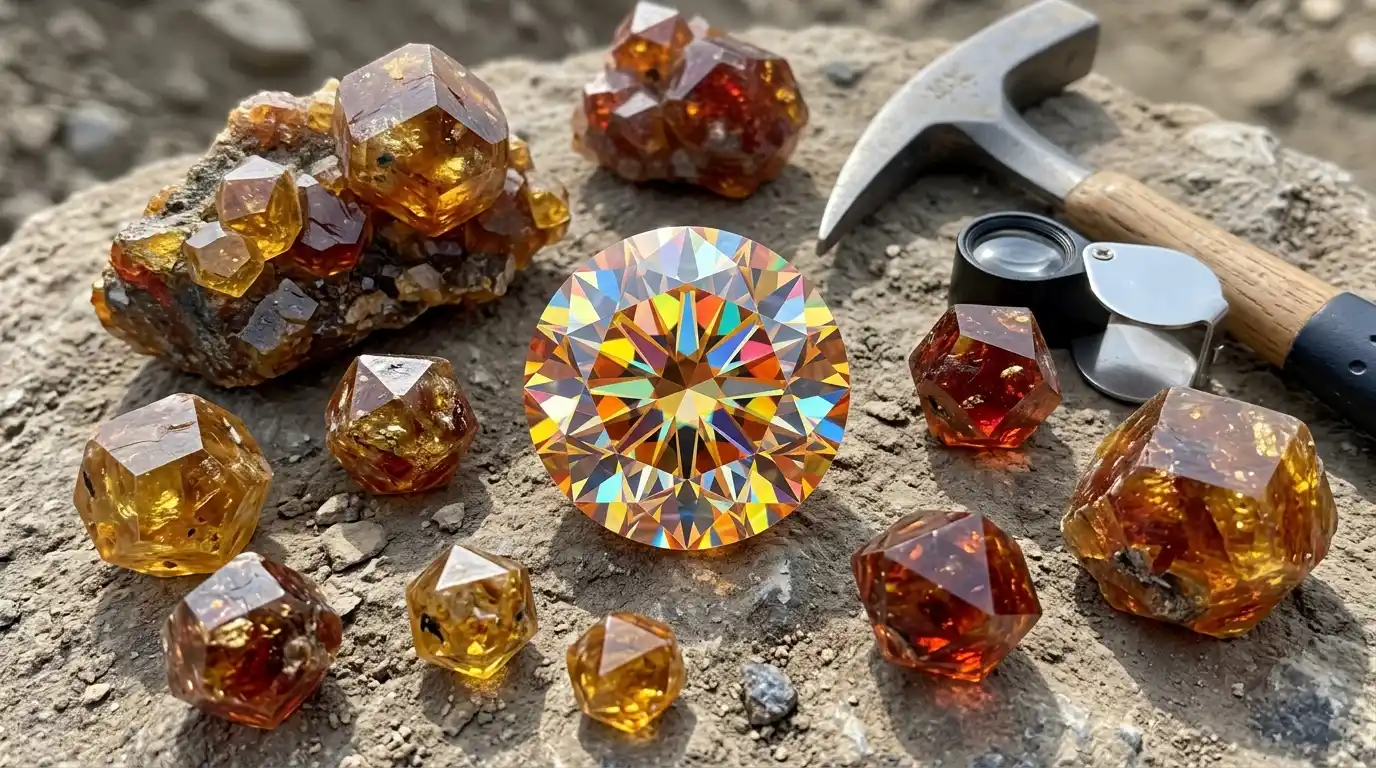
Sphalerite benefits begin with one of the most optically impressive minerals that can occasionally reach gem quality. Sphalerite is zinc sulfide, ZnS, and is the world’s most important ore mineral for zinc. It crystallizes in the isometric system and can range from nearly colorless or pale yellow through honey, orange, red, reddish brown, dark brown, and nearly black depending largely on iron content and other minor chemical components.
Transparent gem-quality sphalerite can display exceptional brilliance because its refractive index is around 2.37 and its dispersion can exceed 0.150, giving well-cut stones flashes of spectral color that are far stronger than those of many familiar gems. This extraordinary optical performance comes with serious durability limits: sphalerite is only about 3.5 to 4 on the Mohs scale, is brittle, and has perfect cleavage, making fine faceted stones better suited to collecting or carefully protected jewelry than demanding everyday wear.
Modern traditions add grounding, confidence, manifestation, vitality, creativity, and personal transformation to sphalerite benefits. These interpretations can provide personal symbolism, but the mineral does not medically supply zinc through the skin, increase physical energy, treat deficiency, detoxify the body, or change emotional health through ordinary contact.
11 Sphalerite Benefits at a Glance
The eleven points below focus first on the physical and optical qualities that make sphalerite unusual, then on the symbolic traditions that can be used responsibly. Its spectacular fire deserves appreciation without ignoring the softness, cleavage, and safe-handling limits that come with this zinc sulfide mineral.
- Exceptional dispersion can produce intense rainbow fire in clean, well-cut transparent stones.
- Very high refractive index gives faceted sphalerite unusually strong brilliance and surface reflections.
- Yellow, orange, red, brown, green, and nearly black colors provide significant mineral and collector variety.
- Zinc sulfide chemistry gives sphalerite major scientific and economic importance as the principal ore of zinc.
- Iron content helps explain why some crystals are transparent and bright while others become dark brown or black.
- Fluorescence, phosphorescence, and triboluminescence can occur in suitable specimens, adding optical interest.
- Perfect cleavage and Mohs hardness of only 3.5 to 4 provide an important lesson in gemstone durability limits.
- Fine crystals and rare faceted gems offer strong collector value, especially from recognized localities.
- Modern grounding and confidence symbolism can support personal routines without implying medical or neurological effects.
- Responsible lapidary work recognizes that sulfide-mineral dust should not be inhaled or ingested and that some natural specimens may contain minor potentially hazardous elements.
- Personal sphalerite benefits can come from geology, collecting, optical beauty, jewelry, study, or meaningful symbolism without requiring supernatural claims.
Sphalerite Benefits Begin With Zinc Sulfide Mineralogy
The most important scientific fact behind sphalerite benefits is that the mineral is zinc sulfide. Its ideal composition is ZnS, although natural crystals commonly contain iron and can also carry manganese, cadmium, gallium, germanium, indium, and other minor elements depending on the deposit. These substitutions change color, density, transparency, luminescence, and other physical characteristics.
Sphalerite crystallizes in the isometric system, but its appearance can vary dramatically. Pale transparent crystals may look honey-yellow, orange, red, or green, while iron-rich sphalerite can become dark brown or nearly black with a more resinous or submetallic appearance. The mineral commonly occurs with galena, pyrite, chalcopyrite, calcite, dolomite, fluorite, quartz, and other minerals in hydrothermal ore systems.
Its economic importance is considerable because sphalerite is the principal source of zinc. Gem-quality transparent crystals are only a tiny fraction of sphalerite production, which is why a fine faceted stone represents a very different use of the mineral from the enormous quantities mined and processed for industrial zinc.
Sphalerite Technical Properties
The table below explains why sphalerite can look spectacular when cut but remains one of the more delicate faceted collector gems.
| Property | Sphalerite |
|---|---|
| Ideal formula | ZnS |
| Crystal system | Isometric |
| Mohs hardness | About 3.5–4 |
| Cleavage | Perfect |
| Tenacity | Brittle |
| Refractive index | Around 2.37 |
| Dispersion | Commonly above 0.150 in gem-quality stones |
| Typical luster | Adamantine to resinous |
| Typical colors | Colorless, yellow, orange, red, brown, green, dark brown to black |
| Main economic role | Principal ore of zinc |
| Jewelry suitability | Collector gems and protected occasional wear |
This combination is unusual because strong brilliance and fire are paired with poor resistance to scratches and impact. A gemstone can therefore be optically exceptional while remaining unsuitable for everyday ring wear.
Extraordinary Dispersion Creates Sphalerite’s Famous Fire
Among all sphalerite benefits, optical fire is the most striking. Dispersion describes the separation of white light into spectral colors as different wavelengths refract by different amounts, and sphalerite’s dispersion is exceptionally high. When transparent rough is cut with sufficient precision, flashes of red, orange, yellow, green, blue, and violet can appear as the stone moves under suitable lighting.
GIA has described gem-quality sphalerite as having a refractive index around 2.37 and dispersion above 0.150, while also noting that Spanish deposits can produce large orange and red stones capable of extraordinary brilliance. These optical values help explain why a well-cut sphalerite may display stronger fire than a diamond even though the two gemstones differ completely in hardness, toughness, chemistry, rarity, and practical wear.
The effect depends on more than chemistry. Cut proportions, transparency, bodycolor, inclusions, lighting, and facet polish all influence whether a stone displays spectacular spectral flashes or simply looks dark and glassy. A highly saturated stone can actually hide some dispersion if the bodycolor absorbs too much light.
Color Variation Makes Sphalerite Valuable for Collectors
Sphalerite can show a surprisingly wide range of colors. Nearly pure ZnS can be colorless or pale, while increasing iron commonly darkens stones toward yellow, orange, brown, and black. Manganese and other trace elements may influence particular specimens, and cobalt has been associated with green sphalerite in some occurrences.
This variability gives collectors several ways to appreciate the mineral. One person may prefer transparent honey-yellow crystals with strong fire, while another values dark metallic-looking sphalerite on matrix with associated galena or calcite. A natural crystal and a faceted gem may therefore have completely different aesthetic priorities.
The principles behind sphalerite quality grading should take color, transparency, clarity, cut, dispersion, crystal condition, locality, inclusions, and damage into account rather than assuming the lightest or most transparent stone is automatically best. Collector crystals may be prized for crystal form and associated minerals even when they would be unsuitable for faceting.
Spain Is Famous for Exceptional Facet-Grade Sphalerite
Spain has become particularly important in the gem history of sphalerite. GIA describes material from Santander in Cantabria as among the finest facet-grade sphalerite known, with orange and red rough capable of producing unusually large cut stones. Spanish specimens can combine transparency, strong color, high refractive index, and exceptional dispersion in a way that makes them especially desirable to specialist cutters and collectors.
Other important sphalerite localities occur in Mexico, the United States, Bulgaria, Romania, Kosovo, Switzerland, China, Peru, and numerous zinc-lead mining districts around the world. The mineral is common as an ore mineral, but transparent gem-quality crystals remain far less common than ordinary industrial sphalerite.
Locality can therefore influence both scientific and commercial interest. A stone from a famous mine may carry characteristic color, inclusions, associated minerals, or historical importance that a generic loose gem does not reveal on its own.
Sphalerite Can Show Fluorescence and Other Light Effects
Luminescence is another fascinating sphalerite benefit. Some low-iron specimens can fluoresce strongly under ultraviolet light, and particular stones may show orange, yellow, red, green, or other reactions depending on their activators and chemistry. Phosphorescence can also occur, allowing light emission to continue briefly after the ultraviolet source is removed.
Triboluminescence is another unusual behavior associated with sphalerite. Mechanical friction, scratching, or breaking can sometimes create visible flashes of light in suitable specimens, although intentionally damaging a collector crystal simply to observe the effect would be unnecessary.
These phenomena have physical explanations involving electronic transitions and crystal chemistry. They do not demonstrate spiritual energy leaving the stone, even though the visible glow may naturally inspire symbolism involving vitality or inner light.
Softness and Perfect Cleavage Define the Main Durability Limits
Sphalerite’s greatest limitation is durability. Mohs hardness of only 3.5 to 4 means ordinary quartz-bearing dust can scratch polished facets, while many common jewelry gems are substantially harder. Perfect cleavage creates additional risk because a blow in an unfavorable direction can split the crystal rather than merely chip the surface.
This combination makes everyday rings a poor choice for valuable faceted sphalerite. Pendants or earrings can offer more protection, but even these should be worn carefully because one accidental strike against a hard surface may cause significant damage.
Collectors often preserve fine stones in cases rather than jewelry for this reason. The extraordinary optical performance is best appreciated when expectations match the mineral’s physical limits instead of treating it like sapphire or garnet.
Cutting Sphalerite Requires Exceptional Skill
Faceting sphalerite is difficult because a cutter must manage softness, brittleness, cleavage, strong optical properties, and valuable rough at the same time. Cutting pressure that would be routine for a tougher gemstone can damage sphalerite, while poor polishing technique may leave scratches on a surface that should otherwise show exceptional luster.
Orientation also affects the finished appearance because bodycolor and inclusions influence how much light reaches the pavilion facets. Skilled cutting can maximize brilliance and dispersion without making the gem so deep that it appears dark or so shallow that light escapes through the bottom.
This expertise helps explain why beautifully cut sphalerite can command serious collector attention. Anyone planning to buy sphalerite should inspect facet edges, polish, chips, fractures, windowing, and overall optical performance rather than judging only carat weight.
Sphalerite Price Reflects Rarity of Fine Gem Quality
Although sphalerite itself is a major ore mineral, transparent faceting rough with attractive color and limited damage is much less common. Value therefore depends on gem quality rather than the simple presence of ZnS.
The sphalerite price is influenced by color, transparency, fire, size, cutting, clarity, locality, damage, and collector demand. Large transparent Spanish stones may attract substantial interest because they combine qualities that ordinary dark ore-grade sphalerite does not possess.
Price should never be interpreted as evidence of spiritual strength. Commercial value comes from rarity, beauty, cutting difficulty, provenance, and market demand, while personal meaning comes from the owner.
Zinc Content Does Not Make Sphalerite a Nutritional Stone
Because sphalerite is ZnS and zinc is an essential human nutrient, some wellness claims imply that holding the mineral provides zinc-related health benefits. This confuses mineral chemistry with nutrition. Zinc inside a stable mineral lattice is not delivered through normal skin contact in a useful dietary dose.
The same distinction applies to other trace elements that may occur in natural sphalerite. A specimen can contain iron, manganese, cadmium, or other elements without becoming a supplement or therapeutic source of those substances.
Intact polished sphalerite can be handled normally, but swallowing fragments, preparing mineral-infused drinking water, or deliberately grinding the stone for ingestion is not appropriate. A gemstone should remain a gemstone rather than being treated as food or medicine.
Safe Lapidary Work Requires Dust Control
Cutting, grinding, drilling, or polishing sphalerite creates fine particles from a zinc sulfide mineral that may also contain iron, cadmium, manganese, or other minor elements. Regular lapidary work therefore deserves appropriate dust control, eye protection, ventilation, and wet-working techniques suited to the operation.
The practical concern is the dust created during mechanical processing, not ordinary handling of a sound finished gem. Collectors do not need to treat an intact sphalerite crystal as though touching it were inherently dangerous, but there is also no reason to inhale or ingest mineral dust.
Good workshop practice protects the cutter and preserves the stone. Sphalerite is soft enough that careful wet polishing can also help reduce scratches while controlling airborne particles.
Grounding as a Modern Sphalerite Tradition
Grounding appears frequently in modern interpretations of sphalerite meaning, particularly because many specimens combine earthy yellow, orange, brown, red, or dark tones. A person may use the stone symbolically when trying to return attention to immediate facts, financial responsibilities, work priorities, or practical decisions.
A reflective routine might involve writing down what is known about a problem, what remains uncertain, and which step can realistically be taken next. The gemstone does not physically connect the nervous system to the Earth, but it can become a tactile reminder to reduce speculation and focus on what can actually be addressed.
This interpretation makes grounding a behavior rather than a medical claim. The stone represents the practice, while attention and action create the useful result.
Creativity, Confidence, and Vitality Need Clear Limits
Bright orange and yellow sphalerite naturally encourages symbolism involving creativity, enthusiasm, confidence, and vitality. A faceted stone with intense fire can look visually energetic, making these themes understandable in modern gemstone traditions.
A person may associate sphalerite with beginning a creative project, speaking confidently, or returning to work after a period of low motivation. Those meanings can be personally useful because the stone becomes linked with a chosen goal.
Sphalerite does not increase metabolism, testosterone, dopamine, physical stamina, or cellular energy through skin contact. Optical brilliance is a property of light interacting with a high-refractive-index mineral, not evidence that the gem transfers biological energy.
Healing and Detoxification Claims Need Firm Boundaries
Some crystal traditions describe sphalerite as helpful for detoxification, immune support, reproductive health, energy balance, or recovery from exhaustion. These ideas are not established medical effects of zinc sulfide and should not be used to replace healthcare.
The fact that sphalerite is an important zinc ore can make such claims sound more plausible than they are. Industrial processes can extract zinc from ore, but the human body does not perform that process simply because a stone is held against the skin.
A meaningful gemstone can accompany meditation, journaling, or another personal practice without being treated as medicine. This keeps spiritual symbolism available while protecting the distinction between mineral chemistry and human physiology.
Sphalerite Benefits for Collectors and Gemology Students
Sphalerite offers unusually rich educational value because so many important gemological principles appear in one mineral. Students can study high refractive index, extreme dispersion, isometric optics, cleavage, softness, color caused by chemical substitution, fluorescence, ore geology, cutting challenges, and the difference between industrial and gem quality.
Collectors can value natural crystals for form, locality, associated minerals, transparency, or unusual color, while faceted-stone collectors may focus on fire and cutting quality. These priorities are different but equally legitimate.
A dark crystal with excellent form can therefore be more interesting mineralogically than a transparent faceting fragment, even though the latter may produce a more spectacular finished gem. Appreciating sphalerite means recognizing several kinds of value rather than forcing every specimen into jewelry.
Conclusion
Sphalerite benefits include extraordinary dispersion, very high refractive index, brilliant faceting potential, wide color variation, luminescence, scientific importance as the principal zinc ore, and exceptional value for mineral and gemological study. Its softness, brittleness, perfect cleavage, and lapidary dust considerations create clear limits, while grounding, confidence, creativity, and vitality remain personal symbols rather than medical effects of zinc sulfide.
FAQs
What are the main sphalerite benefits?
Sphalerite benefits include exceptional rainbow fire, high refractive index, unusual color variety, luminescence in some specimens, collector value, and scientific importance as the principal zinc ore. Modern traditions also connect the stone with grounding, creativity, confidence, and personal energy.
What is sphalerite made of?
Sphalerite is zinc sulfide with the ideal formula ZnS. Natural crystals commonly contain iron and may also carry manganese, cadmium, gallium, germanium, indium, and other minor elements.
Why does sphalerite show so much fire?
Sphalerite has extremely high dispersion, commonly above 0.150 in gem-quality stones. A well-cut transparent gem can therefore separate white light into intense spectral flashes.
Is sphalerite harder than quartz?
No. Sphalerite is only about Mohs 3.5 to 4, while quartz is 7. This makes sphalerite much easier to scratch.
Is sphalerite suitable for everyday jewelry?
Generally not for exposed everyday wear. Its softness, brittleness, and perfect cleavage make rings especially vulnerable, while protected pendants or earrings can be more practical for occasional use.
Does sphalerite give the body zinc?
No. Zinc in a sphalerite crystal does not pass through the skin as a useful nutritional dose. The gemstone should not be treated as a zinc supplement.
Is sphalerite toxic to touch?
Ordinary handling of an intact stone is different from cutting, grinding, or ingesting it. The important precaution is to avoid inhaling mineral dust, swallowing fragments, or using untested sphalerite in drinking water.
Can sphalerite help with grounding?
There is no scientific evidence that sphalerite physically grounds the nervous system. A person may still use the stone symbolically as a reminder to focus on practical facts and immediate responsibilities.
Does sphalerite increase vitality?
Sphalerite does not medically increase metabolism, hormones, stamina, or cellular energy. Its bright color and strong fire can still make vitality an intuitive personal symbol.
Is sphalerite valuable?
Fine transparent sphalerite can be valuable to collectors, particularly when it combines attractive color, strong dispersion, excellent cutting, good clarity, large size, or desirable provenance. Ordinary ore-grade sphalerite follows very different value considerations.
Can sphalerite have personal meaning?
Yes. Sphalerite can represent creativity, practical focus, a collecting milestone, scientific interest, travel, personal achievement, or an important life transition. Personal symbolism does not require a universal metaphysical explanation.
Disclaimer: Grounding, creativity, confidence, vitality, healing, detoxification, chakra, manifestation, and energetic descriptions of sphalerite reflect spiritual beliefs and personal practices. Sphalerite is not a medical or nutritional treatment and should not replace professional healthcare.