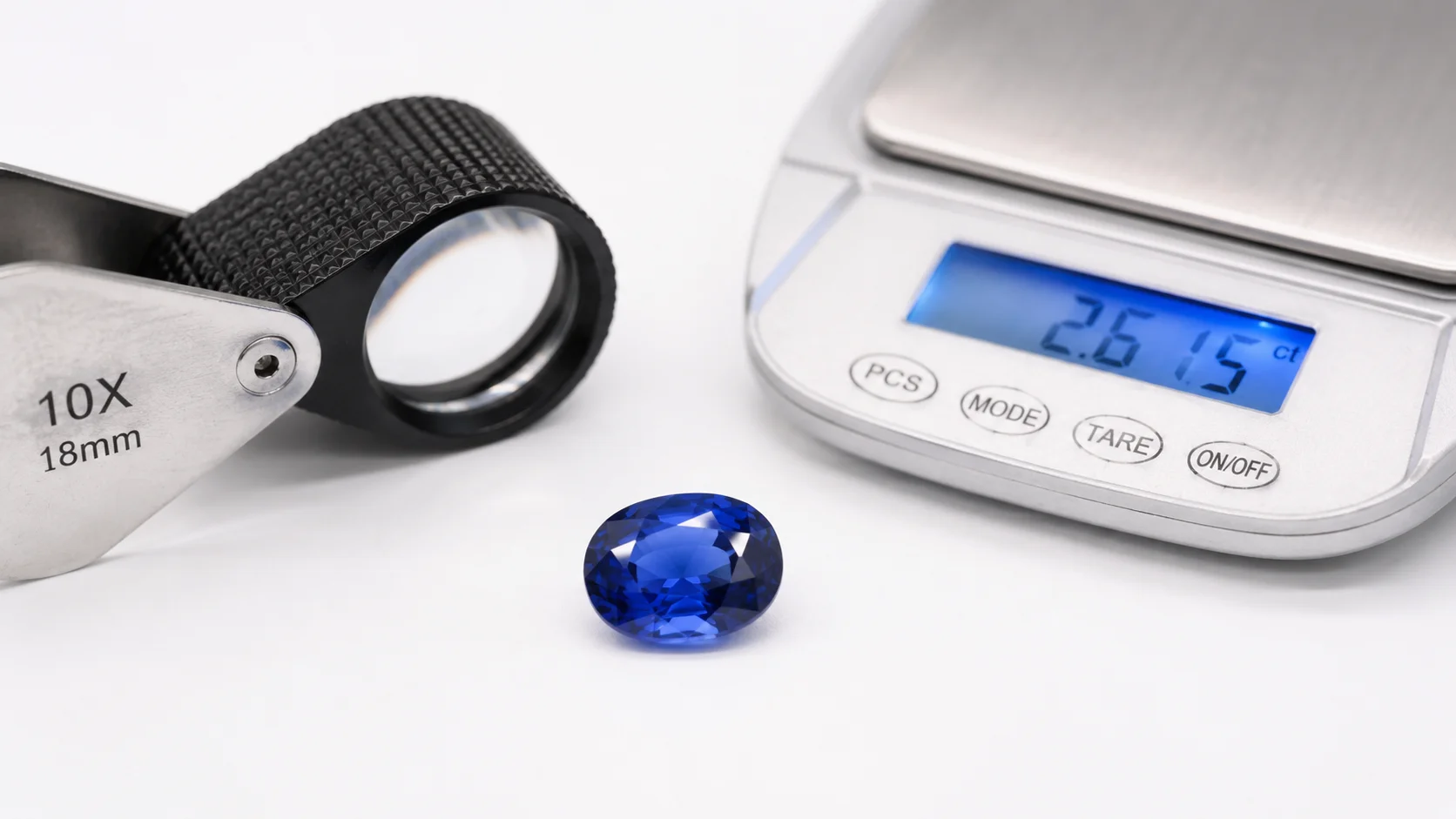
Sapphire Price: Market Cost Guide, Grade, Supply & Demand
Sapphire price can vary from modest commercial levels to extraordinary collector values because the sapphire market includes different colors, treatment categories, natural and laboratory-grown stones, geographic origins, clarity levels, cutting quality, sizes, and optical phenomena. GIA identifies color as the most influential sapphire value factor and states that the highest-valued blue sapphires usually display velvety blue to violetish blue, strong-to-vivid saturation, and medium-to-medium-dark tone. Grayish, overly pale, strongly greenish, or excessively dark stones normally sell below this fine-blue category.
Treatment and origin can then multiply or reduce that base color value considerably. Heating is accepted and common, but fine-quality sapphires with laboratory confirmation of no evidence of heat gain additional rarity and value. Lattice-diffusion-treated material generally costs less than comparable sapphire treated only by conventional heating or left untreated. Geographic origin can create another premium at the exceptional end of the market, with GIA identifying Kashmir as the source receiving the strongest sapphire-origin premium while Myanmar, Sri Lanka, and Madagascar also produce top-quality stones. These distinctions make a universal sapphire price-per-carat chart unreliable unless the stones being compared are genuinely similar.
Sapphire Price At a Glance
| Value Driver | What Usually Raises Sapphire Price | What Can Lower Sapphire Price |
|---|---|---|
| Color | Vivid velvety blue to violetish blue | Grayish, pale, greenish, excessively dark blue |
| Color Uniformity | Even face-up color | Distracting zoning or patchiness |
| Transparency | Bright transparent appearance | Heavy cloudiness or opacity |
| Fine Silk | Attractive velvety light scattering | Excessive silk reducing transparency |
| Heat Status | No evidence of heat in fine material | Conventional heat relative to comparable unheated |
| Lattice Diffusion | None | Diffusion-treated color usually lowers value category |
| Natural Origin | Natural corundum | Laboratory-grown sapphire when compared with natural |
| Carat Weight | Larger stone retaining fine quality | Added size with commercial color or poor cut |
| Cut | Even brilliance, efficient dimensions | Windowing, extinction, excessive pavilion depth |
| Kashmir Origin | Independent origin confirmation on fine quality | Unsupported source claim |
| Myanmar/Sri Lanka/Madagascar | Fine documented provenance | Country name without equivalent stone quality |
| Star Phenomenon | Crisp, centered, mobile star | Weak or fuzzy asterism |
| Fancy Color | Fine rare color such as padparadscha | Weak, unstable, or heavily treated color |
| Condition | Sharp facets, intact girdle | Chips, abrasion, recutting loss |
| Documentation | Independent laboratory report | Seller-only grades or treatment claims |
Color Creates the Largest Sapphire Price Difference
GIA states that color has the greatest influence on sapphire value and that the highest-priced blue material combines strong-to-vivid saturation with a desirable medium-to-medium-dark blue or violetish-blue tone. A one-carat fine sapphire can therefore be worth dramatically more than another one-carat natural sapphire simply because the first has an open velvety blue and the second appears grayish, inky, overly green, or washed out.
This is why the Gems Lore buy sapphire guide should be used before attempting to interpret any sapphire price. Carat weight is easy to measure, but color quality is what determines whether those carats belong to commercial, fine, or exceptional material.
Saturation Must Be Strong Without Making the Stone Black
Saturation describes color intensity, while tone describes relative lightness or darkness. Fine sapphire requires both to be balanced. GIA’s preferred range avoids the extremes because an excessively dark blue loses brilliance and can look almost black, while a very light stone lacks enough saturation to compete with fine blue.
A seller may call an extremely dark stone royal, midnight, or deep Kashmir blue, but such language should not override actual face-up appearance. The premium belongs to visible blue, not to darkness itself.
Color Uniformity Adds Value
Sapphire commonly contains angular color zoning, and GIA explains that cutters orient zoned rough strategically so concentrated blue spreads across the finished gem. A well-oriented stone may therefore appear evenly colored despite uneven rough, while poor orientation leaves obvious pale and dark sections.
The market generally rewards attractive uniformity because an even face-up blue creates a more luxurious appearance. Zoning that is visible only from the side or under close inspection can have little effect, whereas obvious half-light, half-dark stones deserve stronger discounts.
Pleochroism Can Affect Price Through Cut Quality
Blue sapphire commonly shows greenish-blue and violetish-blue directions, and GIA states that cutters generally try to orient the finished stone so the more desirable violetish-blue component dominates. This means cut quality influences color value even before brilliance and symmetry are considered.
A poor orientation can make a sapphire look greener or darker than necessary, reducing price relative to a better-cut stone from similar rough.
Clarity Matters, but Perfect Clarity Is Not the Goal
GIA notes that blue sapphire normally contains inclusions and that extremely high clarity is rare and valuable. Common inclusions include rutile silk, mineral crystals, fingerprint-like healed breaks, color zoning, and banding. The price effect depends on what those features do visually and structurally.
Small inclusions that remain invisible face-up can have limited influence, while large crystals, heavy clouds, reflective fissures, and durability-threatening fractures can lower value sharply. A natural sapphire should therefore be judged on transparency rather than on a diamond-style expectation of microscopic perfection.
Fine Silk Can Add a Velvety Premium
GIA explains that microscopic inclusions in some Kashmir sapphires scatter light and create the coveted velvety appearance without materially reducing transparency. In such cases, inclusions can increase perceived quality rather than decrease it.
The effect has limits. Dense silk that turns the gem cloudy will lower transparency and price, while sparse well-distributed silk can soften extinction and spread blue evenly.
Heat Treatment Establishes the Mainstream Price Baseline
Much commercial sapphire is heated, and GIA describes heating as an accepted treatment. Conventional heat can improve color and clarity enough to transform rough into beautiful durable gemstones, so heated sapphire spans everything from inexpensive commercial jewelry to important high-value stones.
A fair sapphire price comparison should therefore compare heated material with heated material of similar quality rather than automatically treating all heated stones as low grade.
No-Heat Status Adds Value When the Sapphire Is Already Fine
GIA states that independent confirmation of no evidence of heat increases rarity and value in fine-quality sapphire. The premium can become substantial when fine color, clarity, cut, size, and prestigious provenance occur together.
An unheated stone still needs to be beautiful. No-heat status does not make an unattractive gray, overly dark, or heavily included sapphire equal to a vivid heated stone.
Diffusion Treatment Places Sapphire in a Lower Value Category
Lattice diffusion introduces external color-causing elements under high heat. GIA states that diffusion-treated sapphire generally costs less than comparable conventional heated sapphire or untreated material. Depending on the process, treated color may be shallow or extend deeply through the gem.
This distinction matters enormously in price comparison. A five-carat diffusion-treated vivid blue sapphire cannot be benchmarked directly against a five-carat naturally colored heated or unheated sapphire merely because both look blue in photographs.
Beryllium Diffusion Changed the Fancy Sapphire Market
GIA research documents the use of beryllium diffusion to create or modify a wide range of sapphire colors, including pink-orange material resembling padparadscha. Because beryllium can penetrate deeply, detection may require advanced chemical analysis rather than simple visual inspection.
The Gems Lore padparadscha sapphire price guide addresses that specialized market, where a visually convincing pink-orange sapphire can belong to a very different price category depending on treatment.
Natural and Laboratory-Grown Sapphire Have Separate Price Structures
Laboratory-grown sapphire is synthetic corundum and can reproduce excellent color, clarity, and durability at a fraction of the geological scarcity of natural sapphire. GIA identification reports distinguish natural from laboratory-grown material.
Natural sapphire price incorporates mine scarcity, treatment history, provenance, and collector demand that manufactured supply does not share. Buyers focused on visual beauty and durability may prefer synthetic sapphire, while natural-gem collectors operate in a fundamentally different market. Gems Lore covers the manufactured category in lab sapphire price.
Fine Size Premiums Become Stronger as Quality Improves
GIA states that most commercial blue sapphires weigh below five carats and that fine-quality larger sapphires are rarer, making size a more important price factor in the fine market. This means the per-carat value of exceptional blue sapphire can rise substantially as size increases, provided color, transparency, treatment status, and cut remain strong.
A large dark commercial stone should not receive the same multiplier. Size amplifies quality rather than replacing it.
Face-Up Dimensions Matter Alongside Carat Weight
Sapphire rough is expensive, so cutters often retain weight through deep pavilions or thick girdles. A five-carat stone can therefore look smaller than a better-proportioned four-carat sapphire when viewed from above.
Buyers should compare length, width, depth, table, windowing, and visible spread. Paying more for hidden pavilion weight provides limited visual benefit.
Windowing Can Produce a Significant Discount
A shallow pavilion can create a transparent window through the center of the sapphire. Because color is the dominant value factor, losing color in the middle of the gem can reduce both beauty and price sharply.
A slightly smaller well-proportioned sapphire with full color return can therefore represent much stronger value than a heavier windowed stone.
Extinction Can Make a Sapphire Look Smaller and Darker
Extinction refers to broad dark areas where little useful light returns to the observer. Some contrast creates scintillation, but severe persistent blackness reduces the apparent area of fine blue.
Overly deep cutting, poor orientation, and naturally dark rough can all contribute. Buyers should inspect sapphire in motion rather than relying on one perfectly illuminated still image.
Kashmir Has the Strongest Recognized Origin Premium
GIA states that Kashmir receives the highest sapphire-origin premium at the exceptional end of the market, while Myanmar, Sri Lanka, and Madagascar also produce top-quality stones. The famous velvety appearance associated with fine Kashmir material contributes to this demand.
A Kashmir report does not guarantee top quality. The premium belongs to fine Kashmir sapphire, not every sapphire assigned to that geographic origin.
Origin Premiums Depend on Independent Confirmation
GIA describes blue-sapphire origin determination as a complex process involving microscopic inclusions, trace-element chemistry, and spectroscopy, with substantial overlap among deposits. Heat treatment can complicate the process further by dissolving rutile silk and removing features useful for provenance analysis.
An origin premium should therefore rest on a respected laboratory opinion rather than on a dealer’s confidence, accent, paperwork from the mine, or perceived color style alone.
Sri Lanka Can Produce Exceptional Blue and Fancy Sapphire
Sri Lanka is one of the major high-quality sapphire sources recognized by GIA and can produce blue as well as a broad range of fancy colors. Fine Sri Lankan sapphire can command strong prices even without a Kashmir or Myanmar premium when the stone’s color, cut, treatment, and size are exceptional.
Origin should enhance a beautiful stone rather than define beauty by itself.
Madagascar Competes Directly in Fine Color
GIA notes that Madagascar sapphire can achieve intense blue capable of rivaling material from traditional sources. The country’s relatively modern prominence does not reduce the quality of an exceptional gem.
A buyer focused on visible quality can sometimes obtain better value by comparing excellent Madagascar or Sri Lankan material against stones carrying stronger historical-source premiums.
Myanmar Remains an Important Prestige Source
Myanmar produces fine blue sapphire and receives an origin premium on exceptional material. GIA nevertheless emphasizes that mines produce wide quality ranges.
A medium-quality Myanmar stone can therefore sell for less than a superior sapphire from another origin, while exceptional unheated Myanmar sapphire can move into a very high collector category.
Fancy Sapphire Price Requires Color-Specific Evaluation
Pink, yellow, orange, green, purple, white, and color-change sapphires follow different demand patterns from blue. GIA notes that color-change sapphire is judged strongly by the strength of its change, while padparadscha is a rare pink-orange category that commands exceptional premiums.
A universal sapphire price guide cannot rank all colors using one formula. Each fancy category needs comparison against stones of similar hue, saturation, treatment, size, and rarity.
Star Sapphire Price Is Based on Both Bodycolor and Asterism
GIA states that fine star sapphire should show a crisp, distinct, centered star with strong contrast and smooth movement across the surface. The best stones also retain enough transparency and attractive bodycolor rather than becoming completely opaque from the inclusions causing the phenomenon.
Star sapphire therefore follows a different price logic from faceted sapphire. Weight, bodycolor, star definition, symmetry, treatment, origin, and transparency must all be aligned before comparison.
Sapphire Condition Matters in the Secondary Market
Corundum is Mohs 9 with excellent toughness and no cleavage, but old sapphires can still accumulate abrasions, chips, scratches, and girdle damage. Recutting may improve appearance but can remove weight, alter origin-relevant inclusions, or reduce shallow diffusion-treated color.
A secondhand valuation should therefore inspect condition closely instead of assuming sapphire’s hardness makes it immune to wear.
Diffusion-Treated Color Can Be Affected by Recutting
GIA notes that lattice-diffusion color can have varying penetration depth and that surface damage or recutting can remove color where the treated layer is shallow. This can materially affect repair decisions and resale value.
A buyer considering a poorly cut diffusion-treated stone should understand that correcting the geometry may change the color itself.
GIA Reports Reduce Uncertainty but Do Not Establish Price
GIA states that it does not grade sapphire or provide an overall quality score. Its reports can identify whether a stone is natural or laboratory-grown, name detectable treatments, document weight and color, and offer a geographic-origin opinion when possible.
That information establishes the category in which the stone should be valued. The actual sapphire price still comes from market comparison among stones with similar quality and documentation.
AAA, AAAA and “Royal” Grades Are Not Universal
Seller grades have no universal laboratory meaning. One company’s AAA can overlap another retailer’s premium or commercial category, while color names such as royal blue may be used with varying strictness.
Buyers should translate every grade into hue, saturation, tone, zoning, clarity, cut, size, treatment, origin, and condition before comparing prices.
Retail Price, Auction Result, Appraisal and Dealer Offer Are Different
Retail sapphire pricing includes sourcing, certification, inventory, insurance, warranty, branding, and seller margin. Auction prices depend on competition at a specific event, while insurance appraisals estimate replacement context and dealer offers must allow room for resale profit.
These values are not interchangeable. A high appraisal does not guarantee that the stone can be sold immediately for the same amount.
What Usually Raises Sapphire Price?
Sapphire price generally rises with vivid and uniform desirable color, balanced tone, attractive transparency, beneficial fine silk where appropriate, precise cutting, efficient dimensions, larger size with quality maintained, no evidence of heat, absence of diffusion or filling, prestigious independently determined origin, strong condition, rare optical phenomena, and reputable laboratory documentation.
What Usually Lowers Sapphire Price?
Grayish or muddy color, excessive darkness, weak saturation, obvious zoning, severe cloudiness, durability-threatening fractures, large windows, persistent extinction, excessive hidden depth, conventional heat relative to equivalent no-heat material, lattice diffusion, filling, laboratory-grown origin when compared with natural stones, unsupported source claims, condition damage, and undefined seller grades can all reduce value.
How to Compare Sapphire Prices Fairly
Compare only sapphires that match in color category, natural-versus-laboratory-grown identity, hue, saturation, tone, uniformity, transparency, inclusions, silk, heat status, diffusion, filling, cut, dimensions, carat weight, origin opinion, condition, report issuer, and transaction channel. A five-carat unheated Kashmir sapphire, five-carat heated Madagascar sapphire, five-carat diffusion-treated blue sapphire, five-carat synthetic stone, star sapphire, padparadscha, and white sapphire should never be averaged into one universal sapphire price-per-carat figure.
Conclusion
Sapphire price is fundamentally the price of color quality multiplied by rarity layers. GIA identifies fine blue sapphire through strong-to-vivid saturation, attractive medium-to-medium-dark tone, and velvety blue to violetish-blue hue, while size becomes progressively more important as that fine quality is maintained in larger stones.
Treatment can create one of the largest price separations. Conventional heating is mainstream and accepted, fine no-heat sapphire earns a rarity premium, and diffusion-treated material generally belongs to a lower value category. Origin can add another significant premium, particularly for exceptional independently documented Kashmir material, but geographic determination is complex and sometimes inconclusive.
A defensible sapphire valuation therefore does not begin with an online carat chart. It begins by identifying the stone’s exact color category, treatment, natural origin, cut, size, condition, and provenance, then comparing it with genuinely similar sapphires in the same market.
Frequently Asked Questions
How much is sapphire worth per carat?
There is no universal sapphire price per carat because color, treatment, natural origin, clarity, cut, size, provenance, and condition can create enormous differences between stones.
What is the biggest sapphire price factor?
Color. GIA states that color has the greatest influence on sapphire value, with vivid velvety blue to violetish-blue material in balanced tone commanding the strongest mainstream blue prices.
Does unheated sapphire cost more?
Fine sapphire with independent confirmation of no evidence of heat generally commands a rarity premium.
Is heated sapphire still valuable?
Yes. Heating is an accepted and widespread treatment, and exceptional heated sapphire can be highly valuable when color, clarity, cut, size, and provenance are strong.
Why is diffusion-treated sapphire cheaper?
Diffusion introduces external color-causing elements during treatment, so GIA places it below comparable conventional heated and untreated sapphire in value.
Does sapphire price rise sharply with size?
It can when quality is fine. GIA states that most commercial blue sapphires are under five carats and that size has a greater price effect on fine-quality sapphire because large fine stones are rarer.
Is Kashmir sapphire the most expensive?
Fine independently documented Kashmir material generally receives the strongest geographic-origin premium, though Myanmar, Sri Lanka, and Madagascar can also produce exceptional stones.
Can Madagascar sapphire be top quality?
Yes. GIA notes that Madagascar can produce intense blue sapphire rivaling fine stones from traditional sources.
Does perfect clarity make sapphire more expensive?
Very high clarity can add value, but fine sapphire commonly contains inclusions. Tiny inclusions can even create desirable velvety appearance, while large damaging fractures lower value.
Is star sapphire priced like faceted sapphire?
No. Star sapphire additionally depends on star sharpness, centering, contrast, movement, bodycolor, and translucency.
Is synthetic sapphire worth less than natural sapphire?
Generally yes when comparing otherwise similar stones because laboratory-grown supply lacks natural geological rarity. Synthetic sapphire can still be beautiful and durable.
Does GIA assign sapphire AAA grades?
No. GIA identifies and evaluates characteristics but does not issue an overall sapphire quality grade.
Does a GIA report give sapphire market value?
No. It establishes gemological facts such as natural origin, treatment, and potentially geographic origin, while monetary value requires market comparison.
Does sapphire hold its retail price?
There is no guaranteed retention percentage. Secondary-market value depends on color, treatment, size, origin, documentation, condition, dealer margin, and demand.
Is sapphire a guaranteed investment?
No. Exceptional sapphires can be highly collectible, but appreciation, resale liquidity, and recovery of the original purchase price are never guaranteed.