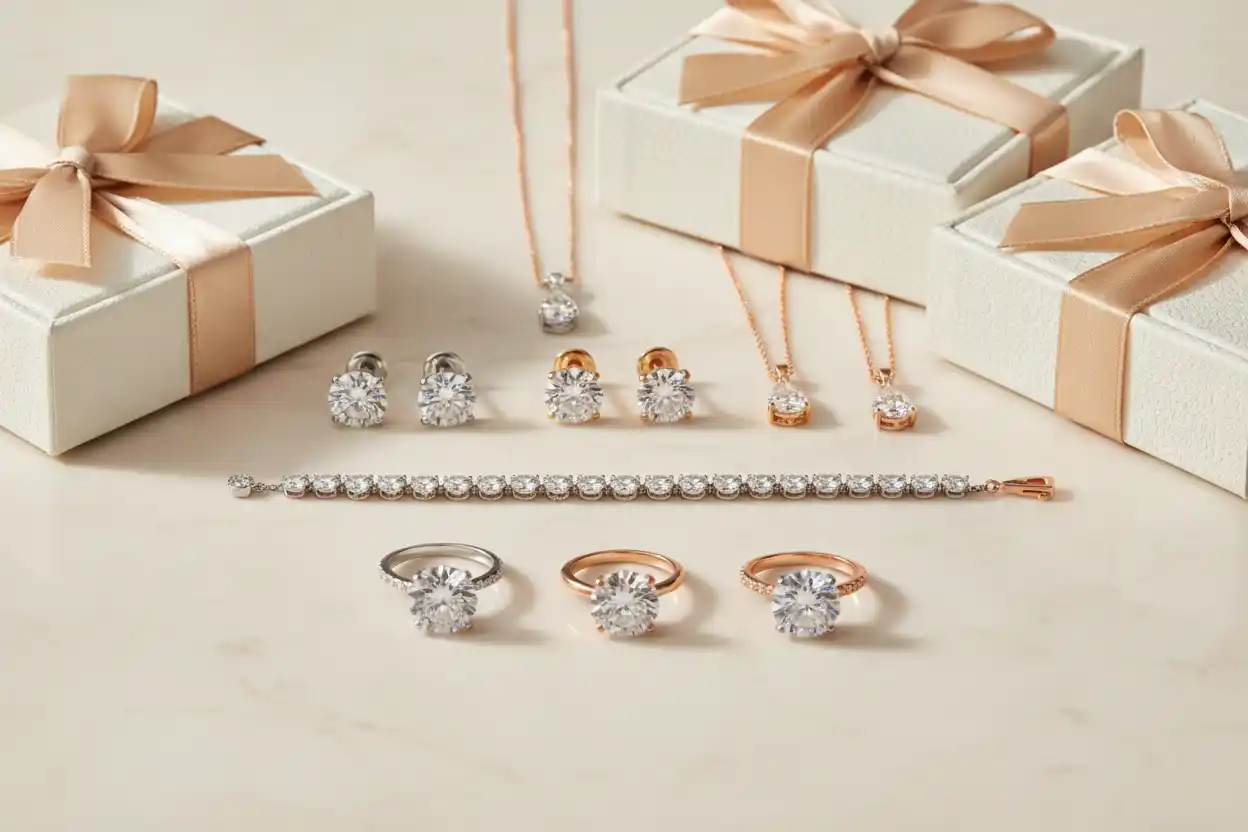
April Birthstone Jewelry: 14 Spiritual Meanings of Diamond Energy
April birthstone jewelry centers on diamond, one of the world’s most recognized gemstones and the standard modern birthstone for April. Diamond consists primarily of carbon arranged in a crystal structure that gives the gemstone extraordinary hardness. It ranks 10 on the Mohs scale, the highest position, although hardness specifically describes resistance to scratching rather than complete resistance to breaking. GIA notes that diamond is also associated with the 60th and 75th wedding anniversaries.
Diamond’s April connection adds another layer to jewelry already associated with engagement, commitment and important milestones. Historically, diamonds were collected from Indian rivers and traded internationally centuries before modern mining developed. GIA records Indian diamond trade as early as the fourth century BCE and notes that the gemstone’s name traces to the Greek word adamas, commonly interpreted as invincible or unbreakable.
The phrase diamond energy belongs to spiritual and symbolic traditions rather than established physics or medicine. Diamond genuinely interacts with light to create brightness, fire and brilliance when properly cut, but there is no scientific evidence that wearing one emits healing energy, protects a person spiritually or increases mental strength. April birthstone jewelry can still represent clarity, endurance, commitment and personal resilience without treating those meanings as measurable health effects.
14 Spiritual Meanings of April Birthstone Jewelry
- Diamond can symbolize clarity and honest intention.
- Its hardness can represent endurance.
- Brightness can symbolize hope and illumination.
- Fire can represent passion and creative vitality.
- Transparency can symbolize truth.
- Long geological formation can represent patience.
- Strength symbolism can reflect personal resilience.
- Engagement traditions connect diamond with commitment.
- April birthstone identity can symbolize personal beginnings.
- Colorless diamond can represent simplicity and purity.
- Fancy-color diamonds can represent individuality.
- Anniversary traditions reinforce continuity and longevity.
- Diamond jewelry can serve as a personal reminder of chosen values.
- Spiritual “energy” remains symbolic rather than a proven therapeutic force.
Diamond Is the Modern Birthstone for April
Diamond appears on nearly all modern birthstone lists as the gemstone for April. GIA also recognizes it as a traditional gift for the 60th and 75th wedding anniversaries, strengthening its cultural connection with longevity and major life milestones.
That makes April birthstone jewelry especially versatile. A diamond pendant may mark a birthday, stud earrings can celebrate a graduation or professional milestone, and a diamond ring can combine April birthstone identity with engagement or anniversary symbolism.
The birthstone connection is cultural rather than mineralogical. A diamond does not behave differently when worn by someone born in April.
Its personal importance comes from tradition, identity and the memories attached to the jewelry.
Diamond Can Symbolize Clarity
GIA describes diamond as the April birthstone associated with clarity and strength.
Clarity has both a gemological and symbolic meaning here.
In gemology, clarity describes inclusions and surface blemishes visible under standardized examination. In symbolic language, clarity can represent honest thinking, direct communication or knowing what matters most.
Someone wearing April birthstone jewelry might use the diamond as a personal reminder to approach important choices deliberately.
The gemstone does not improve cognitive ability, but jewelry can function as a meaningful object associated with an intention the wearer has consciously chosen.
Strength Symbolism Has a Real Physical Starting Point
Diamond’s connection with strength is understandable because it occupies Mohs 10 and has unmatched resistance to scratching among natural gemstones. GIA describes diamond as the hardest natural substance used in gemology.
That physical fact has encouraged symbolic associations with resilience, endurance and firmness of purpose.
Hardness should not be exaggerated into indestructibility. Diamond has cleavage directions and can chip from a sufficiently hard impact, particularly around exposed points or vulnerable girdle areas. GIA specifically distinguishes hardness from toughness and notes that diamond can fracture despite its extraordinary scratch resistance.
This distinction actually makes the symbolism more realistic. Strength does not mean an inability to be damaged.
Diamond Light Can Symbolize Hope and Illumination
A well-cut diamond interacts with light through brightness, fire and scintillation. These effects are optical phenomena produced by refractive behavior, dispersion and facet arrangement, not supernatural illumination.
Yet light has long served as a human symbol of hope, insight and renewal.
April birthstone jewelry can therefore represent coming through a difficult period, recognizing a new direction or beginning another year of life with greater intention.
The brilliance is physically measurable. The meaning attached to it is personal.
Fire Can Represent Passion and Creative Vitality
Diamond fire refers to flashes of spectral color created when white light disperses into its component wavelengths.
In symbolic interpretation, those colored flashes can represent vitality, creativity or enthusiasm.
This is a safer and more precise use of the word energy than claiming that the gemstone emits biological energy. The visible motion of light can inspire an emotional response without implying that diamond changes the nervous system or body.
A person may therefore wear April birthstone jewelry as a symbol of enthusiasm for a new project, relationship or stage of life.
Transparency Can Represent Honesty
Colorless diamond is valued partly for its ability to transmit and return light with remarkable brilliance.
Transparency lends itself naturally to ideas about truth and openness. The internal features of a natural diamond can still be present, but an attractive cut stone often appears strikingly clear to the unaided eye.
The historical and symbolic themes explored through diamond meaning can therefore connect physical appearance with concepts such as commitment, clarity and enduring value.
Those interpretations remain human meanings rather than powers inherent in the stone.
Geological Age Can Symbolize Patience and Endurance
Natural diamonds formed deep within Earth under extreme temperature and pressure. GIA describes natural diamond formation at depths around 100 miles beneath Earth’s surface before geological processes ultimately brought diamond-bearing rock toward the surface.
Many natural diamonds are extraordinarily ancient.
That deep geological history makes diamond a compelling symbol for patience, long development and endurance through pressure.
It does not mean hardship literally creates stronger people in the way geological pressure creates diamond. That phrase is metaphor.
Used thoughtfully, however, a natural diamond can represent the idea that important things may require time.
April Birthstone Jewelry Can Mark Personal Resilience
Birthstone jewelry often becomes meaningful because it is attached to a particular life event.
A diamond necklace received after recovery from a difficult year may symbolize perseverance. A ring bought to celebrate independence might represent self-commitment. Earrings gifted at graduation can become reminders of years of effort.
The gemstone itself does not produce resilience.
What creates the psychological connection is memory, association and intentional symbolism.
This distinction allows jewelry to remain emotionally important without turning ordinary human meaning into unsupported crystal-healing claims.
Diamond Has a Long History of Prestige
GIA traces early diamond trade to India, where diamonds were collected from rivers and streams and were being traded by at least the fourth century BCE. Over time they entered elite markets far beyond their original sources.
Their rarity, hardness and brilliance contributed to associations with royalty, wealth and social prestige.
April birthstone jewelry can borrow some of that historical symbolism, but modern wear does not need to focus on status.
A small diamond can carry more personal meaning than a very large stone if it marks a meaningful birthday, relationship or family connection.
The Word “Diamond” Itself Encourages Endurance Symbolism
The name diamond is historically linked to the Greek adamas, associated with the idea of being invincible or unconquerable. GIA references this linguistic origin when explaining the birthstone’s history.
That makes endurance one of the more understandable symbolic meanings associated with April birthstone jewelry.
It is still worth remembering that actual diamonds can chip.
Symbolic invincibility should not become poor jewelry care.
April Diamond Jewelry Comes in More Than Rings
An April birthstone gift does not need to be an engagement ring.
Diamond stud earrings are practical because they can be worn regularly without carrying romantic implications. Pendants keep the stone relatively protected while placing it where the wearer can enjoy it easily. Bracelets create more visible sparkle but require careful setting construction because they experience greater contact with surfaces.
Rings carry the highest exposure to impact, which makes secure prongs and suitable design especially important.
For someone who specifically wants romantic April jewelry, the symbolism and buying considerations of a diamond engagement ring naturally overlap with the birthstone tradition.
Diamond Color Can Change the Symbolic Personality
Diamond is not always colorless.
Natural fancy-color diamonds occur in yellow, brown, pink, blue, green, orange, violet and extremely rare red, among other appearances. Trace elements and structural effects can influence these colors.
A colorless stone may be interpreted symbolically as clarity or simplicity. Pink may be chosen for affection, yellow for warmth or optimism, and blue for calmness or loyalty.
These meanings are not standardized gemological definitions.
They are personal associations built on color psychology, cultural tradition and individual preference.
Natural and Laboratory-Grown Diamond Share Diamond Properties
Laboratory-grown diamonds have essentially the same basic crystal structure and chemical identity as natural diamonds, although their growth histories are different.
For birthstone symbolism, someone may reasonably decide that laboratory-grown diamond represents April because it is still diamond. Others may specifically value the geological age and natural formation story of a mined diamond.
Neither preference changes the scientific limit on metaphysical claims.
There is no evidence that a natural diamond has stronger spiritual energy than a laboratory-grown diamond, or that either produces measurable healing effects.
The 4Cs Still Matter When Buying April Birthstone Jewelry
Symbolism does not eliminate ordinary buying considerations.
Diamond quality is commonly evaluated through cut, color, clarity and carat weight. For a piece where sparkle matters strongly, cutting deserves close attention because proportions and facet relationships influence how efficiently the stone returns light.
High clarity can be valuable because of rarity, but a birthday pendant does not necessarily require an exceptionally high clarity grade if the inclusions are invisible to the unaided eye.
Likewise, carat is weight rather than beauty.
The buying checks used when you buy diamond are more useful than simply choosing the largest stone the budget allows.
Diamond Price Depends on More Than Carat Weight
Two diamonds of the same weight can have very different prices.
Cut, color, clarity, shape, grading documentation and whether the diamond is natural or laboratory-grown all affect the market.
The factors influencing diamond price become particularly important when birthstone jewelry is being purchased as a major gift rather than a modest everyday piece.
A smaller well-cut diamond can often provide more visible brilliance than a larger stone with poor proportions.
Price should therefore be understood as the result of a quality profile rather than as a simple cost per size.
April Birthstone Jewelry Needs Normal Diamond Care
Diamond is extremely resistant to scratching, but it can accumulate skin oil, lotion and soap residue. These films reduce visible brilliance even when the gemstone itself remains undamaged.
GIA recommends periodic cleaning and inspection of diamond jewelry. Warm water, mild soap and a soft brush are appropriate for many pieces, while heavily included or treated diamonds may require more conservative cleaning. The setting should also be inspected because a loose diamond can damage the metal around it over time.
Store diamond jewelry so the stone cannot scratch other gemstones or nearby precious metal.
Extreme hardness protects the diamond surface, but it also means the diamond can damage softer jewelry stored against it.
Historical Healing Lore Should Not Be Treated as Healthcare
Diamond accumulated many extraordinary beliefs over centuries.
GIA records historical claims that diamond could guard against the evil eye, protect against plague or poison, and promote longevity, strength, beauty and happiness. These accounts are part of gemstone lore rather than evidence of medical effectiveness.
Modern crystal traditions likewise associate diamond with amplification, spiritual clarity and high-vibration energy.
The claims discussed in diamond benefits should remain clearly separated from healthcare decisions.
There is no established clinical evidence that wearing diamond treats illness, changes immunity or produces therapeutic energy.
Diamond Energy Works Best as Symbolic Language
If someone describes diamond as energetic, the most defensible interpretation is symbolic.
Its sparkle can represent optimism. Its hardness can represent resilience. Its clarity can represent honesty. Its geological history can represent endurance. Its association with marriage can represent commitment.
Those meanings can influence how a person experiences jewelry because humans naturally form emotional associations with objects.
That experience does not require a measurable external energy field.
April birthstone jewelry can therefore be spiritually meaningful while remaining scientifically responsible.
Conclusion
April birthstone jewelry is centered on diamond, a carbon gemstone with Mohs hardness 10, exceptional optical brilliance and a long history of cultural importance. Diamond’s physical characteristics make symbolism involving strength, clarity, endurance and light easy to understand, while its April birthstone status gives rings, pendants, bracelets and earrings additional personal meaning. Natural diamonds also carry an extraordinary geological history, while laboratory-grown diamonds share diamond’s essential physical identity through a different origin. Spiritual ideas about protection, amplification or healing should remain symbolic rather than medical claims. The strongest April jewelry choice is one that combines verified quality, appropriate care and a meaning that genuinely matters to the wearer.
FAQs About April Birthstone Jewelry
What is the April birthstone?
Diamond is the principal modern birthstone for April and is also traditionally associated with the 60th and 75th wedding anniversaries.
What does the April diamond symbolize?
Modern symbolism commonly connects diamond with clarity, strength, endurance, commitment and light. GIA specifically identifies clarity and strength among the meanings associated with the April birthstone.
Is diamond the hardest gemstone?
Diamond ranks 10 on the Mohs scale and is the hardest natural gemstone against scratching. Hardness does not mean it cannot chip or fracture.
Can April birthstone jewelry be worn every day?
Yes. Diamond’s exceptional scratch resistance makes it highly suitable for daily jewelry, provided the setting is secure and the piece receives normal maintenance.
Is diamond unbreakable?
No. A sufficiently hard blow in a vulnerable crystallographic direction can chip or fracture diamond despite its exceptional hardness.
Why does diamond symbolize endurance?
Its extreme hardness, ancient natural formation and historical name derived from adamas have all encouraged associations with durability and endurance.
Does April birthstone jewelry have to contain a colorless diamond?
No. Diamonds occur in many colors, and fancy-color diamond jewelry can still serve as April birthstone jewelry.
Can a lab-grown diamond be used as an April birthstone?
Yes. A laboratory-grown diamond is still diamond in chemical and crystal identity, although its growth origin differs from a natural diamond. Whether a buyer specifically wants natural geological origin is a personal preference.
What April birthstone jewelry makes a good birthday gift?
Stud earrings, pendants and simple rings are practical choices because they can be worn regularly. The best design depends on the wearer’s existing jewelry style rather than the birthstone tradition alone.
How should diamond birthstone jewelry be cleaned?
GIA recommends regular cleaning and notes that warm water, mild soap and a soft toothbrush are suitable for many diamonds. Treated or heavily included stones may need additional caution.
Does diamond have spiritual energy?
There is no scientifically established evidence that diamond emits therapeutic spiritual energy. Energy, amplification and protection interpretations belong to spiritual and symbolic traditions.
Did people historically believe diamond had healing powers?
Yes. Historical lore attributed protective and healing effects to diamond, including protection from poison and plague. These are historical beliefs, not scientifically validated treatments.
Does wearing a diamond make someone stronger or more confident?
There is no evidence of a direct biological effect. A meaningful piece of jewelry may serve as a personal reminder of resilience or confidence, but that is different from the gemstone physically producing those qualities.
What should I prioritize when buying April birthstone jewelry?
Prioritize the type of jewelry the person will actually wear, secure setting construction and the diamond qualities most visible in that design. For important natural diamonds, independent grading documentation can make quality comparisons more reliable.
Disclaimer:
Spiritual, healing, protective and energetic interpretations associated with diamond reflect historical lore, modern spiritual traditions and personal symbolism rather than established medical or psychological effects. April birthstone jewelry does not replace professional healthcare, and perceived energy cannot determine diamond quality, natural origin or authenticity.