Apophyllite Healing Properties: 11 Powerful Claims, Hopeful Traditions & Safe Limits
Apophyllite healing properties are traditionally associated with mental clarity, spiritual reflection, intuition, calm, emotional openness, meditation, self-awareness, letting go, dream work, truthfulness, and creating a peaceful personal space. These meanings come from crystal traditions rather than established medical or psychological evidence. Apophyllite does not treat anxiety, depression, insomnia, respiratory illness, pain, neurological conditions, hormonal problems, or other health concerns through ordinary handling or display. Its safest role is symbolic, particularly as a visually striking crystal used to mark reflection, journaling, meditation, or other deliberate routines.
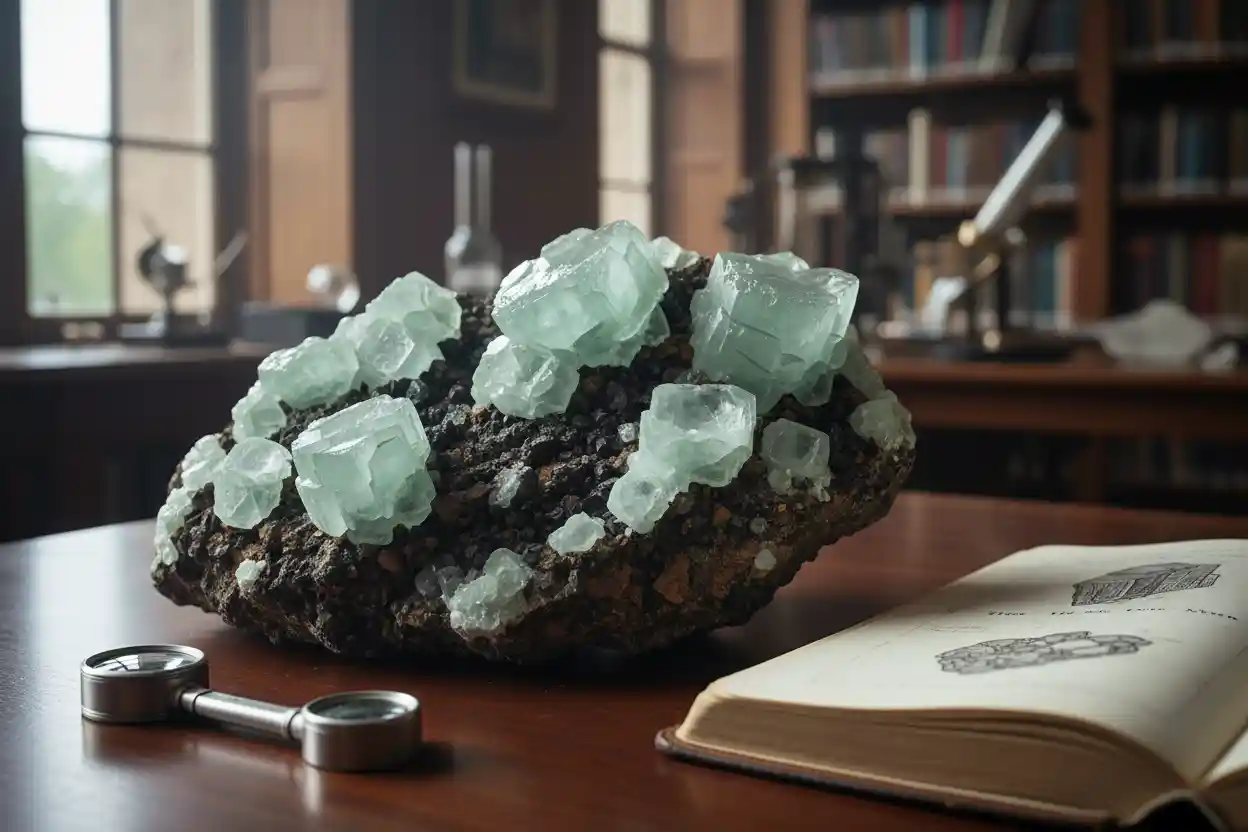
The name apophyllite is commonly used in the gem and mineral trade for members of the apophyllite group rather than for one single mineral species. Clear, white, pale green, and other forms occur, often as attractive tetragonal crystals in cavities of volcanic rocks. Apophyllite has a glassy luster on many crystal faces, a distinctive pearly look on cleavage surfaces, a Mohs hardness around 4.5 to 5, and perfect cleavage that makes it much more fragile than its bright crystal faces may suggest. These features make it especially appealing as a collector specimen, but they also explain why rough handling, jewelry impact, and harsh cleaning are poor choices.
Apophyllite Mental-Clarity Claims Fit Reflective Questions Better Than Cognitive Enhancement
Mental clarity is one of the strongest themes attached to apophyllite. Clear crystals in particular are often described as helping remove confusion, improve focus, or reveal the truth. There is no established evidence that the mineral increases memory, intelligence, attention, or executive function, but its visual transparency makes it an intuitive symbol for structured reflection.
A practical apophyllite routine can begin with a specific question. What facts are known? Which parts remain uncertain? What assumption is creating the most confusion? What information would change the decision? The crystals for clarity tradition becomes more useful when clarity comes from organizing thoughts rather than treating a crystal as a source of hidden answers.
This approach also works for complex personal decisions. Apophyllite can sit near a journal while someone separates evidence from fear, preference, prediction, and wishful thinking. The stone remains a visual anchor, while the actual clarity comes from better questions and more complete information.
Apophyllite Intuition Claims Should Not Be Treated as Verified Knowledge
Apophyllite is widely associated with intuition, spiritual insight, and heightened awareness. Some metaphysical descriptions go further and claim that the stone reveals future events, strengthens psychic perception, or provides access to hidden information. These claims are matters of belief rather than established properties of the mineral.
A safer interpretation is to use apophyllite as a cue to notice internal reactions without assuming they are automatically correct. Intuition can reflect experience and subtle pattern recognition, but it can also be influenced by anxiety, expectations, incomplete information, or bias. The crystals for intuition tradition is most responsible when intuitive impressions are treated as prompts for reflection rather than proof.
This distinction matters greatly for health, financial, legal, and relationship decisions. A strong feeling can be personally significant, but factual questions still require evidence. Apophyllite can accompany that process without replacing it.
Apophyllite Meditation Claims Reflect Attention Practice, Not Energy Transmission
Clear and green apophyllite crystals are popular meditation stones because their bright faces, geometric shapes, and reflective surfaces give the eye a stable point of attention. Some traditions describe the stone as raising vibration, opening spiritual centers, or accelerating meditation. These concepts are not scientifically established, but the crystal can still function effectively as a focus object.
Meditation with apophyllite can be simple. Place the specimen where it can be seen comfortably, notice its geometry and reflections, and return attention to the chosen practice whenever the mind wanders. Any improvement in concentration comes from practicing attention repeatedly, not from a proven force emitted by the crystal.
Traditional apophyllite benefits can therefore include aesthetic enjoyment, a sense of ritual, and a consistent meditation cue without requiring claims about measurable energy. The distinction allows spiritual practice and mineral science to remain separate without dismissing personal meaning.
Apophyllite Calm and Stress Claims Support Quiet Routines but Do Not Treat Anxiety
Apophyllite is often described as calming because many specimens are clear, white, or pale green and occur in visually delicate crystal clusters. These qualities can make the stone appealing in quiet spaces, but there is no established evidence that it lowers stress hormones, changes nervous-system activity, or treats anxiety disorders.
The symbolism can still support a low-stimulation routine. Someone might keep apophyllite near a reading chair, meditation space, or journal and use the crystal as a signal that work and notifications are temporarily set aside. Reducing unnecessary stimulation, slowing breathing, and giving attention to one activity at a time can all support a calmer experience, while the stone provides visual continuity.
Persistent or severe anxiety deserves appropriate professional support. A crystal can remain part of a personal routine, but it should not become the reason treatment is delayed or symptoms are minimized.
Apophyllite Emotional-Openness Claims Need Boundaries and Consent
Crystal traditions sometimes describe apophyllite as encouraging honesty, emotional openness, and willingness to face feelings that have been avoided. This symbolism can be useful if openness is voluntary and paired with appropriate boundaries. A stone cannot make someone disclose feelings safely, and it should never be used to pressure another person into sharing private experiences.
A personally meaningful apophyllite specimen can instead support private journaling or preparation before an important conversation. The person can decide what they want to express, what remains private, and what kind of response they need. Emotional openness becomes useful when it increases clarity and connection without eliminating personal limits.
This is especially important after conflict or trauma. Disclosure is not always the safest first step, and no crystal practice should encourage someone to confront an unsafe person simply because emotional release is described as spiritually necessary.
Apophyllite Letting-Go Claims Should Focus on Specific Habits, Expectations, or Attachments
Apophyllite is commonly associated with releasing fear, old patterns, and emotional attachments. These descriptions become more practical when “letting go” is defined precisely. A person may want to stop checking an old message thread, release an unrealistic expectation, reduce contact with someone harmful, or end a routine that repeatedly creates stress.
The crystals for letting go tradition works best when the stone represents a specific decision rather than an expectation that uncomfortable feelings will disappear. An attachment can weaken gradually while memories remain important. Letting go may therefore mean changing behavior before emotional intensity has fully settled.
Apophyllite can mark that transition. It cannot remove grief, erase trauma, or force emotional closure.
Apophyllite Dream and Sleep Claims Should Stay Separate From Insomnia Treatment
Apophyllite is often used in dream practices because its clear or reflective appearance has become associated with awareness and spiritual insight. Some people place it near the bed to encourage vivid dreams, lucid dreaming, or dream recall. There is no established evidence that apophyllite directly changes dream production or sleep architecture.
The stone can still support a dream-journaling habit. The crystals for dreams tradition becomes practical when a bedside crystal serves as a reminder to write down dream fragments before they fade. The act of recording is what improves the chance of remembering patterns over time.
Large or pointed clusters should not be placed under a pillow or where they could fall onto a sleeper. Apophyllite’s perfect cleavage and brittle character also make bed use physically impractical. A stable bedside shelf or table is safer.
Apophyllite Truth and Self-Awareness Claims Work Through Honest Reflection, Not Revelation
Apophyllite is sometimes described as a stone of truth that exposes hidden motives or helps people see themselves clearly. There is no objective evidence that the mineral reveals deception or hidden psychological content. It can, however, become a useful reminder to ask uncomfortable but specific questions.
Someone might reflect on where they are avoiding responsibility, which repeated pattern keeps producing the same result, or whether a decision is being driven by fear rather than evidence. The insight comes from honest reflection and willingness to consider alternative explanations.
This type of self-awareness should also include compassion. Reflection that becomes relentless self-criticism is unlikely to produce better decisions. Apophyllite symbolism is more useful when it supports accurate self-observation rather than harsh judgment.
Green Apophyllite Growth Claims Are Symbolic and Do Not Produce Physical Healing
Green apophyllite is often given additional symbolism around growth, renewal, emotional recovery, and connection with nature. Its color can make those associations feel intuitive, but green apophyllite does not regenerate tissue, detoxify organs, improve cardiovascular function, or accelerate physical recovery.
The growth theme can instead represent gradual personal change. A person may use a green crystal as a reminder that improvement often happens through repeated small actions rather than a dramatic breakthrough. This can apply to learning, relationships, organization, or another personal goal.
Color differences may influence how people interpret a specimen spiritually, but they do not establish different therapeutic powers. Clear, white, and green apophyllite are better compared through mineral identity, crystal form, color, condition, and aesthetic appeal.
Apophyllite and Stilbite Commonly Occur Together but Remain Different Minerals
Apophyllite frequently occurs alongside zeolite minerals in cavities within volcanic rocks, and collectors often encounter beautiful combinations with stilbite. The two minerals can form striking clusters, but they have different structures and physical properties. Traditional stilbite healing properties often overlap with apophyllite themes such as calm, reflection, and dream symbolism, which can make the pair especially popular in crystal collections.
Their coexistence is geological rather than evidence that they combine healing powers. Mineral associations develop because the chemistry and conditions inside a rock cavity allow several species to crystallize together. The resulting specimen can be scientifically interesting and visually impressive without requiring an energetic explanation.
This is useful to remember when buying mixed clusters. A seller should ideally identify each mineral accurately rather than treating every pale crystal on the specimen as apophyllite.
Apophyllite Cleavage and Moderate Hardness Make It Better for Display Than Daily Jewelry
Apophyllite is relatively soft at about 4.5 to 5 on the Mohs scale and has perfect cleavage, making it vulnerable to scratches and breakage. Although cut apophyllite exists, the mineral is far more common as collector crystals than as everyday jewelry. Rings and bracelets expose stones to repeated impacts that apophyllite handles poorly.
Specimens should be placed on stable shelves away from edges where they might fall. Pointed clusters need extra care because individual crystals can chip or separate. Storage with harder gems should also be avoided if direct contact could scratch polished or crystal surfaces.
The mineral’s high luster can make it appear tougher than it actually is. Care decisions should be based on hardness and cleavage rather than visual brilliance.
Apophyllite Cleaning Should Avoid Heat, Steam, Ultrasonic Methods, and Rough Handling
Apophyllite’s perfect cleavage and brittle character make gentle cleaning essential. Dust can be removed with a soft brush or a careful stream of room-temperature water when appropriate, followed by thorough drying. Aggressive scrubbing, sudden temperature changes, steam cleaning, and ultrasonic methods are poor choices for fragile crystal clusters.
Heat deserves particular caution because apophyllite is known for exfoliating or separating in thin layers when heated, a behavior reflected in the mineral group’s name. Crystal-cleansing rituals involving strong heat, prolonged sunlight, hot water, or flames are therefore unnecessary and potentially damaging.
There is also no need to prepare crystal water or ingest powder. A collector specimen provides all the symbolic and visual value of apophyllite without introducing avoidable ingestion concerns.
Apophyllite Healing Claims Cannot Replace Medical or Mental Health Care
Apophyllite is sometimes credited with effects on breathing, allergies, fatigue, pain, sleep, anxiety, depression, hormones, or other health concerns. These claims are not established therapeutic effects of the mineral. Displaying or holding a specimen does not deliver a medication into the body or correct an underlying health condition.
The same applies to claims of energetic cleansing. A crystal may help someone mark the beginning of a calming routine, but it cannot remove environmental hazards, toxins, infection, or psychological illness. Persistent or concerning symptoms require appropriate assessment.
Apophyllite’s genuine appeal is already substantial. Its glassy faces, unusual crystal forms, pearly cleavage, mineral associations, and collector value provide plenty of reason to appreciate it without assigning medical powers.
Conclusion: Apophyllite Healing Traditions Remain Symbolic While Its Crystal Structure Explains Its Real Behavior
Apophyllite healing properties are best understood as traditional themes of clarity, intuition, calm, meditation, emotional openness, self-awareness, letting go, dream reflection, truthfulness, peaceful spaces, and personal growth. Its real mineral interest comes from bright tetragonal crystals, moderate hardness, perfect cleavage, and frequent association with zeolite minerals such as stilbite. Apophyllite can support personal reflection and spiritual routines, but it does not treat illness, reveal hidden facts, or change sleep, cognition, or emotional health through ordinary contact.
FAQs About Apophyllite Healing Properties
What are the main traditional apophyllite healing properties?
Apophyllite is commonly associated with clarity, intuition, meditation, calm, emotional openness, self-awareness, letting go, dream reflection, and spiritual insight.
Is apophyllite scientifically proven to heal?
No. There is no established evidence that apophyllite treats physical or mental health conditions through ordinary handling or display.
Is apophyllite one single mineral?
The name is commonly used for members of the apophyllite mineral group rather than one single species.
How hard is apophyllite?
Apophyllite is generally around 4.5 to 5 on the Mohs scale and has perfect cleavage, making it relatively fragile.
Can apophyllite improve intuition?
It can serve as a reflection cue, but it does not provide verified hidden knowledge or supernatural information.
Can apophyllite help with sleep or dreams?
It can support a dream-journaling or bedtime ritual, but it does not treat insomnia or directly control dream content.
Is green apophyllite more healing than clear apophyllite?
There is no evidence that color determines stronger healing power. Different colors mainly affect appearance and personal symbolism.
Why is apophyllite often found with stilbite?
Both can crystallize in cavities within volcanic rocks under geological conditions that favor multiple mineral species.
Is apophyllite suitable for everyday jewelry?
Its moderate hardness and perfect cleavage make display specimens more practical than frequently worn rings or bracelets.
Can apophyllite be cleaned with steam or ultrasonic equipment?
Those methods are best avoided because the mineral is brittle and has perfect cleavage.
Can apophyllite go in drinking water?
There is no need to use apophyllite in drinking water. External use through display or handling is simpler and safer.
Apophyllite healing meanings are traditional or personal practices, not established treatments for physical or mental health conditions.