12 Essential Aventurine Healing Properties: Traditional Claims, Evidence & Safe Limits
Aventurine healing properties are traditionally associated with optimism, opportunity, confidence, emotional balance, creativity, motivation, decision-making, relationship growth, resilience, prosperity symbolism, focus, and adapting to new circumstances. These themes are especially strong in green aventurine traditions, although blue and other colors receive their own symbolic interpretations. Aventurine does not attract money through a measurable force, treat heart disease, lower blood pressure, regulate hormones, improve fertility, suppress anxiety, or change metabolism through ordinary handling.
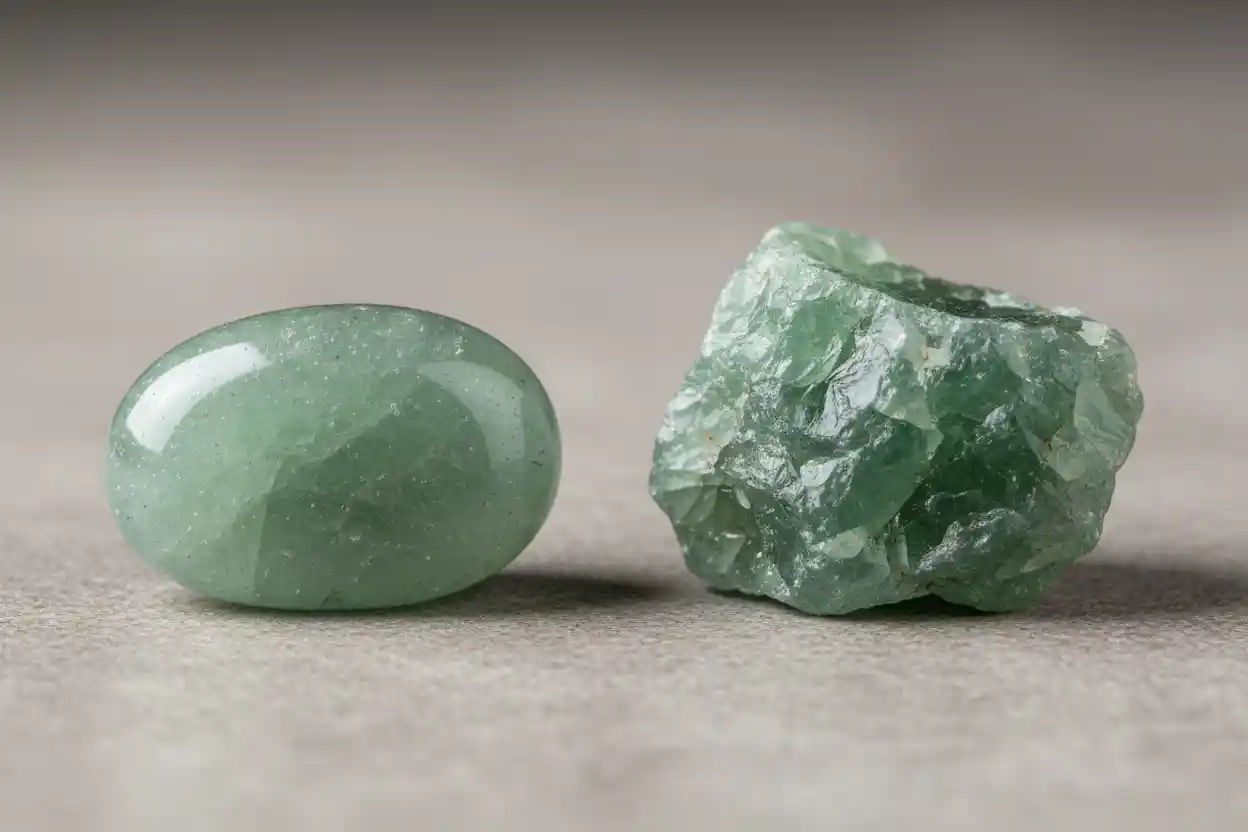
Aventurine is usually a quartz-rich stone distinguished by aventurescence, the glittering effect created when light reflects from small plate-like inclusions within the stone. In green aventurine quartz, mica inclusions such as fuchsite commonly contribute both the green color and the sparkling appearance. The quartz component gives aventurine a hardness close to 7 on the Mohs scale, although its granular structure and inclusions mean it should not automatically be treated like a flawless single quartz crystal. These physical features explain the gem’s appearance, while its luck, prosperity, and emotional-healing reputation belongs to tradition.
Green Aventurine Luck and Opportunity Claims Work Best as Readiness for Real Opportunities
Green aventurine is often called a luck or opportunity stone and is frequently used in crystal practices related to money, work, competitions, new projects, and personal goals. There is no established evidence that it changes probability, attracts favorable events, or makes random outcomes more likely. A more useful interpretation is that the stone can symbolize readiness to notice and act on genuine opportunities when they appear.
Someone might keep green aventurine on a desk as a reminder to submit an application, follow up on a professional contact, prepare for an interview, or take a sensible chance that has been delayed by uncertainty. Traditional green aventurine healing properties become more practical when “luck” is reframed as preparation meeting opportunity rather than a mysterious force changing external events.
The traditional aventurine meaning also connects strongly with possibility and forward movement. This symbolism can be encouraging when someone is entering a new phase, but it should not become a reason to take reckless financial risks, gamble more aggressively, or ignore evidence because the stone is believed to guarantee a favorable outcome.
Aventurine Prosperity Claims Do Not Attract Money or Improve Investments
Prosperity is one of the most commercially popular aventurine themes. Green stones are often placed near wallets, cash registers, desks, or business spaces with claims that they attract wealth. No gemstone has been established as a mechanism for increasing income, raising investment returns, or generating sales. Aventurine can instead symbolize practical financial behavior such as reviewing spending, preparing a budget, developing a skill, completing a business task, or evaluating a decision before committing money.
Traditional aventurine benefits are therefore safest when prosperity refers to constructive habits and opportunity awareness rather than guaranteed financial gain. A stone beside financial records can become a cue to review them regularly, but the numbers themselves still determine whether a plan is sustainable.
Prosperity symbolism should be especially cautious around gambling and speculative decisions. Believing that aventurine increases luck can create false confidence where outcomes remain uncertain. Personal symbolism is harmless when it supports discipline; it becomes risky when it encourages someone to increase financial exposure because they feel spiritually protected.
Aventurine Confidence and Motivation Claims Support Action Without Removing Uncertainty
Aventurine is commonly associated with confidence, motivation, and willingness to move forward. These themes fit its bright appearance and cultural reputation as a stone of opportunity, but the gem does not alter self-esteem, fear responses, or physical energy through contact with the skin. A practical use is to assign the stone to the beginning of a task that repeatedly gets postponed.
Aventurine on a desk might mean start the application, write the first paragraph, make the call, or spend the next focused period on the most important unfinished task. This creates a consistent cue without pretending that the stone generates motivation biologically. The crystals for courage tradition supports the same idea when confidence means acting despite uncertainty rather than waiting until nervousness disappears completely.
Motivation also varies naturally. A sustainable routine should not depend on feeling inspired every day. Aventurine symbolism becomes more useful when the stone represents consistency, including returning to the task after an imperfect day rather than treating a lapse as failure.
Aventurine Emotional-Balance Claims Should Support Reflection Instead of Anxiety Treatment
Green aventurine is often marketed as soothing, heart-centered, emotionally balancing, or helpful during stressful periods. There is no established evidence that the stone regulates the autonomic nervous system, lowers anxiety, or changes mood chemistry. A more responsible interpretation is to use it as a reminder to pause before reacting and identify what an emotion is responding to.
For example, frustration may point to unrealistic workload, disappointment may reveal an expectation that mattered, and anxiety may reflect uncertainty that needs more information. The stone can sit beside a journal while the person writes down the situation, reaction, and possible next action. The crystals for inner peace tradition works better when calm comes from routines, boundaries, rest, and clearer decisions rather than a claim that the gemstone removes negative emotion.
Persistent anxiety, depression, panic, or other significant distress requires appropriate support. Aventurine may remain personally comforting, but it should not replace professional assessment or treatment.
Aventurine Relationship and Heart Claims Do Not Control Love or Physical Heart Health
Green aventurine is frequently associated with the heart in crystal traditions because of its color. This symbolism is often extended in two directions: romantic relationships and physical heart health. Both require clear limits. Aventurine cannot make another person fall in love, repair betrayal, create loyalty, lower cardiovascular risk, or treat heart disease.
The relationship symbolism can still support useful habits. A stone may represent expressing appreciation, having an overdue conversation, or approaching conflict with more curiosity and less assumption. These behaviors can affect relationship quality because people respond to communication and conduct, not because a crystal changes feelings.
Physical heart claims are different and should not be inferred from color symbolism. Chest pain, shortness of breath, fainting, or other concerning cardiovascular symptoms require appropriate medical attention. The fact that a green stone has been assigned “heart” symbolism does not give it physiological effects on the heart or circulation.
Aventurine Creativity and Problem-Solving Claims Reflect Flexible Thinking
Aventurine is often included in creativity practices because its sparkling appearance suggests movement, possibility, and variation. There is no established evidence that the stone increases creative brain function, but it can be an effective visual reminder to generate more than one solution before evaluating the options.
The crystals for creativity tradition becomes useful when a writer, artist, designer, or entrepreneur treats creativity as a process. The person may intentionally produce several ideas, combine elements from different approaches, and delay judgment until enough alternatives exist to compare. Aventurine can mark this exploratory phase without being credited for producing the ideas.
Problem-solving benefits from the same flexibility. If a repeated strategy keeps failing, the relevant question is not whether the stone needs cleansing but whether the strategy itself needs to change. Aventurine symbolism can represent trying another route while keeping the goal clear.
Blue Aventurine Communication and Discipline Traditions Differ From Green Aventurine Symbolism
Blue aventurine is typically given somewhat different symbolic themes from the familiar green variety. Modern crystal traditions often connect it with communication, discipline, mental organization, and measured decision-making rather than luck and prosperity. Traditional blue aventurine healing properties should still be understood symbolically, because color differences do not create proven psychological effects.
A blue aventurine stone can be assigned to a specific behavior such as preparing for a difficult conversation, organizing a study plan, or resisting an impulsive decision long enough to check the facts. The benefit comes from the behavior associated with the object rather than from a different energetic frequency.
This distinction also illustrates how crystal meanings develop culturally. Two stones sharing aventurine’s sparkling quartz appearance can receive different metaphysical interpretations because of color. The visual difference is real, while the claimed healing difference has not been established scientifically.
Aventurine Quartz Aventurescence Comes From Reflective Plate-Like Inclusions
Aventurine’s defining visual feature is aventurescence, a glittering or shimmering effect produced when light reflects from small plate-like inclusions distributed through the stone. In green aventurine quartz, mica inclusions such as fuchsite are commonly responsible for the sparkle and often contribute to the perceived green color. Other inclusion types can produce reddish, brownish, bluish, or other appearances.
This effect is distinct from the metallic sparkle of manufactured aventurine glass, sometimes called goldstone. The similar name can confuse buyers because aventurine glass is man-made, while aventurine quartz is naturally occurring. Reliable identification therefore depends on understanding structure and inclusions rather than assuming every glittering stone with an aventurine label is the same substance.
The granular quartz nature of many aventurine pieces can also produce a different appearance from transparent single-crystal quartz. The stone is commonly cut into beads, cabochons, carvings, and polished shapes that emphasize color and sparkling inclusions rather than transparency.
Aventurine Hardness Supports Regular Jewelry Use but Does Not Make Every Piece Indestructible
Aventurine quartz is generally close to 7 on the Mohs hardness scale, giving it useful resistance to ordinary scratching. This makes it suitable for beads, pendants, bracelets, cabochons, and many rings. However, hardness is not the same as resistance to every kind of damage. Granular structure, fractures, inclusions, thin edges, and carved shapes can still chip under strong impact.
Routine cleaning with lukewarm water, mild soap, and a soft brush or cloth is usually appropriate. Harsh chemicals and unnecessary heat should be avoided when treatments, dyes, coatings, or attached findings are uncertain. Individual jewelry pieces should also be examined according to their settings, because metal components, adhesives, or other stones may require different care.
Crystal rituals do not require prolonged sunlight, salt, or aggressive cleaning. A symbolic practice should preserve the stone rather than expose it to unnecessary wear.
Aventurine Healing Claims Cannot Treat Fertility, Blood Pressure, Metabolism, or Other Health Conditions
Aventurine is sometimes credited with effects on fertility, heart health, circulation, inflammation, metabolism, hormones, skin, eyesight, or immune function. These claims are not established therapeutic effects of aventurine quartz. Holding a stone does not deliver a clinically useful substance into the body, and green color does not create a biological connection with the heart or reproductive system.
The same caution applies to wellness claims around pregnancy or chronic illness. A crystal can remain a personally meaningful object, but it cannot monitor a condition, prevent complications, or replace medical treatment. The safest language around aventurine keeps physical health separate from traditional symbolism.
Aventurine does not need therapeutic power to be valuable. Its natural aventurescence, quartz durability, wide range of polished forms, and long association with luck and opportunity already give it strong decorative and cultural appeal.
Conclusion: Aventurine Healing Properties Are Traditional While Aventurescence and Quartz Hardness Are Measurable
Aventurine healing properties are best understood as traditional themes of optimism, opportunity, confidence, emotional balance, creativity, motivation, decision-making, relationship growth, resilience, prosperity symbolism, focus, and adaptability. Aventurine quartz is distinguished by reflective inclusions that create aventurescence, while its quartz-rich composition provides useful hardness for jewelry and carvings. It can support personal routines and meaningful symbolism, but it does not attract money, change probability, treat illness, control relationships, or alter body function.
FAQs About Aventurine Healing Properties, Aventurescence, and Safe Use
What are the main traditional aventurine healing properties?
Aventurine is commonly associated with optimism, opportunity, confidence, emotional balance, creativity, motivation, resilience, prosperity symbolism, focus, and adaptability.
Is aventurine scientifically proven to heal?
No. There is no established evidence that aventurine treats physical or mental health conditions through ordinary contact.
Why does aventurine sparkle?
Its aventurescence comes from small reflective plate-like inclusions within the quartz-rich stone.
Is green aventurine really a lucky stone?
Luck is a traditional symbolic association. Aventurine does not change probability or guarantee favorable outcomes.
Can aventurine attract money?
No established evidence shows that aventurine increases income, business success, or investment returns.
What is the difference between green and blue aventurine symbolism?
Green aventurine is commonly associated with opportunity and optimism, while blue aventurine is often linked with communication and discipline. These are traditional interpretations rather than proven effects.
How hard is aventurine?
Aventurine quartz is generally around 7 on the Mohs scale, although fractures and granular structure can still make individual pieces vulnerable to impact.
Is aventurine suitable for everyday jewelry?
Its quartz hardness makes many aventurine pieces suitable for regular wear, provided they are protected from strong impacts and inappropriate cleaning.
Is aventurine the same as aventurine glass?
No. Natural aventurine quartz is a stone containing reflective inclusions, while aventurine glass or goldstone is manufactured glass.
Can aventurine improve heart health?
No. Heart-related crystal symbolism does not mean aventurine treats cardiovascular conditions.
Can aventurine help anxiety?
It can serve as a personal reflection cue, but it is not an established treatment for anxiety disorders.
Can aventurine go in drinking water?
There is no need to use aventurine in drinking water for wellness purposes. External symbolic use is simpler.
Aventurine healing meanings are traditional or personal practices, not established treatments for physical or mental health conditions.