7 Aventurine Benefits: Natural Sparkle, Quartz Durability & Practical Uses
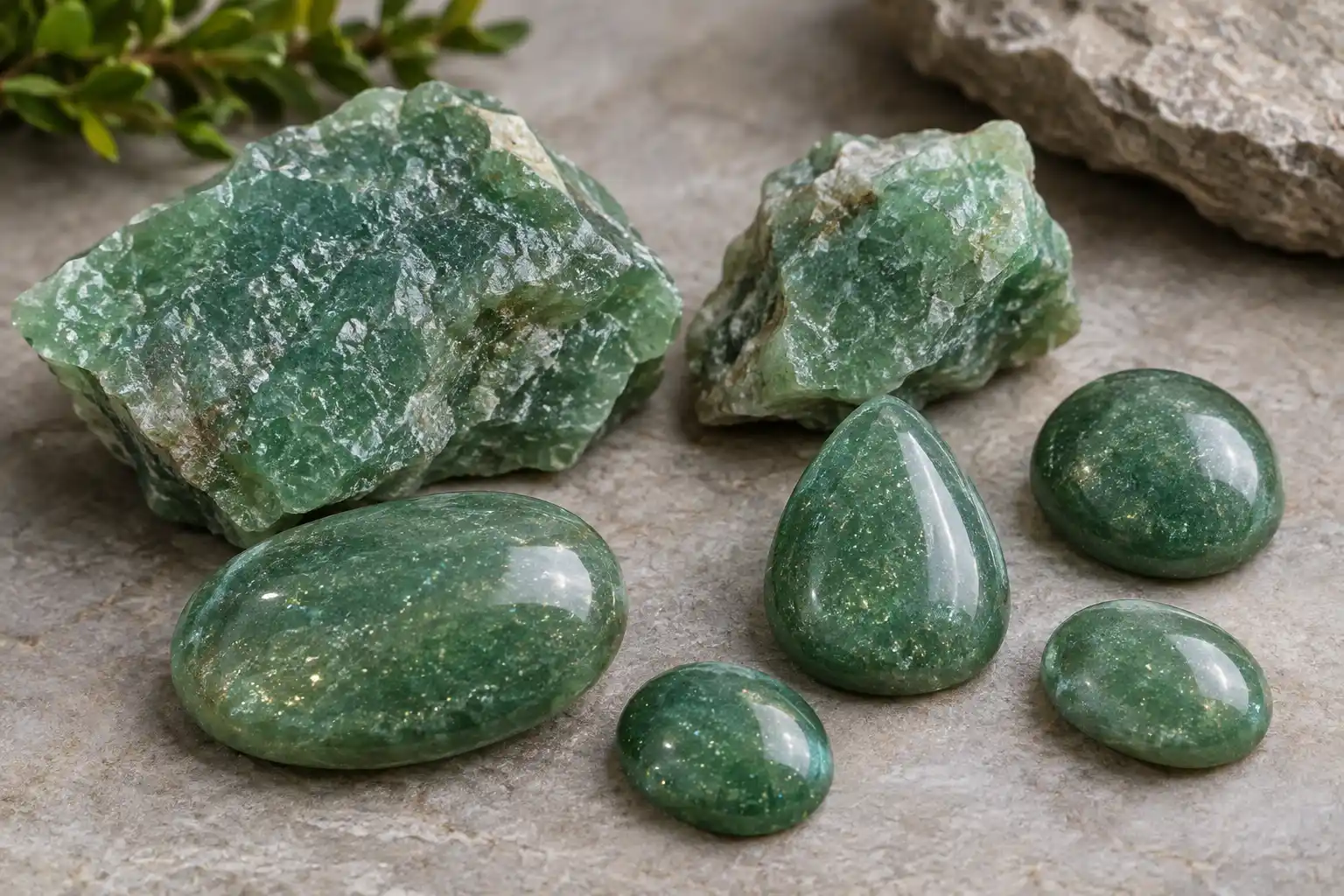
Aventurine benefits begin with a visual effect that gives the stone its identity: aventurescence. Tiny reflective mineral inclusions scattered through quartz can produce shimmering flashes when light strikes the surface, creating a sparkling appearance without glitter, foil, or artificial coating. Green aventurine is the most familiar variety and commonly owes its color and sparkle to chromium-bearing mica, particularly fuchsite, although aventurine quartz can occur in other colors with different inclusions.
Aventurine is usually a quartz-rich rock or variety of quartz rather than a separate mineral species. Because quartz dominates its structure, it generally has hardness near Mohs 7, making it much more practical for beads, cabochons, carvings, pendants, bracelets, decorative objects, and many rings than softer stones such as calcite, fluorite, apatite, or angelite.
The strongest aventurine benefits are therefore physical, optical, decorative, collectible, educational, and practical. Its natural sparkle, useful hardness, wide range of lapidary forms, accessible supply, and easily recognizable green varieties give it substantial appeal before modern beliefs about luck, prosperity, or emotional wellness are considered.
7 Aventurine Benefits at a Glance
- Natural aventurescence creates sparkling reflections from mineral inclusions inside quartz.
- Mohs hardness near 7 makes aventurine suitable for many jewelry and decorative uses.
- Green, orange, red, brown, blue, and other varieties provide significant visual choice.
- Dense quartz can be polished into beads, cabochons, carvings, spheres, bowls, and other durable forms.
- Relative availability makes attractive natural aventurine accessible to beginning collectors and jewelry buyers.
- Its inclusions provide useful lessons about mineral identification, optical effects, and the difference between aventurine quartz and glittering glass.
- Modern luck and prosperity symbolism can add personal meaning without becoming a financial or medical guarantee.
Natural Aventurescence Leads the Most Distinctive Aventurine Benefits
Aventurescence is the defining visual feature behind many aventurine benefits. Small reflective inclusions inside the quartz catch light independently, producing tiny flashes that appear and disappear as the stone moves.
In green aventurine, mica-rich inclusions commonly contribute both color and sparkle. Fuchsite, a chromium-bearing variety of muscovite mica, is especially important in many green examples. Other colors can involve hematite, goethite, or different inclusions.
The intensity of aventurescence varies considerably. Some stones show a subtle shimmer visible only under directional light, while others contain dense reflective inclusions that create a much stronger sparkling effect.
A highly glittery appearance should not automatically be considered proof of quality. Natural pattern, color, polish, translucency, inclusion distribution, and whether the stone is actually quartz all matter.
Quartz Hardness Makes Aventurine Practical for Everyday Objects
Durability is one of the most useful aventurine benefits. Quartz ranks 7 on the Mohs scale, giving aventurine good resistance to common scratching compared with many softer decorative stones.
This durability makes aventurine suitable for beads, pendants, bracelets, earrings, carvings, worry stones, spheres, small bowls, and many other polished objects. Rings can also work, especially when the stone is protected from hard direct impacts.
Aventurine does not have the strong cleavage seen in some softer or more brittle gems. It can still chip or fracture, particularly along existing cracks, but its overall wearability is useful for affordable jewelry.
The crystal hardness chart places quartz well above fluorite, calcite, and apatite while still below topaz, corundum, and diamond. That balance explains why aventurine is durable without being scratch-proof.
Green Aventurine Offers Natural Color Without Transparency Requirements
Green is by far the best-known aventurine color, ranging from pale mint and yellowish green to stronger medium or darker green. Because the stone is usually translucent to opaque, attractiveness does not depend on the high transparency expected from faceted emerald or tourmaline.
This creates practical aventurine benefits for lapidaries. Rough with attractive color and inclusion patterns can become useful even when it would never produce a transparent faceted gem.
Polished cabochons reveal aventurescence effectively because broad curved surfaces catch light from several directions. Beads and spheres can produce similar moving flashes as they rotate.
Color distribution also creates individuality. One stone may be evenly green, while another contains lighter patches, mica-rich zones, or variable translucency.
Buyers should appreciate these variations as normal characteristics rather than expecting every natural piece to resemble a uniform manufactured product.
Aventurine Comes in More Colors Than Green
Green dominates the market, but aventurine benefits from substantial color diversity. Natural aventurine quartz can appear orange, reddish brown, brown, yellowish, blue, gray, or other shades depending on inclusions and geological origin.
Orange and reddish varieties often owe much of their appearance to iron-bearing inclusions such as hematite or goethite. Blue aventurine marketed in the gem trade requires more careful identification because several blue stones and artificial products can be sold under similar descriptive names.
Color terminology is not always standardized, so mineral identity matters more than a seller’s imaginative label.
This variety gives designers flexibility. Earth-toned aventurine works well in warm jewelry palettes, while green remains popular for botanical and nature-inspired designs.
Different colors do not require claims that each produces a unique medical effect. Their most obvious benefit is visual choice.
Aventurine Takes an Excellent Polish for Carving and Jewelry
Fine-grained quartz makes aventurine suitable for many lapidary forms. Cutters commonly produce cabochons, beads, spheres, carvings, palm stones, decorative tiles, and small vessels.
A smooth polish strengthens the visual effect because light can enter or reflect from the surface more cleanly before interacting with internal inclusions. Poor polish can make the same stone look dull even when its natural color is attractive.
Carving also works well because the stone combines reasonable toughness with enough hardness to preserve detail better than very soft carbonate or sulfate minerals.
This versatility is one of the strongest practical aventurine benefits. One geological substance can serve jewelry, collector, decorative, and craft markets without requiring high transparency or faceting.
Natural Aventurine Is Usually Accessible to New Collectors
Aventurine is widespread enough that attractive common examples generally remain accessible compared with rare transparent colored gemstones. Large polished pieces can therefore be obtained without the extreme premiums associated with emerald, alexandrite, fine ruby, or unusual tourmaline.
Accessibility makes aventurine useful for beginners learning about quartz, inclusions, polishing, hardness, and treatment disclosure. A collector can compare rough, tumbled, cabochon, carved, and bead forms without needing a large budget.
Low price should not be confused with low geological interest. A modest natural stone can clearly demonstrate aventurescence and mica inclusions.
When deciding where to buy aventurine, identification and honest descriptions matter more than exaggerated rarity. Natural green aventurine is not ordinarily an ultra-rare gemstone, so dramatic scarcity claims deserve skepticism.
Aventurine Helps Explain the Difference Between Natural Sparkle and Glass
One of the most educational aventurine benefits is its relationship with aventurine glass. Sparkling artificial glass has a long history and is commonly known today as goldstone or aventurine glass.
The glass contains reflective metallic or mineral-like particles deliberately produced during manufacture, creating an intense glittering appearance. Natural aventurine quartz obtains its sparkle from mineral inclusions formed during geological processes.
The two can both be attractive, but they should not be confused. Goldstone is manufactured glass rather than naturally formed aventurine quartz.
Ironically, the gemstone name “aventurine” became associated with the sparkling effect through the history of aventurine glass and the Italian expression a ventura, commonly interpreted as “by chance.” Natural stones showing a similar optical effect later adopted related terminology.
This naming history makes identification especially important.
Aventurescence Can Reveal How Inclusions Improve a Gem
In many transparent gemstones, inclusions reduce value when they interfere with clarity. Aventurine demonstrates that inclusions can instead create the feature people specifically want.
Reflective mica or iron-rich plates generate the sparkling effect. Without those inclusions, ordinary quartz might remain attractive but would no longer display the characteristic aventurescence that defines the variety.
This provides an important gemological lesson: an inclusion is not automatically a defect. Its impact depends on the type of gemstone and the visual effect it produces.
Cat’s-eye gems, star sapphires, sunstone, moss agate, and aventurine all demonstrate different ways internal features can become desirable.
Educational value therefore deserves a place among aventurine benefits, especially for collectors learning to look beyond simple clarity grades.
Aventurine Jewelry Combines Color With Useful Wearability
The combination of quartz hardness and opaque-to-translucent color gives aventurine practical jewelry advantages. Beads tolerate ordinary wear better than many soft stones, while cabochons can work in rings, pendants, earrings, cufflinks, brooches, and bracelets.
The gem is especially suitable for larger designs because common rough is available in substantial sizes. A bold pendant or bead necklace does not require exceptionally rare transparent rough.
Hard impact should still be avoided. Quartz can chip, and internal fractures can weaken individual pieces. Jewelry should also be stored away from harder stones such as sapphire and diamond.
These practical aventurine benefits allow the stone to function as actual wearable jewelry rather than merely a delicate collector object.
Modern Aventurine Symbolism Often Focuses on Luck and Opportunity
Modern spiritual traditions frequently describe aventurine as a stone of luck, prosperity, opportunity, confidence, or new beginnings. Green aventurine in particular is often connected with financial abundance and favorable outcomes.
These interpretations can have personal symbolic value, but the stone does not alter mathematical probability, guarantee gambling wins, increase investment returns, or cause money to appear.
A grounded use might be to treat aventurine as a reminder to notice opportunities and act on realistic ones. Someone building a business, learning a skill, or applying for work can associate the stone with taking constructive action rather than waiting for luck.
The aventurine meaning can therefore remain positive without becoming a financial promise.
Aventurine Benefits Should Stay Separate From Healing Claims
Modern aventurine healing properties sometimes include claims involving heart health, blood pressure, fertility, inflammation, skin conditions, anxiety, metabolism, or recovery from illness.
Reliable scientific evidence does not establish those effects. Aventurine’s quartz and mica components do not become medical treatments simply because the stone touches skin.
A polished stone may still become part of meditation, journaling, or a personal routine. Its green color or sparkling appearance may feel pleasant, and a meaningful object can help someone remember a chosen behavior.
The distinction is straightforward: personal symbolism is possible, but treatment of a health condition requires appropriate evidence and care.
Aventurine Care Is Straightforward
Warm water, mild soap, and a soft cloth or brush are suitable for most untreated aventurine jewelry and polished stones. Rinse away soap residue and dry thoroughly.
Avoid hard impacts, aggressive chemicals, and unnecessary extreme heat. A piece containing fractures or glued components should receive gentler cleaning than a solid polished cabochon.
Store aventurine away from harder gemstones to reduce scratching. Quartz itself can also scratch softer stones, so separate compartments protect the rest of a mixed jewelry collection.
Straightforward maintenance is another practical reason aventurine remains popular for beads and everyday decorative pieces.
Conclusion
Aventurine benefits include natural sparkling aventurescence, quartz durability, attractive color variety, lapidary versatility, accessible collecting, educational inclusions, and practical jewelry use.
Green aventurine remains the most familiar form, but the stone’s real appeal comes from reflective inclusions interacting with light inside durable quartz. Modern symbolism around luck and opportunity can add personal meaning, but natural sparkle, mineralogy, and craftsmanship already give aventurine plenty of value.
FAQs
What Are the Main Aventurine Benefits?
Aventurine benefits include natural sparkle, Mohs 7 durability, jewelry versatility, attractive color, carving potential, accessible collecting, and educational value.
What Causes Aventurine to Sparkle?
Reflective mineral inclusions create aventurescence. Green aventurine commonly contains mica-rich inclusions such as fuchsite.
Is Aventurine a Type of Quartz?
Yes. Natural aventurine is generally quartz containing reflective inclusions that produce aventurescence.
How Hard Is Aventurine?
Because quartz dominates its structure, aventurine is generally around Mohs 7.
Is Aventurine Good for Everyday Jewelry?
Yes. Its quartz hardness makes it practical for many jewelry types, although strong impacts can still chip or fracture a piece.
Is Goldstone the Same as Aventurine?
No. Goldstone, sometimes called aventurine glass, is manufactured glass containing reflective particles. Natural aventurine forms geologically as quartz with mineral inclusions.
Does Aventurine Bring Good Luck?
Luck and prosperity are popular modern symbolic associations, but there is no scientific evidence that aventurine changes probability or guarantees financial outcomes.
Modern symbolic aventurine benefits are personal wellness beliefs and should not replace qualified medical, mental health, or financial advice.