11 Abalone Shell Benefits: Iridescent Beauty, Jewelry Uses & Practical Value
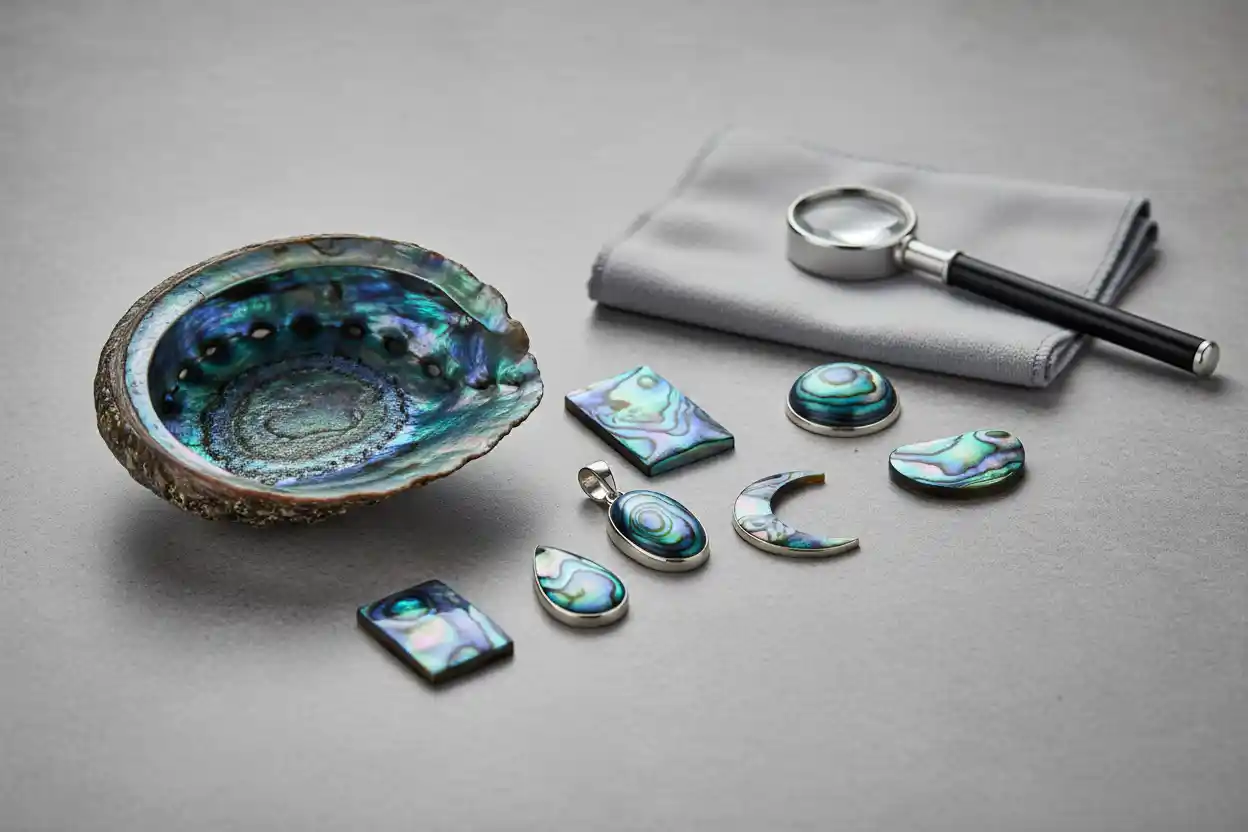
Abalone shell benefits come mainly from its extraordinary iridescent appearance, lightweight form, suitability for jewelry and inlay, cultural history, biological structure, and versatility in decorative craft. The inner shell of abalone can flash blue, green, turquoise, violet, pink, silver, and bronze as the viewing angle changes, creating an optical effect that has made it desirable for ornaments and decorative work across different cultures and time periods.
Abalone shell is not a mineral crystal. It is produced biologically by marine gastropods of the genus Haliotis. The luminous inner layer is nacre, often called mother-of-pearl, built predominantly from microscopic aragonite calcium carbonate tablets arranged with thin organic layers. This intricate structure contributes both to the shell’s visual depth and to the remarkable toughness of nacre compared with simple brittle calcium carbonate crystals.
The practical abalone shell benefits are therefore enough to explain its appeal without relying on unsupported medical claims. Abalone shell works as jewelry, inlay, ornament, art, cultural object, educational specimen, and source of inspiration for scientists studying natural layered structures.
11 Abalone Shell Benefits for Jewelry, Art, Collecting & Design
- Natural iridescence creates changing blue, green, pink, violet, and silver colors.
- Thin shell sections work well in pendants, earrings, mosaics, and decorative inlay.
- Each shell has a unique pattern, making individual pieces visually distinctive.
- Nacre combines mineral layers with an organic structure that improves fracture resistance.
- Polished shell can create vivid color without relying on faceting like a transparent gemstone.
- Abalone has a long history of ornament, tools, containers, and jewelry in several cultures.
- Shell fragments can be shaped into beads, cabochons, buttons, carvings, and decorative accents.
- Its relatively light weight suits larger jewelry and inlay designs.
- Abalone shell provides an accessible example of biological mineral formation and nacre structure.
- Responsibly obtained shell can extend the useful life of a harvested biological resource.
- Modern spiritual symbolism can provide personal meaning when kept separate from medical claims.
Abalone Shell Benefits Begin With Natural Iridescence
The most obvious abalone shell benefits are visual. Nacre does not need transparent faceting to create dramatic color. Its layered microscopic structure interacts with light, producing interference effects that change as the shell, light source, or viewer moves.
This is why one piece can appear predominantly green at one angle, then flash blue, violet, pink, or silver from another. The effect is structural rather than a simple surface pigment. Thin aragonite-rich layers and organic interfaces create a complex optical system that gives nacre its depth.
No two cut sections reveal exactly the same combination of color bands, dark areas, growth patterns, and flashes. Designers can therefore choose pieces for bold blue-green iridescence, warmer pink and bronze tones, or mixed rainbow effects.
Among abalone shell benefits, this natural variability is especially valuable in jewelry because even small pieces can look visually complex without elaborate faceting.
Abalone Shell Benefits for Jewelry and Wearable Design
Abalone shell works well in earrings, pendants, brooches, bracelets, rings with protected settings, beads, and inlaid jewelry. Thin sections provide intense color without the weight of many similarly sized solid stones, allowing designers to create relatively large visual areas of iridescence.
Unlike a transparent faceted gem, abalone shell is usually appreciated for its nacreous surface. Cabochon-style pieces, flat inlays, curved shell sections, and mosaic fragments preserve the color play more effectively than designs intended to imitate diamond-like brilliance.
Its softness means thoughtful settings are important. Abalone should be protected from harder stones and abrasive contact. Earrings and pendants typically expose shell to less impact than rings, making them particularly practical formats.
The crystals vs gemstones difference matters here because abalone shell can function as a gem substance even though it is biogenic rather than a mineral crystal. Gem use depends on beauty and suitability for ornament, not on being a crystal.
Abalone Shell Benefits in Inlay, Furniture, Instruments & Decorative Art
Decorative inlay is one of the most established abalone shell benefits. Thin polished sections can be cut into shapes and fitted into wood, metal, lacquer, and other surfaces. The nacre provides intense visual contrast while adding relatively little thickness.
Abalone and other mother-of-pearl shells have been used for instrument decoration, jewelry boxes, furniture accents, buttons, mosaics, knife handles, small objects, and artistic details. Guitar fretboards, bindings, and decorative markers are familiar examples of modern shell inlay.
Craftsmanship has a major influence on quality. Clean joins, thoughtful color selection, smooth edges, good polish, and stable backing allow nacre to display its color without leaving fragile unsupported sections exposed.
This makes abalone shell benefits relevant beyond conventional jewelry. A small fragment can contribute more color to an intricate inlay pattern than its size would suggest.
Unique Patterns Give Every Piece Individual Character
Natural variation is another reason abalone shell benefits artists and collectors. Growth lines, nacre thickness, species, shell region, age, surface condition, and orientation of the cut all influence appearance.
One section may show sweeping green and blue bands, while another contains dark lines against pink or violet flashes. Some shells produce broad areas of color, while others look highly mottled. The polished surface can also reveal patterns that are difficult to predict from the outer shell.
This natural individuality is useful when jewelry buyers prefer pieces that do not look mass-produced. Even two earrings cut from the same shell may differ slightly, and matching them closely requires careful selection.
Variation should not be mistaken for a quality defect automatically. In abalone, irregular color and pattern are part of the visual identity.
Nacre Structure Is One of the Most Fascinating Abalone Shell Benefits
Abalone nacre is interesting scientifically because it combines hard aragonite calcium carbonate platelets with thin organic layers in a highly organized structure. The arrangement is often described through a brick-and-mortar analogy because mineral-rich platelets stack with organic interfaces between them.
Pure crystalline calcium carbonate is brittle, yet nacre achieves much greater resistance to fracture through this hierarchical architecture. Cracks must interact with multiple interfaces and microscopic structural features rather than moving through one uniform brittle crystal.
This combination has made abalone shell an important subject in biomineralization and bio-inspired structural research. Scientists study how living organisms build strong structures from relatively simple components under biological conditions.
For collectors interested in natural engineering, these abalone shell benefits extend well beyond appearance. The shell is both ornament and evidence of sophisticated biological construction.
Abalone Has a Documented History of Practical and Decorative Use
Abalone shell benefits are not only modern. Archaeological and museum evidence documents its use for ornament, tools, containers, and personal adornment in different communities, although those traditions should never be collapsed into one universal story.
On California’s Channel Islands, archaeological evidence shows that Indigenous communities used abalone as food and transformed the shells into fishhooks, pendants, ornaments, and containers. Shell objects also entered trade networks and decorative traditions elsewhere along the Pacific coast.
Museum collections preserve abalone-shell jewelry associated with several Indigenous peoples, demonstrating that the shell held practical, artistic, and cultural importance in different contexts.
Historical and modern abalone shell meaning varies by community and personal interpretation. Cultural specificity matters more than claiming that every society assigned the same spiritual meaning to the shell.
Abalone Shell Benefits for Crafting and Lapidary Work
The shell can be sawn, cut, shaped, drilled, polished, and assembled into small decorative pieces, although the work requires appropriate care. Thin fragments can become pendants, inlays, mosaics, beads, cabochons, and decorative overlays.
Its layered structure creates opportunities and challenges. Orientation affects the visible iridescence, while thin areas can chip or delaminate if stressed. Good backing and edge protection improve durability in finished work.
Cutting shell also creates fine dust, so lapidary work should not be treated casually. Use wet methods where suitable, effective local ventilation, eye protection, and appropriate respiratory protection. Shell dust contains calcium carbonate along with biological components and should not be deliberately inhaled.
Abalone shell benefits in craft come from how much visual impact a small, well-oriented piece can produce, not from encouraging unsafe dry grinding.
Lightweight Color Is Useful in Larger Designs
Weight is another practical advantage. Abalone shell can provide a relatively large decorative area without the mass of many dense minerals. That makes it attractive for statement earrings, pendants, mosaics, costume design, and large inlay sections.
A large slab still requires backing and careful handling because thin shell can fracture, but the finished piece may remain comfortable when compared with equally large sections of dense gemstone.
This lightweight quality also suits objects where decorative color matters more than structural strength. Designers can use narrow shell strips or small tessellated fragments to create complex visual patterns without substantially increasing overall weight.
Among abalone shell benefits, this combination of low weight and high visual impact explains much of its continuing appeal.
Abalone Shell Benefits as an Educational and Collectible Specimen
An intact abalone shell demonstrates biology, mineral formation, marine adaptation, growth, nacre, and natural optical effects in one object. The respiratory holes along the shell margin also reflect the anatomy and growth pattern of Haliotis, making intact shells useful for natural-history study.
Collectors can compare species, shell form, exterior texture, interior nacre, growth lines, and locality information. A responsibly obtained shell with accurate species and origin information has more educational value than an anonymous polished fragment.
The shell also illustrates why the word gemstone extends beyond mineral crystals. Biological organisms can create substances with enough beauty and durability to become prized ornaments.
These abalone shell benefits make well-documented specimens useful in teaching collections as well as decorative displays.
Responsible Sourcing Adds Value to Abalone Shell
Abalone are marine animals rather than mineral deposits, so sourcing requires a different kind of responsibility. Fisheries, aquaculture, species protection, collection rules, and international trade requirements can vary by species and jurisdiction.
Buyers should prefer sellers who can explain the species or commercial source where feasible and whether the shell entered trade legally. Shell obtained as part of regulated food production or aquaculture can extend the use of an animal that was already harvested, but that should not be assumed for every item.
Vintage and secondhand jewelry provide another route to abalone shell benefits without requiring a newly acquired shell. Older inlay, estate jewelry, and reclaimed decorative pieces can remain useful for decades when cared for properly.
Responsible sourcing strengthens the practical value of shell because beauty should not depend on misleading origin claims or unlawful collection.
Abalone Shell Care Protects Its Iridescent Surface
Nacre is comparatively soft and can be scratched by quartz, topaz, sapphire, diamond, metal abrasives, and many everyday hard surfaces. Store abalone jewelry separately in a soft pouch or lined compartment rather than allowing harder gemstones to rub against it.
Acids can attack calcium carbonate, so vinegar and acidic cleaners are inappropriate. Perfume, hairspray, cosmetics, harsh detergents, and solvents should also be kept away from shell surfaces. Put jewelry on after applying cosmetics and wipe it gently after wear.
A soft dry cloth is ideal for routine cleaning. If additional cleaning is necessary, use a slightly damp soft cloth and dry the shell promptly. Avoid steam, ultrasonic cleaners, abrasive powders, prolonged soaking, and high heat.
Good care preserves the iridescence that creates many of the most important abalone shell benefits.
Abalone Shell Benefits in Modern Symbolic Practice
Modern spiritual interpretations may associate abalone shell with emotional calm, protection, adaptability, connection with the sea, or reflective ritual. The curved shell is also commonly used in some contemporary practices as a decorative holder for herbs or ritual objects.
These interpretations should remain distinct from medical claims. Abalone shell has not been scientifically established as a treatment for anxiety, pain, depression, inflammation, sleep disorders, or another health condition.
Personal symbolism can still add value. Someone may keep an inherited pendant because it represents family history, the ocean, travel, resilience, or a meaningful place. That personal connection is a legitimate part of ownership without requiring a therapeutic mechanism.
Conclusion
Abalone shell benefits come from natural iridescence, lightweight beauty, jewelry versatility, inlay potential, unique patterning, nacre structure, craftsmanship, cultural history, educational interest, responsible reuse, and personal symbolism.
The shell’s appeal is grounded in something remarkable enough on its own: a marine gastropod builds a layered aragonite-rich structure that combines vivid optical effects with impressive resistance to fracture. Careful sourcing and gentle handling allow that beauty to last.
FAQs
What Are the Main Abalone Shell Benefits?
Abalone shell benefits include strong iridescence, unique patterns, light weight, jewelry use, decorative inlay, craft potential, cultural history, scientific interest, collecting value, and personal symbolism.
Is Abalone Shell a Crystal?
No. Abalone shell is a biological structure created by marine gastropods. Its nacre consists mainly of microscopic aragonite calcium carbonate layers combined with organic components.
Why Is Abalone Shell So Colorful?
Its changing colors come largely from light interacting with the layered structure of nacre, producing iridescent blues, greens, pinks, violets, and other hues.
Is Abalone Shell Good for Jewelry?
Yes, particularly in protected earrings, pendants, brooches, and inlay. Its surface is relatively soft, so abrasion and hard impacts should be minimized.
What Are Abalone Shell Benefits for Collectors?
Collectors can appreciate species differences, shell structure, nacre, growth patterns, natural optics, cultural history, and biological mineral formation.
Can Abalone Shell Be Used for Inlay?
Yes. Thin polished sections are widely suited to decorative inlay in jewelry, woodwork, instruments, and artistic objects.
Is Abalone Shell Durable?
Nacre has an impressive layered structure that improves fracture resistance, but the polished surface is still relatively soft and can scratch. Thin pieces can also chip or break.
How Should Abalone Shell Be Cleaned?
Wipe it with a soft dry cloth. If necessary, use a slightly damp soft cloth and dry promptly. Avoid acids, abrasives, steam, ultrasonic cleaners, solvents, and prolonged soaking.
Is Abalone Shell the Same as Mother-of-Pearl?
The iridescent inner layer of abalone shell is nacre, commonly called mother-of-pearl. Mother-of-pearl can also come from other nacre-producing mollusks.
Does Abalone Shell Have Healing Benefits?
Abalone shell is used symbolically in some modern wellness and spiritual practices, but it has not been scientifically established as a medical treatment.
Is All Abalone Shell Responsibly Sourced?
No. Origin and legal sourcing can vary. Regulated fisheries, aquaculture, secondhand pieces, and transparent seller information provide stronger sourcing context.
Symbolic abalone shell benefits are personal or cultural interpretations and should not be treated as medical effects or substitutes for healthcare.