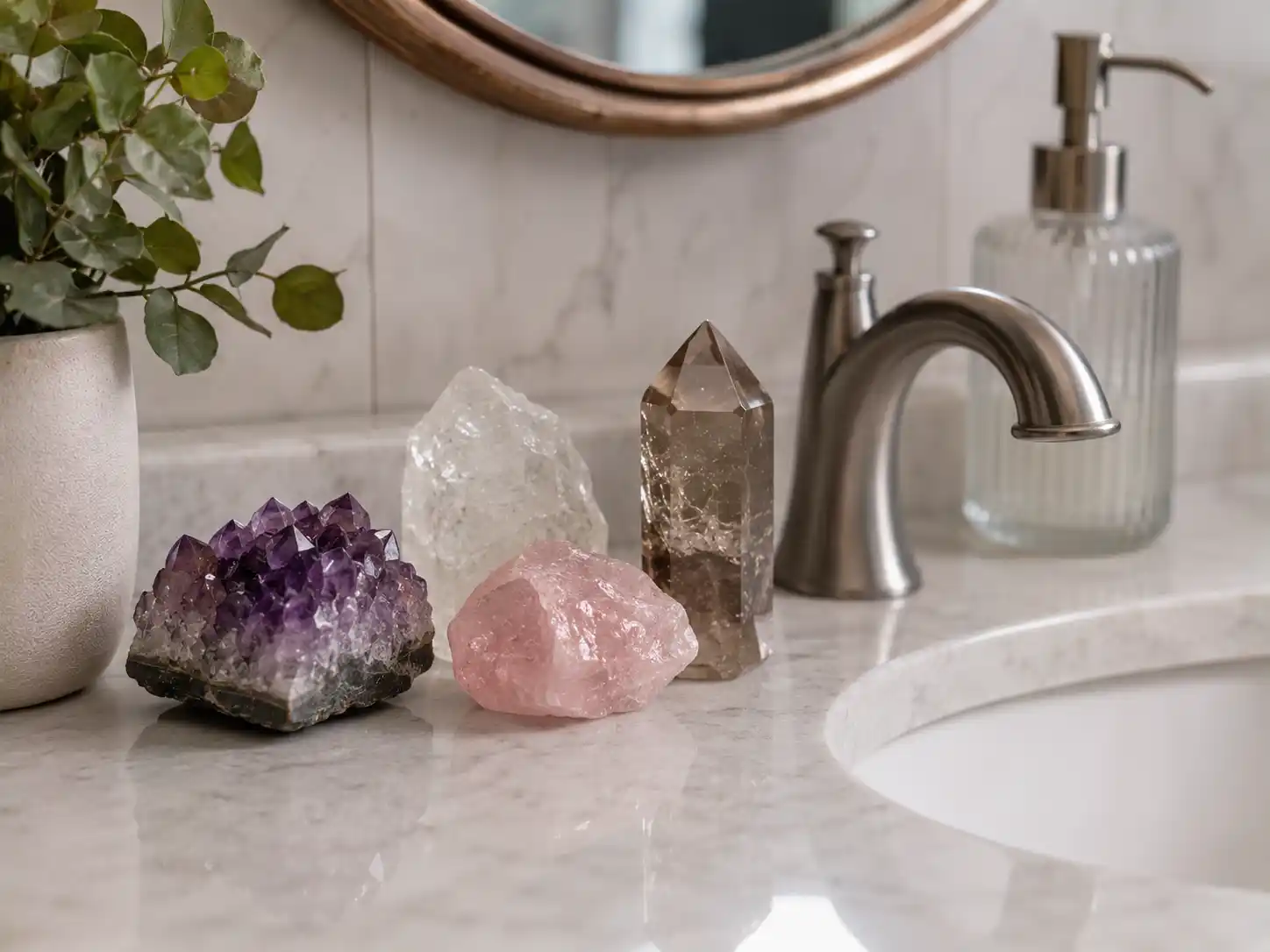
Can You Shower with Crystals? 9 Essential Facts About Water, Heat & Damage
Can you shower with crystals? Some durable, untreated gemstones can tolerate brief contact with warm water, but routinely showering with crystal jewelry is usually unnecessary and can shorten the life of the stone, setting, cord, adhesive, or surface treatment. Water alone is not the only concern. Shampoo, soap, conditioner, hard-water deposits, heat, temperature changes, chlorine, metal corrosion, and repeated wetting all affect whether a particular crystal belongs in the shower.
The safest answer to can you shower with crystals depends on knowing exactly what the stone is. Clear quartz, amethyst, agate, and many other quartz varieties tolerate ordinary water much better than gypsum, halite, turquoise, calcite-rich stones, delicate coated gems, or heavily fractured specimens. Even a water-resistant mineral can sit in jewelry that contains glue, plating, elastic, leather, silk, or a setting that should not stay wet.
Mohs hardness alone cannot answer the question. Hardness measures resistance to scratching, not whether a mineral dissolves, absorbs liquids, reacts with chemicals, fractures from thermal shock, or contains a treatment that water can affect.
9 Facts That Answer “Can You Shower with Crystals?”
- Crystal hardness does not automatically determine water resistance.
- Some minerals slowly dissolve or deteriorate during repeated water exposure.
- Hot water and sudden temperature changes can fracture sensitive gemstones.
- Soap, shampoo, conditioner, and cosmetics can leave residue or alter porous stones.
- Stabilized, dyed, coated, filled, or glued crystals need additional caution.
- Metal settings, cords, elastic, and adhesives may fail before the gemstone does.
- Toxic or lead-bearing mineral specimens should never become shower accessories.
- Even durable quartz jewelry lasts longer when unnecessary wetting is reduced.
- Symbolic crystal cleansing does not require wearing a stone in the shower.
Can You Shower with Crystals Based on Mohs Hardness Alone?
No. A common rule on social media suggests that stones above a certain Mohs number are automatically water-safe, but mineral durability is more complicated. A crystal hardness chart describes scratch resistance, while water stability depends on mineral chemistry, porosity, cleavage, fractures, treatments, and the construction of the finished piece.
Diamond is extremely hard, for example, but a diamond ring can still collect soap underneath the stone or lose a gem if worn repeatedly with a weakened setting. Topaz ranks 8 but has perfect cleavage and can split from a hard impact or thermal stress. Turquoise ranks only about 5 to 6 and may be porous or treated, making repeated exposure to soaps, oils, heat, and chemicals undesirable.
When deciding can you shower with crystals, consider the entire object rather than one hardness number. The gemstone, treatment, mounting, adhesive, thread, and metal all need to tolerate the same conditions.
Which Crystals Should Stay Out of the Shower?
Certain minerals are poor candidates for routine water exposure. Halite, ordinary rock salt, dissolves readily in water. Selenite is a transparent or crystalline variety of gypsum, and gypsum is slightly soluble in water. Repeated or prolonged wetting can dull surfaces and damage delicate cleavage faces. These examples make the crystals that dissolve in water especially important to distinguish from hard, water-resistant gems.
Softness creates additional concerns even when rapid dissolution is not the main problem. Fluorite has perfect cleavage and scratches fairly easily. Calcite is soft and reacts readily with acids, while household products can contain ingredients that are unsuitable for it. Lapis lazuli combines several minerals and can contain calcite and pyrite, so its response is less predictable than a single clean quartz crystal.
Turquoise should also remain out of routine showers. It can be porous, may contain stabilizing treatments, and can discolor through contact with cosmetics, skin oils, heat, or chemicals. Warm soapy water is suitable for controlled cleaning, but that does not mean repeated shower exposure is desirable.
Can You Shower with Crystals Made From Quartz?
Can you shower with crystals such as clear quartz, amethyst, rose quartz, smoky quartz, or many agates? From the mineral’s perspective, brief contact with ordinary warm water is generally less concerning than it is for gypsum or halite. Quartz ranks 7 on the Mohs scale, lacks true cleavage, and remains stable under normal household conditions.
That does not turn a quartz bracelet or pendant into permanent shower jewelry. Soap can form a film over polished surfaces. Shampoo and conditioner can accumulate around beads and settings. Repeated wet-dry cycles can weaken elastic, cords, leather, and some adhesives. Hot water followed by cooler conditions can also create unnecessary thermal stress, especially when a crystal already contains fractures.
An amethyst pendant mounted with glue deserves different care from a loose polished quartz pebble. When people ask can you shower with crystals, the construction of the finished object often determines the answer just as much as the mineral species.
Heat and Thermal Shock Matter as Much as Water
A shower exposes crystals to changing temperature rather than room-temperature water alone. Most ordinary showers are not hot enough to damage every gemstone, but temperature changes become relevant for stones with poor toughness, cleavage, internal fractures, inclusions, or heat-sensitive treatments.
Opal illustrates the difference. Warm soapy water is considered a safe cleaning method for many solid opals, yet high heat and sudden temperature changes can contribute to cracking or crazing. Doublets and triplets contain bonded layers and require different care from solid opal. Topaz, fluorite, moonstone, kunzite, tanzanite, and several other gems also deserve protection from heat or abrupt temperature changes.
For that reason, asking can you shower with crystals requires more than checking whether a stone survives a quick rinse. Repeated exposure over months or years can affect a piece differently from one careful cleaning.
Soap, Shampoo, and Hard Water Can Change Crystal Appearance
Shower water contains more than H₂O by the time it reaches your jewelry. Soap, body wash, shampoo, conditioner, hair products, mineral deposits from hard water, and residues from skin-care products can collect on crystal surfaces or underneath settings.
Transparent gemstones may become cloudy-looking simply because a film coats the surface. Porous stones can absorb oils or chemicals more readily. Pearls are especially sensitive to acids, perfumes, cosmetics, and prolonged moisture around their stringing. Turquoise can discolor, while coated stones may lose or damage a surface layer.
If you repeatedly wonder can you shower with crystals because a favorite stone appears dull afterward, the problem may be residue rather than permanent mineral damage. Removing jewelry before showering prevents much of that buildup and reduces the need for stronger cleaning later.
Treatments and Adhesives Change the Answer
A natural mineral’s properties do not necessarily describe a finished commercial crystal. Stones may be dyed, stabilized with resin, coated, impregnated, fracture-filled, reconstructed, or assembled from several parts. Jewelry can also use glue to secure a drilled cap, cabochon, decorative backing, or bead.
Water, heat, and cleaning products may affect these additions differently from the gemstone itself. Turquoise is frequently stabilized. Some opals contain oils, waxes, polymers, or layered constructions. Dyed agates and quartz are common, while coated quartz can produce metallic or rainbow-like appearances that depend on a thin surface treatment.
Can you shower with crystals when treatment history is unknown? Removing them first is the conservative choice. A few seconds spent taking off a bracelet or pendant is easier than discovering that repeated moisture has loosened an adhesive or altered an unknown coating.
Metal, Elastic, String, and Settings Also Need Protection
Crystal jewelry includes far more than crystals. Repeated moisture can affect plated metals, base-metal components, elastic cords, leather, silk thread, knots, and adhesives. Soap residue can collect beneath ring settings, while long hair and shower movements can pull necklaces or bracelets.
Even precious-metal jewelry benefits from sensible care. Chlorine and strong cleaning chemicals can damage certain metal alloys, and a loose stone can disappear down a drain before the wearer realizes a prong has failed.
This is why the practical answer to can you shower with crystals is often to remove jewelry even when the gemstone itself tolerates water. The piece remains cleaner, settings experience less stress, and the chance of losing it decreases.
Toxic and Lead-Bearing Minerals Should Never Be Shower Stones
Some collectible crystals contain lead, arsenic, copper, mercury, or other elements that require thoughtful handling. An intact display specimen does not automatically create a poisoning event, but turning potentially hazardous minerals into shower stones creates pointless exposure to water, residue, abrasion, and accidental ingestion.
Vanadinite contains lead. Galena is lead sulfide. Realgar and orpiment contain arsenic. Cinnabar contains mercury sulfide. Malachite contains copper and is more appropriate for ordinary finished use than for grinding or creating mineral-infused liquids. A properly researched toxic crystals list matters most when people consider soaking, crushing, licking, grinding, or placing unknown specimens into drinking water.
Can you shower with crystals from this category? The prudent answer is no. Keep potentially hazardous collector specimens dry, intact, clearly identified, and away from toiletries, food, children, and pets.
Crystal Cleansing Does Not Require Showering With the Stone
Some people ask can you shower with crystals because they want to cleanse both themselves and the crystal symbolically. The ritual can be preserved without exposing a gemstone to running water. Sound, meditation, visualization, a spoken intention, or placing the stone in a protected location can serve the same personal purpose.
Physical cleaning should follow the mineral’s actual care requirements. Quartz can usually receive a gentle warm-water wash, while delicate, porous, soluble, or treated gems may need far more conservative care.
Symbolic cleansing is a personal spiritual practice rather than a mineralogical necessity. A stone does not need to accompany someone into the shower for an intention to feel meaningful.
Conclusion
Can you shower with crystals? A few durable, untreated stones can withstand brief water contact, but routinely showering with crystal jewelry provides little advantage and introduces avoidable risks from soap, heat, treatments, cords, adhesives, and metal settings. Water-sensitive stones such as halite and gypsum deserve particular protection, while potentially toxic collector minerals should stay out of the shower entirely.
Removing crystal jewelry before bathing is the simplest general rule when identity, treatment, or construction is uncertain.
FAQs
Can You Shower with Crystals Every Day?
Regular showering is unnecessary even for many durable gemstones. Repeated soap, heat, moisture, and wear can affect settings, cords, adhesives, coatings, and polished surfaces over time.
Can You Shower with Crystals Made of Clear Quartz?
Clear quartz generally tolerates brief warm-water exposure, but jewelry settings, adhesives, elastic, and metal components may not benefit from daily showering.
Can You Shower with Crystals Like Amethyst?
Amethyst is quartz and normally tolerates gentle water cleaning. Removing amethyst jewelry before showering still reduces soap buildup, setting wear, and unnecessary temperature exposure.
Can You Shower with Selenite?
No. Selenite is gypsum, which is soft and slightly soluble in water. Repeated wetting can damage its surface and cleavage features.
Can You Shower with Turquoise?
Routine shower exposure is best avoided. Turquoise can be porous or treated and may be affected by chemicals, cosmetics, heat, oils, and prolonged moisture.
Can You Shower with Crystals on an Elastic Bracelet?
It is better to remove the bracelet. Even if the beads tolerate water, repeated wetting, soap, stretching, and drying can shorten the life of elastic or cord.
Does Mohs Hardness Tell Me Whether a Crystal Is Waterproof?
No. Mohs hardness measures scratch resistance. It does not measure water solubility, porosity, treatment stability, cleavage, thermal-shock resistance, or chemical sensitivity.
What Crystals Should Never Go in Shower Water?
Halite and gypsum varieties such as selenite should stay dry. Potentially hazardous lead-, arsenic-, or mercury-bearing mineral specimens should also never become shower stones.
Is Shower Water a Good Way to Spiritually Cleanse Crystals?
It is unnecessary. Sound, meditation, visualization, or spoken intention can preserve the symbolic practice without exposing a sensitive crystal to water.
Crystal rituals are personal practices and should never be used to justify unsafe exposure to soluble, toxic, or chemically sensitive minerals.