10 Hidden Bloodstone Benefits: Gentle Traditions, Verified Facts & Important Cautions
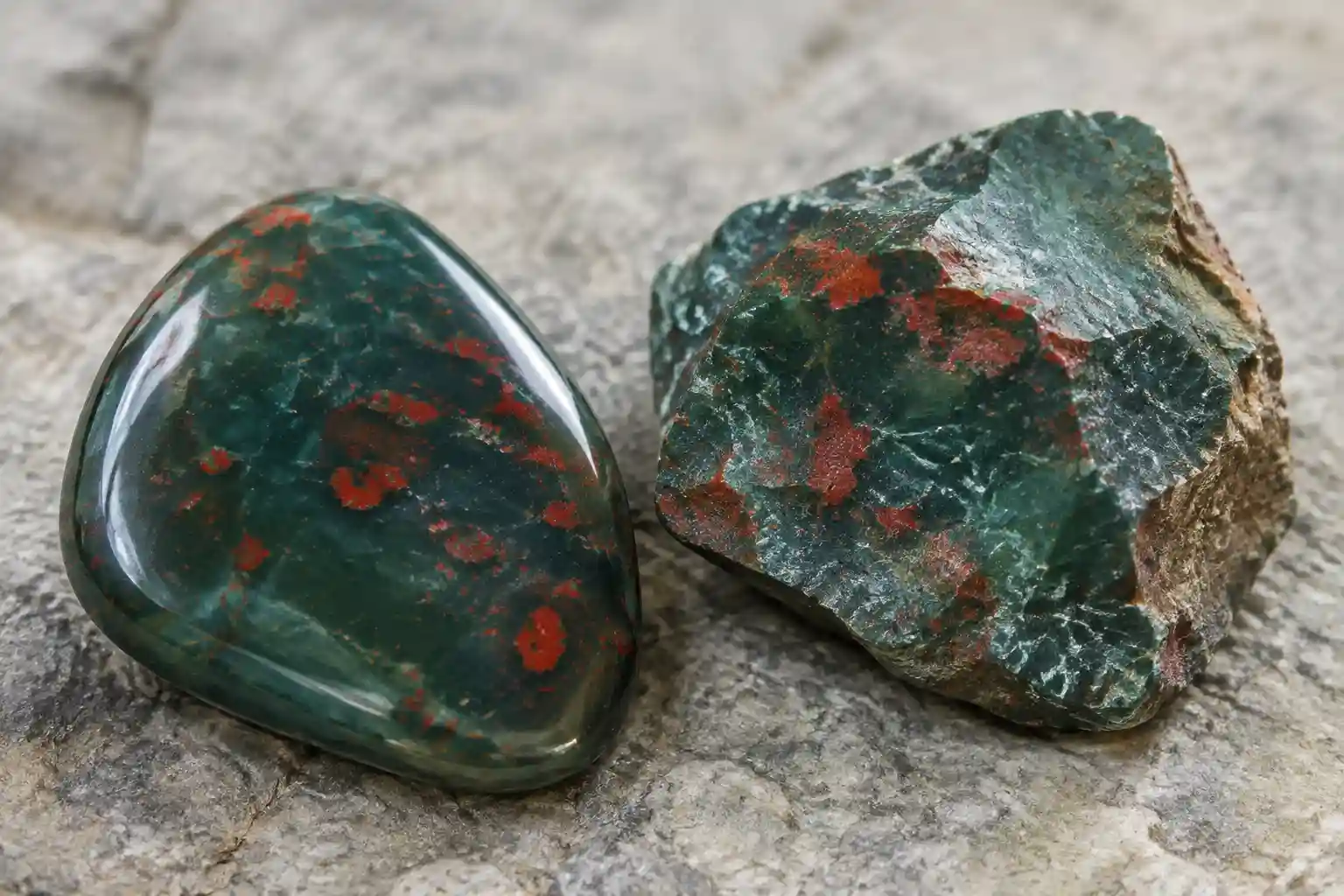
Bloodstone benefits begin with a gemstone that is visually distinctive, physically practical, historically interesting, and easy to connect with human symbolism. Bloodstone, also known as heliotrope, is a variety of chalcedony, the fine-grained form of quartz. Its classic appearance combines a dark green body with red to reddish-brown spots or streaks, usually produced by iron-bearing inclusions. That unusual color contrast has shaped centuries of stories about courage, vitality, sacrifice, endurance, and protection.
The strongest bloodstone benefits are not medical claims. Chalcedony’s hardness makes bloodstone suitable for many jewelry and carving uses, its contrasting inclusions create unique patterns, and its long history makes it valuable for collectors of engraved gems, seals, signet stones, and traditional birthstones. It also offers an accessible way to study cryptocrystalline quartz, inclusions, polishing behavior, color variation, and the difference between genuine historical symbolism and later folklore.
Spiritual traditions sometimes assign bloodstone benefits involving energy, circulation, courage, purification, or physical healing. Those ideas should be kept separate from established evidence. Bloodstone does not improve blood chemistry, detoxify the body, stop bleeding, treat anemia, or cure illness simply because its red markings resemble drops of blood. Its name and appearance have influenced symbolism, but visual resemblance is not a biological mechanism.
10 Bloodstone Benefits at a Glance
- Durable chalcedony makes bloodstone suitable for many jewelry styles.
- Natural red and green patterning gives each stone an individual appearance.
- Fine texture allows attractive polishing, carving, engraving, and cabochon cutting.
- Historical use in seals and engraved gems gives bloodstone cultural and collecting value.
- Quartz mineralogy makes it useful for learning about chalcedony and microcrystalline silica.
- Natural inclusions provide an accessible example of how trace minerals influence gemstone appearance.
- Bloodstone works well in rings, pendants, beads, signets, and ornamental objects with reasonable care.
- Its long symbolic history offers insight into how people connect gemstone appearance with cultural meaning.
- Modern symbolism can represent courage, persistence, sacrifice, or determination without requiring medical claims.
- Responsible buying encourages identification, treatment disclosure, workmanship evaluation, and realistic expectations.
Bloodstone Benefits Begin with Durable Chalcedony and Natural Inclusions
One of the most practical bloodstone benefits comes from its identity as chalcedony. Chalcedony consists of extremely fine intergrowths of silica minerals and belongs to the quartz family. Because the individual crystals are microscopic, bloodstone usually has a dense, smooth appearance rather than the visible crystal faces found on transparent quartz points.
Bloodstone generally falls around 6.5 to 7 on the Mohs hardness scale, giving it enough scratch resistance for many types of jewelry. It can be cut into cabochons, beads, seals, carvings, pendants, and signet stones, and its relatively tough cryptocrystalline structure often performs well when properly set and worn with ordinary care.
The green body color can vary from medium to very dark green, while the red inclusions may appear as tiny dots, irregular patches, thin streaks, or larger concentrated areas. Iron oxides are commonly responsible for the reddish coloration. Some specimens contain yellowish, brown, or pale areas alongside the more familiar red markings.
These natural differences make bloodstone benefits especially appealing to people who prefer individual stones rather than perfectly uniform gems. Two polished cabochons cut from different areas of the same rough may show completely different distributions of green and red, giving each finished piece its own visual identity.
Distinctive Color Patterns Give Bloodstone Strong Jewelry Appeal
Color contrast is among the easiest bloodstone benefits to appreciate. The deep green base creates a subdued background, while red inclusions introduce small points of visual intensity. Some stones display only a few red spots, while others contain dramatic clusters or streaks that dominate the surface.
This appearance works particularly well in cabochons because a smooth polished dome reveals the color pattern without the visual interruption of facets. Traditional signet rings and engraved pieces also suit bloodstone because the dense chalcedony takes a good polish and can support detailed carving when the rough is suitable.
Bloodstone jewelry often has a restrained appearance from a distance and reveals its pattern only on closer inspection. That makes it useful for people who want a distinctive gemstone without the high brilliance associated with transparent faceted gems. Yellow gold can emphasize warmer red inclusions, while silver-colored metals can create strong contrast with the dark green body.
Not every bloodstone requires dense red spotting to be attractive. Pattern balance, polish, body color, shape, surface condition, and the placement of inclusions all influence appearance. A well-cut stone with only a few clearly positioned red markings can be more visually successful than a heavily spotted piece with poor polish or distracting fractures.
Carving and Engraving Are Historically Important Bloodstone Benefits
Bloodstone benefits have long included carving and engraving. Chalcedony varieties have been used for seals, intaglios, cameos, signet stones, and small decorative objects because their fine texture can hold detail while taking a smooth polish.
Bloodstone became particularly suitable for engraved objects because its dark background and contrasting inclusions gave finished pieces a distinctive appearance. Signet stones could combine practical function with personal symbolism, especially when engraved with initials, family devices, religious imagery, animals, or heraldic designs.
This history matters because it provides a real explanation for bloodstone’s cultural importance. The gem did not become famous only through modern crystal culture. Its durability, polish, color, and suitability for engraving gave it practical and artistic value long before contemporary wellness claims became common.
Modern lapidaries can still use bloodstone for seals, small carvings, cabochons, beads, and ornamental objects. Cutting choices depend heavily on the rough because red markings may occur unevenly. A skilled cutter may orient the stone to place the strongest inclusion pattern near the center of a cabochon or preserve an unusual natural feature that gives the finished piece character.
These craft-based bloodstone benefits are measurable and visible. They depend on mineral texture, cutter judgment, workmanship, and design rather than metaphysical claims.
Bloodstone History Shows How Appearance Can Shape Symbolism
Historical symbolism is another reason bloodstone benefits continue to interest collectors. The older name heliotrope comes from Greek roots associated with the sun and turning, reflecting ancient beliefs about how the stone interacted with sunlight or changed its appearance when placed in water.
Ancient and medieval writers attributed extraordinary properties to heliotrope, including invisibility, weather influence, protection, and control over bleeding. Such accounts are important as cultural history, but they should not be treated as demonstrations that the gemstone actually performs those functions.
Later Christian traditions connected bloodstone’s red spots with the blood of Christ, sometimes describing the markings as drops of blood falling onto green stone during the Crucifixion. This is devotional symbolism rather than geological history. Bloodstone existed as a natural chalcedony long before those stories developed.
The distinction makes the historical bloodstone benefits more useful. The gemstone provides an example of how people interpret natural patterns through religious, medical, magical, and cultural frameworks. Its green surface and blood-like red markings created a powerful visual story, and different communities adapted that appearance to their own beliefs.
Understanding those traditions does not require accepting their supernatural claims. They remain valuable evidence of how gemstones participate in human imagination.
Bloodstone Helps Explain Chalcedony, Quartz, and Mineral Inclusions
Educational value is one of the less obvious bloodstone benefits. Because bloodstone belongs to the chalcedony family, it offers a straightforward introduction to cryptocrystalline quartz. Instead of one large transparent quartz crystal, chalcedony consists of microscopic silica structures intergrown so finely that individual crystals cannot normally be distinguished with the unaided eye.
This internal texture helps explain the stone’s smooth fracture, dense appearance, and ability to accept a high polish. It also illustrates why gemstone families can include dramatically different appearances even when their fundamental chemistry is closely related.
The red markings demonstrate another useful concept: inclusions can become an important part of a gemstone’s identity instead of automatically being considered defects. In a transparent diamond, a conspicuous inclusion may reduce visual clarity. In bloodstone, contrasting red inclusions are exactly what many buyers want to see.
This makes bloodstone a helpful teaching stone for understanding why gemstone quality cannot be reduced to one universal rule. Transparency, color uniformity, and absence of inclusions are important in some gem varieties, while pattern, contrast, and distinctive inclusions create value in others.
Bloodstone benefits collectors by making these principles visible in an affordable and approachable gem.
Collecting Bloodstone Rewards Pattern, Locality, and Craftsmanship
Collectors can appreciate bloodstone at several levels. Some prefer polished cabochons with strong red markings, while others seek rough specimens that show how color occurs naturally within the host stone. Engraved gems, antique signets, beads, and historically styled carvings can add another dimension when provenance and workmanship are documented.
Pattern is often more important than size alone. A large bloodstone with dull color and poorly distributed inclusions may be less attractive than a smaller stone with deep green body color, vivid red markings, strong polish, and an appealing shape.
Locality information can also add collecting interest, although sellers should distinguish documented origin from guesswork. Bloodstone occurs in multiple regions, and commercially traded pieces do not always retain reliable mine or geographic documentation once rough enters cutting markets.
A buyer considering where to buy bloodstone should therefore look for clear photographs, accurate dimensions, treatment disclosure, honest descriptions of color and pattern, and seller information that distinguishes verified gemstone facts from folklore.
Bloodstone benefits increase when the actual specimen is well understood. A modest cabochon with excellent workmanship and truthful disclosure can provide more long-term satisfaction than a poorly identified stone surrounded by extravagant spiritual claims.
Jewelry Durability Is Useful, but Bloodstone Still Needs Care
Durability is one of the practical bloodstone benefits, yet the stone should not be treated as indestructible. A hardness near 7 gives bloodstone reasonable resistance to scratches from many everyday objects, but harder substances such as corundum and diamond can still mark the surface.
Rings deserve particular attention because hands frequently encounter desks, doorframes, countertops, tools, and other hard surfaces. A protective setting can reduce the chance of chipping along exposed edges, especially for larger cabochons. Pendants and earrings generally experience less impact and are easier to protect.
Routine cleaning is simple. Lukewarm water, mild soap, and a soft cloth or brush are usually sufficient for untreated bloodstone. Strong chemicals, unnecessary heat, and harsh mechanical cleaning provide little advantage. Stones with fractures, fillings, glued components, or uncertain treatment histories deserve additional caution.
Separate storage also protects polish. Keeping bloodstone away from harder gemstones reduces the chance of scratches, while avoiding loose storage with metal objects helps preserve smooth surfaces.
These ordinary habits keep the physical bloodstone benefits intact for years and are far more useful than treating the gemstone as if historical beliefs made it resistant to damage.
Bloodstone Symbolism Can Represent Courage Without Claiming Physical Effects
Courage, endurance, persistence, and sacrifice are common modern symbolic bloodstone benefits. The red-on-green appearance contributes strongly to these themes because red is culturally associated with blood, vitality, action, danger, and determination in many contexts.
A person may wear bloodstone while working toward a difficult goal, keep a polished piece near a desk as a reminder to continue through setbacks, or associate the gem with service, responsibility, or personal discipline. These uses are symbolic, but symbols can still carry genuine personal value.
Problems arise when symbolic language becomes biological language. The gemstone’s name does not mean it changes blood pressure, improves circulation, increases red blood cells, stops hemorrhage, treats anemia, or strengthens organs. Iron-bearing inclusions within a stone do not make iron medically available to someone wearing it.
Modern discussions of bloodstone healing properties often preserve older themes about blood, vitality, purification, courage, or energy. Those ideas belong to historical or contemporary spiritual belief and should remain separate from evidence-based medicine.
Responsible symbolism allows bloodstone benefits to include inspiration and reflection without turning visual resemblance into a health claim.
Traditional Birthstone Status Adds Cultural and Gift Value
Bloodstone is traditionally associated with March, alongside aquamarine in modern birthstone systems. This connection gives the gemstone another form of cultural value and makes it an appealing choice for birthday gifts, commemorative jewelry, or personal collections.
Birthstone traditions are cultural systems rather than natural laws. A person does not gain different physical effects by wearing a gemstone linked with a particular month. The significance comes from shared convention, family tradition, jewelry history, or personal attachment.
Bloodstone’s appearance also gives March jewelry a very different character from aquamarine. Instead of pale transparent blue, bloodstone offers opaque or translucent dark green chalcedony with contrasting red markings. That variety gives buyers a choice between two completely different visual styles within the same birth-month tradition.
This is a useful example of how bloodstone benefits do not need to involve wellness claims. A gemstone can have value because it marks an anniversary, celebrates a birthday, connects someone with family tradition, or simply fits their preferred style.
Cultural symbolism becomes more meaningful when it remains flexible rather than being presented as a rule everyone must follow.
Important Cautions Keep Bloodstone Benefits Grounded in Evidence
Bloodstone has accumulated centuries of claims about bleeding, blood purification, strength, vitality, detoxification, childbirth, circulation, and disease. Historical beliefs are worth documenting, but age alone does not establish medical effectiveness.
The name bloodstone is especially likely to encourage a misleading chemistry analogy. Red inclusions may contain iron oxides, but wearing or holding the gemstone does not deliver nutritionally useful iron to the body. Mineral composition inside a solid gem is not equivalent to a food, supplement, or medicine.
The stone should likewise not be used as a substitute for medical evaluation of bleeding, anemia, infection, cardiovascular symptoms, pregnancy concerns, pain, or other health problems. Those conditions can require timely professional care.
Responsible bloodstone benefits remain substantial without those claims. The gemstone is durable enough for many jewelry uses, visually individual, historically important, suitable for carving, useful for mineral education, culturally significant, and capable of carrying personal symbolism.
Evidence limits do not make bloodstone less interesting. They allow its real qualities to receive the attention they deserve.
Conclusion
Bloodstone benefits include durable chalcedony, distinctive natural patterning, jewelry versatility, excellent polishing and engraving potential, collecting value, mineralogical education, long cultural history, birthstone significance, and personal symbolism connected with courage or persistence.
Its red inclusions also explain why so many medical and spiritual stories developed around it, but resemblance to blood does not create a biological effect. The most meaningful bloodstone benefits come from understanding the gemstone’s real quartz-family identity, appreciating its artistic and historical uses, caring for it properly, and treating healing traditions as beliefs rather than medical evidence.
FAQs
What are the main bloodstone benefits?
The most verifiable bloodstone benefits include jewelry durability, distinctive color patterns, carving and engraving potential, collecting interest, chalcedony education, historical significance, birthstone tradition, and personal symbolism.
What is bloodstone made of?
Bloodstone is a variety of chalcedony, a cryptocrystalline form of silica in the quartz family. Its classic appearance includes a dark green body with red or reddish-brown inclusions, commonly associated with iron oxides.
Is bloodstone durable enough for jewelry?
Yes. Bloodstone generally has a Mohs hardness around 6.5 to 7 and works well in cabochons, rings, pendants, beads, and signet jewelry when protected from hard impacts and scratching by harder gems.
Why is bloodstone red and green?
The green body comes from the chalcedony and its inclusions, while iron-bearing mineral inclusions commonly produce the red or reddish-brown spots that give bloodstone its characteristic appearance.
Does bloodstone have an ancient history?
Yes. Heliotrope was known in antiquity and accumulated numerous beliefs involving the sun, protection, visibility, blood, and other powers. Those historical claims are culturally important but are not proof of medical or supernatural effects.
Is bloodstone a birthstone?
Bloodstone is a traditional birthstone associated with March. Birthstone significance is cultural and symbolic rather than a scientifically demonstrated physical influence.
Does bloodstone stop bleeding?
There is no established medical evidence that wearing or holding bloodstone stops bleeding. Historical traditions sometimes made this claim, but active bleeding requires appropriate first aid and medical attention when necessary.
Does bloodstone improve circulation or blood health?
No reliable clinical evidence shows that bloodstone improves circulation, red blood cell production, anemia, or other blood-related conditions.
How should bloodstone be cleaned?
Lukewarm water, mild soap, and a soft cloth or brush are generally appropriate for stable untreated bloodstone. Avoid hard impacts, harsh chemicals, and unnecessary exposure to extreme heat.
Can bloodstone symbolism still be meaningful?
Yes. Bloodstone can represent courage, persistence, responsibility, sacrifice, or endurance as personal symbolism without implying that the gemstone creates those qualities biologically.
Bloodstone benefits described as healing, detoxifying, circulatory, or energetic effects belong to historical or spiritual belief and should not replace qualified medical care.