9 Real Blue Aventurine Benefits: Helpful Uses, Verified Facts & Important Cautions
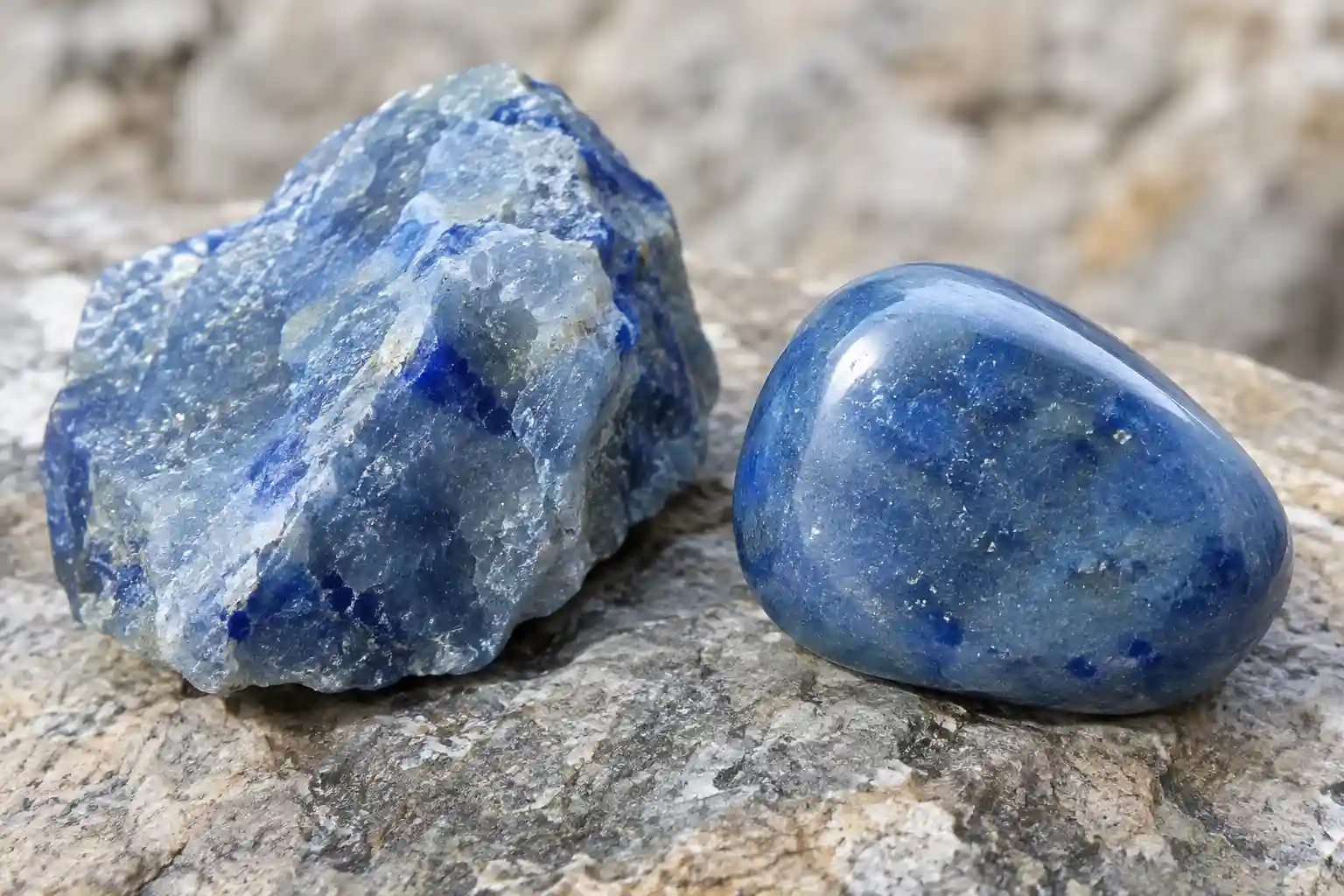
Blue aventurine benefits begin with the qualities of quartz rather than the wellness claims often attached to its color. Blue aventurine is a trade name used for blue to blue-gray quartz containing inclusions that can give the stone its color and, in suitable specimens, a subtle sparkling or aventurescent appearance. Commercial usage is not always perfectly consistent, so the exact inclusions and visual effect can vary between stones sold under the same name.
Quartz hardness makes many blue aventurine pieces practical for beads, cabochons, pendants, carvings, palm stones, and other decorative uses. The cool blue color can range from muted gray-blue to deeper denim or navy tones, while fine inclusions may create internal texture or scattered reflective points. These observable features provide genuine blue aventurine benefits for jewelry, collecting, lapidary work, mineral education, and personal design.
Modern crystal traditions often associate blue aventurine benefits with calm communication, discipline, mental clarity, confidence, and emotional balance. Those themes can function as personal symbolism, but they are not established medical or psychological effects of quartz. The stone does not treat anxiety disorders, cure speech problems, change brain function, or regulate the nervous system simply because it is blue.
9 Blue Aventurine Benefits at a Glance
- Quartz hardness makes many blue aventurine pieces practical for jewelry and decorative use.
- Blue coloration offers an understated alternative to the more familiar green aventurine.
- Fine inclusions can create attractive texture and occasional aventurescent sparkle.
- Cabochon cutting and polishing can reveal color zoning, inclusions, and internal character.
- Collectors can compare different types of inclusion-bearing quartz and commercial aventurine varieties.
- Blue aventurine provides a useful lesson in gemstone trade names and accurate identification.
- Neutral blue tones pair easily with many metals, gemstones, and jewelry styles.
- Modern symbolism can represent calm communication or deliberate decision-making without health claims.
- Proper buying and care encourage attention to identity, treatments, durability, and honest disclosure.
Blue Aventurine Benefits Start with Durable Quartz
One of the strongest blue aventurine benefits is the underlying durability of quartz. Quartz ranks 7 on the Mohs hardness scale, giving it better resistance to everyday scratches than softer stones such as calcite, fluorite, apatite, or opal. That makes blue aventurine suitable for many types of jewelry when the individual piece is structurally sound.
Hardness is not the same as toughness. A blue aventurine cabochon can still chip along an exposed edge or fracture if struck hard enough, especially when the stone contains internal cracks or dense inclusion zones. Jewelry settings should therefore match how the piece will be worn. Pendants and earrings experience relatively little impact, while rings and bracelets need more protection.
The dense quartz structure also takes a good polish. Smooth cabochons, beads, spheres, palm stones, carvings, and decorative shapes can all display the blue body color effectively. A polished surface may reveal details that are difficult to see in rough stone, including fine specks, cloudy areas, color concentrations, or directional inclusion patterns.
These practical blue aventurine benefits do not depend on spiritual belief. Quartz’s hardness, polish, availability, and visual variety provide enough reason for cutters and jewelry makers to work with it.
Color and Aventurescence Create a Distinctive Decorative Stone
Aventurine is best known for aventurescence, a sparkling optical effect produced when light reflects from numerous small inclusions inside a stone. The effect can range from obvious glittering flashes to very subtle scattered reflections, depending on the type, size, abundance, and orientation of the inclusions.
Green aventurine is the most familiar variety and commonly owes its appearance to chromium-bearing mica. Blue aventurine is less standardized in commercial use. Blue coloration may be associated with included blue minerals, and some stones marketed under the name are linked with dumortierite-bearing quartz or other inclusion-rich quartz varieties.
This variability makes accurate identification important. Not every opaque blue quartz automatically qualifies as aventurine in a strict optical sense, and not every blue stone labeled aventurine will show strong aventurescence. Trade terminology sometimes emphasizes market familiarity more than precise mineralogical boundaries.
For owners, one of the useful blue aventurine benefits is learning to look beyond the label. Does the stone actually show reflective inclusions? Is its color natural? Does it resemble inclusion-rich quartz rather than glass? Are treatments disclosed? These questions make gemstone buying more informed.
A subtle stone can still be attractive even when the sparkle is limited. Color, pattern, polish, translucency, and craftsmanship all contribute to visual appeal.
Jewelry Versatility Is One of the Most Practical Blue Aventurine Benefits
Blue aventurine works comfortably in casual and understated jewelry because its color is often softer than intensely saturated blue gemstones. Gray-blue or denim tones pair easily with silver-colored metals, while darker stones can create strong contrast in yellow gold, brass, copper, or mixed-metal designs.
Beads are especially common because the stone can be polished into smooth, durable shapes suitable for necklaces and bracelets. Cabochons work well in pendants, rings, earrings, and brooches, while carved pieces can be used as focal elements in larger designs.
Jewelry designers can also pair blue aventurine with clear quartz, moonstone, black stones, pale chalcedony, or other quartz varieties. The goal does not have to be perfect color matching. Natural variations in inclusion density and blue tone can create more interesting handmade pieces.
The general aventurine benefits associated with quartz durability, decorative use, lapidary versatility, and inclusion-based sparkle also help explain why different aventurine colors remain popular. Blue aventurine adds a cooler visual palette while retaining many of the same practical advantages.
For frequent wear, secure settings and reasonable care matter more than the stone’s spiritual reputation. A well-made piece can provide years of enjoyment when protected from severe impact.
Lapidary Work Reveals Inclusions, Color, and Cutting Decisions
Lapidary value is another source of blue aventurine benefits. Rough pieces may not reveal their best color or internal sparkle until they are sawn, shaped, and polished. The cutter has to decide which surface will display inclusions attractively and whether an irregular pattern should be preserved or removed.
Cabochons usually work well because a smooth curved surface highlights body color and reflective inclusions without requiring transparency. Beads and small carvings can also take advantage of mottled areas that might be unsuitable for more formal gem shapes.
Cutting quality matters. An uneven polish can make quartz appear dull, while poorly placed flat areas may reduce visible sparkle. Excessively thin cabochons can weaken the impact of body color, yet very thick pieces may feel heavy or conceal useful internal detail.
Blue aventurine also teaches a practical lesson about rough yield. A cutter cannot always preserve every attractive region while producing a symmetrical finished stone. Fractures, pits, pale sections, and inclusion concentrations influence the final outline.
These decisions make the finished gem a combination of geological variation and human craftsmanship. One of the most satisfying blue aventurine benefits is therefore seeing how an unremarkable piece of rough can become a visually balanced polished stone through careful orientation and finishing.
Collecting Blue Aventurine Encourages Comparison Across Quartz Varieties
Collectors can use blue aventurine to compare the enormous visual range within quartz. Clear rock crystal, smoky quartz, amethyst, citrine, rose quartz, chalcedony, jasper, and inclusion-rich aventurine may all share silica chemistry while looking dramatically different.
Blue aventurine adds another useful example because its appearance depends heavily on inclusions and commercial naming. A collection containing green and blue aventurine allows direct comparison of color, transparency, sparkle, inclusion type, and texture.
This is one of the more educational blue aventurine benefits. Gemstone families are not defined only by color. The minerals or structures responsible for appearance matter, and trade names can sometimes hide that complexity.
Collectors may prefer rough pieces with visible geological texture, polished cabochons with strong blue color, or specimens with particularly obvious aventurescence. Reliable locality information can add interest when available, although sellers should not invent precise origins when supply-chain documentation is incomplete.
The best collecting approach evaluates the actual specimen rather than purchasing a label. Color stability, natural inclusions, polish, fractures, treatment status, and provenance all matter more than marketing claims about spiritual strength or rarity.
Identification Skills Protect Buyers from Glass, Dye, and Loose Trade Names
Blue gemstones and decorative stones can be difficult to identify from photographs alone. Dyed quartz, colored glass, blue chalcedony, sodalite, dumortierite quartz, synthetic products, and other stones may overlap visually with products sold as blue aventurine.
Aventurine should normally be understood as quartz characterized by reflective mineral inclusions that can produce aventurescence, although commercial naming is not always rigorous. If a stone is uniformly bright blue with no natural texture, unusual saturation, or a highly glassy appearance, additional questions may be worthwhile.
A person deciding where to buy blue aventurine should look for clear close-up photographs, accurate dimensions, disclosure of dye or other treatment, and descriptions that do not pretend a trade name provides more mineralogical certainty than it really does.
Magnification can sometimes reveal reflective inclusions, fractures, color concentrations, or bubbles that provide useful clues. Laboratory testing is rarely necessary for inexpensive decorative stones, but professional identification can make sense when a seller assigns unusual rarity, locality, or high value to a specimen.
Blue aventurine benefits buyers indirectly by encouraging this kind of careful observation. Learning to question color, texture, inclusions, and disclosure is useful across the entire gemstone market.
Geological and Mineralogical Interest Adds Value Beyond Appearance
Another of the quieter blue aventurine benefits is its ability to show how inclusions alter the appearance of quartz. Pure quartz can be colorless, yet trace elements, irradiation, structural defects, and included minerals create a wide range of colors and textures across natural varieties.
Inclusion-rich quartz demonstrates that a gemstone does not have to be internally clean to be attractive. Reflective or colored inclusions can become the defining feature rather than an unwanted defect. This contrasts sharply with grading systems for many transparent faceted gems, where visible inclusions may reduce clarity.
The stone also illustrates the importance of mineral associations. Blue coloration may come from included minerals rather than from quartz itself, which means two stones sold under a similar trade name can have different microscopic features.
Understanding those details improves appreciation. Instead of treating blue aventurine as simply “a blue crystal,” an owner can recognize it as quartz whose visual identity depends on the interaction between host mineral and inclusions.
That knowledge remains valuable whether the specimen becomes jewelry, a lapidary project, a teaching stone, or part of a mineral collection.
Modern Blue Aventurine Benefits Often Center on Communication and Self-Control
Contemporary crystal traditions commonly describe blue aventurine benefits in terms of communication, calmness, discipline, patience, decision-making, focus, and emotional control. The color blue carries similar associations in many modern design and cultural contexts, which likely contributes to these interpretations.
A person can use the stone symbolically without claiming that quartz changes brain chemistry. Someone who wants to speak more deliberately might wear a blue aventurine pendant as a reminder to listen before responding. Another person may keep a polished stone near a workspace to symbolize sustained attention or avoiding impulsive decisions.
These are intentional behaviors. The stone does not create communication skill on its own. Clear communication develops through listening, practice, preparation, confidence, feedback, and consideration for other people.
Beliefs involving blue aventurine healing properties sometimes extend these themes into claims about anxiety, throat conditions, hormones, neurological function, or emotional healing. Such ideas belong to spiritual practice rather than established medicine.
Blue aventurine benefits remain meaningful when symbolism supports personal intention while factual claims stay within what quartz and its inclusions can actually demonstrate.
Care and Handling Keep Blue Aventurine Looking Its Best
Quartz durability makes care relatively straightforward, which is another practical advantage among blue aventurine benefits. Lukewarm water, mild soap, and a soft cloth or brush are usually appropriate for stable untreated pieces.
Hard impacts should still be avoided. Quartz can chip, particularly along thin edges or around existing fractures. Rings worn during manual work face more risk than pendants or earrings, while carved pieces can break at narrow protruding sections if dropped.
Treatment uncertainty deserves attention. Dyed or coated stones may react differently to chemicals, prolonged moisture, abrasion, or heat. When treatment status is unknown, gentle cleaning is the safest default.
Separate storage prevents unnecessary scratching of softer gems and keeps polished blue aventurine from repeated contact with harder stones. A fabric-lined jewelry box or individual pouch is usually sufficient.
Lapidary cutting and drilling require proper workshop precautions. Silica-containing dust should not be inhaled, so dry grinding without suitable dust control is inappropriate. Wet methods, ventilation, eye protection, and professional lapidary practices are important whenever quartz is actively cut or shaped.
These care habits preserve appearance while recognizing that even durable gemstones have practical limits.
Important Cautions Keep Blue Aventurine Benefits Evidence-Based
Blue aventurine’s color and crystal-market popularity sometimes produce claims involving detoxification, hormone balance, throat healing, anxiety relief, psychic development, inflammation, circulation, or nervous-system regulation. Reliable evidence does not show that wearing or holding blue aventurine provides these medical effects.
Quartz chemistry also does not become nutritional simply because a stone contains trace minerals or inclusions. A solid gemstone does not function like a dietary mineral source, supplement, or medicine.
The same evidence standard applies to electromagnetic, chakra, and energy claims. Chakras belong to spiritual frameworks rather than human anatomy. A person may use blue aventurine symbolically within meditation or spiritual practice, but that does not establish a measurable medical mechanism.
Keeping these boundaries clear does not diminish blue aventurine benefits. Jewelry usefulness, durable quartz, attractive color, inclusions, lapidary value, collecting, identification practice, mineral education, and personal symbolism are all legitimate reasons to enjoy the stone.
A gemstone becomes more trustworthy when its real qualities are strong enough to stand without exaggerated promises.
Conclusion
Blue aventurine benefits include quartz durability, subtle aventurescent sparkle, decorative blue color, jewelry versatility, lapidary potential, collecting interest, identification practice, mineralogical education, and personal symbolism involving calm communication or deliberate action.
Because commercial blue aventurine terminology can be inconsistent, understanding the actual specimen matters more than relying on a name alone. The most useful blue aventurine benefits come from recognizing its quartz identity, evaluating inclusions and treatment honestly, caring for the stone properly, and keeping spiritual interpretations separate from medical claims.
FAQs
What are the main blue aventurine benefits?
The most verifiable blue aventurine benefits include jewelry use, quartz durability, polishing and carving potential, inclusion-based visual interest, mineral collecting, identification education, and personal symbolism.
What is blue aventurine made of?
Blue aventurine is generally sold as blue inclusion-bearing quartz. Commercial specimens can vary, and blue coloration is often associated with included minerals rather than pure quartz color alone.
Is blue aventurine naturally blue?
Natural blue inclusion-bearing quartz does occur, but commercial naming and treatment can vary. Buyers should ask whether color is natural and whether dye, coating, or other enhancement has been used.
Does blue aventurine sparkle?
Some blue aventurine shows aventurescence from reflective inclusions, although the strength of the sparkle varies significantly. Certain commercial stones labeled blue aventurine may display only subtle reflective effects.
Is blue aventurine durable enough for jewelry?
Yes. Quartz has a Mohs hardness of 7 and generally performs well in jewelry, although stones can still chip or fracture under strong impact.
Is blue aventurine the same as dumortierite quartz?
The terms can overlap in parts of the commercial market, and dumortierite inclusions are associated with some blue quartz. Exact identity should be based on the actual stone rather than assuming every blue aventurine has identical inclusions.
What does blue aventurine symbolize?
Modern symbolism often connects blue aventurine with calmness, communication, patience, discipline, focus, and deliberate decision-making. These are symbolic interpretations rather than scientifically demonstrated effects.
Can blue aventurine treat anxiety or communication problems?
There is no established clinical evidence that blue aventurine treats anxiety disorders, speech conditions, neurological problems, or other medical concerns.
How should blue aventurine be cleaned?
Use lukewarm water, mild soap, and a soft cloth or brush for stable untreated pieces. Avoid strong impacts, harsh chemicals, and aggressive heat, especially when treatment status is uncertain.
Blue aventurine benefits described as healing, neurological, emotional, chakra, or energetic effects belong to spiritual belief and should not replace qualified medical or mental-health care.