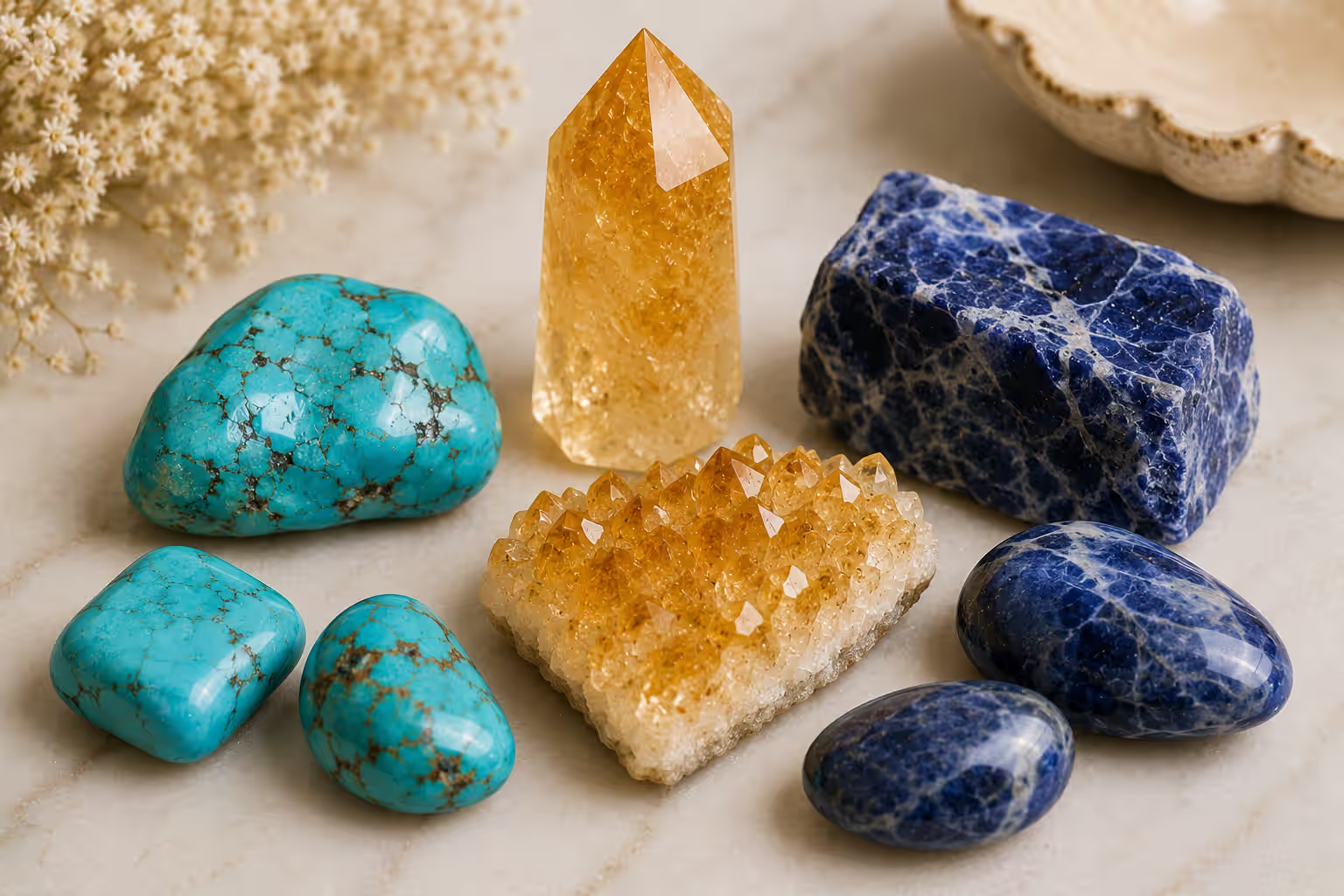
Crystals for Sagittarius: Traditional Crystals, Symbolism & Care Tips
Crystals for Sagittarius are commonly chosen through birthstone tradition, Western astrology, gemstone symbolism, practical jewelry needs, and personal preference. Sagittarius is the ninth sign of the tropical zodiac. Astrology commonly places it from about November 22 through December 21. The Archer or Centaur represents the sign, while traditional astrology classifies Sagittarius as mutable fire and assigns Jupiter as its ruling planet. These ideas belong to astrology rather than experimental science. They do not establish personality, intelligence, compatibility, health, luck, or future events. A gemstone also does not develop different physical properties because a Sagittarius owns it. The strongest approach begins with real gemology, then adds symbolic meaning only where the owner finds it personally useful.
Birthstone tradition gives Sagittarius an unusually broad gemstone selection. November birthdays have topaz and citrine, while December has turquoise, tanzanite, and zircon as widely recognized modern birthstones. These five materials differ significantly in mineral identity, color, durability, rarity, treatment, and care. Modern crystal traditions add lapis lazuli, tiger’s eye, blue lace agate, smoky quartz, sodalite, and carnelian because their symbolism can fit Sagittarius themes involving exploration, truth, communication, optimism, judgment, and direction. Gems Lore places those ideas within the wider crystals for fire signs framework, where symbolism remains separate from measurable gemstone properties.
Sagittarius Crystals at a Glance
| Stone | Sagittarius connection | Practical reason to consider it |
|---|---|---|
| Topaz | November birthstone; direction, confidence, clarity, and purposeful expression | Mohs 8 hardness with many available colors |
| Citrine | November birthstone; optimism, creativity, possibility, and constructive action | Quartz durability and broad availability |
| Turquoise | December birthstone; travel, tradition, communication, and protective symbolism | Distinctive blue-to-green ornamental gem |
| Tanzanite | December birthstone; perspective, transition, learning, and thoughtful change | Rare blue-violet zoisite from a highly restricted source |
| Zircon | December birthstone; clarity, continuity, wisdom, and evidence symbolism | Strong brilliance and a wide natural color range |
| Lapis lazuli | Truth, learning, communication, and responsible self-expression | Historic blue ornamental rock with strong visual identity |
| Tiger’s eye | Judgment, focus, observation, courage, and risk awareness | Durable quartz-rich material with chatoyancy |
| Blue lace agate | Calm speech, listening, and thoughtful communication | Quartz-family durability with distinctive pale banding |
This table combines calendar-based birthstones with modern crystal associations. The two categories should not be confused. Topaz and citrine have established November birthstone status, while turquoise, tanzanite, and zircon represent December. Lapis lazuli and tiger’s eye enter Sagittarius lists mainly through symbolic practice. Their compositions do not change because of a zodiac association. Topaz remains a fluorine-bearing aluminum silicate, citrine remains quartz, and tanzanite remains blue-to-violet zoisite. Symbolism can enrich the choice, but identity, treatment, care, color, price, and durability should guide the purchase first.
Topaz Is a Direct November Sagittarius Birthstone
Topaz provides one of the strongest traditional choices for a Sagittarius born in November. GIA recognizes topaz alongside citrine as a November birthstone. Natural topaz can appear colorless, yellow, orange, brown, pink, red, violet, blue, and other shades. Colorless material is relatively plentiful, while some highly saturated pink, red, and orange colors are much scarcer. This broad palette gives Sagittarius buyers more freedom than the common assumption that topaz must be golden yellow. Someone can choose a warm orange gem for fire-sign aesthetics, pink for personal style, or blue simply because it suits the intended jewelry.
Modern symbolism commonly connects topaz with confidence, direction, truthfulness, generosity, purpose, and communicating ideas clearly. Those ideas fit common Sagittarius themes involving exploration and learning, but they remain interpretive. A gemstone cannot automatically make someone optimistic or decisive. The verified Gems Lore guide to topaz meaning separates topaz’s mineral properties from symbolic traditions. A practical Sagittarius use might connect topaz with defining the purpose behind a new project or journey before acting. The stone serves as the reminder, while planning and behavior create the result.
Topaz Is Hard but Not Invulnerable
Topaz demonstrates why Mohs hardness does not tell the whole durability story. It ranks 8 on the Mohs scale, which provides strong resistance to scratching. However, topaz has perfect basal cleavage and relatively poor toughness. A sharp blow, strong pressure, or sudden temperature change can split or fracture a stone. GIA therefore recommends protective settings for valuable topaz and gentler use where impact remains possible. An exposed ring can face more risk than a pendant or earrings, especially for someone who regularly works with their hands.
Warm soapy water provides the safest routine cleaning method. GIA advises against ultrasonic and steam cleaning because topaz can react poorly to heat or stress. Coated material, including some commercially marketed multicolored topaz, needs especially gentle care because abrasion can damage the surface treatment. Sagittarius symbolism cannot protect the gem from cleavage. A beautiful birthstone works best when the setting and care routine respect the actual mineral.
Topaz Treatment and Color Need Honest Disclosure
Blue topaz deserves special attention because much blue material began as colorless or lightly colored topaz before irradiation and heating produced the familiar commercial colors. GIA notes that colorless topaz is commonly treated to create blue material. This does not make the gemstone fake. It remains topaz, but treatment changes the history of its color. Coatings can also create unusual appearances marketed under special trade names. Buyers should understand which process produced the finished look.
The term “Imperial topaz” also lacks one universal grading standard. GIA notes that dealers may apply it to somewhat different orange, pink, red, or related colors. Color itself matters more than the marketing term. A Sagittarius label adds even less gemological information. Pay for the actual gemstone quality and documented treatment status rather than words such as “Jupiter charged” or “Sagittarius activated.”
Citrine Gives November Sagittarius an Accessible Quartz Option
Citrine is the second recognized November birthstone and provides a practical alternative to topaz. GIA identifies citrine as transparent yellow to brownish-orange quartz. It ranks 7 on the Mohs scale and has good toughness, making it suitable for many jewelry styles with normal care. Its warm palette ranges from pale yellow through stronger golden, reddish-orange, and brownish-orange shades. Those colors naturally fit the warm aesthetics often associated with Sagittarius and other fire signs.
Modern symbolism commonly gives citrine themes involving optimism, opportunity, creativity, enthusiasm, confidence, and constructive forward movement. Gems Lore also includes citrine within its crystals for fire signs guide as a symbol of possibility and directed optimism. A grounded interpretation might use the gem as a reminder to identify one realistic opportunity rather than assuming everything will work out. Optimism becomes more useful when paired with evidence, preparation, and willingness to adjust a plan.
Most Commercial Citrine Has a Treatment Story
Natural yellow quartz suitable for citrine is less common than the amount of citrine jewelry in shops might suggest. GIA states that natural citrine is rare and that most material in the market results from heating amethyst. The process alters color while leaving the material within the quartz family. Heat-treated citrine can therefore be an attractive and legitimate gemstone when sellers disclose it accurately.
Treatment does not create a scientifically weaker or stronger metaphysical stone. An untreated specimen does not contain more Sagittarius energy, while heated material does not lose measurable spiritual power. Those claims cannot be verified through gemological testing. Buyers should focus instead on pleasing color, good cutting, condition, transparency, price, and honest description. For care, warm soapy water is safe. GIA warns that sudden temperature changes can fracture citrine and that prolonged intense light may fade some colors.
Citrine Can Symbolize Optimism Without Becoming a Promise
Sagittarius astrology often emphasizes optimism, enthusiasm, exploration, and looking toward future possibilities. Citrine fits these themes naturally because its warm color already carries cultural associations with sunlight and brightness. However, optimism works best when it remains connected with realistic planning. A person might use citrine as a reminder to ask what opportunity exists, what evidence supports it, and what could realistically go wrong.
That interpretation avoids claims that citrine attracts guaranteed money, business success, travel opportunities, or good fortune. A gemstone cannot make an investment profitable or cause an employer to offer a job. It can serve as a personal symbol of constructive thinking. The practical work still involves research, skill, timing, resources, and decision-making. Sagittarius symbolism becomes more credible when enthusiasm encourages action without replacing risk assessment.
Turquoise Is a Traditional December Sagittarius Birthstone
Turquoise is one of the principal December birthstones and has a long history in jewelry and ornamental use. GIA describes it as a semitranslucent to opaque gem ranging from blue to green, often with visible matrix from the surrounding host rock. The material’s appearance can range from relatively even blue to greenish pieces with brown, black, or other matrix patterns. Some buyers prefer clean blue material, while collectors may deliberately seek attractive spiderweb matrix. GIA notes that quality and appearance usually matter more than a famous geographic source alone.
Turquoise has accumulated historical symbolism involving travel, protection, friendship, communication, status, and personal adornment across different cultures. These traditions vary by place and period, so one universal ancient meaning should not be assumed. The Sagittarius connection often emphasizes travel and exploration. A grounded interpretation can use turquoise as a reminder to prepare carefully before a journey rather than claiming the stone prevents accidents or guarantees safe travel.
Turquoise Requires More Care Than Its Popularity Suggests
Turquoise ranks only 5 to 6 on the Mohs scale, making it considerably softer than topaz, citrine, or many transparent jewelry gems. GIA describes its toughness as fair to good but warns that high heat can discolor or damage the surface. Cosmetics, chemicals, oils, and perspiration can also alter some material. These characteristics make turquoise especially suited to thoughtful wear rather than careless exposure to household chemicals or rough impact.
Warm soapy water works for routine cleaning, while steam and ultrasonic cleaners should be avoided. Treated turquoise can be particularly vulnerable to solvents and heat. Someone who wants a Sagittarius turquoise ring for everyday use should choose a protective design and remove it during activities that create abrasion or chemical exposure. Pendants and earrings often offer an easier way to enjoy the material with less risk.
Turquoise Treatment Can Affect Appearance and Care
Lower-grade turquoise can be porous or relatively soft, so the market uses treatments to improve color, durability, or surface appearance. GIA notes that some turquoise receives enhancement because fine untreated material with attractive natural color and texture is comparatively scarce. Stabilization, impregnation, dyeing, coating, and other processes can therefore matter when buyers compare pieces.
Treatment does not automatically make turquoise undesirable. The central issue is disclosure. A stabilized cabochon can perform well in jewelry when sold honestly at an appropriate price. Problems arise when heavily treated material receives an untreated premium or vague spiritual language hides the material’s actual condition. Sagittarius symbolism should never replace basic questions about whether the turquoise is natural, treated, reconstructed, or imitated.
Tanzanite Offers a Rare December Sagittarius Birthstone
Tanzanite is one of the most geographically restricted major modern birthstones. GIA identifies it as the blue-to-violet variety of zoisite and notes that commercial tanzanite comes from one small region near Mount Kilimanjaro in Tanzania. Its crystals show strong directional color, allowing finished stones to appear more blue or more violet according to orientation, cutting, and lighting. This genuine pleochroism makes tanzanite visually distinctive without requiring metaphysical explanation.
Its modern symbolism often centers on perspective, learning, communication, transition, and recognizing that one situation can look different from another direction. Those themes fit Sagittarius particularly well because the sign is traditionally associated with exploration and broader viewpoints. The Gems Lore guide to tanzanite meaning uses this optical behavior as a metaphor rather than a supernatural mechanism. A stone can remind someone to reconsider a viewpoint, but it cannot automatically produce wisdom.
Tanzanite Needs Protection from Hard Blows
Tanzanite ranks around 6 to 7 on the Mohs scale. More importantly, it has fair-to-poor toughness and cleavage, which can make sharp impacts dangerous. GIA notes that the gemstone can be worn in many jewelry styles when owners take precautions against rough wear. Earrings and pendants generally place less mechanical stress on the gem than exposed rings. Protective ring settings can reduce risk for people who still prefer hand-worn tanzanite.
Warm soapy water is the safest cleaning choice. Sudden temperature changes and strong heat should be avoided, particularly when fractures or filling are present. A December birthstone connection can make tanzanite personally meaningful, but the symbolism does not change its cleavage. Anyone choosing it for regular wear should understand the difference between scratch resistance and resistance to breakage.
Tanzanite Heat Treatment Is Common
Much tanzanite receives heat treatment to reduce brownish or yellow-green components and emphasize the blue and violet colors that dominate the jewelry market. GIA notes that heating is the principal treatment associated with commercial tanzanite. This process is widely accepted, but buyers should still understand what they are purchasing. A naturally blue-dominant stone can differ in rarity from heated material, even though both are genuine tanzanite.
Treatment should not be confused with symbolic transformation. Modern crystal writing sometimes turns the heating process into a claim about personal evolution. That metaphor may feel meaningful, but the treatment does not transmit a transformation effect to the wearer. The more useful comparison is simple: tanzanite’s appearance can change through a controlled physical process, while people change through decisions, experience, learning, and circumstance.
Zircon Is a Natural December Birthstone, Not Cubic Zirconia
Zircon is another recognized December birthstone and one of the most misunderstood gems because people frequently confuse it with cubic zirconia. Natural zircon is zirconium silicate, while cubic zirconia is a manufactured zirconium oxide simulant. GIA emphasizes that zircon is a natural gemstone with strong brilliance, high refraction, and noticeable dispersion. Its colors include blue, yellow, green, red, reddish brown, orange, and colorless.
The Gems Lore guide to zircon meaning separates natural zircon from cubic zirconia and discusses symbolism involving wisdom, continuity, clarity, and evidence preserved through change. These themes work well for Sagittarius when used as reflective ideas. A zircon can represent checking what survives scrutiny rather than simply believing the most exciting claim. The mineral does not produce wisdom, but its geological history provides a meaningful metaphor for continuity and evidence.
Zircon Has Brilliant Optics but Needs Care
Zircon generally ranges from 6 to 7.5 on the Mohs scale and has fair-to-good toughness. GIA warns that the gem can be brittle and that facet junctions may abrade when stones rub against harder materials. This means a well-cut zircon can look spectacular while still needing careful storage. Separate pouches or divided jewelry compartments help protect polished surfaces and sharp facet edges.
Warm soapy water is the recommended cleaning method. GIA advises against ultrasonic and steam cleaning. Blue and colorless zircon commonly receive heat treatment, and some heat-treated stones may change slightly after prolonged exposure to strong light. Sagittarius jewelry buyers should therefore appreciate zircon’s brilliance while accepting its care requirements. Its natural identity and optical performance provide enough interest without confusing it with diamond or cubic zirconia.
Zircon Can Symbolize Learning from Evidence
Sagittarius symbolism often emphasizes truth-seeking, study, philosophy, travel, and building a larger understanding of the world. Zircon provides a useful modern metaphor because some zircon crystals preserve information about extremely ancient geological processes. GIA notes that zircon includes some of the oldest known mineral material from Earth. The important point is geological rather than mystical. Mineral structures can preserve evidence that scientists examine through specialized analytical methods.
A Sagittarius user might therefore connect zircon with the habit of asking how a claim is known. What evidence supports it? How reliable is the source? What could falsify the conclusion? This interpretation aligns with exploration while resisting the idea that curiosity means accepting every possibility equally. The stone does not reveal truth. It can simply represent the discipline required to look for it.
Lapis Lazuli Fits Sagittarius Themes of Truth and Learning
Lapis lazuli appears often in modern Sagittarius crystal lists because its symbolism centers on truth, knowledge, communication, insight, and responsible self-expression. Gemologically, lapis is a metamorphic rock rather than a single mineral crystal. Its blue component comes mainly from lazurite, while calcite, pyrite, and other minerals may contribute to the finished appearance. The verified Gems Lore guide to lapis lazuli meaning explains these distinctions and treats truth symbolism as a reason to verify claims rather than assume the stone detects deception.
This interpretation suits Sagittarius particularly well. Exploration becomes more valuable when it expands knowledge instead of collecting exciting stories without evaluation. A person might keep lapis near reading or study materials as a reminder to check the source before repeating a claim. Another might wear it during an important conversation to represent saying what is accurate rather than what sounds impressive. The stone cannot identify lies or guarantee intellectual insight.
Lapis Can Balance Blunt Communication Symbolism
Sagittarius stereotypes often describe the sign as direct or frank. Astrology does not prove that every Sagittarius communicates this way, but modern crystal traditions sometimes use lapis or blue stones as reminders to connect honesty with responsibility. Truth does not require unnecessary harshness. A statement can be accurate and still be delivered with poor timing, incomplete context, or avoidable cruelty.
Lapis symbolism works best when it prompts three questions. Is the statement accurate? Is saying it useful here? Can it be expressed clearly without adding unnecessary harm? The lapis lazuli meaning guide uses a similar evidence-first approach. A gemstone cannot provide social judgment. It can serve as a physical cue to apply it.
Tiger’s Eye Adds Judgment to Sagittarius Confidence
Tiger’s eye is a popular modern Sagittarius crystal because its symbolism often emphasizes observation, practical judgment, confidence, courage, and risk awareness. Its distinctive moving light band comes from chatoyancy within quartz-rich material. The verified Gems Lore guide to tiger’s eye meaning explains how aligned internal structures create this real optical effect. The eye-like appearance then became a natural metaphor for looking carefully before acting.
For Sagittarius, tiger’s eye can represent confidence that remains open to correction. Exploration always involves uncertainty, whether the context is travel, study, business, relationships, or a new project. A person might use the stone as a reminder to check risks before committing. The gem cannot predict danger or guarantee a favorable outcome. Its strongest symbolic message is simpler: observe first, compare evidence, then act when the available information is sufficient.
Blue Lace Agate Can Represent Deliberate Communication
Blue lace agate provides a softer symbolic counterbalance to energetic fire-sign themes. It is a pale blue banded variety of agate or chalcedony within the quartz family. Its characteristic lace-like bands come from successive silica deposition rather than from an astrological property. The verified Gems Lore guide to blue lace agate meaning connects the material with modern themes of calm communication, patience, listening, and measured speech.
This symbolism can be especially useful when enthusiasm becomes rushed communication. A Sagittarius-themed practice might use blue lace agate as a reminder to slow down long enough to explain the full context. Someone could also associate it with listening before preparing a response. The stone does not biologically calm the nervous system or improve communication skills. Those outcomes depend on behavior, environment, and practice.
Sagittarius Is a Mutable Fire Sign, but That Is Symbolic
Western astrology classifies Sagittarius as mutable fire and traditionally associates it with Jupiter. The Archer serves as its primary symbol. Within astrology, fire commonly represents action, enthusiasm, expression, and aspiration. Mutable symbolism introduces flexibility and transition, while Jupiter carries themes involving expansion, learning, travel, and meaning. These ideas explain why Sagittarius crystal lists often combine warm energizing stones with blue communication or perspective stones.
The classification does not scientifically establish personality. A Sagittarius is not automatically adventurous, reckless, optimistic, blunt, philosophical, restless, lucky, extroverted, or freedom-seeking. People born during the same part of the calendar differ enormously. Crystal recommendations should therefore respond to a real person’s needs and preferences rather than forcing a generic zodiac profile onto them.
The Archer Symbol Can Represent Direction, Not Constant Movement
The Archer offers a useful modern Sagittarius metaphor because an arrow only becomes meaningful when it has a direction. Exploration without purpose can turn into constant movement that never produces depth. A crystal practice can use this distinction without claiming astrology determines behavior. Topaz may represent defining the target, tiger’s eye can symbolize checking risk, and citrine may stand for acting with constructive confidence once the direction is clear.
The same symbolism applies to learning. Gathering more information is not always the same as understanding a subject. Lapis can represent verifying the source, while zircon may symbolize evidence that survives careful examination. The stones do not create focus. They simply make a useful sequence easier to remember.
November and December Give Sagittarius Five Major Birthstone Choices
Sagittarius crosses two months with unusually rich birthstone traditions. November offers topaz and citrine. December offers turquoise, tanzanite, and zircon. This gives Sagittarius buyers transparent and opaque gems, warm and cool colors, affordable quartz, geographically restricted tanzanite, historic turquoise, and brilliant zircon.
No single option is more authentically Sagittarius. A November birthday may make topaz or citrine personally meaningful, while a December birthday supports turquoise, tanzanite, or zircon. Jewelry habits can narrow the choice further. Someone who wants strong scratch resistance may favor topaz while respecting its cleavage. A buyer who values easy maintenance might prefer citrine. A person attracted to rarity may choose tanzanite, while someone who loves opaque historic materials may prefer turquoise.
Blue Topaz Creates an Additional December Association
Topaz is best known as a November birthstone, but GIA also identifies blue topaz as a December birthstone in its topaz reference material. This overlap can make blue topaz especially attractive for someone born near the November–December transition or anyone who wants a blue Sagittarius gemstone with high hardness and broad availability.
Treatment should still remain clear because most blue topaz receives irradiation and heating. The commercial abundance of blue topaz also means that color alone does not indicate rarity. Buyers should compare cut, clarity, color, setting, treatment disclosure, and price. A seller should not charge an extreme premium merely because a common blue topaz receives a Sagittarius label.
How to Choose the Best Crystal for Sagittarius
Start with the role the gemstone needs to perform physically. Daily rings face greater abrasion and impact than earrings or pendants. Topaz is hard but has significant cleavage. Citrine provides quartz hardness with good toughness. Turquoise is softer and more sensitive to chemicals. Tanzanite has cleavage and needs protection, while zircon can abrade along facet edges. These differences should narrow the options before zodiac symbolism matters.
Next, choose one personal theme rather than trying to represent the entire Sagittarius archetype. Topaz may symbolize direction, citrine can represent constructive optimism, turquoise may stand for prepared travel, tanzanite can mark changing perspective, and zircon may symbolize evidence. Lapis can represent truthful communication, while tiger’s eye can stand for judgment. A clear purpose gives the stone more practical meaning than vague claims about increasing Sagittarius energy.
Sagittarius Crystal Jewelry Should Match Real Life
A gemstone that works beautifully in an occasional pendant may not suit an exposed ring worn during manual work. Citrine is a practical option for many everyday designs because quartz combines Mohs 7 hardness with good toughness. Topaz provides greater scratch resistance but needs protection from blows because of cleavage. Tanzanite deserves even more caution in demanding ring settings. Turquoise can discolor through chemicals, cosmetics, oils, or heat. Zircon needs protection from abrasion along facet junctions.
Someone who travels frequently may also want to consider maintenance. A complicated cleaning routine can become inconvenient away from home. Simple designs with durable materials may fit better than delicate stones that require constant attention. The most useful Sagittarius jewelry choice balances meaning, aesthetics, and realistic wear.
Sagittarius Crystals for Travel
Turquoise receives the strongest traditional travel symbolism among popular Sagittarius stones. Historical beliefs have often treated turquoise as a protective material, while modern zodiac practice connects it with movement and exploration. Those beliefs should not be converted into promises that a turquoise pendant prevents accidents or guarantees safe travel. Practical safety still comes from planning, documentation, insurance where appropriate, local information, transportation choices, and situational awareness.
A grounded travel practice might use turquoise as a reminder to complete a checklist before leaving. Zircon can symbolize verifying bookings or information, while tiger’s eye may stand for assessing risk in unfamiliar circumstances. The gemstones do not make travel safer by themselves. They simply give personal meaning to habits that can improve preparation.
Sagittarius Crystals for Learning and Study
Lapis lazuli, zircon, and topaz make a coherent symbolic set for learning. Lapis may represent checking the source, zircon can symbolize evidence that survives examination, and topaz may stand for keeping the larger purpose in view. These themes work well for study, research, professional development, or learning from travel.
A practical routine could assign one question to each stone. What am I trying to understand? What evidence supports the claim? What would change my conclusion? None of these questions requires astrology. The Sagittarius framework simply provides a theme for curiosity and expansion. Real learning still depends on reading, observation, practice, feedback, and willingness to correct mistakes.
Sagittarius Crystals for Communication
Blue lace agate, lapis lazuli, and turquoise can represent different parts of communication. Blue lace agate may symbolize measured delivery. Lapis can stand for factual accuracy, while turquoise may represent communicating across unfamiliar settings or experiences. A person preparing for a difficult conversation can use these ideas as a simple structure: understand the facts, decide what needs to be said, and deliver it without unnecessary aggression.
The crystals do not change another person’s reaction. They also cannot guarantee persuasion or agreement. Communication depends on context, language, listening, timing, and mutual willingness. A gemstone can only remind the wearer of the standard they want to follow.
Sagittarius Crystals for Focus and Direction
Tiger’s eye and topaz work especially well within a direction-focused symbolic practice. Topaz can represent identifying the destination, while tiger’s eye may symbolize checking the road before moving forward. Citrine can add a third theme by representing constructive motivation. This framework suits projects where enthusiasm creates too many competing ideas.
A person could write one current priority beside the stones and define what completion means. New ideas can wait until the current milestone reaches a stopping point. The crystals do not improve executive function biologically. The useful mechanism comes from externalizing the priority and repeatedly returning attention to it.
Sagittarius Crystals for Optimism with Risk Awareness
Citrine and tiger’s eye create one of the clearest symbolic balances for Sagittarius. Citrine can represent optimism, possibility, and willingness to try. Tiger’s eye can represent observation, risk assessment, and changing course when evidence demands it. The combination prevents optimism from turning into certainty.
This distinction matters in financial, career, travel, and relationship decisions. Excitement can justify investigating an opportunity, but it cannot prove the opportunity is good. A person might use citrine to identify what could work and tiger’s eye to ask what could fail. The stones do not determine the answer. Their symbolic roles simply encourage both sides of the evaluation.
Sagittarius Crystals for Boundaries and Overcommitment
Sagittarius symbolism often emphasizes freedom and exploration, but too many commitments can reduce both. Smoky quartz, tiger’s eye, or blue lace agate can represent practical limits. Smoky quartz may symbolize reviewing priorities, tiger’s eye can stand for risk and resource awareness, and blue lace agate can represent saying no clearly without unnecessary conflict.
A boundary becomes real through behavior. Someone may need to decline an invitation, delay a new project, reduce spending, or protect time for an existing commitment. A crystal cannot enforce those decisions. It can act as a cue to remember why the boundary exists. This approach avoids the idea that a stone creates an invisible shield against other people’s demands.
A Small Sagittarius Crystal Set Is Usually Enough
A useful Sagittarius collection does not need every stone mentioned in zodiac lists. Three distinct symbolic roles usually create a clearer system. Topaz might represent direction, citrine can symbolize constructive optimism, and tiger’s eye may stand for judgment. Another set could combine turquoise for travel preparation, lapis for truthful communication, and smoky quartz for boundaries.
Birthstone tradition can make the decision even simpler. A November Sagittarius may choose topaz or citrine alone. A December Sagittarius might prefer turquoise, tanzanite, or zircon. More crystals do not create scientifically stronger effects. Smaller collections are also easier to store properly, especially when their hardness and treatment sensitivities differ.
Do Not Pay Extra for Unsupported Sagittarius Marketing
Terms such as “Sagittarius activated,” “Jupiter charged,” “Archer frequency,” or “travel protection crystal” are not recognized gemological grades. They do not establish natural origin, treatment, quality, rarity, durability, or measurable metaphysical strength. An ordinary citrine remains ordinary citrine even when a zodiac label surrounds it. The same principle applies to topaz, turquoise, tanzanite, and zircon.
Evaluate the actual material before paying a premium. Ask about treatments, condition, origin claims, construction, setting quality, and whether the gemstone is natural or manufactured. Valuable tanzanite or topaz may justify professional documentation when specific claims materially affect price. Turquoise buyers should pay particular attention to stabilization and other treatments. Symbolism can add meaning after the physical product has been understood accurately.
Natural, Treated, and Laboratory-Grown Material Can Still Carry Symbolism
Personal meaning and gemological origin answer different questions. A heat-treated citrine remains quartz, while its color history differs from naturally yellow material. Irradiated and heated blue topaz remains topaz. Heated tanzanite remains natural zoisite, even though treatment changed its visible color balance. These distinctions affect rarity, disclosure, and sometimes value.
A Sagittarius user can assign personal symbolism to treated material if the seller describes it honestly. There is no scientific evidence that untreated material carries stronger zodiac energy. The practical issue is transparency. Buyers deserve to know what they are purchasing so they can compare price, rarity, and care correctly.
Care Tips for a Mixed Sagittarius Crystal Collection
Mixed collections need separate storage because the stones can scratch or damage each other. Topaz is harder than citrine, turquoise, tanzanite, and many zircons, so loose contact can create scratches. Zircon can also suffer abraded facet edges despite respectable hardness. Tanzanite deserves protection from impact because of cleavage, while turquoise can react to oils and chemicals. Soft pouches or divided compartments reduce these risks.
Warm soapy water provides the safest general cleaning option for most of these materials. However, steam and ultrasonic methods should not become the default. GIA specifically advises against them for turquoise and zircon, while tanzanite also benefits from gentle cleaning. Cleaning should follow the needs of the most vulnerable gemstone in a mixed piece.
Sagittarius Crystals Should Not Become Health Claims
No reliable scientific evidence shows that topaz, citrine, turquoise, tanzanite, zircon, lapis lazuli, tiger’s eye, or another gemstone treats medical or psychological conditions because of a Sagittarius association. Historical gemstone traditions include many beliefs about protection, sleep, prosperity, strength, and well-being. Those traditions are culturally interesting but do not establish clinical effectiveness.
A gemstone can still support a harmless reflective routine. Citrine might mark the beginning of a creative work session, while lapis can remind someone to verify an important claim. Turquoise may represent completing a travel checklist. These uses rely on attention and association rather than mineral medicine. Persistent physical or psychological symptoms require appropriate professional support rather than gemstone substitution.
Practical Ways to Use Sagittarius Crystals
The simplest crystal practice connects one stone with one repeatable action. Keep topaz near a planning notebook and define the target before beginning. Place citrine near creative work and use it as a cue to identify one realistic opportunity. Tiger’s eye can sit near a decision list and represent checking the main risk. Lapis may mark the point where a claim needs verification before it is repeated.
Travelers could use turquoise as a reminder to review documents, transport, emergency contacts, and practical safety information. Tanzanite can represent reconsidering a perspective after learning something new. Zircon may symbolize preserving evidence and returning to reliable information. The gemstone does not cause the behavior. Its role is to make the chosen behavior easier to remember.
Conclusion
Crystals for Sagittarius can begin with five strong birthstone choices rather than an endless list of modern correspondences. November-born Sagittarius individuals have topaz and citrine. December-born Sagittarius people can choose turquoise, tanzanite, or zircon. These gemstones already provide substantial variation in color, durability, rarity, optical behavior, treatment, and jewelry use. Modern traditions add lapis lazuli, tiger’s eye, blue lace agate, smoky quartz, and other stones because their symbolism fits themes involving truth, exploration, communication, optimism, judgment, and direction.
The most useful choice starts with the actual gemstone. Consider identity, durability, treatment, care, price, color, and how the piece will be worn. Then decide whether the symbolism supports a specific personal intention. Topaz can represent direction, citrine may symbolize realistic optimism, turquoise can mark prepared travel, tanzanite may represent changing perspective, and zircon can stand for evidence. One carefully chosen stone with a clear purpose usually provides more value than a large collection built only from generic Sagittarius marketing.
Frequently Asked Questions
What is the best crystal for Sagittarius?
There is no universally correct best crystal for every Sagittarius. November-born Sagittarius individuals have topaz and citrine as recognized birthstones. December-born Sagittarius people can choose turquoise, tanzanite, or zircon. Modern crystal traditions also use lapis lazuli, tiger’s eye, blue lace agate, smoky quartz, and other stones. The best choice depends on birthday month, preferred color, intended jewelry use, durability, treatment, budget, and personal symbolism. A Sagittarius does not need one specific stone because of an assumed personality trait.
Is topaz a Sagittarius birthstone?
Yes, topaz has a direct traditional connection with Sagittarius birthdays that fall in November. GIA recognizes topaz alongside citrine as a November birthstone. It occurs naturally in a broad range of colors, including yellow, orange, pink, red, blue, and colorless. Topaz ranks 8 on the Mohs scale but has cleavage, so strong impacts can damage it. Symbolically, it can represent direction, confidence, and purposeful expression. These meanings remain personal interpretations rather than scientifically established Sagittarius effects.
Is citrine good for Sagittarius?
Citrine is especially relevant for November-born Sagittarius individuals because it is a recognized November birthstone. GIA identifies it as yellow to brownish-orange quartz with a Mohs hardness of 7 and good toughness. Modern symbolism often connects citrine with optimism, creativity, confidence, and possibility, which fits familiar Sagittarius themes. The stone does not guarantee luck, financial gain, or success. Buyers should also know that most commercial citrine results from heat treatment of amethyst.
What are the December birthstones for Sagittarius?
Turquoise, tanzanite, and zircon are the three principal December birthstones recognized by GIA. They offer very different choices. Turquoise is generally opaque to semitranslucent and ranges from blue to green. Tanzanite is transparent blue-violet zoisite from a highly restricted Tanzanian source. Zircon is a natural zirconium silicate known for brilliance, dispersion, and many colors. Their care requirements also differ significantly, so jewelry design should matter as much as symbolism.
Is turquoise a Sagittarius stone?
Turquoise is a direct December birthstone and therefore has a strong traditional connection for Sagittarius birthdays during December. GIA recognizes it as one of the month’s principal birthstones. Modern Sagittarius symbolism often emphasizes travel, protection, communication, and exploration. These associations come from cultural and contemporary belief traditions rather than proven gemstone effects. Turquoise ranks only 5 to 6 on the Mohs scale and can react to heat, chemicals, cosmetics, oils, and perspiration. A Sagittarius wearer should therefore treat the actual material carefully regardless of its symbolic meaning.
Is tanzanite suitable for Sagittarius?
Tanzanite is an excellent December birthstone option for Sagittarius. GIA identifies it as blue-to-violet zoisite from one small region near Mount Kilimanjaro in Tanzania. Modern symbolism often connects its changing directional colors with perspective, transition, and learning. Those themes can fit Sagittarius without implying a scientific astrological effect. Tanzanite ranks around 6 to 7 and has cleavage, so hard blows can damage it. The verified tanzanite meaning guide explores its mineral properties and symbolism separately.
Is zircon a Sagittarius birthstone?
Zircon is a recognized December birthstone and therefore has a direct connection with December-born Sagittarius individuals. It is a natural zirconium-silicate mineral and should not be confused with cubic zirconia. GIA notes that zircon can show exceptional brilliance and fire and occurs in many colors. Its modern symbolism can include clarity, continuity, wisdom, and examining evidence. The zircon meaning guide separates those ideas from zircon’s real mineralogical properties.
Is blue topaz also connected with Sagittarius?
Blue topaz can have a Sagittarius connection in two ways. Topaz is a recognized November birthstone, while GIA also identifies blue topaz as a December-associated birthstone in its topaz material. This makes it relevant across much of the Sagittarius period. Most commercial blue topaz obtains its color through treatment, typically involving irradiation followed by heating. Buyers should therefore focus on accurate treatment disclosure rather than assuming blue color indicates unusual natural rarity.
Is lapis lazuli good for Sagittarius?
Lapis lazuli is a popular modern Sagittarius stone because contemporary symbolism connects it with truth, wisdom, learning, communication, and responsible expression. The verified lapis lazuli meaning guide treats those meanings as reflective traditions rather than proof that lapis can reveal hidden information. Gemologically, lapis is a metamorphic rock and mineral aggregate rather than a single mineral crystal. A Sagittarius user might employ it as a reminder to verify information before repeating it or to communicate an important point accurately.
Is tiger’s eye good for Sagittarius?
Tiger’s eye works well as a modern Sagittarius symbol because its moving chatoyant band inspires themes involving observation, judgment, courage, and practical confidence. The Gems Lore guide to tiger’s eye meaning explains that the optical effect comes from aligned structures within quartz-rich material. A Sagittarius user might connect it with checking risk before acting on enthusiasm. The gemstone cannot predict danger, guarantee protection, or ensure that a decision succeeds. Its symbolic role works best as a reminder to observe first and act after enough evidence has been considered.
What Sagittarius crystal is best for communication?
Lapis lazuli and blue lace agate are useful modern symbolic choices. Lapis can represent truth and factual accuracy, while blue lace agate can symbolize measured speech and careful listening. The verified blue lace agate meaning guide treats communication as a behavioral association rather than a physiological gemstone effect. Turquoise can also fit communication symbolism through traditional and modern interpretations. No crystal automatically improves speaking skills. Preparation, listening, clarity, timing, and respect determine whether communication works well.
What Sagittarius crystal is best for travel?
Turquoise carries one of the strongest traditional travel and protective associations among Sagittarius stones, and it is also a genuine December birthstone. However, a gemstone cannot guarantee travel safety. A grounded approach uses turquoise as a reminder to check documents, transport details, local conditions, emergency information, and other practical preparations. Tiger’s eye may symbolize risk awareness, while zircon can represent verifying information. The stones can reinforce a routine, but actual travel safety depends on decisions, planning, and circumstances.
What Sagittarius crystal can symbolize focus?
Topaz and tiger’s eye make a useful symbolic pair for focus. Topaz may represent choosing a clear direction, while tiger’s eye can symbolize keeping attention on the evidence and risks that matter. Citrine may add a third theme by representing constructive motivation. These crystals do not scientifically improve concentration. A practical method assigns one current task to the stone and defines a clear stopping point before switching priorities. The object acts as the reminder, while the work itself builds progress.
Which Sagittarius birthstone is best for everyday jewelry?
Citrine is one of the simpler choices for frequent wear because it has Mohs 7 hardness and good toughness. Topaz offers greater hardness at 8 but has cleavage and can split after a sharp impact. Tanzanite requires greater protection because it has fair-to-poor toughness and cleavage, while turquoise is softer and sensitive to chemicals. Zircon can work in jewelry with care but may abrade along facet edges. The best choice depends on setting, activities, treatment, and maintenance habits.
Can Sagittarius wear several crystals together?
Yes. There is no gemological rule preventing a Sagittarius from wearing several gemstones together when the design and storage account for their physical differences. A simple set might combine topaz for direction, citrine for constructive optimism, and tiger’s eye for judgment. Another could pair turquoise with lapis to symbolize travel preparation and accurate communication. More crystals do not create scientifically stronger energy. Separate storage also matters because harder stones can scratch turquoise, tanzanite, zircon, and other more vulnerable materials.
Are crystals for Sagittarius scientifically proven to affect personality?
No reliable scientific evidence shows that topaz, citrine, turquoise, tanzanite, zircon, lapis lazuli, tiger’s eye, or another gemstone changes personality because someone is a Sagittarius. Gemology can measure composition, crystal structure, hardness, optical effects, treatments, inclusions, and durability. Astrology and crystal correspondences belong to cultural, spiritual, and personal interpretive traditions. A gemstone can still carry meaningful symbolism. Someone may use topaz to represent direction or tiger’s eye to represent judgment, but the behavior comes from the person rather than from a zodiac-specific force produced by the stone.