Fire Opal Healing Properties: 9 Popular Claims, Ancient Traditions & Safe Limits
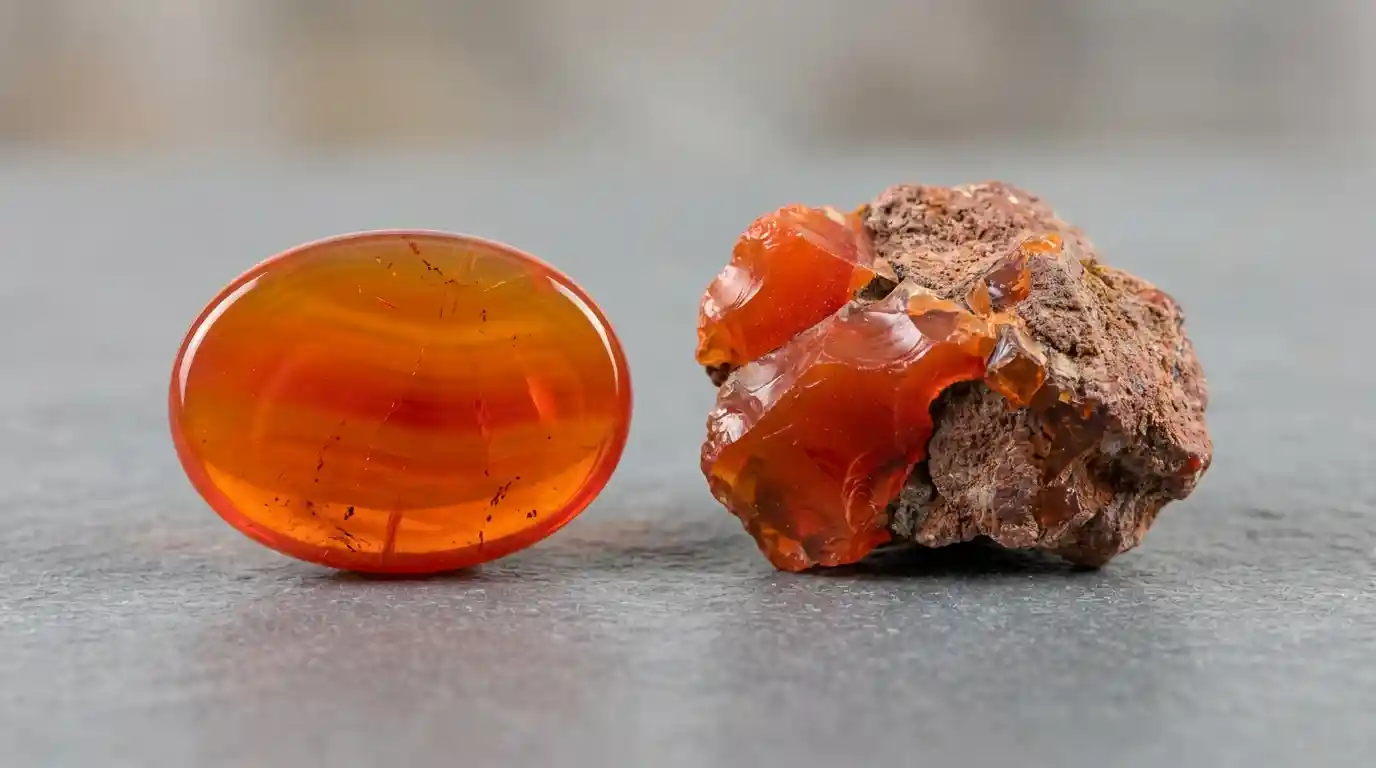
Fire opal healing properties are commonly associated with creativity, confidence, motivation, passion, emotional expression, adaptability, relationship warmth, optimism, and spiritual renewal. Unlike many recently commercialized crystal varieties, fire opal also has a genuine pre-modern cultural context: Mexican opal was used by the Aztecs before the Spanish conquest, and historical accounts describe opal in ceremonial objects. That authentic history should not be stretched into a claim that ancient people practiced today’s chakra-based fire opal healing system. Modern fire opal has not been demonstrated to increase libido, enhance fertility, cure depression, treat fatigue, improve circulation, stimulate metabolism, regulate hormones, or heal disease. Scientifically, it is a yellow, orange, red, or reddish-brown variety of opal, a hydrated amorphous silica mineraloid commonly represented as SiO₂·nH₂O. Its warm bodycolor, variable play-of-color, water content, relatively low hardness, and sensitivity to heat are real properties that require more careful treatment than the wellness claims suggest.
9 Fire Opal Claims Connecting Warm Color With Creativity, Drive, and Renewal
- Creativity and imaginative expression
- Confidence and self-expression
- Motivation and personal drive
- Passion and enthusiasm
- Emotional openness
- Adaptability during change
- Relationship warmth and communication
- Optimism and appreciation
- Spiritual renewal and purposeful beginnings
The nine themes are distinct enough to guide different reflective exercises, but they are not nine medically verified effects of opal. The fire opal benefits described in crystal culture become more grounded when translated into actions such as brainstorming, communicating clearly, beginning a task, reviewing a relationship, or creating a ritual around a new stage of life.
Fire Opal Mineral Identity: Hydrated Silica, Bodycolor, Play-of-Color, and Hardness
Fire opal belongs to the opal family and consists of hydrated amorphous silica, conventionally represented as SiO₂·nH₂O. Its water content varies from specimen to specimen. Unlike quartz, opal does not possess the long-range atomic ordering required for a conventional crystal lattice, so it is generally classified as a mineraloid and has no true crystal system.
The defining feature of fire opal is bodycolor rather than play-of-color. Fine stones are transparent to translucent and typically yellow, orange, red-orange, or red, although brownish tones also occur. Some fire opals display spectacular spectral flashes, while others show little or no play-of-color at all and are valued primarily for their intense bodycolor and transparency.
When play-of-color does occur, light interacts with ordered internal silica structures to produce spectral flashes. Fire opal without play-of-color can still be a genuine natural opal. This is an important distinction because the word “fire” in its trade name refers primarily to the warm fiery bodycolor, not necessarily the optical phenomenon seen in precious opal.
Opal generally ranges around Mohs 5 to 6.5 depending on composition and formation conditions. It is significantly softer than quartz, topaz, ruby, sapphire, and diamond, so normal contact with harder gemstones or abrasive dust can scratch a polished surface. Fire opal has no true cleavage but can be brittle, with conchoidal to uneven fracture and variable toughness.
Its luster is commonly vitreous to resinous, while transparency can be an important quality factor for fine faceted Mexican material. Because fire opal can occur as transparent rough suitable for faceting, it may look very different from the domed white, black, or boulder opals many buyers first imagine when they hear the word opal.
Mexican Fire Opal History: Aztec Use, Querétaro Deposits, and Genuine Ancient Context
Fire opal has a historically defensible connection with pre-modern Mexican culture. Historical gemological literature records extensive Aztec use of opal before the Spanish conquest, including ceremonial applications. Early accounts also preserve Indigenous terminology associated with brilliantly colored opal and compare its appearance with iridescent hummingbird feathers.
One famous historic specimen associated with this tradition is the so-called Aztec Sun God opal, traditionally linked with pre-Columbian Mexico. While the detailed provenance of individual historical objects can be difficult to prove to modern archaeological standards, the wider evidence is sufficient to establish that Mexican opal was known and used before modern crystal-healing culture.
That history does not establish ancient belief in today’s nine healing properties, chakra correspondences, manifestation practices, or claims about sexual and hormonal energy. Historical gemstone use and modern wellness symbolism should remain separate.
Mexico remains the locality most strongly associated with fire opal, particularly the volcanic regions around Querétaro. Commercial deposits were rediscovered and developed during the nineteenth century after centuries of limited documented exploitation. Fire opal occurs in cavities and fractures within volcanic rocks, including rhyolitic hosts, where silica-bearing fluids deposited opaline silica.
Other fire opal sources exist, including Ethiopia, Brazil, the United States, Australia, Turkey, Indonesia, Kazakhstan, and other regions. Mexico nevertheless remains central to the gemstone’s identity. The fire opal meaning therefore combines a genuine history of Mexican opal with much newer symbolic interpretations that should not be confused with archaeology.
Creativity, Confidence, and Motivation Claims
1. Creativity Through Protected Experimentation
Fire opal’s orange and red colors make it a popular symbol of creativity. The stone has not been demonstrated to increase creative cognition or activate a special neurological pathway. A person can instead use it as the visual cue for a dedicated brainstorming interval in which ideas are generated without immediate criticism. The gemstone marks the practice; giving the mind time and permission to experiment provides the plausible benefit.
2. Confidence and Self-Expression
Transparent fire opal is sometimes associated with boldness and expressive confidence. Wearing the gem does not biologically increase self-esteem or eliminate social anxiety. Before a presentation or difficult conversation, it can act as a reminder to formulate the main point, rehearse the opening, and decide which outcome is actually under personal control. Confidence grows from preparation rather than from hydrated silica.
3. Motivation and Personal Drive
Another claim says fire opal stimulates energy and initiative. The gemstone does not increase metabolic energy, dopamine, or physical stamina. A practical ritual is to connect it with starting one clearly defined task. When the stone is placed beside a planner or workstation, begin the planned action before evaluating whether you feel motivated. Behavior can precede motivation rather than waiting for a crystal to create it.
Passion, Emotional Openness, and Adaptability Claims
4. Passion and Enthusiasm
Fire opal’s fiery color has encouraged associations with passion, sexuality, and desire. There is no evidence that the gemstone alters libido, reproductive hormones, fertility, circulation, or sexual function. Used symbolically, it can prompt someone to identify which relationships, activities, or projects genuinely matter to them and make time for those priorities. The enthusiasm comes from engagement, not from opal chemistry.
5. Emotional Openness Without Magical Emotional Release
Some practitioners believe fire opal helps reveal or release hidden emotions. A gemstone cannot pull suppressed memories or feelings out of the nervous system. A more grounded ritual is to journal about what has been difficult to express, what fear is attached to saying it, and whether communication would be constructive and safe. The stone can mark the reflective space without being credited as the cause of disclosure.
6. Adaptability During Change
Opal’s changing appearance under different lighting makes adaptability an intuitive metaphor. Fire opal does not make a person psychologically flexible through mineral energy. During a major change, use it as a cue to identify what is fixed, what remains uncertain, and what can still be adjusted. This converts the symbolic idea of transformation into practical problem-solving.
Relationship Warmth, Optimism, and Spiritual Renewal Claims
7. Relationship Warmth and Communication
Fire opal is sometimes linked with attraction, affection, and relationship vitality. No stone can make another person feel love, restore trust automatically, or create compatibility. It can instead represent a communication habit: express appreciation specifically, ask rather than assume, and address small conflicts before they accumulate. Relationship warmth comes from repeated interaction.
8. Optimism and Appreciation
Its luminous orange and red bodycolor naturally supports themes of warmth and optimism. Fire opal cannot cause good fortune or guarantee positive events. A realistic ritual is to use it as a prompt to identify one thing that went well, one difficulty that remains unresolved, and one action that could improve tomorrow. This protects optimism from becoming denial.
9. Spiritual Renewal and Purposeful Beginnings
Fire opal is also used symbolically during new beginnings, creative transitions, and spiritual reflection. Someone might keep it nearby while considering what they want to leave behind and what values should guide the next stage. The gemstone cannot change destiny or initiate spiritual transformation through a known physical mechanism. The ritual may still help a person define a transition consciously.
Fire Opal Chakra Associations: Sacral Creativity and Solar Plexus Confidence
Modern crystal systems most often associate orange fire opal with the sacral chakra because of themes involving creativity, emotional expression, pleasure, intimacy, and movement. Yellow-orange stones may also be connected with the solar plexus chakra, where symbolism shifts toward confidence, motivation, identity, and purposeful action.
Chakras are a spiritual framework rather than anatomical structures. Fire opal has not been demonstrated to affect reproductive organs, fertility, digestion, adrenal function, sexual hormones, or another physiological system through chakra placement. Someone who values chakra symbolism can still use the gem during meditation to move from questions about creativity and relationships toward questions about confidence and responsibility.
Fire Opal Physical Care: Water Content, Heat Sensitivity, Scratching, Steam, and Ultrasonic Risk
Fire opal is a hydrated silica gemstone, so care requires more caution than for quartz or agate. Its Mohs hardness of roughly 5 to 6.5 means ordinary quartz dust can scratch it, while topaz, corundum, and diamond are even harder. Opal jewelry should therefore be stored separately from harder gemstones, ideally in a padded compartment or soft pouch.
Although opal has no cleavage, it can have poor to fair toughness and may fracture from impact. Rings are particularly vulnerable because hands frequently encounter hard surfaces. Protective settings can reduce exposure, while pendants and earrings generally face fewer knocks.
Fire opal contains structurally associated water, but this does not mean repeated soaking is beneficial. Ordinary brief contact with clean water is generally acceptable for untreated solid opal, yet prolonged immersion is unnecessary. Treatments, assembled jewelry, adhesives, surface coatings, or unusually porous material can behave differently. Warm soapy water used briefly is the safest general cleaning method.
Heat deserves particular attention. Intense heat or rapid temperature changes can cause opal to craze, producing networks of fractures. Do not expose fire opal to steam cleaners, boiling water, open flame, hot vehicle interiors for unnecessary periods, or rapid transitions between hot and cold environments. Artificially accelerating drying is also a poor idea.
Ultrasonic cleaning should be avoided. Vibration combined with liquid exposure can exploit fractures, treatments, or structural weaknesses, while steam introduces exactly the heat risk opal does not need. Mild hand cleaning is sufficient.
Hydrofluoric acid and caustic alkaline solutions attack opal and should never be used. Household bleach, abrasive cleaners, solvent-heavy products, and jewelry dips of uncertain composition are also inappropriate. Even perfumes, cosmetics, and oils are best allowed to dry on the skin before opal jewelry is put on.
Fire opal treatments can include coatings, impregnation, and other color or clarity modifications, so treatment disclosure matters when buying. The workbook-verified fire opal quality grading topic addresses gem-quality factors, while fire opal price per carat considers how color, transparency, play-of-color, treatments, stability, and overall appearance affect value.
Ritual Cleansing Fire Opal Without Exposing It to Heat or Aggressive Methods
Ritual cleansing should not place a delicate hydrated gemstone at physical risk. There is no scientific requirement to wash, heat, salt, bury, or expose fire opal to sunlight in order to remove spiritual energy.
Sound, quiet reflection, intentional breathing, dry placement, or setting the gem on a clean cloth are safer choices. A practitioner might acknowledge the previous intention connected with the stone, decide whether that intention still applies, and then assign a new purpose before wearing it again.
Avoid prolonged water soaking, saltwater, steam, heat, flame, abrasive salt contact, chemical sprays, and burying fine jewelry in damp soil. The spiritual purpose can be achieved without stressing a relatively soft, water-bearing gemstone.
Conclusion
Fire opal combines a genuine pre-modern Mexican history with a much newer wellness mythology. Its Aztec-era use, volcanic origin, hydrated silica composition, warm bodycolor, occasional play-of-color, and delicate care requirements are all grounded in gemology. Its nine healing claims belong to symbolic practice. They can still serve as prompts for creativity, communication, optimism, motivation, and deliberate change without being treated as biological properties of opal.
Frequently Asked Questions About Fire Opal Healing Properties
What are the main fire opal healing properties people claim?
Popular claims include creativity, confidence, motivation, passion, emotional openness, adaptability, relationship warmth, optimism, and spiritual renewal. These remain traditional or contemporary beliefs rather than proven therapeutic effects.
What is fire opal made of?
Fire opal is hydrated amorphous silica commonly represented as SiO₂·nH₂O. Because it lacks a conventional long-range crystal lattice, opal is generally classified as a mineraloid.
Does all fire opal show play-of-color?
No. Fire opal is primarily defined by yellow, orange, red, or reddish-brown bodycolor. Some specimens show play-of-color, while others are valued for transparent vivid bodycolor without spectral flashes.
How hard is fire opal?
Opal generally ranges around Mohs 5 to 6.5. This makes fire opal softer than quartz, topaz, ruby, sapphire, and diamond, so it needs protection against scratching and impact.
Does fire opal really have ancient traditions?
Mexican opal has documented pre-modern use, including Aztec ceremonial associations before the Spanish conquest. That historical fact does not prove today’s chakra, fertility, passion, or crystal-healing claims.
Is fire opal scientifically proven to increase passion or fertility?
No. Fire opal has not been shown to alter libido, fertility, sex hormones, reproductive health, or relationship attraction through a gemstone-specific mechanism.
Which chakra is fire opal associated with?
Modern crystal practice most commonly associates orange fire opal with the sacral chakra and may connect yellow-orange specimens with the solar plexus chakra. These are spiritual correspondences rather than anatomical relationships.
Can fire opal go in water?
Brief contact with clean water is generally acceptable for untreated solid fire opal, but prolonged soaking is unnecessary. Treatment, porosity, adhesives, or assembled jewelry can change how an individual piece responds.
How should fire opal be cleaned?
Use warm, mild soapy water and a soft cloth. Avoid steam, ultrasonic cleaners, harsh chemicals, rapid temperature changes, and abrasive cleaning because opal is relatively soft and can craze or fracture.
Is fire opal suitable for everyday jewelry?
It can be worn in jewelry, but it requires more care than quartz, sapphire, or diamond. Pendants and earrings are relatively protected, while rings benefit from protective settings and careful wear because fire opal is softer and less tough.
Crystal healing claims are traditional or personal beliefs and should not replace qualified medical or mental health care.