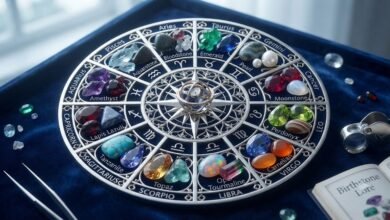

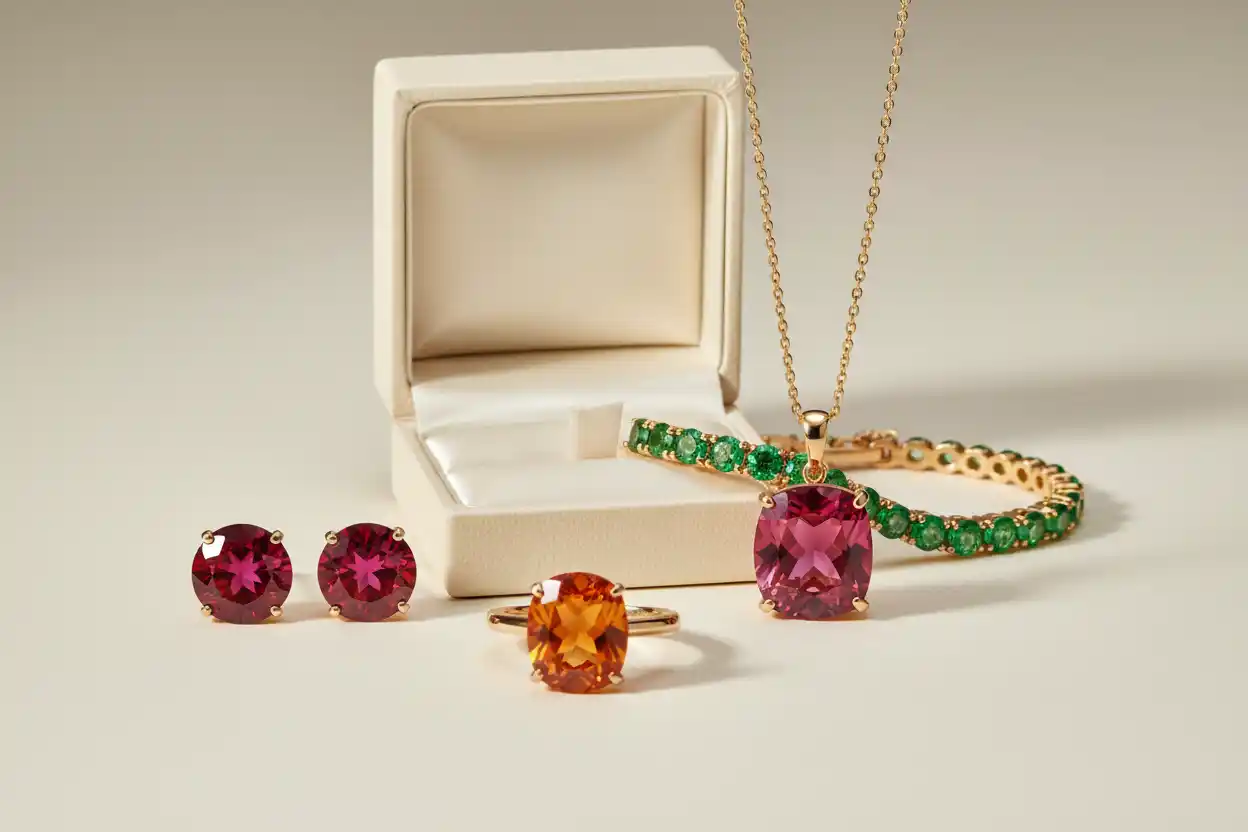

January birthstone jewelry does not have to mean one dark-red stone in a generic ring. Garnet is a mineral group with red, raspberry, orange, yellow, green, purple, brown, and rare color-changing options, so a thoughtful gift can reflect the recipient’s style rather than relying only on convention.
The companion guide to the January birthstone explains garnet’s month association, history, colors, and traditional symbolism. The broader birthstones-by-month chart places January within the full calendar. Here, the focus is practical: choosing the right garnet variety, jewelry form, setting, metal, size, construction, and level of documentation for a gift.
Start With the Recipient, Not the Stone
A good birthstone gift should suit the person’s routine. Someone who rarely wears rings may appreciate earrings or a pendant more, while an active wearer may need a low-profile setting and a garnet variety without major fractures.
Before comparing colors, consider:
| Recipient factor | Practical question |
|---|---|
| Existing jewelry | Do they usually wear rings, earrings, necklaces or bracelets? |
| Preferred metal | Do they favor yellow gold, white metal, rose gold or silver? |
| Color palette | Do they wear deep red, raspberry, orange, green or neutral colors? |
| Lifestyle | Will the jewelry face frequent impact, water, cosmetics or manual work? |
| Sensitivity | Do posts, clasps or alloys need to be nickel-free? |
| Sentiment | Is the gift for a birthday, anniversary, new child, graduation or personal milestone? |
| Maintenance | Will the wearer remove jewelry for exercise and cleaning? |
| Documentation | Does the rarity or price justify an independent laboratory report? |
A piece that fits naturally into the recipient’s wardrobe will usually be worn more often than a technically impressive stone chosen without considering comfort or taste.
Garnet Gives January More Than One Color
The general garnet guide explains the mineral group, while Types of Garnet separates the principal species and varieties. For gift shopping, color provides the easiest starting point.
Classic Deep-Red Garnet
Almandine and pyrope-rich garnets produce the traditional January look. They work well in antique-inspired clusters, signet rings, cabochon pendants, bead strands, and understated stud earrings.
Very dark stones can appear nearly black in low light, especially when they are cut deeply. Ask to see the jewelry in diffused daylight and normal indoor lighting rather than judging it from one illuminated display photograph.
Raspberry and Purplish-Red Rhodolite
Rhodolite garnet usually has a lighter, brighter raspberry, rose-red, or purplish-red appearance. It suits recipients who find traditional garnet too brown or dark.
Rhodolite often works especially well in white gold, platinum, or rose gold. Its brighter tone also makes it suitable for smaller stones that still need to remain visible from normal viewing distance.
Orange Spessartine
Spessartite garnet ranges from yellowish orange to vivid mandarin and reddish orange. It makes a distinctive January gift for someone who wears warm colors or wants a birthstone that does not look conventional.
Fine orange material can be much rarer than commercial red garnet. Some stones also contain noticeable inclusions, so buyers should inspect whether those features are enclosed or reach the surface.
Green Tsavorite
Tsavorite is a vivid green grossular garnet. It offers a January birthstone option for someone who prefers emerald-like color but wants a gem that is usually sold without routine clarity enhancement.
Larger fine tsavorites become increasingly scarce. For that reason, a small well-cut stone with lively color can make a better gift than a larger dark or heavily fractured gem.
Green Demantoid
Demantoid garnet is the green variety of andradite. It has high luster and dispersion, and some stones display valued horsetail-like inclusions.
Demantoid sits near the softer end of jewelry garnets, so earrings, pendants, brooches, and protected rings are generally more suitable than exposed everyday bracelets.
Choosing the Jewelry Form
Garnet Rings
A garnet ring creates a personal and visible birthday gift. Solitaires, halos, clusters, vintage-inspired rings, signets, and stackable bands can all work.
Rings receive more impact and abrasion than other jewelry. Therefore, the center stone should have no threatening surface-reaching fracture, and pointed shapes should receive protective prongs or corner guards.
A low bezel or halo often suits an active wearer better than a high four-prong solitaire. Before ordering, obtain the exact ring size rather than relying on an age, height, or general small-medium-large estimate.
Garnet Earrings
Garnet earrings are one of the safest gifts when the recipient’s ring size is unknown. Studs work for routine wear, while drops and clusters provide more color and movement.
Earrings also suit valuable tsavorite or demantoid because they encounter fewer hard surfaces. Check the weight per earring, post material, back style, and whether the two stones match in color, apparent size, cut, and brightness.
Garnet Necklaces and Pendants
A garnet necklace can carry a larger gem without exposing it to the impacts faced by a ring. Pendants also allow flexible symbolism through initials, floral forms, lockets, geometric settings, and vintage motifs.
Confirm the pendant dimensions, chain length, clasp, metal weight, and bail opening. A substantial pendant requires a chain strong enough to support it rather than the thinnest chain that looks attractive in a product photograph.
Garnet Bracelets
A garnet bracelet can use faceted links, cabochons, beads, charms, or a tennis-style arrangement.
Bracelets strike desks and doorframes frequently. Bead strands also experience abrasion around drill holes and stringing. Secure clasps, sound settings, periodic restringing, and a fit that does not slide excessively improve durability.
Which Garnet Jewelry Makes the Safest Surprise Gift?
Earrings and adjustable pendants are usually the easiest surprise gifts because they require little or no sizing information.
A ring needs an accurate finger size, while a fixed bangle or close bracelet needs wrist and hand measurements. A necklace is more forgiving, although chain length still affects where the pendant rests.
For a recipient whose preferences remain uncertain, a moderate-size red or rhodolite pendant in a familiar metal is generally more versatile than a large cocktail ring or strongly colored green garnet.
Color, Cut and Clarity
Color is the most important visual factor in most garnet jewelry. The gem should look attractive in normal lighting rather than only beneath intense display lights.
A well-cut stone returns light across most of its face. A broad transparent area through the center indicates windowing, while large black areas can result from extinction or excessive depth.
Clarity expectations vary by garnet type. Transparent red and rhodolite garnets are often expected to appear reasonably clean to the unaided eye. Orange garnets may show more inclusions, while demantoid can contain valued horsetail features.
The presence of an inclusion is not automatically a defect. However, a reflective fracture reaching the surface near a prong, corner, or drill hole creates a durability concern.
Matching Garnets in a Pair or Set
Earrings and multi-stone jewelry require more matching than a solitaire gift.
Compare:
- Hue and saturation
- Lightness and darkness
- Apparent size
- Shape
- Cut pattern
- Transparency
- Inclusion visibility
- Face-up brightness
Two stones do not need identical internal features, but they should appear balanced when viewed at normal distance.
In a bracelet or necklace, a deliberate color progression can work well. Randomly alternating dark and pale stones usually looks less refined unless the design clearly embraces variation.
Metal Choices
Yellow gold strengthens the warmth of deep red, orange, and brownish garnet. Rose gold complements rhodolite and softer red tones, while white gold and platinum provide cleaner contrast with raspberry, purple-red, tsavorite, and demantoid.
Sterling silver offers an accessible setting, although thin silver prongs and lightweight chains may bend more readily than substantial gold or platinum construction.
The guide to gemstones and metals for sensitive skin explains why nickel content, plating, posts, clasps, solder, and base-metal components need separate consideration. The garnet itself may be suitable while the surrounding alloy causes irritation.
Choosing a Setting
A bezel protects the girdle and works well for everyday rings and pendants. Prongs expose more of the gem but require regular inspection. Halos can enlarge the visual footprint and shield a center stone when the surrounding setting sits slightly higher.
Cluster settings suit small red pyropes and almandines, drawing on historic Bohemian and Victorian styles. However, numerous small prongs create more maintenance points.
Tension settings place concentrated force on the gemstone and should be used only when the jeweler has evaluated the specific garnet. Surface-reaching fractures and highly included stones are poor candidates.
Natural Garnet and Treatments
Most garnets on the jewelry market are not routinely treated. That relative lack of enhancement can make garnet attractive to buyers who prefer natural color.
Rare fracture filling occurs, however, and any filler should be disclosed. Filled material may require gentler cleaning and can have lower value than a comparable unfilled stone.
A seller should identify the garnet variety when reasonably known and state whether the stone is natural, laboratory-created, treated, assembled, or an imitation.
Budget and Value
The garnet buying guide explains quality selection, while the garnet price guide covers the factors behind value.
Commercial red garnets can offer substantial size and strong color at accessible prices. Rhodolite often occupies a moderate tier, while fine spessartine, tsavorite, demantoid, rare color-change garnet, and unusually large clean gems can cost much more.
The metal and workmanship can exceed the value of the stone in a small gift. Conversely, a fine green garnet may account for most of the price even in a simple setting.
Do not compare two pieces only by carat weight. Variety, color, tone, clarity, cut, treatment, setting, brand, and metal all affect the result.
Birthday, Anniversary and Milestone Gifts
Garnet is associated with January birthdays and is also commonly used for the second wedding anniversary. A red garnet can emphasize affection and continuity, while green or orange garnet gives the tradition a more individual character.
January spans Capricorn and Aquarius. The Capricorn birthstone guide and Aquarius birthstone guide cover zodiac-specific lists, which are separate from the standard month birthstone.
For a child, consider a pendant that can move to a longer chain later rather than a ring or bracelet that will soon be outgrown. Stud earrings may work when the recipient already has healed piercings and the post material is suitable.
For an heirloom gift, choose a construction that can be repaired and a design that does not depend on fragile plating, glued components, or a highly unusual ring size.
Personalization
Engraving a date, initials, short message, or coordinates can add meaning without changing the gemstone. Confirm that enough metal remains around the engraving area and that future resizing will not remove the inscription.
A custom setting can incorporate a family stone, but inherited garnet should receive inspection before resetting. Old chips, foil backs, previous repairs, and worn facet edges may affect design options.
When combining several family birthstones, separate harder gems from garnet so their exposed girdles do not rub against it.
Buying Online
The guide to buying gemstones online safely provides general transaction safeguards.
For January birthstone jewelry, request:
| Detail | What to confirm |
|---|---|
| Garnet identity | Variety or best available species description |
| Treatment | Filling, coating, dye, assembly or other enhancement |
| Stone measurements | Millimeters as well as carat weight |
| Jewelry dimensions | Ring width, pendant size, bracelet length or earring drop |
| Metal | Alloy, fineness, hallmark and plating |
| Video | Neutral-light movement without heavy editing |
| Condition | Chips, open fractures, repairs and prong wear |
| Sizing | Current size and realistic alteration options |
| Documentation | Report details for rare or expensive garnet |
| Returns | Enough time for non-destructive inspection |
A generic card stating “genuine garnet” does not establish the exact variety, treatment status, origin, or value.
Durability and Daily Wear
The guide Is Garnet Durable Enough for Everyday Wear? explains species differences and jewelry risks in depth.
Most gem garnets fall around 6.5–7.5 on the Mohs scale and lack pronounced cleavage. That makes many varieties practical for jewelry, although they can still scratch and chip.
Remove garnet jewelry for exercise, gardening, construction, contact sports, cleaning with chemicals, swimming, and heavy lifting. Earrings and pendants generally tolerate regular wear more easily than exposed rings and bracelets.
Cleaning and Presentation
Follow the complete procedure in How to Clean Garnet Jewelry Safely. Warm soapy water and a soft brush provide the safest general method.
Avoid steam. Ultrasonic cleaning may be suitable for some sound untreated garnets, but it should not be used for fractured, filled, delicate, antique, or uncertain stones.
Before presenting the gift, inspect the clasp, prongs, backs, stringing, engraving, and polish. Include treatment disclosures, the receipt, appraisal or report, spare earring backs, and care instructions rather than discarding them with the packaging.
Frequently Asked Questions
1. What is the best January birthstone jewelry gift?
The best form matches the recipient’s habits. Stud earrings and pendants are easiest when sizing is unknown, while rings and bracelets work best when measurements and daily routine are known.
2. Does January birthstone jewelry have to be red?
No. Orange spessartine, green tsavorite, green demantoid, raspberry rhodolite, purple-red garnet, and rare color-change garnet all belong to the garnet group.
3. Which garnet color is most traditional for January?
Deep red pyrope and almandine provide the most traditional appearance. Rhodolite offers a brighter purplish-red alternative.
4. Is garnet jewelry suitable for men?
Yes. Dark red cabochons, signet rings, cuff links, tie accessories, bead bracelets, and understated pendants can all work. Design and fit matter more than gendered marketing labels.
5. Is a garnet ring appropriate for daily wear?
Many garnet rings can be worn regularly, especially when the stone is sound and protected. Remove the ring for impact-prone activities and keep it away from harder gemstones.
6. Which garnet is best for someone who likes emerald green?
Tsavorite provides saturated green, while demantoid offers strong luster and dispersion. Tsavorite is generally the more practical ring choice, although individual condition and setting remain important.
7. Are garnet earrings a safe surprise gift?
They are one of the safest options because no ring or wrist size is required. Confirm metal sensitivity, piercing style, weight, and the return policy.
8. Is natural garnet normally treated?
Most garnet is sold without routine treatment, but rare fracture filling and other alterations can occur. The seller should disclose any known enhancement.
9. Should expensive garnet jewelry have a laboratory report?
A report is useful for rare green, color-change, unusually large, or high-value garnets when identity and treatment materially affect the price.
10. Can January birthstone jewelry be given for an anniversary?
Yes. Garnet is commonly associated with the second wedding anniversary and can also mark personal milestones unrelated to birth month.
11. How should garnet jewelry be packaged for long-term storage?
Use a fabric-lined box with separate compartments. Keep garnet away from harder gems that can scratch it and from softer gems that garnet itself may abrade.
12. What should be included with a garnet gift?
Include the receipt, treatment disclosure, metal details, care instructions, sizing information, laboratory report or appraisal when applicable, and the seller’s return or service terms.
January birthstone jewelry becomes more personal when the gift reflects the recipient rather than merely the calendar. Garnet’s broad color range makes that possible: classic red for tradition, rhodolite for brightness, spessartine for warmth, or green garnet for an unexpected interpretation. Once color is chosen, sound construction, honest disclosure, proper sizing, and realistic care determine whether the gift remains wearable for years.
Birthstone meanings and symbolic associations are cultural or personal traditions, not scientifically proven guarantees of health, protection, prosperity, relationship success, or other outcomes.