7 Rubellite Benefits for Passion & Emotional Strength
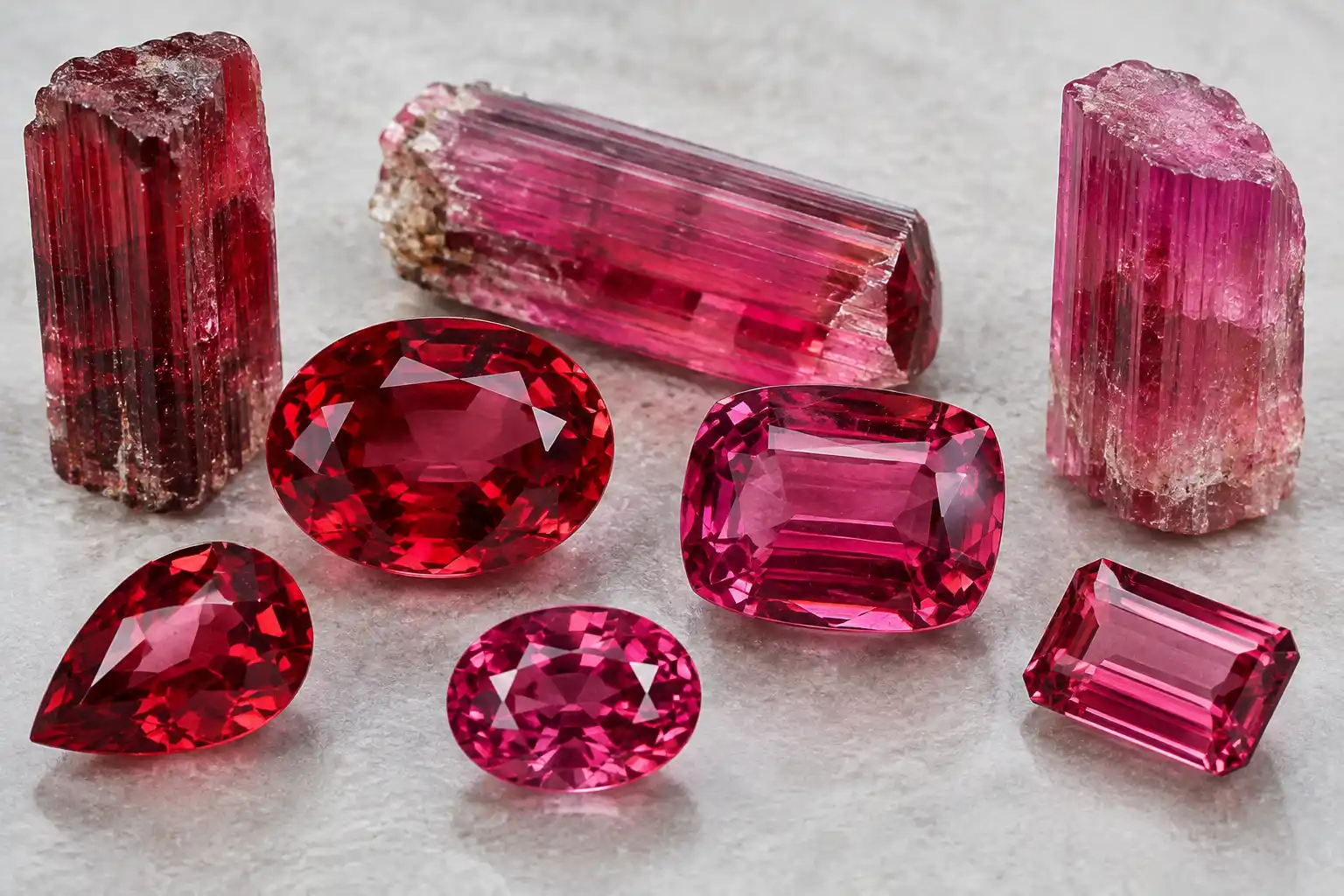
Rubellite benefits begin with the genuine qualities of one of tourmaline’s most attractive red-to-pink gem varieties. Rubellite is a trade name used for saturated red, pinkish red, violet-red, and intense pink tourmaline, most commonly belonging to lithium-rich elbaite or fluor-elbaite. Its vivid color, strong vitreous luster, useful jewelry hardness, pleochroism, and complex crystal chemistry give the gem considerable value for jewelry, collecting, lapidary work, and gemological study.
Unlike a separate mineral species with one fixed formula, rubellite sits within the chemically varied tourmaline group. Tourmaline crystallizes in the trigonal system and typically reaches about 7 to 7.5 on the Mohs scale, making it practical for many jewelry styles. Red and pink colors are strongly associated with manganese in the crystal chemistry, although color centers and other chemical influences can also affect individual stones.
Modern crystal traditions add passion, emotional strength, affection, courage, and heart-centered symbolism to rubellite benefits. These interpretations can give a ring, pendant, or loose gemstone personal significance, but rubellite does not medically increase energy, alter hormones, repair emotional trauma, or change cardiovascular function.
7 Rubellite Benefits at a Glance
- Intense red, raspberry, pinkish-red, and violet-red colors give rubellite exceptional jewelry and collector appeal.
- Mohs hardness around 7 to 7.5 provides useful scratch resistance for rings, earrings, pendants, and other jewelry.
- Strong transparency and vitreous luster allow well-cut rubellite to produce rich color and lively brilliance.
- Pleochroism, inclusions, crystal growth features, and complex chemistry give rubellite strong educational value for gemology.
- Pegmatite occurrences and recognized mining regions add geological interest and provenance value.
- Modern passion and emotional-strength traditions can make rubellite a meaningful symbol for relationships, confidence, or personal goals.
- Straightforward care with warm soapy water helps preserve the gemstone when fractures, heat sensitivity, and possible treatments are respected.
Rubellite Benefits Begin With Tourmaline Mineralogy
The strongest rubellite benefits come from the properties of tourmaline itself. Rubellite commonly belongs to elbaite or fluor-elbaite, although the red-to-pink trade name can occasionally be applied to other lithium-rich tourmalines with suitable color.
Elbaite has a complex borosilicate chemistry containing sodium, lithium, aluminum, silicon, boron, oxygen, and hydroxyl groups. Natural chemical substitutions create an extraordinary range of colors across the tourmaline group, which is why closely related crystals can be green, blue, yellow, colorless, pink, or red.
Rubellite crystallizes in the trigonal system and commonly develops elongated prismatic crystals with strongly striated surfaces. Natural crystals may also show color zoning, with pink or red cores surrounded by green, colorless, or differently colored growth zones.
These mineralogical features make rubellite benefits especially valuable for students learning how chemistry, crystallography, color, optical properties, and geological formation combine in one gemstone.
Rich Red Color Is One of the Main Rubellite Benefits
Color is the defining visual feature behind rubellite benefits. Fine stones can range from vivid pinkish red and raspberry to deeper violet-red, with the most attractive gems retaining strong color under different lighting conditions rather than becoming overly brown or dark.
Manganese plays an important role in producing red and pink tourmaline. Some pink elbaites may also owe part of their coloration to radiation-related color centers, which can develop naturally or be created during treatment.
The standards involved in rubellite quality grading place strong emphasis on hue, tone, saturation, clarity, cut, and overall face-up appearance. A saturated red gem with good brightness will generally be more visually successful than an excessively dark stone whose color disappears under normal indoor lighting.
Red tourmaline is also more accepting of inclusions than many green and blue tourmalines. Fine color can remain attractive even when some internal features are visible, although large whitish inclusions, severe fractures, or surface-reaching cavities can reduce beauty and durability.
Rubellite Benefits for Jewelry
Jewelry versatility is among the most practical rubellite benefits. With Mohs hardness around 7 to 7.5, tourmaline resists ordinary scratching better than feldspar, fluorite, apatite, calcite, and many softer ornamental gems.
Hardness does not mean the stone is immune to damage. Tourmaline’s toughness is generally considered fair, and heavily included rubellite can contain fractures or fluid-filled cavities that make it more vulnerable to impact or sudden temperature change.
Understanding rubellite durability is therefore particularly important for rings. A well-cut stone in a protective setting can perform well, but high-profile designs should be removed before sports, construction, weight training, gardening, or other activities where the gem may strike a hard surface.
Earrings and pendants generally expose rubellite to fewer impacts. Bracelets and rings can still be practical when the setting protects the stone and the wearer treats it as fine colored-stone jewelry rather than as an indestructible gem.
Pleochroism and Cutting Add Gemological Interest
Pleochroism adds another layer to rubellite benefits. Tourmaline can display different color strength or hue when viewed along different crystallographic directions, which affects both identification and cutting decisions.
A cutter must consider the optical axis before orienting valuable rough. Poor orientation can make a strongly colored rubellite appear too dark, while thoughtful cutting can balance saturation with brightness and preserve as much weight as practical.
Tourmaline crystals are often elongated, so rubellite is frequently fashioned into rectangular, oval, cushion, pear, and elongated custom shapes. Cutters sometimes accept unusual proportions because preserving valuable red rough can be more important than producing a standard commercial outline.
Good polish and symmetrical facet junctions improve brilliance, but color remains the central visual feature. A technically perfect cut cannot fully compensate for weak or unattractive bodycolor.
Inclusions Can Reveal How Rubellite Grew
Natural inclusions provide important gemological information and are another reason rubellite benefits mineral study. Tourmalines commonly contain liquid-filled cavities, growth tubes, thread-like inclusions, small mineral crystals, and fractures related to crystal growth.
Pink and red tourmalines often contain more visible inclusions than many green examples. This means a slightly included rubellite with exceptional color can still be desirable, while a weaker-colored gem may need greater clarity to remain visually appealing.
Growth tubes can run parallel to the elongated crystal direction, reflecting interruptions during tourmaline growth. In some stones, aligned tubes can even create chatoyancy when the rough is cut as a properly oriented cabochon.
Inclusions should still be evaluated for durability. Surface-reaching fractures are more significant than isolated internal features because they can interfere with polish, collect residue, and sometimes be filled with oil or resin to improve appearance.
Geological Origins Add Real Rubellite Benefits
Knowing where rubellite is found gives each gemstone a geological identity beyond its color. Most gem-quality lithium-rich tourmalines form in granitic pegmatites, where late-stage fluids enriched in boron, lithium, water, and other elements allow unusually complex minerals to crystallize.
Brazil has produced large quantities of gem tourmaline, including rubellite, while important stones also come from Mozambique, Nigeria, Madagascar, Namibia, Afghanistan, Pakistan, the United States, and other pegmatite regions.
Individual mining areas can produce different color zoning, inclusion patterns, crystal sizes, associated minerals, and chemical characteristics. A crystal found beside lepidolite, albite, quartz, spodumene, or beryl also preserves evidence of the mineral assemblage in which it grew.
These geological differences make locality especially interesting for collectors. A natural crystal on matrix may be valued very differently from a faceted jewelry stone even when both are rubellite.
Passion as Modern Rubellite Symbolism
Passion is one of the best-known spiritual themes attached to rubellite benefits. The saturated red and pink colors naturally invite associations with affection, attraction, enthusiasm, confidence, creativity, and emotional intensity.
A person might wear a rubellite ring to represent a relationship, personal goal, anniversary, artistic project, or period of renewed confidence. In this sense, passion refers to the meaning assigned to the gemstone rather than to a biological effect.
Rubellite does not raise testosterone, estrogen, dopamine, adrenaline, libido, or another physiological marker through ordinary skin contact. Its lithium, manganese, aluminum, boron, and other elements remain locked within the crystal structure rather than entering the body in medically active doses.
These limits do not make personal symbolism meaningless. A gemstone can represent an intention without having to cause a chemical change inside the wearer.
Emotional Strength Without Healing Claims
Emotional strength is another common theme among rubellite benefits. A person may connect the gemstone with resilience, courage during a difficult conversation, confidence before an important event, or commitment to healthier relationship boundaries.
The stone itself does not remove anxiety, treat depression, resolve trauma, or prevent grief. Persistent emotional or psychological symptoms deserve appropriate support rather than substitution with crystal practices.
Rubellite can still serve as a physical reminder. Someone might touch a pendant before speaking publicly or notice a ring while deciding whether to respond impulsively during a disagreement.
The practical effect comes from the person’s chosen behavior. Rubellite provides symbolism, color, and continuity rather than psychological treatment.
Heart Chakra Traditions
Modern chakra traditions often associate red and pink tourmalines with heart-centered themes, relationships, compassion, and emotional openness. Depending on the spiritual system, deeper red rubellite may also be connected with lower-chakra themes involving vitality, confidence, or purposeful action.
Chakras are spiritual ideas rather than anatomical structures. Placing rubellite near the chest does not physically alter the heart, circulation, lungs, hormones, or nervous system.
Meditation with a gemstone may still be personally useful as a structured reflective practice. A person can connect the stone with one question about a relationship, boundary, or personal commitment and spend time considering what action makes sense.
Rubellite benefits are more credible when this symbolic use remains clearly separate from medical claims.
Rubellite Benefits for Collectors
Collector rubellite can look very different from jewelry-grade rubellite. Well-formed prismatic crystals, unusual color zoning, transparent terminations, association with other pegmatite minerals, size, rarity, and locality can all influence specimen appeal.
A crystal does not need to be faceting rough to be desirable. Some specimens are more valuable when left intact because cutting would destroy crystal form, mineral associations, or provenance.
Fine rubellite can also show dramatic combinations with albite, lepidolite, quartz, or other pegmatite minerals. These natural associations provide more geological information than a loose faceted stone.
Collectors should examine repairs, glued crystals, filled fractures, artificial coatings, and restoration work when buying significant specimens. Clear seller disclosure is part of responsible mineral collecting.
Treatment and Clarity Enhancement
Treatments are another area where rubellite benefits from accurate disclosure. Tourmaline can be heated or irradiated to alter color, and some stones with surface-reaching fractures may be filled with oils or resins to make those fractures less visible.
Treatment does not automatically make rubellite unsuitable. The important issue is whether the gemstone is correctly represented so the buyer understands what has been done.
Heat is particularly important because tourmalines can contain fluid inclusions. Excessive heating may rupture these inclusions and create additional fractures, which is one reason repair work and jewelry manufacturing should be handled carefully.
For valuable rubellite, professional laboratory testing may help identify detectable treatment and confirm that the stone is natural tourmaline rather than glass, synthetic imitation, or another red gemstone.
How to Clean Rubellite Safely
Care is one of the most useful everyday rubellite benefits because the gemstone does not require complicated maintenance. Warm water, mild soap, and a soft brush are generally the safest approach to clean rubellite jewelry.
Steam and ultrasonic cleaners are poor default choices. Internal liquid inclusions, fractures, and possible fracture filling can make aggressive cleaning unnecessarily risky.
High heat and sudden temperature changes should also be avoided because they can cause fracturing or alter the appearance of some treated stones. Jewelry should be removed before exposure to high heat, strong physical impacts, or rough household work.
Store rubellite away from harder gemstones such as sapphire, ruby, and diamond. Separate compartments or soft pouches help protect polished facets from abrasion.
Conclusion
Rubellite benefits include intense red-to-pink color, Mohs 7 to 7.5 hardness, strong jewelry versatility, pleochroism, fascinating inclusions, pegmatite geology, and excellent educational value for gemology. Passion, emotional strength, and heart-centered themes can carry personal meaning, but they remain symbolic rather than medical effects of tourmaline.
FAQs
What are the main rubellite benefits?
Rubellite benefits include vivid red and pink color, good scratch resistance, jewelry versatility, attractive brilliance, geological interest, and useful gemological features such as pleochroism and characteristic inclusions. Modern spiritual traditions also connect rubellite with passion, emotional strength, affection, and confidence.
Is rubellite a ruby?
No. Rubellite is red or pink tourmaline, while ruby is red corundum. The two differ in chemistry, crystal structure, hardness, refractive properties, inclusions, and many other gemological characteristics.
Is rubellite a type of tourmaline?
Yes. Rubellite is a trade name for saturated red to pink gem-quality tourmaline, most commonly elbaite or fluor-elbaite. The name describes color and gem quality rather than a completely separate mineral species.
What gives rubellite its red color?
Manganese is an important coloring element in red and pink tourmaline. Radiation-related color centers can also contribute to the color of some pink elbaites, and individual stones can have complex color-producing chemistry.
Is rubellite suitable for everyday jewelry?
Rubellite has Mohs hardness around 7 to 7.5 and can work well in many jewelry styles. Heavily included stones and exposed rings deserve more care because impact, fractures, and thermal shock can still damage tourmaline.
Does rubellite increase passion or emotional strength?
There is no scientific evidence that rubellite directly changes emotions, hormones, confidence, or relationship outcomes. A person can use the gemstone symbolically as a reminder of passion, courage, affection, or a personal commitment.
How should rubellite be cleaned?
Warm soapy water and a soft brush are the preferred cleaning method. Avoid steam and ultrasonic cleaners as a routine choice, particularly when the gemstone contains fractures, liquid inclusions, or possible fracture filling.
Disclaimer: Passion, emotional-strength, heart-centered, chakra, love, and energetic descriptions of rubellite reflect spiritual beliefs and personal practices. Rubellite is not a medical or psychological treatment and should not replace professional healthcare.