Sapphire Meaning: Properties, Colors, Symbolism, Uses & Care
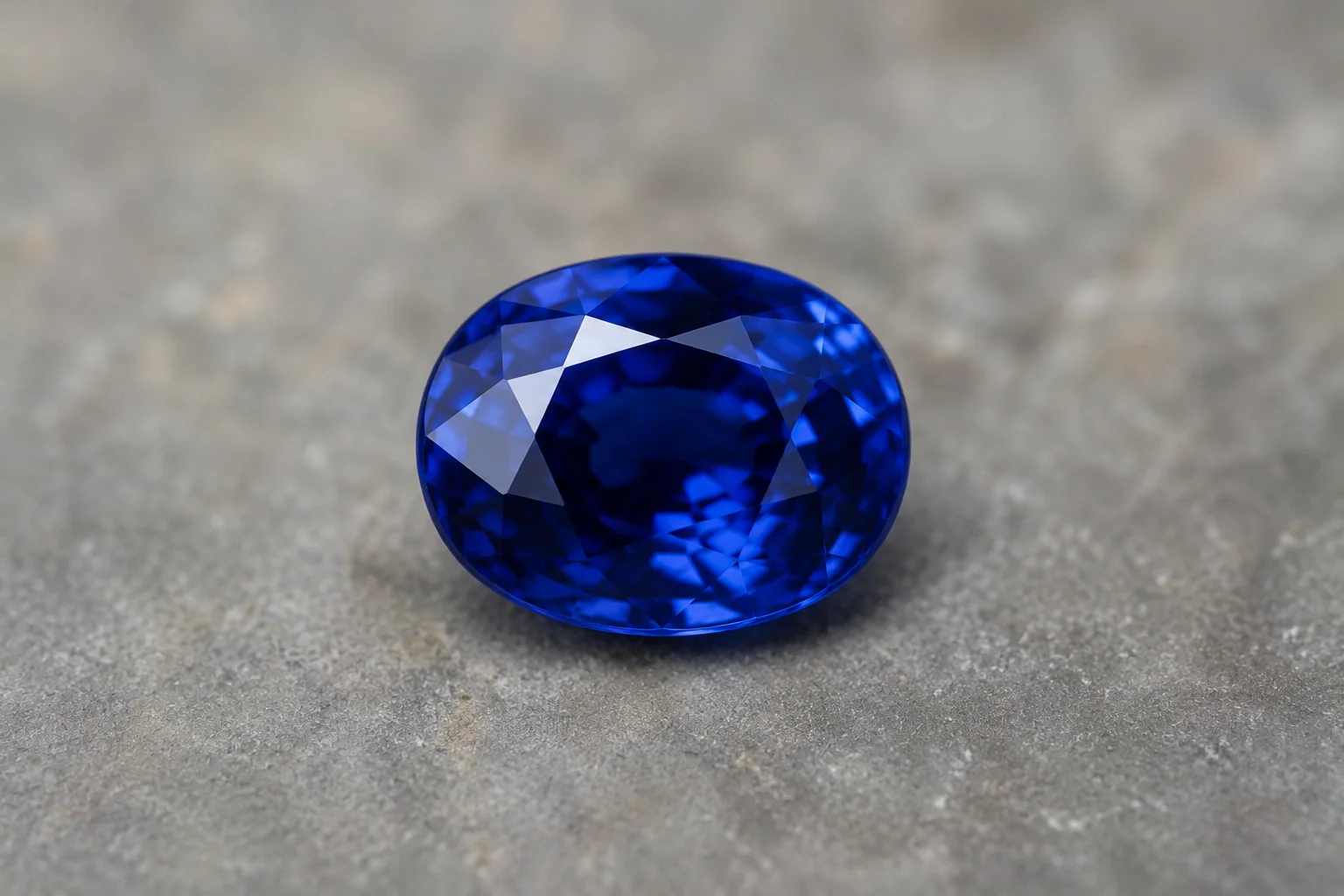
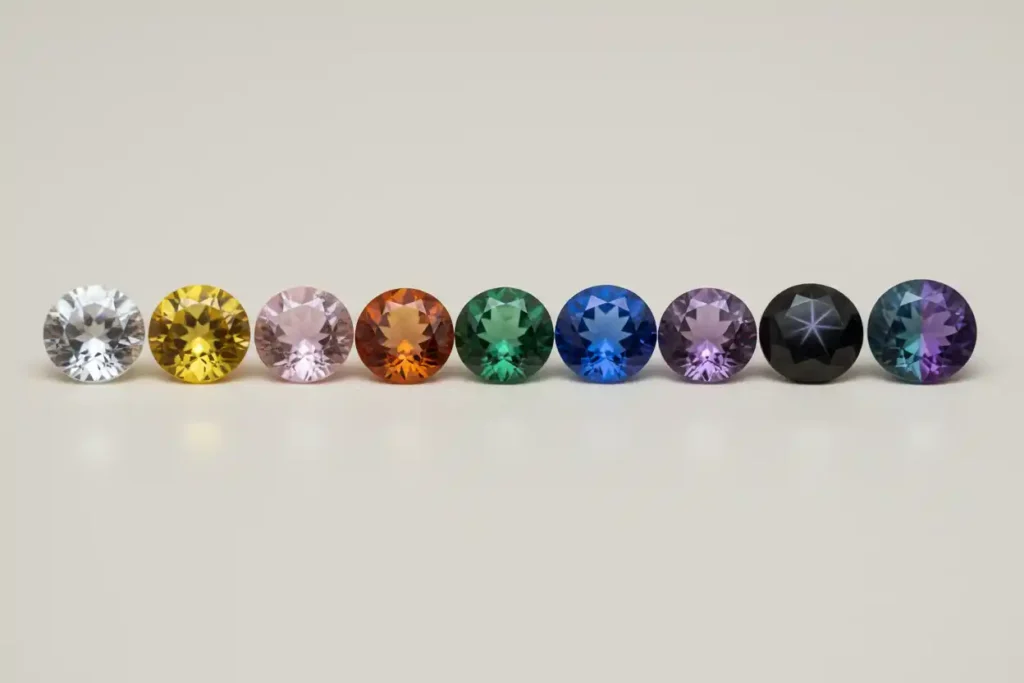
Sapphire is gem-quality corundum in nearly every color except the dominant red classified as ruby. Blue is its most famous appearance, yet natural sapphire also occurs in pink, yellow, orange, green, teal, purple, white, gray, black, parti-colored and color-changing varieties. Sapphire meaning developed through centuries of religious, royal, romantic and cultural use, with truth, wisdom, loyalty, disciplined judgment, commitment and protection becoming its strongest recurring themes.
The physical gemstone and sapphire meaning should be understood separately. Mineralogy explains sapphire’s aluminum-oxide composition, color-causing trace elements, hardness, inclusions, geological formation and optical phenomena. History and spiritual traditions explain why different societies attached symbolic significance to the stone.
That distinction becomes particularly important when comparing natural and laboratory-grown sapphire. Lab-grown sapphire is genuine manufactured corundum with essentially the same fundamental composition, crystal structure and hardness as natural sapphire, but it lacks geological origin. Sapphire meaning can remain personally relevant to either material, while rarity, provenance, treatment and market value remain separate factual questions.
Sapphire at a Glance
| Property | Sapphire |
|---|---|
| Mineral species | Corundum |
| Chemical composition | Aluminum oxide, Al₂O₃ |
| Color definition | Gem corundum except dominant ruby red |
| Common colors | Blue, pink, yellow, orange, green, teal, purple, white, gray and black |
| Crystal system | Trigonal |
| Transparency | Transparent to opaque |
| Luster | Vitreous to subadamantine |
| Mohs hardness | 9 |
| Cleavage | None; parting may occur |
| Tenacity | Brittle, with excellent practical durability in sound material |
| Refractive index | Approximately 1.762–1.770 |
| Specific gravity | Around 4.00 |
| Optical phenomena | Asterism, color change and occasional chatoyancy |
| Common treatments | Heat, lattice diffusion, filling, dyeing and coating |
| Laboratory-grown forms | Flame-fusion, flux, Czochralski/pulled and other synthetic corundum |
| Birthstone | September |
| Common symbolic themes | Truth, wisdom, loyalty, discipline, commitment and protection |
What Is Sapphire?
Sapphire is corundum, a crystalline form of aluminum oxide. Pure corundum is colorless. Trace elements, structural defects and interactions within the crystal create the colors that make sapphire one of the world’s most diverse gemstone families.
Iron and titanium interactions commonly contribute to blue. Chromium produces pink and, at sufficient red saturation, ruby. Iron-related mechanisms contribute to many yellow and green stones, while combinations involving vanadium, chromium and other factors can create purple or color-change material.
The complete types of sapphire family includes color varieties, phenomenal stones and different material origins. Understanding that family strengthens sapphire meaning because it prevents every sapphire from being treated as though it were simply a dark blue stone.
Ruby and sapphire are the same mineral species. Their distinction is primarily color. Red corundum is called ruby, while qualifying non-red colors are sapphire. Around the pink-red boundary, classification can sometimes depend on saturation and laboratory convention.
Sapphire meaning does not alter that classification. A pink gemstone associated with passionate symbolism does not become ruby unless its physical color qualifies.
Why Sapphire Comes in So Many Colors
The sapphire crystal structure can accept small amounts of foreign elements in place of aluminum. Those trace components alter the wavelengths of light that the crystal absorbs.
That chemistry creates the enormous visual range behind modern sapphire meaning.
Blue sapphire may appear pale gray-blue, violetish blue, royal blue, greenish blue or nearly navy. Pink ranges from blush to vivid magenta. Yellow can resemble lemon, gold or warm honey. Green can shift toward teal, olive or forest tones.
The dedicated sapphire color meaning guide explores how these colors developed different symbolic associations.
Color can also be affected by treatment and cutting. Heat may improve or modify color, while diffusion can introduce color-producing elements. A cutter may orient zoning so the best color faces upward.
For that reason, sapphire meaning should never be used as evidence that a color is natural or untreated.
Sapphire Meaning and Symbolism
At its core, sapphire meaning centers on disciplined truth.
The stone’s durability, prestigious history and particularly its traditional blue color encouraged associations with wisdom, loyalty, responsibility, justice and promises intended to endure.
A grounded interpretation of sapphire meaning does not ask the gemstone to make someone honest or wise. Instead, it treats the stone as a reminder to behave consistently with those values.
Someone may associate sapphire meaning with checking evidence before making an important claim. Another person may use it to represent keeping a commitment even when enthusiasm changes.
This interpretation makes sapphire meaning practical without turning symbolism into supernatural certainty.
Sapphire Meaning for Wisdom
Wisdom is one of the oldest and strongest themes within sapphire meaning.
Wisdom is not the same as knowing everything. In practical terms, it involves distinguishing evidence from assumptions, recognizing uncertainty and being willing to revise a conclusion when better information appears.
A sapphire on a desk or worn in jewelry can symbolize that process.
Someone using sapphire meaning for decision-making might ask: What do I actually know? Which part am I inferring? What information would change my opinion?
The gemstone does not provide hidden answers. Sapphire meaning works best when it encourages careful judgment rather than replacing it.
Sapphire Meaning for Truth and Communication
Truth is another central element of sapphire meaning, especially for blue stones.
Historical religious and ceremonial uses reinforced the connection between blue sapphire and sincerity, moral responsibility and clear communication.
A practical interpretation is straightforward: say what can be supported, distinguish certainty from opinion and correct an error when necessary.
In modern crystal traditions, blue sapphire is sometimes associated with communication and the throat chakra. The broader sapphire healing properties discussion covers these traditions while keeping them separate from medical claims.
Sapphire meaning does not imply that the stone improves speech, hearing, thyroid function or neurological performance. Communication improves through attention, practice and appropriate support.
Sapphire Meaning for Loyalty and Commitment
Loyalty is deeply embedded in sapphire meaning.
Its durability made sapphire a natural symbol for promises intended to last, helping establish the stone in engagement jewelry, anniversary gifts and ceremonial rings.
Healthy loyalty, however, does not mean unconditional obedience.
Sapphire meaning is more useful when loyalty includes honesty, consent, responsibility and the ability to maintain reasonable boundaries. Commitment is demonstrated through repeated behavior, not guaranteed by possession of a gemstone.
This explains why a sapphire engagement ring can carry powerful personal symbolism while still remaining only a symbol of the relationship.
The stone cannot guarantee fidelity or prevent separation.
Sapphire Meaning for Protection
Historical traditions often attached protective qualities to sapphire meaning.
The gemstone was sometimes believed to guard against deception, envy, poisoning, misfortune or harmful intentions. Those beliefs form part of cultural history rather than established physical protection.
A grounded version of sapphire meaning interprets protection as discernment.
A sapphire may symbolize verifying a financial claim before acting, protecting confidential information, recognizing manipulation or maintaining a clearly stated boundary.
This keeps sapphire meaning relevant without suggesting that corundum can prevent accidents, violence, infection or other hazards.
Practical protection requires practical measures.
Sapphire Meaning for Discipline and Focus
Discipline gives sapphire meaning a different character from symbolism based purely on emotion.
Blue sapphire in particular is often associated with consistency, patience and deliberate thinking.
A useful ritual can connect the stone with one repeatable action. Begin the planned study period. Review a decision before sending it. Finish the scheduled task before moving to another.
In this context, sapphire meaning becomes a cue for behavior rather than a promise of effortless productivity.
The gemstone cannot increase intelligence or guarantee academic or professional success.
Its symbolism can simply represent the decision to remain consistent.
Sapphire Meaning in Love and Relationships
In relationships, sapphire meaning emphasizes loyalty, honesty, trust and enduring commitment.
These associations explain sapphire’s longstanding popularity for significant romantic jewelry.
A sapphire cannot determine compatibility, prove that another person is faithful or make an estranged partner return.
A more practical use of sapphire meaning focuses on what trust looks like in observable behavior. Are promises kept? Can concerns be discussed safely? Is affection accompanied by respect? Are boundaries honored consistently?
Sapphire meaning can symbolize commitment without encouraging someone to remain in a harmful relationship.
Love and loyalty do not require accepting coercion, intimidation or repeated mistreatment.
Sapphire Meaning and Emotional Reflection
Modern spiritual traditions sometimes associate sapphire meaning with emotional calm and mental clarity.
There is no established evidence that wearing sapphire medically regulates mood, anxiety or stress.
Still, sapphire meaning can support a reflective routine.
A person might use the gemstone as a prompt to slow a response during a difficult conversation. Before reacting, separate the event from the interpretation: What happened? What am I assuming? What response would still seem reasonable tomorrow?
The value comes from the reflective pause, not from corundum altering brain chemistry.
Persistent anxiety, depression, trauma symptoms or other significant mental-health concerns require appropriate professional support rather than gemstone treatment.
Sapphire Meaning and Chakra Traditions
Different sapphire colors receive different chakra associations in contemporary spiritual systems.
Blue sapphire is commonly connected with throat and third-eye traditions, where sapphire meaning involves communication, truth and reflection. Yellow sapphire may be associated with the solar plexus, while pink and green sapphires appear in heart-centered practices. Black sapphire sometimes appears in root-chakra symbolism.
These systems vary.
Chakras are spiritual concepts rather than scientifically established anatomical structures. Sapphire does not treat the throat, eyes, brain, digestive system, heart or endocrine organs.
Someone may still use sapphire meaning during meditation or personal ritual as long as symbolic interpretation remains separate from healthcare.
Blue Sapphire Meaning
Blue carries the most familiar form of sapphire meaning.
Wisdom, truth, loyalty, justice, authority and disciplined judgment dominate its traditional symbolism.
The specific Neelam blue sapphire tradition adds a South Asian and Jyotish framework. Within that system, Neelam is associated with Shani or Saturn and may symbolize discipline, responsibility, endurance, limits and consequences.
Those beliefs should be treated as cultural and spiritual traditions rather than predictions.
A blue sapphire does not scientifically change planetary influence, guarantee status or cause misfortune when worn by the “wrong” person.
Sapphire meaning can instead preserve the broader theme of responsible judgment.
Yellow Sapphire Meaning
Yellow sapphire meaning emphasizes optimism, learning, discernment and prosperity approached responsibly.
The physical yellow sapphire may range from pale lemon to saturated golden or orangish yellow.
Within Vedic traditions, Pukhraj yellow sapphire is associated with Jupiter and themes such as knowledge, guidance, generosity and constructive expansion.
Sapphire meaning should remain non-predictive in this context.
Yellow sapphire cannot guarantee wealth, marriage, fertility, academic success or professional advancement. A grounded prosperity interpretation may instead represent budgeting carefully, learning a valuable skill or making a defensible financial decision.
White Sapphire Meaning
White sapphire is colorless or nearly colorless corundum.
White sapphire meaning commonly centers on clarity, honesty, simplicity and deliberate commitment.
Because it lacks strong body color, inclusions, poor cutting and surface residue are more visible than they may be in saturated blue material.
White sapphire is sometimes compared with diamond, but its optical behavior differs. It has less dispersion and typically less fire.
The strongest sapphire meaning for white material therefore comes from appreciating it as colorless corundum rather than expecting it to imitate another gemstone perfectly.
Pink, Green, Purple and Orange Sapphire
Fancy colors expand sapphire meaning beyond the traditional blue framework.
Pink sapphire commonly symbolizes affection, compassion and emotional courage. Green sapphire is associated with renewal, balance and practical growth. Purple or violet stones tend to carry themes of reflection, dignity and imagination, while orange sapphire is often linked with creativity and confident expression.
These color interpretations are explored in more detail through sapphire color meaning.
The important distinction is that sapphire meaning changes culturally while the fundamental mineral identity remains corundum.
A green sapphire is not a different mineral simply because its symbolism differs from blue.
Padparadscha Sapphire
Padparadscha sapphire occupies a narrow pink-orange to orange-pink range.
Its unusual color has encouraged sapphire meaning involving joy, transition, balanced passion and the meeting of complementary qualities.
The trade term requires caution. Not every peach, salmon or pinkish-orange sapphire qualifies as padparadscha.
Color balance, tone, saturation, stability and treatment can affect whether a laboratory applies the designation. Buyers considering an important specimen should use the padparadscha sapphire buying guide rather than relying on seller terminology alone.
Sapphire meaning cannot establish a prestigious variety name.
Star Sapphire Meaning
Star sapphire displays asterism, usually as a six-rayed star that moves across a polished cabochon under focused light.
Oriented microscopic inclusions create the star.
Sapphire meaning for star stones often emphasizes guidance, direction, hope, purpose and protection. Those interpretations are inspired by the visible rays rather than evidence of supernatural guidance.
A high-quality star should move as the gemstone or light source moves.
Synthetic star sapphire and treated star material also exist, so a sharp star does not prove natural origin.
Sapphire as September’s Birthstone
Sapphire is the recognized modern September birthstone.
That calendar association adds personal sapphire meaning for September birthdays without requiring metaphysical belief.
Blue remains the traditional color, but a September birthstone can also be pink, yellow, green, white, purple or another qualifying sapphire.
The symbolism commonly emphasizes truth, loyalty, wisdom and commitment.
A birthstone connection is cultural rather than biological. Someone born in September does not receive different physical effects from sapphire than someone born in another month.
For finished gifts, September birthstone jewelry provides a more practical comparison of jewelry forms.
How Sapphire Forms
Natural sapphire forms in geological environments rich in aluminum but relatively poor in silica.
When silica is abundant, aluminum is more likely to enter silicate minerals such as feldspar or mica rather than crystallizing as corundum.
Sapphire forms in both metamorphic and magmatic environments.
Metamorphic stones can develop through recrystallization and alteration of aluminum-rich rocks under heat and pressure. Other sapphires are associated with alkaline igneous rocks or are carried toward the surface by basaltic volcanism.
Weathering later releases the durable crystals from host rock. Their hardness and chemical resistance allow sapphire to survive transport and accumulate in river gravels.
The slow geological origin contributes to some people’s sapphire meaning, particularly symbolism involving endurance and persistence. That symbolism is metaphorical; geological pressure does not produce emotional strength.
Important Sapphire Sources
Sri Lanka has supplied blue and fancy-color sapphire for centuries and remains famous for a broad range of material.
Historic Kashmir sapphire is renowned for velvety blue stones and extraordinary scarcity. A Kashmir origin claim that materially affects value should be supported by respected laboratory evidence.
Myanmar produces sapphire alongside ruby and spinel, while Madagascar has become one of the world’s important modern sources.
Australia is known particularly for basalt-related blue, green and parti-colored sapphire. Montana produces blue, teal, green, yellow, gray and parti-color material, including distinctive Yogo sapphire.
Thailand and Cambodia have also contributed both sapphire production and extensive cutting and treatment expertise.
Sapphire meaning is not inherently stronger because of locality. Geographic origin can affect rarity and price, but it does not establish spiritual power.
Sapphire Inclusions
Natural sapphire can contain rutile silk, zircon, feldspar, mica, fingerprints, healed fissures, negative crystals, color zoning and other internal features.
These inclusions are valuable evidence.
Gemologists use inclusion scenes together with spectroscopy, chemistry and other tests to evaluate natural origin, treatment and sometimes geographic source.
Heat can alter inclusions. Rutile may dissolve, crystals can change appearance and healed fissures may show signs of treatment.
An eye-clean sapphire can still be natural. An included stone can still be laboratory-grown.
For that reason, sapphire meaning should never enter authenticity decisions. A gemstone’s origin is determined by material evidence.
Sapphire Hardness and Durability
Sapphire ranks 9 on the gemstone hardness chart.
That makes it one of the most scratch-resistant natural gemstones commonly used in jewelry.
However, hardness is not the same as resistance to every type of damage. The distinction is explained in gemstone toughness vs hardness.
Corundum has no true cleavage in the conventional gemological sense, although parting can occur. The gemstone cleavage guide explains why structural weaknesses and impact direction still matter.
A thin corner, pointed cut or surface-reaching fracture can chip after a sufficiently strong blow.
Sapphire meaning may symbolize strength, but the gemstone itself is not indestructible.
Sapphire Treatments
Treatment is central to understanding sapphire.
Heating is the most common enhancement. Conventional heat may improve color, reduce unwanted modifiers, alter inclusions or improve apparent clarity.
A heated natural sapphire remains natural sapphire.
Lattice diffusion is different. Coloring elements are introduced during high-temperature treatment, and the resulting color may be concentrated near the surface or penetrate more deeply depending on the process.
Beryllium diffusion is particularly important in yellow, orange and pink-orange material.
Fracture filling, cavity filling, dyeing and coating can also occur.
The treated sapphire guide explains these distinctions in greater depth.
Treatment does not determine sapphire meaning, but it can substantially influence price, durability, repair procedures and seller disclosure.
Natural vs Lab-Grown Sapphire
Natural sapphire crystallizes through geological processes. Laboratory-grown sapphire crystallizes under controlled manufacturing conditions.
Both are corundum.
That distinction is essential when consolidating sapphire meaning with modern lab-grown material. A laboratory-grown sapphire is not automatically fake simply because it did not come from a mine. It shares natural sapphire’s fundamental aluminum-oxide composition, trigonal crystal structure, Mohs hardness of 9 and closely matching optical properties.
The difference is origin.
Natural sapphire carries geological rarity, natural inclusion history and potential locality significance. Lab-grown sapphire offers controlled production, often high clarity, consistent color and lower prices.
For buying decisions, the lab sapphire buying guide focuses on manufactured material without confusing it with mined rarity.
How Lab Sapphire Is Grown
Several manufacturing methods can produce synthetic corundum.
Flame fusion, also known as the Verneuil process, melts powdered material in a flame and builds a synthetic crystal boule. It is efficient and widely used. Curved growth lines and gas bubbles may occur.
Flux growth crystallizes corundum more slowly from a molten solution. Flux-grown sapphire can contain irregular veils, metallic particles and inclusions that sometimes look surprisingly natural.
Pulled methods such as Czochralski growth form crystals from a melt around a seed. Other industrial approaches can create large sapphire crystals for jewelry, optics and technical applications.
The important sapphire meaning distinction is not whether one method is spiritually “better.” There is no scientific evidence for such a hierarchy.
The meaningful factual questions are whether laboratory origin and any post-growth treatments have been disclosed accurately.
Does Lab-Grown Sapphire Have the Same Sapphire Meaning?
It can share the same symbolic sapphire meaning if the wearer connects the symbolism with color, corundum identity or personal intention.
A blue lab-grown sapphire can represent loyalty and careful judgment. Pink can symbolize affection, yellow optimism and white clarity.
The lab sapphire color meaning guide explores these interpretations by color.
What laboratory-grown sapphire cannot authentically inherit is a geological locality story.
A manufactured sapphire was not mined in Kashmir, Sri Lanka, Myanmar, Madagascar or Montana.
Some people place additional sapphire meaning on natural geological formation, while others value lab-grown material because it represents technology, accessibility or deliberate modern design.
Both are personal interpretations. Neither should obscure factual origin.
Lab-Grown Sapphire vs Imitation Sapphire
Laboratory-grown sapphire and sapphire imitation are not the same thing.
A lab-grown sapphire is corundum. Glass, synthetic spinel, cubic zirconia and other materials can resemble sapphire without sharing its composition and structure.
This distinction is explained more fully in real vs fake sapphire.
Home observations can reveal warning signs, but they cannot reliably separate every modern natural, synthetic, treated and imitation stone.
Curved growth lines may suggest some flame-fusion synthetic corundum, while particular flux inclusions may occur in other synthetic material. Modern identification requires several lines of evidence.
Sapphire meaning cannot authenticate a gemstone based on whether it feels cold, powerful or calming.
Sapphire Jewelry
Sapphire’s combination of hardness and color range makes it one of the most practical colored gemstones for frequent jewelry wear.
A sapphire ring can withstand everyday use well when the gemstone is sound and the setting protects vulnerable corners.
Sapphire earrings experience less impact and are particularly suitable for matched stones.
A sapphire necklace allows larger stones or pendants to be worn in a comparatively protected position.
A sapphire bracelet needs secure links and settings because wrists repeatedly strike desks, handles and other surfaces.
Sapphire meaning can influence which format feels most personal. A ring may symbolize commitment, while an inherited pendant may carry family sapphire meaning unrelated to crystal traditions.
How to Judge Sapphire Quality
Color generally leads the quality evaluation.
Fine sapphire should show an attractive balance of hue, saturation, tone and brightness rather than simply appearing as dark as possible.
Cut matters because sapphire often contains color zoning and pleochroism. A cutter may preserve extra weight at the cost of brightness, creating excessive depth or extinction. A shallow stone may develop a visible window.
Clarity expectations depend on color, origin and variety. Natural sapphire often contains inclusions, and some fine stones are not completely clean under magnification.
Size becomes increasingly important when high color quality, attractive clarity and desirable treatment status occur together.
Treatment and origin documentation can dramatically change price.
The sapphire buying guide provides the dedicated purchasing framework, while the sapphire price guide focuses on market value.
Sapphire meaning is not a quality factor. A seller’s claim that one stone carries stronger wisdom or protective energy does not establish higher value.
Sapphire Certification and Documentation
For inexpensive commercial jewelry, laboratory documentation may not always be economical.
As value increases, independent testing becomes increasingly useful.
A report may establish whether the material is corundum, whether it is natural or laboratory-grown and which detectable treatments are present. Some laboratories also provide geographic-origin opinions when sufficient evidence exists.
The gemstone certification guide compares laboratory services, while how to read a gem lab report explains treatment wording, measurements and report limitations.
Certification does not measure sapphire meaning.
A laboratory can evaluate physical evidence. It cannot determine whether a gemstone is emotionally important to its owner.
Buying Sapphire Online
Remote buying makes documentation and realistic photography especially important.
Ask to see sapphire under ordinary lighting rather than only intense display lights. Request video that moves the stone so zoning, extinction and brilliance can be evaluated.
Confirm weight, dimensions, natural or laboratory-grown origin and every known treatment.
For expensive material, verify a laboratory report directly with the issuing organization.
The broader guide on buying gemstones online safely explains seller verification, return policies and common warning signs.
Sapphire meaning should be the personal reason for choosing a stone, not a reason to accept weak disclosure.
Practical Ways to Use Sapphire Meaning
Sapphire meaning works best when each symbolic theme is connected with something observable.
For wisdom, check evidence before deciding.
For truth, communicate what can be supported rather than what is merely assumed.
For loyalty, make behavior consistent with promises.
For discipline, repeat a useful action even after initial motivation fades.
For protection symbolism, verify information and maintain appropriate boundaries.
For commitment, identify what the promise requires in daily behavior.
This approach allows sapphire meaning to remain personally significant without claiming that the gemstone controls outcomes.
Meditation and Reflective Practice
Sapphire meaning can also be used during a quiet reflective practice.
Place an intact sapphire or sapphire jewelry piece somewhere comfortable. Choose one question rather than expecting the stone to supply a message.
What fact am I avoiding because it is inconvenient?
Which commitment still deserves my effort?
Am I confusing confidence with certainty?
What boundary would make this situation clearer?
Sapphire meaning can make these questions memorable, while the answers still come from observation and judgment.
If meditation increases distress, panic or dissociation, stop the exercise. A difficult reaction should not be interpreted as proof that sapphire is releasing hidden energy.
Spiritual Cleansing and Sapphire Meaning
Some owners use symbolic cleansing because it forms part of their spiritual practice.
The safest methods respect the actual condition and treatment of the gemstone.
The guide to cleansing sapphire separates spiritual ritual from physical cleaning and provides lower-risk options.
There is no need to expose sapphire to strong acids, chemicals, extreme heat or other damaging conditions to maintain sapphire meaning.
No cleansing ritual can establish whether a stone is natural, remove laboratory-grown origin or reverse a treatment.
How to Clean Sapphire Jewelry
Sound untreated and conventionally heated sapphire can usually be cleaned with lukewarm water, mild soap and a soft brush.
The detailed sapphire jewelry cleaning guide addresses settings and treatment-specific caution.
Fracture-filled, cavity-filled, dyed, coated or uncertain material deserves gentler care.
Avoid boric acid and aggressive chemicals when treatment is unknown. Repair heat can also affect some filled or treated stones.
Ultrasonic and steam cleaning may be suitable for many sound untreated or heated sapphires, but the entire piece must be considered. Glue, fractures, accent stones and unknown fillers can make those methods inappropriate.
Cleaning preserves the physical gemstone; it does not strengthen or weaken sapphire meaning.
How to Store Sapphire
Sapphire is hard enough to scratch many other gemstones.
Store it separately from softer materials such as opal, moonstone, quartz, garnet and emerald.
Diamond can scratch sapphire, so diamond jewelry should also be separated.
A padded compartment or individual pouch reduces unnecessary abrasion and prevents metal settings from striking neighboring stones.
Inspect frequently worn rings and bracelets periodically for loose prongs or worn metal.
Sapphire meaning may emphasize protection, but the jewelry still needs ordinary physical protection.
How Sapphire Meaning Fits With the Real Gem
Sapphire meaning becomes strongest when symbolism grows from real characteristics without being confused with them.
Its durability can symbolize commitment. Blue color can represent truth and disciplined thought. Centuries of royal and religious use can support themes of responsibility and wisdom. A star sapphire can represent direction, while parti-colored sapphire can symbolize complexity and integration.
Natural sapphire can also carry sapphire meaning connected with geological history. Laboratory-grown sapphire can carry meaning connected with technology, accessibility or intentional design.
None of these interpretations requires claiming that sapphire treats illness, guarantees fidelity, changes planetary forces or reveals hidden truths.
At Gems Lore, sapphire meaning is most useful when it remains a cultural and personal layer around a gemstone whose physical identity can be tested.
The stone’s chemistry determines whether it is corundum. Inclusions and laboratory evidence help determine origin and treatment. Color, cutting and rarity influence value. The wearer determines what the gemstone represents personally.
That separation makes sapphire meaning clearer rather than weaker.
Sapphire also appears in the broader crystals that start with S and gemstones that start with S collections for readers comparing related names and materials.
Frequently Asked Questions
What is the main sapphire meaning?
The main sapphire meaning centers on truth, wisdom, loyalty, disciplined judgment, commitment and protection. These associations developed through cultural, historical and spiritual traditions rather than scientifically established energetic effects.
What does blue sapphire mean?
Blue sapphire meaning emphasizes truth, wisdom, loyalty, responsible authority, communication and disciplined thinking. It is the color most strongly associated with traditional sapphire symbolism.
What does sapphire mean in love?
In relationships, sapphire meaning focuses on loyalty, honesty, trust and enduring commitment. A sapphire cannot guarantee fidelity, compatibility, marriage or reconciliation.
Does sapphire have healing properties?
Sapphire healing properties belong to traditional and contemporary spiritual systems. Scientific evidence has not established that sapphire treats disease, improves eyesight, regulates hormones, changes circulation or treats mental-health conditions.
What chakra is sapphire associated with?
Blue sapphire is commonly associated with the throat and third-eye chakras. Yellow, pink, green and black sapphire receive different chakra assignments in some modern traditions. These are spiritual frameworks rather than anatomical properties.
Is sapphire September’s birthstone?
Yes. Sapphire is the recognized modern September birthstone. Blue is traditional, although any qualifying sapphire color can be used in September birthstone jewelry.
Is sapphire the same mineral as ruby?
Yes. Ruby and sapphire are both corundum. Dominantly red gem corundum is classified as ruby, while most other colors are sapphire.
Why is sapphire usually blue?
Blue commonly results from interactions involving iron and titanium within corundum. Concentration, zoning, treatment and cutting influence the exact appearance.
Does sapphire occur naturally in colors other than blue?
Yes. Natural sapphire occurs in pink, yellow, orange, green, teal, purple, white, gray, black, parti-colored and color-changing forms.
What is star sapphire?
Star sapphire is corundum containing oriented microscopic inclusions that reflect a moving star across a cabochon under focused light. The effect is known as asterism.
Is lab-grown sapphire real sapphire?
Laboratory-grown sapphire is genuine manufactured corundum. It shares natural sapphire’s fundamental composition, crystal structure and hardness but forms through a controlled manufacturing process rather than geology.
Does lab-grown sapphire have the same sapphire meaning?
It can carry the same color-based or personal sapphire meaning. There is no scientific evidence that geological origin makes spiritual symbolism stronger. Natural and laboratory-grown sapphire do differ objectively in origin, rarity and market value.
How is laboratory-grown sapphire made?
Lab sapphire can be produced through flame-fusion, flux, Czochralski or other synthetic crystal-growth methods. Different methods create different growth features that gemologists use during identification.
Is synthetic sapphire fake?
Synthetic sapphire means laboratory-grown corundum, so it is not the same as an imitation. Glass, cubic zirconia and synthetic spinel can imitate sapphire but have different compositions.
Is heated sapphire still natural?
Yes. A natural sapphire remains natural after conventional heat treatment, although the treatment should be disclosed because it affects rarity and market value.
What is diffusion-treated sapphire?
Diffusion treatment uses high temperature and coloring elements to modify sapphire’s appearance. The resulting color may be surface-concentrated or penetrate more deeply depending on the treatment.
How can I tell if sapphire is real?
No single home test can reliably determine whether every sapphire is natural, laboratory-grown, treated or imitation. Gemologists use microscopy, optical properties, spectroscopy, growth features and other evidence. Valuable stones may justify an independent laboratory report.
Is sapphire good for everyday jewelry?
Yes. Sapphire’s Mohs hardness of 9, lack of true cleavage and good practical durability make sound stones excellent choices for frequently worn jewelry. Severe impacts can still chip a stone.
What determines sapphire value?
Color, cut, clarity, size, treatment, natural versus laboratory-grown origin, geographic-origin evidence and overall rarity all affect value. Sapphire meaning does not establish monetary value.
How should sapphire be cleaned?
Most sound untreated and conventionally heated sapphire can be cleaned with lukewarm water, mild soap and a soft brush. Filled, dyed, coated or uncertain stones need more conservative care.
Sapphire combines exceptional durability, unusual color diversity and a long human history of symbolism. Its corundum structure explains what the gemstone physically is, while sapphire meaning explains how people have interpreted it through ideas of wisdom, loyalty, responsibility and enduring promises.
The strongest sapphire meaning does not depend on magical certainty. A sapphire can symbolize careful judgment without supplying hidden knowledge, represent loyalty without controlling another person and mark protection without replacing real safeguards. Natural and laboratory-grown sapphire can both carry personal meaning when their origins are described honestly.
In that grounded form, sapphire meaning becomes less about what the gemstone promises to do and more about what the wearer deliberately chooses to represent: truth that can withstand scrutiny, commitment supported by behavior and wisdom that remains willing to learn.
Sapphire meaning, healing traditions, chakra associations, astrological uses, protection beliefs and prosperity interpretations are cultural, historical, spiritual or personal frameworks rather than scientifically established medical or predictive effects. Sapphire should not replace medical or mental-health care, guarantee relationship or financial outcomes, or be used to make health, fertility or safety predictions. Natural, laboratory-grown and treated sapphire should always be distinguished through accurate disclosure and appropriate gemological evidence.