Sardonyx Healing Properties: 10 Historical Beliefs, Cameo Heritage & Safe Use
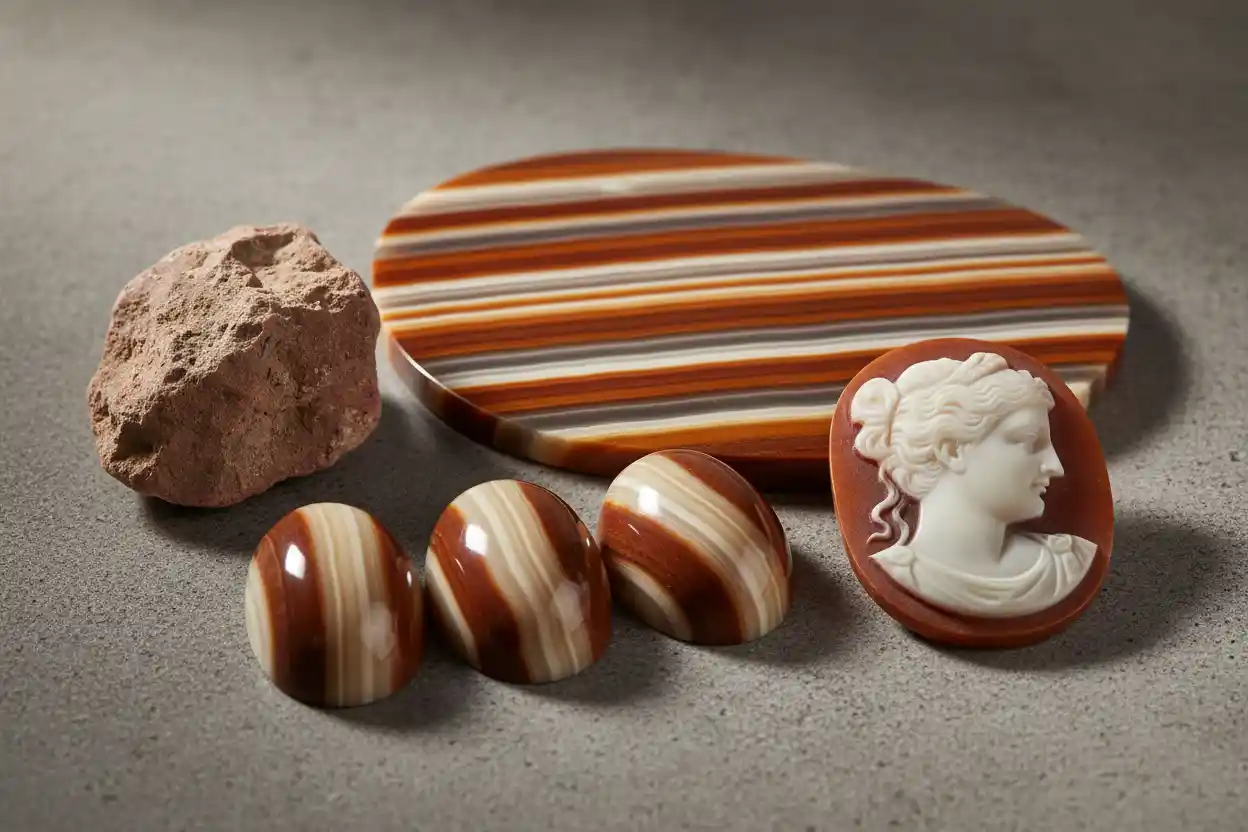
Sardonyx healing properties are traditionally associated with courage, protection, discipline, loyalty, confidence, concentration, resilience, honest communication, responsible leadership, and stable relationships. Unlike many modern trade stones, Sardonyx has a genuine history of carving, seals, signet rings, cameos, intaglios, and symbolic use stretching back through the ancient Mediterranean world. Historical tradition does not prove a medical mechanism, however. Sardonyx healing properties have not been scientifically demonstrated to treat anxiety, depression, pain, inflammation, blood disorders, digestive illness, neurological problems, sleep disorders, or another medical condition. Gemologically, Sardonyx is banded chalcedony composed of alternating layers traditionally described as sard and onyx. Brownish-red, reddish-orange, brown, white, and sometimes black bands create the strong contrast that made Sardonyx exceptionally suitable for relief carving.
10 Sardonyx Healing Properties Traditions
- Courage during difficult circumstances
- Protection as an ancient symbolic theme
- Discipline and consistent action
- Loyalty and dependable relationships
- Confidence grounded in preparation
- Concentration and purposeful attention
- Resilience after setbacks
- Honest and measured communication
- Responsible leadership and integrity
- Stability in long-term relationships
These ten sardonyx healing properties have more historical context than the metaphysical systems attached to many recently marketed crystals. The practical value comes from converting symbolism into behavior. Courage can mean acting after assessing risk, discipline can mean following a routine consistently, and loyalty can mean dependable conduct rather than promises alone. The separate Sardonyx benefits page can address everyday uses, while this article keeps sardonyx healing properties focused on historical beliefs, mineral identity, evidence limits, carving history, and safe care.
What Sardonyx Actually Is
Understanding sardonyx healing properties begins with chalcedony. Sardonyx is not a separate mineral species with one unique chemical formula. It is a banded variety of cryptocrystalline quartz in which layers of sard and onyx occur together.
The dominant chemistry is SiO₂. Instead of forming large visible quartz crystals, chalcedony consists of extremely fine intergrowths of silica phases that create a dense, compact structure.
Sard provides brownish-red, reddish-orange, brown, or dark warm-toned bands, while onyx traditionally refers to parallel-banded chalcedony, often with white, black, gray, or contrasting layers. Sardonyx brings these contrasting zones together.
Sardonyx healing properties are not stronger in specimens with more red, more black, sharper bands, or greater antiquity. Strong color contrast makes the stone more suitable for carving and may influence desirability, but it does not establish greater therapeutic action.
Why Sardonyx Became a Famous Carving Stone
The layered structure behind sardonyx healing properties made the gemstone especially useful for cameos and intaglios. A skilled carver can cut through one color layer to expose another, allowing a pale figure to appear against a darker reddish or black background.
Hardstone cameos use this natural contrast to create images in relief. Intaglios reverse the concept by cutting the design below the surface, often so the engraved stone can function as a seal.
Sardonyx became particularly important because its fine-grained structure can take detailed carving while remaining durable enough for jewelry and seals. Surviving Roman examples show portraits, deities, mythological scenes, imperial symbolism, and other subjects carved into layered stones.
These historical objects give sardonyx healing properties authentic cultural context, but their existence proves artistic and symbolic use rather than therapeutic effectiveness.
Sardonyx in Ancient Greece and Rome
Sardonyx healing properties are often associated with courage and protection, and there is real historical background behind some of those ideas. Sardonyx became a popular stone for Greek and Roman seals, signet rings, cameos, and engraved gems.
Roman signet rings made practical use of the stone because sealing wax did not readily adhere to its polished surface. Sardonyx was also carved with military, divine, and protective imagery.
Historical traditions describe Roman soldiers wearing engraved Sardonyx associated with Mars and protection in battle. Surviving Roman Sardonyx ring stones and cameos confirm widespread ancient use, although an archaeological object cannot prove that a protective belief actually worked.
Cameo carving continued long after antiquity. Renaissance and Neoclassical carvers revived classical styles, making Sardonyx an important link between ancient glyptic art and later European decorative traditions.
The Sardonyx meaning page can examine this cultural history more deeply, while sardonyx healing properties focus on how traditional associations can be interpreted safely today.
Courage, Protection, and Discipline
Courage Through Deliberate Action
Courage is one of the most persistent sardonyx healing properties. The gemstone cannot remove fear or make dangerous situations safe.
A practical approach is to identify the actual risk, reduce avoidable danger, distinguish discomfort from threat, and then take the next reasonable action. The stone can serve as a reminder of courage without being treated as a source of invulnerability.
Protection as Historical Symbolism
Protection has legitimate historical relevance among sardonyx healing properties because engraved gems were used as amulets, seals, and objects carrying religious or military imagery.
There is no scientific evidence that Sardonyx creates an invisible shield. Protection can instead be translated into strong boundaries, secure environments, careful agreements, safer travel decisions, and responsible risk management.
Discipline Through Repeated Behavior
Discipline is another useful interpretation of sardonyx healing properties. Chalcedony cannot create willpower through skin contact.
Pair the stone with one repeated action such as studying, budgeting, writing, exercising, or completing a work review. The symbolism becomes useful only when it consistently precedes actual behavior.
Loyalty, Confidence, and Concentration
Loyalty Shown Through Reliability
Loyalty and fidelity have become central themes within sardonyx healing properties. A gemstone cannot make another person faithful or dependable.
A more grounded relationship interpretation focuses on repeated behavior. Are commitments honored? Are promises followed by action? Are boundaries respected? Is responsibility taken when trust is damaged?
Confidence Through Preparation
Confidence appears frequently among sardonyx healing properties because ancient signets and military imagery encourage associations with authority.
Sardonyx cannot biologically increase self-esteem. Before an important task, review what has been prepared, identify what remains uncertain, and decide what first step remains under personal control.
Concentration Through One Defined Priority
Focus is another modern extension of sardonyx healing properties. Cryptocrystalline quartz has not been shown to improve attention span or memory through ordinary contact.
Use the stone as a cue to choose one task, remove unrelated distractions, define the desired endpoint, and work without unnecessary switching for a planned period.
Resilience, Communication, and Leadership
Resilience After Disruption
Sardonyx healing properties often include strength and endurance. The tightly bonded silica structure provides a visually convincing metaphor, but mineral toughness does not transfer psychological resilience.
After a setback, identify what failed, what remains useful, and what must change before another attempt. Resilience grows through adjustment and repetition.
Honest Communication
Communication is another traditional or modern theme within sardonyx healing properties. The stone cannot make another person agree or understand automatically.
Before a difficult conversation, define the central issue, remove unnecessary accusations, state the request clearly, and decide what boundary applies if the problem continues.
Leadership With Responsibility
Historical seals, imperial cameos, and signet rings make authority a natural theme in sardonyx healing properties.
A gemstone cannot create leadership skill. A useful interpretation emphasizes accountability, consistent standards, willingness to hear relevant evidence, and responsibility for consequences.
Relationship Stability
The tenth of the sardonyx healing properties concerns stable relationships, partnership, and commitment. Historical and modern sources have repeatedly associated Sardonyx with marriage, loyalty, and lasting bonds.
The stone cannot preserve a relationship that lacks trust, compatibility, communication, or mutual respect. A better use of the symbolism is to evaluate the behaviors that actually support stability.
Long-term relationships usually depend on reliability, honest communication, repair after conflict, realistic expectations, boundaries, and shared responsibility. Sardonyx healing properties can provide a reminder of those values without replacing them.
Sardonyx Chakra Associations
Sardonyx healing properties are commonly linked with the root and sacral chakras in contemporary crystal practice because of the stone’s reddish-brown, orange, white, and black bands. Some systems also connect it with the solar plexus because of discipline and confidence themes.
Chakras are spiritual frameworks rather than anatomical structures. Sardonyx healing properties have not been demonstrated to affect the spine, adrenal glands, reproductive organs, digestive system, nervous system, or endocrine glands through chakra placement.
The color layers can still provide a structured visual framework for meditation when treated as symbolism rather than physiology.
Sardonyx Hardness and Durability
Sardonyx healing properties should remain separate from the stone’s physical behavior. Like other chalcedony varieties, Sardonyx generally measures about Mohs 6.5 to 7.
Its microcrystalline structure provides good toughness for rings, beads, cameos, seals, cabochons, and carvings. It does not have the prominent cleavage problems seen in minerals such as fluorite or feldspar.
Quartz, topaz, sapphire, ruby, and diamond can still scratch it, while Sardonyx itself can scratch softer stones. Separate storage helps preserve polished surfaces and delicate carved details.
Ancient and historic cameos demonstrate that properly preserved Sardonyx can survive for centuries, although that durability should not be mistaken for evidence supporting sardonyx healing properties.
Dyed Sardonyx and Color Treatment
Color treatment matters because banded chalcedony responds readily to dyeing. Sardonyx, onyx, agate, and related stones have been artificially colored for a very long time.
Dye can strengthen contrast between bands, darken onyx layers, or intensify red and brown tones. A treated Sardonyx remains chalcedony, but treatment disclosure matters when natural color is important to the buyer.
High heat can alter some dyes. Harsh chemicals and solvents may also affect treated stones.
Sardonyx healing properties cannot determine whether a stone is naturally colored or dyed. Appearance, treatment history, seller disclosure, and gemological testing are more reliable.
Sardonyx Care and Cleaning
Warm soapy water and a soft-bristle brush are the safest routine cleaning method for Sardonyx. This approach works for both natural and many treated examples without introducing unnecessary heat or aggressive chemicals.
Ultrasonic and steam cleaners should be used cautiously because treatment history may be unknown. A sound untreated chalcedony can be physically durable, but dyed or repaired stones may respond differently.
Avoid prolonged exposure to strong heat because color in dyed Sardonyx can change. Strong acids, bleach, and harsh cleaning solutions are unnecessary.
Thin cameos deserve extra care because raised carved details can chip even when the underlying chalcedony is reasonably tough.
Sardonyx healing properties do not require exposing a historic or carved specimen to risky cleansing methods.
Safe Ritual Cleansing
Sardonyx healing properties can be incorporated into personal rituals without prolonged saltwater, flame, chemicals, or extreme heat. There is no scientifically demonstrated unwanted energy that must be extracted from chalcedony.
Sound, prayer, intentional breathing, dry placement, quiet reflection, or gentle washing are lower-risk options. A discipline-focused practice can involve identifying one commitment that needs consistent follow-through and completing its next step immediately afterward.
Avoid abrasive salt on polished carvings, aggressive chemicals on dyed stones, and high heat that could alter treated color.
Conclusion
Sardonyx healing properties have genuine historical context because Sardonyx was widely used for ancient seals, signet rings, cameos, intaglios, and symbolic carvings. The stone itself is banded chalcedony, a cryptocrystalline form of silica whose reddish sard layers contrast with onyx bands. Courage, protection, loyalty, discipline, confidence, leadership, and relationship stability can remain meaningful traditional themes when historical belief is distinguished clearly from medical evidence.
FAQs
What are sardonyx healing properties?
Sardonyx healing properties commonly refer to traditional beliefs involving courage, protection, discipline, loyalty, confidence, concentration, resilience, communication, leadership, and relationship stability.
What is Sardonyx made of?
Sardonyx is banded chalcedony, composed mainly of cryptocrystalline silica, SiO₂, with alternating sard and onyx layers.
What colors occur in Sardonyx?
Typical Sardonyx combines brownish-red, reddish-orange, brown, white, black, or other contrasting parallel bands.
How hard is Sardonyx?
Sardonyx generally measures about Mohs 6.5 to 7 and has good practical toughness.
Are sardonyx healing properties genuinely ancient?
Some protective, courage, loyalty, and amuletic associations have real historical context because Sardonyx was used in ancient seals, rings, and carved gems. The full modern system of sardonyx healing properties contains later interpretations as well.
Why was Sardonyx used for cameos?
Its contrasting color layers allow carvers to expose different bands and create figures that stand out from the background.
Which chakras are associated with Sardonyx?
Modern practice often links Sardonyx with the root, sacral, and sometimes solar plexus chakras. These are spiritual rather than anatomical associations.
Can Sardonyx go in water?
Yes. Warm soapy water is the safest routine cleaning method for most Sardonyx. Treatment history should still be considered.
Can Sardonyx be dyed?
Yes. Chalcedony is commonly dyed, and Sardonyx color can be enhanced to create stronger contrast between layers.
Are sardonyx healing properties medically proven?
No. Sardonyx healing properties belong to historical, spiritual, and personal belief systems rather than scientifically established therapeutic effects.
Sardonyx healing properties are traditional or personal beliefs rooted partly in historical symbolism and should not replace qualified medical or mental health care.