10 Topaz Healing Properties: Traditional Beliefs, Gem Science & Safe Use
Topaz healing properties are commonly associated with clear thinking, confidence, emotional steadiness, motivation, hopeful reflection, and intentional communication. Modern crystal practitioners may hold topaz during meditation, wear it as a reminder of a personal goal, or keep it near a desk or journal to reinforce deliberate habits. These practices can carry genuine personal meaning, but topaz is not scientifically proven to treat anxiety disorders, depression, insomnia, attention disorders, chronic pain, hormonal conditions, circulatory problems, digestive disease, or any other medical or psychological condition.
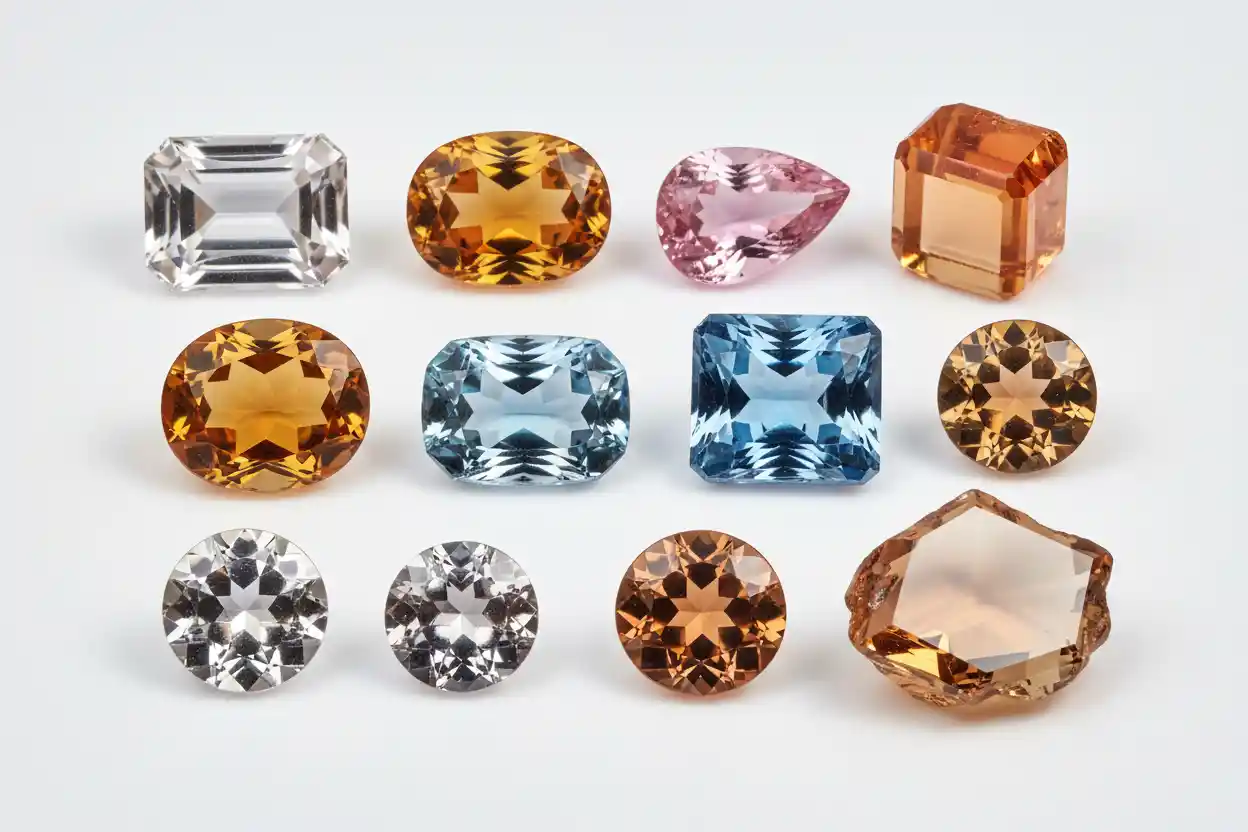
Topaz itself is a well-defined mineral rather than a mystical substance with demonstrated therapeutic activity. It is an aluminum fluorosilicate with the formula Al₂SiO₄(F,OH)₂, belongs to the orthorhombic crystal system, and ranks 8 on the Mohs hardness scale. Natural crystals can be colorless, yellow, golden, brown, orange, pink, red, pale green, or blue. Much of the vivid blue topaz encountered in jewelry has received irradiation followed by heat treatment, so color does not establish whether topaz healing properties are stronger, weaker, or more authentic.
A useful way to approach topaz healing properties is to separate symbolic practice from medical fact. The gemstone can serve as a visual or tactile cue to pause, reflect, prepare, journal, or act on a chosen intention. Any benefit from those activities should be attributed to the person’s behavior and experience rather than to an unproven healing force inside the crystal.
10 Topaz Healing Properties Commonly Described in Wellness Practice
- Clearer reflection before making important decisions.
- Confidence when speaking, presenting, or setting boundaries.
- Emotional steadiness during periods of uncertainty.
- Motivation to begin or complete realistic goals.
- Hopeful thinking without ignoring practical problems.
- Greater awareness of personal habits and priorities.
- Deliberate communication during difficult conversations.
- Creative focus during writing, planning, or artistic work.
- Mindful relaxation during meditation or quiet reflection.
- Spiritual reflection connected with gratitude, purpose, or personal growth.
What Topaz Really Is: Chemistry, Crystal Structure, Color, and Formation
Topaz has a chemistry represented by Al₂SiO₄(F,OH)₂, with fluorine and hydroxyl occupying related structural positions in varying proportions. Its orthorhombic crystals can form as elongated prisms with well-developed faces and a glassy luster. With Mohs hardness 8, topaz resists scratching better than quartz, yet hardness should not be confused with toughness. Topaz has perfect basal cleavage, which means a sufficiently strong impact or poorly directed pressure can split a crystal even though its surface is relatively hard.
The mineral commonly develops in fluorine-rich geological settings, including granitic pegmatites, cavities in rhyolitic volcanic rocks, and high-temperature quartz veins. Important gem-producing regions have included Brazil, Pakistan, Russia, Sri Lanka, Nigeria, Madagascar, Mexico, and other localities where suitable igneous or hydrothermal conditions occurred. Brazil is particularly famous for richly colored imperial-type topaz, while Pakistan has produced notable pink and other attractive crystals.
Color arises from combinations of structural defects, trace constituents, and natural or artificial irradiation. Colorless topaz can acquire blue coloration through controlled irradiation followed by heating, while heating some yellowish-pink topaz can intensify the pink appearance by reducing yellow components. Thin surface coatings can also create unusual iridescent colors. None of these color mechanisms provides scientific evidence for topaz healing properties, but understanding them helps separate mineral science from spiritual interpretation.
Topaz Healing Properties for Focus, Confidence, and Intentional Action
Mental clarity as a structured reflection practice
Among the most familiar topaz healing properties is mental clarity. Crystal traditions sometimes describe topaz as clearing confusion or sharpening the mind, but there is no evidence that the mineral changes neurotransmitters, increases cognitive capacity, or medically treats attention problems. A practical interpretation is to use the gemstone as the starting signal for a focused routine.
Someone facing a complicated decision could place the topaz beside a notebook and divide the issue into known facts, unknowns, assumptions, and actions that can be taken immediately. This converts an abstract belief into a behavior that remains under the reader’s control. Topaz does not make the decision, but the ritual can remind someone to slow down long enough to think more systematically.
Confidence through preparation rather than crystal power
Confidence also appears frequently among topaz healing properties. Golden and blue varieties are often associated with personal expression, courage, or assured communication. Rather than expecting the gemstone to create confidence automatically, a person can connect it with preparation. Before a meeting or difficult conversation, holding the stone might prompt a review of key points, boundaries, questions, and the outcome the person hopes to achieve.
This distinction keeps the practice realistic. Confidence often grows from experience, preparation, knowledge, and repeated action. A gemstone cannot guarantee persuasive speech or remove social anxiety. The practical and decorative reasons people choose to wear or carry the stone fit more naturally within topaz benefits, while topaz healing properties concern wellness beliefs and the limits of their evidence.
Emotional steadiness without suppressing difficult feelings
Another group of topaz healing properties centers on calmness, emotional balance, and hope. A useful practice is not to treat unpleasant emotions as something the stone must erase. Instead, topaz can become a reminder to identify what is being felt, determine whether an immediate response is necessary, and choose an action that fits the situation.
For example, a person might pause before replying to an upsetting message, describe the emotion in a journal, and revisit the response after the initial intensity has passed. That routine may help create emotional distance, but the stone itself is not treating anxiety, depression, trauma, or mood disorders. Persistent psychological symptoms require appropriate professional support.
Motivation, creativity, and completing realistic goals
Motivation and creativity also appear in discussions of topaz healing properties, particularly around yellow, golden, and blue stones. These associations become more useful when tied to specific behavior. A writer might place a topaz beside a workspace and use it as a cue for twenty uninterrupted minutes of drafting. Someone pursuing a personal project could associate the stone with reviewing one achievable next step rather than waiting for motivation to appear.
The gemstone therefore functions as a reminder rather than a source of measurable energy. Success depends on effort, resources, circumstances, skills, and repeated decisions. This approach preserves the symbolic appeal of topaz without promising productivity, creativity, wealth, or favorable outcomes.
Topaz Healing Properties in Chakra and Spiritual Practice
Modern chakra systems associate different topaz colors with different symbolic themes. Blue topaz is commonly linked with the throat chakra and communication, golden or yellow topaz with the solar plexus and personal agency, pink topaz with heart-centered reflection, and clear topaz with crown-oriented spiritual practice. These correspondences vary among contemporary teachers and should not be treated as fixed properties of the mineral.
Chakras are spiritual frameworks rather than anatomical organs or medically measurable structures. Topaz healing properties therefore do not demonstrate that the stone opens a throat chakra, regulates the thyroid, activates the nervous system, improves circulation, or changes an organ’s function. Someone who values chakra meditation can still use color associations as prompts for reflection without confusing symbolism with physiology.
A throat-focused practice, for example, might involve identifying one conversation that requires greater honesty or listening. Solar plexus symbolism can be translated into setting one realistic boundary or completing one postponed task. Used this way, topaz remains part of a deliberate reflective practice, while the person retains responsibility for every decision.
Topaz History and Why Old Gem Lore Requires Careful Interpretation
Topaz has a long cultural history, but historical references require caution. The name has been associated with Topazios, an old name connected with an island in the Red Sea, yet stones called topaz in antiquity were not always the mineral now identified as topaz. Some historical references probably concerned gems that would receive different mineralogical names today.
That uncertainty matters when discussing topaz healing properties. Statements that a specific topaz color had one continuous therapeutic role for thousands of years can overstate the evidence. Gem names, identification methods, trade practices, and cultural beliefs changed considerably over time. Historical topaz lore did include ideas involving protection, strength, favorable fortune, and relief from various ailments, but those ideas belong to historical belief systems rather than experimental medicine.
Modern topaz meaning draws from this mixture of historical symbolism and contemporary interpretation. Healing-focused discussion should remain distinct by concentrating on wellness beliefs, reflective behavior, and evidence limits rather than repeating all symbolic meanings.
Topaz Treatments, Imitations, and Color Considerations
Blue topaz deserves particular attention because strong blue colors are commonly produced from initially pale or colorless stones through irradiation and controlled heating. Properly released irradiated topaz sold through regulated commercial channels is intended to meet applicable radiation-safety limits. The treatment changes color, not the underlying mineral identity.
Pink coloration may sometimes result from heating suitable topaz, while surface coatings can create intensely colored or iridescent appearances. Coatings are less durable than the topaz beneath them and can scratch or abrade. Glass and other transparent gems can also imitate topaz, and visual appearance alone is not always enough to distinguish them.
Treatment disclosure and physical quality belong to gem identification rather than healing belief. Factors such as color origin, clarity, cut, cleavage risk, and treatment are more directly addressed through topaz quality grading. No known treatment has been shown to create, remove, increase, or reduce topaz healing properties in a scientifically measurable way.
Topaz Care: Hardness, Cleavage, Heat, Water, and Safe Cleaning
Topaz ranks 8 on the Mohs scale, but its perfect basal cleavage gives it relatively poor toughness compared with what its hardness might suggest. A sharp blow, pressure in an unfavorable direction, or abrupt temperature change can split or fracture the gem. Rings and bracelets therefore need more protection from impact than the hardness number alone might imply. Keep topaz away from diamonds, sapphires, rubies, and other harder stones during storage, and avoid allowing separate topaz pieces to strike one another.
Warm water, mild soap, and a soft cloth or brush are the safest routine cleaning choices. Brief contact with clean water is generally suitable for intact topaz, but long soaking provides no useful advantage. Steam and ultrasonic cleaners should be avoided because cleavage, fractures, treatments, and sudden temperature changes can increase the risk of damage. High heat should also be avoided. Most colors are reasonably stable under ordinary use, although prolonged intense heat or light may affect some yellow, brown, or reddish-brown stones.
Coated topaz requires additional care because abrasion or harsh cleaning can damage the thin surface layer. Strong household chemicals and acids are unnecessary for any topaz. Lapidary cutting, drilling, or grinding can create fine mineral dust, so professional work should use wet methods, effective ventilation, eye protection, and suitable respiratory protection. Powder or grinding residue should never be intentionally inhaled or ingested. Topaz healing properties provide no reason to prepare gemstone powders, drinking mixtures, or so-called crystal elixirs.
Safer Symbolic Cleansing for Topaz
People who include topaz healing properties in spiritual routines can cleanse the stone symbolically without exposing it to damaging methods. Safe options include wiping it gently with a clean cloth, placing it in a quiet meditation space, using sound from a bell or singing bowl, or holding it while restating a personal intention. Indirect natural light can also serve as a symbolic ritual without prolonged exposure to intense sun.
Avoid boiling water, fire, salt burial, chemical baths, harsh abrasives, and deliberate temperature shocks. Physical cleaning removes dirt, while ritual cleansing expresses personal meaning. They are different practices and do not require the same methods.
Conclusion
Topaz healing properties are best understood as traditional and contemporary wellness beliefs connected with clarity, confidence, emotional steadiness, motivation, communication, creativity, and spiritual reflection. Topaz itself is an orthorhombic aluminum fluorosilicate with notable hardness, perfect cleavage, diverse natural colors, and a long gemological history. Used as a cue for reflection or deliberate action, it can have personal significance without being mistaken for a medical treatment or a proven source of healing energy.
FAQs
What are the main topaz healing properties?
Topaz healing properties commonly include clarity, confidence, emotional steadiness, motivation, communication, creativity, mindful relaxation, hope, self-awareness, and spiritual reflection. These remain belief-based associations rather than established medical effects.
Is topaz scientifically proven to heal the body?
No. There is no reliable scientific evidence that topaz treats diseases, repairs organs, alters hormones, regulates circulation, or produces medically measurable healing effects.
What is topaz made of?
Topaz is an aluminum fluorosilicate mineral with the formula Al₂SiO₄(F,OH)₂. It crystallizes in the orthorhombic system and has a Mohs hardness of 8.
Which chakra is topaz associated with?
The association depends largely on color. Modern practices commonly connect blue topaz with the throat chakra, yellow or golden topaz with the solar plexus, pink topaz with the heart, and clear topaz with the crown. Chakras are spiritual frameworks, not anatomical structures.
Can topaz healing properties help with anxiety?
Topaz is not proven to treat anxiety disorders. Someone may use the stone as a reminder to journal, pause, breathe, prepare, or seek support, but it should not replace evidence-based mental health care.
Is blue topaz naturally blue?
Pale natural blue topaz exists, but much of the strong blue topaz in jewelry begins as colorless or lightly colored stone and receives irradiation followed by controlled heating.
Can topaz go in water?
Brief cleaning with lukewarm water and mild soap is generally suitable for intact topaz. Long soaking is unnecessary, and sudden temperature changes should be avoided because topaz has perfect cleavage.
Can I clean topaz ultrasonically?
Ultrasonic and steam cleaning are best avoided. Warm soapy water is safer because fractures, cleavage, coatings, or other treatments can increase vulnerability.
Does the color change topaz healing properties?
Crystal traditions assign different symbolic themes to different colors, but there is no scientific evidence that blue, yellow, pink, or clear topaz produces different therapeutic effects.
Is topaz safe to handle?
Finished topaz is generally safe to handle and wear. Cutting and grinding require proper dust control, and gemstone powder should never be intentionally inhaled or swallowed.
Topaz healing properties reflect spiritual, historical, and personal wellness beliefs rather than medical treatment and should not replace qualified medical or mental health care.