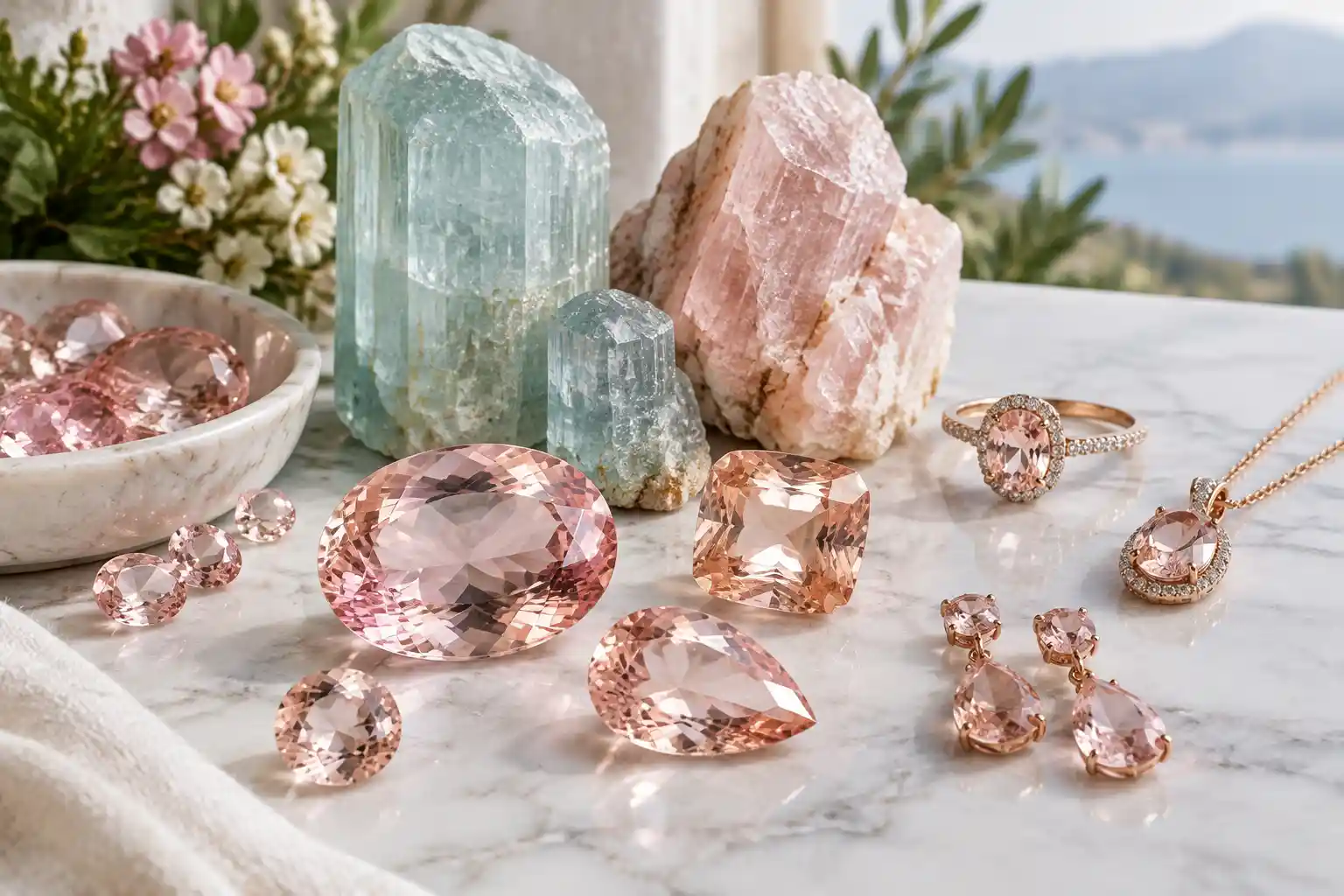
11 Real Morganite Benefits: Helpful Uses, Verified Facts, Important Cautions
Morganite benefits begin with a combination of attractive pastel color, strong jewelry durability, excellent transparency, and membership in one of the most important gemstone mineral families. Morganite is the pink to peach variety of beryl, the same mineral species that includes emerald and aquamarine. Its basic composition is beryllium aluminum silicate, while trace manganese is primarily responsible for the pink, rose, peach, and salmon colors that distinguish it from other beryl varieties.
The stone usually appears in light, delicate tones rather than strongly saturated color. Fine specimens may range from soft peach and blush pink through rose and purplish pink, while large crystals can show richer color because a longer light path makes pale hues more visible. Morganite also commonly has good clarity, allowing cutters to produce bright transparent gems in substantial sizes.
These qualities create Morganite benefits that are practical rather than purely symbolic. A Mohs hardness of about 7.5 to 8 supports jewelry wear, large clean crystals give cutters flexibility, pastel colors pair well with several metals, and heat treatment can be used to shift orange or yellow components toward a purer pink appearance. Modern symbolism involving affection, commitment, gentleness, patience, and new beginnings can add personal meaning, but those interpretations should remain separate from medical or emotional-healing claims.
11 Morganite Benefits at a Glance
- Pink, rose, peach, and purplish-pink colors create a distinctive soft jewelry appearance.
- Mohs hardness of about 7.5 to 8 provides good scratch resistance for many jewelry uses.
- Large transparent crystals allow substantial faceted stones to be cut more readily than with many rarer gems.
- Good clarity commonly produces bright, clean-looking finished gemstones.
- Beryl mineralogy connects Morganite scientifically with emerald and aquamarine.
- Pleochroism can contribute subtle color differences when the stone is viewed from different directions.
- Heat treatment can improve or modify color while remaining an important disclosure factor.
- Engagement-ring use combines attractive color, useful durability, and strong design flexibility.
- Pastel tones work well with rose gold, yellow gold, white gold, and platinum.
- Modern symbolism can connect Morganite with affection, commitment, patience, and meaningful relationships.
- Straightforward care and good durability make well-cut stones practical for regular jewelry when protected from hard impacts.
Pastel Pink and Peach Color Is the Most Visible Morganite Benefit
Color is one of the strongest Morganite benefits because the gemstone occupies a distinctive place among pastel-colored gems. Its palette includes blush pink, rose, peach, salmon, orangy pink, and purplish pink, often with a soft transparency that gives finished stones a light, elegant appearance.
Manganese is responsible for Morganite’s characteristic coloration. The precise shade depends on trace chemistry, concentration, crystal orientation, treatment history, and the thickness of the finished stone. Pale gems may appear nearly colorless in very small sizes, while larger stones often show the hue more clearly.
Modern market preference frequently favors pink and purplish-pink stones, although peach and salmon examples can be highly attractive, particularly to buyers who prefer warmer tones. Personal taste matters because a strongly pink stone is not automatically more beautiful to every wearer.
Morganite also shows pleochroism, meaning color can vary somewhat with viewing direction. Skilled cutters consider orientation when shaping the rough so that the most attractive hue appears face-up in the finished gem.
Beryl Mineralogy Gives Morganite Scientific Value
Another important Morganite benefit is its place within the beryl mineral family. Beryl has the formula Be₃Al₂Si₆O₁₈ and crystallizes in the hexagonal system. Changes in trace-element chemistry produce several familiar gemstone varieties.
Emerald receives its green color primarily from chromium and/or vanadium, while aquamarine is typically blue to blue-green because of iron. Morganite is colored mainly by manganese, demonstrating how small changes in trace chemistry can produce dramatically different gemstones within the same basic mineral structure.
This relationship makes Morganite useful for teaching mineralogy and gemology. A collection containing emerald, aquamarine, heliodor, goshenite, and Morganite can demonstrate how one mineral species can develop several commercial varieties according to color and chemistry.
The relationship also explains why terms such as “pink emerald” are misleading. Morganite is not a pink emerald. Both are beryl varieties, but each has its own established gemstone name and color origin.
Morganite Hardness Supports Regular Jewelry Wear
Durability is one of the most practical Morganite benefits. With a Mohs hardness of approximately 7.5 to 8, Morganite resists scratching substantially better than stones such as calcite, fluorite, opal, or feldspar.
That hardness makes it suitable for rings, earrings, pendants, necklaces, and bracelets when jewelry is designed and worn sensibly. Engagement rings are particularly popular because the stone combines pastel color with sufficient hardness for frequent use.
Hardness should not be confused with complete resistance to breakage. Beryl can still chip or fracture when struck sharply, particularly along thin edges or exposed corners. Emerald cuts, pears, marquises, and other shapes with vulnerable points deserve suitable protective settings.
Anyone planning to buy Morganite should therefore consider both gemstone quality and jewelry construction. A beautiful center stone in a poorly protected setting may be less practical than a slightly smaller gem secured by well-designed prongs or a protective bezel.
Good Clarity Makes Morganite Attractive in Large Faceted Stones
Morganite often occurs in relatively clean crystals, and faceted gems frequently show few inclusions visible without magnification. This clarity is another major Morganite benefit because transparent stones can display brightness and pastel color without heavy internal obstruction.
Large crystals also occur in nature, making substantial faceted gems more available than in some gemstone varieties where larger clean pieces are exceptionally rare. A larger Morganite can show stronger apparent color because the light travels through more of the gem.
Cutters can therefore produce large ovals, cushions, pears, emerald cuts, rounds, and custom designs while retaining transparency. The ability to work with substantial rough also makes artistic or designer cuts practical.
Clarity should still be considered together with color and cutting. A very clean gemstone with weak color and poor proportions may be less visually attractive than a slightly included stone with strong hue and excellent brilliance.
Heat Treatment Can Improve Color but Requires Understanding
Heat treatment is common in Morganite and represents an important point within Morganite benefits and buying decisions. Heating can reduce yellow or orange components in some stones, leaving a purer pink color.
The resulting color is generally stable under normal wear. Heat treatment is accepted in the gem trade, but buyers should still understand what they are purchasing because untreated peach or salmon stones may appeal to collectors who specifically value natural color.
Treatment does not turn Morganite into a synthetic gemstone. A natural Morganite that has been heated is still natural beryl whose color has been modified through treatment.
Disclosure is particularly important when price premiums are attached to claims such as untreated, natural-color, or rare peach Morganite. Buyers should request reliable information rather than assuming appearance alone proves treatment status.
Engagement Rings Are a Strong Practical Morganite Use
Morganite has become especially popular in engagement rings because its soft pink color naturally fits romantic jewelry while its hardness supports frequent wear. Rose gold is a common pairing because the metal can reinforce peach and pink tones, but white gold and platinum provide stronger contrast, while yellow gold can create a warmer traditional appearance.
Large center stones are relatively accessible compared with many highly saturated rare gems. This allows designers to create prominent solitaires, halos, three-stone rings, vintage-inspired settings, or side-stone combinations.
A Morganite engagement ring should still be chosen with lifestyle in mind. Someone who works extensively with tools, machinery, sports equipment, or hard surfaces may benefit from a lower-profile protective setting.
The gemstone’s pale color can also show dirt or oils more noticeably than strongly saturated stones. Routine gentle cleaning helps preserve brilliance and prevents the gem from appearing cloudy.
Morganite Price Can Offer Flexibility in Size and Design
Morganite is not inexpensive in every grade, but it often gives buyers access to relatively large transparent gemstones without the prices associated with similarly sized fine ruby, sapphire, emerald, or diamond.
This creates flexibility. A buyer may choose a larger center stone, allocate more of the budget to a handcrafted setting, or prioritize color and cutting rather than rarity alone.
Several factors influence Morganite price, including hue, saturation, tone, clarity, cutting, carat weight, treatment claims, origin information, and overall visual appeal. Strong pinks and purplish pinks can command premiums, while pale stones are generally more abundant.
Price should not be confused with investment performance. Morganite jewelry can hold substantial sentimental and aesthetic value without providing guaranteed resale appreciation.
Morganite Works With Many Jewelry Metals and Styles
Design versatility is another practical Morganite benefit. Pastel pink and peach hues interact differently with surrounding metal, giving designers several ways to influence the final appearance.
Rose gold can visually deepen peach and pink tones, creating a warm unified look. White metals may make the gemstone appear cooler or slightly more pink by contrast. Yellow gold can emphasize peach and salmon hues and create a classic warm palette.
The stone also works in minimalist and elaborate settings. A clean oval solitaire emphasizes color and size, while a diamond halo can increase contrast and visual brightness. Vintage-style designs can use milgrain, engraving, or side stones to create a more decorative appearance.
This flexibility allows Morganite jewelry to feel individual even when the gemstone itself comes from a familiar commercial category.
Symbolism Often Focuses on Affection, Patience, and Commitment
Modern Morganite benefits frequently include symbolic ideas involving affection, gentleness, patience, compassion, commitment, reconciliation, and loving communication. Pink coloration naturally contributes to these associations because pink gemstones are widely linked with relationships and emotional warmth in contemporary jewelry culture.
A couple may choose Morganite because the color fits the tone they want for an engagement ring. A parent might give a pendant to mark an important family relationship. Someone celebrating a personal milestone may use the gemstone as a reminder to approach new relationships with greater patience.
These meanings are personal rather than chemical effects. Manganese within Morganite does not scientifically create affection or emotional balance.
Modern beliefs discussed under Morganite healing properties should therefore remain separate from clinical treatment. The gemstone can symbolize relationships without being described as therapy for anxiety, depression, trauma, or heart disease.
Morganite Is Useful for Personal Milestones and Keepsakes
Jewelry often acquires significance through experience, and Morganite is particularly well suited to milestone pieces because its soft color can be both distinctive and understated.
An engagement ring may represent partnership. Earrings purchased after graduation may become associated with independence. A pendant received from a family member may eventually carry more meaning because of the person who gave it than because of the gemstone’s market value.
This is one of the most lasting Morganite benefits because sentimental value develops through ownership rather than through claims about gemstone energy.
The stone’s durability helps preserve these associations. When cared for properly, Morganite jewelry can remain wearable for many years and may eventually become an heirloom.
Morganite Care Is Straightforward but Hard Impacts Should Be Avoided
Morganite is relatively durable, and warm water with mild soap is a sensible cleaning method for ordinary untreated or heat-treated jewelry. A soft brush can help remove oil and dirt from the pavilion and setting where residue often reduces brilliance.
Steam and ultrasonic cleaning may be suitable for many stones, but caution is appropriate when a gem contains fractures, liquid inclusions, fracture filling, delicate mountings, or uncertain treatments. Warm soapy water remains the conservative option.
Storage should prevent the gemstone from rubbing against harder stones such as sapphire or diamond. Separate pouches or lined compartments help preserve polished facet edges.
Morganite rings should be removed before heavy manual work, exercise, gardening, or household tasks involving strong chemicals and hard surfaces. Good care is not complicated, but it does significantly reduce unnecessary damage.
What Morganite Benefits Do Not Include
Morganite benefits do not include proven treatment for emotional disorders, cardiovascular disease, hormonal problems, fertility concerns, anxiety, depression, trauma, or other health conditions.
Its pink color and modern relationship symbolism can make the gemstone personally comforting, but comfort is not the same as medical treatment. There is also no evidence that wearing beryl transfers therapeutic manganese into the body.
Morganite is already valuable as a jewelry gemstone, mineral specimen, collector object, engagement-ring option, and personal symbol. These qualities provide more than enough reason to appreciate it without unsupported health claims.
Conclusion
Morganite benefits include attractive pastel pink and peach color, strong beryl mineralogy, Mohs hardness of about 7.5 to 8, good clarity, availability in substantial sizes, design versatility, and suitability for engagement and milestone jewelry.
Heat treatment, cutting, color, and setting quality all deserve attention when choosing a stone. Modern symbolism involving affection, patience, commitment, and meaningful relationships can add emotional value when clearly separated from medical claims. Morganite is strongest as a beautiful and durable pink beryl with genuine gemological identity.
FAQs
What are the main Morganite benefits?
The strongest Morganite benefits include attractive pink and peach coloration, good durability, excellent transparency, availability in relatively large clean stones, design versatility, and suitability for engagement rings and other frequently worn jewelry. Modern symbolism also links Morganite with affection, commitment, patience, and relationships, but these are personal interpretations rather than medical effects.
What type of gemstone is Morganite?
Morganite is the pink to peach variety of beryl, the same mineral species that includes emerald and aquamarine. It has the basic chemical formula Be₃Al₂Si₆O₁₈, with trace manganese producing its characteristic pink, rose, peach, or salmon colors. It should be called Morganite or pink beryl rather than pink emerald.
Is Morganite durable enough for daily wear?
Morganite has a Mohs hardness of about 7.5 to 8, giving it good resistance to ordinary scratching. It is durable enough for many daily-wear jewelry designs, including engagement rings, but hard impacts can still chip or fracture a stone. Protective settings and sensible removal during strenuous activities improve long-term wear.
Is Morganite usually treated?
Heat treatment is common and may reduce orange or yellow tones to create a purer pink appearance. The treatment is generally stable. Buyers interested specifically in untreated peach or salmon Morganite should request reliable disclosure because appearance alone may not reveal treatment history.
Why is Morganite often cut in large sizes?
Morganite crystals can occur in substantial sizes and frequently offer good clarity. Larger finished stones also show pale color more effectively because light travels through a greater thickness of gemstone. This makes sizable ovals, cushions, pears, and custom cuts relatively common compared with some rarer colored gems.
Is Morganite good for an engagement ring?
Yes. Its attractive pastel color, good hardness, and availability in large transparent stones make Morganite popular for engagement jewelry. A secure setting is important because beryl can still chip under sharp impact. Buyers should also consider how frequently the ring will be exposed to hard physical work.
Does Morganite fade in sunlight?
Properly treated Morganite has generally stable color under normal light exposure. Ordinary jewelry wear does not normally cause the color to disappear. Excessive heat should still be avoided, and unusual treatment claims should be considered separately if a particular stone has been enhanced in ways other than routine heat treatment.
What gives Morganite its pink color?
Trace manganese within beryl is principally responsible for Morganite’s pink, rose, peach, and salmon hues. The exact appearance depends on chemistry, concentration, treatment, cutting orientation, and stone size. Manganese is part of the color origin, not a therapeutic substance delivered through jewelry wear.
Does Morganite have healing powers?
There is no established scientific evidence that Morganite diagnoses, treats, cures, or prevents physical or mental-health conditions. Claims involving emotional healing, heart wellness, anxiety, depression, hormones, or other medical effects belong to modern spiritual traditions rather than proven medicine.
Morganite benefits involving emotional healing, love energy, heart-centered wellness, or spiritual effects reflect modern personal and metaphysical interpretations and should not replace qualified physical or mental-health care.