9 Hidden Pearl Benefits: Gentle Traditions, Hidden Facts, Responsible Use
Pearl benefits begin with a biological origin unlike the crystalline growth of diamond, sapphire, quartz, or beryl. Pearls are produced by mollusks through biomineralization, using calcium carbonate together with an organic matrix and small amounts of water. Many familiar jewelry pearls have nacreous structures built predominantly from microscopic aragonite platelets, while some unusual pearl types have different calcium-carbonate structures and surface appearances.
Natural pearls form without deliberate human intervention, while cultured pearls develop after people intentionally initiate the pearl-forming process within a suitable mollusk. Both are genuine pearls. Cultured pearls are not the same as imitation pearls made from glass, plastic, shell beads, or coated products designed to resemble the real gem.
Real Pearl benefits include natural luster, enormous color and shape variety, lightweight jewelry, biological and scientific interest, long cultural history, design versatility, and the ability to become deeply personal heirlooms. Their main limitation is softness. Pearls rank only about 2.5 to 3 on the Mohs scale, making careful wear and storage essential. Traditional symbolism involving purity, wisdom, love, maturity, prosperity, or calmness can add meaning, but pearls should not be presented as treatments for fertility, skin disease, digestion, anxiety, or other medical conditions.
9 Pearl Benefits at a Glance
- Natural nacre can produce soft, complex luster and iridescent overtone unmatched by ordinary opaque beads.
- White, cream, pink, lavender, golden, gray, green, blue, and dark pearls create remarkable jewelry variety.
- Round, near-round, oval, drop, button, circled, and baroque shapes support both classic and contemporary design.
- Biomineralization makes pearls scientifically important examples of gemstones produced by living organisms.
- Natural and cultured pearls have centuries of cultural, ceremonial, fashion, and heirloom significance.
- Relatively low density allows substantial pearl jewelry to remain comfortable compared with many stone gems of similar visual size.
- Quality can be evaluated through size, shape, color, luster, surface, nacre, and matching rather than carat weight alone.
- Modern symbolism can connect pearls with maturity, patience, family, wisdom, commitment, and important milestones.
- Gentle cleaning and careful storage can preserve Pearl benefits despite the gem’s softness and chemical sensitivity.
Pearl Luster Is One of the Most Distinctive Natural Benefits
Luster is central to Pearl benefits because fine pearls interact with light in a way that differs from faceted gemstones. Instead of relying on polished facets to reflect light sharply, nacreous pearls obtain much of their visual character from light interacting with the curved surface and microscopic internal layers.
A high-luster pearl can show bright, crisp reflections even though the gem is not faceted. Lower-luster pearls appear softer, duller, or more chalky.
Fine nacre can also create orient, a subtle iridescent effect in which pink, green, blue, or other colors seem to float over the surface. Not every pearl shows strong orient, and its appearance depends on structure, nacre quality, color, and lighting.
This optical complexity means two apparently white pearls can look dramatically different when placed side by side. One may appear flat and creamy, while another shows bright reflections, pink overtone, and considerable visual depth.
For many buyers, luster matters more than perfect roundness because it determines whether the pearl appears alive and luminous.
Natural and Cultured Pearls Are Both Genuine Organic Gems
Understanding formation is one of the most useful Pearl benefits for buyers because the terms natural, cultured, and imitation are frequently confused.
A natural pearl forms inside a mollusk without deliberate human initiation. A cultured pearl develops after human intervention introduces suitable tissue, a bead nucleus, or another stimulus that allows the mollusk to form the pearl.
The mollusk itself carries out the biomineralization process. This is why cultured pearls remain real pearls rather than synthetic copies.
Imitation pearls are different. They may consist of coated glass, plastic, shell, ceramic, or other products manufactured to look like pearls but without genuine pearl structure.
Anyone preparing to buy Pearl should understand these categories because the distinction has major effects on rarity, identification, value, durability, and pricing.
Pearl Colors Provide Far More Variety Than Classic White
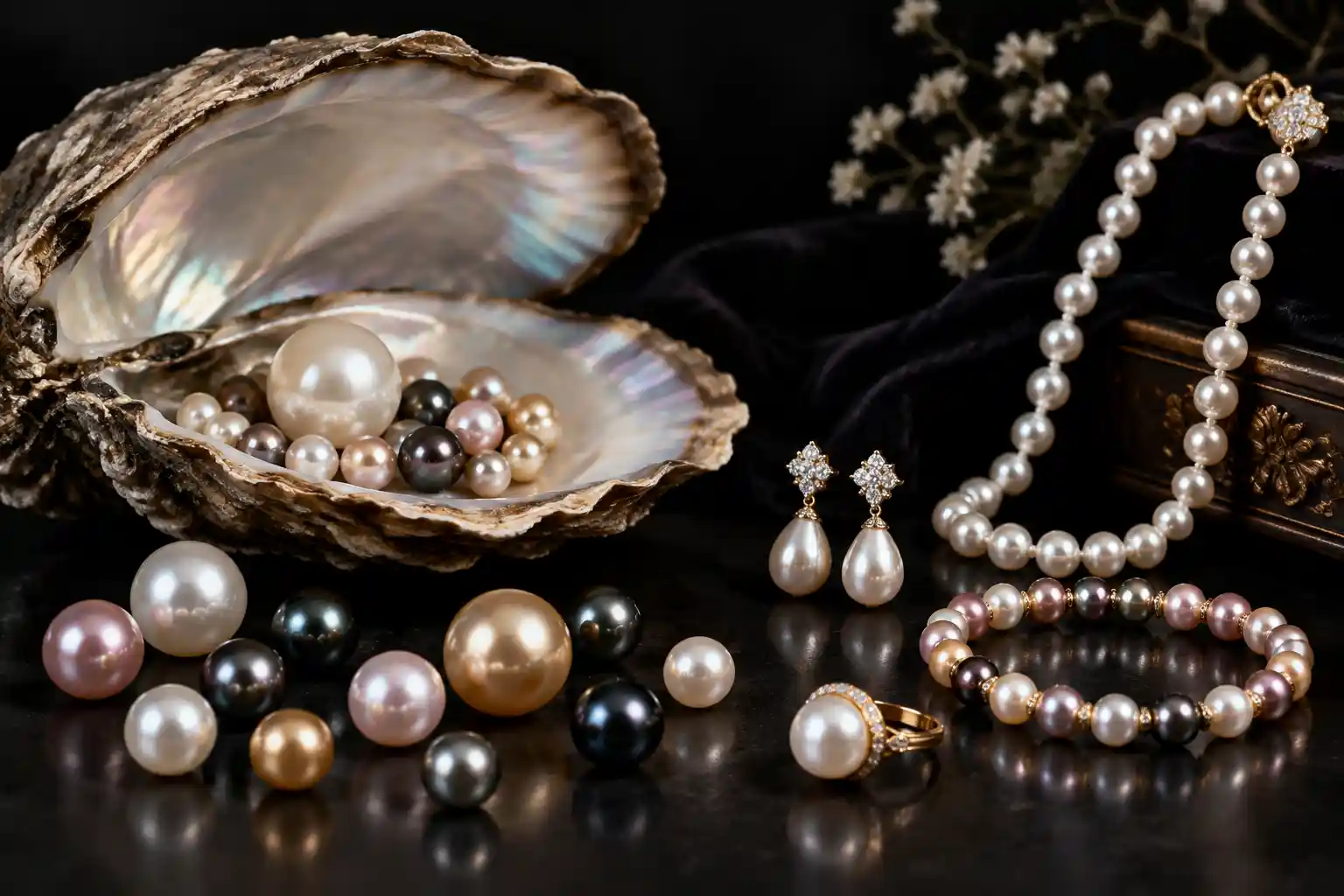
White pearls are iconic, but color diversity is another important Pearl benefit. Natural and cultured pearls occur in cream, yellow, golden, pink, lavender, gray, green, blue, brown, dark gray, and nearly black appearances, often with secondary overtones.
Color depends on mollusk species, nacre structure, pigments, environment, and sometimes treatment. Tahitian cultured pearls, for example, can show dark body colors with green, blue, purple, or other overtones, while South Sea cultured pearls are known for white, silver, and golden ranges.
Freshwater cultured pearls can occur naturally in white, cream, pink, peach, and lavender tones, while treatment can expand the commercial palette further.
Dyed or otherwise treated color is not automatically undesirable. Accurate disclosure matters because buyers should know whether a color developed naturally during growth or was altered after harvesting.
The variety allows pearl jewelry to move far beyond conventional bridal strands.
Shape Diversity Makes Pearls Extremely Versatile in Jewelry
Pearl benefits also include unusual shape diversity. Perfectly spherical pearls are famous and often highly valued, but mollusks produce many other forms.
Near-round, oval, drop, button, circled, semi-baroque, and strongly baroque pearls can all be attractive. Modern designers frequently value irregular shapes because they make individual jewelry pieces difficult to duplicate.
A symmetrical drop pearl can work beautifully in earrings or pendants, while a highly baroque freshwater pearl may become the centerpiece of a contemporary necklace. Button shapes can sit relatively close to the ear or skin, making them practical in certain settings.
Matching becomes especially important in strands and pairs. A necklace of forty pearls does not require each specimen to be genetically identical, but color, luster, size progression, shape, and surface characteristics should work together visually.
This design versatility is one reason pearls remain relevant even as fashion changes.
Pearls Are Remarkable Examples of Biomineralization
Scientific interest is one of the least appreciated Pearl benefits. Pearls demonstrate how living organisms can create highly ordered mineralized structures.
Many nacreous pearls are composed largely of aragonite, a crystalline form of calcium carbonate, arranged in extremely thin platelets with organic components between them. The structure is often compared with microscopic brickwork because hard mineral platelets are bonded by thin organic layers.
This organization contributes to both optical appearance and mechanical behavior. Pearl therefore connects gemology with biology, marine science, chemistry, and structural research.
Some pearls are non-nacreous and form with different arrangements of calcium carbonate. Conch, Melo, and other unusual pearl types demonstrate that the word pearl covers a wider group of biological gem structures than the familiar round white strand suggests.
The relationship with Mother of Pearl benefits is especially useful here because shell nacre and nacreous pearls share related biological construction while forming in different parts and forms within the mollusk.
Pearl History Gives the Gem Extraordinary Cultural Depth
Pearls were valued long before modern culturing transformed supply. Because a beautiful pearl can emerge from a mollusk already possessing a smooth surface and attractive luster, it did not require the same cutting technology demanded by many mineral gemstones.
This made pearls desirable ornaments in numerous societies. They have appeared in royal jewelry, religious objects, trade, ceremonial dress, bridal traditions, portraiture, fashion, and family heirlooms.
The meanings attached to pearls varied. Purity, wealth, status, tears, love, wisdom, femininity, prosperity, and spiritual ideas have all appeared in different contexts, but they should not be treated as one universal ancient belief.
Cultured pearl production later made pearls accessible to a much wider range of buyers. This transition is important because today’s pearl market combines biological farming, gemological grading, luxury design, and mass-market jewelry.
The historical importance itself is one of the strongest Pearl benefits.
Pearl Jewelry Can Be Elegant Without Heavy Visual Weight
Pearls create a large visual presence without the cutting geometry required by most faceted gemstones. A strand can appear substantial while remaining smooth and comfortable against the skin.
This makes Pearl benefits particularly noticeable in necklaces and earrings. Round forms lack sharp facets or corners, and many pearl designs sit comfortably during long periods of wear.
Stud earrings provide a simple example. A single pearl creates immediate visual presence without needing an elaborate setting. Long strands can be worn formally, layered casually, or combined with metal chains for a modern appearance.
Pearls can also complement diamonds and colored gems rather than compete with them. Their diffuse luster provides contrast against highly reflective faceted stones.
Comfort still depends on overall jewelry construction, pearl size, metal weight, and fastening design, but pearls offer unusually strong visual scale relative to their soft appearance.
Pearl Quality Depends on Several Factors Working Together
One of the most practical Pearl benefits is that quality cannot be judged from size alone. Professional evaluation considers several interacting characteristics.
Luster is crucial because bright reflections make pearls look more lively. Surface condition matters because blemishes, pits, wrinkles, spots, or other features can affect appearance. Shape influences rarity, while color includes body color, overtone, and sometimes orient.
Nacre quality is especially important in nacreous pearls because thin or damaged nacre can influence both appearance and durability. Matching matters when several pearls are assembled into a strand, pair, or set.
The factors behind Pearl price therefore depend on the complete combination rather than one simple measurement. A smaller pearl with exceptional luster can be more attractive than a larger pearl with weak surface reflection and poor nacre.
Buyers benefit from examining the entire piece rather than focusing only on millimeter size.
Symbolism Often Centers on Maturity, Wisdom, and Important Milestones
Pearl benefits can include symbolic value because the gem’s biological growth and long jewelry history invite rich personal interpretation.
Maturity is a common theme because a pearl forms gradually within a living organism. Wisdom can be associated with accumulation over time, while family continuity fits heirloom strands that pass from one generation to another.
Bridal traditions have also connected white pearls with purity, elegance, and commitment in many modern contexts. Anniversary jewelry can represent continuity, while a graduation gift may symbolize achievement and entering a new stage.
These meanings are cultural and personal rather than biological effects of calcium carbonate.
A pearl strand does not automatically make its wearer wise or calm. The symbolism becomes meaningful because of the occasion, person, and history attached to it.
Softness Makes Pearl Care Especially Important
Pearls are much softer than most familiar jewelry stones, with Mohs hardness around 2.5 to 3. This means dust, harder gemstones, metal edges, and abrasive fabrics can scratch the surface.
Perfume, cosmetics, hairspray, household chemicals, acids, and prolonged exposure to perspiration can also damage pearls or reduce luster. A useful habit is to put pearls on after cosmetics and fragrance have been applied.
After wearing, wiping the pearls gently with a very soft clean cloth helps remove residue. Occasional cleaning with warm mild soapy water can be appropriate, but strung pearls should be allowed to dry fully before being worn again.
Steam and ultrasonic cleaning should be avoided. High heat can dehydrate or damage nacre, while harsh cleaning methods can affect both the pearl and the string.
Separate storage is essential because diamonds, sapphires, quartz, and many other gems are easily hard enough to scratch pearls.
Pearl Treatments and Imitations Require Accurate Identification
Pearls may be bleached, dyed, irradiated, coated, or otherwise treated to change appearance. Some treatments are widespread and stable under ordinary conditions, while others can change with time or wear.
Treatment does not automatically eliminate beauty or usefulness. Disclosure simply allows buyers to understand what they are purchasing.
Imitation pearls create a separate issue. Coated glass or plastic products can look convincing, especially from photographs. Surface texture, weight, drill-hole appearance, microscopic observation, and professional testing may help distinguish them.
Separating genuine pearl formation from imitation is important because the biological origin is one of the defining Pearl benefits.
High-value natural pearls require even more sophisticated identification because distinguishing natural from cultured origin often involves X-radiography and examination of internal growth structure.
Pearl Symbolism Should Remain Separate From Health Claims
Traditional and modern wellness writing may attribute Pearl benefits to skin health, fertility, digestion, emotional calmness, hormone regulation, bone strength, sleep, or reproductive wellness.
There is no established scientific evidence that wearing pearls treats these conditions. Calcium carbonate within a pearl does not function as a dietary calcium supplement through ordinary skin contact.
Some traditional medicinal systems have used processed pearl-derived substances in particular preparations, but that historical fact does not prove that wearing pearl jewelry produces the same biological effect or that such preparations are clinically appropriate for self-treatment.
Beliefs discussed within Pearl healing properties should therefore remain clearly distinguished from evidence-based healthcare.
Pearls do not need medical claims to justify their importance. Their biology, luster, jewelry history, cultural significance, and personal symbolism already make them extraordinary gems.
Conclusion
Pearl benefits combine natural luster, remarkable color and shape diversity, biological formation, jewelry versatility, historical depth, scientific interest, and strong heirloom potential. Natural and cultured pearls are genuine organic gemstones, while their soft calcium-carbonate structure explains why careful handling is essential.
Maturity, wisdom, love, purity, patience, and family continuity can all provide meaningful cultural or personal symbolism when separated from unsupported health claims. Pearls are most compelling when their real biomineralization, craftsmanship, and human history are allowed to carry the story.
FAQs
What are the main Pearl benefits?
The strongest Pearl benefits include natural luster, diverse colors and shapes, comfortable jewelry use, biological and scientific interest, cultural history, design versatility, and heirloom potential. Symbolic themes such as wisdom, maturity, love, and purity can add personal meaning but are not medical effects.
Are cultured pearls real pearls?
Yes. Cultured pearls are genuine pearls produced by mollusks after deliberate human intervention begins the growth process. The mollusk deposits the pearl structure itself. Imitation pearls made from coated glass, plastic, or other substances are different.
What are pearls made of?
Pearls consist mainly of calcium carbonate together with organic components and small amounts of water. Many familiar nacreous pearls are built largely from microscopic aragonite platelets arranged with an organic matrix.
How hard are pearls?
Pearls generally measure about 2.5 to 3 on the Mohs scale. They are therefore much softer than quartz, sapphire, diamond, and many other jewelry gems. Separate storage and gentle handling are important to prevent scratching.
Why are some pearls more lustrous than others?
Luster depends on how light reflects from the pearl’s surface and interacts with its internal structure. Fine nacre, good surface quality, and proper growth can create sharp bright reflections, while lower-quality surfaces may appear dull or chalky.
Are all pearls white?
No. Pearls occur in white, cream, pink, peach, lavender, golden, silver, gray, blue, green, dark gray, and other colors. Some colors are natural, while others may result from dyeing or other treatment.
How should pearls be cleaned?
Wipe pearls gently with a soft clean cloth after wearing. Warm mild soapy water can be used occasionally for suitable pieces, but ultrasonic and steam cleaning should be avoided. Perfume, cosmetics, hairspray, acids, and harsh household chemicals should also be kept away from pearls.
Do pearls provide calcium to the body?
There is no established evidence that wearing pearl jewelry provides a useful nutritional dose of calcium through the skin. The calcium carbonate is part of the pearl’s physical structure and does not function as a wearable dietary supplement.
Do pearls have healing powers?
There is no established scientific evidence that wearing pearls diagnoses, treats, cures, or prevents physical or mental-health conditions. Claims involving fertility, skin health, digestion, hormones, emotional healing, or bone strength belong to traditional or spiritual interpretations rather than established medical evidence.
Pearl benefits involving healing energy, fertility, calcium supplementation, emotional treatment, or physical wellness reflect cultural, spiritual, or personal interpretations and should not replace qualified physical or mental-health care.