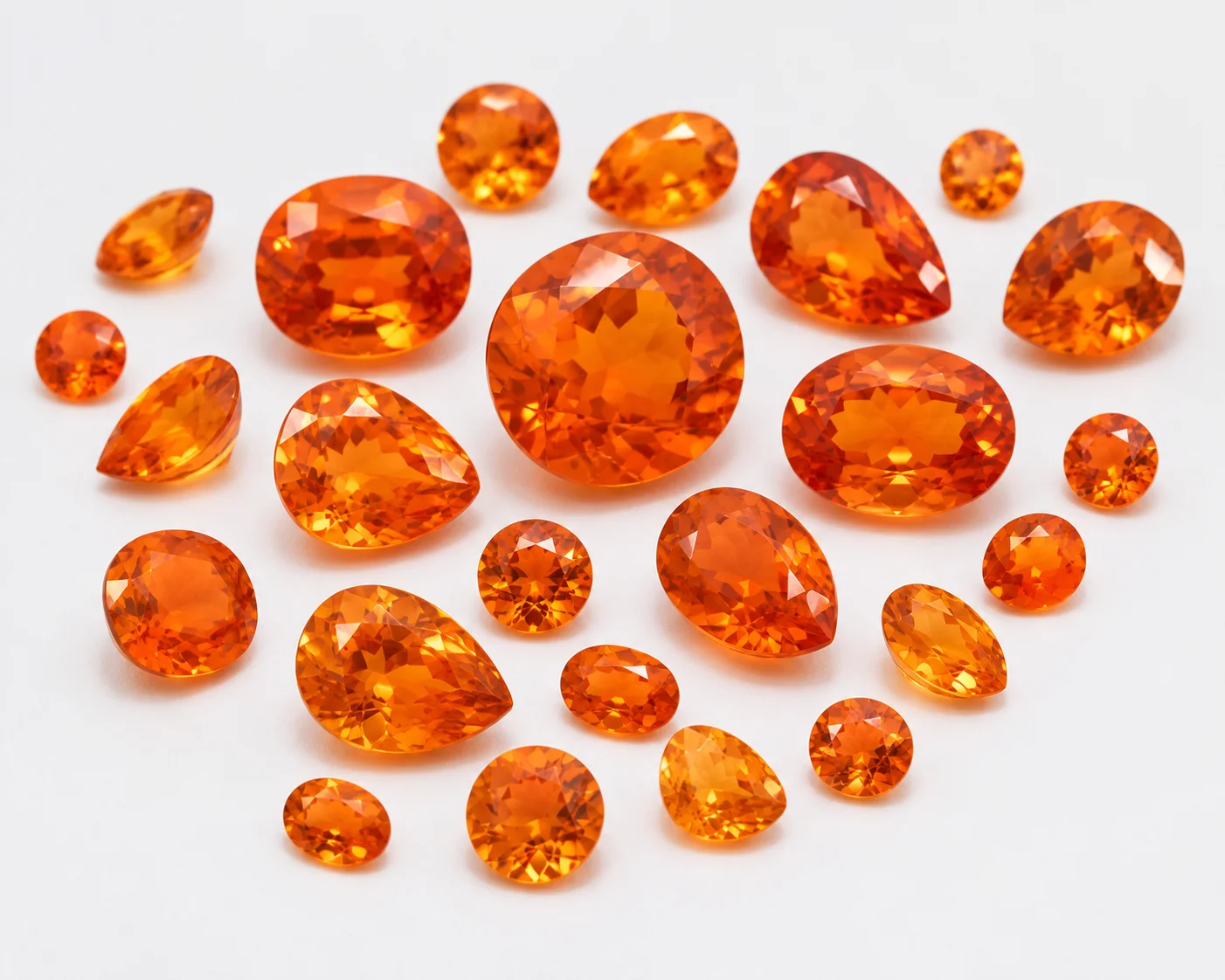
Buy Spessartite Garnet: What Quality Looks Like, Treatments, Grading & Cost
To buy spessartite garnet intelligently, focus first on vivid orange color, brightness, transparency, the visibility and type of inclusions, cutting, size, treatment disclosure, and correct garnet identification. The mineral’s formal name is spessartine, while spessartite garnet is a widely used trade synonym; GIA describes spessartine as an orange garnet and identifies vivid orange to orangy red as its best commercial color range. Mindat defines spessartine as a manganese-aluminum garnet with the ideal formula Mn₃Al₂(SiO₄)₃, Mohs hardness around 6.5–7.5, an isometric crystal system, and colors ranging through red, reddish orange, yellowish brown, reddish brown, and brown.
Clarity requires a more realistic standard than it does in rhodolite or many red garnets. GIA states that spessartine frequently contains eye-visible inclusions and specifically notes that finding eye-clean material is relatively rare. Fine inclusions can therefore be tolerated when the color is exceptional, but heavy clouds, broad fractures, or distracting black features still reduce beauty and may affect durability. The strongest purchase combines the intense orange color that makes the variety distinctive with enough transparency and skilled cutting to create a bright face-up stone rather than simply maximizing carat weight.
Buy Spessartite Garnet At a Glance
| Buying Factor | What to Examine | Why It Matters |
|---|---|---|
| Mineral Identity | Spessartine/spessartite garnet rather than hessonite, zircon, sapphire, or glass | Orange color alone cannot establish species |
| Color | Vivid orange to orangy red | GIA identifies this as the strongest quality range |
| Yellow Modifier | Bright yellow-orange can be attractive | Too pale may reduce saturation |
| Red Modifier | Fiery reddish-orange can carry strong appeal | Excessive brown can make the stone look dull |
| Tone | Medium to medium-dark while staying bright | Excess darkness suppresses orange fire |
| Clarity | Inclusions are common and should be judged realistically | Eye-clean spessartine is relatively rare |
| Fractures | Check whether fissures reach the surface | Structural features can affect durability and polish |
| Cut | Even brilliance, minimal windowing, strong color return | Cut strongly affects brightness |
| Carat Weight | Size considered with color and clarity | Large fine stones become more selective |
| Composition | True spessartine versus pyrope-spessartine mixture | Garnets commonly form solid solutions |
| “Mandarin” Label | Judge actual orange color rather than the name | Trade terminology is not an official laboratory grade |
| Treatment | Usually little routine enhancement; ask about filling | Garnets are rarely fracture filled |
| Origin | Namibia, Tanzania, Nigeria, California, Sri Lanka and others | Provenance can interest collectors but quality remains primary |
| Condition | Sharp facets and intact girdle | Chips or abrasion lower value |
| Report | Useful for significant or unusual purchases | Confirms garnet identity when needed |
Spessartine and Spessartite Refer to the Same Garnet Market
GIA commonly uses spessartine for the orange manganese-rich garnet species, while the trade also uses spessartite. GIA’s garnet description explicitly identifies spessartine, also called spessartite, as an orange garnet. Buyers should therefore not assume the two terms describe different gems or quality levels.
The mineral itself belongs to the broader garnet group alongside pyrope, almandine, grossular, andradite, and other species. Gems Lore’s buy garnet guide provides that group-level context, while buy rhodolite garnet and buy demantoid garnet show how dramatically quality standards can differ between garnet varieties.
Spessartine Is a Manganese-Rich Garnet Species
Mindat gives the ideal spessartine formula as Mn₃Al₂(SiO₄)₃ and places the mineral within the garnet supergroup. Manganese plays a central role in producing the orange coloration associated with the species, while iron and mixing with other garnet components can shift hue toward redder, browner, or darker appearances.
Natural garnets commonly form compositional solid solutions rather than perfectly pure end members, so a gemstone can contain meaningful pyrope, almandine, or grossular components while remaining within the commercial spessartine or mixed-garnet market. GIA’s reference collection includes both pure-dominant spessartine and pyrope-spessartine gems, demonstrating this compositional continuity.
Vivid Orange Is the Benchmark Color
GIA states that the best spessartine colors are vivid orange to orangy red. Fine stones can resemble glowing mandarin peel, flame orange, or saturated reddish orange, and the strongest gems combine that color with enough transparency to remain bright rather than muddy.
Color should be judged under neutral daylight-equivalent illumination and ordinary indoor light because warm bulbs can make an orange stone appear richer than it will in cooler conditions. Video is useful when buying online because it shows whether saturation remains attractive during movement or whether the stone becomes brown or dark from certain angles.
Bright Orange Can Be More Valuable Than Maximum Darkness
Spessartine does not need to be dark to be saturated. A lively medium orange can return substantially more light than a deeper reddish-brown gem and may therefore have stronger commercial appeal even when the darker stone appears more intense in a still photograph.
The best balance allows orange to remain visible across most of the face. Broad black extinction, muddy brown, or overly dark reddish tone can suppress the fiery appearance that distinguishes fine spessartine from less desirable orange-brown garnets.
“Mandarin Garnet” Is a Trade Name, Not an Official Grade
The phrase Mandarin garnet is widely used for vivid orange spessartine, particularly material associated historically with African production, but it does not create a separate mineral species or universally standardized laboratory grade. Gemdat lists Mandarin garnet as a trade variety within the spessartine market.
A buyer should therefore ask what the seller means by Mandarin. The strongest stone should actually show clean vivid orange, useful transparency, attractive cut, and appropriate size rather than receiving a premium simply because the word appears in the listing.
Reddish-Orange Spessartine Can Be Highly Attractive
Pure orange receives enormous attention, but GIA’s preferred range extends into orangy red, so a red modifier is not automatically negative. Fiery reddish-orange material can display exceptional warmth and brilliance, particularly under daylight.
The discount generally begins when red is accompanied by excessive brown or darkness rather than because red itself is undesirable. Buyers should compare stones side by side rather than rely on seller categories such as Fanta orange, flame, mandarin, or imperial orange.
Brown Usually Lowers Fine-Gem Appeal
Mindat’s natural spessartine color range includes yellowish brown, reddish brown, and brown in addition to orange and red. These colors are mineralogically legitimate, but commercial jewelry demand generally favors brighter orange.
A brownish specimen can still have strong collector value when it forms an exceptional natural crystal, comes from a notable locality, or displays unusual associations. Faceted jewelry value and mineral-specimen value should therefore remain separate.
Eye-Visible Inclusions Are Common in Spessartine
GIA specifically contrasts spessartine with cleaner red garnets, stating that orange garnets such as spessartine frequently contain eye-visible inclusions. This means a vivid stone should not be rejected automatically because several inclusions can be seen without magnification.
The important issue is what those inclusions do. Fine thread-like features or small crystals can be acceptable when the gem remains transparent and bright, whereas dense clouds, large black inclusions, or reflective fractures crossing the table deserve larger discounts.
Eye-Clean Spessartine Can Command a Strong Combined Premium
GIA’s buyer materials explicitly note that finding spessartine with no eye-visible inclusions is relatively rare. A gem that combines vivid orange color with eye-clean clarity therefore unites two desirable characteristics and can move into a substantially stronger market category.
The premium should still remain color-led. An eye-clean pale or brownish stone can be less desirable than a slightly included vivid mandarin-orange gem because orange saturation defines the variety’s strongest appeal.
Characteristic Inclusions Can Help Support Natural Identity
GIA’s detailed study of California spessartine documented partially healed fractures, negative crystals, needles or tubes, growth patterns, and other internal features. These inclusions can provide gemologists with useful evidence about formation and sometimes source characteristics.
Consumers should not attempt to identify origin from one inclusion alone. Similar internal features can occur across deposits, and a beautiful inclusion photograph is not a substitute for comprehensive gemological analysis when provenance carries a meaningful premium.
California Spessartine Has Historic Importance
GIA documents the Little Three mining area near Ramona, California, as an historically important source of fine spessartine, particularly bright orangy-yellow to yellowish-orange material. The deposit supplied noteworthy faceting rough and remains important to locality collectors.
Documented California origin can therefore add collector interest, especially for natural crystals, old cut stones, or specimens with historic mine provenance. In ordinary jewelry, however, actual color and brilliance usually matter more than the locality name.
Namibia Became Famous for Intense Orange Material
GIA literature records pure-orange Namibian spessartine and notes that similar intense orange can also occur in California and Madagascar material. Namibia became strongly associated in the trade with vivid Mandarin-style orange, creating lasting collector recognition.
The country name still does not guarantee premium quality. Included, dark, damaged, or poorly cut Namibian material should be judged on its actual characteristics rather than receiving an automatic premium.
Tanzania Is an Important Modern Source
GIA identifies Tanzania among key sources of rich orange-to-yellow spessartine garnet. Tanzanian material can range substantially in color and composition, and some garnets sit within mixed pyrope-spessartine or other solid-solution categories rather than being chemically pure end-member spessartine.
For the jewelry buyer, this reinforces why laboratory identity and face-up beauty matter more than a simplified country label.
Nigeria Has Produced Significant Spessartine
GIA’s reference collection includes an 11.29 ct Nigerian spessartine, demonstrating the country’s place in the gem material record. Nigerian orange garnets have contributed to the modern market and can occur in attractive sizes.
As with other origins, source should support rather than replace quality. A vivid bright Nigerian gem can be superior to a weaker stone from a more famous locality.
Sri Lanka Also Produces Documented Spessartine
GIA’s Gübelin collection contains multiple Sri Lankan spessartines, including transparent vivid orange examples above ten carats. This shows that substantial gem-quality spessartine is not limited to the famous African or California localities.
Sri Lankan provenance may appeal to collectors, but fine color, clarity, and cutting normally remain the dominant jewelry-value factors.
Large Spessartine Exists, but Fine Large Material Is More Selective
Gemdat documents spessartine examples extending to very large weights, while GIA’s reference collection contains multi-carat material from several countries. This means large size is possible and should not be marketed as impossible rarity.
The premium becomes stronger when vivid orange color and good transparency persist as size rises. A 15 ct dark included stone is not equivalent to a 15 ct vivid eye-clean gem, and size should amplify quality rather than substitute for it.
Cut Quality Has a Large Effect on Orange Brilliance
GIA’s garnet buyer guidance states that cut strongly affects beauty and that poorly cut garnets are less marketable and sell at discounts. Spessartine benefits particularly from good pavilion proportions because strong orange can become dead-looking when excessive depth creates extinction.
Ovals, cushions, rounds, pears, and designer cuts can all work well. The best shape is the one that distributes orange evenly, returns light across most of the crown, minimizes windowing, and avoids hiding too much weight beneath the girdle.
Windowing Can Weaken Saturated Orange
A shallow pavilion allows the observer to see through the center of the stone, creating a pale transparent area rather than continuous fiery color. Because color is the primary value factor, this can reduce marketability significantly.
Compare face-up dimensions with weight. A slightly lighter gem with better proportions can look larger and more saturated than a heavier stone whose extra carats sit in an inefficient pavilion.
Garnet Is Usually an Uncomplicated Treatment Market
GIA states that most garnets are not treated and that fracture filling is encountered only rarely. This makes spessartine substantially simpler than ruby, sapphire, emerald, or Paraíba tourmaline from an enhancement perspective.
An untreated label should therefore not be converted automatically into an extraordinary premium because untreated status is normal for much of the garnet market. The buyer’s money is usually better directed toward exceptional color, clarity, cut, and size.
Rare Fracture Filling Should Still Be Disclosed
GIA notes that garnets can rarely be fracture filled to reduce the visibility of surface-reaching breaks. A filled spessartine can remain attractive, but its apparent clarity should not be compared directly with a naturally cleaner stone without acknowledging the enhancement.
The treatment also changes care requirements. GIA recommends warm soapy water for fracture-filled garnets rather than aggressive cleaning.
Heat Treatment Is Not the Normal Spessartine Value Story
Unlike ruby or sapphire, spessartine commerce is not generally organized around a routine heated-versus-unheated hierarchy. GIA’s current consumer guidance emphasizes that most garnets are untreated and discusses rare fracture filling rather than widespread color enhancement.
A seller advertising ordinary spessartine as “ultra-rare unheated” should therefore explain why that characteristic supposedly merits a premium. Natural untreated orange is expected in much of the market.
Spessartine Is Durable Enough for Jewelry
Mindat lists spessartine around Mohs 6.5–7.5, while GIA places spessartine among the harder members of the garnet group and describes garnets as having fair-to-good toughness. This makes the gem suitable for rings, earrings, pendants, and bracelets when worn with sensible care.
It remains softer than sapphire, ruby, and diamond, so storing spessartine against harder gems can scratch polished surfaces. Frequently worn rings should also be removed during heavy manual work.
Warm Soapy Water Is the Safest Cleaning Choice
GIA states that warm soapy water is always safe for garnets, while ultrasonic cleaning is generally acceptable except when fractures are present and steam cleaning is not recommended. This conservative approach is especially appropriate for included spessartine because eye-visible fissures are more common than in some cleaner garnet varieties.
Owners should tell a jeweler if fracture filling has been identified before cleaning or repair.
Spessartite Garnet Versus Rhodolite Garnet
The Gems Lore buy rhodolite garnet guide covers a purple-red pyrope-almandine market where eye-clean clarity is more routinely expected. Spessartine, by contrast, is orange and often contains visible inclusions.
The Gems Lore rhodolite garnet price guide therefore should not be used as a direct price template even when the two stones are similar in weight.
Spessartite Garnet Versus Demantoid Garnet
Demantoid garnet belongs to green andradite and can command dramatic premiums for color, dispersion, size scarcity, and in some cases desirable horsetail inclusions. Spessartine follows a completely different orange-color and clarity framework.
Both demonstrate why garnet cannot be valued as one homogeneous gemstone.
Spessartite Garnet Versus Hessonite
Spessartine and hessonite can both appear orange, but hessonite is a grossular variety and often displays a characteristic roiled internal appearance. GIA distinguishes spessartine from hessonite within the garnet group and notes that both orange types frequently contain eye-visible inclusions.
Professional identification is useful when an expensive orange garnet is being sold under a specific variety name because color overlap alone cannot establish chemistry.
Spessartite Garnet Versus Orange Sapphire
Orange sapphire is corundum with Mohs hardness 9 and a treatment market that can include heating and diffusion, whereas spessartine is a natural-orange garnet whose mainstream treatment market is far simpler. The difference can be substantial in price and care expectations.
A seller should identify orange gems gemologically rather than relying on the assumption that bright orange automatically means Mandarin garnet.
Spessartite Garnet Versus Fire Opal
Orange fire opal can overlap visually with spessartine but belongs to a much softer hydrated silica material with different transparency, phenomenon, and durability. The fire opal price guide therefore follows a separate market.
Spessartine generally offers greater hardness and brilliance, while fire opal can provide a distinctive internal glow and, in some stones, play-of-color.
Independent Reports Are Useful for Significant Purchases
GIA’s garnet buyer guidance recommends obtaining an independent laboratory report when there is doubt about what is being sold. This is particularly sensible for large vivid orange stones carrying significant premiums, unusual provenance, mixed-composition claims, or supposed rare trade varieties.
A laboratory report confirms identity; it does not provide a universal quality grade or tell the buyer what market price must be paid.
AAA and AAAA Spessartite Are Not Universal Grades
There is no universal GIA AAA, AAAA, 5A, Mandarin-A, or investment-grade scale for spessartine. Seller categories can be useful when their criteria are published, but they should never replace the direct evaluation of hue, saturation, tone, clarity, cut, size, treatment, origin, and condition.
A stone with objectively vivid orange color and lively cutting can be an excellent purchase even when the seller uses no letter grade at all.
Common Red Flags When You Buy Spessartite Garnet
Warning signs include a brownish or dark stone marketed as top Mandarin purely through naming, a seller claiming eye-clean clarity is mandatory despite the variety’s common inclusions, ordinary untreated material priced as though no treatment were exceptionally rare, fracture filling omitted from disclosure, hessonite or another orange gem represented as spessartine without identification, enormous size used as the only justification for premium pricing, a locality claim based solely on color, a large window hidden by dark backgrounds, severe fractures concealed in low-resolution photography, and AAAA presented as an official laboratory grade.
How to Compare Spessartite Garnet Listings Fairly
Compare stones by confirmed garnet identity, spessartine composition where relevant, hue, saturation, tone, brown or red modifier, transparency, eye-visible inclusions, fractures, cut, windowing, dimensions, carat weight, treatment, provenance, condition, report status, setting value, and return policy. A vivid Namibian mandarin-orange gem, reddish California spessartine, included Nigerian stone, mixed pyrope-spessartine garnet, hessonite, orange sapphire, and fire opal should never be collapsed into one generic orange-gem price comparison.
Conclusion
To buy spessartite garnet successfully, judge the actual orange gemstone rather than the trade language surrounding it. GIA identifies vivid orange to orangy red as the strongest spessartine color range and notes that visible inclusions are common, making eye-clean stones comparatively selective. Mindat confirms that spessartine is a manganese-aluminum garnet with Mohs hardness around 6.5–7.5 and a natural color range extending through orange, red, and brown tones.
Color should remain the first priority, followed by transparency and cut. A slightly included vivid mandarin-orange gem can be much stronger than a clean but brownish stone, while a well-proportioned cutter can preserve fiery brilliance that excessive depth or windowing would destroy. Size matters once those qualities are established, but large spessartine exists and should not receive an extreme premium merely for crossing a carat threshold.
Treatment is relatively uncomplicated because GIA states that most garnets are untreated, with fracture filling encountered rarely. The strongest purchase therefore combines vivid natural orange, realistic clarity expectations, lively cutting, useful size, sound condition, transparent disclosure, and documentation proportionate to the amount being spent.
Frequently Asked Questions
Is spessartite the same as spessartine?
Yes. Spessartine is the formal mineral name commonly used by GIA and Mindat, while spessartite is a widely used alternative trade name for the same orange garnet species.
What is the best spessartine color?
GIA identifies vivid orange to orangy red as the strongest traditional color range. Bright saturated orange with enough transparency to remain lively generally attracts the strongest demand.
What is Mandarin garnet?
Mandarin garnet is a trade term used for vivid orange spessartine. It is not a separate mineral species or universal laboratory quality grade.
Should spessartine garnet be eye-clean?
Not necessarily. GIA notes that spessartine commonly contains eye-visible inclusions and that eye-clean stones are relatively rare.
Do inclusions always lower spessartite garnet value?
No. Moderate inclusions can be acceptable when color is exceptional, but large fractures, dense clouds, and distracting black or white features can reduce transparency and durability.
Is spessartine usually treated?
Most garnets are untreated. GIA notes that fracture filling is encountered only rarely in the garnet market.
Is unheated spessartine worth more?
Unheated status is normal enough in garnet that it should not automatically create a major rarity premium. Color, clarity, cut, and size are usually more important.
Where does fine spessartine come from?
GIA identifies Namibia and Tanzania among important sources and documents material from Nigeria, Sri Lanka, California, and other localities.
Is California spessartine collectible?
Yes. GIA documents the Ramona area as a historically important source of bright orangy-yellow to yellowish-orange facet-grade spessartine.
Is large spessartite garnet rare?
Large stones exist, including substantial documented examples, but large vivid eye-clean material becomes more selective. Size should be judged together with quality rather than alone.
How hard is spessartine?
Mindat lists spessartine around Mohs 6.5–7.5, while GIA places it among the harder garnet types.
How should spessartite garnet be cleaned?
GIA recommends warm soapy water. Ultrasonic cleaning is usually safe unless fractures or fracture filling are present, while steam cleaning is not recommended.
Does AAAA spessartite have an official meaning?
No universal AAA or AAAA spessartine grading standard exists. Compare measurable color, clarity, cut, size, treatment, and condition instead.
Do I need a lab report?
For an important or expensive purchase, an independent report is useful when identity, composition, or seller claims are uncertain. GIA recommends laboratory confirmation when buyers are in doubt about garnet identity.
Is spessartite garnet a guaranteed investment?
No. Fine vivid stones can be highly collectible, but future appreciation, resale demand, and liquidity are not guaranteed.