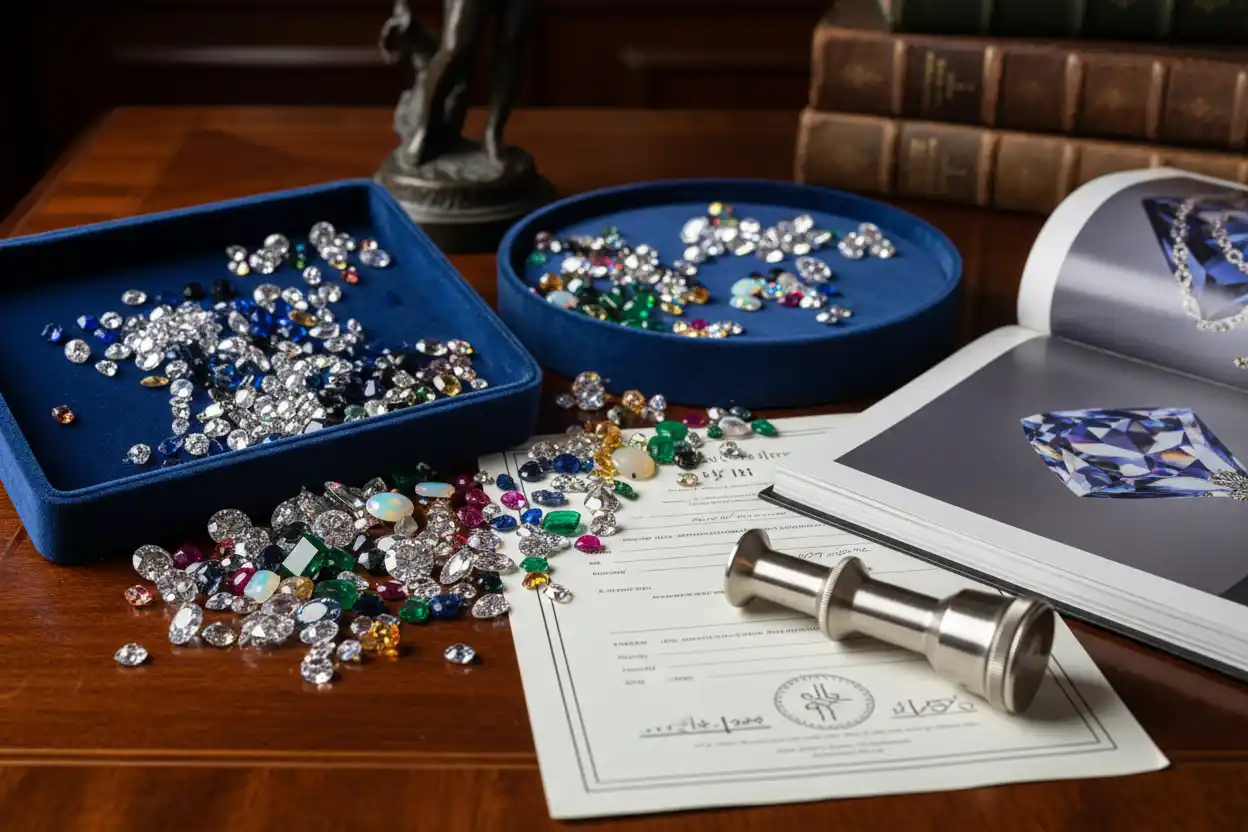
Do Gemstones Hold Their Value? A Realistic Guide
Gemstones can preserve value, but most ordinary retail stones do not behave like liquid financial assets. A gem’s future sale price depends on what it is, how exceptional it is within its species, whether buyers can verify its qualities, and how efficiently the owner reaches the right secondary market.
This distinction matters because the amount printed on a receipt, insurance appraisal, laboratory report, dealer offer, and auction estimate can represent five different things. Before deciding that a gemstone has gained or lost value, you need to know which market and which definition of value you are comparing.
Gemstone value at a glance
| Question | Realistic answer |
|---|---|
| Do all natural gemstones hold value? | No. Natural origin alone does not create scarcity or strong resale demand. |
| Can exceptional gemstones preserve substantial value? | Yes, especially when quality, rarity, treatment status, size, documentation, and collector demand align. |
| Is retail price the same as resale value? | No. Retail pricing includes services, overhead, risk, profit, warranties, and presentation that a secondary buyer may not reimburse. |
| Does an insurance appraisal predict a cash offer? | Usually not. Insurance appraisals commonly address replacement rather than immediate resale. |
| Do laboratory reports state financial value? | No. They document identity and other gemological findings rather than guaranteeing a selling price. |
| Are gemstones easy to sell quickly? | Usually not. Colored stones are specialized and comparatively illiquid. |
| Does rarity guarantee appreciation? | No. A rare mineral can have weak demand, limited wearability, or too few informed buyers. |
| Does sentimental value affect market price? | Generally not, unless the item also has documented historical or celebrity provenance. |
Which “value” are you discussing?
Confusion often begins when several valuation terms are treated as interchangeable.
| Value type | What it generally represents | Why it may differ |
|---|---|---|
| Retail price | What a consumer pays a retailer | Includes sourcing, overhead, design, marketing, warranties, financing, and profit |
| Retail replacement value | Estimated cost to replace an item with a comparable item in an appropriate retail market | Often used for insurance and may exceed what an owner could receive in a sale |
| Fair-market value | An opinion of what an informed, willing buyer and seller might agree upon in the relevant market | Depends on the market selected, condition, timing, and comparable sales |
| Wholesale value | A trade-level price between knowledgeable businesses | Assumes trade access and excludes many retail services |
| Auction estimate | A specialist’s pre-sale range for a particular auction and market | It is not a promise that bidding will reach the estimate |
| Cash resale value | What a buyer will pay the owner now | Reflects resale risk, verification costs, inventory time, margin, and liquidity |
| Liquidation value | Expected proceeds under restricted time or selling conditions | Usually reflects greater pressure and fewer potential buyers |
The broader mechanics behind retail pricing are covered in How Gemstone Prices Are Determined. Owners who are specifically trying to understand low dealer or auction proceeds should also distinguish this question from Why Gemstone Resale Disappoints.
Retail price includes more than the gemstone
A retail customer does not pay only for the mineral in the setting. The purchase price may also support the dealer’s sourcing network, staff, rent, photography, security, financing costs, return policy, packaging, marketing, repair commitments, professional judgment, and the financial risk of holding unsold inventory.
Those services can make a purchase safer and more convenient, but they do not become physical attributes of the stone. When the same gem enters the secondary market, a dealer does not normally reimburse the original owner for the previous seller’s operating costs.
Consequently, a gemstone can remain equally beautiful and gemologically unchanged while being worth less in an immediate cash transaction than its original retail price.
The species name is only the beginning
A ruby, sapphire, emerald, or alexandrite may sound inherently valuable. However, the commercial market includes a wide range of quality within each name.
An opaque, heavily treated, poorly cut ruby and a transparent unheated ruby with exceptional color are both rubies, yet they occupy entirely different markets. Similar divisions exist between commercial and exceptional sapphire, emerald, jadeite, spinel, tourmaline, opal, and diamond.
Individual guides such as the Ruby Price Guide, Sapphire Price Guide, and Emerald Price Guide explain the material-specific factors. The broad principle is that value retention usually belongs to a narrow tier of unusually desirable examples, not automatically to every member of a respected species.
Natural rarity versus commercial abundance
A gemstone can be natural without being scarce in the form, quality, and size sold at retail. Amethyst, blue topaz, many garnets, commercial-grade sapphire, and numerous opaque ornamental stones can be natural while remaining available in substantial quantities.
Conversely, geological rarity does not guarantee a strong market. Some minerals occur in very small quantities but have limited consumer recognition, unsuitable durability, unattractive color, or few buyers capable of evaluating them.
Commercial value therefore requires two forms of scarcity:
- The gem must be difficult to obtain in the desired quality.
- Enough buyers must actively compete for that quality.
A mineral with no established collector base may be rare but illiquid. An attractive gem with broad demand may sell readily, yet common commercial examples may still lack meaningful value-retention potential.
Quality must be scarce within the species
The stones most capable of preserving value generally combine several exceptional features:
- Strong, desirable color rather than merely acceptable color
- A size that is scarce for the species
- Attractive transparency, texture, or optical performance
- Skilled cutting that preserves weight without sacrificing appearance
- Limited or no treatment where untreated material commands a premium
- A respected laboratory report when identity, origin, or treatment status matters
- Good condition without major chips, recutting losses, or structural problems
- Documented provenance when a distinguished prior owner, historic setting, or notable maker adds collector interest
These conditions are demanding. Most commercially available gems meet only some of them.
The comparison in Best Gemstones for Investment examines species that can develop stronger collector markets, but even those gemstones qualify only at the upper end of quality.
Treatments can change the value equation
Treatments are not automatically negative. Heat treatment of ruby or sapphire, oiling of emerald, stabilization of turquoise, and other accepted processes can make gems more attractive or usable. However, the type, extent, permanence, detectability, and market acceptance of a treatment influence value.
An untreated stone may command a premium when untreated examples are scarce and the status is supported by credible evidence. By contrast, an undisclosed filling, coating, dye, diffusion treatment, composite construction, or durability-sensitive enhancement can reduce buyer confidence.
The practical differences are explained in Gemstone Treatments Explained. Composite construction presents another issue because a doublet or triplet should not be valued as though the entire visible stone were one natural gem; see Gemstone Doublets and Triplets.
Treatment status matters most when the market pays significantly different prices for apparently similar stones. Without reliable disclosure, a secondary buyer must price the uncertainty or pay for additional testing.
What a laboratory report contributes
A respected report can reduce uncertainty about identity, natural or laboratory-grown origin, detectable treatments, and—in some cases—geographic origin. It does not set the selling price, guarantee future demand, or convert an ordinary gemstone into an investment-grade asset.
Laboratory documentation works best when:
- The report can be verified with the issuing laboratory.
- Its identifying details match the stone.
- It addresses the questions that materially affect the market.
- It comes from a laboratory recognized by the intended buyers.
- The stone has not been altered, recut, damaged, or replaced since examination.
Gemstone Certification Labs Compared explains how laboratory services differ, while How to Read a Gem Lab Report covers the information a report does and does not provide.
Documentation creates confidence, but it cannot replace quality. A thoroughly documented mediocre stone remains mediocre.
Natural, laboratory-grown, and imitation materials
Laboratory-grown gemstones can offer the same essential chemical composition and many of the same physical properties as natural counterparts. Nevertheless, their value behavior differs because production can respond to demand and improve over time.
For that reason, buyers should not assume that a laboratory-grown ruby, sapphire, emerald, or diamond will follow the scarcity economics of rare natural material. The purchase may still provide excellent beauty and wearability, but value retention should not be the primary expectation.
The distinction among natural, laboratory-grown, and imitation products is covered in Lab-Grown vs Natural Gemstones.
Origin premiums are conditional
Geographic origin can affect the price of exceptional ruby, sapphire, emerald, spinel, tourmaline, and certain other gems. However, origin does not override quality.
A weak stone from a famous locality does not automatically become more desirable than an outstanding gem from another source. Origin premiums are most relevant when the stone already has exceptional color, size, condition, and treatment status, and when a credible laboratory can provide a defensible origin opinion.
Moreover, origin language often gets oversimplified in sales presentations. A locality name should not become a substitute for examining the stone itself.
Provenance is different from origin
Origin describes where the gemstone is believed to have formed or been mined. Provenance documents the item’s ownership and history after extraction.
Credible provenance can increase collector interest when a jewel belonged to a notable person, appeared in a documented historic collection, came from an important designer, or has an unbroken record that supports authenticity. An unsupported story, family tradition, or seller’s verbal claim does not provide the same confidence.
Receipts, dated photographs, auction catalogs, maker archives, service records, historic inventories, and prior laboratory reports can help establish a chain of evidence.
Auction-quality stones are not ordinary retail gems
Highly publicized auction results often involve an exceptional combination of rarity, beauty, size, provenance, laboratory documentation, condition, and international marketing. These results should not be applied directly to an ordinary stone that happens to share the same gem name.
Auction houses also select items for the audience they expect to attract. A major international sale can reach specialized collectors, while a local general auction may not have bidders who understand a rare gem.
Therefore, auction prices demonstrate what exceptional buyers may pay for exceptional property under specific conditions. They do not establish a universal price-per-carat formula.
Liquidity determines whether value can be realized
A gem may have an estimated market value but still take months or years to sell at that level. Liquidity depends on the number of qualified buyers, the transparency of the market, the stone’s price, its documentation, and how easily comparable examples can be found.
Commonly traded diamonds have broader pricing references and dealer networks than most colored stones, although their cash resale values can still differ sharply from retail. The Diamond Price Guide addresses the diamond-specific variables.
Colored stones require more individualized judgment. A fine alexandrite may be rare, but the pool of buyers who understand color change, origin, treatment, size, and pricing is small. The same applies to top copper-bearing tourmaline, jadeite, and fine spinel, whose variables are discussed in the Alexandrite Price Guide, Paraiba Tourmaline Price Guide, Jade Price Guide, and Spinel Price Guide.
A fast sale usually requires accepting the price offered by the buyers available now. Achieving a stronger price may require patient consignment, specialist marketing, and uncertainty about whether the item will sell.
Loose gemstones versus mounted jewelry
A loose stone gives a buyer better access for weighing, measuring, microscopic examination, spectroscopy, and other testing. It also allows the gem to be considered independently from a dated or damaged setting.
Mounted jewelry can still hold substantial value when the design, workmanship, metal, maker, period, or provenance attracts buyers. In ordinary jewelry, however, the setting may complicate evaluation. Prongs can hide chips, foil or closed backs can affect appearance, and removing the stone may create cost and damage risk.
The physical condition of the gem matters as well. Hardness alone does not describe resistance to impact, chipping, or cleavage. Gemstone Toughness vs Hardness explains why a seemingly hard stone can lose market value after edge damage or an unfortunate impact.
Transaction costs reduce what the owner receives
Even when a gemstone sells for a respectable price, the owner may not receive the full headline amount. Depending on the channel, costs can include:
- Appraisal or specialist consultation
- Laboratory examination
- Shipping and insurance
- Cleaning, repair, or restoration
- Removal from a setting
- Photography and catalog preparation
- Auction or consignment charges
- Payment-processing fees
- Taxes or legal costs where applicable
These expenses are one reason purchase-price comparisons can mislead. The relevant result is the owner’s net proceeds after the sale, not merely the buyer’s gross payment.
Inherited gemstones need fresh evaluation
An inherited piece may carry substantial emotional importance, but the original purchase story may not reflect today’s market. Family descriptions such as “untreated,” “from Burma,” “museum quality,” or “worth a fortune” need independent verification before they influence financial decisions.
Begin by preserving all accompanying documents, boxes, receipts, photographs, and previous appraisals. Avoid unnecessary polishing, recutting, stone removal, or repair until a qualified professional examines the item.
Next, determine the purpose of the valuation. Insurance replacement, estate reporting, equitable distribution, and potential resale may require different research and value conclusions.
Sentimental value and financial value are different
Sentimental value belongs to the owner and may be irreplaceable. Market value depends on what other people will pay.
A modest birthstone ring can be priceless within a family while having limited resale demand. Conversely, a gem with no emotional significance to its owner may attract specialist buyers because of its rarity, quality, maker, or provenance.
Neither form of value is more legitimate. Problems arise only when an emotional attachment is used as evidence for a cash price or when a low resale offer is treated as a judgment on the item’s family importance.
Realistic expectations by market tier
Commercial jewelry gemstones
These stones may offer excellent beauty and durability, but they are widely available and frequently treated. Their future value usually depends more on metal content, design, condition, or branded craftsmanship than on the loose gem.
Fine natural gemstones
Strong color, attractive size, good cutting, acceptable clarity, and documented treatment status can support meaningful secondary demand. Even so, transaction costs and limited liquidity remain important.
Exceptional collector gemstones
Top-quality unheated ruby and sapphire, important emerald, fine alexandrite, copper-bearing tourmaline, superior jadeite, rare natural fancy-color diamonds, fine spinel, and certain collector stones can attract sophisticated buyers. Only a small portion of material bearing these names belongs in this tier.
Historic and signed jewelry
A recognized maker, period design, rarity, condition, and credible provenance can sometimes matter as much as the center stone. In this market, dismantling a jewel to sell the gem separately could destroy part of the item’s value.
How to improve the chance of preserving value
Buy the gemstone rather than the sales story. Compare quality within the species, confirm treatments, understand the relevant market, and avoid paying a large premium for unsupported origin or investment claims.
For high-value purchases, request an independent report appropriate to the material. Keep invoices, correspondence, photographs, report numbers, appraisal documents, and provenance records together.
Choose a seller with clear disclosure, a meaningful inspection period, and a return policy. How to Buy Gemstones Online Without Getting Scammed explains the transaction protections that matter before payment.
Finally, regard any possible financial appreciation as uncertain. The strongest reason to buy a gem is that its quality, beauty, rarity, and history justify the cost to you even when a future buyer is not guaranteed.
Final value-retention checklist
Before describing a gemstone as likely to hold value, ask:
- Is the stone exceptional within its species rather than merely natural?
- Is the color desirable in the market that buys this material?
- Is the size genuinely scarce at this quality?
- Have treatments and composite construction been investigated?
- Does a credible laboratory report address the material risks?
- Is any origin claim documented rather than assumed?
- Is the gem in sound condition?
- Does the cut support beauty and weight without obvious problems?
- Is there an established collector or trade market?
- How many realistic buyers exist at the expected price?
- What selling costs would reduce net proceeds?
- Could the owner wait long enough to find a specialist buyer?
- Is the appraisal type appropriate to the question being asked?
- Would the purchase still make sense without financial appreciation?
Frequently Asked Questions
1. Do natural gemstones always hold their value?
No. Natural origin is only one characteristic. Commercial abundance, treatment, ordinary quality, weak demand, and high retail margins can all limit resale value.
2. Which gemstones are most likely to preserve value?
Exceptional examples of ruby, sapphire, emerald, alexandrite, jadeite, copper-bearing tourmaline, fine spinel, and certain rare diamonds may attract stronger collector demand. Most examples within those categories still do not qualify.
3. Does an insurance appraisal show what my gemstone is worth in cash?
Usually not. Insurance appraisals commonly estimate the cost of obtaining a comparable replacement in a specified retail market, not the amount a dealer would pay immediately.
4. Can a gemstone increase in value while still being hard to sell?
Yes. A specialist may conclude that comparable market prices have risen, but the owner still needs access to a buyer willing to pay that level. Market value and liquidity are separate issues.
5. Does a laboratory report guarantee resale value?
No. A report can establish identity and document relevant findings, but it does not guarantee beauty, demand, rarity, price, or a future buyer.
6. Are untreated gemstones always more valuable?
Not automatically. An untreated stone must still have desirable color, clarity, size, cut, and market demand. In some species, accepted treatments are routine and untreated premiums vary greatly.
7. Does gemstone origin always create a premium?
No. Origin premiums usually apply to exceptional stones in markets where buyers value and trust the origin opinion. Quality remains fundamental.
8. Do large gemstones hold value better than small ones?
Only when the size is scarce for that species and quality. An unusually large but dark, included, treated, or poorly cut stone may remain difficult to sell.
9. Is loose gemstone value higher than jewelry value?
Not necessarily. Loose stones are easier to examine, but important signed or antique jewelry may derive value from design, maker, condition, and provenance.
10. Should I recut a chipped gemstone before selling it?
Not without specialist advice. Recutting can improve appearance, but it removes weight and may erase historic cutting features. The best decision depends on the stone and intended market.
11. Can an inherited gemstone be valuable without paperwork?
Yes, but missing documentation increases uncertainty. Testing, appraisal research, provenance investigation, and market selection may be necessary before its financial value becomes clear.
12. Are gemstones a reliable substitute for stocks or savings?
Generally not. Gemstones are specialized, illiquid assets with subjective quality judgments, material transaction costs, and no guaranteed return or income stream.
Conclusion
Gemstones hold value selectively rather than automatically. Exceptional quality, verifiable rarity, respected documentation, strong condition, provenance, and access to specialist buyers can preserve significant value. Ordinary retail gemstones, meanwhile, should usually be purchased for beauty, meaning, craftsmanship, and enjoyment rather than an assumed financial return.
The most useful question is therefore not simply, “Is this gemstone valuable?” It is, “Which value applies, in which market, for which specific stone, and how realistically could that value be converted into net cash?”