Buy Sapphire: Smart Buying Tips & Red Flags
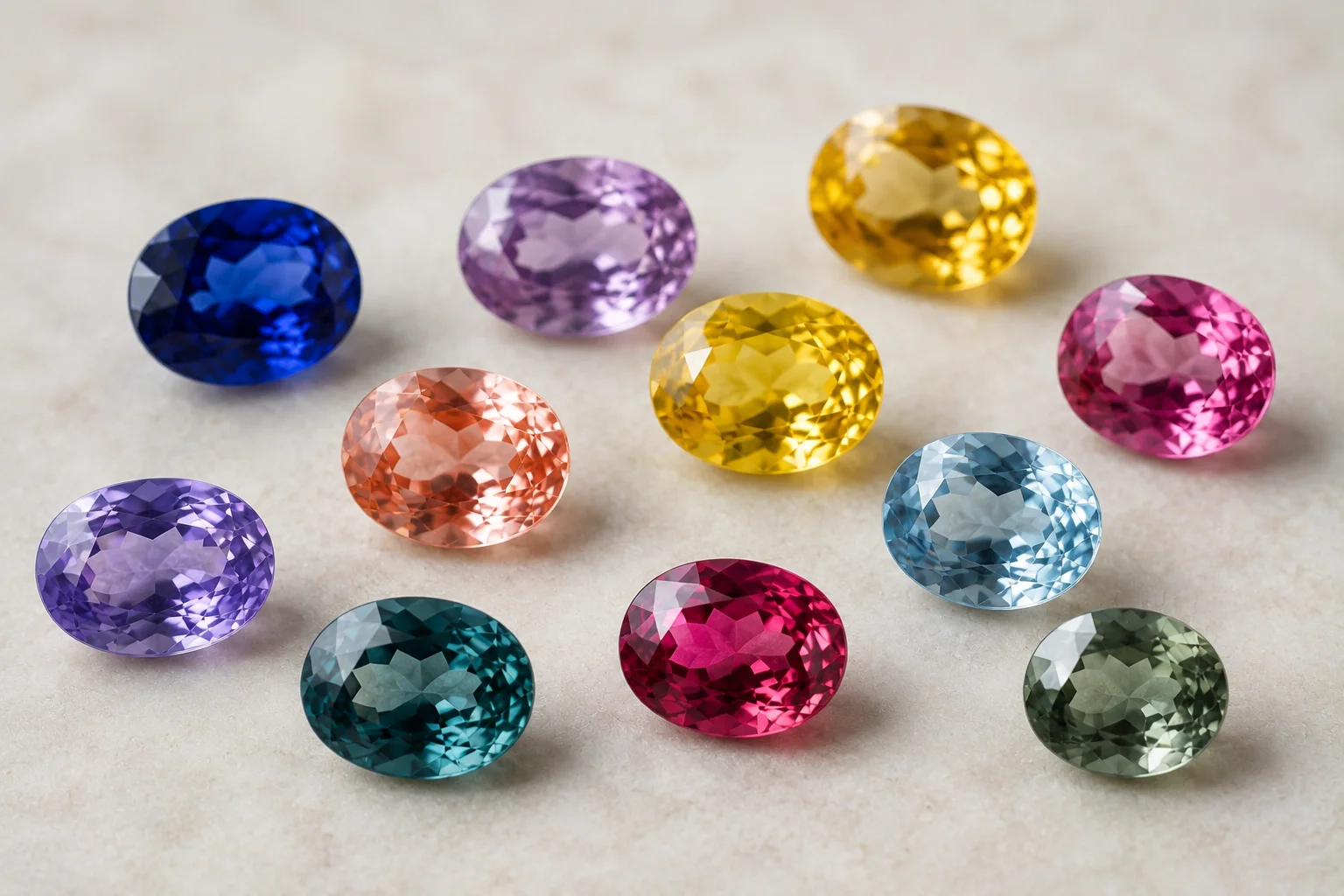
When you buy sapphire, begin by defining exactly what kind of sapphire you want rather than treating every stone as a variation of the same blue gem. Sapphire is gem-quality corundum outside the dominant red range classified as ruby, so the market includes blue, pink, yellow, orange, green, teal, purple, colorless, parti-colored, color-change, star, and other sapphires, each with its own quality hierarchy and treatment risks.
For most buyers, color should receive the greatest attention after identity. A beautiful sapphire needs an attractive combination of hue, tone, saturation, and brightness, but that face-up appearance must then be considered alongside treatment, transparency, inclusions, cutting, dimensions, durability, and documentation. A heavily diffusion-treated vivid stone, an ordinary heated natural sapphire, an exceptional unheated sapphire, and a laboratory-grown sapphire can all be visually appealing while occupying very different value categories.
The best way to buy sapphire is therefore evidence-first and stone-specific. Establish natural versus laboratory-grown origin, identify the color variety, determine what treatment has been applied, inspect the exact gemstone under realistic lighting, compare its visible dimensions with its weight, and require stronger documentation when an untreated claim, prestigious geographic origin, exceptional color designation, or unusually large size accounts for a substantial part of the price.
What Should You Judge First When You Buy Sapphire?
A practical buy sapphire hierarchy begins with identity, followed by color, treatment, clarity, cut, dimensions, size, condition, provenance, and documentation. This sequence prevents an attractive country name, proprietary grade, or impressive carat figure from overshadowing weaknesses you will see every time the gemstone is worn.
Sapphire is corundum, a crystalline form of aluminum oxide. Pure corundum is colorless, while trace elements and structural effects create the large range of sapphire colors. The broader mineralogical characteristics and individual varieties are explained in sapphire meaning and types of sapphire.
When you buy sapphire, remember that the word sapphire alone tells you the mineral family but does not answer the commercially important questions. You still need to know whether the material is natural or manufactured, whether its color is natural or modified, whether fractures or cavities have been filled, whether diffusion treatment has occurred, and whether the quality justifies the price.
| Priority | What to establish | Stronger choice | Main red flag |
|---|---|---|---|
| 1 | Identity | Natural or laboratory-grown sapphire disclosed accurately | Vague “genuine sapphire” wording |
| 2 | Color | Attractive hue with strong saturation and useful brightness | Gray, brown, overly dark, washed-out, or uneven appearance |
| 3 | Treatment | Specific disclosure | “Enhanced” with no explanation |
| 4 | Transparency and clarity | Attractive transparency for the sapphire type | Heavy cloudiness or structural fractures priced as fine material |
| 5 | Cut | Even face-up color and lively light return | Windowing, excessive extinction, severe asymmetry |
| 6 | Dimensions | Good visible spread for weight | Excessive hidden weight beneath the girdle |
| 7 | Size | Quality maintained as size increases | Large commercial material priced on carats alone |
| 8 | Condition | Crisp polish and sound edges | Chips, abrasion, cavities, damaged girdle |
| 9 | Provenance | Supported when locality adds substantial value | Country inferred from color alone |
| 10 | Documentation | Independent evidence matched to the exact stone | Appraisal used as proof of identity or treatment |
This hierarchy is especially useful when you buy sapphire online because photographs and marketing descriptions tend to emphasize the most impressive attribute while minimizing the compromises.
Decide Which Sapphire Color You Actually Want
Before comparing prices, decide which color category you intend to buy. Blue sapphire dominates the traditional market, but fancy-color sapphires can provide very different visual effects and value structures.
Blue sapphire ranges from light gray-blue through violetish blue, pure blue, greenish blue, royal-looking medium blue, and deep navy. Pink sapphire spans delicate blush to vivid magenta. Yellow sapphire ranges from pale lemon to saturated golden yellow, while green and teal material can combine blue, green, yellow, and gray components in complex ways.
Colorless sapphire places more emphasis on transparency and cutting because there is little body color to conceal weak proportions. Parti-colored sapphire deliberately contains multiple visible color zones, while color-change sapphire needs to be judged under distinct light sources.
When you buy sapphire, do not use one universal standard across all these colors. Compare each candidate with good examples of its own variety.
Color Is Usually the Most Important Visible Quality Factor
For blue stones, a strong buy sapphire choice generally combines an attractive blue or violetish-blue hue with medium to medium-dark tone, strong saturation, and enough brightness to remain lively. A dark navy stone can be attractive and affordable, but darkness should not be confused with elite quality.
The same principle applies to fancy colors. Saturation should be strong enough that the hue looks intentional rather than gray or washed out, yet the gemstone should still return light effectively.
When you buy sapphire, look at the stone before reading the seller’s color adjective. Words such as royal, cornflower, vivid, neon, lagoon, peacock, sunset, champagne, and imperial can be useful descriptions within a retailer’s inventory, but many are not universal quality grades.
Your eye should agree with the price.
Do Not Automatically Buy the Darkest Blue Sapphire
Dark blue sapphire is common enough that deep tone alone should not create a premium. In fact, excessive darkness can suppress the very color that makes sapphire attractive.
A sapphire may look strongly saturated beneath concentrated showcase lighting but become nearly black in ordinary environments. This problem can arise from naturally dark body color, high iron content, deep cutting, extinction, or a combination of factors.
When you buy sapphire, evaluate a blue stone under ordinary neutral-looking light as well as stronger illumination. Rotate it slowly and determine whether the blue remains visible across most of the face.
A somewhat lighter gemstone with stronger brilliance can look far more impressive in jewelry than a heavier, darker stone described with a more prestigious color term.
Tone, Saturation, and Brightness Must Work Together
Buyers sometimes focus on saturation while forgetting tone and light return. Saturation describes the strength of color, while tone describes how light or dark the stone appears. Neither operates independently from cut.
A medium-dark sapphire with strong saturation and competent cutting can look intensely blue because light returns efficiently through the crown. Another stone with similar body chemistry may look almost black because its proportions suppress light.
When you buy sapphire, judge the complete face-up result rather than attempting to purchase one isolated color metric.
Fine color should look rich without becoming closed, and bright without becoming watery.
Color Zoning Can Be Acceptable or Distracting
Natural sapphire commonly grows with uneven color distribution. A cutter may orient the rough so the strongest or most attractive section faces upward, using the stone’s internal zoning to improve the finished appearance.
When you buy sapphire, subtle zoning is not necessarily a problem. A stone can contain distinct internal color bands yet look relatively even when viewed normally from the top.
More obvious zoning should affect the price when pale patches, dark bands, or sharply contrasting colors dominate the face. Parti-colored sapphire is the important exception because visible multiple colors are intentionally part of the design.
The question is whether the zoning improves the gemstone, remains unobtrusive, or looks accidental.
Check Sapphire Color Under Neutral Lighting
Photographic presentation can dramatically affect a buy sapphire decision. Warm lighting may strengthen violet or yellow components, cool lighting can make some stones look bluer, dark backgrounds increase apparent saturation, and strong exposure can make deep material appear much brighter than it is.
Ask to see the exact gemstone against neutral white or gray where practical. Continuous rotating video is especially valuable because it reveals changes in darkness, zoning, windowing, and extinction that a single photograph can hide.
Pay attention to surrounding reference objects. White card should look reasonably white, metal should not have an unexplained blue cast, and skin should not appear unnaturally tinted.
The goal is not perfect color reproduction. It is to ensure that you do not buy sapphire based on a color created primarily by lighting and processing.
Blue Sapphire Requires More Than a Desirable Color Name
Commercial phrases such as cornflower blue and royal blue are widely used, but the terminology does not create one globally standardized retail grade.
Some gemological laboratories offer defined color descriptions or special trade-color comments under their own criteria, while sellers may use the same expressions much more loosely.
If you buy sapphire at a substantial premium because it is represented with a particular premium color designation, determine whether that description comes from the seller or from an independent laboratory examining the exact stone.
A beautiful sapphire can justify its price without a famous color phrase. An ordinary sapphire does not become exceptional because one has been added.
Fancy-Color Sapphire Needs Its Own Quality Logic
Pink, yellow, green, teal, purple, and colorless sapphire should not be priced through blue-sapphire logic alone. Each category has its own preferred combinations of hue, saturation, rarity, and market demand.
When you buy sapphire in a fancy color, compare it with stones of the same general hue. A vivid pink sapphire and a vivid yellow sapphire can both be attractive while relying on different trace-element chemistry and having different treatment histories.
This is also where diffusion treatment becomes especially relevant because sophisticated color modification can create vivid fancy colors that look highly desirable.
The gemstone may still be natural corundum, but color origin and treatment category can materially affect its value.
Padparadscha Requires Especially Careful Color and Treatment Review
Padparadscha sapphire occupies a specialized pink-orange to orange-pink range and can command significant premiums when the color, natural origin, and treatment status meet strict expectations.
If you buy sapphire marketed as padparadscha, a seller’s opinion should not be the only evidence supporting a major premium. Laboratories may apply their own criteria to determine whether a sapphire qualifies for the term, and certain treatments can make the designation inappropriate.
The boundary is more demanding than simply finding a sapphire that contains both pink and orange.
A high-value padparadscha purchase therefore deserves more documentation than an ordinary commercial yellow or pink sapphire.
Clarity Standards Depend on Color and Type
Sapphire commonly contains inclusions, so the correct goal is not absolute microscopic perfection. Blue sapphires can contain rutile silk, mineral crystals, healed fissures, growth zoning, fingerprints, and other features while remaining highly desirable.
When you buy sapphire, judge inclusions according to their visibility, location, effect on transparency, structural significance, and potential evidence of treatment.
A small crystal near the edge may be inconsequential. A large reflective fracture beneath the table may dominate the stone. Dense cloudiness can reduce brightness, while fine silk can sometimes soften the visual appearance pleasantly.
Clarity should support beauty rather than satisfy an arbitrary demand for flawlessness.
Rutile Silk Can Add Character but Also Reduce Transparency
Fine rutile needles are commonly called silk. In suitable concentrations, silk can diffuse light and contribute to a velvety appearance in some sapphires. Heavy silk, however, can make the stone noticeably cloudy.
When you buy sapphire, do not automatically reject silk as a defect. Its importance depends on density, orientation, color, and the final face-up appearance.
Silk can also provide valuable evidence during gemological examination because heating can alter or dissolve rutile. However, buyers should not conclude that visible silk automatically proves an unheated stone.
Treatment determination requires interpretation of multiple features rather than one inclusion shortcut.
Surface-Reaching Fractures Deserve More Attention
An enclosed inclusion and an open fissure should not receive the same durability assessment.
When you buy sapphire, inspect fractures that reach the crown, girdle, pavilion, or corners because these features can create structural vulnerabilities and can also contain filler.
A surface-reaching fracture near a prong position may be more concerning than a larger enclosed feature deep inside the stone. A cavity along the girdle can similarly create problems during setting or repeated wear.
Close photography is useful, but professional inspection becomes increasingly appropriate as the value rises.
Star Sapphire Has a Different Clarity Standard
Star sapphire is cut as a cabochon specifically because aligned inclusions create asterism. The inclusions are therefore part of the desirable optical phenomenon rather than simply defects.
When you buy sapphire with a star, evaluate the star’s sharpness, completeness, centering, movement, body color, translucency, dome proportions, and treatment.
A six-rayed star is common, and the rays should move naturally across the curved surface as the stone or concentrated light source changes position. A strong star remains coherent without appearing painted or fixed to one area.
Do not compare star sapphire directly with transparent faceted sapphire using the same clarity criteria.
Synthetic Star Sapphire Is an Important Buying Consideration
Laboratory-grown sapphire has long been produced in phenomenal forms, including material with strong, highly organized star effects.
When you buy sapphire displaying a remarkably sharp and perfectly organized star, that appearance does not automatically mean synthetic origin, but it should encourage proper identification when the seller is charging a natural-star premium.
Natural and laboratory-grown corundum are both sapphire in a mineralogical sense, yet geological origin is commercially important.
A beautiful synthetic star sapphire can make excellent jewelry when sold accurately. Misrepresentation is the problem.
Cut Quality Has an Enormous Effect on Sapphire Beauty
Sapphire rough can be valuable, strongly zoned, and awkwardly shaped, so cutters often balance weight retention against optical performance. This is one reason colored-stone cutting does not always follow the same proportion-focused approach used for standardized round diamonds.
When you buy sapphire, some asymmetry can be a reasonable consequence of conserving valuable rough. The critical question is whether the finished stone still looks attractive from the top.
A good cut should make useful color visible, control darkness, return light across most of the face, and provide reasonable dimensions for the weight.
A technically imperfect but visually beautiful cut can be a better buy sapphire choice than a symmetrical stone with severe windowing or extinction.
Windowing Should Affect the Price
Windowing appears as a transparent or unusually pale face-up area where light travels through the pavilion instead of returning toward the viewer.
When you buy sapphire, look straight through the table. If you can clearly see the background through a broad central zone, the stone probably has a meaningful window.
This problem can make color look weak in the center and reduce brilliance. It may also indicate that the cutter retained a shallow shape to preserve maximum diameter or worked around limitations in the rough.
Recutting can sometimes improve the appearance, but it removes weight and may change the outline dramatically. Price the sapphire you are buying rather than assuming a future recut will solve everything.
Extinction Can Make Good Color Look Too Dark
Extinction is the opposite optical problem. Areas of the gem return little light and appear nearly black.
Some contrast is essential for a lively faceted stone, so a few dark facets are normal. Excessive extinction becomes a weakness when broad sections remain dark as the gemstone moves.
When you buy sapphire, examine video rather than a single ideal photograph. A properly performing stone should show changing light and dark patterns instead of a large dead region.
This is particularly important with deeply colored blue and teal sapphires, where dark tone and poor light return can combine.
Bow Ties Matter in Elongated Sapphire Shapes
Oval, pear, marquise, and elongated cushion sapphires can show central bow-tie patterns.
A mild bow tie can create attractive contrast. A severe one can leave the gemstone with bright ends and a persistent black band across the center.
When you buy sapphire in an elongated shape, rotate it through several angles and evaluate how the central contrast behaves. If it breaks up and changes naturally, it may be acceptable. If it remains broad and dead, the effect should influence the price.
Shape preference is personal. Severe light-performance weakness is not.
Compare Face-Up Dimensions With Carat Weight
Carat weight measures mass, not visible size. Two sapphires with equal weight can look significantly different from the top if one has a deep pavilion, thick girdle, or bulky lower half.
When you buy sapphire, always request length, width, and depth alongside carat weight.
This becomes particularly important once size premiums increase. If one stone weighs substantially more but has nearly identical face-up dimensions to a lighter candidate, ask whether the extra weight produces stronger color and brilliance or merely sits beneath the girdle.
A slightly lighter gemstone with excellent spread can give you more visible sapphire for the budget.
Hidden Weight Is Not Automatically Bad
Deep cutting can sometimes improve color or be necessary because of the original rough. A cutter may also need depth to avoid inclusions, preserve a valuable color zone, or maintain structural integrity.
Therefore, when you buy sapphire, do not reject every deep stone mechanically.
Instead, determine what the depth accomplishes. If the stone has exceptional face-up color and brilliance despite being deep, the compromise may be reasonable. If it looks small, dark, and poorly proportioned while carrying a large carat premium, the hidden weight becomes much harder to justify.
Context matters.
Heat Treatment Is Common and Generally Accepted
Heat treatment is one of the central realities you need to understand before you buy sapphire. Natural sapphire is commonly heated to modify or improve color and clarity-related appearance.
A conventionally heated sapphire remains natural corundum. Heat treatment does not make the stone fake, and well-treated natural sapphires can be beautiful, durable, and appropriate for fine jewelry.
The commercial distinction becomes important because comparable high-quality sapphires with credible evidence of no heating can command larger premiums due to their relative rarity.
The dedicated treated sapphire discussion covers the major treatment categories in greater detail.
Unheated Sapphire Deserves a Premium Only When the Stone Is Good
An unheated label should not distract you from poor color, weak cutting, excessive darkness, or unattractive inclusions.
When you buy sapphire, compare the visible beauty first. A lively conventionally heated natural sapphire can be a much better jewelry purchase than a dull untreated stone.
No-heat status becomes especially meaningful when the sapphire already has exceptional color, useful transparency, good cutting, meaningful size, and perhaps respected provenance.
In that situation, untreated rarity adds to an already strong stone instead of being asked to compensate for mediocrity.
“No Heat” Should Be Independently Supported at Higher Values
The more money you pay specifically because a sapphire is represented as unheated, the more important independent laboratory evidence becomes.
Visual inspection by a buyer cannot reliably exclude all heating. Laboratories examine inclusions, microscopic alteration, spectroscopy, structural features, and other evidence to determine whether heating indications are present.
When you buy sapphire at a high premium, distinguish among “seller believes untreated,” “no treatment disclosed,” and an independent report stating no indications of heating.
Those claims are not equivalent.
Lattice Diffusion Is Not the Same as Conventional Heating
Lattice diffusion combines high temperature with introduced elements that modify color within sapphire. Depending on the process, the added color can be concentrated near the surface or penetrate much farther into the material.
When you buy sapphire, diffusion treatment should be disclosed separately from ordinary heating because the market generally values diffusion-treated sapphires below comparable conventionally heated or untreated natural stones.
This is especially important with extremely vivid blue, orange, yellow, pink-orange, and other fancy-color material offered at unexpectedly low prices.
A sapphire can be natural corundum and still owe commercially important color to diffusion.
Beryllium Diffusion Can Produce Dramatic Fancy Colors
Beryllium diffusion is particularly relevant to fancy-color sapphire because beryllium can penetrate significantly into corundum under treatment conditions and create or alter colors.
When you buy sapphire in unusual orange, yellow, pink-orange, or related ranges, do not assume that color extending deeply into the stone proves natural coloration.
Older consumer shortcuts based on shallow surface color are not sufficient for every diffusion process.
Laboratory analysis becomes much more valuable when treatment status materially affects the price.
Surface Diffusion Creates Recutting Risks
Some diffusion-treated sapphires carry much of their added color close to the surface. Recutting or repolishing can therefore remove or alter portions of the color.
When you buy sapphire that may later need significant recutting, treatment status matters beyond price alone.
A chipped untreated or conventionally heated sapphire might be repolished primarily with weight and proportions in mind. A shallow diffusion-treated color layer introduces another variable because polishing can change the face-up appearance.
Ask about diffusion before purchasing a damaged stone with plans for restoration.
Fracture and Cavity Filling Need Clear Disclosure
Sapphire can contain fractures and cavities that are filled with glass-like or other materials to improve apparent clarity or surface condition.
When you buy sapphire, substantial filling should be distinguished from ordinary heat treatment because the added material can influence durability, repair, value, and cleaning.
A filled cavity near the girdle may also respond differently to polishing or setting pressure than solid corundum.
If the seller uses vague terms such as clarity enhanced, ask what was actually introduced into the stone and how extensive the treatment is.
Dyeing and Coating Belong at the Lower End of the Treatment Spectrum
Sapphire or low-quality corundum can also be dyed or coated to alter apparent color. These treatments are less central to fine sapphire buying than heat and diffusion but are important in inexpensive commercial material.
Color concentrated in fractures, drill holes, porous areas, or near the surface can raise questions. Abrasion exposing a different underlying color can similarly suggest coating.
When you buy sapphire, visual clues are useful for screening but should not be treated as definitive laboratory conclusions.
Avoid destructive attempts to scrape coatings or chemically extract dye.
Natural and Laboratory-Grown Sapphire Must Be Distinguished Clearly
Laboratory-grown sapphire is manufactured corundum with essentially the same basic composition, crystal structure, hardness, and many optical properties as natural sapphire.
That means a hardness test cannot tell you whether a sapphire formed geologically. A laboratory-grown stone can scratch glass, show strong brilliance, and remain highly durable because it is genuinely corundum.
When you buy sapphire, the relevant distinction is origin rather than whether synthetic material is somehow “plastic” or “fake glass.”
Laboratory-grown sapphire can be an excellent jewelry material when represented accurately and priced accordingly.
Synthetic Sapphire Can Be Exceptionally Clean
Laboratory-grown sapphire is available in extremely transparent material with vivid, controlled colors. Some growth methods can also produce internal features that imitate natural-looking complexity closely enough that casual visual inspection is insufficient.
When you buy sapphire represented as natural, do not assume that inclusions prove geological origin or that perfect clarity proves laboratory growth.
Natural stones can be remarkably clean, and manufactured stones can contain growth structures and internal features.
Professional identification considers a broader combination of optical, microscopic, spectroscopic, and growth-related evidence.
Sapphire Imitations Are a Different Category
Glass, synthetic spinel, cubic zirconia, blue topaz, blue glass composites, and other materials can imitate certain sapphire colors.
These materials may look convincing in photographs but do not share sapphire’s complete gemological properties.
The distinctions among natural, laboratory-grown, treated, and imitation material are examined in real vs fake sapphire.
When you buy sapphire, avoid destructive scratch, flame, acid, or impact tests. Professional nondestructive testing provides stronger answers without risking the gemstone.
Colorless Sapphire Needs Extra Attention to Cut
Colorless sapphire lacks the body color that helps blue and fancy sapphires mask some cutting weaknesses. Its brilliance also differs from diamond, which has higher dispersion and different optical behavior.
When you buy sapphire in a colorless form, focus strongly on transparency, polish, symmetry, windowing, and overall light return.
A poorly cut white sapphire can look flat, while a well-proportioned stone can offer an attractive clean appearance even though it will not reproduce diamond’s optical performance exactly.
Do not pay for the comparison claim. Pay for the quality of the sapphire itself.
Teal and Parti Sapphires Should Be Judged for Balance
Teal sapphire often combines blue and green, while parti sapphire deliberately displays two or more distinct colors within one stone.
When you buy sapphire in these categories, zoning becomes part of the design rather than something that must always be eliminated.
A strong teal stone should show an attractive balance rather than becoming muddy gray-green. A parti-colored gemstone should display its color pattern in a visually intentional way, with the cut making useful use of the natural zoning.
There is no universal percentage of blue versus green that makes every teal sapphire superior. Personal preference plays a larger role.
Geographic Origin Can Add Value, but It Does Not Replace Quality
Sapphire has been produced from numerous regions, including Kashmir, Myanmar, Sri Lanka, Madagascar, Australia, Thailand, Cambodia, Montana, and parts of East Africa.
Certain origins can command significant premiums because of rarity, historical reputation, characteristic appearance, or collector demand. However, each source produces a range of qualities.
When you buy sapphire, a weak stone does not become fine because a prestigious locality is written on its invoice.
Color, transparency, treatment, cut, and size should establish that the gemstone deserves attention before provenance adds another layer of value.
Kashmir Claims Deserve Exceptional Evidence
Kashmir sapphire occupies one of the most prestigious positions in the colored-stone market. Fine documented material can command extraordinary premiums, making unsupported Kashmir claims particularly risky.
When you buy sapphire represented as Kashmir material, appearance alone is not enough. A velvety blue visual impression may be suggestive to an expert, but it cannot establish geographic origin conclusively for a buyer.
Important stones should have credible independent origin opinions matched to the exact gemstone.
The larger the provenance premium, the less appropriate it is to rely on seller history alone.
Sri Lankan and Myanmar Sapphire Should Also Be Proven When Origin Matters
Sri Lanka has produced fine sapphire in numerous colors, while Myanmar has produced important blue and fancy-color material. Both localities carry established gemological significance.
However, when you buy sapphire, neither country name functions as a universal quality grade.
A pale or windowed sapphire does not become exceptional because it is described as Ceylon material, and a dark heavily included stone does not become fine simply because Burma is claimed.
Pay for origin after you have established that the stone itself is desirable.
Madagascar Produces a Wide Quality Range
Madagascar has become an important source of sapphire in blue and many fancy colors. Material ranges from commercial quality to exceptional gems.
When you buy sapphire represented as Madagascar origin, treat the country as provenance rather than as shorthand for quality.
The same logic applies across nearly every producing region. Mines and deposits do not create one uniform grade.
The exact sapphire determines the purchase.
Montana Sapphire Has Its Own Market Appeal
Montana sapphire is especially popular for blue-green, teal, gray-blue, and parti-colored stones, although other colors occur.
When you buy sapphire from Montana, collectors and jewelry buyers may value documented domestic provenance, individual color character, and custom cutting as much as traditional deep blue saturation.
That makes comparisons with classic blue sapphires from other regions less straightforward.
Evaluate Montana material within the aesthetic and provenance category you actually want rather than demanding that every stone imitate a traditional royal-blue sapphire.
Never Accept Origin Based on Color Alone
One of the clearest red flags when you buy sapphire is a seller claiming precise geographic origin solely from appearance.
Experienced laboratories evaluate microscopic inclusions, trace chemistry, spectroscopy, geological associations, and reference data, and even then some sapphires cannot be assigned confidently to one origin.
A retailer saying “the color proves Kashmir” or “this shade can only come from Sri Lanka” is oversimplifying a difficult gemological problem.
If origin materially increases the price, require stronger evidence.
Laboratory Reports Become More Valuable as the Premium Rises
Not every small commercial sapphire needs an individual report. A modest heated natural sapphire with clear disclosure and an appropriate price may not economically justify expensive documentation.
A report becomes much more important when you buy sapphire whose price depends on natural versus laboratory-grown origin, no-heat status, diffusion status, prestigious geographic origin, padparadscha classification, unusual phenomenal behavior, or exceptional size and quality.
A good report can document identity, dimensions, weight, color, natural or manufactured origin, detectable treatment, and sometimes a geographic-origin opinion.
It does not tell you whether the seller’s retail price is a bargain.
The Lab-Report Threshold Should Depend on Risk
Instead of choosing one arbitrary price threshold, ask what would happen if the most important claim were wrong.
If you buy sapphire for a modest amount and simply want an attractive disclosed heated natural gem, the financial consequence of uncertainty may be limited.
If you are paying a substantial premium because the stone is supposedly unheated and from a prestigious deposit, the potential difference in value can be large. Independent analysis then becomes much easier to justify.
Documentation should rise with claim-dependent financial risk.
A Gemological Report Is Not an Appraisal
A laboratory report investigates what the gemstone is. An appraisal estimates monetary value for a particular purpose.
When you buy sapphire, a high insurance appraisal should not be treated as proof that a stone is natural, unheated, diffusion-free, or from a particular country unless those questions were separately established through appropriate examination.
Likewise, an excellent laboratory report does not establish that the asking price is competitive.
Identification and valuation should remain distinct.
Match Every Report to the Exact Sapphire
A genuine report is useful only when it belongs to the stone you are receiving.
When you buy sapphire with documentation, compare the report number, carat weight, dimensions, shape, cutting style, color description, photograph when supplied, and other identifying details.
If the sapphire has been recut since examination, its measurements and weight may no longer match the document. If the seller presents a report for “another stone from the same parcel,” that report does not establish the characteristics of your gemstone.
Report matching should happen before the return period disappears.
Actual-Stone Photos Matter More Than Stock Images
Sapphire varies dramatically in tone, saturation, color zoning, clarity, cut, and treatment, so representative photographs are weak evidence for an individually priced gem.
When you buy sapphire online, request the exact stone face-up, from the side, and from the pavilion where practical.
The face-up view shows color, zoning, windowing, and extinction. The side reveals depth and girdle thickness. The pavilion can expose chips, fractures, cavities, and poor polishing.
A rotating video ties those views together and shows whether the stone remains lively rather than looking good only in one position.
Ask for Normal-Distance and Close-Up Images
Macro images are useful for understanding inclusions but can make tiny features appear much more serious than they look in jewelry.
When you buy sapphire, examine the stone first at a realistic viewing distance. Then inspect enlarged images to understand structural details.
This two-stage approach prevents you from rejecting a beautiful stone because a microscopic inclusion looks enormous on screen while also preventing a seller from hiding meaningful fractures through distant photography.
Clarity should be assessed in context.
White-Balance Manipulation Is a Serious Color Risk
A blue sapphire can appear significantly more attractive when exposure, saturation, contrast, and color temperature are adjusted aggressively.
When you buy sapphire online, compare photographs in which neutral objects remain believable. A supposedly white background that appears strongly blue should make you cautious about the gemstone’s displayed hue.
Likewise, a very dark stone photographed with enough exposure to wash out the metal setting may appear far brighter than it will in person.
Request additional imagery before paying a premium based on color.
Return Terms Are Part of Online Sapphire Inspection
Remote photography cannot reproduce every aspect of sapphire appearance perfectly. A meaningful return policy is therefore part of a sensible buy sapphire process.
Read the conditions before payment. Check whether removing tags, resizing a ring, altering a mounting, setting a loose gemstone, or requesting engraving ends return rights.
Determine who pays insured shipping, whether restocking charges apply, and how the seller handles a material discrepancy found through independent examination.
A retailer making major untreated or provenance claims while effectively preventing verification deserves additional scrutiny.
Put Important Claims on the Invoice
When you buy sapphire at meaningful value, the written description should reflect the characteristics you are paying for.
Useful language may identify the sapphire as natural or laboratory-grown, state known treatments, record weight and dimensions, identify color variety, and reference an independent laboratory report.
If no-heat status or geographic origin materially contributes to the price, preserve those representations in writing.
An invoice does not replace scientific testing, but it defines what the seller actually represented during the transaction.
Seller-Created Grades Are Not Universal Standards
Terms such as AAA, AAAA, investment quality, premium, royal grade, heirloom, and collector quality are not universal sapphire grading standards.
One retailer may use AAA for strongly saturated heated material, while another reserves it for cleaner or supposedly untreated inventory.
When you buy sapphire carrying a proprietary grade, ask what the designation actually measures. Color? Clarity? Cut? Treatment? Origin? Size?
If the grade cannot be translated into observable or documented attributes, ignore it.
Sapphire Is Excellent for Jewelry, but Treatment Still Matters
Sound sapphire ranks 9 on the Mohs scale, making it highly resistant to scratching and suitable for frequently worn jewelry. Corundum also lacks easy cleavage, giving sapphire excellent practical durability when the stone is structurally sound.
That makes sapphire particularly attractive for rings, including a sapphire engagement ring style where frequent wear is expected.
However, a filled, heavily fractured, or cavity-enhanced sapphire should not automatically be treated like an intact untreated stone. Treatment and internal condition influence practical handling even when the underlying corundum remains hard.
Durability belongs to the complete gemstone, not just its Mohs number.
Ring Buyers Should Inspect the Girdle and Corners
When you buy sapphire for a ring, pay special attention to girdle condition, exposed corners, points, and fractures near prong locations.
An oval or cushion usually has fewer vulnerable sharp points than a pear or marquise, although any shape can work in a well-designed setting.
A thin girdle near a surface-reaching fracture creates more concern than a small internal crystal far from the edge.
The setting should protect the gemstone without placing concentrated pressure directly on existing weaknesses.
Heat-Affected Repairs Require Treatment Awareness
Ordinary sound sapphire tolerates wear very well, but jewelry repair can involve temperatures far beyond normal use.
If you buy sapphire that is filled, coated, diffusion treated, or otherwise modified, preserve treatment documentation and show it to the jeweler before soldering, retipping, resizing, or other work involving heat or chemicals.
The safest repair strategy depends on both the gemstone and its treatment history.
A good purchase remains easier to maintain when the treatment is known from the beginning.
Care After You Buy Sapphire
For sound untreated or conventionally heated sapphire, warm water, mild soap, and gentle manual cleaning provide a straightforward approach.
Filled, dyed, coated, heavily fractured, or otherwise sensitive material requires greater caution. Aggressive chemicals, high heat, steam, or ultrasonic cleaning may be inappropriate depending on the treatment and condition.
The physical cleaning procedure is covered in how to clean sapphire jewelry.
When the sapphire is mounted with pearls, enamel, adhesives, or other delicate materials, use the safest method appropriate for the entire piece.
Where Should Your Budget Go?
When you buy sapphire on a limited budget, prioritize the attributes you will actually see.
For a blue sapphire, that normally means buying the most attractive balance of hue, tone, saturation, and brightness you can afford before chasing maximum carat weight. A smaller vivid gemstone can look substantially more impressive than a larger dark stone.
Next, prioritize cut and transparency. A large window weakens apparent color, while heavy extinction makes the stone look black.
Treatment comes next as a value-category decision. A beautiful conventionally heated sapphire can provide excellent value, while an unheated stone may cost considerably more when all other characteristics are comparable.
Prestigious origin should come after those fundamentals unless provenance itself is the purpose of the collection.
Heated Fine Sapphire Versus Weaker Unheated Sapphire
Suppose two stones fit the same budget. One is a conventionally heated natural sapphire with vivid color, good transparency, and lively cutting. The other has independent evidence of no heating but is considerably darker, more included, and less attractive.
If you buy sapphire primarily for jewelry, the heated stone may be the stronger choice because its visible qualities are better.
A collector specifically seeking untreated material may prefer the second stone.
Neither decision is universally correct. The important point is to understand which characteristic you are paying for instead of assuming untreated always means better.
Better Color Versus Larger Carat Weight
Size is one of the easiest ways to overspend when you buy sapphire.
A larger gemstone may have greater rarity if fine color and clarity survive, but commercial large stones can also be dark, heavily included, shallow, or deeply cut.
If a smaller sapphire has superior color and face-up spread, it may produce greater visual presence than its weight suggests.
Compare dimensions and appearance before accepting a large-stone premium.
Prestigious Origin Versus Better Face-Up Quality
A documented prestigious origin can add collectability, but it should not force every buyer to accept a visibly inferior gem.
When you buy sapphire for personal jewelry, compare what the extra provenance premium could purchase in color, clarity, cut, or size from another source.
You may decide that historical origin matters deeply. You may instead prefer the more beautiful gemstone.
Both choices are rational when made deliberately.
Laboratory-Grown Sapphire Can Be a Rational Choice
If geological rarity and resale considerations are not important to you, laboratory-grown sapphire can offer strong color, clarity, durability, and larger dimensions at a lower cost.
When you buy sapphire manufactured in a laboratory, the critical issue is accurate representation. The stone should not be sold as mined material or priced as though geological scarcity applies.
For an engagement ring or frequently worn jewel, laboratory-grown corundum still provides sapphire’s underlying hardness and practical durability.
Your budget can then be directed toward cutting, setting quality, metal, design, or size.
Realistic Resale Expectations
Fine natural sapphire has an established collector market, particularly for exceptional unheated stones with strong color, important size, respected provenance, and major laboratory documentation. That does not mean every sapphire will resell easily or appreciate.
Ordinary heated stones, diffusion-treated material, laboratory-grown sapphire, heavily included commercial stones, and generic retail jewelry occupy different secondary markets.
When you buy sapphire, assume that retail markup, setting costs, dealer margin, branding, and transaction expenses may not be recovered automatically.
A gemstone should not be purchased on promises of guaranteed appreciation.
A Practical Buy Sapphire Decision Matrix
| Factor | Strong candidate | Reasonable trade-off | Serious concern |
|---|---|---|---|
| Identity | Natural sapphire independently supported where appropriate | Clearly disclosed laboratory-grown sapphire | “Genuine” without natural/synthetic clarification |
| Color | Strong saturation with useful brightness | Attractive lighter or darker color at fair price | Muddy, gray, brown, washed out, or nearly black |
| Zoning | Even face-up or visually intentional | Minor zoning | Distracting pale or dark bands |
| Clarity | Attractive transparency with acceptable inclusions | Visible but stable natural inclusions | Major open fractures or heavy cloudiness |
| Cut | Balanced light return | Minor asymmetry from rough conservation | Large window or persistent extinction |
| Dimensions | Good spread for weight | Moderate depth supporting color | Excessive hidden weight |
| Heat | Specifically disclosed | Conventional heating accepted | “Enhanced” with no details |
| Diffusion | Clearly disclosed and discounted appropriately | Buyer knowingly accepts treated color | Diffusion hidden as ordinary heat |
| Filling | None or specifically disclosed | Minor treatment reflected in price | Extensive undisclosed filling |
| No-heat claim | Independent evidence for high-value stone | Treatment uncertain at modest commercial price | Major untreated premium based only on seller assertion |
| Origin | Credible support if it materially affects value | Origin unimportant to buyer | Prestigious locality claimed from appearance |
| Photos | Exact stone under neutral light | Clear actual-stone images | Stock imagery for an expensive individual gem |
| Report | Matches exact gemstone | No report when stakes are modest | Unrelated report or appraisal used as identification |
| Returns | Meaningful inspection opportunity | Reasonable disclosed restrictions | Little remedy despite exceptional claims |
Use the matrix to expose trade-offs rather than to create another artificial universal grade.
Stone-Specific Red Flags When You Buy Sapphire
One major red flag is vague treatment disclosure. If a seller uses only “enhanced” for a vivid sapphire, ask whether that means conventional heat, lattice diffusion, fracture filling, coating, dye, or another process.
Another warning is a large untreated premium with no independent evidence. No-heat sapphire can command substantial value, which makes casual seller claims financially important.
Be cautious when prestigious origin is asserted from color alone, particularly for Kashmir, Myanmar, or another locality carrying a meaningful premium. Geographic origin requires more than a visual resemblance.
An unusually vivid fancy-color sapphire offered far below comparable untreated material also deserves treatment questions, particularly about diffusion.
Other concerns include large carat weight with very small face-up dimensions, a broad central window hidden by a dark background, persistent extinction described as deep saturation, stock photographs for an individually priced gemstone, color that varies radically among seller images, and a report that cannot be matched to the stone.
None of these factors proves misrepresentation by itself. Each identifies a point where stronger evidence should replace assumption.
A Better Way to Buy Sapphire
Start your buy sapphire comparison with several stones in the same color family and approximately the same budget. Ignore seller-created grades at first and compare only the actual face-up appearance under similar conditions.
Remove stones that are too dark, washed out, muddy, or unattractively zoned. Then compare transparency and inclusions, distinguishing harmless internal features from structural fractures.
Next, evaluate cutting. Look for useful brilliance, balanced contrast, limited windowing, manageable extinction, and dimensions that make sense for the weight.
Only after those visible qualities are established should you compare treatment categories. Decide whether you prefer the value of a conventionally heated natural sapphire, the rarity premium of a documented unheated stone, or the affordability and consistency of laboratory-grown sapphire.
Then consider provenance, reports, setting, exact-stone photography, written disclosures, and return terms.
The wider Buying & Value section applies similar evidence-based purchasing principles across other stones, but a successful buy sapphire decision must give unusual weight to color, treatment category, and documentation because those variables can alter value dramatically.
Frequently Asked Questions
What should I look at first when I buy sapphire?
Confirm whether the gemstone is natural or laboratory-grown and identify the sapphire type, then judge color, treatment, transparency, clarity, cut, dimensions, and condition. Provenance and special trade descriptions should come after those fundamentals.
What is the best blue sapphire color?
Many buyers favor strong to vivid blue or violetish-blue color in a medium to medium-dark tone with enough brightness to remain lively. The best individual shade is still partly subjective, and an overly dark stone can be less attractive than a slightly lighter one.
Is darker blue sapphire more valuable?
Not automatically. Deep color becomes undesirable when the gemstone appears nearly black or suffers excessive extinction. Strong saturation and useful brightness are generally more important than maximum darkness.
Should sapphire be eye-clean?
Not necessarily. Natural sapphire commonly contains inclusions, and fine stones can show silk, crystals, healed fissures, and zoning. The important questions are whether inclusions are distracting, reduce transparency, create structural weakness, or provide treatment evidence.
Is heated sapphire real sapphire?
Yes. Conventionally heated natural sapphire remains natural corundum. Heat treatment is common and accepted, but it should be disclosed because comparable fine unheated stones can command larger premiums.
Is unheated sapphire always better?
No. An unattractive unheated sapphire can be less appealing for jewelry than a beautifully colored, well-cut heated stone. No-heat status becomes most valuable when the gemstone already has strong quality.
How can I prove a sapphire is unheated?
For a valuable purchase, rely on an appropriate independent gemological laboratory rather than visual inspection alone. Treatment determination may require microscopy, spectroscopy, and interpretation of heat-sensitive internal features.
What is diffusion-treated sapphire?
Diffusion treatment uses high temperature and introduced elements to create or modify color within sapphire. Depending on the process, color can be relatively shallow or penetrate much more deeply. Diffusion-treated material is generally valued below comparable conventionally heated or untreated sapphire.
Can sapphire be fracture filled?
Yes. Fractures or cavities can contain filling materials that improve appearance. Significant filling should be disclosed because it may affect value, care, setting, and repair.
Can sapphire be dyed or coated?
Yes, particularly in lower-quality material. Dye can concentrate in fractures or porous areas, while coating adds color or optical effects at the surface. These treatments should be represented accurately.
Does laboratory-grown sapphire have the same hardness?
Laboratory-grown sapphire is corundum and therefore has essentially the same fundamental Mohs hardness of 9 as natural sapphire. Hardness cannot prove geological origin.
Is laboratory-grown sapphire fake?
Laboratory-grown sapphire is manufactured corundum rather than an imitation such as glass. It should be clearly distinguished from mined sapphire because geological origin and rarity differ.
What is the difference between sapphire and ruby?
Both are corundum. Dominantly red gem corundum is classified as ruby, while qualifying non-red gem corundum is sapphire. The pink-red boundary can involve differences in commercial and laboratory classification.
Do I need a laboratory report when I buy sapphire?
Not every modest commercial sapphire requires one. Reports become more important when a substantial premium depends on natural origin, no-heat status, prestigious locality, diffusion status, padparadscha classification, phenomenal behavior, or exceptional size and quality.
Does a laboratory report grade sapphire quality?
A gemstone identification report generally documents characteristics, origin type, detectable treatment, and sometimes geographic origin rather than providing one universal commercial quality grade. You still need to judge color, clarity, cut, and value.
Is an appraisal proof that sapphire is natural?
No. An appraisal is primarily a valuation document. Natural versus laboratory-grown origin and treatment status require appropriate gemological examination.
Is Kashmir sapphire always better?
No. Kashmir provenance can carry an exceptional premium in fine documented material, but locality does not rescue poor color, weak transparency, or unattractive cutting. Quality and provenance should be evaluated separately.
Is Ceylon sapphire valuable?
Sri Lanka has produced many excellent sapphires, but “Ceylon” is a provenance description rather than a universal quality grade. Evaluate the individual stone and require evidence when origin materially increases the price.
Is Madagascar sapphire good?
Madagascar produces a broad quality range, including outstanding blue and fancy-color sapphires. The source alone does not determine quality.
What is windowing in sapphire?
Windowing is a pale or transparent face-up area caused when light escapes through the pavilion. A large window reduces apparent color and brilliance and should influence the price.
What is extinction in sapphire?
Extinction appears as dark or black-looking portions where little light returns toward the viewer. Some contrast is desirable, but large persistent areas can make sapphire look lifeless.
Should I choose carat weight or millimeter dimensions?
Compare both. Carat measures mass, while dimensions reveal visible size. A deep sapphire can weigh considerably more without appearing proportionately larger from the top.
What pictures should I request before I buy sapphire online?
Ask for photographs of the exact gemstone face-up, from the side, and from the pavilion where practical, plus continuous rotating video under neutral-looking and ordinary illumination. These views reveal color, zoning, inclusions, depth, windowing, extinction, and condition.
Is sapphire good for an engagement ring?
Yes. Sound sapphire is one of the most practical colored gemstones for frequent ring wear because corundum has high scratch resistance and no easy cleavage. Treatment and fracture condition should still be considered.
How should I clean sapphire jewelry?
For sound untreated or conventionally heated sapphire, gentle cleaning with lukewarm water, mild soap, and a soft brush is generally appropriate. Filled, coated, dyed, or heavily fractured material may require more conservative care.
Does sapphire hold its value?
Exceptional natural sapphires can have strong collector markets, particularly when color, size, no-heat status, provenance, and documentation align. Ordinary retail sapphire does not come with guaranteed resale value, and treatment category can materially affect secondary demand.
What is the biggest red flag when I buy sapphire?
A major warning is a large premium based on an unsupported claim—such as unheated status, prestigious geographic origin, exceptional trade color, or natural fancy color—combined with vague treatment disclosure or insufficient independent evidence.
Final Buy Sapphire Checklist
Before you buy sapphire, determine whether the stone is natural or laboratory-grown and identify the exact color or phenomenal variety you are purchasing. Sapphire is too diverse for “blue gem” assumptions to produce consistently good decisions.
Judge color under realistic lighting, looking for a combination of attractive hue, appropriate tone, useful saturation, and enough brightness to keep the gemstone lively. Examine zoning rather than assuming perfectly even color, and be particularly careful with stones whose photographs depend on extreme exposure, dark backgrounds, or strongly altered white balance.
Next, evaluate transparency and inclusions. Natural internal features are normal, while surface-reaching fractures, cavities, heavy clouds, and structural weaknesses deserve closer scrutiny. Star sapphire should be evaluated through the quality and movement of its asterism rather than faceted-stone clarity standards.
Study the cut from several directions. Look for a balanced face-up pattern, limited windowing, manageable extinction, sensible symmetry, and dimensions appropriate to the carat weight. Do not pay a large size premium for material hidden beneath the girdle unless the depth materially improves color and optical performance.
Ask specifically about treatment before you buy sapphire. Conventional heating, lattice diffusion, fracture filling, cavity filling, coating, and dyeing should not be collapsed into one vague word. A conventionally heated sapphire can provide excellent value, while diffusion-treated or heavily filled material belongs in a different commercial category.
If an unheated claim contributes materially to the price, seek independent support. Apply the same principle to prestigious geographic provenance, special color terminology, and padparadscha classification. The more expensive the claim, the stronger the evidence should be.
For online purchases, insist on actual-stone photographs, neutral-looking video, side and pavilion views, written treatment disclosure, report-to-stone matching where documentation is supplied, and return conditions that give you a meaningful opportunity to inspect the gemstone.
The strongest way to buy sapphire is to pay first for accurately represented identity, compelling color, useful transparency, efficient cutting, sound condition, and clear treatment disclosure. Untreated status, famous origin, exceptional size, premium color terminology, and collector rarity should increase the price only after the sapphire itself—and the evidence supporting those claims—earns the premium.