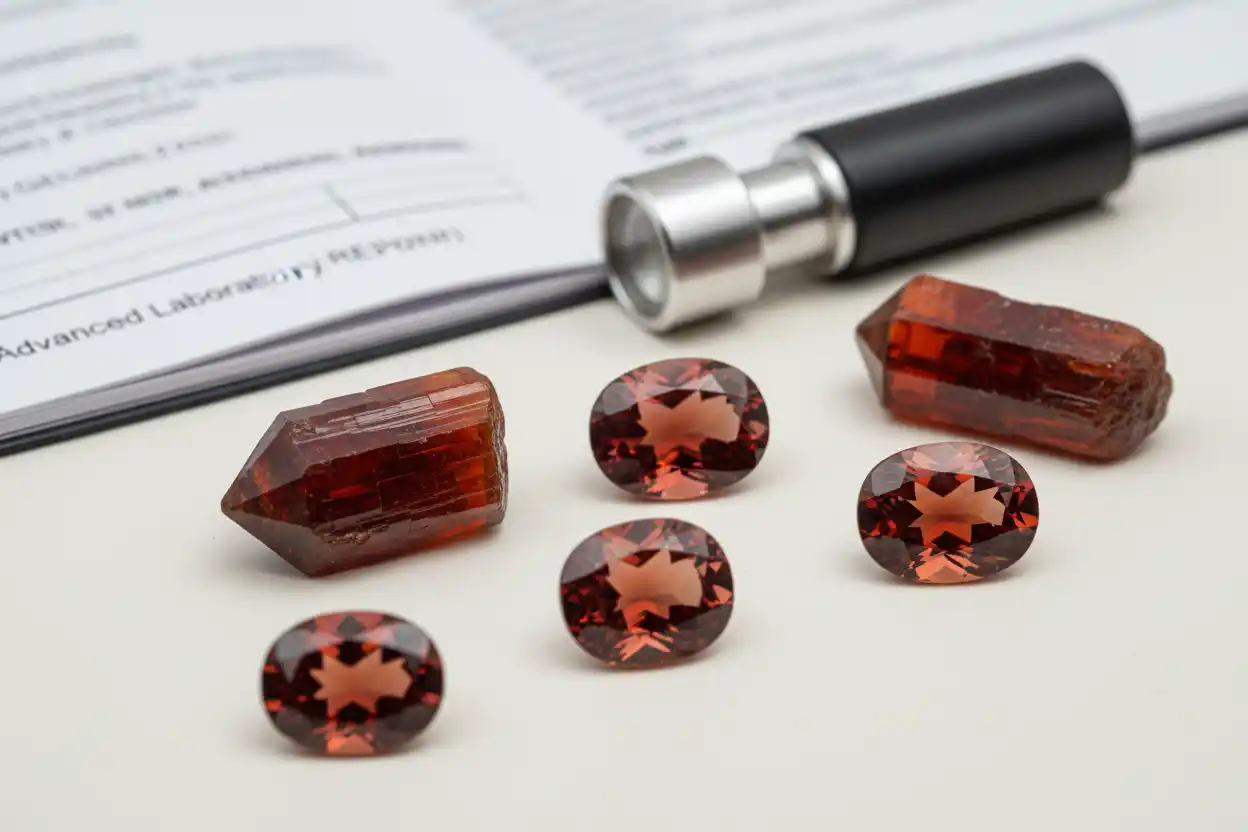
Buy Painite: Buyer Checks, Provenance, Treatments & Returns
If you want to buy Painite, establish identity before paying for rarity. Genuine Painite is an uncommon borate gem associated primarily with Myanmar, and fine transparent faceted stones remain scarce even though discoveries since the early 2000s greatly increased the number of known specimens. The buying risk comes from the gap between genuine collector gems, heavily included stones, rough specimens, unsupported rarity claims, and listings that may use the Painite name without equally strong documentation.
Current asking prices illustrate that gap. One recently listed 0.39-carat certified Mogok Painite is offered at $440, or about $1,128 per carat. Other current verified-seller listings include 0.77 carats at $4,000 and 0.24 and 0.54-carat stones at $2,400 and $5,400 respectively. Those last two equal about $10,000 per carat. The Painite price therefore cannot be judged from rarity headlines alone.
Verify Identity Before Comparing Color or Price
Painite became famous because only a few specimens were known for decades. GIA documented how this changed after new discoveries around Mogok and other Myanmar localities, but the gem remains unusual enough that confident identification matters.
A small red-brown crystal can visually overlap with other gems or minerals. Color alone is not a reliable test, and a seller’s invoice does not replace gemological identification when the price is substantial.
For an expensive faceted stone, look for a report from a recognized laboratory that identifies the species directly. The report should match the gem through weight, dimensions, shape, and other identifying information.
The Painite quality grading should only begin after species identity is secure.
Current Listings Show Why Verification Matters
Current Painite listings do not form a neat retail curve.
| Current Painite example | Weight | Asking price | Approx. price per carat |
|---|---|---|---|
| Certified Mogok pear | 0.39 ct | $440 | $1,128 |
| Myanmar faceted stone | 0.77 ct | $4,000 | $5,195 |
| Burma faceted stone | 0.24 ct | $2,400 | $10,000 |
| Burma faceted stone | 0.54 ct | $5,400 | $10,000 |
These are retail asking prices, not completed-sale values. The differences are large enough to show that seller positioning, transparency, clarity, cutting, documentation, and individual quality can outweigh simple weight.
The Painite price per carat should therefore be compared only across stones that are reasonably similar in quality and documentation.
Historical Rarity Still Shapes Buyer Expectations
GIA reported that for many years only two Painite crystals were known, followed later by a third. Additional discoveries beginning around 2001 changed that picture significantly.
By 2005, new Myanmar deposits had produced more than a thousand crystals and fragments. Even then, GIA noted that only a small percentage of the rough was suitable for faceting.
Most documented cut stones in that period were tiny. Among more than 167 faceted examples known to one contributor, most weighed about 0.05 to 0.30 carats, although larger stones had been cut.
That history explains why buyers still associate Painite with extreme rarity, but it also means old claims such as only two or three stones exist are badly outdated.
Transparency Can Matter More Than Weight
A large Painite can remain dark, included, fractured, or poorly suited to attractive jewelry. A smaller transparent stone with good color and an effective cut can be much more desirable.
Current seller descriptions illustrate this distinction. Some Painites are marketed with included clarity, while another current 0.39-carat example emphasizes unusually good transparency and precision cutting.
Face-up appearance matters because many Painites can look extremely dark until strong light passes through them. Ask for videos in ordinary daylight and directional light rather than relying only on backlit photographs.
A stone that appears vivid only when a flashlight shines directly through it should not be compared with a gem that looks lively during ordinary viewing.
Color Usually Falls in the Red to Brown-Red Range
Painite is commonly associated with red, orangy red, brownish red, deep burgundy, and related shades. Some specimens can appear almost black when strongly saturated or cut deeply.
Color preference is personal, but transparent red to red-orange stones with enough brightness to show their hue clearly are generally easier to appreciate than nearly opaque dark examples.
Lighting is especially important. A stone can shift from deep brown-red to crimson or orange-red depending on direction and illumination.
Do not pay a large premium for a dramatic color description unless photographs and video show that appearance consistently.
Myanmar Provenance Is Important
Painite was discovered near Mogok in Myanmar, and major later discoveries also came from Myanmar.
GIA documented finds at Thurein-taung and Wetloo in the Mogok region, as well as Painite associated with Namya in northern Myanmar. Those discoveries greatly expanded scientific knowledge of the species.
Provenance can support collector appeal, but a country name alone does not establish quality or identity. A seller claiming Mogok origin should ideally provide documentation that is credible enough for a future buyer to understand.
An origin statement from the seller and a laboratory identification report answer different questions. Do not treat them as interchangeable.
Size Premiums Need Context
Fine Painite becomes more difficult to replace as size increases, particularly when transparency and attractive color remain strong.
GIA’s historical records show that most faceted stones known during the major early discoveries were well below half a carat. Larger cut examples existed, including stones above 1 carat and a reported 2.02-carat faceted gem, but they were much less common.
This does not mean every 1-carat Painite deserves an extreme price. Included, dark, damaged, or weakly cut stones can still trade at much lower rates than exceptional examples.
Size becomes valuable when it combines with quality.
Cutting Can Reveal or Hide the Color
Painite rough is scarce enough that cutters may prioritize weight retention. That can produce deep pavilions, unusual shapes, or small face-up dimensions.
A good cut should still reveal the gem’s color and transparency effectively. Large windows, dull central areas, or excessive darkness can reduce visual appeal.
Compare millimeter dimensions alongside weight. A 0.70-carat stone that faces up very small may carry much of its weight below the visible surface.
In a collector gem, unusual cutting can be acceptable, but it should not automatically receive a premium simply because the species is rare.
Treatment Claims Should Be Specific
Painite does not have a well-established routine enhancement market comparable with heated sapphire or clarity-enhanced emerald. That makes broad claims such as completely natural and untreated common in listings.
Even so, buyers should not assume treatment status without evidence. Current Painite listings may state no treatment, but the strength of that statement depends on who made it and whether a qualified laboratory examined the stone.
General gem-trade standards require meaningful treatments to be disclosed when known.
For a costly purchase, ask the seller what the report actually says rather than relying on marketing language placed around it.
Seller Certificates Are Not All Equal
A certificate can range from an internal store card to an independent laboratory report.
The issuing laboratory matters. Check whether it is established, whether the report number can be verified, and whether the report identifies the species clearly.
A report should also match the exact stone. Weight, dimensions, shape, and photographs can help prevent confusion between similar-looking gems.
If a seller is asking several thousand dollars per carat, independent confirmation becomes a reasonable part of due diligence.
Very Low Prices Deserve Additional Questions
Painite listings can appear at strikingly low prices online. Some may represent heavily included rough, tiny fragments, poorly transparent stones, mistaken identity, weak documentation, or sellers using aggressive rarity language.
A low price does not automatically prove a gem is fake, just as a high price does not prove it is genuine.
The useful question is whether the identity, weight, clarity, provenance, treatment claim, and seller reputation support the offer.
When a listing looks dramatically cheaper than documented comparable gems, assume you need more evidence before assuming you found a bargain.
Returns Are Essential for Remote Purchases
Painite photographs can be difficult to judge because dark red-brown stones change appearance under different lighting.
A useful return period lets you compare the actual gem with the listing, report, dimensions, and video. It also gives you an opportunity to seek an independent opinion when the purchase price justifies one.
Check whether submitting the stone to another laboratory affects return eligibility.
Never mount or recut a stone until you are satisfied with identity and condition because alteration can make return rights disappear.
Condition Affects Collector Value
Painite is reasonably hard, generally reported around 7.5 to 8 on the Mohs scale, but hardness does not make a gemstone immune to chips or fractures.
Inspect facet edges, girdle condition, surface scratches, open cracks, and any fractures reaching the edge.
A rare gem can remain collectible with inclusions, but fresh damage reduces both beauty and potential resale appeal.
For mounted Painite, ask whether any edge areas are hidden beneath prongs. Photographs taken before setting can be especially useful.
Do Not Treat Famous Price Claims as Guarantees
Painite is frequently described online as worth $50,000 to $60,000 per carat. Those figures refer to top-end gem-quality estimates rather than every stone carrying the name.
A documented Bonhams sale from 2022 realized $3,570 for a 1.07-carat Painite, about $3,336 per carat. Current asking prices reviewed here also range from roughly $1,128 to $10,000 per carat.
The difference between those numbers is not a contradiction. They refer to different stones, quality levels, dates, and market settings.
The lesson is to value the actual gem rather than repeat one famous number.
Personal Symbolism Is Separate From Quality
The Painite meaning may include modern symbolic associations connected with rarity, transformation, persistence, or discovery. These interpretations do not establish gemstone identity.
The Painite benefits discussed in personal traditions are also separate from commercial quality. Value should remain tied to verified identity, color, transparency, clarity, cutting, size, condition, provenance, documentation, and actual market demand.
FAQs
How much does genuine Painite cost?
Current asking prices reviewed here range from about $1,128 to $10,000 per carat across several small faceted stones. Exceptional top-quality gems may be quoted much higher.
Is Painite still one of the rarest gems?
Yes, especially in fine transparent faceted quality, although new discoveries since the early 2000s mean far more specimens are known than the earliest rarity stories suggest.
Is all Painite from Myanmar?
Commercially significant Painite is strongly associated with Myanmar, particularly the Mogok region and other documented Myanmar localities.
What color is genuine Painite?
Common colors include red, brownish red, orangy red, burgundy, and dark red-brown.
Is Painite usually transparent?
Many specimens are included, fractured, dark, or translucent. Clean transparent faceted gems are much less common.
Is Painite treated?
There is no major routine treatment market comparable with sapphire. Specific treatment claims should still be documented rather than assumed.
Should Painite have a laboratory report?
For an expensive stone, yes. Independent species identification is especially important because rarity itself creates much of the premium.
Does larger Painite cost more per carat?
It can when transparency, color, cutting, and condition remain strong. Large low-quality stones do not automatically command top rates.
Is a low-priced Painite automatically fake?
No. Low price can reflect weak clarity, rough condition, small size, or poor documentation. It should encourage closer verification.
Is Painite a good investment?
Painite has a small collector market and limited public price data. Buy it for rarity and collector appeal rather than assuming guaranteed appreciation or easy resale.
Conclusion
To buy Painite confidently, verify the species first and rarity claims second. Current small faceted stones show asking prices from roughly $1,100 to $10,000 per carat in the examples reviewed, while top-end estimates can be far higher. Transparency, color, size, cutting, condition, provenance, documentation, and return protection all matter, but none can replace reliable identification.