7 Aquamarine Benefits: Durable Blue Beryl, Jewelry Appeal & Practical Value
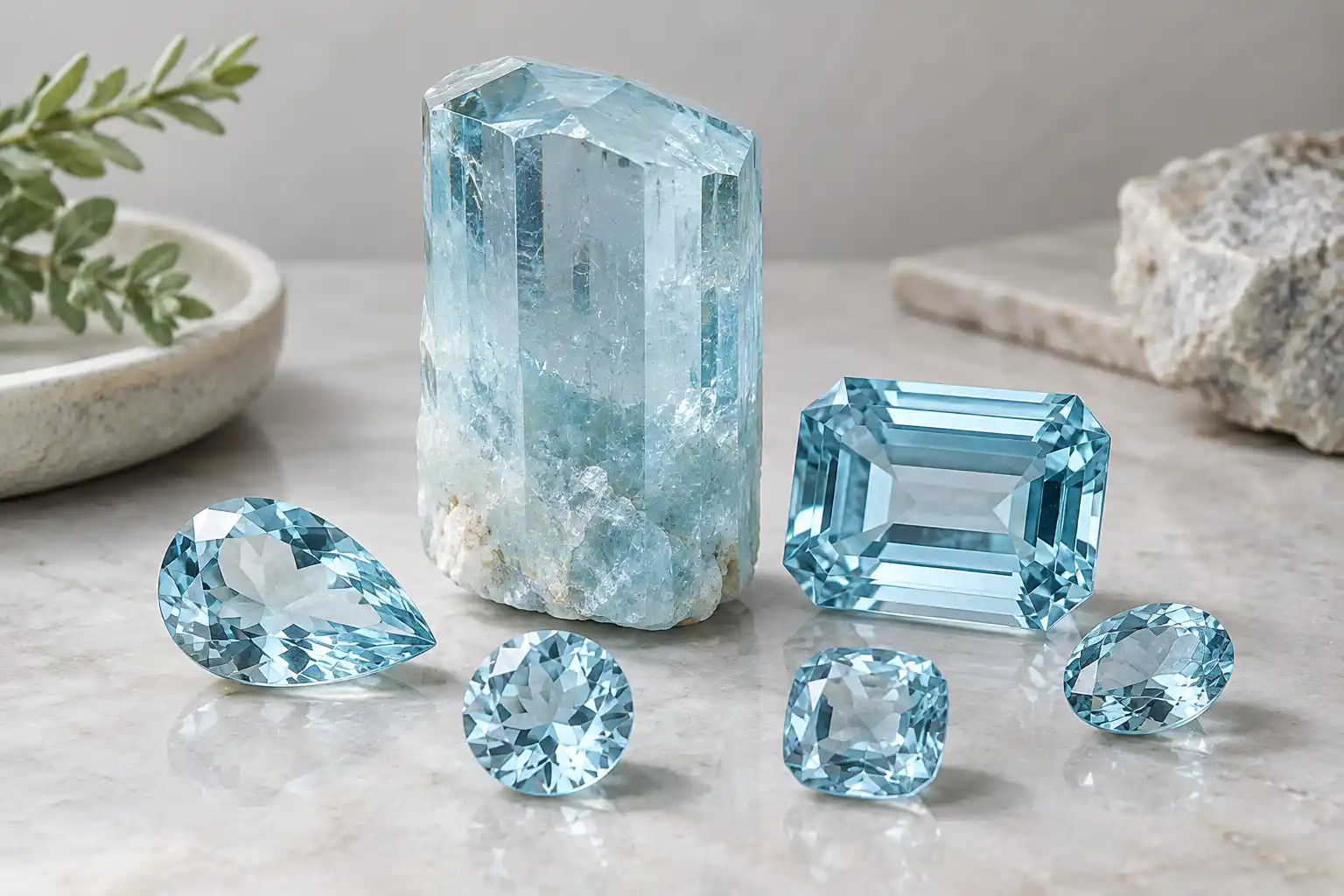
Aquamarine benefits begin with an unusually useful combination of delicate blue color, high transparency, good durability, availability in substantial crystal sizes, and versatility in jewelry. Aquamarine is the blue to greenish-blue variety of beryl, the same mineral species that includes emerald. Its chemical formula is Be₃Al₂Si₆O₁₈, while iron-related substitutions produce the blue and greenish-blue colors associated with the gem.
Unlike many attractive stones that require cautious occasional wear, aquamarine ranks about 7.5 to 8 on the Mohs scale and has good toughness. That makes properly set stones practical for rings, earrings, pendants, necklaces, and other frequently worn jewelry. Aquamarine crystals can also grow exceptionally large and clean, allowing cutters to produce sizeable faceted gems without the rarity premiums attached to equivalent sizes in ruby, alexandrite, or fine emerald.
The strongest aquamarine benefits are therefore physical, gemological, decorative, collectible, and personal. Historical sea symbolism and modern wellness associations can add meaning, but they do not need to replace the genuine advantages provided by beryl mineralogy, transparency, cutting potential, and long-term wearability.
7 Aquamarine Benefits at a Glance
- Mohs hardness of about 7.5 to 8 makes aquamarine suitable for many frequently worn jewelry designs.
- High transparency allows bright faceted gems with a clean, watery appearance.
- Large natural crystals can produce impressive gems at sizes that remain attainable compared with many rarer stones.
- Blue to greenish-blue color offers strong design versatility across different metals and jewelry styles.
- Well-formed natural beryl crystals provide significant mineral-collecting interest.
- March birthstone status and established jewelry history give aquamarine strong personal and gifting value.
- Straightforward care and generally stable color make ownership practical when heat, fractures, and treatments are respected.
Durable Beryl Is One of the Strongest Aquamarine Benefits
Durability is among the most important aquamarine benefits for jewelry. With hardness around 7.5 to 8, aquamarine resists everyday scratching better than quartz, feldspar, apatite, fluorite, calcite, and many other familiar gemstones.
Hardness is only one part of durability, but aquamarine also has good toughness. A properly cut and securely mounted stone can therefore tolerate routine jewelry wear when protected from hard blows. Rings are practical, although large stones with exposed corners still benefit from thoughtful settings.
Aquamarine’s durability gives buyers more design freedom. A collector does not have to restrict the gem to a display cabinet, while a jeweler can consider engagement rings, anniversary pieces, earrings, pendants, bracelets, and statement jewelry.
When choosing to buy aquamarine, durability remains an advantage only when the gem itself is sound. Large fractures, delicate settings, or poorly protected edges can still create avoidable risks.
High Clarity Gives Aquamarine a Distinctive Watery Appearance
Transparency is another of the defining aquamarine benefits. Faceted stones are often remarkably clean to the unaided eye, allowing light to travel through the gem without the dense inclusion scenes commonly seen in emerald.
This clarity suits aquamarine’s usually light to medium blue color. Instead of relying on extreme saturation, fine stones can create a bright, open appearance that resembles clear water or pale sky.
High clarity also lets cutters use larger step cuts, emerald-style cuts, elongated shapes, pears, ovals, and custom fantasy designs. A transparent stone with good proportions can retain visual interest even without the intense fire of diamond.
Aquamarine benefits from careful cutting because pale stones can look washed out if too shallow, while excessively deep stones may sacrifice brightness. Good proportions allow both body color and transparency to contribute to the finished gem.
Large Crystal Sizes Make Aquamarine Excellent for Statement Jewelry
Beryl crystals can grow to substantial dimensions, and aquamarine is particularly famous for large, well-formed transparent crystals. This creates one of the most practical aquamarine benefits for cutters and designers: relatively large gems can be produced without automatically becoming extraordinarily rare.
A large aquamarine pendant can therefore provide strong visual presence while remaining far more accessible than a comparably sized fine ruby, alexandrite, or emerald. This makes aquamarine especially suitable for cocktail rings, statement pendants, sculptural cuts, and collector gems.
Large size does not automatically indicate exceptional quality. Pale color, poor cutting, windowing, inclusions, or unattractive greenish tones can reduce desirability. A smaller stone with strong blue color and excellent brightness may be more appealing than a much larger weakly colored gem.
These distinctions explain why aquamarine price depends on color, clarity, cutting, size, treatment, and overall appearance rather than carat weight alone.
Blue Color Gives Aquamarine Strong Jewelry Versatility
Aquamarine ranges from greenish blue through blue, usually in relatively light tones. Deeper saturated blue generally receives stronger market interest, while some buyers prefer the natural sea-green character of unheated stones.
This color flexibility is one of the useful aquamarine benefits for jewelry design. White metals can emphasize an icy or watery appearance, yellow gold creates warmer contrast, and rose gold can produce a softer relationship with pale blue stones.
Aquamarine also pairs easily with diamonds, pearls, colorless gems, and many pastel stones. Large clean gems can act as centerpieces without requiring highly elaborate settings.
The color can also appear different depending on lighting and background. Buyers should therefore view a stone under several normal lighting conditions rather than judging only a highly processed photograph.
Heat Treatment Can Improve Blue Color Without Changing the Mineral Identity
Many aquamarines naturally contain a noticeable green or yellowish component. Controlled heating is commonly used to reduce that greenish contribution and produce a purer blue appearance.
Heat-treated aquamarine remains genuine beryl. Treatment changes appearance rather than converting the stone into another mineral. Disclosure still matters because buyers should know whether the color is believed to be natural or altered.
The treatment is generally stable under normal wear, although excessive heat remains unnecessary and can be risky when inclusions or fractures are present. Aquamarine does not need repeated heating, sunlight exposure, or spiritual charging to maintain ordinary gem color.
Treatment awareness is one of the educational aquamarine benefits because it teaches an important jewelry principle: natural origin and natural color are separate questions. A mined stone can still have treated color.
Natural Aquamarine Crystals Have Strong Collector Appeal
Aquamarine benefits mineral collectors as much as jewelry buyers. Natural crystals can form long hexagonal prisms with flat or modified terminations, good transparency, attractive blue-green coloration, and associations with feldspar, mica, quartz, tourmaline, or other pegmatite minerals.
Pakistan is particularly well known for spectacular aquamarine crystals from high mountain pegmatites, while Brazil, Afghanistan, Nigeria, Madagascar, Mozambique, Zambia, and other regions have also produced notable specimens.
A collector-quality crystal follows different standards from faceting rough. Crystal form, undamaged termination, matrix association, locality, natural surface condition, color, and transparency may matter more than whether the piece would produce the largest finished gemstone.
These aquamarine benefits are lost when every natural crystal is evaluated only by the number of faceted carats it could produce.
March Birthstone Status Gives Aquamarine Personal Value
Aquamarine is the recognized birthstone for March and is also associated with the nineteenth wedding anniversary in modern gem tradition. These roles give the stone a straightforward personal significance without requiring supernatural claims.
A March birthstone can represent a birthday, family connection, engagement, or inherited tradition. Aquamarine’s durability makes such jewelry practical enough to wear rather than preserve only for rare occasions.
The name itself comes from Latin words associated with seawater, and historical lore connected aquamarine with sailors, safe voyages, and the sea. These traditions contribute cultural interest but should not be treated as evidence that the gem physically protects travelers.
Birthstone and historical associations add to aquamarine benefits by giving an already practical gemstone a recognizable personal identity.
Aquamarine Can Be Easier to Evaluate Than Highly Included Gems
Aquamarine’s frequent transparency allows buyers to evaluate many stones visually with relative ease. Face-up color, brightness, cutting, windows, extinction, polish, visible inclusions, and symmetry can often be examined directly.
That does not mean every aquamarine can be authenticated by eye. Synthetic beryl, glass, blue topaz, and other lookalikes can imitate portions of its appearance. A valuable stone may require professional gemological testing to establish identity, natural origin, or treatment.
The distinction between real vs fake aquamarine becomes especially important for unusually saturated stones offered at prices inconsistent with normal aquamarine quality.
Buyer education is therefore another of the useful aquamarine benefits. The gem provides an accessible introduction to evaluating color, transparency, cut, treatment, and identification.
Aquamarine Care Is Relatively Straightforward
Warm soapy water is a reliable cleaning method for aquamarine. A soft brush can remove residue around the back of a setting, followed by careful rinsing and drying.
Ultrasonic and steam cleaning may be suitable for many untreated stones, but they should be avoided when substantial fractures, liquid inclusions, fracture filling, or uncertain treatments are present. Gentle hand cleaning remains the conservative choice.
Heat exposure is not recommended even though ordinary light is generally not a significant problem for aquamarine color. Hard impacts should also be avoided, particularly around exposed facet junctions and pointed shapes.
Straightforward maintenance is one of the practical aquamarine benefits that supports long-term jewelry use.
Aquamarine Benefits Do Not Depend on Healing Claims
Modern crystal practice frequently associates aquamarine with calmness, communication, courage, emotional balance, throat-chakra work, and protection during travel. These interpretations can add personal symbolism, particularly because the blue color and sea-related name naturally encourage themes involving water and calmness.
Someone might wear aquamarine as a reminder to communicate carefully or remain composed during a stressful conversation. The behavior comes from the person rather than a medical effect produced by beryl.
Claims about aquamarine healing properties should remain separate from verified aquamarine benefits. Aquamarine has not been scientifically established as a treatment for anxiety disorders, respiratory conditions, thyroid disease, pain, hormonal problems, or other health concerns.
Its durability, clarity, color, crystal size, collecting value, jewelry versatility, and personal significance already provide substantial reasons to appreciate it.
Conclusion
Aquamarine benefits include excellent jewelry durability, high transparency, large available crystal sizes, attractive blue color, collector-quality natural crystals, birthstone significance, and relatively straightforward care.
The gemstone succeeds because practical qualities reinforce its visual appeal. Aquamarine can be worn frequently, cut into substantial gems, collected in natural crystal form, and appreciated for its connection with beryl geology without relying on unsupported health promises.
FAQs
What Are the Main Aquamarine Benefits?
Aquamarine benefits include Mohs 7.5 to 8 hardness, good toughness, high clarity, attractive blue color, large crystal sizes, jewelry versatility, collecting value, and March birthstone significance.
Is Aquamarine Good for Everyday Jewelry?
Yes. Its hardness and good toughness make it suitable for many rings, pendants, earrings, and other frequently worn designs when protected from hard impacts.
Why Is Aquamarine Usually So Clear?
Gem-quality aquamarine commonly forms with fewer eye-visible inclusions than emerald, even though both belong to the beryl family.
Can Aquamarine Be Heat-Treated?
Yes. Heating is commonly used to reduce greenish or yellowish components and produce a purer blue color.
Is Heated Aquamarine Still Real Aquamarine?
Yes. Heat-treated aquamarine remains genuine beryl. Treatment changes color rather than mineral identity.
Why Can Aquamarine Be Found in Large Sizes?
Beryl crystals can grow very large, and aquamarine frequently forms transparent sections suitable for substantial faceted gems and carvings.
Are Aquamarine Healing Benefits Scientifically Proven?
No reliable evidence establishes aquamarine as a medical treatment.
Modern symbolic aquamarine benefits are personal wellness beliefs and should not replace qualified medical or mental health care.