Alexandrite Healing Properties: 12 Essential Claims, Positive Traditions & Safe Limits
Alexandrite healing properties are traditionally associated with transformation, adaptability, balance, optimism, resilience, self-confidence, creativity, intuition, relationship growth, prosperity symbolism, focus, and personal renewal. These meanings are inspired strongly by the gemstone’s extraordinary color-change effect, but they are not established medical or psychological effects. Alexandrite does not balance hormones, treat neurological conditions, improve circulation, cure anxiety or depression, increase fertility, strengthen eyesight, or change physical health through contact with the body.
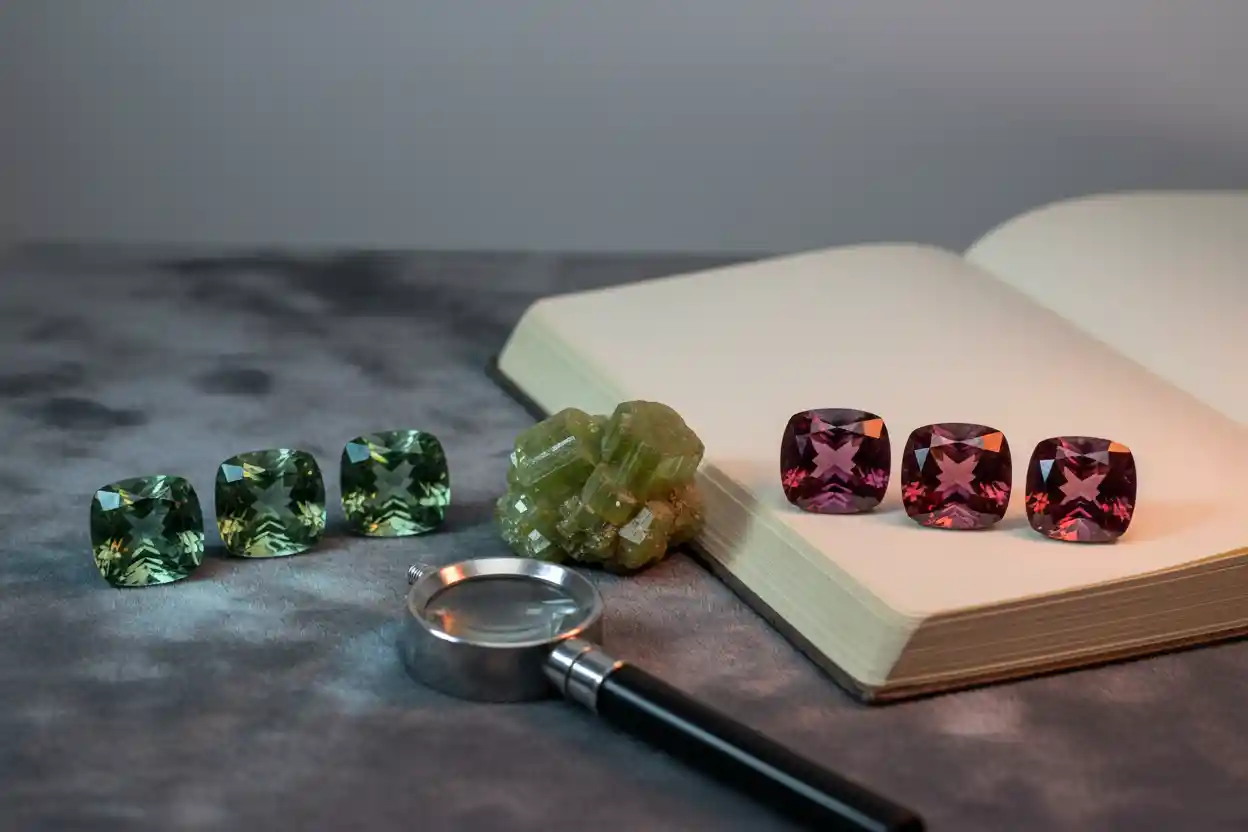
Alexandrite is a rare color-change variety of chrysoberyl rather than a type of emerald, ruby, or quartz. Fine stones can appear green to bluish green in daylight-equivalent illumination and red to purplish red under warmer incandescent light. Chromium is responsible for much of this dramatic response to different light sources. Alexandrite is also strongly pleochroic, meaning it can show different colors when viewed from different crystal directions, although pleochroism and color change are separate optical effects. With a Mohs hardness around 8.5, alexandrite is also one of the harder gemstones commonly used in fine jewelry.
Transformation and Adaptability Claims Come From Alexandrite’s Color Change
The central symbolic theme of alexandrite is transformation. Few gemstones display such an obvious visual shift under different illumination, so crystal traditions naturally connect it with changing circumstances, personal growth, adaptation, and the ability to see a situation differently. The gem does not cause psychological transformation, but its optical behavior provides a powerful metaphor for the idea that the same person or situation can appear different when conditions change.
A person might use alexandrite as a reminder to reassess a problem when the first approach fails. Changing perspective does not require abandoning principles; it can mean recognizing that a solution suitable for one situation may not work in another. The traditions around alexandrite meaning often emphasize renewal and duality for precisely this reason. Green and red appearances within one gem can symbolize apparently opposing qualities existing together, such as confidence and caution, ambition and patience, or independence and connection.
Adaptability can also mean allowing identity to change over time. Careers, relationships, responsibilities, and priorities rarely remain fixed. Alexandrite symbolism becomes most useful when it supports deliberate adjustment rather than suggesting that change will happen automatically because the gem is worn. A ring can mark an intention to remain flexible, but the actual transformation still depends on choices, learning, and experience.
Balance, Resilience, and Emotional Claims Should Remain Symbolic
Alexandrite is frequently described as a balancing stone that helps harmonize emotion and reason, optimism and realism, or internal and external demands. There is no established evidence that it regulates mood or nervous-system activity. A safer interpretation is to use the stone as a reminder to examine more than one side of a decision before reacting.
Resilience claims fit the gemstone’s symbolism for similar reasons. Alexandrite does not make someone psychologically stronger through physical contact, yet its color change can represent the ability to remain recognizable while responding differently to changing circumstances. Someone facing a difficult transition might use the gem as a cue to ask which part of the situation can be influenced and which part must be accepted. That distinction is often more useful than trying to remain positive at all costs.
The alexandrite benefits traditionally described in crystal culture should therefore be separated into symbolic and unsupported medical claims. A gemstone can support a ritual, encourage reflection, or become associated with a meaningful personal milestone. It cannot directly treat grief, anxiety, depression, trauma, or another mental health condition. If emotional symptoms persist or interfere significantly with normal life, professional care remains more appropriate than relying on gemstone practice.
Confidence, Creativity, Focus, and Intuition Depend on the Person Using the Stone
Alexandrite is sometimes associated with self-confidence because its changing appearance can symbolize flexibility without loss of identity. This is a useful personal metaphor, especially during situations that require someone to adapt while maintaining clear values. A person could wear alexandrite before a presentation or difficult conversation as a private reminder to remain composed and responsive. The stone does not create confidence, but it can carry an intention already chosen by the wearer.
Creativity claims also arise naturally from the gem’s unusual optics. Seeing a stone shift under different light can become a reminder that one problem may allow several interpretations. Writers, designers, artists, and other creative professionals may enjoy alexandrite for this symbolism, but the gemstone does not increase creative ability or generate ideas biologically. Creativity still develops through observation, practice, experimentation, and willingness to revise weak ideas.
Focus and intuition should be handled with similar care. Alexandrite cannot improve cognition, concentration, memory, or hidden perception. It can, however, become a cue for reflective questions. What facts are available? What assumption am I making? What changed when the situation was viewed from another angle? The crystals for intuition tradition is most responsible when intuition means noticing experience, values, and subtle patterns without pretending to obtain supernatural certainty.
Love, Relationship Growth, and Prosperity Claims Do Not Control Outcomes
Alexandrite is sometimes connected with romantic renewal, commitment, loyalty, and relationship growth. Because the gem changes color while remaining the same stone, it makes an appealing symbol for relationships that evolve through different life stages. That symbolism can be meaningful in jewelry given for an anniversary, milestone, or reconciliation, but the gemstone cannot create affection, prevent infidelity, restore trust, or make another person stay.
A relationship improves through communication, accountability, respect, shared effort, and appropriate boundaries. Alexandrite can symbolize those intentions without controlling the result. This distinction is especially important because expensive gemstones sometimes acquire emotional expectations that exceed what any object can deliver. A meaningful gift can express commitment, but it does not substitute for dependable behavior.
Prosperity claims should also remain symbolic. Alexandrite’s rarity and high market value have encouraged associations with abundance and fortunate opportunity, yet owning the gemstone does not attract income, improve investments, or guarantee financial success. Anyone considering the gem primarily as a purchase should evaluate quality and price rather than metaphysical promises. The alexandrite price varies dramatically with color change, saturation, size, clarity, origin considerations, and overall quality, while fine stones can command substantial premiums because truly strong natural color change is uncommon.
When someone wants to buy alexandrite, practical verification matters far more than claims about luck or prosperity. Natural alexandrite can be expensive, and synthetic color-change chrysoberyl as well as imitations exist. A seller’s disclosure, reliable documentation, and careful evaluation are more useful than assuming high spiritual value confirms natural origin.
Alexandrite’s Real Optical Properties Are More Remarkable Than Healing Claims
Alexandrite’s actual gemology gives it plenty of fascination without requiring medical explanations. It belongs to the chrysoberyl mineral species, with a chemical composition based on beryllium aluminum oxide. Chromium substitutes within the crystal structure and contributes to the selective absorption that creates the famous shift between cooler and warmer light environments. Fine stones may show a dramatic green to bluish-green appearance under daylight-equivalent illumination and a strong red to purplish-red appearance under incandescent illumination, although many natural stones show less complete or less vivid changes.
The gem is also pleochroic, so its appearance can vary with crystal direction. This should not be confused with the alexandrite effect itself. Pleochroism concerns directional color differences within a crystal, while color change concerns how the gem responds when the spectral character of the light source changes. Both properties make alexandrite visually complex and help explain why cutting orientation matters.
Scarcity adds another dimension. Natural alexandrite is known from Russia, Brazil, Sri Lanka, parts of East Africa, and several other sources, but fine stones with strong color change remain uncommon. Origin can influence collector interest and value, although appearance and reliable identification remain central. Expensive stones deserve appropriate documentation, and gemstone certification can help buyers understand what a laboratory report can and cannot confirm.
These real physical properties are more compelling than claims that alexandrite alters human biology. A gem that changes dramatically because of light absorption already provides a striking natural phenomenon without needing unsupported medical effects added to its story.
Alexandrite Healing Claims Should Never Replace Medical or Mental Health Care
Some crystal descriptions attribute alexandrite with effects on circulation, blood, vision, neurological health, hormones, fertility, inflammation, or internal organs. These claims are not established by credible medical evidence. Wearing alexandrite in a ring or pendant does not deliver a therapeutic substance into the body and does not correct a medical disorder.
The same limit applies to emotional health. A gemstone may feel comforting because it carries personal meaning, represents a gift, or forms part of a familiar ritual. That comfort is different from treating an anxiety disorder, depression, trauma-related symptoms, sleep problems, or another condition. Personal symbolism can coexist with professional care, but it should not delay diagnosis, prescribed treatment, counseling, or urgent help when symptoms are severe.
Alexandrite should also not be used diagnostically. Changes in its visible color reflect the lighting environment and viewing conditions, not the wearer’s health, mood, energy, or spiritual state. If the gemstone appears greener in one room and redder in another, that is exactly what its optical properties predict. It is not evidence that the stone detected illness or emotional change.
Safe Alexandrite Jewelry Use and Care
Alexandrite’s hardness around 8.5 makes it well suited to rings and other jewelry, although hardness is only one part of durability. Any gemstone can chip or fracture under a sufficiently hard blow, especially if it contains significant inclusions or is cut with vulnerable corners. Protective settings are sensible for expensive stones worn frequently.
Cleaning should remain straightforward. Warm water, mild soap, and a soft brush are generally suitable for ordinary jewelry care, while valuable stones should be inspected periodically for loose settings or damage. If a gemstone’s identity, treatment history, or mounting is uncertain, professional cleaning advice is preferable to aggressive home methods.
The high value of fine alexandrite also changes the practical risk calculation. Losing or damaging a valuable ring is much more consequential than damaging an inexpensive polished crystal. Secure settings, appropriate insurance where relevant, and careful storage are reasonable considerations for significant pieces.
For collectors, synthetic alexandrite and alexandrite-like color-change stones deserve special attention. Synthetic chrysoberyl can have the same essential crystal chemistry and many physical properties as natural alexandrite while being grown in a laboratory. Other gems or manufactured products can imitate the visual effect without actually being alexandrite. Buying decisions should therefore rely on identification and disclosure rather than color change alone.
Conclusion
Alexandrite healing properties are best understood as traditional themes of transformation, adaptability, balance, resilience, confidence, creativity, intuition, relationship growth, prosperity symbolism, focus, optimism, and renewal. The gemstone’s genuine fascination comes from its rarity, strong pleochroism, excellent hardness, and dramatic change between greenish and reddish appearances under different light sources. Alexandrite can support personal reflection and meaningful symbolism, but it does not treat physical or mental health conditions, control relationships, or guarantee financial outcomes.
FAQs
What are the main traditional alexandrite healing properties?
Alexandrite is commonly associated with transformation, adaptability, balance, resilience, confidence, creativity, intuition, relationship growth, prosperity symbolism, focus, optimism, and renewal.
Is alexandrite scientifically proven to heal?
No. There is no established evidence that wearing or carrying alexandrite treats physical or mental health conditions.
Why does alexandrite change color?
Its crystal structure absorbs different parts of the visible spectrum in a way that causes the gem to appear greener under daylight-equivalent light and redder under warmer incandescent light.
Is alexandrite a type of emerald or ruby?
No. Alexandrite is a color-change variety of chrysoberyl.
How hard is alexandrite?
Alexandrite is about 8.5 on the Mohs hardness scale, giving it strong resistance to scratching compared with many other gemstones.
Can alexandrite improve confidence?
It can serve as a personal symbol of adaptability and confidence, but it does not directly change confidence through physical contact.
Is alexandrite associated with love?
Crystal and jewelry traditions sometimes connect it with evolving relationships, commitment, and renewal, but it cannot control another person’s emotions or loyalty.
Does alexandrite attract money?
There is no established evidence that alexandrite attracts wealth or changes financial outcomes.
Is natural alexandrite rare?
Fine natural alexandrite with strong color change is genuinely rare, especially in larger high-quality stones.
Are synthetic alexandrites available?
Yes. Laboratory-grown alexandrite exists and can share essential physical and optical properties with natural chrysoberyl.
Can color change prove that a stone is natural alexandrite?
No. Color change alone is not enough to establish natural origin or identity because synthetic and imitation stones can also show changing colors.
Is alexandrite safe for everyday jewelry?
Its hardness makes it suitable for many jewelry uses, but valuable stones still deserve protection from hard impact and secure settings.
Alexandrite healing meanings are traditional or personal practices, not established treatments for physical or mental health conditions.