9 Real Black Opal Benefits: Gentle Uses, Verified Facts & Important Cautions
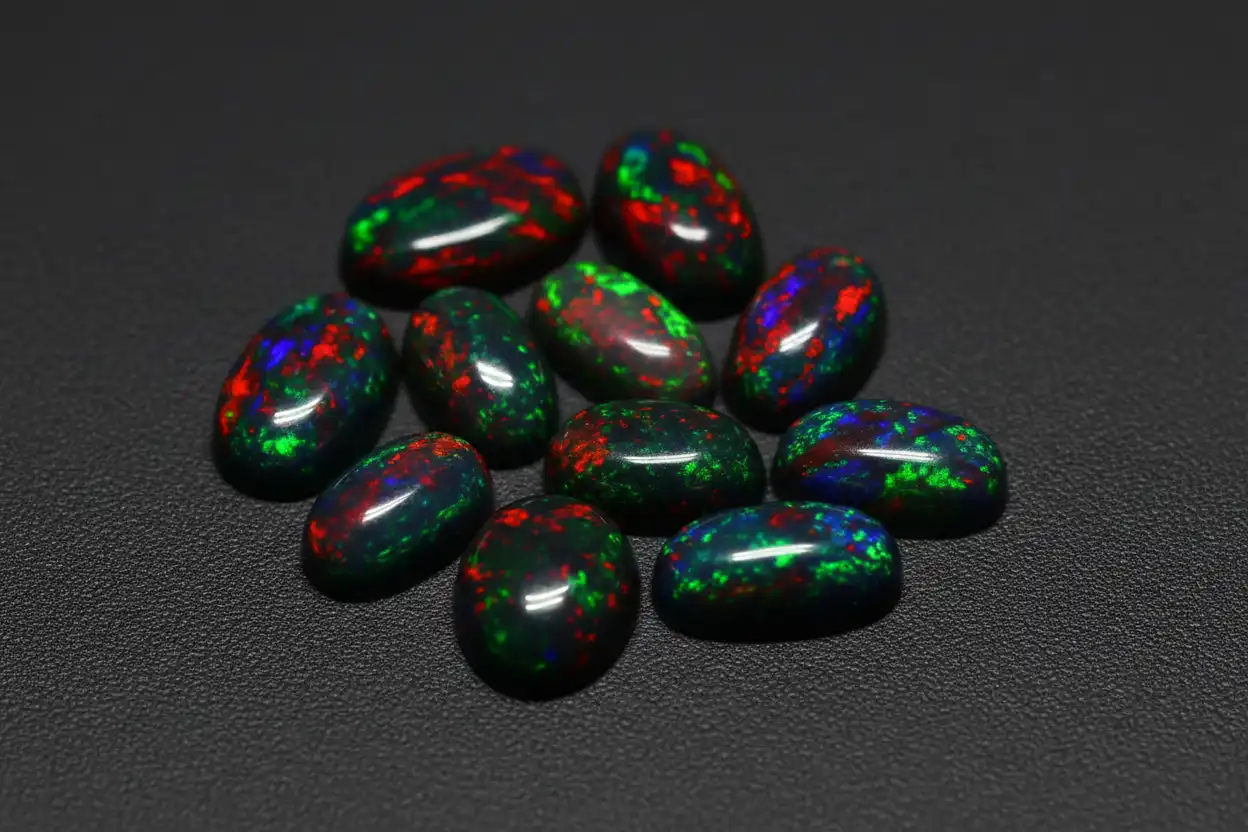
Black opal benefits begin with one of the most dramatic optical effects in the gemstone world. Black opal combines a dark body tone with play-of-color, allowing flashes of blue, green, orange, yellow, violet, or red to stand out against a darker background. The stone can appear completely different as it moves through light, giving jewelry, collections, and lapidary work a level of visual individuality that few gems can duplicate.
Its appeal is not limited to appearance. Black opal can teach collectors how play-of-color forms, show cutters how orientation and shape affect a finished gemstone, demonstrate why body tone differs from spectral color, and introduce buyers to important questions about natural opal, treatments, doublets, triplets, synthetics, and imitations. These practical black opal benefits remain meaningful regardless of whether someone accepts the spiritual symbolism associated with opal.
Modern beliefs sometimes connect black opal with creativity, confidence, emotional depth, protection, transformation, or self-expression. Those themes can function as personal symbolism, but they should not overshadow the gem’s real qualities or become medical claims. Black opal does not treat disease, regulate the nervous system, improve circulation, cure depression, or produce guaranteed psychological effects.
9 Black Opal Benefits at a Glance
- Dark body tone can make play-of-color appear especially vivid and dramatic.
- Each black opal offers an unusually individual combination of color, pattern, brightness, and transparency.
- Cabochon cutting can turn complex internal color into highly distinctive jewelry.
- Collectors can study one of the most prized visual expressions of precious opal.
- Lapidaries gain experience evaluating color bars, orientation, shape, thickness, and polish.
- Gemology students can learn how structure creates play-of-color in precious opal.
- Black opal encourages careful identification of natural gems, treatments, composites, synthetics, and imitations.
- Personal symbolism can represent creativity, transformation, individuality, or hope without requiring health claims.
- Proper care teaches why opal’s moderate hardness, water content, and sensitivity to damage deserve respect.
Dark Body Tone Makes Play-of-Color One of the Greatest Black Opal Benefits
The visual contrast between a dark background and spectral flashes is responsible for much of black opal’s reputation. Precious opal displays play-of-color because its internal silica spheres can be arranged with enough regularity to diffract light into spectral colors. As the gem or viewing angle moves, different colors can appear, disappear, or shift position.
Black opal is defined primarily by its dark body tone rather than by an absence of color. In fact, a fine specimen can contain intense red, orange, green, blue, violet, and yellow play-of-color over a dark gray to nearly black background. The dark base acts almost like a stage, making the spectral effect look stronger by comparison.
This contrast is among the most observable black opal benefits. It requires no spiritual explanation. A stone that appears subdued in one position can suddenly produce brilliant color when rotated slightly, and different lighting can emphasize different parts of its pattern.
Not every black opal shows the same intensity. Brightness, pattern, range of colors, viewing angles, body tone, transparency, inclusions, and cut all contribute to appearance. A dark stone with weak play-of-color is not automatically better than a somewhat lighter example with exceptional brightness and pattern. Black opal rewards evaluation of the complete gem rather than reliance on a single descriptive word.
Individual Color Patterns Give Black Opal Exceptional Jewelry Character
Individuality is one of the most practical black opal benefits for jewelry. Unlike gemstones that are primarily judged by uniform body color, precious opal can display irregular flashes, broad patches, tiny pinpoints, ribbons, rolling colors, or mosaic-like patterns. Two stones of similar size and body tone may still look completely different.
Designers can build a piece around those individual features. A cabochon with concentrated red and orange may pair beautifully with warm-toned metal, while blue and green flashes can create strong contrast in white metal. Irregular shapes are also accepted more readily in opal jewelry than in many traditional faceted gems because cutters often preserve areas with the strongest play-of-color rather than forcing valuable rough into standardized dimensions.
Black opal’s relatively low density can also make visually substantial cabochons comfortable to wear for their size. Pendants, earrings, rings, and brooches can all display the gem effectively, although exposed settings require sensible protection from hard impacts.
These black opal benefits depend heavily on good cutting. A high dome is not automatically better than a low dome, and perfect symmetry is not always worth sacrificing an exceptional color area. The best design often follows the individual stone, preserving brightness and pattern while creating enough structure for secure setting and practical wear.
Black Opal Benefits Collectors Through Geology, Locality, and Natural Variation
Black opal offers collectors more than a polished display of color. It belongs to the fascinating geological story of hydrated amorphous silica and the conditions that allow precious opal to develop an ordered internal structure capable of producing play-of-color. Variations in host rock, formation environment, inclusions, body tone, and structure give specimens from different deposits recognizable characteristics.
Lightning Ridge in New South Wales, Australia, is especially famous for black opal and has become closely associated with the gem in the international trade. The locality does not guarantee exceptional quality, but documented origin can add geological and collecting interest when supported by reliable provenance.
One of the deeper black opal benefits is the ability to compare specimens rather than treating the name as a single appearance. Some black opals are nearly opaque, while others have degrees of translucency. Color may cover most of the face or appear only in selected areas. Patterns can be fine or large-scale, orderly or irregular, and visible from many angles or only a limited viewing position.
This diversity makes black opal an engaging study gem. A collector can examine how brightness changes with lighting, how body tone affects contrast, and how polishing reveals or suppresses particular features. These observations provide lasting value even when market fashion or personal taste changes.
Cutting Black Opal Requires Judgment, Not Just Removing Rough
Lapidary work reveals another set of black opal benefits because precious opal forces the cutter to make decisions that cannot be reduced to a simple formula. Rough may contain a thin or uneven color bar, patches of host rock, common opal, fractures, sand inclusions, or areas where the play-of-color changes direction.
The cutter has to determine how the strongest color will face upward, how much depth can be preserved beneath it, and which shape will reveal the pattern effectively. Removing too much can destroy valuable color, while preserving too much poor-quality base may leave an awkward or unstable stone.
Experienced cutting can also improve how play-of-color appears across the face. Orientation is especially important because certain patterns look much stronger from one direction than another. The finished cabochon should balance visual performance, durability, polish, proportion, and practical setting requirements.
For anyone studying craftsmanship, these are significant black opal benefits. A finished gemstone records multiple judgments about natural structure rather than simply displaying a standard shape. The result can retain small irregularities or nontraditional outlines because preserving exceptional color sometimes matters more than producing perfect symmetry.
That relationship between nature and human decision helps explain why fine black opal jewelry can feel highly individual.
Gemological Study Explains Why Black Opal Can Display Rainbow Color
Black opal benefits gemology students because play-of-color provides a memorable example of structural color. Precious opal contains tiny silica spheres arranged with enough regularity that incoming light interacts with the spaces in the structure and separates into visible spectral colors. Different sphere sizes and arrangements influence the wavelengths that become prominent.
This means the red, blue, or green flashes are not simply pigments sitting on the surface. The effect depends on internal structure and viewing geometry. Moving the gem changes how light interacts with that structure, so the apparent colors and their positions can shift.
The dark body tone of black opal enhances contrast, which is why strong play-of-color can look especially vivid against it. Understanding this phenomenon adds scientific value to the visual experience. What appears almost magical at first has a physical explanation based on light and structure.
This is also why photographs can be misleading. A single image captures only one arrangement of stone, camera, and light. Video and multiple viewing angles reveal much more about how a black opal actually performs. A buyer assessing black opal quality grading should consider body tone, brightness, pattern, color range, viewing angle, transparency, inclusions, cut, and condition rather than judging the gem from one saturated photograph.
Identification Skills Are Among the Most Valuable Black Opal Benefits
Black opal exists in a market that also includes treated opal, synthetic opal, assembled stones, and imitations. Learning the differences is therefore one of the most useful black opal benefits for collectors and buyers. A stone’s appearance alone may not reveal everything about construction or treatment, particularly after it has been mounted in jewelry.
Doublets and triplets are especially important to understand. A doublet generally combines a thin layer of precious opal with a dark backing, while a triplet usually adds a transparent protective cap as well. These assembled gems can display attractive color and offer legitimate jewelry options when accurately disclosed, but they are not the same as a solid natural black opal.
Treatments can also alter apparent body tone or color contrast. Smoke treatment, sugar-and-acid processes, dyes, impregnation, coatings, or other methods may appear in parts of the opal trade. Exact identification sometimes requires magnification, observation from the side or back, professional testing, or a gemological laboratory report.
A person preparing to buy black opal should therefore pay attention to whether the gem is natural, treated, assembled, synthetic, or imitated, as well as to its color and pattern. Transparent disclosure protects both enjoyment and value.
Beauty, Collecting, and Personal Expression Offer Real Black Opal Benefits
Black opal’s expressive appearance makes it useful even outside collecting or gemological study. Some stones look fiery, others cool and oceanic, while certain patterns resemble clouds, mosaics, brushstrokes, distant lights, or abstract landscapes. These comparisons are subjective, but they show why owners often form strong personal connections with individual opals.
Jewelry can use that individuality as a form of self-expression. A person may choose strong red play-of-color because it feels dramatic, prefer predominantly blue and green because the appearance is calmer, or select a subtle pattern because it fits everyday wear. There is no single correct combination.
Modern symbolism adds another layer to black opal benefits. The contrast of spectral light against darkness can represent hope, creativity, possibility, imagination, or finding something valuable in an uncertain period. The changing colors can suggest adaptability or multiple perspectives. These interpretations arise naturally from appearance without requiring claims that the opal itself changes a person’s health or destiny.
Personal meaning can therefore coexist with gemological understanding. Someone can appreciate the science of diffraction while also associating a particular opal with an important relationship, achievement, creative goal, or personal transition. The two forms of appreciation do not conflict.
Durability and Care Define the Practical Limits of Black Opal Benefits
Black opal is beautiful, but it is not an indestructible gemstone. Opal typically falls around 5 to 6.5 on the Mohs hardness scale, so harder gems and abrasive surfaces can scratch it. It is also hydrated silica, which means water forms part of its structure. Some opals can develop fine fractures known as crazing when internal stress, dehydration, or unfavorable environmental conditions affect stability.
Normal ownership does not require soaking an opal constantly or storing it in water. Stable natural opal is generally best protected by avoiding severe heat, abrupt temperature changes, strong chemicals, hard impacts, and prolonged exposure to very dry conditions. Jewelry should be stored so harder stones cannot repeatedly rub against the polished surface.
Cleaning should remain gentle. Lukewarm water, mild soap, and a soft cloth are normally suitable for stable solid opal. Doublets, triplets, filled stones, or pieces with unknown treatment histories may require additional caution because prolonged moisture or aggressive cleaning can affect adhesives or treatments.
These limits are part of understanding black opal benefits honestly. A gemstone does not have to be extremely hard to be worthwhile. Appropriate setting, careful wear, and sensible maintenance can preserve an opal for many years while respecting its physical characteristics.
Quality and Value Encourage More Informed Gemstone Buying
Learning why some specimens command far greater prices than others is another useful black opal benefit. Body tone matters, but it operates alongside brightness, pattern, spectral range, dominant colors, transparency, size, cut, condition, origin documentation, and whether the stone is solid, treated, assembled, or synthetic.
Red play-of-color is often highly prized, particularly when it appears brightly across a substantial area, but color preference is not the only consideration. An intense blue-green stone with exceptional brightness and pattern can be more compelling than a dull example containing a small amount of red.
The interaction between these features explains why black opal price varies so dramatically from one stone to another. Weight alone cannot describe quality because two cabochons of similar size may differ greatly in brightness, pattern, condition, color distribution, and overall visual impact.
For buyers, the most useful habit is to evaluate the whole gemstone rather than becoming attached to one marketing phrase. Dark body tone, famous origin, large carat weight, or rare pattern names can all attract attention, but the visible beauty and condition of the actual opal should remain central to the decision.
Responsible Symbolism Keeps Black Opal Benefits in Perspective
Spiritual descriptions sometimes assign black opal benefits involving emotional healing, protection, creativity, sexual energy, intuition, confidence, or transformation. These associations belong to modern metaphysical practice and should not be confused with established medical or psychological effects.
Symbolic use can remain perfectly meaningful without making those claims. Someone experiencing a creative block may wear black opal as a reminder to experiment with new ideas. A person beginning a difficult project might associate the gem’s shifting colors with flexibility. Another owner may see vivid light against a dark background as a symbol of optimism during uncertainty.
Problems arise when metaphor becomes medical advice. Black opal does not treat depression, anxiety disorders, trauma, reproductive conditions, hormonal problems, circulation issues, neurological disease, or chronic pain. Its silica chemistry does not supply nutritional or medicinal benefits to the body.
Keeping expectations realistic protects both the owner and the gemstone’s reputation. Black opal benefits already include exceptional optical beauty, geological interest, lapidary challenge, jewelry versatility, collecting value, scientific education, and powerful personal symbolism. None of these qualities needs a cure claim to become worthwhile.
Conclusion
Black opal benefits are rooted in one of nature’s most extraordinary combinations of structure, color, and contrast. Dark body tone can intensify play-of-color, while each stone offers its own arrangement of spectral flashes, patterns, inclusions, transparency, and shape. Jewelry, collecting, lapidary work, gemological study, identification, and responsible buying all provide genuine ways to appreciate the gem.
Modern symbolism can add themes of creativity, transformation, individuality, or hope, but those ideas remain personal interpretations rather than health effects. The best understanding of black opal benefits combines visual enjoyment with accurate identification, careful handling, realistic expectations, and respect for the gem’s distinctive physical properties.
FAQs
What are the main black opal benefits?
The most verifiable black opal benefits include dramatic play-of-color, distinctive jewelry appearance, collecting interest, geological education, lapidary value, gemological study, identification skills, and personal symbolic meaning.
Why does black opal show such bright colors?
Precious opal contains ordered microscopic silica spheres that interact with light and create play-of-color. A dark body tone can make those spectral flashes appear particularly vivid.
Is black opal actually black?
Black opal has a dark body tone that can range from dark gray to very dark coloration. The surface may simultaneously display vivid play-of-color in multiple spectral hues.
Is black opal good for jewelry?
Yes. Black opal can make exceptional rings, pendants, earrings, and other jewelry, but it needs protection from scratching, hard impact, extreme heat, and abrupt temperature changes.
What makes one black opal better than another?
Brightness, pattern, body tone, color range, viewing angle, transparency, cut, condition, size, origin documentation, and treatment status can all affect quality and desirability.
Are black opal doublets and triplets fake?
Not necessarily. Doublets and triplets are assembled opal products and can be legitimate jewelry stones when accurately disclosed. They should not be represented as solid natural black opal.
Can black opal be treated?
Yes. Opal can receive treatments intended to change apparent color, clarity, or durability. Buyers should ask about treatment and obtain professional identification when the purchase warrants it.
Does black opal have healing benefits?
There is no established clinical evidence that black opal treats disease, mental-health conditions, hormonal problems, pain, circulation issues, or other medical concerns.
How should black opal be cleaned?
Stable solid black opal is generally best cleaned gently with lukewarm water, mild soap, and a soft cloth. Aggressive chemicals, high heat, hard impacts, ultrasonic cleaning, and abrupt temperature changes are best avoided.
Black opal benefits associated with healing, energy, or wellness are spiritual and personal beliefs and should not replace qualified medical or mental-health care.