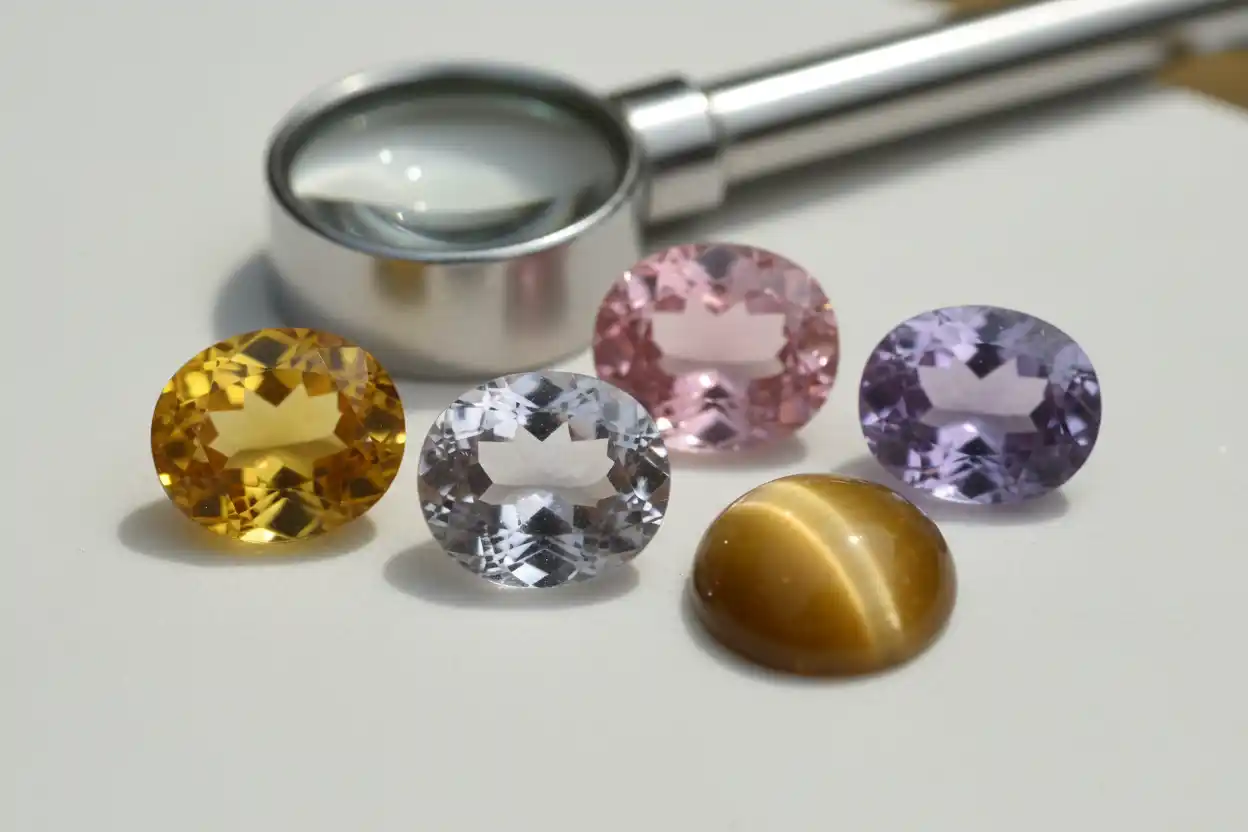
Buy Scapolite: Smart Buying Tips & Red Flags
When you buy scapolite, begin by identifying exactly what kind of material is being offered rather than allowing an unusual color, large carat weight, or rarity claim to determine the purchase. Gem-quality scapolite occurs in several colors, including yellow, colorless, pink, violet, and related shades, while some included material can display a cat’s-eye effect and rarer specimens can show additional optical phenomena. These forms require different quality standards, and their durability is more restrictive than the bright polished surface of a faceted stone may suggest.
The strongest buy scapolite decision usually depends on color, transparency, cutting, structural condition, and correct identification before size or geographic origin. Scapolite is not among the hardest mainstream jewelry gems, it has cleavage and brittle tenacity, and some color modification through irradiation can be unstable. Those characteristics make treatment disclosure and intended jewelry use particularly important, especially when a seller is asking a premium for vivid violet material, phenomenal stones, or unusually large transparent gems.
A disciplined way to buy scapolite is therefore to classify the material first, inspect its color under realistic light, assess transparency and fractures, examine the cut for windowing and hidden weight, consider treatment and color stability, then decide whether the price justifies independent testing. The stone should earn its value through qualities you can see or reasonably verify rather than through phrases such as rare collector grade, investment quality, natural purple, or premium African material.
What Should You Judge First When You Buy Scapolite?
When you buy scapolite, use a hierarchy that reflects the mineral rather than borrowing a generic checklist from diamond, ruby, or sapphire. Establish identity first, then evaluate color, transparency, clarity, cut, dimensions, structural condition, treatment, optical phenomena where present, provenance, and documentation.
Scapolite is not one single end-member mineral but a mineral group and solid-solution series associated principally with sodium-rich marialite and calcium-rich meionite compositions. Variations in chemistry influence measurable properties such as refractive index and density, which is one reason professional identification can be more useful than relying on a single memorized number.
For a buyer, the important conclusion is simpler: a yellow, violet, pink, colorless, or cat’s-eye gemstone cannot be authenticated as scapolite from color alone. Several more common gemstones and manufactured materials can occupy the same visual range.
| Priority | What to evaluate | Stronger choice | Main concern |
|---|---|---|---|
| 1 | Identity | Scapolite supported by appropriate gemological evidence | Color used as the only identification |
| 2 | Color | Attractive, believable color under neutral light | Color dependent on extreme lighting or editing |
| 3 | Transparency | Good transparency for faceted material | Heavy milkiness priced as fine transparent quality |
| 4 | Clarity | Inclusions that do not dominate appearance or structure | Large surface-reaching fractures |
| 5 | Cut | Lively face-up appearance and useful spread | Large window, heavy extinction, unnecessary depth |
| 6 | Dimensions | Appropriate visible size for weight | Excessive hidden weight below the girdle |
| 7 | Treatment | Clear disclosure, especially for unusual violet color | Irradiation or other treatment ignored or vaguely described |
| 8 | Phenomenon | Strong, mobile eye where represented | Weak or photographic-only cat’s-eye claim |
| 9 | Durability | Setting appropriate to moderate hardness and cleavage | High exposed setting for frequent impact |
| 10 | Documentation | Evidence proportional to rarity and price claims | Seller certificate used as unquestionable proof |
This sequence matters because an impressive five- or ten-carat stone can still be a weak buy scapolite choice if its color is unstable, its center is badly windowed, or its cleavage risk makes the intended ring impractical.
Color Is the First Major Visual Decision
Scapolite occurs in a surprisingly broad color range, although yellow, pink, violet, and colorless gem material receive much of the attention in jewelry. Yellow can range from pale straw to stronger golden or honey-like shades, while violet material may appear lavender, purple, bluish violet, or pinkish purple.
When you buy scapolite, judge the color according to the form in front of you rather than assuming one universally superior shade. A clean, lively yellow gem may be more attractive than a rare-looking violet stone whose color becomes weak under normal lighting.
Tone is important because very pale stones can appear almost colorless once mounted, especially in small sizes. Conversely, overly dark violet material can lose transparency and brilliance.
The best color is one that remains clearly visible and attractive under ordinary conditions rather than requiring a spotlight, black background, or transmitted light to look interesting.
Do Not Let Purple Automatically Mean More Valuable
Violet and purple scapolite can appear unusual enough that buyers assume every saturated example must be rare and naturally colored. That is too simplistic.
Scapolite color can be influenced by radiation-related color centers, and artificially irradiated material has been documented. Some irradiation-induced violet coloration can be unstable and may fade with exposure to light or heat.
That makes color stability particularly important when you buy scapolite represented as vivid purple or amethystine material. Ask whether the seller knows how the color originated, whether any irradiation has been disclosed, and whether the stone has shown fading.
Natural violet scapolite exists, so strong purple does not prove treatment. Equally, attractive color cannot prove that the stone is untreated.
The correct response is evidence rather than assumption.
Compare Scapolite in More Than One Lighting Environment
A pale yellow or violet gemstone can look dramatically different when the light source changes. Warm illumination may strengthen yellow and orange components, while cooler light can emphasize purple or blue-violet tones.
When you buy scapolite online, request images of the actual gemstone against a neutral white or gray background rather than relying exclusively on black velvet or colored surroundings. A continuous rotating video can be even more informative because it shows whether the stone retains attractive color as reflections move.
Pay attention to familiar reference objects in the frame. White backgrounds should look reasonably white, silver-colored metal should not show an unexplained color cast, and skin tones should remain plausible.
Scapolite is often bought precisely because of its unusual hue. The photography should therefore help you understand the hue rather than manufacture it.
Yellow Scapolite Should Be Compared for Saturation and Brightness
Yellow scapolite can range from delicate straw tones to warmer golden and honey colors. Fine transparent material can look exceptionally bright when it is cut efficiently, but weakly colored stones can become almost colorless through the center if the cut leaks light.
When you buy scapolite in yellow, compare saturation with brightness rather than simply choosing the darkest specimen. A dark brownish-yellow stone may have more body color but less visual life than a medium yellow gem with stronger transparency and better cutting.
Also examine whether the color appears consistent across the face. Natural zoning can occur, but a large nearly colorless section may be visually distracting in an otherwise saturated stone.
A good yellow buy scapolite choice should look intentionally yellow without becoming muddy.
Violet Scapolite Requires a Color-Stability Question
Violet material deserves a specific decision process because artificially created color can behave differently from natural stable color.
Certain scapolites can develop violet or amethystine coloration after irradiation, while documented induced color may fade with light exposure or heating. In some scapolite, radiation-related effects can also produce reversible or temporary color changes.
When you buy scapolite specifically because of a vivid violet appearance, ask whether the stone has been exposed to irradiation deliberately, whether color stability has been evaluated, and whether the seller recommends avoiding prolonged bright light.
Avoid testing an expensive stone by deliberately leaving it in intense sunlight. If the color fades, you have learned the answer by damaging the product you already paid for.
A meaningful return policy and clear treatment disclosure are safer than destructive experimentation.
Tenebrescent Scapolite Is a Specialized Category
Some scapolite can show tenebrescence, a reversible photochromic behavior in which exposure to suitable radiation changes the visible color and the material gradually returns toward its original appearance.
This phenomenon is especially interesting to collectors, but it should be demonstrated carefully. A photograph taken before ultraviolet exposure and another after exposure can show the effect, yet continuous video under controlled conditions provides stronger evidence that the images correspond to the same stone.
When you buy scapolite because of tenebrescence, ask what color appears before activation, what color develops afterward, what type of light is used, how long the effect persists, and whether artificial irradiation has altered the strength of the phenomenon.
Phenomenal behavior should be part of the disclosed identity of the specimen rather than a vague “color-changing crystal” claim.
Clarity Standards Depend on the Scapolite Type
Transparent faceted scapolite can be relatively clean, which means obvious central fractures, dense clouds, or dark inclusions should normally affect the price. At the same time, natural inclusions can provide useful evidence and can create optical phenomena in cat’s-eye material.
When you buy scapolite for faceted jewelry, examine it first at ordinary viewing distance. If the stone appears transparent and visually clean, then use magnified images to understand smaller features and structural risks.
A small inclusion near the girdle may have little practical effect. A large reflective fissure beneath the table may interfere with both brilliance and durability.
The goal is not microscopic perfection. It is transparency appropriate to the type and price.
Surface-Reaching Fractures Deserve Extra Scrutiny
Scapolite already has more durability limitations than sapphire, spinel, or quartz, so structural condition deserves serious attention.
When you buy scapolite, distinguish internal veils from fractures that reach the surface. An open fissure near the girdle, corner, or prong location can create a weak point during setting or later impact.
Examine the stone from the side and pavilion, not only face-up. Ask for close photographs of any feature that appears to intersect the surface.
A large fracture does not automatically make the gemstone unusable, especially in a pendant or collector specimen, but the risk should be reflected in both price and setting choice.
Cat’s-Eye Scapolite Has a Different Quality Hierarchy
Scapolite can display chatoyancy when oriented inclusions reflect light as a moving band across a cabochon. In this category, the inclusions are essential to the optical effect, so the stone should not be judged by transparent faceted-gem clarity standards.
When you buy scapolite with a cat’s-eye effect, prioritize the eye, body color, translucency, orientation, dome shape, condition, and stability.
A stronger cat’s-eye shows a reasonably distinct band that travels across the surface as the stone or light source moves. The line can be broader than the razor-sharp eye seen in the finest chrysoberyl, so buyers should judge scapolite within its own material characteristics rather than expecting every phenomenon to look identical.
A weak stationary reflection should not receive the same premium as convincing mobile chatoyancy.
Ask for Moving Video of Every Cat’s-Eye Claim
A static photograph is particularly weak evidence for chatoyancy because almost any polished cabochon can carry a bright surface reflection in the right position.
When you buy scapolite advertised as cat’s-eye material, request continuous video using a small concentrated light source. The bright band should move logically across the dome as the relationship between stone and light changes.
A poorly oriented cabochon may show only part of an eye or a diffuse glow. That can still be natural, but it should not receive a strong-phenomenon premium.
Photographic sharpness is not the same as optical sharpness.
Rare Asterism Should Be Evaluated Even More Carefully
Asterism has also been reported in scapolite, although it is much less familiar in commerce than cat’s-eye material. A rare phenomenon can attract large premiums, which increases the need for careful identification.
If you buy scapolite because it supposedly displays a star, request video under a point-like light source and examine whether the rays move naturally over the cabochon.
A gemstone with an unusual optical effect should also receive proper identification when the price is substantial because other materials can show cat’s eyes and stars.
The rarity of an effect makes verification more important, not less.
Cut Quality Is Crucial in Transparent Scapolite
Transparent scapolite can be brilliant enough to make a striking faceted gem, but weak proportions can quickly turn attractive rough into a pale, lifeless stone.
When you buy scapolite, look through the table for a broad transparent area. If the background remains clearly visible through the center, the gemstone may have a window.
Windowing is especially noticeable in pale yellow or colorless material because there is limited saturation to disguise poor light return. A large window can make the stone appear empty despite high clarity.
A good cut should distribute brightness across most of the face while preserving the gemstone’s color.
Windowing Should Reduce the Price
A window occurs when light passes through the pavilion rather than reflecting back toward the viewer. This creates a pale or transparent central zone.
When you buy scapolite, compare several stones face-up on a neutral background. A well-cut stone should show a more coherent pattern of light and color, while a badly windowed gem may allow you to see objects beneath it clearly.
Small leakage at steep viewing angles is normal. A large face-up window occupying much of the center is not.
Recutting may improve proportions, but it removes weight and can be risky in a cleavage-prone material. Do not buy a poorly cut stone assuming that correction will be simple.
Excessive Depth Creates Hidden Weight
Scapolite is sometimes encountered in surprisingly large faceted stones, and carat weight can become an easy marketing focus. However, a deep pavilion can retain mass without giving the buyer an equivalent increase in visible size.
When you buy scapolite, compare length, width, and depth with the stated weight. If two stones look nearly equal from the top but one weighs significantly more, determine where the extra mass is located.
A deep pavilion can occasionally support better color, but it can also reduce brilliance or complicate setting.
Visible spread should matter more than the psychological appeal of a larger carat number.
Extinction Should Not Dominate the Face
Dark facets are necessary for contrast, but large areas that remain black can make transparent scapolite appear less lively.
When you buy scapolite, rotate the stone slowly and watch whether dark areas change position as light moves through the facet pattern. A well-performing cut should show an active balance of brightness and shadow.
If a large region remains dead through many angles, the issue may involve excessive depth, orientation, or body color.
Do not confuse poor light return with desirable saturation.
Pleochroism Can Affect Face-Up Color
Scapolite can display pleochroism, meaning different colors or color strengths may be visible along different crystallographic directions. Violet material can show particularly noticeable directional differences.
This makes cutter orientation relevant when you buy scapolite. A stone may present its best color face-up because the cutter deliberately oriented the rough in that direction.
However, poor orientation can result in uneven color or a less attractive hue.
Video is useful because it lets you see how the gemstone behaves as it rotates instead of judging only the single direction selected for the listing photograph.
Carat Weight Alone Tells You Very Little About Value
Scapolite can occur in larger transparent crystals than many extremely rare collector gemstones, so an impressive weight should not automatically be interpreted as exceptional scarcity.
When you buy scapolite, ask what qualities survive into the larger size. Does the color remain attractive? Is the transparency still high? Is the stone well cut? Does it have serious fractures? Is the color stable? Is the phenomenon strong?
A large windowed yellow stone can remain commercial material. A smaller transparent violet gem with excellent cutting may provide far greater visual appeal.
Pay for the qualities contained within the carats, not the carats alone.
Identity Is More Difficult Than the Color Suggests
Yellow scapolite can resemble citrine, yellow beryl, orthoclase, topaz, and other pale yellow gems. Violet scapolite can overlap visually with amethyst, iolite, kunzite, spinel, and some tourmalines, while colorless material can resemble many transparent gems.
Because of that overlap, color is not a sufficient identification method when you buy scapolite.
Gemological testing can use refractive indices, birefringence, optical character, density, spectroscopy, inclusions, and other properties to separate scapolite from lookalikes.
Scapolite’s measurable properties also vary with composition across the marialite–meionite series, so diagnosis should consider an appropriate range rather than one single memorized value.
Glass Is a Practical Imitation Risk
Glass can be manufactured in nearly any of scapolite’s commercial colors and can be cut into transparent faceted stones or cabochons.
Round gas bubbles, curved flow structures, unusual abrasion, or optical behavior inconsistent with scapolite may suggest glass, but a clean-looking specimen cannot be authenticated simply because no bubbles are visible.
When you buy scapolite at a meaningful price, do not rely on a magnifying glass alone to exclude every imitation.
The value of professional testing rises quickly when rarity or unusual color is central to the purchase.
Synthetic Material Is Not the Main Consumer Risk
Laboratory synthesis of many mineral compounds is possible for scientific or industrial purposes, but direct laboratory-grown scapolite is not the dominant routine retail challenge faced by most buyers.
A more practical concern is an ordinary yellow, violet, or colorless gemstone—or glass—being mislabeled as rare scapolite.
That means when you buy scapolite, the first authentication question should usually be “Is this material actually scapolite?” rather than automatically assuming that an unusually clean stone must be synthetic.
Large size and transparency alone do not prove manufactured origin.
Do Not Use Hardness Tests to Authenticate Scapolite
Scapolite commonly falls around 5.5 to 6 on the Mohs scale, but attempting to authenticate it by scratching glass or another mineral is a poor buying method.
Hardness ranges overlap with numerous gemstones and imitations, while the test itself can damage a polished edge or leave an unnecessary scratch.
When you buy scapolite, use nondestructive gemological measurements instead.
This is particularly important because its moderate hardness already makes polished facet edges more vulnerable to abrasion than harder stones such as quartz, topaz, spinel, sapphire, or diamond.
The distinction between scratch resistance and breakage is explained in gemstone toughness vs hardness.
Scapolite’s Hardness Changes the Jewelry Decision
Scapolite’s approximately 5.5–6 Mohs hardness is adequate for occasional jewelry but substantially below the level many buyers associate with low-maintenance everyday rings.
A pendant or pair of earrings generally experiences much less abrasion than a ring or bracelet. This makes them more forgiving settings when you buy scapolite primarily for color rather than durability.
A ring can still be practical for occasional wear, especially when the gemstone has sound structure and protective metalwork. However, an exposed high-set scapolite is not a sensible substitute for sapphire when continuous daily wear is expected.
The purple engagement ring stones comparison places purple scapolite in context with more durable alternatives for buyers choosing a violet center stone.
Cleavage Is More Important Than the Mohs Number Alone
Scapolite also has cleavage, which introduces a directional breakage risk that the hardness number cannot describe.
Hardness asks how readily the surface scratches. Cleavage asks whether the crystal can split more easily along particular structural directions.
A gemstone can therefore resist some surface abrasion while still breaking after a well-placed impact or strong setting pressure.
When you buy scapolite for jewelry, this is one of the material’s most important practical limitations. The broader mechanics are explained in gemstone cleavage explained.
A high-quality stone deserves a setting designed around that reality.
Brittle Tenacity Makes Sharp Impacts a Problem
Scapolite is brittle, meaning it can chip or fracture under impact despite looking solid and glassy when polished.
When you buy scapolite for a ring, inspect thin girdles, pointed corners, pear tips, marquise ends, and any pre-existing fractures. These locations can concentrate stress.
Rounded ovals and cushions may be somewhat easier to protect, but shape alone cannot compensate for a weak stone or poor setting.
A bezel or substantial partial bezel can provide useful edge protection, while prongs need to be positioned carefully and tightened without excessive pressure.
Earrings and Pendants Usually Make Better Scapolite Jewelry
If you buy scapolite primarily for its unusual color, earrings and pendants often provide the best compromise between visibility and protection.
These jewelry types experience fewer direct blows and less repeated contact with hard surfaces than rings and bracelets. Large transparent stones can therefore be displayed without subjecting the girdle to the same level of abrasion.
A pendant setting should still protect the stone from swinging directly against harder gems, metal components, or zippers.
Scapolite is wearable. It simply rewards deliberate placement.
A Ring Should Be Chosen for Occasional Rather Than Punishing Wear
A well-protected scapolite ring can be enjoyed, but the buyer should understand its limitations before treating it as an uninterrupted everyday piece.
If you buy scapolite for a ring, prioritize a structurally sound stone without major surface-reaching fractures. Avoid excessively thin girdles, high exposed mountings, and designs that leave pointed ends vulnerable.
Remove the ring before manual work, sports, gardening, cleaning, moving furniture, or any activity where it may strike a hard surface.
Jewelry suitability is an engineering question as much as an aesthetic one.
Irradiation Is the Most Important Treatment Question
Scapolite is not a market dominated by routine heat treatment in the same way as ruby or sapphire. The more distinctive treatment issue is irradiation, particularly in relation to certain violet colors and photochromic behavior.
When you buy scapolite with unusually vivid purple coloration, ask explicitly about irradiation rather than simply asking whether the stone has been “treated.”
The word untreated should also be interpreted cautiously if unsupported. Treatment detection and color stability can involve more than a simple visual examination.
A seller who cannot answer may still be offering an attractive gemstone at an appropriate commercial price, but uncertainty should not be converted into an untreated rarity premium.
Induced Violet Color May Be Unstable
An important scapolite-specific issue is that violet color produced through irradiation can fade with light or heat.
That means a treated gemstone may look excellent when purchased yet change after prolonged exposure. This is materially different from a stable color treatment that remains essentially unchanged during normal wear.
When you buy scapolite with this type of color, stability belongs in the value calculation.
Ask whether fading has been observed, how the stone has been stored, and whether any care guidance accompanies it. A retailer promising that every purple scapolite is permanently stable without explaining treatment history deserves skepticism.
Heat Should Not Be Used as a Home Treatment Test
Because some radiation-induced scapolite colors can fade on heating, a buyer might be tempted to apply heat as an authenticity experiment.
Do not do this.
Heat can change color permanently and can create thermal stress in a brittle cleavage-bearing gemstone. Fractures and inclusions can increase the risk further.
If you buy scapolite and need to understand treatment, laboratory testing and seller disclosure are much safer than deliberately attempting to reproduce fading.
Filling and Coating Are Separate Questions
Fracture filling and surface coating are not defining mainstream scapolite treatments, but any valuable gemstone with open fissures or unusual surface color deserves appropriate screening.
A filler could reduce the visibility of a fracture, while a coating could make a pale stone appear more saturated. These possibilities affect both value and care.
When you buy scapolite with visible fissures, ask whether foreign material has been introduced. If color appears concentrated at facet edges, scratches, drill holes, or surface damage, seek further examination instead of assuming the entire body color is natural.
Rare treatment should still be disclosed when present.
Geographic Origin Should Rank Below Stone Quality
Gem-quality scapolite has been reported from several regions, including Madagascar, Tanzania, Sri Lanka, Myanmar, Mozambique, Kenya, Brazil, Canada, and other localities.
Some sources are associated with particular colors or optical phenomena, which can create collector interest. However, geographic origin should not become a substitute for color, transparency, cut, condition, and treatment disclosure.
When you buy scapolite labeled Madagascar, Tanzania, Sri Lanka, or another provenance, inspect the actual gem first.
A famous locality cannot repair windowing, unstable color, severe fractures, or poor polish.
Do Not Accept Geographic Origin From Color Alone
A yellow stone cannot be proved Madagascar scapolite simply because similar gems occur there, and a violet gem cannot be assigned confidently to Tanzania or another source only through hue.
Locality determination can require chemistry, inclusions, spectroscopy, provenance records, and comparison with known reference material. Even then, not every gemstone can be assigned conclusively.
When you buy scapolite at ordinary commercial value, exact geographic origin may not matter enough to justify sophisticated testing.
If a seller adds a substantial locality premium, however, the evidentiary standard should rise accordingly.
Mine Names and Collector Stories Need Traceability
Scapolite’s relative unfamiliarity can make provenance stories especially persuasive. A dealer may describe a stone as coming from an old parcel, closed mine, famous pocket, or one-time discovery.
Such stories can be true, but they are not self-proving.
When you buy scapolite because of collector provenance, look for old labels, parcel records, prior ownership documentation, credible mine information, photographs of original specimens, or other traceable evidence.
The broader responsible-sourcing questions in ethically sourced crystals are also useful when a seller emphasizes mine-to-market provenance.
A good story can add context. It should not be the only reason for the price.
Seller-Created Grades Are Not Universal Standards
AAA, AAAA, gem quality, collector grade, investment quality, museum grade, and similar phrases are not universal scapolite grading systems.
A retailer may use internal categories consistently, but the labels have little comparison value unless the criteria are explained.
When you buy scapolite labeled AAAA, ask what earned the grade. Is the seller evaluating color saturation, transparency, cut, phenomenon, treatment, or lack of fractures?
If the answer is simply “this is our best grade,” return to the stone itself.
Observable quality carries more weight than an undefined letter system.
When Does a Scapolite Need a Laboratory Report?
Most inexpensive commercial scapolite jewelry will not economically justify a major individual laboratory report. The cost of testing can exceed a meaningful portion of the gemstone’s price.
A report becomes more reasonable when you buy scapolite with a substantial price, unusually saturated violet color, disputed identity, exceptional transparency and size, an important cat’s-eye or star claim, unusual tenebrescence, a strong untreated assertion, or provenance that materially increases value.
The report should address the actual uncertainty creating the premium.
If the main question is whether the stone is scapolite, an identification report may be enough. If the main concern is treatment or phenomenal behavior, make sure the selected service addresses those questions within its scope.
A Laboratory Report Is Not a Quality Guarantee
A report identifying a gemstone as natural scapolite does not mean the stone has excellent color, good cutting, or a fair retail price.
When you buy scapolite with documentation, separate material identity from quality judgment.
A laboratory can establish measurable characteristics and report supported treatment observations. You still need to decide whether the color is attractive, the center is windowed, the stone is structurally sound, and the dimensions justify the weight.
Certification should reduce uncertainty, not replace buying judgment.
Laboratory Report Versus Appraisal
An appraisal and an identification report perform different functions.
A gemological report investigates the material and its characteristics. An appraisal assigns or estimates monetary value for a specific purpose.
When you buy scapolite, a high insurance valuation is not proof that the gemstone is rare, untreated, stable in color, or from a claimed locality.
Likewise, a laboratory report does not automatically tell you whether the asking price is competitive.
Keeping those functions separate makes unusual-gem purchases much easier to evaluate.
Match Documentation to the Exact Stone
If an important scapolite comes with documentation, make sure the report belongs to that exact stone.
Compare dimensions, weight, shape, cutting style, color description, photograph where available, and report number.
A report for another specimen from the same mine or parcel does not establish the properties of your gemstone.
When you buy scapolite specifically because of a rare color or phenomenon, this matching step becomes especially important because the premium may depend heavily on the exact stone’s identity and treatment.
Actual-Stone Photography Is Essential
Scapolite can vary significantly in color, clarity, cut, and phenomenon, so a stock image tells you very little about an individually priced gemstone.
When you buy scapolite online, request an actual face-up photograph, side profile, pavilion view where practical, and rotating video.
The face-up image reveals color and windowing. The profile exposes depth and hidden weight. The pavilion can reveal chips, fractures, and poor polishing.
For phenomenal stones, video should additionally demonstrate the moving optical effect.
The more unusual the listing claim, the more specific the imagery should become.
Ask for Neutral-Light and Ordinary-Light Video
An exotic gemstone is easy to sell through dramatic lighting because the buyer may have no familiar reference for how it should normally look.
When you buy scapolite, request continuous video in neutral-looking light and at least one ordinary indoor environment where practical.
This is especially important for purple material, color-change or tenebrescent stones, and pale yellow gems whose apparent saturation depends strongly on illumination.
A listing should help you understand the gemstone’s normal appearance rather than only its most theatrical appearance.
Side Views Matter Because Scapolite Can Hide Weight
Large transparent scapolite can be impressive, and preserving large finished weights may encourage deeper cutting.
A side view reveals whether a substantial portion of the gemstone sits below the girdle. That depth is not automatically bad, but it needs to provide something useful—better color, stronger brilliance, safer proportions, or avoidance of a serious inclusion.
When you buy scapolite whose deep pavilion provides none of those benefits, the additional weight may simply increase the carat figure.
Visible size and optical performance should determine whether the mass is worth paying for.
Condition Is Especially Important in Previously Worn Scapolite
Moderate hardness means facet junctions can abrade through repeated contact, while cleavage and brittleness increase the significance of chips and impacts.
When you buy scapolite secondhand, inspect the table, facet edges, girdle, points, and areas beneath prongs.
A heavily worn faceted stone may look hazy because sharp edges have rounded and polish has deteriorated. A chipped girdle can make resetting more difficult, particularly if a fracture extends inward from the damage.
Restoration may be possible, but repolishing removes material and can introduce additional risk in a cleavage-bearing gem.
Condition should therefore affect the price.
Setting Quality Can Be More Important Than Extra Carats
A smaller scapolite in a secure, protective mounting can provide far better long-term value than a larger stone placed high above the finger in minimal prongs.
When you buy scapolite jewelry, examine how the metal protects the girdle and whether pointed sections remain exposed.
The setting should hold the gemstone securely without excessive tension. Existing fractures should not sit directly beneath strong prong pressure.
For an unusual or valuable stone, competent setting work is part of the purchase rather than a cosmetic afterthought.
Cleaning Should Be Conservative
Scapolite’s cleavage, brittle nature, inclusions, and possible color-treatment concerns make conservative maintenance appropriate.
For a sound untreated stone, brief cleaning with lukewarm water, mild soap, and a soft brush or cloth is generally the safest home approach. Avoid prolonged soaking when the stone is heavily fractured, filled, glued, or mounted with vulnerable companion materials.
Steam and ultrasonic cleaning are best avoided as routine methods because heat, vibration, fractures, cleavage, and treatment uncertainty can create unnecessary risk.
Dry the jewelry gently rather than subjecting it to abrupt temperature changes.
Light Exposure Matters More for Some Scapolite Than Others
Ordinary naturally colored material does not automatically require darkness, but irradiation-related color can create additional stability concerns.
When you buy scapolite whose violet color is known or suspected to be irradiation induced, avoid prolonged exposure to intense light and high heat unless the seller or laboratory has established stability confidently.
This does not mean the gemstone cannot be worn normally. It means storage and display decisions should reflect the specific material rather than applying a universal rule to every scapolite.
Treatment history should determine care advice.
Do Not Store Scapolite Against Harder Gems
Scapolite can be scratched by many common jewelry gemstones. Quartz, topaz, spinel, sapphire, ruby, and diamond can all abrade a softer polished scapolite surface during repeated contact.
Store loose stones or jewelry pieces separately in soft compartments or pouches.
When you buy scapolite as part of a multi-gem bracelet or ring stack, consider whether harder stones will repeatedly strike or rub its surface.
Scratch resistance is an everyday ownership issue, not merely a laboratory number.
Value Trade-Off: Color Versus Size
If your budget forces a choice between a very large pale stone and a smaller gem with stronger color and better cutting, the smaller candidate will often produce greater visual impact.
When you buy scapolite, remember that large size by itself is not the strongest rarity indicator in ordinary material.
A beautifully saturated stone with clean transparency can look far more distinctive than a large gem whose center is almost colorless.
Let visible performance earn the premium.
Value Trade-Off: Natural Stable Color Versus Treated Vivid Color
A disclosed irradiated purple scapolite may be visually striking and reasonably priced, yet potential color stability should be part of the decision.
A naturally colored stable stone may justify more money when the evidence supports that distinction, particularly for collectors.
When you buy scapolite primarily for jewelry, you may decide that an attractive treated stone is perfectly acceptable if the treatment and care requirements are transparent.
When collecting for natural rarity, you may place much greater weight on treatment status.
Both decisions can be rational when the trade-off is explicit.
Value Trade-Off: Faceted Clarity Versus Cat’s-Eye Phenomenon
Transparent faceted scapolite and cat’s-eye scapolite should not compete under one clarity standard.
For a faceted gem, transparency and brilliance usually deserve greater weight. For a cat’s-eye cabochon, aligned inclusions are necessary to create the moving eye.
When you buy scapolite with chatoyancy, accepting greater translucency can be sensible if the optical phenomenon is strong.
A cloudy faceted stone and a translucent phenomenal cabochon therefore occupy different quality categories even when both are natural scapolite.
Value Trade-Off: Famous Locality Versus Better Gemstone
A locality claim can interest collectors, but the majority of jewelry buyers will notice color and cutting every time they look at the stone.
If one scapolite has excellent transparency and cutting while another carries a prestigious origin story but is badly windowed, ask which attribute you actually want to own.
When you buy scapolite for personal jewelry, visible quality will often provide more satisfaction.
When building a locality-focused mineral collection, provenance may legitimately become central.
The important point is to pay deliberately rather than allowing the seller to define the priority for you.
Resale Expectations Should Stay Realistic
Scapolite is much less liquid than ruby, sapphire, diamond, or other widely recognized jewelry gemstones.
That can make unusual fine examples attractive to collectors, but it also means the eventual pool of buyers may be smaller. Retail price, cutting labor, setting expense, and dealer markup should not be assumed recoverable.
When you buy scapolite, avoid guaranteed appreciation claims or statements suggesting that rarity automatically creates easy resale.
A genuinely uncommon gem can still be difficult to sell because rarity and market demand are separate concepts.
Buy unusual scapolite for its color, phenomenon, mineralogical interest, or personal appeal first.
Practical Buy Scapolite Decision Matrix
| Factor | Strong candidate | Reasonable compromise | Serious concern |
|---|---|---|---|
| Identity | Scapolite appropriately identified | Seller disclosure plus return rights at modest price | Identification based only on color |
| Color | Attractive under neutral and normal light | Pale but pleasing color | Vivid appearance exists only under dramatic lighting |
| Transparency | Clean to lightly included faceted material | Moderate inclusions with good color | Heavy cloudiness priced as fine transparent gem |
| Fractures | No serious surface-reaching fissures | Minor stable feature reflected in price | Major open fracture near girdle or setting point |
| Cut | Bright and well spread | Minor asymmetry | Large window, severe extinction, excessive depth |
| Treatment | Known and clearly disclosed | Treatment uncertain at modest commercial value | Expensive natural-color claim without support |
| Color stability | Stable or limitations explained | Buyer accepts known fading risk | Permanent-color claim contradicts uncertain treatment history |
| Cat’s eye | Convincing mobile band | Broad but attractive eye | Static reflection used as phenomenon evidence |
| Size | Strong quality survives into larger gem | Large commercial stone at appropriate price | Weight itself treated as proof of rarity |
| Origin | Documented where relevant | Origin unspecified | Premium country claim based on color alone |
| Condition | Crisp facets and sound girdle | Minor wear priced accordingly | Chips, heavy abrasion, cleavage damage |
| Setting | Protective and structurally sensible | Occasional-wear ring | Exposed high setting promoted for unrestricted daily wear |
| Documentation | Appropriate to unusual claims | No report for ordinary modest-value stone | Generic appraisal used as technical proof |
| Returns | Time for non-destructive inspection | Clear reasonable limitations | No meaningful remedy despite strong rarity claims |
The purpose of this matrix is not to create another universal grade. It is to make the buy scapolite decision explicit enough that rarity language cannot hide important compromises.
Stone-Specific Red Flags When You Buy Scapolite
One of the strongest red flags is vivid purple scapolite sold with an absolute natural and permanently stable color claim while the seller cannot explain whether irradiation has been investigated. Natural violet material exists, but treatment-related color is sufficiently relevant that strong premiums deserve stronger evidence.
Another warning is a large transparent stone marketed as extraordinarily rare solely because of carat weight. Scapolite can occur in meaningful sizes, so color, transparency, cutting, treatment, and condition must support the premium.
Be cautious when a cat’s-eye claim is demonstrated only by one still photograph. Surface reflections can resemble an eye, whereas genuine chatoyancy should move logically across the dome.
Other red flags include seller-created AAAA grades with no definition, precise origin assigned from color alone, prominent open fractures paired with no treatment disclosure, heavy windowing hidden by a black background, extreme color differences among photographs, and an expensive stone accompanied only by a generic valuation certificate.
Durability misrepresentation also matters. A seller presenting scapolite as an ideal unrestricted daily-wear ring stone while ignoring its moderate hardness, cleavage, and brittle behavior is omitting information relevant to the purchase.
A Better Way to Buy Scapolite
Begin your buy scapolite comparison by separating faceted transparent stones from cat’s-eye, star, tenebrescent, and collector-specimen material. Each group has a different quality hierarchy.
For a faceted gem, compare several candidates under similar neutral lighting. Remove stones whose color disappears, becomes muddy, or appears convincing only under special conditions. Then compare transparency and inspect fractures.
Next, evaluate cutting. Look for strong face-up brightness, limited windowing, manageable extinction, and dimensions that make sense for the weight. Pay particular attention to large gems because deep cutting can hide substantial mass.
After visible quality is established, investigate irradiation and other treatment concerns according to color and price. Violet material deserves a more specific color-stability conversation than ordinary yellow material.
For phenomenal scapolite, shift the emphasis toward the optical effect. A mobile eye, correct cabochon orientation, attractive body color, and structurally sound stone are more important than high transparency.
Finally, assess intended jewelry use, provenance, documentation, setting construction, actual-stone imagery, and return terms. The Buying & Value collection applies evidence-based purchasing principles across many gems, but scapolite requires unusually careful attention to color stability and durability because those factors can materially change whether an attractive loose stone becomes a satisfying long-term purchase.
Frequently Asked Questions
What should I check first when I buy scapolite?
Confirm that the material is actually scapolite, then evaluate color, transparency, clarity, cut, dimensions, treatment, structural condition, and intended jewelry use. Provenance and seller-created grades should come later.
What colors does scapolite occur in?
Gem-quality scapolite can occur colorless and in yellow, pink, violet, purple-related, and other shades. Color can vary with composition and radiation-related effects, so hue alone cannot establish identity.
Is purple scapolite naturally purple?
Natural violet and purple scapolite exists, but irradiation can also create or intensify violet coloration in some material. Treatment disclosure is therefore important when you buy scapolite primarily for strong purple color.
Can irradiated scapolite fade?
Certain irradiation-induced scapolite colors have been documented as unstable and can fade with exposure to light or heat. That does not mean every violet scapolite will fade, but treatment and stability should be investigated for higher-value purchases.
Is scapolite usually treated?
Scapolite is not dominated by one routine enhancement comparable with heating in sapphire, but irradiation is an important treatment consideration, particularly for some violet material. Filling or coatings can also be relevant when present and should be disclosed.
Does scapolite show tenebrescence?
Some scapolite can display tenebrescence, a reversible light-induced color change. Phenomenal material should be evaluated through controlled demonstration rather than one static photograph.
Can scapolite have a cat’s-eye effect?
Yes. Aligned inclusions can create chatoyancy in scapolite when the material is oriented and cut as a cabochon.
What makes a good cat’s-eye scapolite?
Look for a recognizable moving light band, attractive body color, useful translucency, sound condition, and correct orientation. The eye should move across the dome as the stone or light source changes position.
Can scapolite show a star?
Asterism has been reported in scapolite, although it is much less familiar than ordinary cat’s-eye material. An unusual star claim deserves careful identification when it materially increases the price.
Should faceted scapolite be eye-clean?
Fine transparent material is often sufficiently clean that obvious central inclusions or major fractures should affect value. Minor natural internal features can be acceptable when they do not dominate appearance or durability.
What is windowing in scapolite?
Windowing is a pale or transparent face-up area created when light escapes through the pavilion rather than returning toward the viewer. It can be especially obvious in lightly colored scapolite.
Is a large scapolite automatically valuable?
No. Scapolite can occur in sizeable material, so large weight alone does not establish high value. Color, transparency, cut, treatment, phenomenon, condition, and provenance can matter more.
How hard is scapolite?
Scapolite generally falls around 5.5 to 6 on the Mohs scale. This provides substantially less scratch resistance than quartz, topaz, sapphire, or diamond.
Does scapolite have cleavage?
Yes. Scapolite has cleavage, which means it can split more readily along particular structural directions. This makes impact and setting pressure important even though the polished stone may look solid.
Is scapolite good for everyday rings?
It can be worn in rings, but it is better suited to occasional or carefully protected use than unrestricted daily wear. Moderate hardness, cleavage, and brittleness make earrings and pendants lower-risk choices.
What setting is best for scapolite?
Protective bezels, partial bezels, halos, or well-positioned substantial prongs can help shield vulnerable girdle areas and points. The correct design depends on the exact stone and its fractures.
What gemstones can look like scapolite?
Depending on color, scapolite can resemble citrine, amethyst, iolite, kunzite, topaz, beryl, feldspar, tourmaline, quartz varieties, glass, and other transparent materials.
Can I identify scapolite with a scratch test?
It is not recommended. Scratch tests can damage the gemstone and provide weak evidence because hardness overlaps with other materials. Nondestructive gemological measurements are more useful.
Is synthetic scapolite common in jewelry?
Direct laboratory-grown scapolite is not the primary ordinary retail concern. Misidentification with other natural gems, glass, or manufactured substitutes is a more practical risk for most buyers.
Do I need a laboratory report when I buy scapolite?
Not for every inexpensive commercial stone. A report becomes more useful for high-value gems, disputed identity, vivid unusual color, important phenomenal material, exceptional size, treatment questions, or provenance claims that materially affect the price.
Does a certificate prove scapolite is high quality?
No. An identification document may establish what the material is and report supported characteristics, but it does not automatically establish excellent color, good cutting, or a fair price.
Is an appraisal the same as a laboratory report?
No. An appraisal estimates monetary value for a stated purpose, while a gemological report addresses material identity and related characteristics. A high appraisal figure is not proof of treatment status or rare origin.
Can a seller tell where scapolite came from by color?
Not reliably. Similar colors can occur from different deposits, and geographic attribution may require more evidence than appearance. Origin should not receive a major premium without appropriate support.
What photographs should I request before I buy scapolite online?
Ask for actual-stone images face-up, from the side, and from the pavilion where practical, plus rotating video under neutral-looking and ordinary light. For cat’s-eye or tenebrescent material, request video that demonstrates the phenomenon directly.
How should scapolite be cleaned?
Use a conservative approach with lukewarm water, mild soap, and gentle manual cleaning for sound material. Avoid routine steam or ultrasonic cleaning, particularly when fractures, cleavage, treatment, filler, or setting condition create uncertainty.
Does scapolite hold its value?
Exceptional stones can interest collectors, but scapolite has a smaller secondary market than major gemstones. Rarity does not guarantee liquidity, and ordinary retail prices should not be treated as guaranteed resale values.
What is the biggest red flag when I buy scapolite?
A major warning is an unsupported premium based on vivid purple color, enormous weight, prestigious origin, or rare optical phenomena while treatment, stability, identity, cutting, and structural condition remain poorly documented.
Final Buy Scapolite Checklist
Before you buy scapolite, identify the exact category of stone you are evaluating. Transparent yellow or violet faceted gems, cat’s-eye cabochons, tenebrescent stones, star material, and mineral specimens should not be judged by one universal standard.
For transparent material, prioritize attractive color, useful transparency, manageable inclusions, and efficient cutting. Inspect the center for windowing, watch dark areas for excessive extinction, and compare millimeter dimensions with carat weight so you do not unknowingly pay for a deep pavilion that adds little visible size.
Treat vivid violet color with additional care because irradiation can create color in scapolite and some induced coloration may be unstable. Ask specifically about treatment and color stability rather than relying on a vague natural or untreated statement. Do not attempt to test stability with deliberate heat or intense sunlight.
For cat’s-eye material, ask for moving video under a concentrated light source and judge the mobility, centering, visibility, body color, translucency, and condition of the eye. Apply the same evidence-first principle to rarer star or tenebrescent claims.
Remember that scapolite’s approximately 5.5–6 Mohs hardness, cleavage, and brittle behavior materially affect jewelry suitability. Earrings and pendants generally present less risk, while rings deserve protective settings, structurally sound stones, and deliberate occasional wear.
Use independent testing when the price depends heavily on rare identity, unusual color, important phenomenon, treatment status, or provenance. Match any report to the exact gemstone, distinguish identification from appraisal, and preserve important claims in the written sales description.
Finally, insist on actual-stone photography, realistic lighting, side and pavilion views, sensible return terms, and clear treatment disclosure. The strongest way to buy scapolite is to pay first for correct identity, attractive stable color, transparency appropriate to the material, competent cutting, sound structure, and honest representation. Large size, exotic locality, proprietary grades, and rarity stories should matter only after those fundamentals are secure.