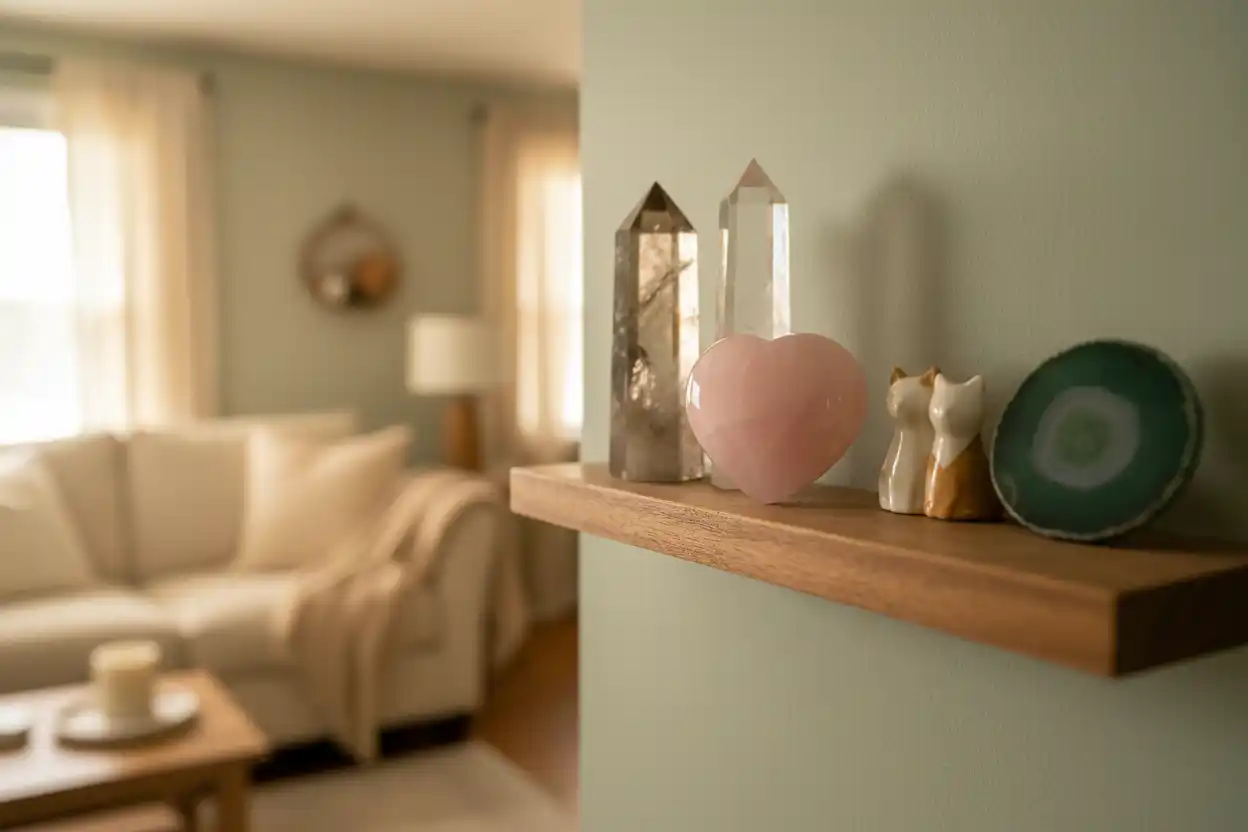
9 Best Crystals for Pets: Positive Meanings & Powerful Everyday Uses
Crystals for pets are safest when they remain symbols for the owner rather than objects given directly to the animal. Rose quartz, amethyst, clear quartz, smoky quartz, green aventurine, tiger’s eye, howlite, moonstone, and black tourmaline can represent affection, patience, routine, confidence, adjustment, and attentive care, but they do not treat anxiety, pain, seizures, skin disease, digestive problems, arthritis, infection, or any other veterinary condition.
Pets explore the world differently from people. Dogs may chew or swallow objects, cats may knock small items from shelves, birds can peck unfamiliar objects, and small mammals may gnaw almost anything placed inside an enclosure. A crystal that seems harmless on a human desk can become a choking hazard, intestinal foreign body, sharp fragment, dental hazard, or source of unwanted dust if an animal can lick, bite, scratch, or swallow it. The safest approach is therefore indirect: keep the crystal securely out of reach and use it as your own reminder to provide consistent care.
Rose Quartz for Affection, Gentle Handling, and Daily Attention
Rose quartz is pink quartz traditionally associated with affection, compassion, kindness, and emotional warmth. Those meanings fit pets naturally because many people view animals as close companions and family members.
Traditional rose quartz healing properties can be reframed around the owner’s behavior rather than claims about the pet. A securely displayed rose quartz stone can symbolize gentle handling, regular attention, grooming, play, and noticing changes in behavior.
Affection alone is not enough to assess an animal’s health. A pet that becomes withdrawn, stops eating, changes drinking habits, develops breathing difficulty, limps, vomits repeatedly, or behaves unusually may need veterinary attention rather than extra crystal exposure.
Do not place rose quartz loose in a pet’s bed or crate. Even a smooth stone can be chewed, swallowed, or used in ways the owner did not anticipate.
Amethyst for Calm Owner Behavior During Stressful Pet Situations
Amethyst is purple quartz traditionally associated with reflection and calm routines. In a pet context, its most reasonable symbolic use is helping the owner remember to remain deliberate during stressful events.
The themes within amethyst healing properties can support preparation before travel, veterinary appointments, grooming, thunderstorms, visitors, or another situation that tends to make the household tense.
Animals can respond to changes in routine, environment, handling, and human behavior. Remaining calm and following a veterinarian or qualified behavior professional’s advice is more useful than expecting a crystal to calm the animal directly.
An amethyst stone can stay on the owner’s desk beside appointment notes or a pet-care checklist.
Do not attach crystal points or beads to a collar as a calming device. Added items can create snagging, breakage, chewing, or swallowing risks.
Clear Quartz for Routines, Medication Schedules, and Pet-Care Organization
Clear quartz is traditionally associated with focus, intention, and clarity. These themes are particularly practical for organizing pet care.
Traditional clear quartz healing properties can be used symbolically beside an owner’s feeding schedule, veterinary notes, grooming reminders, or medication chart.
The stone should never be substituted for the medication itself or used to decide whether treatment is necessary. If a veterinarian prescribes medicine, the important action is following the instructions and asking questions when something is unclear.
Multi-pet households can become complicated when different animals have different foods, medicines, exercise requirements, or health needs. A visible reminder system can reduce confusion.
Keep the quartz itself out of reach. Clear polished stones can still be swallowed, while pointed quartz specimens may create sharp edges.
Smoky Quartz for Consistent Routines During Environmental Changes
Smoky quartz is traditionally associated with grounding and returning attention to immediate practical needs. Those meanings fit situations where a pet is experiencing a change in household routine.
The symbolism around smoky quartz healing properties can remind owners to maintain predictable feeding, walking, litter, sleep, and interaction schedules when moving home, welcoming a new family member, or changing work routines.
The crystal does not make the animal adapt. Familiar schedules, gradual introductions, safe spaces, appropriate enrichment, and professional behavioral guidance when needed have real practical roles.
A smoky quartz stone can remain in an owner-only area as a prompt to ask whether the animal’s environment has become unnecessarily unpredictable.
Physical signs of illness should not be attributed simply to stress from change. Veterinary assessment may be necessary when behavior or health changes significantly.
Green Aventurine and Tiger’s Eye for Play, Confidence, and Careful Observation
Green aventurine is traditionally associated with growth, optimism, and new opportunities. For pet owners, those themes can symbolize appropriate play, enrichment, and positive new experiences.
The traditions around green aventurine healing properties can serve as a reminder to provide species-appropriate activity rather than expecting a crystal to improve mood or confidence.
A dog may benefit from suitable walks and training games. Cats often benefit from opportunities to climb, hide, scratch, stalk toys, and explore. Birds and small mammals have their own behavioral needs.
Tiger’s eye is traditionally associated with observation, practical judgment, and confidence. The symbolism around Tiger’s Eye healing properties can fit one of the most important pet-care skills: noticing changes.
Owners often know what is normal for their own animal. A difference in appetite, mobility, sleep, grooming, elimination, vocalization, or social behavior can provide useful information.
Observation should lead to veterinary advice when a change is concerning rather than to crystal diagnosis.
Howlite and Moonstone for Patience With Training and Life Transitions
Howlite is traditionally associated with patience and slowing reactive responses. These themes can be useful for owners working through house training, leash manners, introductions between pets, or another process that takes repetition.
Traditional howlite healing properties can remind an owner that frustration rarely improves training. Clear cues, suitable reinforcement, consistency, realistic expectations, and appropriate professional guidance are more useful.
Howlite is relatively soft and should remain inaccessible to animals that may chew it.
Moonstone is traditionally associated with cycles, transition, and adaptation. The symbolism around moonstone healing properties can fit adoption, moving, aging, or changes in household structure.
A newly adopted animal may need time to feel secure. An older pet may require adjustments to routines, access, exercise, or veterinary care.
Moonstone has cleavage and can chip if dropped or bitten, making secure display far preferable to direct pet contact.
Black Tourmaline for Owner Boundaries and Creating a Safer Home
Black tourmaline is commonly associated with protection symbolism. With pets, the safest interpretation is not that the stone creates an invisible shield, but that it reminds the owner to remove hazards and maintain sensible boundaries.
Traditional black tourmaline healing properties can symbolize checking doors, gates, electrical cords, medications, cleaning products, foods, plants, and small objects that an animal could access.
A black tourmaline specimen on a high secure shelf can therefore represent environmental safety.
The stone itself must also be treated as a potential object hazard. Raw tourmaline can have fractured or pointed surfaces, and small pieces may be swallowed.
Do not place black tourmaline inside a crate, aquarium, terrarium, bird cage, food bowl, or water dish unless a qualified professional has specifically established that the object and setting are safe. Decorative preference should never override animal safety.
Crystals Should Never Replace Veterinary Diagnosis or Treatment
Pets cannot explain symptoms in words, so changes in behavior sometimes provide the first sign that something is wrong. Reduced appetite, repeated vomiting, breathing difficulty, collapse, seizures, significant pain, inability to urinate, serious injury, or other major changes can require prompt veterinary assessment.
A crystal cannot diagnose the cause.
The traditions around crystals for emotional healing may be meaningful to an owner who is worried about a pet, but the animal still needs appropriate veterinary care when health is in question.
Do not stop prescribed medication, change a veterinary diet, delay testing, or avoid treatment because a pet appears calmer near a stone.
Coincidental improvement does not establish that the crystal treated the condition.
Crystal Water, Powders, and Direct Ingestion Are Unsafe Pet Practices
Do not put crystals into a pet’s drinking water or food. Mineral composition, surface treatments, coatings, adhesives, metal findings, contaminants, and small fragments may create unnecessary risk.
Crystals should never be ground into powders for feeding or sprinkled onto pet food.
Even stones considered relatively stable for ordinary human handling can become hazards when chewed or swallowed. Foreign objects may damage teeth, become lodged, or create digestive obstruction.
The safest symbolic practice does not require the pet to touch the crystal at all.
Keep drinking bowls, food bowls, bedding, litter areas, cages, tanks, and enclosures free from decorative stones unless the objects are specifically selected as safe for that species and environment.
Crystal Collars and Pet Jewelry Add Risks Without Proven Health Benefits
Attaching crystal beads, wire-wrapped stones, pendants, or raw specimens to a pet’s collar may look attractive, but it introduces additional objects that can break, snag, fall off, or be chewed.
There is no established health benefit that justifies those risks.
If a collar is needed for identification or another practical reason, choose equipment appropriate for the animal’s species, size, environment, and safety needs rather than adding unnecessary decorative weight.
Cats may require specific breakaway designs in situations where snagging is a concern. Other animals have different requirements.
The crystal can remain with the owner while the pet wears equipment designed for the pet.
Safe Crystal Display Means Thinking Like the Animal
A shelf that seems inaccessible may not actually be inaccessible to a climbing cat. A large stone may still be movable by a strong dog. Birds can reach objects through cage bars, and rodents may chew decorations placed near an enclosure.
Secure displays should account for the specific animal’s behavior.
Heavy specimens should not sit where they can fall onto a pet. Small stones should not be left on low tables or floors. Sharp clusters should remain enclosed or placed well outside animal access.
The owner can still enjoy a meaningful collection while keeping the pet entirely separated from it.
Use Pet Crystals as Reminders for Owner Actions
A safer crystal routine centers on what the person does.
Rose quartz can mean spend a few attentive minutes with the pet. Clear quartz can mean check the care schedule. Tiger’s eye can mean observe behavior carefully. Black tourmaline can mean inspect the home for hazards.
This keeps symbolism practical without making the animal participate in the crystal practice.
Crystals can also accompany an owner’s pet journal containing vaccination records, medication notes, weight changes, appointment questions, feeding information, or behavior observations.
The stone remains decorative and symbolic while the written information provides something genuinely useful for care.
Conclusion
The best crystals for pets are safest when they are actually used by the owner rather than given to the animal. Rose quartz, amethyst, clear quartz, smoky quartz, green aventurine, tiger’s eye, howlite, moonstone, and black tourmaline can symbolize affection, patience, routine, observation, adjustment, and household safety. Keep stones out of reach, avoid crystal water and powders, skip crystal collars, and rely on qualified veterinary care whenever a pet has health or behavioral concerns.
FAQs
Are crystals safe for pets?
Crystals can be kept safely in a pet-owning home when they are securely stored out of reach. Direct chewing, licking, swallowing, or unsupervised contact should be avoided.
Can crystals calm an anxious dog or cat?
There is no established evidence that crystals treat pet anxiety. Behavioral changes should be addressed through appropriate environmental changes and veterinary or qualified behavioral guidance when needed.
Can I put rose quartz in my pet’s bed?
It is safer not to leave loose stones where a pet can chew or swallow them.
Is crystal water safe for pets?
No crystal needs to be placed in a pet’s water. Unknown composition, treatments, coatings, contaminants, and small fragments create unnecessary risk.
Can I attach a crystal to my pet’s collar?
Crystal pendants and beads add potential snagging, chewing, breakage, and swallowing risks without an established health benefit.
Can crystals replace veterinary medicine?
No. Crystals cannot diagnose or treat animal illness and should never replace veterinary assessment or prescribed care.
Which crystal can symbolize affection for a pet owner?
Rose quartz is traditionally associated with affection and compassion and can serve as an owner’s reminder to provide attentive care.
Which crystal can symbolize careful observation?
Tiger’s eye is commonly associated with observation and practical judgment, making it a suitable owner-focused reminder to notice changes in a pet’s normal behavior.
Where should crystals be kept in a home with pets?
Use a stable, secure location the animal cannot climb to, knock over, chew, swallow from, or otherwise access.
Crystal meanings for pets are traditional or personal symbolism for owners, not established veterinary treatments or methods for changing animal health or behavior.