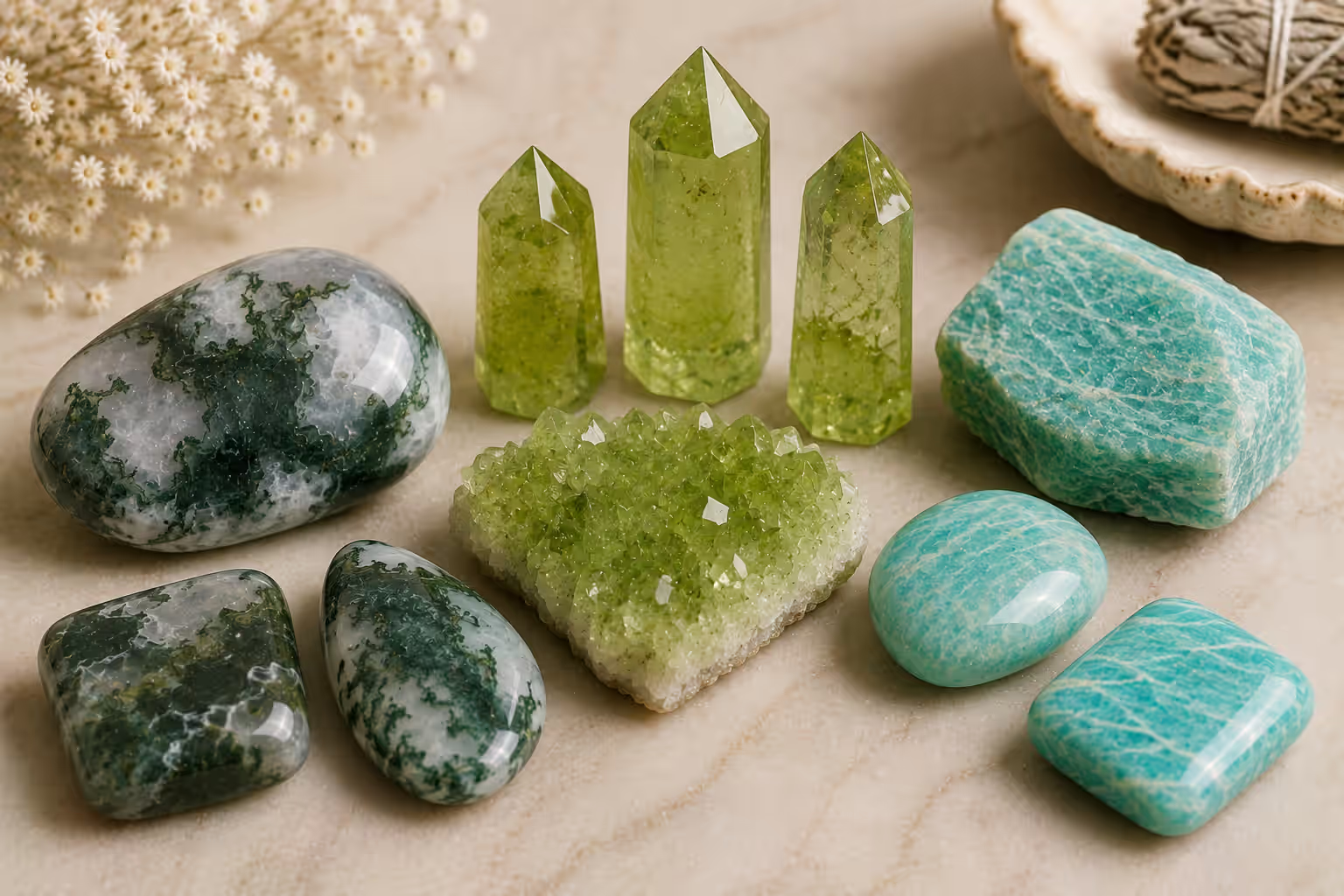
Crystals for Virgo: Gemstone Choices, Symbolism & Practical Tips
Crystals for Virgo can be approached in two very different ways, and separating them makes the subject far more useful. People born during the Virgo portion of August or September can look first to established month-based birthstone traditions, while modern crystal practices add other stones through symbolic themes such as discernment, organization, communication, gradual improvement, and practical reflection. These systems should not be treated as interchangeable. August birthstones belong to an established calendar tradition, September has its own birthstone, and stones described online as “Virgo crystals” usually come from modern astrological or metaphysical associations rather than gemological classification.
Virgo itself is described in Western astrology as a mutable earth sign, a framework commonly associated with adaptability, practical attention, refinement, and thoughtful analysis. Those ideas are astrological themes rather than scientifically established personality traits. A Virgo person does not automatically have a particular temperament, and gemstones do not diagnose personality, correct character flaws, or determine future outcomes. Used responsibly, however, a gemstone can represent a value, intention, memory, aesthetic preference, or personal ritual while still being appreciated for its genuine mineralogical properties.
Crystals for Virgo at a Glance
| Gemstone | Why It May Be Chosen | Gemological Identity | Practical Jewelry Note |
|---|---|---|---|
| Peridot | August birthstone; often linked symbolically with renewal and constructive change | Gem variety of olivine | Mohs 6.5–7; suitable with sensible care |
| Spinel | August birthstone; modern symbolism may emphasize resilience and fresh perspective | Distinct mineral species, not ruby or sapphire | Mohs 8; durable for many jewelry styles |
| Sardonyx | Traditional August birthstone; often connected with discipline and boundaries | Layered chalcedony | Mohs about 6.5–7; dyed material is common |
| Sapphire | September birthstone; traditionally linked with truth, loyalty, and judgment | Corundum, except red corundum classified as ruby | Mohs 9; excellent everyday jewelry option |
| Amazonite | Modern Virgo association with communication and balanced expression | Blue-green potassium feldspar, commonly microcline | Cleavage makes protective settings sensible |
| Moss Agate | Modern symbolic choice for gradual growth and grounded development | Chalcedony with moss-like inclusions | Moderately durable; avoid assuming inclusions are actual moss |
| Citrine | Modern symbolic choice for purposeful action and optimism | Yellow to orange quartz | Mohs 7; widely suitable for jewelry |
The most important distinction is that the first four stones have a direct connection to August or September birthstone traditions, while amazonite, moss agate, and citrine are examples of contemporary symbolic associations. GIA recognizes peridot, spinel, and sardonyx as August birthstones, while sapphire is the traditional September birthstone.
Virgo Birthstones and Virgo Crystals Are Not the Same Thing
Someone searching for crystals for Virgo may encounter dozens of lists that present one collection of stones as if it were universally established. There is no single mineralogical body that assigns crystals to zodiac signs in the way gemological organizations identify mineral species, treatments, or physical properties. Zodiac crystal lists come from astrological, metaphysical, commercial, and contemporary cultural traditions, so different authors may recommend different stones. Month-based birthstones have a clearer conventional structure because August and September each have recognized gemstone traditions.
This matters because Virgo season spans portions of both months in common Western astrology. An August-born Virgo may choose among peridot, spinel, or sardonyx through birthstone tradition, while a September-born Virgo has sapphire as the principal month-based birthstone. GIA identifies peridot as a yellowish-green to greenish-yellow gem variety of olivine, recognizes spinel as a separate gem material, and describes sardonyx as an August birthstone within the chalcedony family. Sapphire, the September birthstone, belongs to the corundum mineral family.
A person may still prefer a modern Virgo-associated stone that has no birthstone connection. That choice can be meaningful if the distinction remains clear. An amazonite bracelet selected as a reminder to communicate calmly is a personal symbolic use; it is not the same claim as saying sapphire is the September birthstone. Keeping those categories separate prevents tradition, personal meaning, and mineral science from becoming unnecessarily mixed.
Sapphire: The September Birthstone for Virgo
For a September-born Virgo, sapphire provides the strongest connection to an established birthstone tradition. Sapphire is gem-quality corundum in colors other than the red material conventionally classified as ruby. Although blue remains the color most people associate with sapphire, the gem can also occur in pink, yellow, green, purple, orange, colorless, and other hues. GIA identifies sapphire as the September birthstone and notes that corundum ranks 9 on the Mohs hardness scale, with excellent toughness and no cleavage. Those properties make many sapphires especially practical for rings and jewelry exposed to frequent wear.
Historically, sapphire has accumulated symbolic associations with truth, faithfulness, sincerity, and nobility. Those traditions can fit modern Virgo themes such as discernment, accountability, or careful judgment, but the connection remains symbolic rather than biological or psychological. Someone might wear sapphire as a personal reminder to verify information before making a decision, communicate accurately, or remain consistent with chosen values. The gemstone does not make a person more logical, loyal, productive, or emotionally controlled. Readers interested in how those traditions vary across different hues can explore the Gems Lore guide to sapphire color meaning.
Sapphire treatments deserve attention because appearance alone does not establish treatment history. Heat treatment is common and accepted in the trade, while lattice diffusion, fracture filling, and dyeing also occur. GIA notes that untreated and heat-treated sapphire are generally durable, whereas fracture-filled or dyed stones may require greater care. Warm soapy water remains a safe cleaning method, and treatment disclosure becomes especially important when purchasing a valuable sapphire.
Peridot: An August Birthstone with a Direct Virgo Connection
Peridot is one of the clearest birthstone choices for an August-born Virgo. Mineralogically, peridot is the gem variety of olivine and occurs naturally in yellowish-green to greenish-yellow shades. GIA documents peridot from geological environments connected with Earth’s mantle and volcanic activity, while gem-quality olivine has also been found in certain meteorites. These unusual origins help make peridot interesting without needing to attribute supernatural properties to it.
Modern symbolism often connects peridot with renewal, clearing unhelpful patterns, confidence, or fresh direction. For a Virgo-themed interpretation, that symbolism can be reframed around practical improvement rather than a stereotype about perfectionism. Someone might use peridot to mark the beginning of a revised routine, a new project, or a decision to improve something incrementally. The stone cannot remove anxiety, eliminate negative emotions, change luck, or guarantee personal progress, but an object chosen intentionally can serve as a visible reminder of a commitment.
Peridot ranks about 6.5 to 7 on the Mohs scale and has fair to good toughness. It works in jewelry, although rings deserve more care because the stone can scratch or fracture if subjected to hard wear. GIA recommends warm soapy water and advises against ultrasonic or steam cleaning because rapid or uneven heating can cause damage. Peridot is rarely treated, although fracture filling can occur in some material.
Spinel: Another August Birthstone Worth Considering
Spinel is another legitimate August birthstone, and it offers a broad range of colors that makes it useful for people who do not prefer peridot green. Historically, red spinel was sometimes mistaken for ruby before mineralogical distinctions became clear. Modern gemology recognizes spinel as its own mineral species rather than a variety of corundum. GIA lists major spinel colors including red, pink, orange, violet, blue, and bluish green, while also identifying it as one of the official August birthstone choices.
In a symbolic Virgo context, spinel can represent recovery, renewed motivation, or the ability to adjust without abandoning a goal. Those ideas align reasonably with the astrological concept of mutability, but they remain metaphors rather than effects produced by the mineral. A pink spinel might be chosen to represent warmth in communication, a blue stone may be linked personally with calm judgment, and red spinel can symbolize determination. None of those colors has been demonstrated to alter personality, relationships, or mental performance.
Spinel ranks 8 on the Mohs scale and has good toughness, making it suitable for many jewelry types, including pieces worn frequently. GIA reports that heat treatment may sometimes alter color and that fracture filling is possible, although treatment is relatively uncommon compared with several other colored gems. Warm soapy water is a conservative cleaning choice, especially when treatment or internal fractures are uncertain.
Sardonyx: A Traditional August Choice with Layered Character
Sardonyx is the third recognized August birthstone and can appeal to someone who prefers patterned or opaque gems over transparent faceted stones. It belongs to the chalcedony family and typically displays contrasting bands involving sard and onyx layers. Its graphic structure gives sardonyx a very different appearance from peridot or spinel, so August-born Virgos are not limited to one visual style when choosing a birthstone. GIA places sardonyx within the August tradition and reports a Mohs hardness around 6.5 to 7.
Modern symbolic interpretations often associate banded stones with structure, steadiness, boundaries, or consistency. Within a Virgo theme, sardonyx could therefore represent maintaining useful routines without turning orderliness into rigidity. A wearer might connect the contrasting layers with separating essential tasks from distractions or balancing responsibility with rest. Those meanings come from human interpretation of the stone’s appearance and history; they are not measurable effects of chalcedony.
Treatment awareness matters with sardonyx because chalcedony can be dyed to strengthen or alter color. GIA specifically notes that dyed sardonyx is common and that high heat can affect treated color. Warm soapy water and a soft brush provide a conservative cleaning method, while ultrasonic or steam cleaning deserves caution when treatment status is unknown.
Amazonite: A Modern Virgo Crystal for Communication Symbolism
Amazonite is not an August or September birthstone. Its place among crystals for Virgo comes from modern crystal symbolism, where its blue-green appearance is frequently associated with communication, composure, truth, and balanced expression. Those themes can work as reflective prompts for someone who wants to communicate carefully without overediting every thought or delaying a conversation in search of perfect wording. The usefulness lies in the intention attached to the object rather than a demonstrated energy emitted by the mineral.
Mineralogically, amazonite is a green to blue-green potassium feldspar variety, most commonly associated with microcline. Mindat identifies it with microcline and the ideal formula KAlSi₃O₈, while Gem-A literature describes amazonite as microcline feldspar with pronounced cleavage. This distinction is important because amazonite is not jade, turquoise, or a separate mineral species simply because its color resembles those materials. The detailed Gems Lore guide to amazonite meaning explores its mineral identity and symbolic history separately.
Feldspar requires more impact awareness than sapphire or spinel because cleavage can make the material vulnerable to breaking along structural planes. GIA’s guidance for feldspar gems likewise emphasizes that hardness alone does not determine durability and that cleavage must also be considered. Protective settings, pendants, earrings, or jewelry worn away from repeated knocks can therefore make practical sense for amazonite.
Moss Agate: Symbolism of Gradual Growth
Moss agate is another modern symbolic choice often included in Virgo crystal lists. Despite its name, the branching or moss-like patterns inside the material are mineral inclusions rather than biological moss. Moss agate belongs to the chalcedony family of fine-grained silica materials, and GIA gemological literature identifies moss agate among chalcedony varieties. Its appearance can range from translucent material with delicate dendritic-looking inclusions to pieces with denser green, brown, reddish, or dark internal patterns.
Contemporary symbolism frequently connects moss agate with growth, patience, nature, and gradual development. For a Virgo-themed practice, that can become a grounded metaphor for improving systems through small adjustments instead of expecting immediate perfection. A desk stone might mark a long-term project, or a piece of jewelry could represent steady learning. The mineral does not accelerate achievement, increase productivity, heal the body, or influence career results. Its symbolic value comes from the story a person chooses to attach to it.
Because moss agate is part of the broader chalcedony and agate family, its identity is more complex than the everyday word “crystal” suggests. Agate itself is patterned chalcedony composed mainly of microscopic silica phases rather than one large single crystal. The Gems Lore guide to agate meaning explains that distinction and the geological significance of agate’s structures.
Citrine: A Practical Quartz Option for Purpose and Momentum
Citrine is another popular modern addition to lists of crystals for Virgo, usually through themes of confidence, direction, constructive optimism, or purposeful action. It has no special status as an August or September birthstone, so its Virgo connection should be understood as symbolic. Someone who likes its yellow to orange color might use it as a visual cue to finish a project, make a decision after adequate research, or recognize progress rather than continually moving the standard for success.
Gemologically, citrine is the yellow to orange variety of quartz with a Mohs hardness of 7. GIA notes that naturally occurring citrine is uncommon and that much commercial citrine results from heat treatment of amethyst. Laboratory-grown quartz can also be used to produce citrine-colored material. Treatment therefore does not automatically indicate that a stone is fraudulent, but sellers should describe the material accurately rather than implying that every yellow quartz is untreated natural citrine.
Citrine has good toughness and works in many types of jewelry, though it can still scratch and fracture. GIA recommends warm soapy water for cleaning and warns that abrupt temperature change can cause cracking. Some citrine color may also fade after prolonged intense light exposure, and steam cleaning is not recommended.
Choosing Crystals for an August-Born Virgo
An August-born Virgo has three direct month-based birthstone options: peridot, spinel, and sardonyx. GIA recognizes all three within the August birthstone tradition, which means choosing among them can be based on practical factors rather than trying to determine which one is supposedly “most powerful.” Peridot offers a distinctive yellow-green appearance and an olivine identity, spinel provides greater hardness and an unusually broad color range, while sardonyx offers banded patterning and a long decorative tradition.
Jewelry use can help narrow the choice further. Spinel generally tolerates frequent wear better because of its Mohs hardness of 8 and good toughness. Peridot can perform well with more thoughtful handling, particularly when protected from hard impacts. Sardonyx works effectively in cabochons, carvings, beads, pendants, and many ring designs, although dyed material deserves appropriate care. Personal color preference may ultimately matter more than astrological symbolism, especially for a piece intended to be worn for many years.
Choosing Crystals for a September-Born Virgo
September-born Virgos have sapphire as their direct month-based birthstone. Its combination of established tradition, excellent durability, and broad color variety makes it one of the most practical gemstones for frequent-wear jewelry. A person who dislikes classic blue can consider pink, yellow, green, purple, white, or another sapphire color while retaining the same corundum mineral identity. Red corundum is classified separately as ruby.
Treatment disclosure becomes especially important when comparing sapphires. Heat treatment is common and widely accepted, while diffusion, fracture filling, and dyeing can influence both value and care requirements. Laboratory-grown sapphire also exists and can possess essentially the same basic chemical and physical identity as natural corundum while differing fundamentally in origin and market context. A seller should accurately distinguish natural from laboratory-grown material and disclose detectable treatments rather than relying on zodiac language to justify quality or price.
How to Choose a Virgo Crystal Without Relying on Stereotypes
A useful gemstone choice does not require believing that Virgo people share one personality. Astrology may describe themes such as analysis, organization, service, adaptability, or discernment, yet individuals vary enormously. Statements that every Virgo is anxious, critical, unemotional, obsessive, perfectionistic, or excessively analytical reduce a symbolic system to personality labeling and can turn a harmless gemstone tradition into an inaccurate judgment.
A better method is to start with a value that actually matters to the individual. Someone focused on clear communication might choose amazonite symbolically, while another person may prefer sapphire as a reminder of truth and accountability. Moss agate can represent patient development, peridot a fresh start, sardonyx consistent boundaries, spinel resilience, and citrine purposeful momentum. None of those meanings needs to describe the person’s existing personality. A stone can represent a chosen direction instead of a supposed deficiency.
Durability Matters More Than Zodiac Association in Jewelry
When crystals for Virgo will be worn rather than displayed, jewelry design should reflect the material’s physical properties. Hardness measures resistance to scratching, whereas toughness describes resistance to breaking or chipping, and stability concerns responses to heat, light, and chemicals. GIA emphasizes that gemstone durability depends on all three rather than Mohs hardness alone. A harder stone is therefore not automatically impossible to damage, while a somewhat softer stone may remain entirely practical when mounted and worn appropriately.
Sapphire and spinel are particularly convenient for frequent-wear jewelry because of their strong combinations of hardness and toughness. Citrine performs well with ordinary precautions. Peridot needs somewhat more protection from scratching and impact, while feldspar such as amazonite deserves attention to cleavage. Any gemstone can still chip, scratch, loosen in a mounting, or become damaged under sufficiently harsh conditions. Choosing a setting that protects exposed edges often matters as much as choosing the stone itself.
Treatments, Natural Origin, and Seller Descriptions
Astrological marketing should never replace gemological disclosure. Terms such as “Virgo stone,” “healing crystal,” “high vibration,” or “zodiac crystal” tell a buyer nothing about whether a gemstone is natural, laboratory-grown, dyed, heated, fracture-filled, coated, irradiated, or otherwise treated. These questions concern the physical material and should be answered separately from symbolism.
Sapphire may be heat treated or subjected to other color and clarity treatments; sardonyx and related chalcedony may be dyed; most commercial citrine is produced by heating amethyst; spinel is usually untreated but treatments are possible; and peridot is rarely treated, although fracture filling can occur. Higher-value stones may justify an independent gemological report when natural origin, treatment, or geographic origin materially affects price.
Practical Ways to Use Virgo Crystals Responsibly
A crystal does not need a supernatural claim to become personally meaningful. Jewelry can commemorate a birthday, a necklace may serve as a reminder of a decision, and a polished stone on a desk can represent a goal or principle. A sapphire ring might symbolize careful judgment, moss agate could mark a long-term learning project, or amazonite may remind someone to communicate clearly during difficult conversations. These are behavioral cues and personal metaphors, not effects produced by mineral radiation, invisible energy, or zodiac compatibility.
Reflective practices can remain equally grounded. A person might hold a stone while journaling about priorities, place one beside a written weekly plan, or choose a birthstone as a tangible link to family tradition. The meaningful action comes from the person’s attention and behavior. Crystals should not be used to replace medical treatment, mental-health care, financial advice, relationship decisions, workplace safety, or other professional support.
Caring for Virgo Gemstones
Care should follow gemstone identity rather than astrological category. Warm soapy water is a conservative option for many stones discussed here, although treatment status and structural features can change what methods are safe. Sapphire is generally robust, whereas peridot should avoid steam and ultrasonic cleaning, treated sardonyx needs protection from high heat, and citrine should not be exposed to abrupt temperature changes. Amazonite and other feldspars deserve impact protection because cleavage can increase breakage risk.
Storage also matters. Keeping gemstones separated can reduce scratching because harder materials can abrade softer ones. Rings should be inspected periodically for loose prongs or worn settings, particularly when worn frequently. Perfume, cosmetics, household chemicals, and harsh cleaning agents are best kept away from gemstone jewelry unless the specific material and treatment are known to tolerate them.
Conclusion
The most useful approach to crystals for Virgo begins by separating birthstone tradition, modern symbolism, and gemological fact. August-born Virgos can choose among recognized birthstones such as peridot, spinel, and sardonyx, while September-born Virgos have sapphire as their principal month-based birthstone. Amazonite, moss agate, citrine, and similar stones belong to a different category: modern symbolic associations that may reflect themes such as communication, gradual improvement, purposeful action, or adaptability.
No gemstone determines what a Virgo person is like, and no crystal can correct supposed zodiac weaknesses or guarantee desired outcomes. A more responsible choice considers genuine mineral identity, durability, treatments, jewelry suitability, color preference, budget, and the symbolism that personally resonates with the wearer. That approach preserves what is interesting about astrology and gemstone traditions without confusing metaphor with measurable properties.
Frequently Asked Questions About Crystals for Virgo
What is the main crystal for Virgo?
There is no single scientifically or gemologically designated “Virgo crystal.” If birthstone tradition is the priority, an August-born Virgo can choose peridot, spinel, or sardonyx, while sapphire is the recognized September birthstone. Other stones described as Virgo crystals come from modern astrological or metaphysical traditions, so lists legitimately vary.
Is sapphire a Virgo stone?
Sapphire can be especially relevant to a September-born Virgo because it is the traditional September birthstone. GIA identifies sapphire as corundum and recognizes it as the birthstone for September. Its additional Virgo associations with discernment, truth, or responsibility are symbolic interpretations rather than scientific effects.
Is peridot a Virgo birthstone?
Peridot is an August birthstone, so it can serve as a traditional birthstone for a Virgo born during the August portion of the sign. It is the gem variety of olivine and ranks approximately 6.5 to 7 on the Mohs hardness scale. Its zodiac symbolism is separate from its mineralogical identity.
Can August Virgos wear sapphire?
Yes. Birthstone customs are traditions rather than restrictions, so an August-born Virgo can wear sapphire if they prefer its color, durability, symbolism, or appearance. Sapphire’s status as the September birthstone does not make it unsuitable for someone born in another month.
Can September Virgos wear peridot?
Yes. A September-born Virgo may choose peridot for aesthetic or symbolic reasons even though sapphire is the traditional September birthstone. Gemstones do not become physically compatible or incompatible with a wearer because of a zodiac sign.
Which Virgo crystal is best for everyday jewelry?
Sapphire and spinel are among the strongest practical choices discussed here. Sapphire has Mohs hardness 9, excellent toughness, and no cleavage, while spinel ranks 8 and has good toughness. Jewelry design, setting security, treatment, and wear habits still matter because no gemstone is indestructible.
Is amazonite a traditional Virgo birthstone?
No. Amazonite is better described as a modern symbolic Virgo association rather than a recognized August or September birthstone. Mineralogically, it is a blue-green potassium feldspar variety commonly associated with microcline. People may still choose it as a personal symbol of communication or balance without presenting those associations as scientific properties.
Why is moss agate associated with Virgo?
Modern crystal traditions often connect moss agate with growth, patience, nature, and steady development, themes that some people find compatible with Virgo symbolism. These associations are interpretive. Gemologically, moss agate belongs to the chalcedony family and contains mineral patterns that can resemble vegetation without actually containing moss.
Is citrine naturally yellow?
Natural citrine exists, but GIA reports that naturally occurring yellow quartz is comparatively uncommon and that much citrine sold commercially results from heating amethyst. A heated stone can still be genuine quartz, but treatment and natural origin should be described accurately.
Do Virgo crystals help with anxiety or perfectionism?
There is no established evidence that gemstones treat anxiety or alter a supposed tendency toward perfectionism. Those traits should not be assumed simply because someone identifies with Virgo. A stone can instead function as a personal reminder to set reasonable standards, rest, communicate, journal, or follow other constructive habits without being presented as a medical or psychological treatment.
Should a Virgo choose a birthstone or a zodiac crystal?
Either approach can work as long as the distinction remains clear. Birthstones connect the gemstone to the person’s month of birth, while zodiac crystal associations are more flexible symbolic traditions. Someone may also ignore both systems and choose a gemstone solely for its color, mineralogy, durability, family significance, or design.
Can Virgo crystals be worn together?
Yes. Combining gemstones is primarily a jewelry-design and durability question rather than an astrological safety issue. A sapphire, peridot, amazonite, or other stone will not become dangerous because it is worn beside another crystal. When several gems share a piece or storage container, however, differences in hardness and toughness should be considered to limit scratching and impact damage.