12 Jade Healing Properties: Popular Claims, Clear Evidence Limits & Safe Use
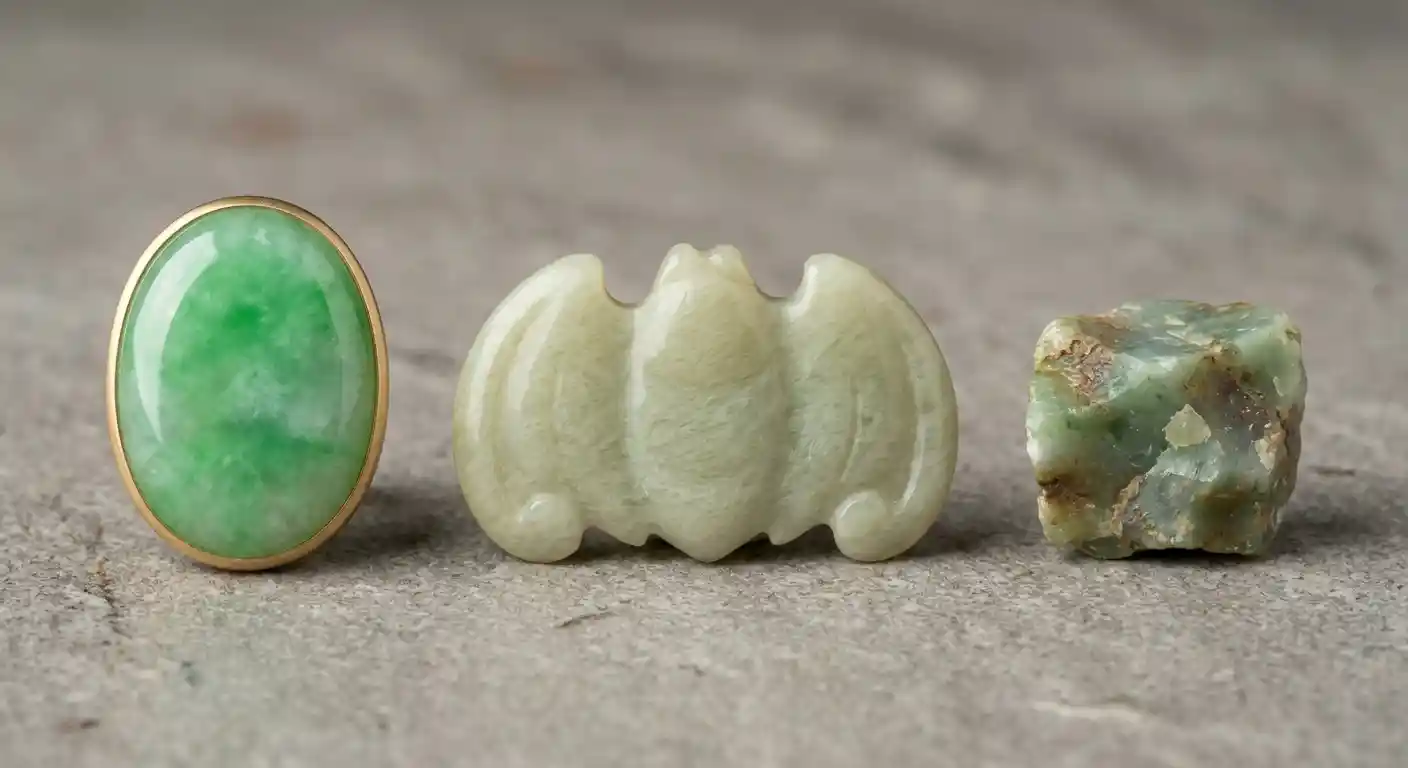
Jade healing properties are commonly associated with harmony, calm, compassion, good fortune, confidence, wisdom, resilience, protection, relationship stability, patience, grounding, and spiritual reflection. Unlike many recently named crystals, jade has an exceptionally deep and well-documented cultural history. Nephrite was shaped into tools, ornaments, ritual objects, and prestigious carvings thousands of years ago in China and other parts of the world, while jadeite became especially important in China after significant supplies reached the country from Myanmar. Jade was also deeply valued in Mesoamerican societies. Historical medicinal beliefs existed as well, but antiquity does not establish efficacy. Jade has not been demonstrated to treat kidney disease, side pain, cardiovascular conditions, anxiety, infertility, digestive disorders, inflammation, or other illness through contact with the body. Gemologically, “jade” is not one single mineral. The term most commonly covers jadeite jade and nephrite jade, with some modern classifications also recognizing certain green omphacite-rich stones. Understanding that distinction is essential because jadeite and nephrite differ chemically while sharing the interlocking structures that make fine jade exceptionally tough.
12 Jade Claims Shaped by Virtue, Harmony, Protection, and Good Fortune
- Emotional harmony and balance
- Calm during periods of stress
- Compassion and considerate behavior
- Good fortune and opportunity
- Confidence and steady decision-making
- Wisdom and thoughtful judgment
- Resilience during difficult periods
- Protection and personal boundaries
- Relationship harmony and loyalty
- Patience and long-term perspective
- Grounding and appreciation of daily life
- Spiritual reflection on values and character
These twelve themes span long-standing symbolism and much newer wellness practice, but they are not twelve scientifically verified biological effects. The jade benefits people describe become more useful when translated into actions such as slowing down before a decision, maintaining a commitment, preparing for a conversation, reviewing long-term priorities, or deliberately noticing opportunities.
Jadeite and Nephrite: Why “Jade” Describes More Than One Gemstone
The word jade traditionally refers to two physically distinct gemstones: jadeite jade and nephrite jade. They can look similar and both can be exceptionally tough, but their chemistry and mineral structures are different.
Jadeite is a pyroxene mineral with the ideal formula NaAlSi₂O₆. Jadeite itself crystallizes in the monoclinic system, although gem-quality jadeite jade is normally a compact rock made of tightly intergrown microscopic pyroxene grains rather than a single transparent crystal. Fine jadeite can range from white and colorless through green, lavender, yellow, orange, reddish, gray, brown, and nearly black.
Nephrite is a rock composed predominantly of densely interwoven amphibole fibers in the tremolite-actinolite series. Its approximate composition can be represented as Ca₂(Mg,Fe)₅Si₈O₂₂(OH)₂, with magnesium-rich tremolite grading toward iron-bearing actinolite. This felted fibrous structure gives nephrite extraordinary toughness and explains why ancient craftspeople could make thin, durable tools and intricate carvings from it.
Modern gemological usage sometimes also includes certain green omphacite-rich stones within the jade category, particularly where their gemological properties and appearance closely overlap with jadeite. For most buyers, however, understanding jadeite and nephrite remains the essential starting point.
Jadeite has a Mohs hardness around 6.5 to 7, while nephrite is typically around 6 to 6.5. Neither is exceptionally hard compared with sapphire or diamond, yet both are exceptionally tough because their microscopic crystals or fibers interlock. Toughness means resistance to breaking and chipping, while hardness measures resistance to scratching. Jade is one of the clearest examples of why the two properties should not be confused.
Jadeite jade may show vitreous to greasy luster, while nephrite often has a characteristic waxy to greasy appearance after polishing. Transparency ranges from opaque to semitransparent. Highly translucent, evenly textured, intensely colored jadeite can be exceptionally valuable.
Jade’s Ancient History Across China, Mesoamerica, and Other Cultures
Jade has one of the richest cultural histories of any gemstone. Nephrite was fashioned into tools, weapons, ornaments, ceremonial objects, and carvings in prehistoric societies across China, Europe, New Zealand, North America, and other regions. Its exceptional toughness made it useful long before people valued it primarily for jewelry.
China developed an especially deep jade tradition. Nephrite objects extend back thousands of years, and jade acquired associations with virtue, status, ritual order, purity, morality, heaven, and political authority. Carved bi disks, ceremonial blades, ornaments, seals, and later highly sophisticated sculptures became central parts of Chinese jade culture.
Jadeite entered Chinese carving traditions much later than nephrite. Important supplies from Myanmar reached China during the late imperial period, after which vivid green jadeite became increasingly prized. The finest intensely green, semitransparent jadeite later became known in the trade as imperial jade.
Jadeite was also highly important in Mesoamerica. Maya and Aztec cultures valued green jade for elite ornament, ritual use, symbolic meaning, and other purposes. Historical accounts include medicinal beliefs associated with the stone, but these should be described as historical beliefs rather than modern clinical evidence.
The English word jade has an unusual medical connection. It ultimately derives from the Spanish expression piedra de ijada, meaning stone of the side or flank. Early Spanish observers associated the gemstone with Indigenous use for side or kidney-area pain. The name therefore preserves a historical healing belief, but the etymology does not demonstrate that jade treats kidney disease.
Emotional Harmony, Calm, and Compassion Claims
1. Emotional Harmony Through Deliberate Balance
Jade is often described as a stone of harmony. It cannot biologically balance emotions, hormones, or nervous-system activity. A practical ritual is to use the stone while identifying where daily life feels out of proportion. Work, relationships, rest, finances, and personal responsibilities can then be examined individually. The useful change comes from adjusting behavior rather than expecting jade to restore balance automatically.
2. Calm During Stressful Periods
Smooth jade carvings and bangles can feel pleasant to hold, which makes them natural objects for sensory focus. The gemstone itself does not treat anxiety or reduce stress hormones through mineral contact. Someone can use a jade piece while slowing the breathing, relaxing the shoulders, and naming what actually needs attention now. The pause may be useful even though the stone is not pharmacologically calming.
3. Compassion and Considerate Behavior
Jade has long carried moral and virtue-related symbolism in several cultural settings, especially in China. Modern crystal practice often turns that symbolism toward compassion. A stone cannot make a person kinder automatically, but it can represent a behavioral commitment to listen before responding, consider another person’s perspective, and act consistently with stated values.
Good Fortune, Confidence, and Wisdom Claims
4. Good Fortune as Openness to Opportunity
Jade is widely associated with luck, prosperity, and favorable fortune. There is no evidence that a jade bangle, pendant, or carving changes probability, gambling outcomes, investment performance, or random events. A grounded interpretation is to let the stone remind you to notice legitimate opportunities, prepare carefully, and act when the expected benefit justifies the risk. Opportunity requires attention and judgment rather than supernatural luck.
5. Confidence and Steady Decision-Making
Jade’s toughness and cultural association with enduring values make confidence a natural symbolic theme. It does not neurologically increase self-esteem. Before a difficult decision, a person can use the stone as a cue to identify priorities, review evidence, and choose the next step that fits those priorities. Steadiness comes from having a process.
6. Wisdom and Thoughtful Judgment
Jade has long been associated with wisdom, virtue, and cultivated character. A gemstone cannot supply knowledge or judgment through physical contact. It can nevertheless serve as a reminder to slow down before reaching a conclusion, distinguish experience from assumption, and consider long-term consequences rather than only immediate reward.
Resilience, Protection, and Relationship Harmony Claims
7. Resilience During Difficult Periods
The extraordinary toughness of jade provides an unusually fitting physical metaphor for resilience. Neither nephrite nor jadeite transfers that toughness into human psychology, however. After a setback, the stone can be used as a cue to identify what remains intact, what needs repair, and what can be tried differently. The geological structure supplies the metaphor, while adaptation supplies resilience.
8. Protection Through Practical Boundaries
Jade has been used in protective symbolism across different traditions. There is no evidence that wearing it creates an invisible shield against accidents, hostility, illness, or bad luck. A safer interpretation connects protection with boundaries, planning, safe environments, and appropriate help. The stone may symbolize those commitments but cannot replace them.
9. Relationship Harmony and Loyalty
Jade jewelry is sometimes exchanged as a symbol of affection, continuity, or commitment. A gemstone cannot guarantee loyalty or make conflict disappear. It can instead represent the behaviors that sustain relationships: honest communication, reliability, respect, appreciation, and boundaries. Symbolic value can be real without requiring a therapeutic mechanism.
Patience, Grounding, and Spiritual Reflection Claims
10. Patience and Long-Term Perspective
Jade carving requires substantial skill and has developed through traditions spanning generations, making patience an understandable association. The gemstone itself does not change impulse control. A person can use it as a reminder to review progress over a realistic timescale instead of judging a long-term goal by one difficult day.
11. Grounding Through Sensory Awareness
The weight, coolness, and smooth polished surface of jade can make it an effective sensory object. A grounding routine might involve noticing temperature, pressure, texture, breathing, and surrounding sounds. Jade does not electrically or energetically anchor the body to the Earth, but tactile attention can bring focus back to the immediate environment.
12. Spiritual Reflection on Values and Character
Jade’s genuine cultural association with virtue and spiritual symbolism gives it a stronger historical foundation for contemplative use than many modern trade-name crystals. Someone may use a carving, bead, pendant, or bangle while reflecting on integrity, responsibility, gratitude, ancestry, or personal values. Such practices can be meaningful without suggesting that jade changes consciousness through an invisible frequency.
Jade Chakra Associations and the Difference Between Historical Symbolism and Modern Energy Practice
Green jade is most commonly associated with the heart chakra in modern crystal systems because of its color and themes involving compassion, harmony, love, and emotional balance. White jade may be linked with the crown chakra, while yellow, lavender, black, or other colors sometimes receive additional correspondences.
These chakra systems should not be confused with jade’s much older cultural histories. Ancient Chinese nephrite symbolism, Maya jade traditions, and modern chakra practice emerged in different cultural contexts and should not be blended into one supposedly universal ancient healing system.
Chakras are a spiritual framework rather than anatomical structures. Jade has not been demonstrated to affect the physical heart, kidneys, blood vessels, endocrine glands, brain, or other organs through chakra placement.
Jade Physical Care: Toughness, Scratching, Treatments, Water, Heat, Acids, Steam, and Ultrasonics
Jade is famous for toughness rather than extreme hardness. Jadeite generally measures about Mohs 6.5 to 7, while nephrite falls around 6 to 6.5. Both can therefore be scratched by quartz, topaz, corundum, diamond, and other harder stones, even though they resist chipping exceptionally well.
Warm water, mild soap, and a soft cloth or brush are reliable choices for routine cleaning. Brief water exposure is generally safe for untreated jadeite and nephrite. The main complication is treatment rather than the natural stone itself.
Jadeite can be sold under treatment categories commonly described as A, B, and C jade. A jade generally refers to natural jadeite that has not undergone significant treatment beyond traditional waxing. B jade has been chemically bleached and impregnated with polymer resin. C jade has been dyed, and some stones receive combinations of treatments. These distinctions matter because heat, solvents, harsh cleaners, or aggressive procedures may affect impregnated or dyed stones.
Untreated jade can tolerate more intensive cleaning than many fragile gemstones, and professional guidance may permit steam or ultrasonic cleaning in appropriate cases. When treatment history is uncertain, warm soapy water remains the safer default. There is little reason to expose a valuable jade piece to unnecessary heat or vibration at home.
Strong heat from a jeweler’s torch can harm jade. Warm acids can also affect it, while chemical bleaching and polymer impregnation are themselves important treatment concerns in jadeite. Household acids, bleach, solvent-based cleaners, and abrasive powders should therefore be avoided.
Jade’s toughness makes bangles and carvings durable, but thin sections can still break under sufficient force. Store polished pieces so that harder gemstones cannot scratch them.
When purchasing jade, treatment disclosure and identification matter greatly because serpentine, dyed quartz, glass, and other green stones may be sold under misleading jade-like names. The workbook-verified jade quality grading focuses on the quality signals that deserve attention.
Ritual Cleansing Jade Without Risking Treated or Valuable Pieces
Jade has genuine ritual and symbolic histories, but modern ritual cleansing does not require chemically altering the gemstone. There is no scientifically demonstrated unwanted energy that must be removed by soaking, heating, salting, or exposing the stone to extreme conditions.
Sound, quiet reflection, intention-setting, prayer, or simply wiping the stone gently before assigning a new symbolic purpose are low-risk options. For a culturally significant inherited piece, reflection on its history or the person who wore it may be more meaningful than applying a generic cleansing method.
Avoid saltwater soaking, acid exposure, chemical sprays, prolonged strong heat, flame, abrasive powders, and unnecessary solvents. These approaches are especially unwise when treatment history is unknown.
Conclusion
Jade has enough verified history, geology, and cultural significance that exaggerated wellness claims add little to its story. Jadeite and nephrite differ chemically but share remarkable toughness created by tightly interlocking structures, while jade traditions extend back thousands of years in several parts of the world. Its twelve healing themes can still support reflection on harmony, character, patience, opportunity, resilience, and relationships when symbolism remains separate from medical claims.
Frequently Asked Questions About Jade Healing Properties
What are the main jade healing properties people claim?
Common claims include emotional harmony, calm, compassion, good fortune, confidence, wisdom, resilience, protection, relationship harmony, patience, grounding, and spiritual reflection. These are traditional or contemporary beliefs rather than scientifically proven therapeutic effects.
Is jade one mineral?
No. The term jade most commonly refers to jadeite jade and nephrite jade, which have different chemistry and mineral structures. Some modern gemological definitions also include certain green omphacite-rich stones.
What is jadeite made of?
Jadeite is a pyroxene mineral with the ideal formula NaAlSi₂O₆. Gem jadeite commonly occurs as a compact rock composed of tightly intergrown microscopic crystals.
What is nephrite made of?
Nephrite is a very tough rock composed mainly of fine interwoven amphibole fibers in the tremolite-actinolite series, approximately Ca₂(Mg,Fe)₅Si₈O₂₂(OH)₂.
How hard is jade?
Jadeite is about Mohs 6.5 to 7, while nephrite is approximately 6 to 6.5. Both are exceptionally tough despite being softer than sapphire or diamond.
Does jade have genuine ancient traditions?
Yes. Nephrite has been used for thousands of years in China and elsewhere for tools, ornaments, ritual objects, and carvings. Jadeite was also highly important in pre-Columbian Mesoamerica. Historical importance does not prove modern therapeutic claims.
Can jade really treat kidney problems?
No. The word jade has an etymological connection with historical beliefs about side or kidney-area pain, but there is no evidence that wearing jade treats kidney disease or substitutes for medical care.
Which chakra is jade associated with?
Modern crystal systems most commonly associate green jade with the heart chakra. Other jade colors may receive different chakra correspondences. These are spiritual rather than anatomical associations.
Can jade go in water?
Brief washing with warm water is generally safe for untreated jadeite and nephrite. Mild soap is suitable for routine cleaning. Extra caution is appropriate when the gemstone has been dyed, bleached, polymer-impregnated, coated, or otherwise treated.
What should buyers check before purchasing jade?
Confirm whether the stone is jadeite or nephrite, ask about dyeing, bleaching, polymer impregnation, coatings, and other treatments, and evaluate color, transparency, texture, condition, and workmanship. The workbook-verified buy jade topic covers those buying checks in detail.
Crystal healing claims are traditional or personal beliefs and should not replace qualified medical or mental health care.