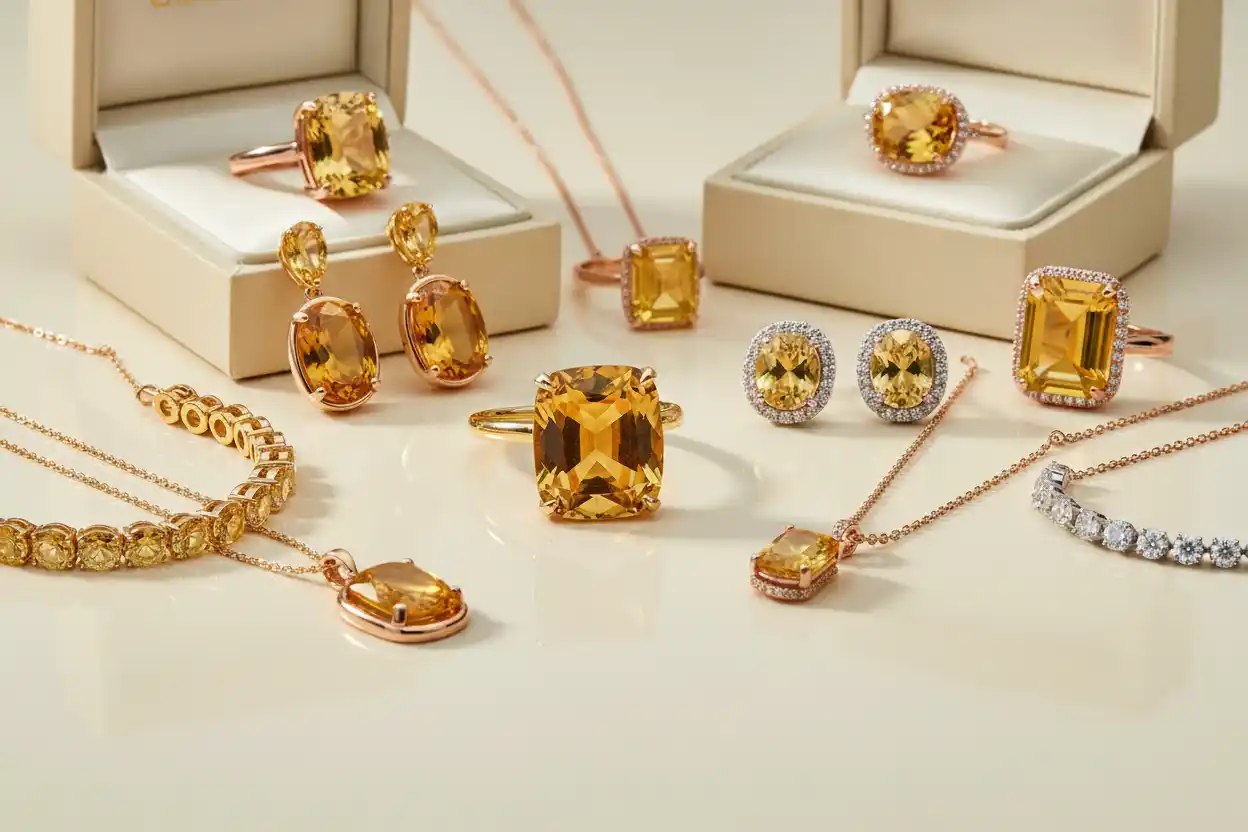
November Birthstone Jewelry: 17 Spiritual Meanings of Citrine & Topaz
November birthstone jewelry offers two very different gemstones: citrine and topaz. Citrine is the yellow to brownish-orange variety of quartz, while topaz is a separate mineral species that occurs in colorless, yellow, orange, brown, pink, red, violet, blue and occasionally greenish colors. This gives November jewelry unusual visual flexibility, from warm golden citrine to rare pinkish-orange topaz or the widely available blues produced through treatment. GIA recognizes both citrine and topaz as November birthstones.
The two stones also differ in durability. Citrine ranks 7 on the Mohs hardness scale and has good toughness, making it suitable for most jewelry when protected from harder stones and abrupt temperature changes. Topaz is harder at Mohs 8, yet its pronounced basal cleavage gives it poor toughness, so a sharp impact in the wrong direction can split the gem despite its higher scratch resistance.
Spiritually, November birthstone jewelry is often associated with warmth, optimism, abundance, confidence, calmness and personal direction. These meanings fit the sunny colors of citrine and the wide historical symbolism of topaz, but they should remain symbolic. Neither gemstone has been scientifically demonstrated to attract money, cure emotional conditions, improve metabolism or emit measurable healing energy.
17 Spiritual Meanings of November Birthstone Jewelry
- Citrine yellow can symbolize optimism and warmth.
- Golden color can represent abundance and gratitude.
- Citrine can symbolize creative confidence.
- Quartz durability can represent steady resilience.
- November’s autumn timing can symbolize appreciation and harvest.
- Topaz can represent clarity of purpose.
- Golden topaz can symbolize generosity and success.
- Pink topaz can represent affection and emotional warmth.
- Blue topaz can symbolize calm communication.
- Topaz hardness can symbolize persistence.
- Rare warm-colored topaz can represent individuality.
- Clear topaz can symbolize honesty and simplicity.
- Both gems can mark personal November identity.
- Their warm colors can represent hope during seasonal change.
- Birthstone jewelry can preserve memories across generations.
- A meaningful gemstone can reinforce personal intentions.
- Spiritual energy and abundance remain symbolic rather than guaranteed effects.
Citrine Gives November Jewelry Its Warm Golden Identity
Citrine is quartz colored in shades ranging from pale yellow through orange and brownish orange. Natural yellow quartz is comparatively uncommon, and GIA notes that most citrine sold today is produced by heat treating amethyst. The resulting stones are still quartz, but their commercial color has been modified through heat.
This warm color explains much of citrine’s modern symbolism. Yellow and orange naturally evoke sunlight, warmth, autumn leaves and ripe harvests, so November birthstone jewelry is often interpreted in terms of optimism, gratitude and abundance. Those ideas can be personally meaningful without suggesting that citrine changes financial outcomes.
A citrine pendant given after a professional milestone might symbolize confidence and gratitude for progress already made. A ring purchased at the beginning of a new project may serve as a reminder to approach work with optimism. The symbolic traditions discussed through citrine benefits can therefore be used as personal interpretation while remaining separate from claims that the gemstone physically creates luck or prosperity.
November Abundance Symbolism Is Better Understood as Gratitude
Citrine is frequently marketed as a gemstone of wealth, manifestation or commercial success. The golden color makes the association easy to understand, but there is no scientific evidence that wearing citrine attracts money, increases sales or alters financial probability.
A more meaningful interpretation of abundance is appreciation for what already exists. November is strongly associated in many places with harvest, seasonal transition and reflection on the year, so golden birthstone jewelry can symbolize resources, relationships, opportunities and accomplishments that have already been built.
This interpretation avoids turning spiritual symbolism into a financial promise. A piece of November birthstone jewelry may remind someone to act confidently, save carefully or remain grateful, but the gemstone itself does not make those decisions or generate their results.
Citrine Is Practical for Most Jewelry With Sensible Care
Citrine’s Mohs hardness of 7 and good toughness make it suitable for rings, earrings, pendants and bracelets. GIA notes that abrupt temperature changes can fracture citrine and that prolonged intense light can fade the color of some stones. Warm soapy water is consistently safe, while steam cleaning should be avoided because high heat creates unnecessary risk.
Its scratch resistance is good rather than exceptional. Quartz dust itself can abrade softer surfaces, and harder gemstones such as sapphire, ruby and diamond can scratch citrine if pieces are stored together.
For a frequently worn citrine ring, a secure setting and separate storage are simple precautions. Pendants and earrings experience much less impact and are therefore especially easy ways to wear November birthstone jewelry regularly.
Citrine Quality Depends on Color, Clarity and Cutting
GIA recommends looking for eye-clean citrine with lively, pleasing color and attractive cutting. Because larger quartz crystals are relatively available, size alone does not create the extreme price increases seen in large fine ruby, sapphire or alexandrite.
This makes cutting particularly important. A large stone with a wide transparent window through the center may be less attractive than a smaller citrine with stronger brightness and balanced proportions.
Color preferences vary. Some buyers like pale lemon yellow, while others prefer intense golden orange or reddish-orange tones. The best choice should remain attractive under normal lighting rather than only beneath strong showroom lamps.
When you buy citrine, comparing several stones side by side makes differences in color, windowing and brightness much easier to recognize than judging one gemstone in isolation.
Topaz Gives November Birthstone Jewelry a Much Wider Color Range
Topaz is a completely different mineral from citrine. It has the chemical formula Al₂(F,OH)₂SiO₄ and occurs naturally in a wide range of colors, including colorless, yellow, orange, brown, pink, red, violet and blue. GIA places topaz at Mohs 8, making it harder against scratching than quartz.
Color is one of topaz’s greatest attractions because November jewelry does not need to remain yellow or orange. Someone who prefers cool colors can choose blue, while collectors may seek rare pink, reddish or imperial-type stones.
This range also creates different symbolic possibilities. Warm topaz can represent generosity and confidence, pink can suggest affection, clear topaz can symbolize simplicity, and blue can represent calm communication. These interpretations are cultural and personal rather than fixed gemological definitions.
Blue Topaz Is Usually Treated
Much of the blue topaz seen in modern jewelry begins as colorless topaz and receives irradiation followed by heating to produce stable blue color. GIA describes this treatment as the source of the vast majority of blue topaz in the market.
That does not make blue topaz fake.
The gemstone remains natural topaz whose color has been modified. What matters is accurate disclosure so that buyers do not pay a rarity premium for a treatment-created color that is widely available.
GIA also notes that regulations control the release of irradiated topaz from treatment facilities so it meets radiation-safety requirements before entering the market.
A buyer can therefore choose blue topaz confidently when the treatment is properly represented.
Imperial and Pink Topaz Occupy a Different Market Position
Warm orange, reddish-orange, pink and purplish-pink topaz can be considerably rarer than commercial blue or colorless stones. GIA identifies vivid purplish pink among the rarest topaz colors and emphasizes that color matters more than country of origin when judging quality.
This distinction matters because the word topaz covers gemstones with radically different values.
A large treated blue stone can be affordable, while a fine natural pink or richly colored imperial-style topaz may be substantially more expensive even at a smaller size.
When you buy topaz, establish the exact color variety and treatment status before comparing prices. General statements about “topaz value” can be misleading when different colors occupy such different markets.
Topaz Is Hard but Its Cleavage Demands Respect
Topaz demonstrates why hardness should never be used as the only measure of jewelry durability.
At Mohs 8, it resists scratching better than citrine, aquamarine and many common gems. Yet it has strong basal cleavage and poor toughness, meaning a hard blow in an unfortunate direction can split the stone. GIA recommends protective mountings for valuable topaz and suggests lower-impact jewelry such as pendants and pins when practical.
This creates an interesting symbolism for November birthstone jewelry. Strength is not simply resistance to every form of damage. Topaz is hard, yet it still has structural vulnerability.
A wearer might interpret that combination as a reminder that resilience includes understanding one’s limits rather than pretending to be invulnerable.
Topaz Care Is Different From Citrine Care
Warm soapy water is the safest cleaning method for topaz. GIA advises against both steam and ultrasonic cleaning because heat, pressure and vibration can create problems around cleavage or existing internal weaknesses. Sudden temperature changes should also be avoided.
Mystic topaz deserves additional care because its rainbow appearance comes from a thin surface coating. Abrasive cleaning or polishing can remove that coating.
For November birthstone jewelry containing several gems, always use the cleaning method appropriate for the most delicate component. A diamond accent may tolerate aggressive cleaning that the topaz center stone should not receive.
Citrine and Topaz Were Historically Confused
One reason citrine and topaz share November symbolism is that yellow stones were historically classified more by appearance than by modern mineralogical identity. Citrine and yellow topaz were therefore confused for long periods.
GIA notes that citrine shared a history of mistaken identity with topaz, and many beliefs associated with one stone consequently became attached to the other.
Modern gemology clearly separates them. Citrine is quartz, while topaz is its own mineral species with different chemistry, hardness, cleavage and optical properties.
For today’s buyer, the shared November birthstone status is cultural rather than evidence that the gems are physically related.
Warm November Colors Can Symbolize Hope During Seasonal Change
Citrine and golden topaz are especially well suited to November because their warm colors resemble late-autumn leaves, low sunlight and harvest tones.
This gives November birthstone jewelry a natural emotional identity built around warmth during transition.
Someone might choose golden jewelry after a difficult year as a reminder that darker seasons are temporary, or give it to a loved one as a symbol of encouragement.
This is a human interpretation rather than an energetic effect. The gemstone does not change mood biologically, but an emotionally meaningful object can become associated with memories and intentions that matter to the wearer.
The Two Birthstones Support Very Different Jewelry Styles
Citrine often works beautifully in larger statement pendants because clean quartz can be available in substantial sizes without extreme prices. Its golden colors pair naturally with yellow or rose gold, while white metals create sharper contrast.
Topaz offers a wider range. Blue stones work particularly well with white gold or platinum, while imperial and pink topaz can look rich in yellow or rose gold.
Rings are practical in both gems, but citrine should be protected from harder surfaces and topaz from severe impact because of cleavage. Earrings and pendants reduce those risks significantly.
The strongest November birthstone jewelry is therefore selected around both color preference and lifestyle rather than spiritual symbolism alone.
Citrine and Topaz Energy Should Remain Symbolic
Modern crystal traditions may describe citrine as energizing, manifesting or financially attractive, while topaz may be associated with clarity, confidence, emotional balance or spiritual illumination.
The ideas found in topaz benefits can enrich a personal ritual or gift when they are presented as symbolism rather than treatment.
Neither citrine nor topaz has been scientifically established as a therapy for depression, fatigue, digestive disorders, hormonal conditions or financial difficulties.
A gemstone can still be useful as a personal reminder. Someone may touch a citrine pendant before an important presentation because they associate it with confidence, but the confidence comes from the person’s preparation and psychological association rather than a measurable force emitted by the quartz.
Conclusion
November birthstone jewelry gives wearers a choice between golden citrine and the far wider color range of topaz. Citrine is quartz with Mohs hardness 7 and good toughness, while topaz ranks Mohs 8 but requires greater impact protection because of its pronounced cleavage. Much commercial citrine is produced by heating amethyst, and most blue topaz receives irradiation and heat treatment, so treatment should be understood rather than automatically treated as a defect. Their warm colors and long histories support symbolism involving optimism, abundance, clarity, confidence and resilience, but those meanings remain cultural and personal rather than medical or financial guarantees.
FAQs About November Birthstone Jewelry
What are the November birthstones?
Topaz and citrine are both recognized November birthstones. Citrine is yellow to brownish-orange quartz, while topaz is a separate mineral that occurs in many colors including yellow, orange, pink, red, blue and colorless.
Is citrine naturally yellow?
Natural yellow citrine exists, but it is relatively uncommon. GIA notes that most citrine in the marketplace is produced by heating amethyst into yellow, golden or orange quartz.
Is blue topaz natural?
Natural blue topaz exists, but the vast majority of blue topaz in commercial jewelry is created by irradiating and heating colorless topaz. The treatment produces stable color when properly processed.
Which November birthstone is better for everyday wear?
Both can be worn regularly with care. Citrine has good toughness at Mohs 7, while topaz is harder at Mohs 8 but has poor toughness because of cleavage. Topaz therefore needs particular protection from sharp impacts.
How should November birthstone jewelry be cleaned?
Warm soapy water is safe for both citrine and topaz. Steam should be avoided for citrine, while both ultrasonic and steam cleaning are best avoided for topaz because heat, vibration and cleavage create additional risk.
Does citrine attract wealth?
There is no scientific evidence that citrine attracts money, creates business success or changes financial probability. Prosperity and abundance are symbolic associations rather than measurable gemstone effects.
Does topaz have healing energy?
No scientifically established therapeutic energy has been demonstrated for topaz. Spiritual interpretations involving confidence, communication or emotional balance belong to cultural and personal traditions.
Disclaimer:
Spiritual, abundance, manifestation, calming, healing and energetic meanings associated with citrine and topaz reflect folklore, cultural symbolism and personal spiritual practice rather than established medical, psychological or financial effects. November birthstone jewelry does not replace professional healthcare or financial decision-making, and perceived gemstone energy cannot determine authenticity, treatment or quality.