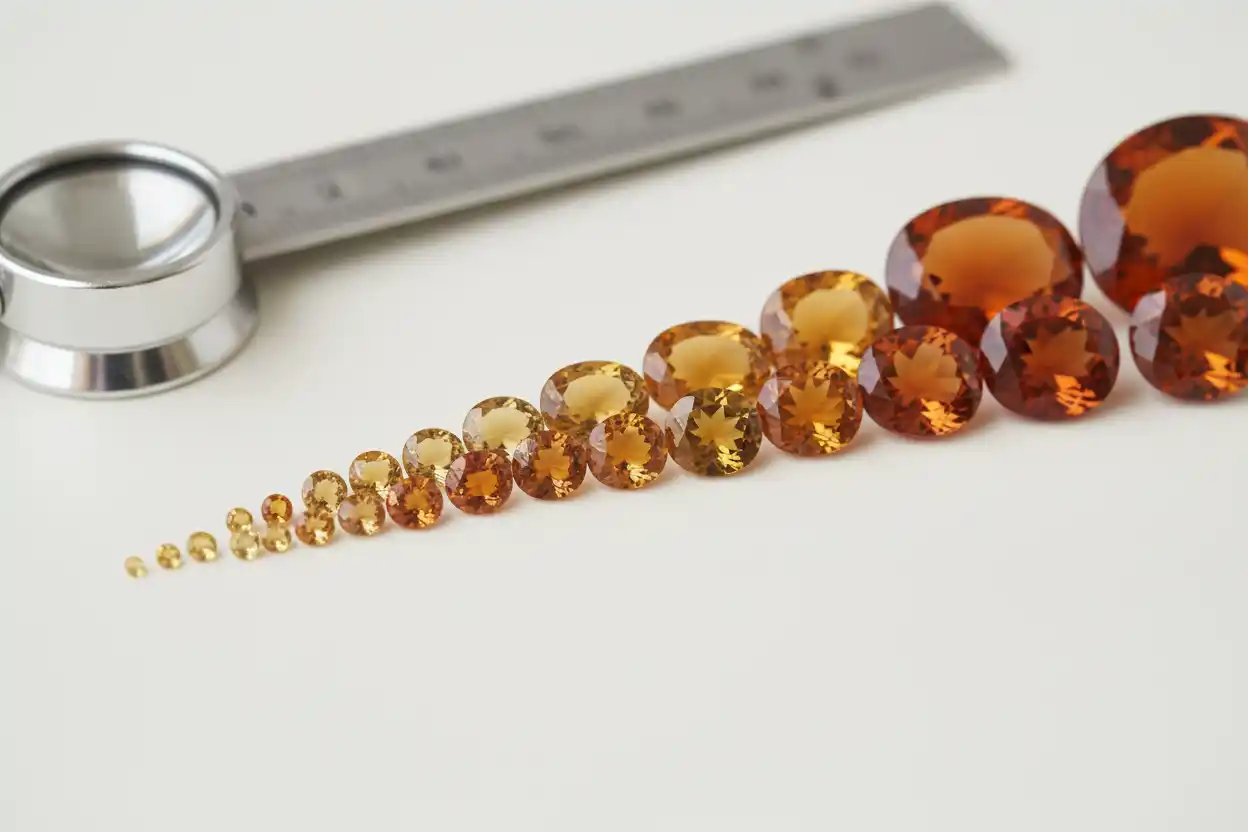
Buy Citrine: How to Compare Listings, Authenticity, Origin & Price
To buy citrine intelligently, start by understanding that most commercial citrine is not naturally yellow quartz straight from the mine. Citrine is the transparent yellow to brownish orange variety of quartz, and natural-color citrine is comparatively rare. GIA states that most citrine in the market results from heating amethyst, which changes suitable purple quartz into yellow, orange, or reddish-orange material. Heat-treated citrine is a legitimate gemstone when represented accurately, but buyers should know whether they are paying for ordinary heated material or for a seller’s claim of unusual natural, unheated color.
Citrine is also widely available in large clean stones, which generally keeps it accessible compared with colored gems whose prices rise sharply with size. GIA notes that large citrines remain relatively affordable and that price per carat does not rise dramatically merely because a stone becomes larger. That makes quality comparison more important than chasing carat weight. Buyers should evaluate color, clarity, cutting, treatment, natural versus laboratory-grown status, condition, documentation, and seller terms before deciding whether a listing represents good value.
Buy Citrine At a Glance
| Buying Factor | What to Check | Why It Matters |
|---|---|---|
| Identity | Citrine quartz versus another yellow gemstone or imitation | Citrine is quartz; visual resemblance does not prove identity |
| Color | Hue, saturation, brown component and zoning | Attractive lively color is the leading quality factor |
| Clarity | Eye-visible inclusions, fractures and transparency | Much faceted citrine is expected to be eye-clean |
| Cut | Brilliance, windowing, symmetry and polish | Good cutting can make inexpensive material look significantly better |
| Carat Weight | Weight together with face-up dimensions | Large citrine is common enough that size alone does not guarantee a high per-carat premium |
| Treatment | Natural-color versus heat-treated quartz | Most market citrine is heated, so disclosure and representation matter |
| Synthetic Status | Natural quartz versus laboratory-grown citrine quartz | Laboratory-grown citrine exists and belongs to a separate market category |
| Origin | Seller locality claim versus documented evidence | Origin generally matters less than visible quality unless provenance has special significance |
| Condition | Chips, abrasions, scratches and fractures | Wear can lower value and affect jewelry durability |
| Documentation | Laboratory identification when financially justified | Reports can confirm identity and detectable treatment information but do not set price |
| Seller Terms | Accurate photography, return period and disclosure | Strong buyer protections reduce online-purchase risk |
| Price | Compare stones with similar quality and treatment | Weight alone is not enough for a fair comparison |
Know What Citrine Actually Is
Citrine belongs to the mineral species quartz and has the chemical composition silicon dioxide. GIA describes citrine as transparent quartz ranging from pale yellow to brownish orange and records a Mohs hardness of 7. That mineral identity matters because yellow topaz, yellow sapphire, yellow beryl, glass, synthetic materials, and other gemstones can occupy the same visual color range without being citrine.
Historic confusion between citrine and topaz arose because older gem naming often relied more heavily on color than modern mineralogical identification. GIA notes that citrine’s tawny appearance caused it to be confused with topaz before modern gemology established clearer mineral distinctions. A contemporary seller should therefore identify citrine as quartz rather than use vague phrases implying that it is a type of topaz.
For an ordinary modestly priced stone, a reputable seller’s disclosure may provide enough confidence. For an unusually expensive, unusually large, or allegedly natural-color collectible stone, independent laboratory identification can become more worthwhile.
Color Is the Most Important Visual Buying Factor
GIA describes the finest citrine colors as saturated yellow through reddish orange and orangy red with little or no brownish component, while also noting that deep brownish or reddish-orange shades are popular in the contemporary market. This illustrates an important point: market preference and strict descriptions of “finest” color can overlap without being identical, and personal taste still matters.
Very pale citrine can be attractive and may suit buyers who want subtle yellow jewelry, but it should not automatically command the same premium as a strongly saturated, lively stone of comparable clarity and cut. Extremely dark material can also lose brightness or show excessive brown, so simply choosing the deepest orange does not guarantee superior appearance.
Color zoning deserves attention because GIA notes that dealers generally prefer citrine without obvious zoning. Rotate the stone and inspect it against a neutral background to determine whether large portions appear significantly lighter or darker. Photographs can hide zoning when the seller chooses a favorable angle.
Most Market Citrine Is Heat-Treated Amethyst
Natural citrine is rare, but citrine itself is not rare in jewelry stores because heating suitable amethyst creates yellow-to-orange quartz in large commercial quantities. GIA repeatedly states that most citrine in the marketplace results from heat treatment of amethyst.
This makes treatment disclosure different from a situation where an enhancement is unusual or inherently suspicious. Heated citrine can be attractive, durable, and commercially normal. The buying issue is whether the seller represents the stone honestly. A listing that simply calls the stone “natural citrine” can be ambiguous because the quartz may be geologically natural but its present color may result from treatment.
If unheated natural color is important to you, ask the seller exactly what evidence supports the claim. The Gems Lore guide on how to buy amethyst is particularly relevant because amethyst and commercial citrine are directly connected through heat treatment, while the amethyst price guide provides context for how abundant quartz varieties can vary significantly in price despite belonging to the same mineral species.
Natural Unheated Citrine Should Not Be Accepted on Color Alone
Natural-color citrine does exist, and GIA has examined naturally colored material from sources including Zambia while documenting inclusions and growth features that supported natural origin in studied samples. Yet a buyer cannot reliably establish unheated status merely because a stone looks pale, smoky, lemon-yellow, or unlike common heated material.
Online advice often proposes simplistic visual rules such as assuming that every pale citrine is natural or that every orange stone must be heated. Those shortcuts are not reliable enough for a substantial purchase because natural and treated color ranges can overlap.
A seller charging a significant premium for verified unheated citrine should be able to explain the evidence behind the representation. If the premium is meaningful, independent laboratory analysis becomes more appropriate than relying on a verbal claim or a certificate produced by the seller itself.
Laboratory-Grown Citrine Exists
GIA states that quartz is grown in laboratories and that some laboratory-grown quartz is produced as citrine. Laboratory-grown citrine has essentially the same fundamental mineral identity as natural quartz but was created artificially rather than through geological processes.
Synthetic citrine should not be confused with an imitation. An imitation merely resembles citrine while having different material properties, whereas laboratory-grown citrine is synthetic quartz. Accurate disclosure matters because natural, synthetic, and imitation materials occupy different markets even when they appear similar.
For most inexpensive citrine jewelry, the economic incentive for extensive laboratory testing may be limited. GIA itself notes that it offers identification reports for citrine but that such reports are not commonly requested because the report cost can be high relative to the value of ordinary citrine. That changes when a seller asks an unusually high price or makes exceptional rarity claims.
Clarity Should Usually Be High in Faceted Citrine
Much of the faceted citrine market consists of eye-clean material. GIA notes that dealers look for citrine without visible inclusions and that eye-visible inclusions can reduce the value of pale stones substantially. This means buyers generally do not need to accept distracting internal features in ordinary transparent faceted citrine unless the stone has another exceptional characteristic.
A minor inclusion at the edge may have little effect on face-up beauty, while a central reflective fracture can interfere with brilliance. Surface-reaching fractures also deserve more caution because they can affect durability and potentially indicate filling or later damage.
Carvings, cabochons, beads, and artistic objects belong to a somewhat different category. Material with inclusions can be perfectly suitable when the design incorporates them effectively, so clarity expectations should match the type of product rather than a single universal rule.
Cut Quality Can Matter More Than an Extra Few Carats
Citrine rough is sufficiently available that cutters do not always face the same extreme weight-retention pressure found in very rare gems. GIA notes that citrine appears in standard calibrated shapes as well as custom and fantasy cuts, and that its availability in large sizes makes it popular with jewelry designers.
A good cut should produce lively light return, balanced symmetry, clean polish, and an attractive outline. A large window through the center can make the gem appear washed out, while excessive pavilion depth can add weight without producing corresponding face-up size.
Compare dimensions rather than carat weight alone. A well-proportioned ten-carat stone may face up larger and brighter than a twelve-carat stone whose additional weight hides beneath the setting. Paying slightly more for better cutting can therefore produce a visibly better piece of jewelry.
Large Citrine Is Not Automatically Rare or Premium Quality
GIA notes that citrine is available in large sizes and that larger gems do not necessarily command sharply increasing prices per carat. This distinguishes citrine from gems in which clean rough becomes dramatically scarcer as size rises.
A very large citrine can still be expensive in absolute terms because there is more material and potentially more cutting work, but the mere existence of a large carat figure should not be interpreted as evidence of extraordinary rarity.
This is especially important in online listings where sellers may emphasize a twenty-, thirty-, or fifty-carat weight as though it automatically signals museum-level quality. Color, transparency, proportions, craftsmanship, natural-versus-treated status, and actual face-up beauty remain more informative.
Origin Claims Need Appropriate Skepticism
GIA lists important citrine sources including Bolivia, Spain, Madagascar, Mexico, and Uruguay and notes that much amethyst heated to citrine color is mined in Brazil. Geographic source can be interesting, particularly for natural-color material with documented provenance, but it should not replace examination of actual gem quality.
A seller may use a country name confidently without providing evidence. Unless credible documentation supports the claim, treat it as seller-supplied provenance rather than independently established geographic origin.
GIA’s current geographic-origin report service applies only to a defined group of colored stones, and citrine is not listed among them. A standard GIA citrine identification report therefore should not be assumed to prove a Brazilian, Bolivian, Zambian, or other origin unless the actual report explicitly contains such information under an applicable service.
Do Not Pay a Large Premium for an Undefined Trade Name
Citrine listings commonly use evocative commercial descriptions for particular shades. Such terminology can communicate appearance, but a trade name is not automatically a laboratory grade, treatment determination, or geographic-origin finding.
When a seller attaches a strong premium to a named color category, translate the term into observable characteristics. Ask how saturated the stone is, how much brown or red is visible, whether zoning occurs, whether the color is natural or heat-induced, and whether the photographs represent the gem accurately in ordinary light.
The gemstone should justify the price without relying solely on the name.
AAA and AAAA Citrine Are Not Universal Laboratory Grades
Colored-stone retailers frequently create letter grades to organize inventory. A seller might call one citrine AA, another AAA, and a third AAAA, yet those labels do not automatically follow one universal gemological standard.
GIA’s Colored Stone Identification Report determines gem material, natural or synthetic status, detectable treatments, and descriptive characteristics; it is an identification service rather than a universal commercial quality-grading system for citrine.
A useful citrine comparison therefore examines actual color, clarity, cutting, dimensions, treatment, condition, and documentation instead of assuming that two retailers’ AAA stones are equivalent.
Condition Matters in Pre-Owned Citrine Jewelry
Citrine has a Mohs hardness of 7 and good toughness, making it suitable for many jewelry uses, but GIA cautions that abrupt temperature changes can fracture it and prolonged intense light can fade some citrine color. Hardness describes scratch resistance rather than immunity from chipping, fracture, or wear.
Pre-owned stones should be inspected for scratches, abraded facet junctions, chips around the girdle, loose settings, and damaged corners. Large citrines can expose broad table facets that accumulate wear over time, particularly in rings.
Condition should influence price separately from clarity. An internal natural inclusion and an external scratch created through wear are not the same type of feature.
A Laboratory Report Is Not an Appraisal
GIA offers Colored Stone Identification Reports that can identify a gemstone, indicate whether it is natural or laboratory-grown, report detectable treatments, and record characteristics such as weight, measurements, shape, cutting style, and color.
The report does not determine the retail price or guarantee that an expensive listing represents good value. Most ordinary citrine is inexpensive enough that laboratory reports are uncommon, so a seller should not use the mere presence of a report to justify an arbitrary premium.
An appraisal addresses value for a stated purpose. Retail price, insurance replacement value, resale value, and dealer purchase price are different concepts and should not be presented as interchangeable.
How to Compare Citrine Listings Fairly
A fair comparison places similar stones side by side in terms of color, treatment, clarity, cutting, dimensions, condition, and seller protection. A richly saturated eye-clean precision-cut citrine should not be compared directly with a pale mass-produced stone simply because both weigh five carats.
Photographs deserve scrutiny because yellow and orange colors can shift dramatically under warm lighting. Request neutral-light images or video when color is responsible for a meaningful premium. A generous return period is especially useful for online purchases because monitor settings and photographic processing can distort hue and saturation.
The strongest listing explains what the seller knows and avoids pretending that ordinary heated quartz is an extremely rare material.
Conclusion
To buy citrine well, concentrate on quality and disclosure rather than dramatic rarity claims. Citrine is quartz, and most commercial citrine obtains its yellow-to-orange color through heat treatment of amethyst. Natural-color material is comparatively rare, but ordinary market citrine remains widely available and affordable because treated supply is abundant and large clean stones are common.
A strong purchase combines pleasing saturated color, good transparency, minimal distracting inclusions, skillful cutting, useful face-up dimensions, sound condition, accurate treatment representation, and seller terms that allow proper inspection. Natural, treated, synthetic, and imitation materials should remain separate categories, while origin claims should be distinguished from documented evidence. Buyers who follow those distinctions can compare citrine listings on real gemological characteristics rather than marketing language.
Frequently Asked Questions
What should I check first when I buy citrine?
Start with identity, color, treatment disclosure, clarity, and cut. Citrine is yellow-to-orange quartz, and most market material has been produced by heating amethyst, so a seller’s description of treatment status deserves particular attention. After that, compare dimensions, condition, documentation, seller reputation, and return rights.
Is most citrine natural?
The underlying quartz is commonly natural, but most citrine in the marketplace receives its yellow-to-orange color through heat treatment of amethyst. GIA states that natural-color citrine is rare and that heating accounts for most commercial material. Buyers should therefore distinguish natural geological origin from untreated natural color.
Is heat-treated citrine fake?
No. Heat-treated citrine is real quartz whose color has been changed through treatment. It should be disclosed accurately, but treatment does not make the material an imitation. A synthetic citrine is laboratory-grown quartz, while an imitation is a different material made or selected to resemble citrine.
Does synthetic citrine exist?
Yes. GIA states that laboratory-grown quartz can be produced as citrine. Synthetic citrine has a different origin from natural quartz and should be disclosed accordingly.
What citrine color is considered fine quality?
GIA describes saturated yellow to reddish orange and orangy red colors with little or no brownish component as highly prized, while deep brownish or reddish-orange shades are also popular in the contemporary market. Personal preference still matters, and attractive brightness and even color are important.
Should citrine be eye-clean?
Much faceted citrine in the market is eye-clean, and GIA notes that dealers generally prefer stones without visible inclusions or obvious color zoning. A visibly included stone can still be attractive, especially as a carving or cabochon, but inclusions should normally be reflected in price.
Are large citrines rare?
Large clean citrines are comparatively available. GIA notes that large sizes remain accessible and that price per carat does not rise dramatically solely because a citrine becomes larger. Large weight should therefore not be treated as an automatic quality grade.
Can GIA tell me where my citrine was mined?
GIA offers identification reports for citrine, but citrine is not among the gem species currently listed for its standard Colored Stone Identification & Origin Report service. A seller’s origin claim should therefore be evaluated according to the actual supporting evidence.
Is citrine suitable for everyday jewelry?
Citrine has a Mohs hardness of 7 and good toughness, so it works well in many jewelry types with sensible care. GIA advises protecting it from abrupt temperature changes and prolonged intense light because these can cause fracture or, in some material, color fading.